
Our readers keep the lights on and the weekend projects moving. As an Amazon Associate, I earn from qualifying purchases.
The frantic dance between breast and bottle often ends with a crying baby and a frustrated parent. Nipple confusion — when a baby refuses the breast after experiencing a bottle’s faster, less demanding flow — can derail breastfeeding goals within days. Finding a bottle that mimics the natural latch, pace, and feel of breastfeeding is the single most effective way to prevent this rejection.
I’m Rikta — the co-founder and writer behind FitlyFast. I’ve spent countless hours analyzing the flow mechanics, nipple material science, and anti-colic venting systems of dozens of baby bottles to understand exactly which designs preserve a baby’s breastfeeding latch.
After evaluating nipple shape, flow rate, material softness, and venting effectiveness across seven top contenders, I’ve identified the models that truly minimize rejection. This is a focused guide to the best bottle for nipple confusion.
How To Choose The Best Bottle For Nipple Confusion
Choosing the wrong bottle can undo weeks of breastfeeding progress. The goal is not just a bottle a baby will drink from — it’s a bottle that reinforces the same oral mechanics used at the breast. Three factors determine whether a bottle helps or hurts.
Nipple Shape, Softness, and Material
A rigid, short, or excessively pointed nipple encourages a shallow latch and a different tongue motion than breastfeeding. Look for a wide, breast-shaped base with a gradual taper and ultra-soft silicone that compresses similarly to breast tissue. Medical-grade silicone is the gold standard — it is taste-free and mimics the skin-like feel babies expect. Avoid nipples that are too firm or have an unnatural bulbous tip.
Flow Rate and Pacing Control
The fastest path to nipple confusion is a bottle that delivers milk without effort. A newborn used to working for a letdown will quickly prefer the instant gratification of a fast-flow nipple. Choose bottles that offer extra-slow (preemie or 0m+) flow rates and, ideally, a “responsive” design that only releases milk when the baby actively sucks and pauses. This trains the baby to maintain the same rhythmic suck-swallow-breathe pattern used at the breast.
Anti-Colic Venting System
Swallowing air creates discomfort that babies associate with the bottle itself, making them reject it. Effective venting — whether through a bottom vent, internal stem, or nipple slits — keeps air out of the milk and reduces gas. However, complex venting systems with multiple small parts (like Dr. Brown’s) can be tedious to clean. A simple, effective vent integrated into the nipple or bottle base is ideal for parents who value both function and convenience.
Quick Comparison
On smaller screens, swipe sideways to see the full table.
| Model | Category | Best For | Key Spec | Amazon |
|---|---|---|---|---|
| Philips Avent Natural | Mid-Range | Responsive pacing control | Flow 2 (slow) nipple | Amazon |
| Pigeon PPSU Wide Neck | Premium | Research-based latch guidance | SS nipple (0m+) | Amazon |
| MAM Easy Start Anti-Colic | Premium | Colic reduction & latch acceptance | Vented base + SkinSoft nipple | Amazon |
| Gulicola Glass (5 oz Pack) | Premium | High-quality glass & soft nipple | Borosilicate glass body | Amazon |
| Gulicola Glass (3+5 oz Set) | Mid-Range | Newborn starter set with two sizes | Extra slow + slow flow nipples | Amazon |
| Evenflo Feeding Classic Glass | Budget | Affordability & simplicity | Standard neck, 3-piece design | Amazon |
| Playtex Baby VentAire | Budget | Angled design & bottom vent | Angled body, bottom vent | Amazon |
In‑Depth Reviews
1. Philips Avent Natural Baby Bottle

This bottle’s defining feature is the Natural Response nipple, which only releases milk when the baby actively sucks — it stops flowing when the baby pauses to swallow or breathe. This echoe of breastfeeding mechanics is the most effective defense against flow preference. The wide, breast-shaped nipple sits soft against the palate and encourages a deep latch, not a shallow chew. The anti-colic valve is integrated into the nipple skirt, keeping the bottle itself simple with only a few parts. Parents consistently report that babies who refused other brands accepted the Avent without fuss.
The 4 oz size is ideal for newborns and smaller feeds, and the Flow 2 (slow) nipple is correctly paced for breastfed babies in the early weeks. The wide neck makes filling and cleaning straightforward, and the no-drip design means less milk waste during handling. This bottle earned a Best of The Bump Award for newborn feeding for good reason: it solves the psychological and mechanical mismatch between breast and bottle better than nearly any competitor.
The plastic construction is lightweight and durable, though some parents prefer glass for environmental or taste reasons. The nipple is also compatible with the entire Philips Avent range of faster flows and sippy cup tops, making this a bottle that can grow with your baby without requiring a brand switch. If you buy one bottle for the combined breastfeeding and bottle-feeding journey, this is the safest bet.
Why it’s great
- Natural Response nipple stops flow when baby pauses, mimicking breastfeeding
- Wide, soft nipple promotes deep latch
- Simple design with few parts for easy cleaning
- No leaks — a common pain point solved
Good to know
- Plastic body; no glass option
- Flow 2 may still be too fast for some newborns — consider Flow 1 if available
2. Pigeon PPSU Wide Neck Baby Bottle
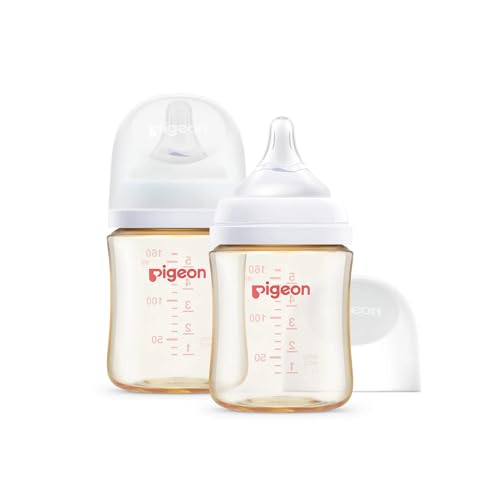
Pigeon’s bottles are built on research into the three natural sucking movements babies use during breastfeeding. The wide neck and “latch-on line” on the nipple guide the baby’s tongue and lips into the correct position, encouraging that effective suction pattern. The SS nipple (0m+) is ultra-slow and extra-soft, which is critical for preventing flow preference in newborns. Parents of babies who struggled with a shallow latch on other bottles have reported noticeable improvement within days of switching to Pigeon.
The PPSU material is a high-end plastic alternative — lighter than glass, shatterproof, heat-resistant, and completely free of BPA and BPS. It withstands repeated sterilization without clouding or degrading. The streamlined body is easy to grip and clean, and the venting system is integrated into the nipple to keep air out of the milk. Babies who used this bottle required less frequent burping, a strong indicator that air intake was minimized.
The downside is the price point, which sits at the premium end of the spectrum. The nipples also come in a specific sizing system (SS, S, M, L, 3L) that requires matching flow to the baby’s age and feeding strength. For parents who want a science-backed approach to preserving the breastfeeding latch and are willing to invest in a durable, non-glass body, the Pigeon Wide Neck is a standout choice.
Why it’s great
- Nipple design based on infant sucking research for correct latch
- Ultra-soft, extra-slow SS nipple prevents flow preference
- Durable, heat-resistant PPSU body
- Reduces air intake and burping frequency
Good to know
- Premium price point
- Nipple flow sizes must be carefully matched to baby’s age
3. MAM Easy Start Anti-Colic+ Wide Neck Bottle
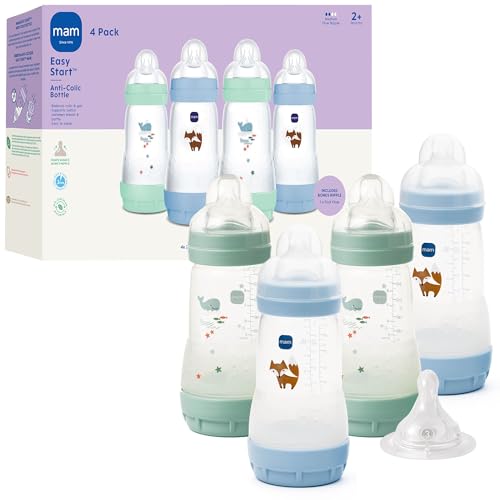
The MAM Easy Start addresses two threats to breastfeeding simultaneously: nipple confusion and colic discomfort. Its SkinSoft nipple is elongated and pre-compressed, designed to feel familiar enough that 94% of babies accept it even when switching between breast and bottle. The vented base is a dual anti-colic system that prevents air from entering the bottle in the first place — clinically shown to reduce colic symptoms in 80% of babies. Parents who switched from other brands to MAM frequently report a dramatic reduction in gas, fussiness, and reflux within the first feeding.
The medium flow nipple included with the 9 oz version is better suited for babies 2 months and older, so newborns will need the slow flow nipple sold separately. The bottle’s wide neck and few parts make cleaning straightforward, and the self-sterilizing feature is a genuine time-saver: fill with a small amount of water, microwave for 3 minutes, and the bottle stays sterile for up to 48 hours. The materials are bio-circular and BPA-free, manufactured in Europe to rigorous safety standards.
The bottle body is plastic, which some parents may want to avoid. Additionally, the angled nipple shape is distinct from the Philips Avent or Pigeon designs, and some babies may still show a preference. However, for families dealing with colic alongside breastfeeding, the MAM system delivers a one-two punch that few competitors match.
Why it’s great
- SkinSoft nipple achieves 94% acceptance rate
- Vented base reduces colic in 80% of babies
- Self-sterilizing in microwave
- Few parts, easy to clean
Good to know
- Medium flow nipple is fast for newborns — buy slow flow separately
- Plastic body; no glass option
4. Gulicola Natural Glass Baby Bottle (5 oz, 2 Pack)
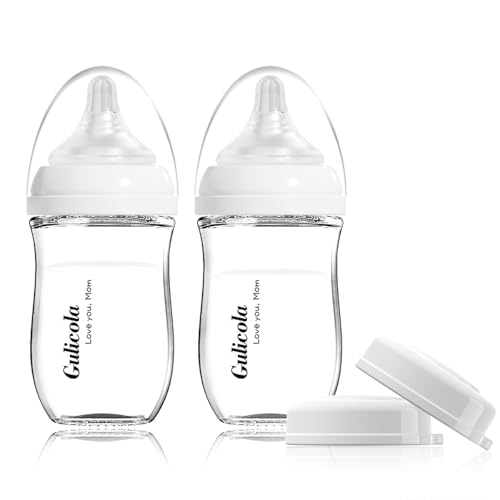
Gulicola’s 5 oz twin pack is for parents who want glass without compromising on nipple design. The bottle is made from premium borosilicate glass that withstands thermal shock and has survived multiple drops on tile and hardwood in real-world use. The nipple is the standout feature: an ultra-soft, jelly-like silicone that mimics the natural feel, flex, and movement of breastfeeding. The slow flow rate is appropriate for the 0-3 month window, and the anti-colic vents are integrated into the nipple base to release air without complex internal tubes.
The wide neck makes filling and hand-washing simple, and the bottles fit standard breast pumps for direct pumping into storage. The set includes two storage caps, allowing parents to prep milk in advance. The glass is heavy compared to plastic or PPSU, so this is less ideal for diaper bags but excellent for home use. Parents who prioritize avoiding plastic chemicals entirely will appreciate the BPA-free, BPS-free, and phthalate-free construction.
The nipple feel is notably softer than many competitors, which helps with acceptance but also means the nipple may wear faster with frequent sterilization. The 5 oz size is a good daily driver for babies taking 4-5 oz feeds, but larger 8 oz versions are also available from the same brand. For the price, the Gulicola delivers premium glass quality at a very reasonable cost.
Why it’s great
- Premium borosilicate glass, drop-resistant
- Jelly-soft nipple closely mimics breast tissue
- Slow flow, anti-colic venting
- Comes with storage caps
Good to know
- Heavier than plastic or PPSU bottles
- Nipple durability may be lower with frequent sterilization
5. Gulicola Natural Glass Baby Bottle Newborn Set (3 oz + 5 oz)
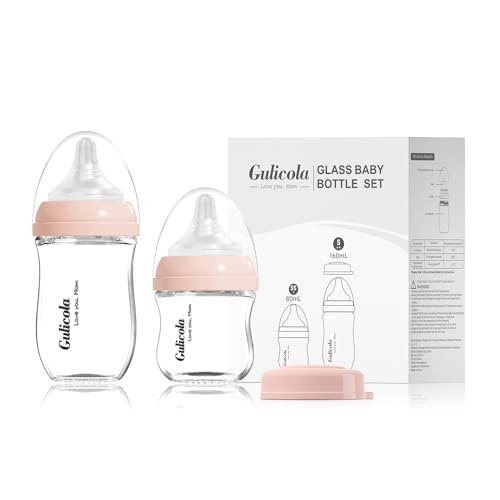
This newborn-specific set from Gulicola includes a 3 oz bottle with an extra slow flow nipple (0m+) and a 5 oz bottle with a slow flow nipple (1m+). The dual-size approach lets parents start with tiny feeds in the earliest days and scale up without buying a separate bottle. The extra slow flow on the smaller bottle is crucial for preventing flow preference in the first weeks of life, when babies are learning to coordinate suck-swallow-breathe.
The nipple design is identical to the standalone Gulicola 5 oz pack — the same jelly-soft silicone with latch guidance points that train correct suction habits. The borosilicate glass is heat-resistant and dishwasher safe. Parents report that their breastfed babies transitioned seamlessly between breast and bottle, with many noting the baby still preferred the breast but accepted the bottle without fuss — the ideal outcome.
The pink color of this specific set may not appeal to all families, and the 3 oz bottle becomes too small quickly as the baby’s appetite grows. However, as a dedicated newborn solution for the first 6-8 weeks, this set is thoughtfully conceived and executed. The value proposition — two glass bottles, two different nipple flows, and two storage caps — is strong for the price.
Why it’s great
- Includes extra slow flow nipple for newborns
- Two sizes for growth (3 oz and 5 oz)
- Jelly-soft silicone with latch guidance
- Durable borosilicate glass
Good to know
- 3 oz size outgrown quickly
- Pink color may not suit all preferences
6. Evenflo Feeding Classic Glass Twist Bottle
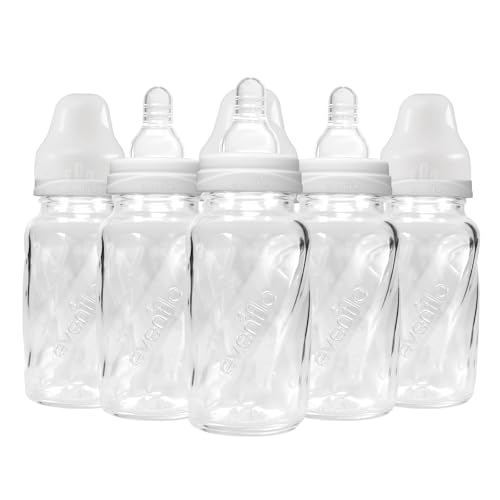
The Evenflo Classic Glass is a straightforward, no-frills bottle that prioritizes simplicity and affordability without sacrificing material safety. The 4 oz bottles are made of tempered glass that is recyclable, sustainable, and completely free of BPA, PVC, and phthalates. The design uses only three pieces (bottle, nipple, and ring), making assembly and cleaning nearly effortless. For parents who feel overwhelmed by multi-part venting systems, this bottle is a relief.
The nipple is standard neck (narrower than wide-neck bottles) and must be paired with standard neck breast pumps for direct pumping. The flow is on the slower side, which helps with breastfeeding babies, but some parents report needing to size up to a faster flow nipple as the baby gets older. The glass has proven durable in practice, surviving drops onto LVP and tile floors in customer reports without breaking. The ergonomic twist shape makes it easier to grip than a straight cylinder.
The standard neck nipple is a different shape from the wide, breast-shaped nipples found on other bottles in this guide. Some breastfed babies may not accept it as readily. The slow flow also frustrates some babies who are used to faster feeding. For the price of a six-pack, however, this is an excellent budget-friendly option for parents who want a simple, clean, and safe glass bottle and are willing to trial the nipple.
Why it’s great
- Very affordable for a 6-pack of glass bottles
- Only 3 pieces for simple cleaning
- Durable tempered glass
- Made from recyclable, sustainable materials
Good to know
- Standard neck nipple may not suit all breastfed babies
- Slow flow may require faster nipple upgrade later
7. Playtex Baby VentAire Complete Tummy Comfort Bottle

The Playtex VentAire takes a different approach to the nipple confusion problem by focusing on feeding posture and air reduction. The ergonomic, angled shape encourages semi-upright feeding, which pediatricians recommend to reduce ear infections and reflux. The patented bottom vent draws air in from the base of the bottle rather than mixing it with the milk, significantly reducing the air the baby swallows. The included Nutralatch medium flow nipple is softer than previous Playtex designs and has a shape that sits comfortably in the baby’s mouth.
The medium flow nipple is appropriate for babies 3 months and older, but newborns will need to size down to a slow flow nipple. The bottle body is plastic and BPA-free, and the wide-bottle design is easy to clean despite the bottom vent mechanism. Parents whose babies struggled with gas and colic from other brands have reported immediate improvement with VentAire. The angled design also means less milk pooling in the nipple, reducing the need to tilt the bottle to an extreme angle.
The redesign since 2020 has introduced some compatibility issues — older and newer parts are not interchangeable, and some parents report leakage from the bottom vent when the bottle is not assembled perfectly. The medium flow may be too fast for a breastfed newborn, and the nipple shape is less breast-like than the Philips Avent or Pigeon. For colic-prone babies who can handle the faster flow, the VentAire remains a solid option, but it is not the top choice for the primary goal of preventing nipple confusion.
Why it’s great
- Angled bottle promotes upright feeding posture
- Bottom vent reduces air mixing with milk
- Easy to clean wide design
- Soft Nutralatch nipple
Good to know
- Medium flow is too fast for newborns
- Post-2020 redesign may cause leakage and part incompatibility
- Nipple is less breast-like than other options
FAQ
What flow rate nipple should I use for a breastfed newborn at risk of nipple confusion?
Is glass or plastic better for preventing nipple confusion?
Can I use a bottle with an anti-colic vent to help with nipple confusion?
How many bottles do I need for a breastfed baby?
Can a baby develop nipple confusion from one bottle feeding per day?
Final Thoughts: The Verdict
For most users, the bottle for nipple confusion winner is the Philips Avent Natural because its Natural Response nipple forces the baby to work for the milk, closely mimicking breastfeeding mechanics. If you want research-backed latch guidance and a durable, lightweight body, grab the Pigeon PPSU Wide Neck. And for families dealing with colic alongside breastfeeding concerns, nothing beats the MAM Easy Start Anti-Colic+ — it addresses both the mechanical and digestive sides of the feeding equation.