
Our readers keep the lights on and the weekend projects moving. As an Amazon Associate, I earn from qualifying purchases.
The return to film isn’t about nostalgia — it’s about intentionality. An auto film camera strips away the digital noise, forcing you to frame a shot, meter the light, and commit. The right body becomes your creative partner, not a distraction.
I’m Rikta — the co-founder and writer behind FitlyFast. I’ve spent hundreds of hours analyzing auto-exposure systems, zone-focus mechanics, and lens coatings across dozens of 35mm and instant-film platforms to build this guide.
Whether you want a true point-and-shoot, a classic SLR with autofocus, or a modern half-frame that doubles your roll, this guide to the best auto film camera breaks down every spec and real-world quirk that matters.
How To Choose The Best Auto Film Camera
Not every auto film camera is built for the same job. Some prioritize pocket-size convenience with a flash that fires every time. Others give you aperture-priority or shutter-priority modes for creative control. Your choice depends on where you shoot, what film you prefer, and how much you want the camera to think for you.
Lens Quality and Zone-Focus Systems
A camera’s lens defines the sharpness, contrast, and character of your images. Look for multi-element glass lenses — a 3-element build (like the Kodak Snapic A1) delivers noticeably better detail than a single plastic element. Zone-focus systems with marked zones (portrait, group, landscape) let you set distance quickly without squinting through a viewfinder.
Auto-Exposure Modes and Metering
Program AE mode handles aperture and shutter speed together, perfect for beginners. Aperture-priority (Av) lets you control depth of field while the camera sets the shutter speed. Shutter-priority (Tv) freezes or blurs motion. A TTL (through-the-lens) meter, like the one in the Canon AE-1, reads the actual light hitting the film for accurate exposure in changing conditions.
Film Transport and Build Quality
Automatic film loading, advance, and rewind save frustration and prevent torn sprocket holes. A robust metal body, like the Pentax 17’s magnesium-alloy top and bottom, handles daily carry better than an all-plastic shell. Half-frame cameras capture two vertical 17mm x 24mm images per standard 35mm frame, doubling your shot count and making economical use of every roll.
Quick Comparison
On smaller screens, swipe sideways to see the full table.
| Model | Category | Best For | Key Spec | Amazon |
|---|---|---|---|---|
| KODAK Snapic A1 | Point-and-Shoot | Entry-level day shooting | 3-Element Glass Lens | Amazon |
| Fujifilm Instax Mini 40 | Instant | Instant prints and parties | Auto Exposure / Instax Mini | Amazon |
| Kodak PIXPRO FZ45 | Digital Point-and-Shoot | Budget family camera | 16MP / 4X Optical Zoom | Amazon |
| Canon Rebel 2000 | 35mm SLR | Learning exposure modes | 7-Point AF / 28-80mm Lens | Amazon |
| Halina Tegra AF290 | Point-and-Shoot | Vintage aesthetic | 28mm Wide / F2.8-F5.6 | Amazon |
| Canon EOS Kiss (Rebel G) | 35mm SLR | Reliable auto-focus SLR | Wide-Area AF / ISO 3200 | Amazon |
| Canon AE-1 | 35mm SLR | Classic build and control | TTL Meter / Shutter-Priority | Amazon |
| Pentax 17 | Half-Frame | Double your shot count | 25mm F3.5 / 72 Images | Amazon |
| FUJIFILM X Half | Digital Half-Frame | Film simulation in a pocket | 18MP / 26 Film Filters | Amazon |
In‑Depth Reviews
1. Canon EOS Kiss (Rebel G) With 35-80mm EF Lens

This Canon EOS Kiss (identical to the Rebel G in North America) delivers a reliable wide-area autofocus system paired with a clean 35-80mm EF zoom lens. The seven-point AF locks onto subjects quickly, even in mixed light, and the built-in pop-up flash handles fill and low-light duties without fuss. With an ISO range that hits 3200, it gives you room to shoot Portra 400 pushed two stops or Tri-X in dim conditions.
The user interface is intentionally simple — a clear LCD screen, a mode dial with program, aperture-priority, shutter-priority, and full auto, and a comfortable grip that balances the lightweight plastic body. Automatic film loading, advance, and rewind mean you spend zero time fighting the mechanics. Users consistently report that renewed units arrive in excellent shape with a fresh battery included, and the first roll produces sharp, properly exposed negatives.
Battery life is long, the quiet shutter makes it unobtrusive for street or candid work, and the lens quality holds up against modern expectations for color and contrast. For someone who wants a dependable, everyday film SLR without hunting for a vintage body with tired electronics, this is the most balanced pick in the lineup.
Why it’s great
- Reliable wide-area autofocus makes it a true point-and-shoot SLR
- Built-in flash with red-eye reduction covers most indoor scenarios
- Auto film wind and rewind eliminate handling errors
Good to know
- Plastic body doesn’t feel as premium as all-metal vintage cameras
- Kit lens is adequate but not as fast as a prime
2. Vintage Canon AE-1 With 50mm 1:1.8 Lens

The Canon AE-1 is the SLR that defined an era for film enthusiasts. Its shutter-priority auto-exposure mode lets you dial in the shutter speed while the TTL metering system selects the aperture — a creative sweet spot between full manual and program auto. The all-metal chrome body, 50mm f/1.8 FD lens, and tactile film advance lever give it a weight and feel that the plastic-bodied later models simply lack.
Renewed units from reputable sellers arrive in near-mint condition with functioning meters, clean lens glass, and smooth shutter actuation. The shutter range from 1/1000 second down to 2 seconds plus Bulb mode covers everything from bright daylight to long exposures on a tripod. Users switching from digital report that the AE-1’s meter is surprisingly accurate, especially with modern 400-speed film.
One point to know: this is not a fully auto camera. It requires basic understanding of shutter speeds and aperture coupling. But the learning curve is short, and the results — sharp, well-exposed negatives with the signature FD lens character — are worth mastering the interface. It’s the best option for photographers who want manual backup with capable auto exposure.
Why it’s great
- Precision TTL metering delivers accurate exposures in varied light
- All-metal build feels premium and durable
- Interchangeable FD lens system offers endless creativity
Good to know
- No program or aperture-priority mode — shutter-priority only
- Vintage electronics may need servicing after decades of use
3. Pentax 17 35mm Film Camera

The Pentax 17 is a modern half-frame camera that captures two vertical 17mm x 24mm images inside each standard 35mm frame. That means 72 exposures from a 36-shot roll, cutting film and development cost per frame by roughly fifty percent. The 25mm f/3.5 lens (equivalent to 37mm in full-frame) features Pentax’s HD coating, delivering sharpness and contrast that rivals their SLR glass.
Its zone-focus system divides distance into six marked zones, from close-up to infinity, and the manual film advance lever recreates the tactile experience of shooting vintage gear. The magnesium-alloy top and bottom plates keep the body light while feeling sturdy in hand, and the quiet shutter is ideal for candid street photography. Reviewers note that the auto-exposure system handles most lighting well, though the zone focus requires some practice to nail distance without peeping through a viewfinder.
The body is not cheap, but inflation-adjusted comparisons to old half-frame models show you’re paying for a reliable, repairable modern camera with warranty support. For hobbyists who shoot regularly and want to stretch every roll of Kodak Gold or Ilford HP5, this is the most cost-effective way to shoot film over the long run.
Why it’s great
- Half-frame design doubles your shot count per roll
- HD-coated lens produces crisp, well-saturated images
- Lightweight magnesium build is durable for daily carry
Good to know
- Zone-focus system takes practice for consistent accuracy
- Lens is fixed — no interchangeable options
4. FUJIFILM X Half Premium Compact Camera

The FUJIFILM X Half is a digital camera that mimics the 35mm film-shooting experience. It uses a 1-inch, 18MP sensor and a film-camera mode that forces you to frame and shoot without chimping — no preview, just a lever advance and a satisfying click. The body is genuinely pocketable at just under 16 ounces, and the 26 analog-inspired film simulations (Classic Chrome, Acros, Velvia, and more) let you dial in a look without post-processing.
A unique 2-in-1 mode lets you capture a still and a short video in one press, combining both into a single creative output. The retro dial-based controls feel intuitive, and the JPEG output is sharp with excellent dynamic range in good light. Users report that the X Half is an ideal travel companion — discreet, fun to shoot, and capable of printing straight to a compatible Instax printer or sharing via the dedicated smartphone app.
The autofocus can hunt in low light, and the software interface feels slightly laggy compared to a dedicated smartphone camera. It is also JPEG-only, so RAW shooters looking for maximum editing latitude will be frustrated. But for anyone wanting the deliberate pace and tactile joy of film without buying, loading, and developing actual rolls, this is a compelling hybrid.
Why it’s great
- Wide selection of film simulations mimics classic stocks
- Pocketable body with retro tactile controls
- Prints directly to Instax printers and shares via app
Good to know
- JPEG-only output limits post-processing flexibility
- Autofocus can be slow and noisy in dim light
5. Canon Rebel 2000 SLR With 28-80mm EF Lens
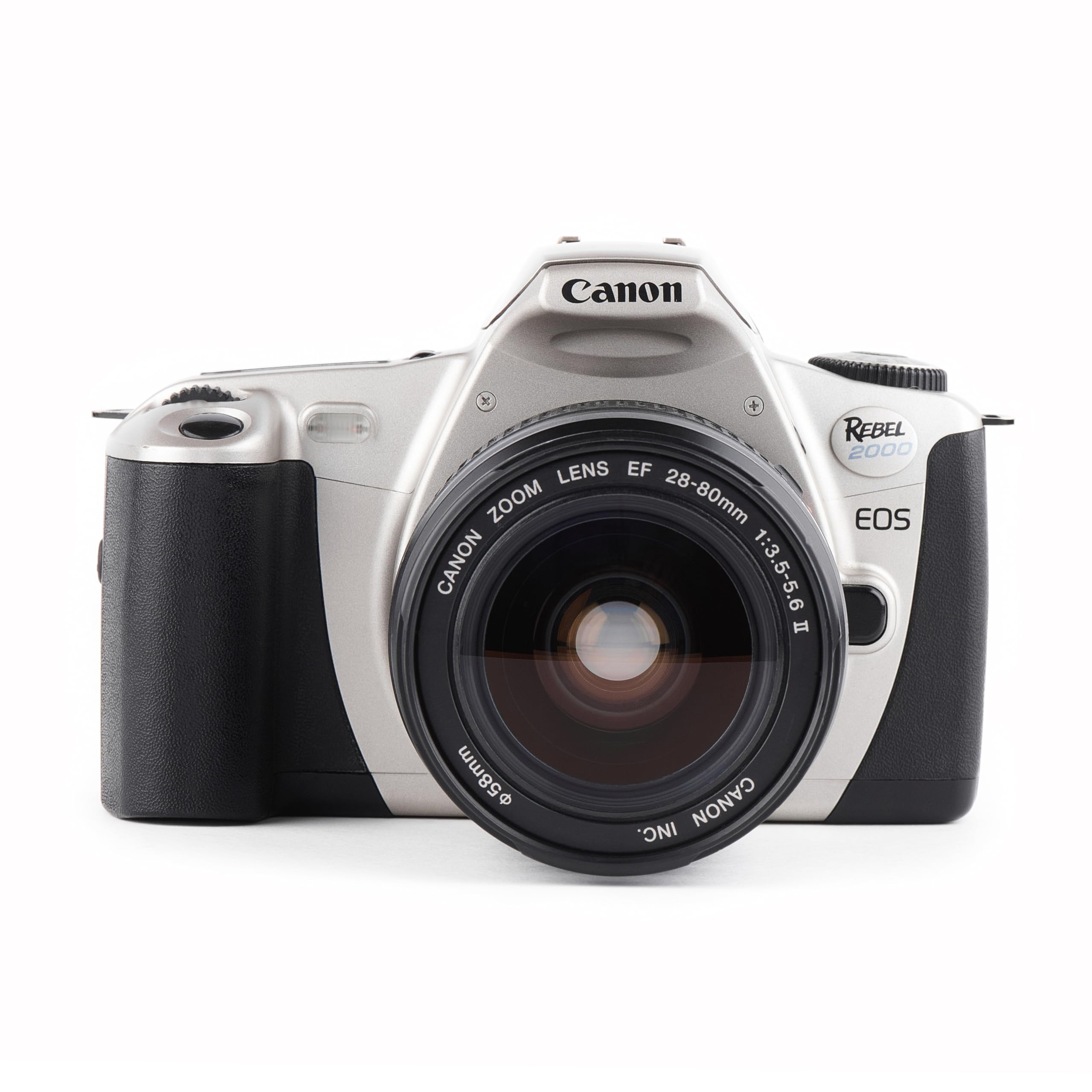
The Canon Rebel 2000 was the quintessential student film SLR, and renewed units still deliver the same reliable performance today. Its 7-point autofocus system is fast enough for everyday shooting, and the included 28-80mm EF zoom lens provides a versatile range from wide-angle to moderate telephoto. The camera offers program AE, aperture-priority, shutter-priority, and full manual modes, so it grows with you as your skills develop.
Automatic film loading, advance, and rewind are standard, and the built-in pop-up flash works as a fill or primary light source. The body is lighter and more compact than its metal-framed predecessors, making it easy to bring along for class assignments or casual travel. Users consistently praise the image quality of the first roll, noting that the lens and metering system pair well with consumer-grade films like Fujicolor 200 and Kodak UltraMax 400.
One common frustration is that the camera ships with no cords or accessories beyond the strap and QR code manual link. Some units arrive with cosmetic wear, but functionally they tend to work fine. For the price, this is the best entry point into autofocus film SLR photography without risking a broken vintage body.
Why it’s great
- Multiple exposure modes let you learn at your own pace
- Reliable 7-point AF system tracks subjects well
- Lightweight body is comfortable for extended carry
Good to know
- No accessories included beyond the camera and lens
- Some renewed units show cosmetic wear marks
6. Fujifilm Instax Mini 40 Instant Film Camera
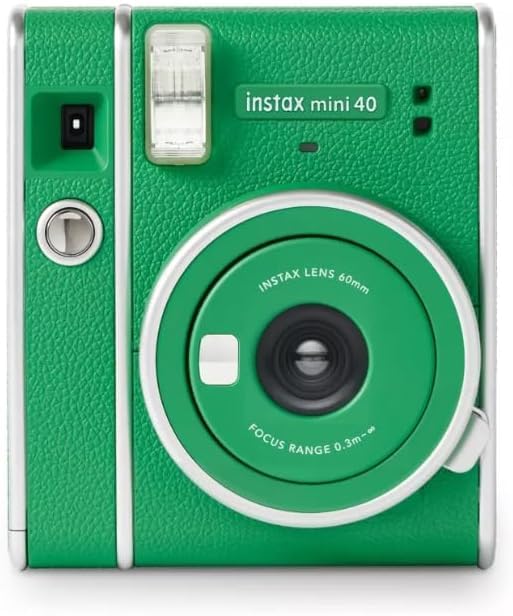
The Instax Mini 40 is a renewed instant camera that pairs the traditional Instax Mini film format with a classic, leather-accented design. It features auto-exposure and automatic shutter speed, so you point, press, and a credit-card-sized print emerges in about 90 seconds. The built-in selfie lens makes group shots and portraits easy, and the vintage aesthetic draws compliments everywhere it’s carried.
Users report that photos have that characteristic Instax look — slightly soft, warm-toned, and nostalgic — which is exactly why people buy them. The experience is tactile and social, perfect for parties, travel, or documenting a new baby’s early days. Battery life is reasonable for about 10 packs of film, though heavy users wish it lasted longer between changes.
Some renewed units arrive with scuffs or cosmetic damage, and a small number arrive non-functioning with an orange error light. Buying from a seller with a good return policy is wise. Overall, if you want an instant camera with auto controls and a stylish retro appearance, the Mini 40 delivers the fun factor consistently.
Why it’s great
- Auto exposure makes instant photography foolproof
- Classic design with built-in selfie lens for group shots
- Instant prints are tactile and shareable at events
Good to know
- Renewed condition varies — some units show wear or defects
- Battery life is adequate but not outstanding
7. KODAK Snapic A1 35mm Film Camera
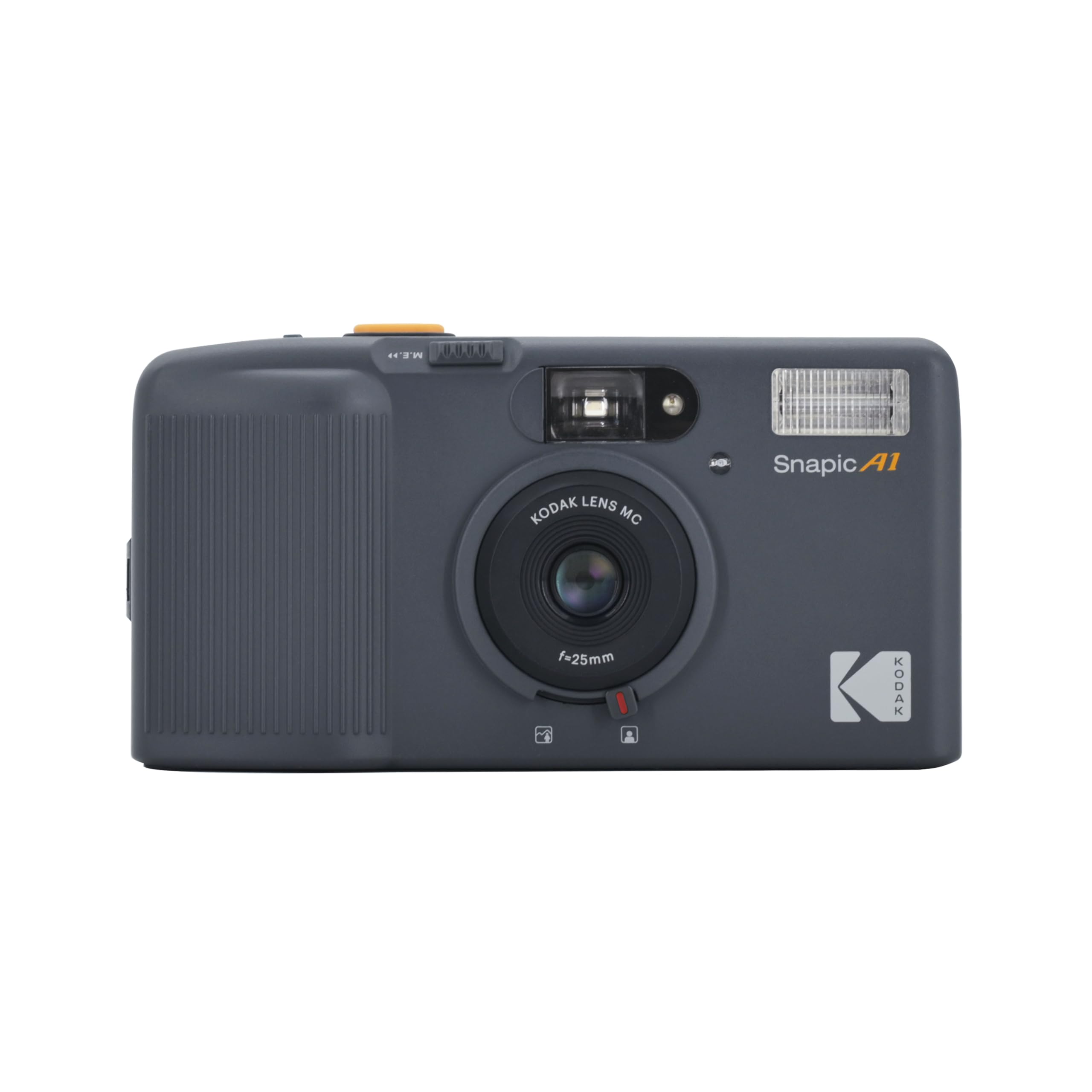
The Kodak Snapic A1 is a compact point-and-shoot with a 3-element glass lens that punches above its weight. The lens delivers noticeably sharper detail than the single-element plastic windows found on budget competitors, making it a genuine step up from disposable cameras. A 2-zone focus system lets you toggle between close-up and landscape, and the built-in auto flash includes red-eye reduction for indoor shots.
Multiple exposure mode lets you layer two scenes onto a single frame — a creative touch usually reserved for higher-end or vintage bodies. The camera is small enough to slip into a jacket pocket, and the automatic film wind and rewind mean you never handle the spool manually. Users who upgraded from a Kodak Ektar report that the Snapic A1 justifies the difference in price with better image quality and more reliable auto exposure.
The plastic build feels solid but not dense, and the flash button can be pressed accidentally when gripping the camera. It is noticeably best in daytime conditions with 200-speed film; night shots can be underexposed despite the flash. Alkaline batteries are required — rechargeable NiMH cells may not deliver enough current for the wind mechanism. For a lightweight, affordable auto camera that produces real 35mm negatives with character, this is the most balanced entry-level pick.
Why it’s great
- 3-element glass lens produces sharper images than disposable alternatives
- Double exposure mode allows creative layering on a single frame
- Compact, lightweight body fits easily in a pocket or small bag
Good to know
- Flash button is easy to press accidentally
- Requires alkaline batteries — NiMH rechargeables not compatible
8. Kodak PIXPRO FZ45 16MP Point and Shoot Digital
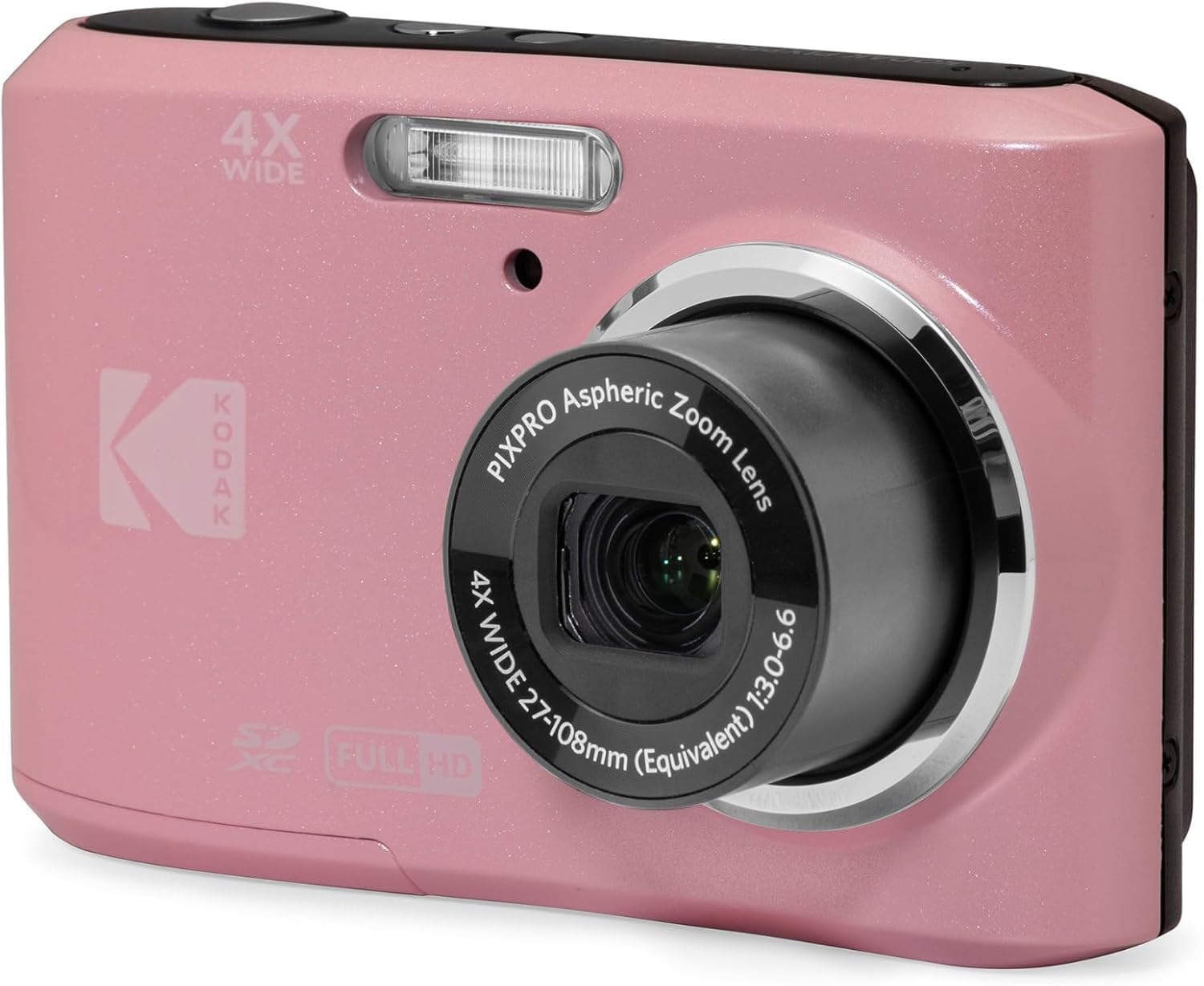
The Kodak PIXPRO FZ45 is a budget-friendly digital compact that mimics the point-and-shoot experience with a 16MP CMOS sensor and 4X optical zoom. Its 27mm wide-angle lens allows flexible framing from group shots to indoor close-ups, and the 2.7-inch LCD screen provides a clear live view for composition. The camera records full 1080p HD video for travel clips or family moments, adding versatility beyond still photography.
The contrast-detection autofocus works well in good light, and the built-in flash handles indoor and fill scenarios. Users report that image colors are natural and pleasing for casual shooting — vacations, birthday parties, and everyday snapshots. The camera accepts SD, SDHC, or SDXC cards up to 512GB, giving plenty of storage headroom. It runs on two AA alkaline batteries, which are included but are low-quality and die quickly; investing in rechargeable NiMH AAs is recommended.
The digital zoom is best avoided, and video quality is notably inferior to the still photos. It is not a film camera, but for users who want the simplicity of a dedicated camera body without the workflow of developing film, the FZ45 fills the niche affordably. Just budget extra for proper batteries and a memory card.
Why it’s great
- 16MP sensor produces detailed, naturally colored images
- 4X optical zoom provides framing flexibility without quality loss
- Full HD video recording adds multi-purpose functionality
Good to know
- Included AA batteries are low-quality and die quickly
- Digital zoom degrades image quality significantly
9. Halina Tegra AF290 35mm Film Camera Compact

The Halina Tegra AF290 is a compact 35mm point-and-shoot with a 28mm wide-angle lens and auto-focus capability. Its retro styling and boxed presentation with manual and strap make it a visually appealing gift for someone new to film photography. Powered by two AA batteries, the camera offers a built-in flash and contrast-detection autofocus that works for everyday shooting in good light.
The 28mm f/2.8 to f/5.6 aperture range gives reasonable flexibility for daylight and well-lit indoor scenes. The camera is lightweight and pocket-friendly, ideal for casual vacation snaps or documenting daily life with a vintage look. Users who received it as a gift appreciated the nostalgic packaging and the fun of shooting film without the cost of a premium body.
Quality control is a concern here. Several units have arrived with tacky paint, jammed dials, or internal mechanisms that shred film. The autofocus can be inconsistent, and some bodies fail within the first few rolls. This camera is best treated as a low-expectation fun purchase rather than a reliable daily shooter. If you want a working camera every time, the Kodak Snapic A1 is safer for a similar price tier.
Why it’s great
- 28mm wide-angle lens captures a broader field of view than standard 35mm
- Retro packaging and styling make it a charming gift item
- Simple operation with auto focus and flash
Good to know
- Quality control issues are common — some units arrive damaged
- Autofocus reliability is inconsistent across samples
FAQ
What type of batteries does a 35mm auto film camera typically use?
Can I use a zone-focus camera without guessing the distance?
What does half-frame mean and why does it matter for film shooters?
Do auto film cameras work with all 35mm film stocks?
Final Thoughts: The Verdict
For most users, the best auto film camera winner is the Canon EOS Kiss (Rebel G) because it combines reliable wide-area autofocus, multiple exposure modes, and a sharp kit lens in a lightweight, durable body. If you want a classic metal SLR with iconic optics and shutter-priority control, grab the Canon AE-1. And for doubling your shot count with a modern half-frame design, nothing beats the Pentax 17.