
Our readers keep the lights on and the weekend projects moving. As an Amazon Associate, I earn from qualifying purchases.
Nothing ruins a surf session faster than feet that have gone completely numb. You either feel every rock and reef underfoot, or the neoprene is so water-logged that your booties feel like heavy buckets pulling you down. The gap between a good session and a miserable one often boils down to one single piece of gear: the bootie. But the sheer number of thickness options, sole designs, and closure types makes it easy to pick wrong.
I’m Rikta — the co-founder and writer behind FitlyFast. For this guide I spent hours digging through spec sheets and analyzing hundreds of real-world user reports on neoprene thickness, sole durability, and water-entry control to identify the strongest performers in the surf bootie market.
After comparing seven models across budget-friendly, mid-range, and premium tiers, you can now make a confident choice on the best booties for surfing based on your local water temperature, the terrain you paddle over, and your tolerance for extra bulk around the ankle.
How To Choose The Best Booties For Surfing
Choosing a surf bootie is a trade-off between insulation and dexterity. A 5mm boot keeps your feet warm in 40°F water but makes you feel like you’re wearing boxing gloves on your feet. A 2mm boot offers incredible board feel but leaves you shivering when the water drops below 60°F. Understanding your local conditions is step one.
Neoprene Thickness: Matching to Water Temperature
The most common thicknesses for surf booties are 2mm, 3mm, and 5mm. Use 2mm for tropical water above 70°F where you only need a thin layer of protection from reefs. Use 3mm as the all-rounder for water between 55°F and 70°F. Only step up to 5mm when the water dips below 55°F and you are paddling out for more than an hour. Thicker neoprene also reduces flexibility, so consider that if you do technical maneuvers that require precise foot placement.
Sole Type: Split Toe vs Round Toe vs Full Sole
Split-toe booties let your big toe and other toes spread naturally. This gives you far better balance on the board and allows you to grip the wax with your toes. Round-toe booties are warmer because there is less surface area for heat to escape, but they sacrifice feel. Full rubber soles are the most durable for walking over sharp rocks but they add weight and reduce board feel. For surfing, a split-toe design with a textured rubber sole is the best compromise.
Seam Construction: GBS vs Flatlock
Glued-and-blind-stitched (GBS) seams are the gold standard for cold water. The neoprene is glued first and then stitched without piercing through the outer layer. This prevents water from seeping through the stitch holes. Flatlock seams are more comfortable against the skin and breathable, but they let water flow in and out, making them better for warm-water booties. If you surf in water below 60°F, prioritize GBS construction.
Quick Comparison
On smaller screens, swipe sideways to see the full table.
| Model | Category | Best For | Key Spec | Amazon |
|---|---|---|---|---|
| O’Neill Heat 3mm Split Toe | Premium | Cold-water surf performance | Split toe + 3mm FluidFlex | Amazon |
| O’Neill Superfreak 2mm | Premium | Warm-water board feel | 2mm split toe + drawstring | Amazon |
| NRS Comm-3 Wetshoe | Premium | Maximum warmth + walking traction | 3mm upper / 5mm insole | Amazon |
| XUKER Neoprene Diving Boots 5mm | Mid-Range | Cold water on a budget | 5mm GBS + side zipper | Amazon |
| Cressi Minorca Short 3mm | Mid-Range | Lightweight warm-water diving | 3mm + rubber heel/toe cap | Amazon |
| BPS Dive Boots 3mm | Budget-Friendly | Versatile water sports + wading | 3mm + double velcro strap | Amazon |
| Skyone Neoprene Dive Boots 5mm | Budget-Friendly | Inshore sailing and cold plunge | 5mm + memory foam insole | Amazon |
In‑Depth Reviews
1. O’Neill Heat 3mm Split Toe Neoprene Boot

The O’Neill Heat is the standard against which other cold-water surf booties are measured. Its FluidFlex Firewall neoprene traps heat effectively without the stiff feeling you get from budget 3mm suits. The split-toe design allows your toes to spread naturally, which gives you genuine control over the rail of your board — you can actually feel the wax through the sole. The vulcanized rubber sole provides enough bite on wet rocks that you can walk down a cobblestone point without sliding.
Surfers who have used these for years report that they stay structurally intact after dozens of sessions, with no peeling around the sole edge or loose stitching at the heel pull-tab. The key advice across nearly every review is to order one full size down from your street shoe size. A size 10 shoe should order a size 9 in this boot. If you buy your exact shoe size, water will pool inside the boot within 20 minutes of paddling. The torsion control strap across the forefoot locks the boot in place, and the lower profile around the ankle works well with open-heel surf fins.
For surfers who spend two hours or more in water between 50°F and 60°F, this bootie delivers the warmth-to-flexibility balance that cheaper models can’t touch. It is not a cheap option, but you are paying for consistent performance across an entire cold season, not just a few sessions before the neoprene stiffens or the sole starts separating.
Why it’s great
- Split-toe design improves board feel and balance
- FluidFlex neoprene retains warmth without feeling rigid
- Textured vulcanized sole grips wet rocks and reefs
Good to know
- Must order a full size smaller than regular shoe size
- Premium price reflects the higher build quality
2. O’Neill Superfreak 2mm Split Toe Boot
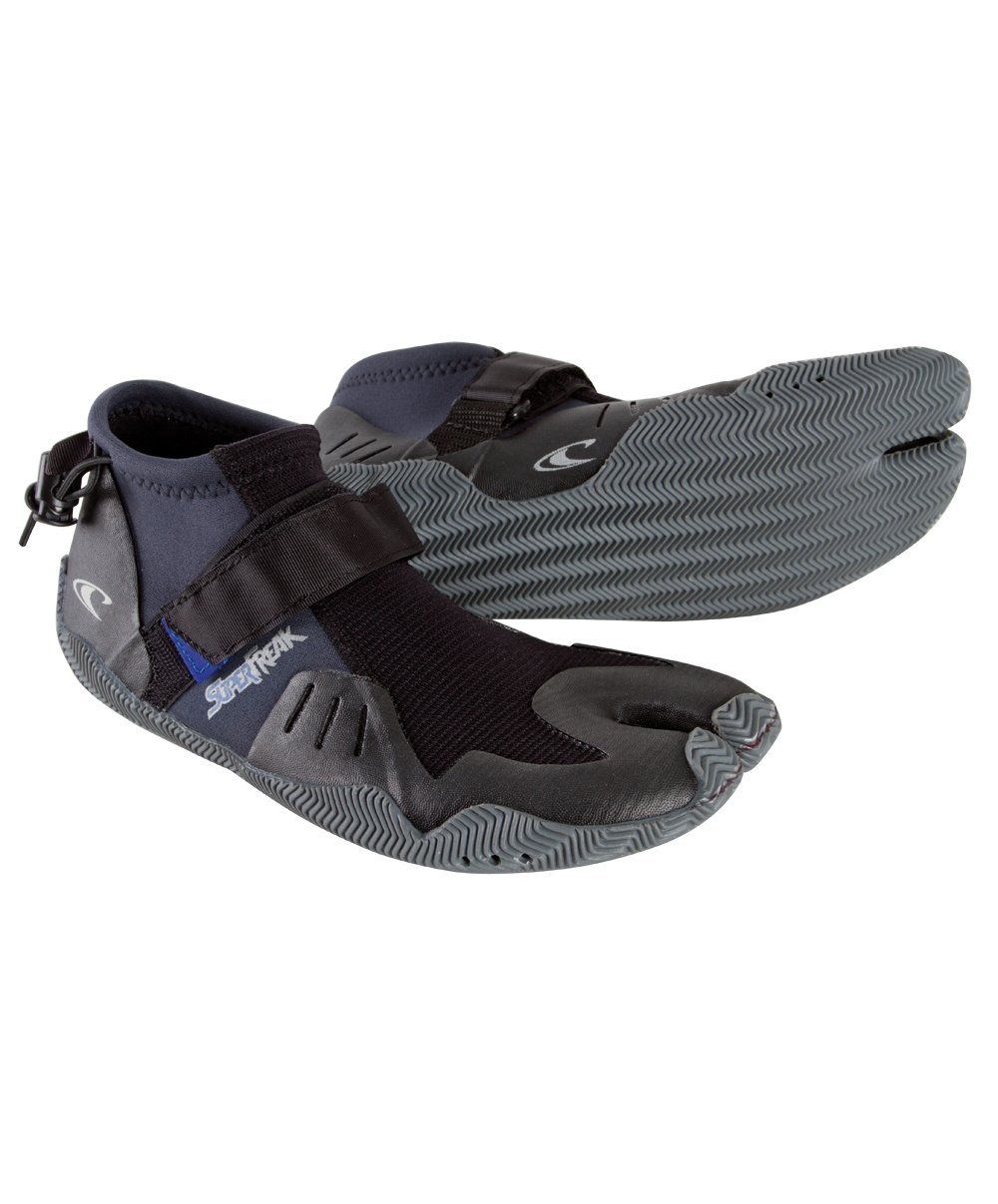
When the water hits 72°F and the sun is overhead, the last thing you want is a thick, clunky bootie. The O’Neill Superfreak at 2mm is about as close as you can get to barefoot surfing while still having a protective layer between your skin and the reef. The split-toe is narrow and anatomically cut, so your toes are not fighting against extra material. The drawstring closure at the top is simple — a cinch cord and a forefoot strap — and keeps the boot locked in place during paddle-outs.
The flatlock stitching is comfortable against bare skin and dries quickly between sessions. However, flatlock construction means water flows through the stitch holes, so you will feel every splash. This is perfectly fine for warm water, but do not expect it to hold heat. The textured rubber sole is thin enough that you can feel the contours of your surfboard traction pad, but it still offers enough protection to walk over a coral shelf. The heel pull tab makes getting them off a lot easier than you would expect from a 2mm boot.
Customers consistently mention that sizing is critical. A half-size down from your normal shoe size gives you a snug sock-like fit. Going a full size down can cause toe numbness because the toe divider presses too hard. For tropical surf, reef walking, or paddleboarding in the summer, this is the lightest, most flexible option that still provides real foot protection.
Why it’s great
- Extremely flexible with exceptional board feel
- Anatomically cut split toe for natural movement
- Lightweight and quick-drying flatlock seams
Good to know
- Flatlock stitching allows water exchange, not for cold water
- Thin sole is not ideal for long walks over sharp rocks
3. NRS Comm-3 Wetshoe

The NRS Comm-3 is built for a different kind of water enthusiast — someone who splits their day between paddling a kayak, launching a boat, and maybe catching a few waves. The 3mm neoprene upper is paired with a 5mm insole, which gives you thick cushioning underfoot. This is the boot you want if your walk to the water involves sharp gravel, barnacles, or a long rocky shoreline. The YKK zipper is gusset-backed so it does not pinch your skin, and it’s covered by a flap that keeps sand and grit out of the mechanism.
What sets the Comm-3 apart from standard surf booties is the structural sole. The rubber bottom is thick and heavily treaded, providing real traction on wet boat ramps and muddy banks. This makes the boot noticeably stiffer than a typical 3mm surf bootie. You gain walking stability but lose board feel. For stand-up paddleboarding or kayaking this is a fair trade, but for shortboard surfing you will miss the sensitivity that a split-toe design offers. The zippered entry is also the most practical option when your hands are cold and wet.
Users report that these boots last through many seasons of hard use, though some have noted a slight decline in build consistency compared to older NRS models. The fit is generous, and people with wider feet find them comfortable. The calf opening can feel tight if you have larger calves, so some customers size up for that reason. If your primary sport is paddlesports or you do cold-water kayaking, the Comm-3 is the durable, warm, walkable option that standard surf booties are not designed to be.
Why it’s great
- Zipper entry is fast and seals out debris
- Thick rubber sole handles rough terrain easily
- 5mm insole provides excellent underfoot insulation
Good to know
- Sole is stiff and reduces board feel for surfing
- Calf opening may be tight for larger leg sizes
4. XUKER Neoprene Diving Boots 5mm

The XUKER 5mm bootie is the answer for surfers who need cold-water protection but cannot justify spending premium dollars on a single session’s worth of gear. At 5mm, this boot delivers serious warmth. The GBS (glued-and-blind-stitched) construction is the same seam-sealing technique used by high-end wetsuit brands, which means minimal water entry through the stitch holes. The side zipper is practical — it goes up the inside of the ankle, which makes getting the boot on and off much easier than a pull-on style at this thickness.
The sole is a ridged rubber design that provides good grip on slick boat decks and wet rocks. Users report that it holds up well after dozens of dives and surf sessions, with no premature delamination or seam failures. The boot is structured enough that it keeps its shape when you step out of it, but it also retains water in the sole channels after use, so you need to hang it upside down to drain. The fit runs true to size, though people with half sizes should size up for comfort with thick wetsuit socks.
For the price, you are getting a 5mm GBS boot with a sole that does not fall apart after a season. It is not as flexible or lightweight as the O’Neill Heat, but it is a fraction of the cost. If you only need a cold-water boot a few times per year for a winter beach trip or seasonal surf sessions, this boot gives you the warmth you need without overpaying for features you will not notice.
Why it’s great
- Full 5mm GBS construction keeps feet warm
- Durable ridged sole provides solid wet traction
- Side zipper makes entry and exit simple
Good to know
- Sole channels hold water, requires outdoor draining
- Not as flexible as thinner premium booties
5. Cressi Minorca Short 3mm Boot

Cressi is a name that carries serious weight among divers and snorkelers, and the Minorca Short reflects that Italian design heritage. It is a 3mm pull-on bootie that feels more like a slipper than a boot. There is no zipper, no velcro strap — just a clean neoprene tube with a rubber heel and toe cap for reinforcement. The weight is remarkably low at 14.4 ounces for the pair. For warm-water surfers who want a low-profile boot that barely makes itself known, this is an appealing option.
The rubber sole is long-lasting and provides excellent grip on wet fiberglass boat decks, but it is not as textured as the vulcanized soles on premium surf booties. The pull-on design means you need to stretch the neoprene over your heel, and over time, the material can soften, making it easier to put on. However, without a cinch cord or strap at the ankle, some water will inevitably flow in from the top. This is acceptable in warm water but a deal-breaker for cold surf. The heel cut is also slightly lower than ideal for surf fins, which can cause the fin strap to slip.
Customers who use these for warm-water diving, snorkeling, or casual surfing love the comfort and the no-fuss design. The sizing runs large — many reviews note that you should order a half to a full size smaller than your street shoe. For the surfer who operates in warm water most of the year and wants a boot that feels like a thick sock, the Cressi Minorca is a lightweight, reliable choice from a proven manufacturer.
Why it’s great
- Extremely lightweight at 14.4 ounces a pair
- Rubber heel and toe cap add durability
- Smooth pull-on design slides on easily when wet
Good to know
- No ankle closure allows water entry at the top
- Heel cut is low, fins may slip off
6. BPS Dive Boots 3mm

The BPS Dive Boot is a no-nonsense mid-range bootie that works across a wide range of water sports beyond just surfing. It uses a 3mm neoprene upper with a hard-wearing vulcanized rubber sole. The design includes two velcro straps: one at the top to seal the ankle after the zipper is closed, and a second across the top of the foot to eliminate dead space. This twin-strap system is effective at minimizing water sloshing around inside the boot, which is the most common complaint with simpler pull-on designs.
The sole is sturdy enough that anglers and wade fishermen use these as their primary footwear. The rubber is grippy on wet rocks and sandy boat ramps. The heel has a ridge designed to work with open-heel fins, and it does a good job keeping the fin strap seated. The main durability concern reported by users is the zipper. Over extended use, the zipper can have trouble staying up on its own, which is why the top velcro strap is essential. If you rely heavily on the zipper for a watertight seal, this may be a long-term issue.
For the buyer who wants one boot that handles surfing, wade fishing, kayaking, and jet skiing, the BPS 3mm is a strong value. It is thicker than minimal surf booties but comfortable to walk in. The neoprene is less flexible than higher-end brands, so you lose some board feel, but for a mixed-use water shoe that will not empty your wallet, it is a practical and well-thought-out product from a small family-owned operation.
Why it’s great
- Double velcro straps minimize water entry
- Vulcanized rubber sole provides reliable traction
- Designed for use across multiple water sports
Good to know
- Zipper can lose its hold over time
- Neoprene is less flexible than premium options
7. Skyone Neoprene Dive Boots 5mm

The Skyone 5mm boot stands out because of an unusual feature in the surf bootie category: a memory foam insole. This makes the boot noticeably more comfortable to stand on for extended periods, whether you are paddling a catamaran or standing on a fishing platform. The 5mm premium neoprene is double-glued and blind-stitched for durability, and the manufacturer backs it with a five-year warranty — an aggressive promise at this price point.
The sole is anti-slip rubber with a flat heel that works well with open-heel fins. The zipper design at the back of the ankle allows for a snug fit, and the neoprene has high stretch and recovery, which helps the boot conform to different foot shapes. Users report that the sizing runs slightly big, so if you want the tight wetsuit-like fit that surfers prefer, you should order one size down. The boot is not marketed as completely waterproof, but as a diving companion to a wetsuit, so some water entry at the top is expected.
For the price, you are getting a 5mm boot with a manufacturer that explicitly promises customer satisfaction. The memory foam insole is a genuine comfort difference if you spend time standing on hard surfaces. The boot is heavier and less nimble than thinner models, so it is not the best choice for performance surfing. But for cold plunging, sailing, inshore kayaking, or any activity where you will be stationary in cold water for long stretches, the Skyone offers comfort and insulation that cheaper 5mm boots cannot match.
Why it’s great
- Memory foam insole provides excellent underfoot comfort
- 5mm GBS neoprene with a five-year warranty
- High stretch neoprene conforms well to different foot shapes
Good to know
- Not fully waterproof, water enters via the top opening
- Heavier and less flexible than premium surf booties
FAQ
Should I buy split-toe or round-toe booties for surfing?
What is the correct sizing for surf booties?
Why do my booties fill with water after 20 minutes?
Final Thoughts: The Verdict
For most users, the best booties for surfing winner is the O’Neill Heat 3mm Split Toe because it offers the ideal balance of warmth, split-toe board feel, and durable vulcanized sole construction for cold-water sessions. If you want maximum dexterity and an ultralight feel for tropical reefs, grab the O’Neill Superfreak 2mm. And for the surfer on a budget who needs real 5mm warmth without premium pricing, nothing beats the XUKER 5mm GBS boot.