
Our readers keep the lights on and the weekend projects moving. As an Amazon Associate, I earn from qualifying purchases.
An art tablet is the single biggest upgrade you can make from a mouse or a laptop trackpad — it turns your strokes into natural, pressure-sensitive lines that actually follow your hand. But with options ranging from simple pad-style tablets that need a computer all the way up to standalone screens that run full drawing apps, picking the right one comes down to how you want to work and how much screen (if any) you need on your desk or in your bag.
I’m Rikta — the co-founder and writer behind FitlyFast. This guide is built by comparing the manufacturers’ published specifications and the patterns across verified customer reviews, so you get each pick’s real strengths and trade-offs instead of marketing spin.
Whether you are sketching on the couch, building 3D models in Blender, or looking for a portable screen that replaces a laptop for art, this breakdown of the best art tablet options will point you straight to the one that fits your workflow and your budget.
How To Choose The Best Art Tablet
Picking an art tablet is simpler once you separate the two main categories: pen tablets (no screen, you look at your computer monitor while drawing on the pad) and pen displays (a screen you draw directly on). Your decision comes down to whether you want portability and lower cost (pen tablet) or direct eye-hand coordination and a premium feel (pen display or standalone tablet).
Pen Tablet vs Pen Display vs Standalone
A pen tablet, like the HUION Inspiroy 2 Medium, has no built-in screen — it is a flat pad you connect to your computer or phone. You draw on the pad while looking at your monitor or phone screen. These are lighter, cheaper, and take up less desk space. A pen display, like the Wacom Cintiq 16, is a screen you draw on directly, giving you the same feeling as drawing on paper with the digital layer running underneath. A standalone tablet, like the HUION KAMVAS Slate 11 or XPPen Magic Drawing Pad, runs its own operating system (usually Android) so you do not need a computer at all — just pick it up and draw.
Pressure Sensitivity and Tilt
Pressure sensitivity is measured in levels — 4096, 8192, or even 16384. More levels mean finer gradations between a light tickle and a heavy press, giving you more control over line weight and opacity. Tilt support (usually up to 60 degrees) lets you shade the same way you would angle a pencil for a broader stroke. Budget models tend to cap at 4096 levels, while premium models like the XPPen Magic Drawing Pad hit 16384 levels, which 3D modelers and illustrators who lay down ultra-fine shading notice immediately.
Active Area and Resolution
The active area is the drawing surface itself, measured in inches. A larger area (like the Wacom Intuos Pro Medium’s 8.7 x 5.8 inches) lets you make broad arm movements, which feels more natural for long sketching sessions. A smaller area (like the HUION Inspiroy 2 Medium’s 8.7 x 5.4 inches) suits tighter strokes and smaller monitors. The native resolution — 1920×1080 or higher on pen displays — determines how sharp the image looks. On a pen display, a 2.5K resolution (2560 x 1600 on the Wacom Cintiq 16) means you can see fine details without zooming in as much.
Battery-Free vs Battery-Powered Pens
A battery-free stylus (also called EMR, or electro-magnetic resonance) draws power from the tablet surface itself — you never charge it, never pair it, and never deal with a dead pen mid-sketch. Every product on this list uses a battery-free pen. The only thing to check is whether the pen requires a replaceable nib (the tip wears down over time) and whether extra nibs are included in the box (most are).
Connectivity and Compatibility
Most pen tablets connect via USB-C or USB-A and work with Windows, Mac, and often Android. Wireless options (Bluetooth 5.0 or 5.3) let you work without a cable, but you trade a tiny bit of latency for convenience — how noticeable depends on your software. If you work in fast-paced digital painting or real-time 3D sculpting in Blender, a wired connection is safer. For standalone tablets, check whether the operating system (Android 14 in most cases) supports the drawing apps you use, like Clip Studio Paint or ibisPaint X.
Quick Comparison
On smaller screens, swipe sideways to see the full table.
| Model | Category | Best For | Key Spec | Amazon |
|---|---|---|---|---|
| Wacom Intuos Pro Medium (2025) | Pen Tablet | Professional workflow & multi-monitor setups | 8,192 pressure levels, Bluetooth 5.3 | Amazon |
| XPPen Deco Pro LW 2nd Gen | Pen Tablet | Wireless freedom & large workspace | 16,384 pressure levels, 10hr battery | Amazon |
| HUION Inspiroy 2 Large | Pen Tablet | Beginners & budget-conscious artists | 10.5 x 6.56 inch active area | Amazon |
| HUION Inspiroy 2 Medium | Pen Tablet | Portable sketching & travel | 8.7 x 5.4 inch active area | Amazon |
| Wacom Cintiq 16 | Pen Display | Direct-on-screen drawing with premium color | 2.5K WQXGA, 99% DCI-P3 color | Amazon |
| HUION KAMVAS Slate 11 | Standalone | On-the-go artists who want no computer needed | 10.95″ FHD+, 8GB+128GB, Android 14 | Amazon |
| XPPen Magic Drawing Pad | Standalone | High-end standalone drawing & professional color work | 16,384 pressure, 12.2″ 2K screen | Amazon |
In‑Depth Reviews
1. Wacom Intuos Pro Medium (2025)

The Wacom Intuos Pro Medium wins the top spot because it packs 8192 pressure levels and tilt support into a tablet that is somehow slimmer than most smartphones at just 4mm thin — yet feels rock-solid thanks to its magnesium back plate. This is the tablet for professionals and serious hobbyists who want a compact pen tablet that handles multiple monitors without breaking a sweat.
It gives you two mechanical dials and ten customizable ExpressKeys at the top, so you can scroll through layers, adjust brush size, and zoom without reaching for your keyboard. Buyers report the Pro Pen 3 is comfortable enough for hours of work, with adjustable grips and button placement. The 16:9 format maps perfectly to widescreen monitors, and its 8.7 x 5.8 inch active area feels large enough for sweeping arm strokes while the entire tablet stays small enough to disappear into a laptop bag.
It is expensive, and the Bluetooth 5.3 wireless connection can be fiddly on Windows 11 (owners mention flawless performance on Mac). For a professional-grade pen tablet that will last years, this is it.
Why it’s great
- Ultra-slim magnesium body feels premium and durable
- Two mechanical dials speed up workflow without looking at the tablet
- Bluetooth 5.3 offers reliable wireless with up to 16-hour battery life
Good to know
- Bluetooth on Windows 11 can be glitchy; Mac users report flawless pairing
- No touch sensitivity — you cannot use finger gestures on the surface
- Price is significantly higher than competing pen tablets with similar specs
2. XPPen Deco Pro LW 2nd Gen

The XPPen Deco Pro LW 2nd Gen beats the Wacom Intuos Pro on two critical specs: pressure sensitivity (16,384 levels vs 8,192) and wireless battery life (over 10 hours on its 1,000mAh battery vs the Intuos Pro’s 16 hours for a wired battery-less operation since the Intuos Pro runs on Bluetooth battery for wireless). The XPPen uses Bluetooth 5.0 with a dedicated USB receiver for a stable connection, and customers note near-zero latency with the X3 Pro stylus even wirelessly — though a wired USB-C connection is still best for fast-paced Blender sculpting or Unreal work.
Where this tablet really shines is its large 9 x 6 inch active area and the included Mini Keydial remote. That wireless shortcut remote gives you 10 keys plus a scroll wheel, so you can keep your canvas clean while still having quick access to brush size, undo, and zoom. One reviewer with 25 years of 3D art experience called the value-to-price ratio “highly satisfying,” noting the tablet holds its own alongside Wacom for a fraction of the price.
Choose this over the Wacom Intuos Pro if you work in multiple apps throughout the day, need wireless freedom without pairing headaches, and want the highest pressure sensitivity available in a pen tablet for under mid-range pricing.
Where it shines
- 16,384 pressure levels give you microscopic control over line weight and opacity
- Mini Keydial remote with 10 keys plus a scroll wheel improves workflow speed
- Over 10 hours of wireless battery life keeps you sketching all day
Worth noting
- Bluetooth wireless is not compatible with Android or Linux — wired only for those OSes
- Some reviewers point out minor lag over Bluetooth in Maya and ZBrush; USB-C cable fixes it instantly
- Driver can be buggy on Mac, requiring an occasional restart to fix odd menu selections
3. HUION Inspiroy 2 Large

The HUION Inspiroy 2 Large is the sweet spot for any beginner or budget-conscious artist who wants a generous drawing surface — 10.5 x 6.56 inches — without paying premium money. It uses PenTech 3.0, which shoppers say smooths out the wobble and lag that bothered earlier HUION pens, making it feel “just like a standard pen” even for detailed lineart in MediBang and Krita.
It gives you a scroll wheel and 8 customizable press keys across three sets, so you can program shortcuts for different apps. Buyers report the software is simple to use for mapping buttons, and the PW110 stylus has a soft silicone grip that makes long sessions more comfortable. The tablet is lightweight at 1.2 pounds and ultra-slim, easily packing into a laptop bag for school or coffee-shop work.
The biggest trade-off is the connection — it uses a Micro-B port instead of the more modern USB-C found on the Wacom Intuos Pro, so it feels a generation behind on connectivity. If you want a large drawing surface on a tight budget and are okay with an older cable standard, this is the best value in the entire list.
What stands out
- 10.5 x 6.56 inch active area gives you room for broad arm strokes without spending more
- Scroll wheel plus 8 programmable keys (three sets) let you customize per app
- PenTech 3.0 stylus feels smooth, with no noticeable lag or wobble
The trade-offs
- Uses Micro-B instead of USB-C — a dated port that can be harder to find cables for
- The plastic body feels a bit fragile; some buyers worry about dropping it
- On Linux, the Huion software maps buttons to the left third of the screen only
4. HUION Inspiroy 2 Medium

The single number that matters most for this category — active area — comes in at 8.7 x 5.4 inches on the HUION Inspiroy 2 Medium, making it the most portable pen tablet that still gives you enough room for real drawing. At 420 grams (0.93 pounds), it is lighter than the Large version and fits perfectly next to a 13-inch laptop without hanging over the edge.
The catch you accept is fewer shortcut keys — you get 8 programmable press keys plus a scroll wheel and 3 group keys, while the Large offers those same keys across three sets. Owners mention the nib wears down faster than expected, and the scroll wheel feels a bit stiff. On the plus side, it connects via USB-C (a clear win over the Large’s Micro-B), and it works with Android phones running OS 6.0 or later, so you can draw directly on your phone screen using the tablet as a pad.
For the price, you get PenTech 3.0 with 60-degree tilt support, a battery-free pen, and a build that multiple buyers call “great quality for the money.” If you want a compact, travel-friendly pen tablet that does not compromise on pressure sensitivity or tilt, this is the best value-to-size ratio on the list right now.
The upsides
- Compact size (420g, 9×5 inches) fits in any laptop bag for on-the-go drawing
- USB-C connection feels modern and works easily with most laptops and phones
- PenTech 3.0 with 60-degree tilt support gives you natural shading without paying premium
Keep in mind
- Nib wears down relatively fast; keep the included extra nibs handy
- Scroll wheel is stiff to push, which can be annoying during fast work
- Green color option is very dark (nearly black), not the bright green pictured
5. Wacom Cintiq 16
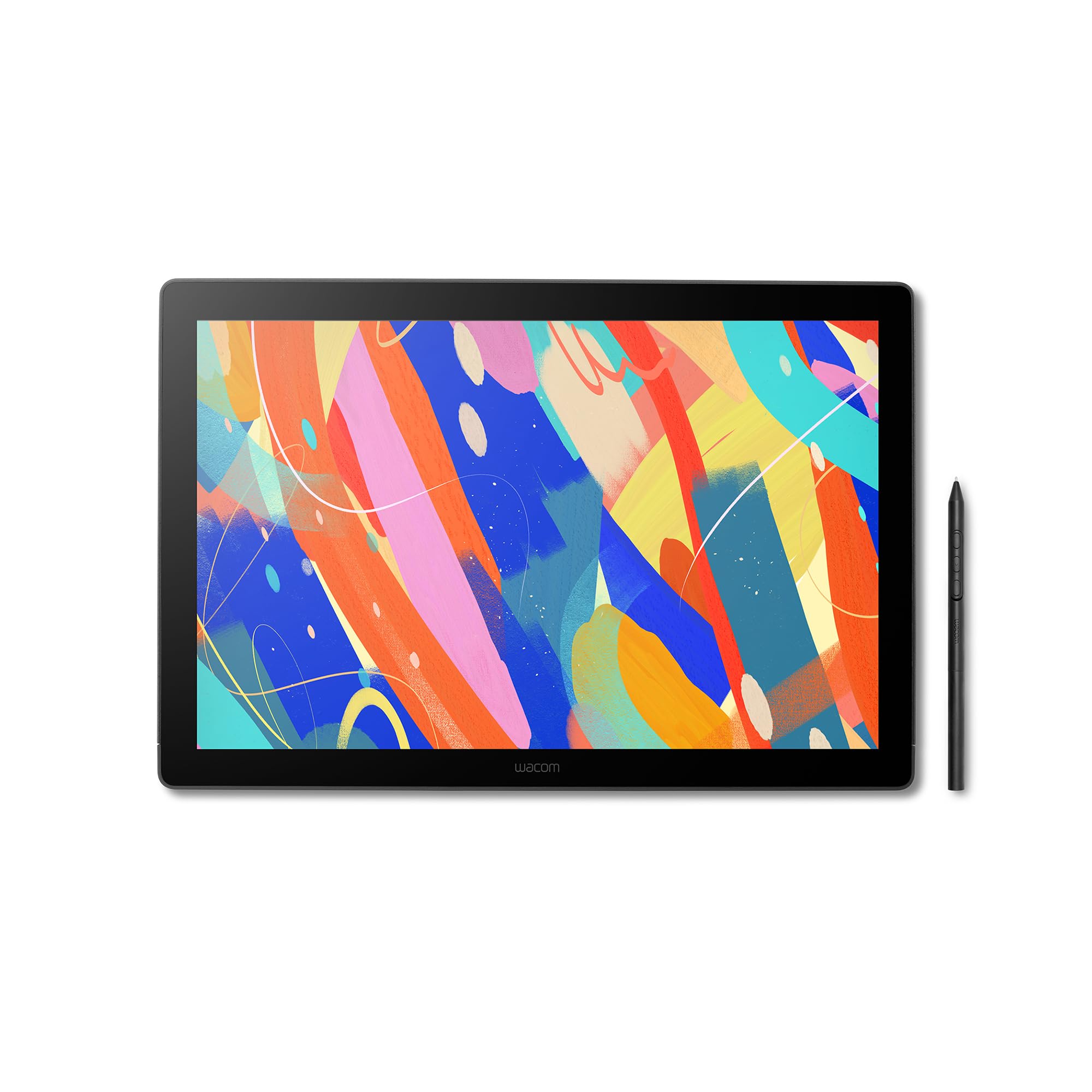
What you actually get at this lower price is a 16-inch IPS pen display with 2.5K WQXGA resolution (2560 x 1600) and a direct drawing surface where every line appears exactly where your pen touches. The anti-glare surface cuts reflections so you can work under overhead lights without squinting, and the color accuracy is strong: 99% DCI-P3 and 100% sRGB coverage with 8-bit color depth means what you see on screen matches what you get on a calibrated monitor or in print.
What you give up is portability — at 4.5 pounds and requiring a USB-C cable with DisplayPort Alt Mode or Thunderbolt 3/4, this is a desk-bound tool. The built-in fold-out legs give you a 20-degree working angle, but an adjustable stand costs extra. Buyers love the zero-gap laminated anti-glare glass, saying it eliminates parallax (the gap between the pen tip and the cursor), making the experience feel like drawing on paper. The Pro Pen 3 with 8192 pressure levels and tilt support is included, and one long-time user calls the Cintiq 16 “the closest to a perfect drawing tablet” for its crisp display and durable build.
At a premium price, the Cintiq 16 is for serious illustrators, animators, and designers who spend hours every day on screen and demand the direct eye-hand connection that only a pen display provides. If you can afford the investment and have the desk space, it is the exact budget buyer it is perfect for.
Why we’d pick it
- 2.5K resolution (2560×1600) on a 16-inch screen shows fine detail without zooming
- 99% DCI-P3 and 100% sRGB color coverage matches professional color standards
- Full-laminated anti-glare glass eliminates parallax for accurate pen-on-screen drawing
A few caveats
- No stand included — built-in legs provide only a fixed 20-degree angle
- Requires USB-C with DisplayPort Alt Mode or Thunderbolt 3/4; no HDMI or mini-HDMI cable included
- Pro Pen 3 lacks the eraser that some artists prefer, and its buttons can feel stiff
6. HUION KAMVAS Slate 11

If you want to draw without a computer at all, the HUION KAMVAS Slate 11 is the most affordable standalone art tablet on this list. It runs Android 14 natively, so you can launch Clip Studio Paint or ibisPaint X right out of the box (including a free 3-month membership to both). The 10.95-inch FHD+ screen (1920 x 1200 resolution) with 99% sRGB color gamut gives you sharp, colorful visuals, and the 90Hz refresh rate makes every stroke feel fluid and responsive.
The screen uses a full-laminated anti-glare surface with a nano-etched matte finish that reduces fingerprints and glare, and customers note it feels “like drawing on paper.” The H-Pencil stylus offers 4096 pressure levels and 60-degree tilt support — not as high as the XPPen Magic Drawing Pad’s 16K levels, but plenty for sketching, note-taking, and most illustration work. Inside, you get an 8-core CPU, 8GB of RAM, and 128GB of storage expandable up to 1TB via microSD, plus an 8,000mAh battery that reviewers point out lasts through a full day of mixed use.
The honest limit is that the palm rejection can be choppy when you first start using it, and some early units had dead-on-arrival screens (buyers recommend getting the extended warranty).
Strong points
- Standalone Android 14 tablet — no computer needed, draw right out of the box
- Pre-installed Clip Studio Paint and ibisPaint X with 3-month free memberships
- 8,000mAh battery keeps you drawing all day without hunting for a power outlet
Before you buy
- Palm rejection can cause choppy drawing strokes during the first few hours of use
- Some buyers received units with non-functional screens; extended warranty is advised
- Only 4096 pressure levels — less nuanced than the 16K on the XPPen Magic Drawing Pad
7. XPPen Magic Drawing Pad

The XPPen Magic Drawing Pad lands in the premium standalone tier, and it backs that position with a 12.2-inch 2K screen (2160 x 1440 resolution, 3:2 aspect ratio) that hits 115% sRGB color gamut — wider than the HUION KAMVAS Slate 11’s 99% sRGB and noticeably punchier for vibrant artwork. Its 16,384 pressure levels on the X3 Pro Slim stylus are the highest available on any tablet in this guide, giving illustrators and 3D modelers the ability to register the faintest tickle versus a full press.
At just 6.9mm thin and 599 grams, it is lighter and slimmer than the KAMVAS Slate 11 while offering 8GB of RAM and 256GB of base storage (expandable to 1TB via microSD). The 8,000mAh battery gives you a fantastic 13 hours of continuous drawing. Buyers rave about the matte, oil-resistant screen that “feels better than an Apple Pencil on iPad” and report the pen never needs charging or pairing — just pick it up and draw. The tablet runs Android 14 and comes with a 3-month Clip Studio Paint and ibisPaint X membership.
The one reason to choose the XPPen Magic Drawing Pad over the KAMVAS Slate 11 is the combination of a bigger screen, higher resolution, 4x the pressure sensitivity levels, and double the base storage — all in a thinner, lighter package.
What we like
- 16,384 pressure levels on the X3 Pro Slim stylus give you microscopic control over stroke weight
- 12.2-inch 2K screen with 115% sRGB gamut delivers vivid, color-accurate artwork
- 13-hour battery life in a 6.9mm thin body — truly portable for all-day drawing
The downsides
- No headphone jack — you need wireless earbuds for audio
- Tilt support is poorly implemented compared to Wacom pens; shading feels less natural
- Stock software feels bloated with NXTVISION gimmicks; some pre-installed apps are not tablet-friendly
Understanding the Specs
Pressure Sensitivity
This number — 4096, 8192, or 16384 — tells you how many levels of force the pen can detect between the lightest ghost stroke and the heaviest press. Higher numbers mean you can create a finer gradation of line width and opacity, which matters most for realistic shading, thin-to-thick calligraphy strokes, and detailed digital painting. A 4096-level pen is plenty for beginners and most illustrators; 16384 is noticeable in professional work where every micro-change in pressure influences the brush stroke.
Tilt Support
Measured in degrees (usually 60 degrees), tilt support lets you angle the pen the same way you would a pencil for shading. When tilt is enabled, the brush stroke spreads wider or narrows based on how steep the angle is. If you do side-shading in pencil or charcoal style, tilt support makes the difference between flat digital lines and strokes that feel like real graphite on paper.
Active Area
The active area is the dimensions of the drawing surface in inches — for example, 8.7 x 5.4 inches. A larger area lets you draw with your whole arm, reducing wrist strain over long sessions, while a smaller area restricts you to finger and wrist motion. The right size depends on your monitor’s aspect ratio and your desk space. For a single 24-inch monitor, an active area around 8.7 x 5.4 inches maps 1:1 well; for multi-monitor setups, a larger area like 10.5 x 6.56 inches gives you more coverage.
Pen Display Resolution
On pen displays (screens you draw on), resolution determines how sharp the image and your lines look. The Wacom Cintiq 16’s 2560 x 1600 (2.5K) resolution means individual pixels are invisible at normal viewing distance, and fine details stay crisp without needing to zoom in. Lower resolutions like 1920 x 1080 (Full HD) are still perfectly usable for most art, but you may notice slight jaggedness on diagonal lines at close range. Color gamut coverage (sRGB and DCI-P3 percentages) determines how accurate and vibrant the colors appear — 99-100% sRGB is the standard for digital art, while DCI-P3 is wider and covers more of the colors used in modern film and display production.
Standalone vs Computer-Needed
Standalone tablets (like the HUION KAMVAS Slate 11 and XPPen Magic Drawing Pad) run their own operating system — Android 14 — and do not need a computer at all. You install drawing apps directly on the tablet, draw on its screen, and save files internally. This gives you freedom to work anywhere, but the processing power is limited to mobile-class chips, so heavy 3D software or massive multi-layer files may run slower. Computer-needed tablets (pen tablets and pen displays) rely on your PC or laptop for processing power, which means you can use desktop-grade software like Photoshop, Blender, and Clip Studio Paint at full performance.
Battery-Free Stylus (EMR)
EMR stands for electro-magnetic resonance — a technology where the pen draws power from the tablet’s electromagnetic field instead of containing its own battery. You never charge the pen, never pair it via Bluetooth, and never worry about it dying mid-drawing. Every pen on this list is battery-free. The only maintenance is replacing the nib (the plastic tip) when it wears down, which happens faster if you draw with heavy pressure. Most tablets include extra nibs in the box, and replacements are cheap and widely available.
FAQ
Do I need a pen display or is a pen tablet enough?
What does 16,384 pressure levels give me that 4,096 does not?
Can I use an art tablet with my Android phone or tablet?
How long do the pen nibs last?
Final Thoughts: The Verdict
When it comes down to it, the best art tablet winner is the Wacom Intuos Pro Medium (2025) because it combines pro-grade build quality, 8192 pressure levels, and customizable dials in a slim, durable package that works perfectly with multiple monitors. If you want wireless freedom and the highest pressure sensitivity available in a pen tablet, grab the XPPen Deco Pro LW 2nd Gen. And for a standalone drawing tablet that needs no computer at all, the HUION KAMVAS Slate 11 gives you the best balance of screen quality and price for a beginner-friendly all-in-one drawing experience.