
Our readers keep the lights on and the weekend projects moving. As an Amazon Associate, I earn from qualifying purchases.
Cold feet on the trail can ruin an otherwise perfect hike. Regular wool socks often feel itchy or leave your feet damp, and cotton is a disaster once it gets wet. Alpaca fiber changes that — it traps heat better than sheep’s wool, feels smooth against sensitive skin, and wicks moisture away so you stay dry mile after mile. The challenge is that not all alpaca socks are created equal: the blend percentages, cushioning, and fit vary widely, and the wrong pair can still leave you uncomfortable. This guide cuts through the blend ratios and marketing claims to show you which pairs actually deliver on warmth, softness, and durability when you need them most.
I’m Rikta — the co-founder and writer behind FitlyFast. This guide is built by comparing the manufacturers’ published specifications and the patterns across verified customer reviews, so you get each pick’s real strengths and trade-offs instead of marketing spin.
Whether you face freezing mornings or wet autumn trails, the right pair makes all the difference. These are the top-rated alpaca socks for hiking based on real-world warmth, moisture control, and comfort tested by hundreds of buyers.
How To Choose The Best Alpaca Socks For Hiking
Alpaca socks are not all the same. The fiber quality, the blend ratio, the cushion weight, and the fit all determine whether your feet stay warm and dry or get sweaty and blistered. Here are the four things you need to check before you buy.
Alpaca Content Percentage
100% alpaca fiber sounds great, but socks made entirely from alpaca lack the stretch and durability needed for hiking. Manufacturers blend alpaca with nylon, acrylic, or merino wool to add strength and shape retention. The sweet spot is 30% to 60% alpaca: enough to get the warmth and softness, with enough synthetic fiber to hold its shape wash after wash. Higher percentages feel softer but often require careful hand-washing.
Cushion Weight and Boot Fit
Socks are sold in light, mid, and heavyweight cushion grades. Lightweight is best for tight-fitting shoes or summer hiking. Midweight (the most versatile) fits under most hiking boots without needing to upsize. Heavyweight is for extreme cold and loose-fit boots — if you buy heavy socks for snug boots, your toes will feel cramped and circulation will suffer, making your feet colder, not warmer.
Moisture Wicking vs. Waterproof
Alpaca fiber naturally wicks moisture away from your skin and releases it into the air. That ability makes it better than cotton, which holds wetness against your foot. If you are crossing streams or hiking in heavy rain, you still need a waterproof boot. If you are hiking in dry cold or light drizzle, alpaca’s natural moisture-moving property is enough to keep you dry and comfortable.
Fit and Elastic Band Pressure
Some alpaca socks have tight elastic bands at the calf that can leave deep marks or cut off circulation after a few hours. Look for reviews that mention “loose fit” or “no leg compression” if you have wider calves or sensitive skin. A sock that fits well should stay up without sagging but should not pinch or indent your skin.
Quick Comparison
On smaller screens, swipe sideways to see the full table.
| Model | Category | Best For | Key Spec | Amazon |
|---|---|---|---|---|
| Jeasona Alpaca Wool Socks | Mid-Range | Everyday warmth & gifting | Alpaca blend, vintage knit | Amazon |
| WARRIOR ALPACA SOCKS Base Camp | Mid-Range | Hikers with sensitive skin | 3.2 oz, hypoallergenic | Amazon |
| Toughland Alpaca Wool Socks | Mid-Range | All-day hiking in varied temps | 60% Baby Alpaca, midweight | Amazon |
| Juclise Alpaca Wool Heavyweight Crew | Premium | Extreme cold & sub-freezing hikes | 62% Baby Alpaca, heavyweight | Amazon |
| Alpaca Socks (82% Alpaca/Merino Blend) | Premium | Chronically cold feet & wet conditions | 82% baby alpaca/merino, reinforced toe/heel | Amazon |
In‑Depth Reviews
1. Toughland Alpaca Wool Socks
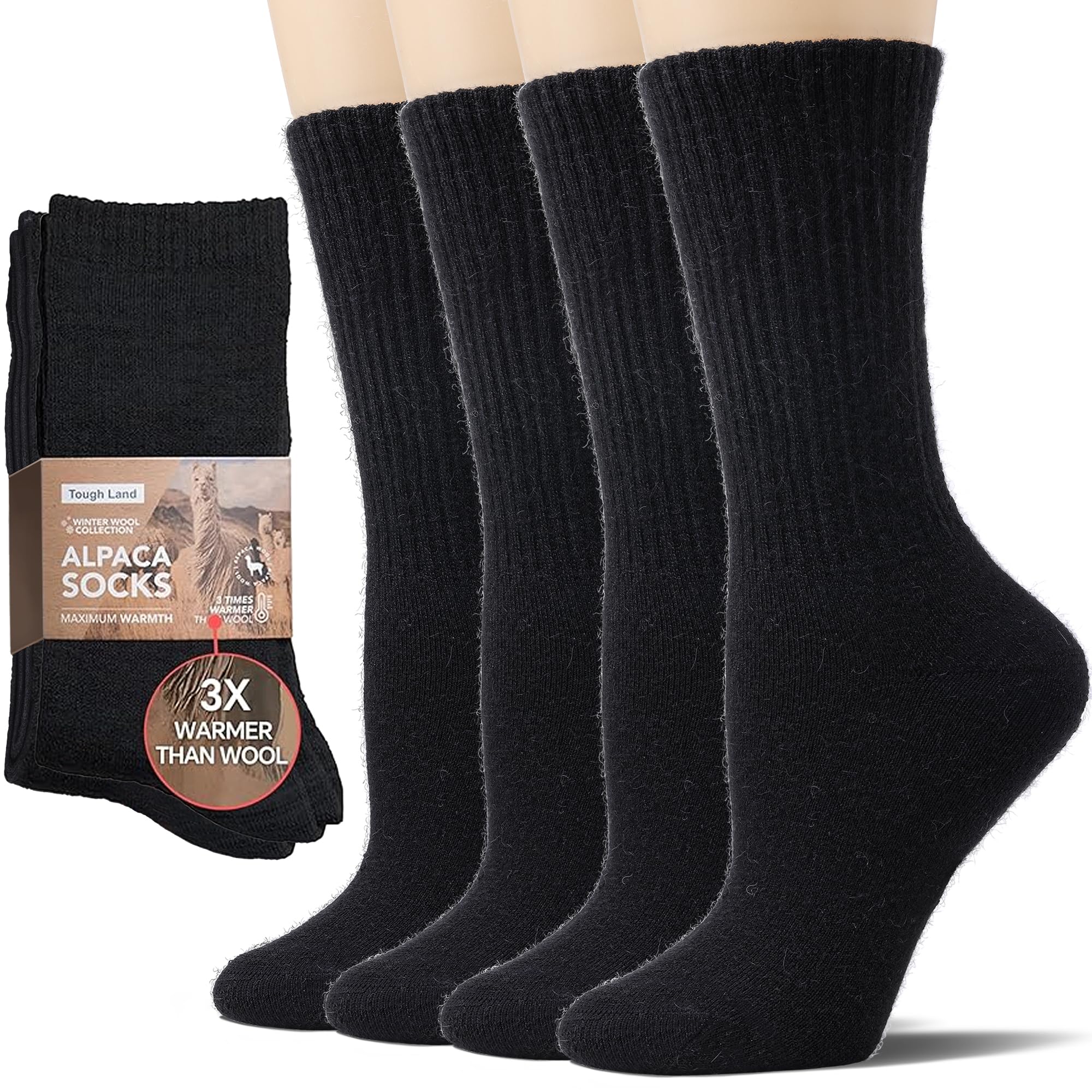
The 60% baby alpaca blend makes the Toughland socks the top pick for hikers who want the most natural fiber for mid-range money without needing to buy bigger boots. For hikers who want one pair that works from a brisk morning walk to a full day on rocky terrain, the Toughland socks deliver the strongest balance of warmth, softness, and durability among the mid-range field. The 60% baby alpaca content gives you more natural fiber than the Warrior or Jeasona options, which means you feel the silky smoothness against your skin right away and trap heat even when temps drop.
The midweight cushion fits under hiking boots without requiring you to upsize your footwear — buyers report that a size L fits US 10.5-11 perfectly and that the cushioned footbed provides “Super comfy, breathable, soft, warm” comfort even on long walks. Reviewers also report the socks hold up well after multiple machine washes (turning them inside out is recommended) with no pilling or fading. This is the only pair in the mid-range that explicitly promises you won’t need to go up a boot size, which saves you from an expensive footwear swap.
The honest trade-off is the elastic band at the top: a few buyers with wider calves say it leaves a leg depression even after stretching, though most users find it comfortable. If you have very sensitive calves, the Warrior socks might be a better fit, but for nearly everyone else these are the best all-around pick. Standout spec: the 60% baby alpaca blend that outperforms the Warrior (which buyers wish had a higher alpaca percentage) and the Jeasona on both natural fiber content and warmth-to-bulk ratio.
Why it’s great
- 60% baby alpaca delivers maximum warmth without bulky thickness
- Midweight cushion fits boots without upsizing
- Excellent durability — no pilling after multiple washes
Good to know
- Elastic band can feel tight for some calves
- No knee-high option available for women who prefer taller socks
2. WARRIOR ALPACA SOCKS – Base Camp
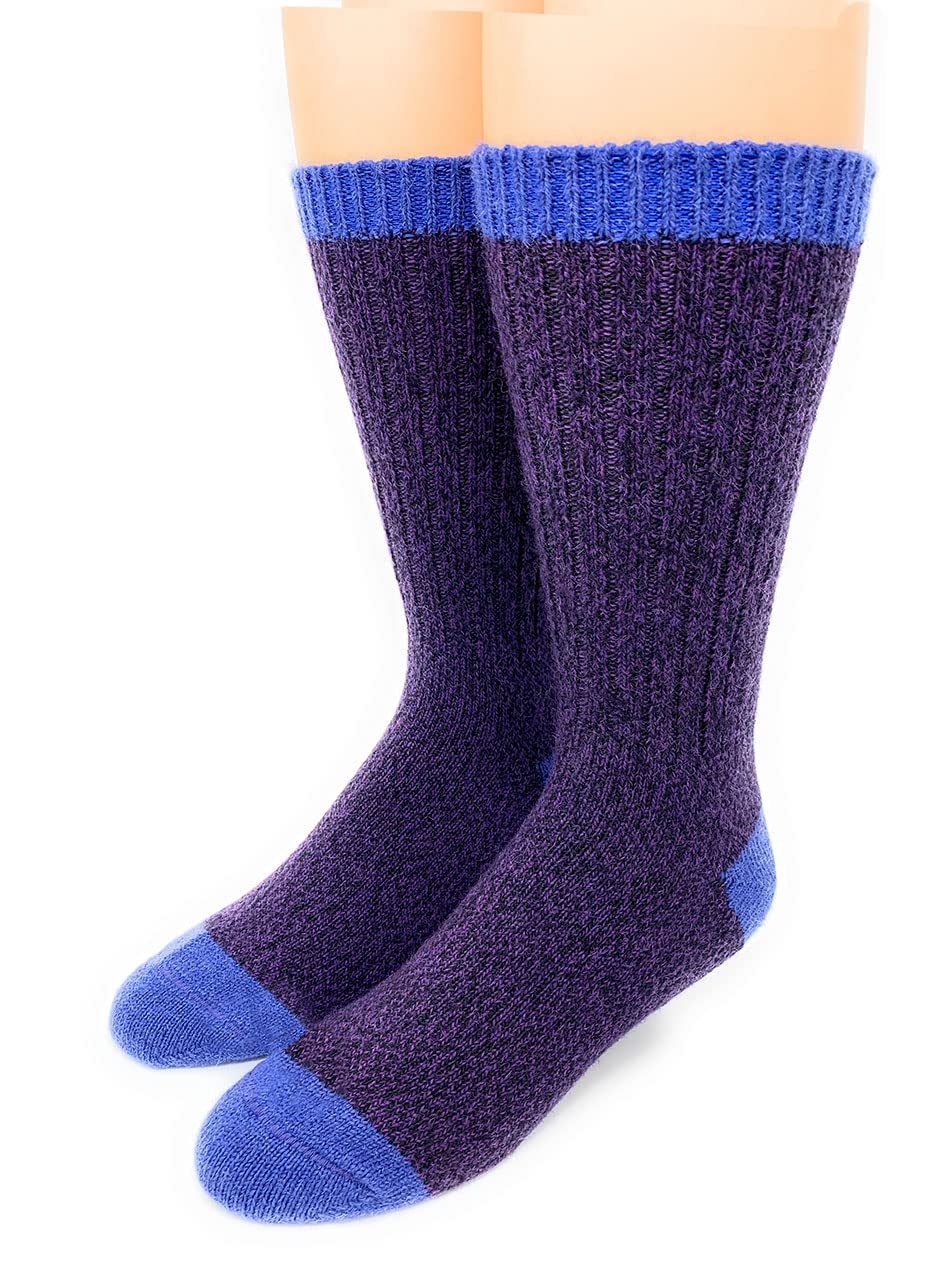
If you have sensitive skin or a wool allergy, the Warrior Base Camp is the safer choice — it beats the Toughland squarely on fit, since buyers with arthritic feet and fibromas describe these as “non-restrictive” and “comfortable” with no leg marks. At 3.2 ounces, these are the lightest socks in the review, which means they feel less substantial than the Toughland 60% blend but also breathe better for milder conditions.
One buyer who is allergic to traditional wool specifically chose these because alpaca is hypoallergenic (does not trigger wool allergies), noting “I do wish the Alpaca content was a little higher percentage, but these are still very comfortable.” This is the key trade-off: you get a relaxed, non-binding fit that accommodates swelling or sensitive feet, but the alpaca content is lower than the Toughland, so you trade some natural warmth for comfort and allergy safety.
Choose the Warrior Base Camp over the Toughland if you know your skin reacts to synthetic blends, if you need socks that won’t pinch arthritic toes or leave indent marks, or if you hike mostly in cool weather rather than deep winter. For warmth-focused all-day hikes in freezing conditions, the Toughland gives you more natural fiber per dollar.
Where it shines
- Hypoallergenic — safe for people allergic to sheep wool
- Non-restrictive fit comfortable for arthritic feet
- Regulates temperature well for varied conditions
Worth noting
- Lower alpaca content than the Toughland pick
- Shorter length than some competing Warrior models
3. Jeasona Alpaca Wool Socks
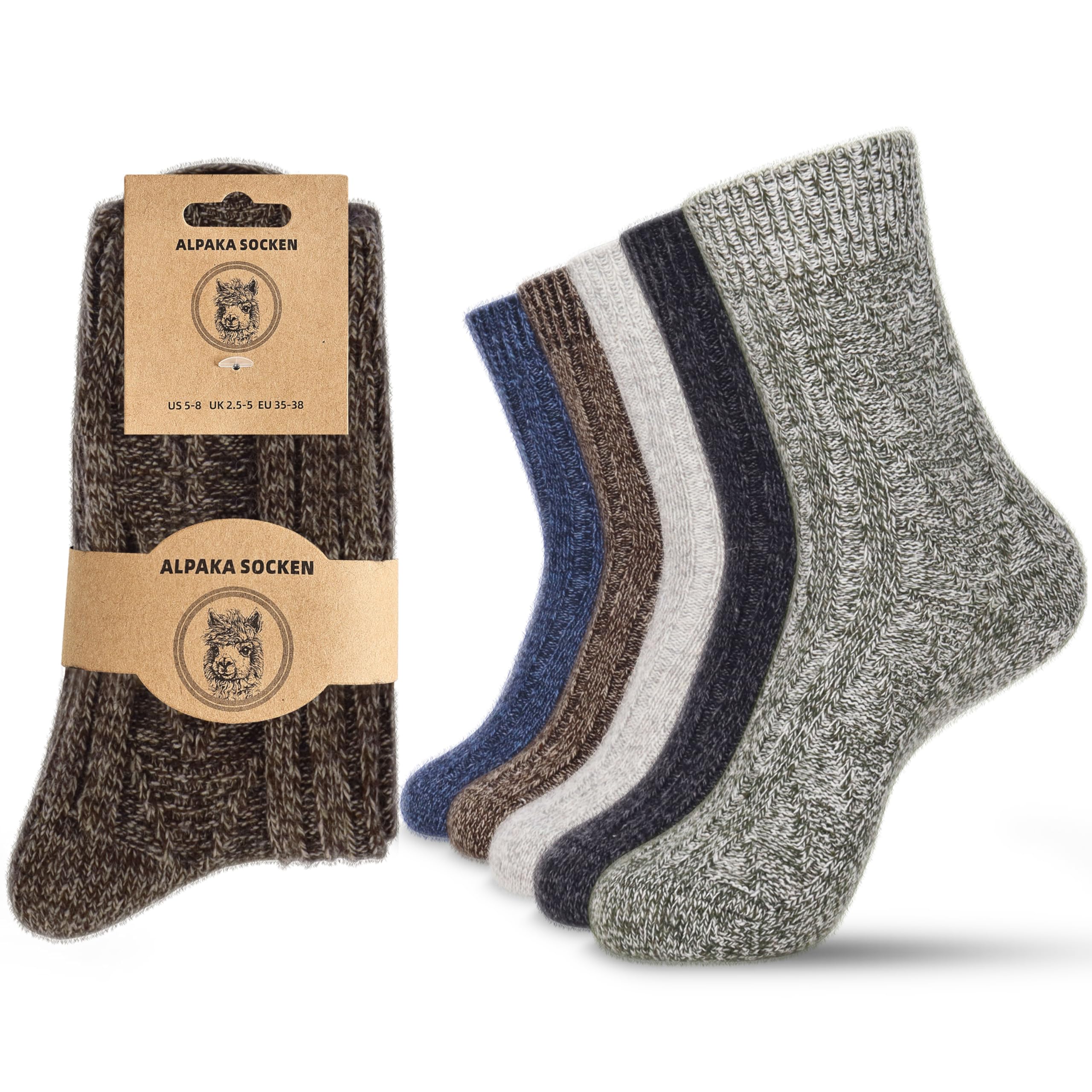
If you need an affordable pair for casual hiking, wearing around the house, or gifting, the Jeasona socks are the budget-friendly entry point that still delivers real alpaca softness. Buyers consistently say “they are always warmer and softer than all the others with no itchy or scratchy feel,” which is impressive at this tier — and several reviewers are buying extra packs specifically to give as Christmas gifts.
The vintage double-line knit pattern gives these a distinct look that stands out from the solid-color competition, and the fit is described as “not tight on my ankles or lower legs.” One buyer uses them as sleep socks and finds they keep feet warmer than regular socks without causing any itch, which suggests the alpaca blend is genuinely gentle even for sensitive sleepers. They machine wash and dry well, adding convenience for everyday use.
Standout spec: the price-to-quality ratio that has multiple verified buyers calling them “a great price for the quality” and “very good deal” — but note that the alpaca percentage is not disclosed, so they likely contain a lower natural fiber ratio than the Toughland or premium picks. Still, for the price, you get authentic alpaca softness and warmth without breaking your budget.
What stands out
- Genuinely soft and non-itchy — verified by multiple buyers
- Machine washable for easy care
- Vintage color patterns make them gift-worthy
The trade-offs
- Exact alpaca percentage is not listed
- Women’s-specific sizing — not unisex
4. Juclise Alpaca Wool Heavyweight Crew
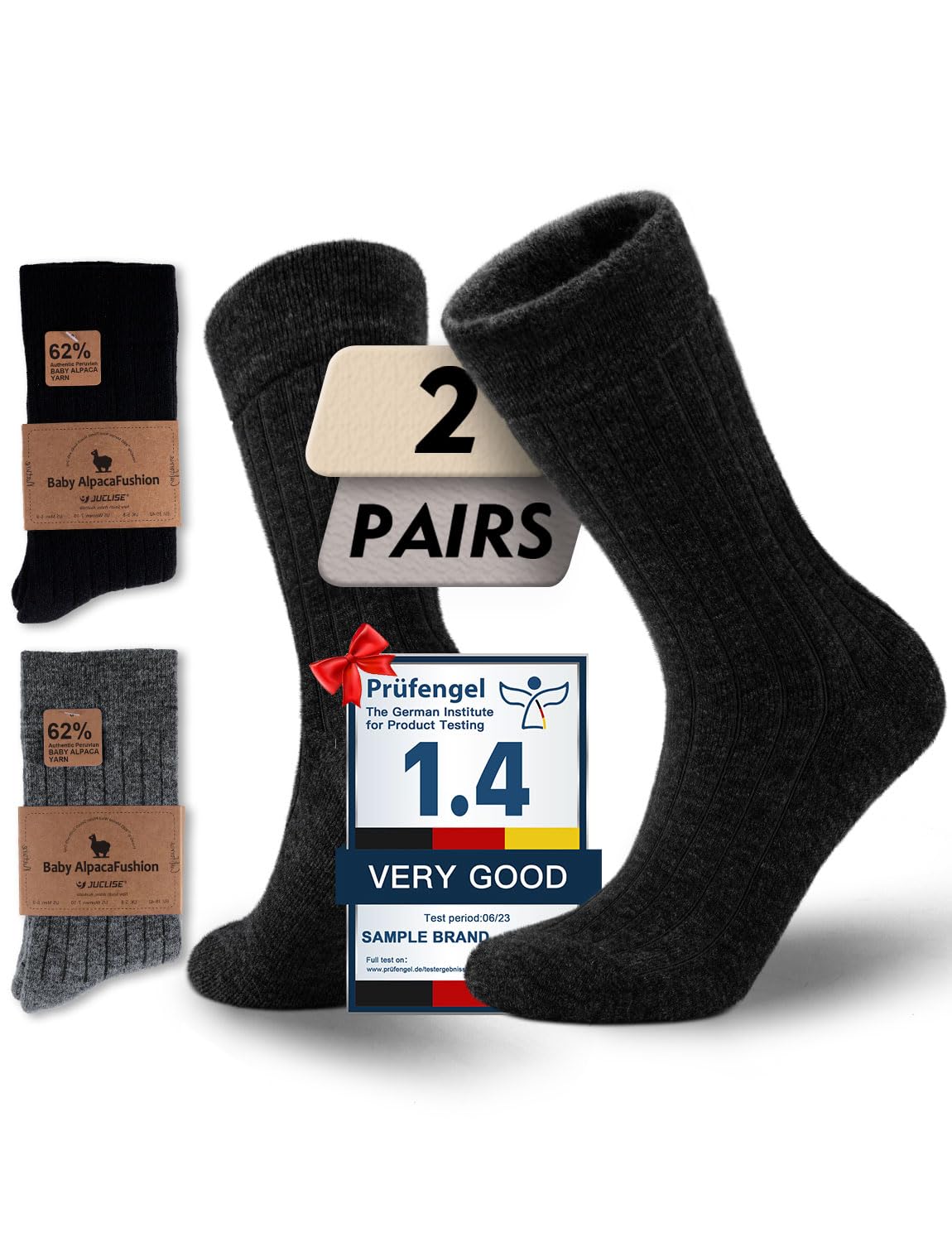
The single number that matters most in this category is the baby alpaca percentage: the Juclise scores 62%, the second-highest blend in this lineup. One buyer wore these in Finland for a full week in March and reported they “kept feet warm during extended periods in the outdoors below freezing temperatures,” which is the strongest real-world cold-weather test in this review. The heavyweight cushion traps more warm air than any midweight sock can, making these the best choice if you regularly hike in sub-freezing conditions.
The catch you accept for this level of insulation is that these are heavyweight socks: they require a loose-fit boot or you will need to upsize. They are also full-cushion, meaning the entire sock (not just the footbed) has extra padding, which makes them feel thick and plush but less versatile for tight footwear. Owners mention they are “very, very soft and comfortable in hiking boots” but emphasize the need to lay them flat to dry to avoid shrinking.
Price-to-value read: at this tier, you pay a premium for the highest natural fiber percentage and the proven extreme-cold performance. If you hike regularly in winter conditions below 20°F, this is the pair that will actually keep your toes warm when cheaper blends fail. If you only hike in mild cold, the Toughland gives you comparable warmth at a lower cost.
The upsides
- 62% baby alpaca — the highest blend in this lineup
- Proven extreme-cold performance in sub-freezing Finland
- Moisture-wicking keeps feet dry after removing boots
Keep in mind
- Heavyweight cushion may require upsizing boots
- Must lay flat to dry — machine drying causes shrinking
5. Alpaca Socks (82% Alpaca/Merino Blend)
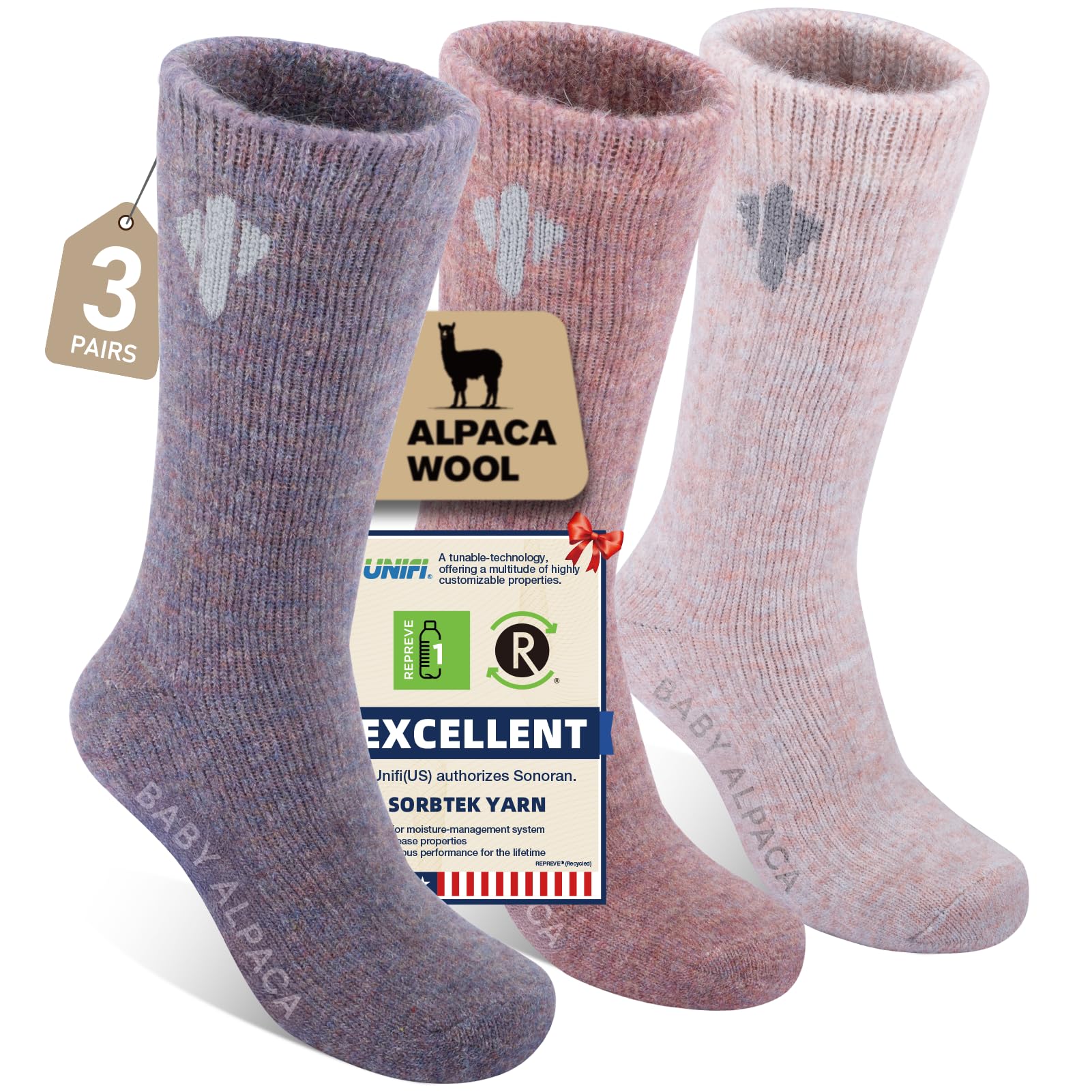
At this lower price, you actually get the highest natural fiber percentage available in this guide — 82% baby alpaca and merino wool combined, nearly 20% more alpaca/merino content than the Juclise socks. Buyers with chronically cold feet call this “the cure for cold feet,” noting it is “noticeably warmer than wool socks” and that the fiber feels like “being wrapped in a warm blanket.”
What this premium money actually gets you beyond fiber percentage: reinforced heels and toes for durability, a light compression fit that “reduces fatigue” during long hikes according to one reviewer, and natural antimicrobial properties that reduce foot odor even after days of use. One buyer tested them in 30°F rain for 45 minutes and then slept in 40°F temps — without needing foot warmers — which backs up the claim that these perform well in wet cold conditions.
The one reason to choose this over the Juclise: if you want the highest possible natural wool content for maximum warmth and odor resistance, and you are willing to hand-wash and air-dry your socks to preserve that delicate fiber. The Jeasona is the value entry point, the Toughland is the balanced mid-range, but this premium pair is the no-compromise performance choice for the serious hiker in wet and cold environments who wants the purest warmth nature can offer.
Why we’d pick it
- 82% baby alpaca/merino — the highest natural fiber content available
- Proven performance in rain, freezing temps, and overnight cold
- Reinforced heels and toes add durability for rugged trails
A few caveats
- Hand wash and air dry recommended — less convenient
- Premium price reflects the high natural fiber percentage
Understanding the Specs
Alpaca Fiber Percentage
The percentage of baby alpaca or alpaca wool in the blend tells you how much natural warmth and softness you are getting. Higher numbers (60% and above) mean more heat retention and smoother feel against skin, but also require gentler washing. Lower numbers (around 30%) add durability from nylon or acrylic but sacrifice some of the natural benefits that make alpaca special.
Cushion Weight
Cushion weight refers to how thick the sock is. Lightweight is thin and flexible (good for tight shoes), midweight is balanced (works with most boots), and heavyweight is thick and plush (best for cold weather and loose-fitting boots). The cushion also determines how much insulation your feet get — heavier cushion traps more warm air but takes up more space inside your boot.
FAQ
Can alpaca socks be machine washed?
Are alpaca socks warmer than merino wool?
Do alpaca socks itch like regular wool?
How should alpaca hiking socks fit inside boots?
What is the difference between baby alpaca and regular alpaca?
Final Thoughts: The Verdict
For most hikers, the alpaca socks for hiking winner is the Toughland Alpaca Wool Socks because the 60% baby alpaca blend gives you the best warmth-to-bulk ratio at a mid-range price without requiring boot upsizing. If you hike in extreme cold and want the highest natural fiber percentage, grab the Juclise Heavyweight Crew for its proven sub-freezing performance. And for sensitive skin or wool allergies, the WARRIOR ALPACA SOCKS Base Camp provides hypoallergenic comfort that will not irritate your skin.