
Our readers keep the lights on and the weekend projects moving. As an Amazon Associate, I earn from qualifying purchases.
Forget squinting at a watch mid-sprint or fiddling with a sweaty chest strap that slides around mid-climb. A dedicated bike heart rate monitor — worn on your arm or chest — gives you the real-time, beat-by-beat data you need to nail your training zones without taking your hands off the handlebars. This guide compares seven top contenders, from armbands that feel like nothing to chest straps that rival medical equipment, so you can pick the one that actually fits your ride.
I’m Rikta — the co-founder and writer behind FitlyFast. This guide is built by comparing the manufacturers’ published specifications and the patterns across verified customer reviews, so you get each pick’s real strengths and trade-offs instead of marketing spin.
Whether you are chasing a new FTP (Functional Threshold Power — your highest average power for one hour) on a smart trainer or grinding through a century ride, you need a reliable partner on your wrist — or arm, or chest. This is your no-spin breakdown of the best bike heart rate monitor for every kind of cyclist.
How To Choose The Best Bike Heart Rate Monitor
Picking a heart rate monitor for cycling comes down to a few key decisions — where you wear it, how you connect it, and how often you want to charge it. Here is what matters most.
Chest Strap vs. Armband
Chest straps read the electrical signal of your heart (ECG, or electrocardiography — the same method a medical EKG uses), which gives you the most accurate beat-by-beat response. They are the gold standard for high-intensity intervals and hard efforts where every beat counts. Armbands use an optical sensor (a light that shines through your skin to detect blood flow) — they are more comfortable and easier to slide on, but they can lag a few seconds during rapid heart rate changes, like a sprint out of a corner.
Battery Life and Type
Some monitors use replaceable coin-cell batteries (like a CR2025) that last hundreds of hours — you pop a new one in and forget about it for a year. Others have built-in rechargeable batteries that save you from buying replacements but need a USB cable every week or two, depending on how much you ride. Armbands tend to drain faster because the optical sensor uses more power than a chest strap’s ECG sensor.
Connectivity — Bluetooth and ANT+
Bluetooth (a wireless standard that connects directly to your phone or tablet) is great for pairing with a phone on your handlebars or a Peloton screen. ANT+ (a different wireless standard designed for fitness gear) is what most bike computers like Garmin Edge or Wahoo ELEMNT use. Many monitors offer both, but check that yours does if you plan to use a bike computer — some premium armbands only support Bluetooth.
Quick Comparison
On smaller screens, swipe sideways to see the full table.
| Model | Category | Best For | Key Spec | Amazon |
|---|---|---|---|---|
| Scosche Rhythm+ 2.0 | Armband | All-day comfortable accuracy | 24-hour battery, IP68 waterproof | Amazon |
| iGPSPORT HR70 | Armband | Best battery life armband | 65-hour battery, ±1BPM error | Amazon |
| COROS Heart Rate Monitor | Armband | Premium comfort and multi-device | 38-hour battery, 3-device Bluetooth | Amazon |
| Polar H10 | Chest Strap | Maximum ECG accuracy for indoor/outdoor | 400-hour battery, ECG sensor | Amazon |
| Polar Verity Sense | Armband | Versatile wear — arm, forearm, goggles | Dual Bluetooth, ANT+ | Amazon |
| Wahoo TRACKR | Chest Strap | Rechargeable chest strap with long life | 200-hour rechargeable battery | Amazon |
| Garmin HRM-Fit | Chest Strap (Clip-On) | Women — clips to sports bra | 1-year battery, running dynamics | Amazon |
In‑Depth Reviews
1. Scosche Rhythm+ 2.0

The Scosche Rhythm+ 2.0 wins best overall because it gives you armband comfort plus real-time accuracy — its optical sensor tracks HRV (Heart Rate Variability — tiny time differences between heartbeats) and RRi (R-R interval — the gap between two heartbeats), so you see how recovered you are before you pedal. One buyer reports the Rhythm+ is “medically accurate, validated against 12-lead EKG during stress test.” Its IP68 waterproof rating (fully sealed against dust and can survive submersion over 1 meter) means rain and sweat are no concern. The Scosche lasts 24 hours between charges, which covers 5 to 7 one-hour workouts, and it connects via Bluetooth and ANT+, so it works with a Garmin Edge bike computer and a Peloton screen without adapters. Buyers report it stays put in sweaty sessions, but the battery life trails the iGPSPORT HR70 (24 hours vs. 65 hours). skip it if you multi-day tour without access to a charger; pick it for daily training where comfort and accuracy beat marathon battery.
At 2.82 ounces, it is heavier than the iGPSPORT’s 13.3 grams, but owners mention it stays planted during sprints. The one catch: some customers note occasional signal dropouts during interval sprints.
The honest trade-off is battery life: at 24 hours, it trails the iGPSPORT HR70’s 65-hour run by a factor of 2.7x, so if you are a multi-day tourer who does not want to pack a cable, this is not your pick. For daily rides, intervals, and gym sessions where accuracy and comfort matter more than three-week endurance, the Rhythm+ 2.0 is the most balanced performer.
Why it’s great
- Optical sensor delivers HRV and RRi data for recovery insights — rare at this level
- Works with ANT+, dual Bluetooth, and 5 kHz connections simultaneously
- IP68 waterproof rating handles sweaty and rainy rides no problem
Good to know
- Battery drops to 24 hours — expect to charge after 5-7 sessions
- Some reviewers point out occasional signal dropouts and lag during interval sprints
2. iGPSPORT Heart Rate Monitor Armband HR70
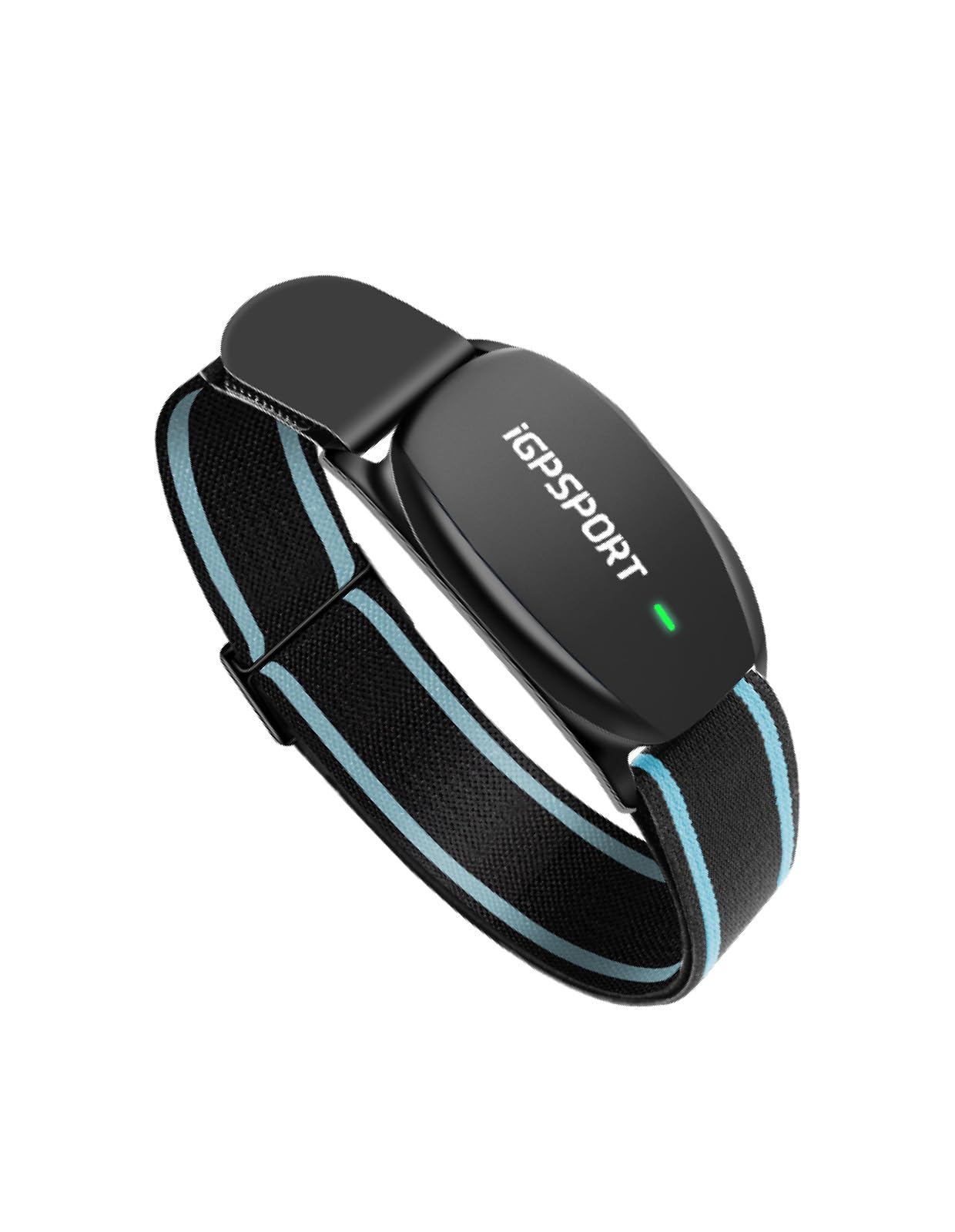
The iGPSPORT HR70 beats the Scosche Rhythm+ 2.0 handily on battery endurance — 65 hours of active use versus 24 hours, which means you can ride every day for two to three weeks before reaching for the charger. Its optical sensor claims a ±1BPM error margin, and buyers confirm the accuracy is “excellent verified by pulse counts,” making it a credible alternative to chest straps for steady-paced cycling and commuting.
What sets it apart in daily use is the LED heart rate zone indicator — the band glows in different colors (green for easy, yellow for moderate, red for hard) and can vibrate to alert you when you drift out of your target zone. That is a huge help when you are watching the road instead of a bike computer screen. The adjustable polyester strap leaves a temporary pressure mark after long rides, shoppers say, but the band stays secure and does not shift during out-of-saddle efforts.
Choose the HR70 over the Scosche if battery life is your priority — you will charge it roughly once every three weeks instead of twice a week, and the haptic vibration alerts are genuinely useful for zone-based training on the road. The magnetic Type-C charger is unique, but one reviewer noted a polarity issue that stopped charging after a year, so check your warranty coverage.
Where it shines
- 65-hour battery is 2.7x longer than the Scosche Rhythm+ 2.0
- LED zone lights and vibration alerts keep you in your training zone hands-free
- Dual Bluetooth 5.0 and ANT+ connect to 99% of devices
Worth noting
- No HRV or RRi data — just basic heart rate tracking
- One buyer mentioned the charging connector stopped working after a year
3. COROS Heart Rate Monitor
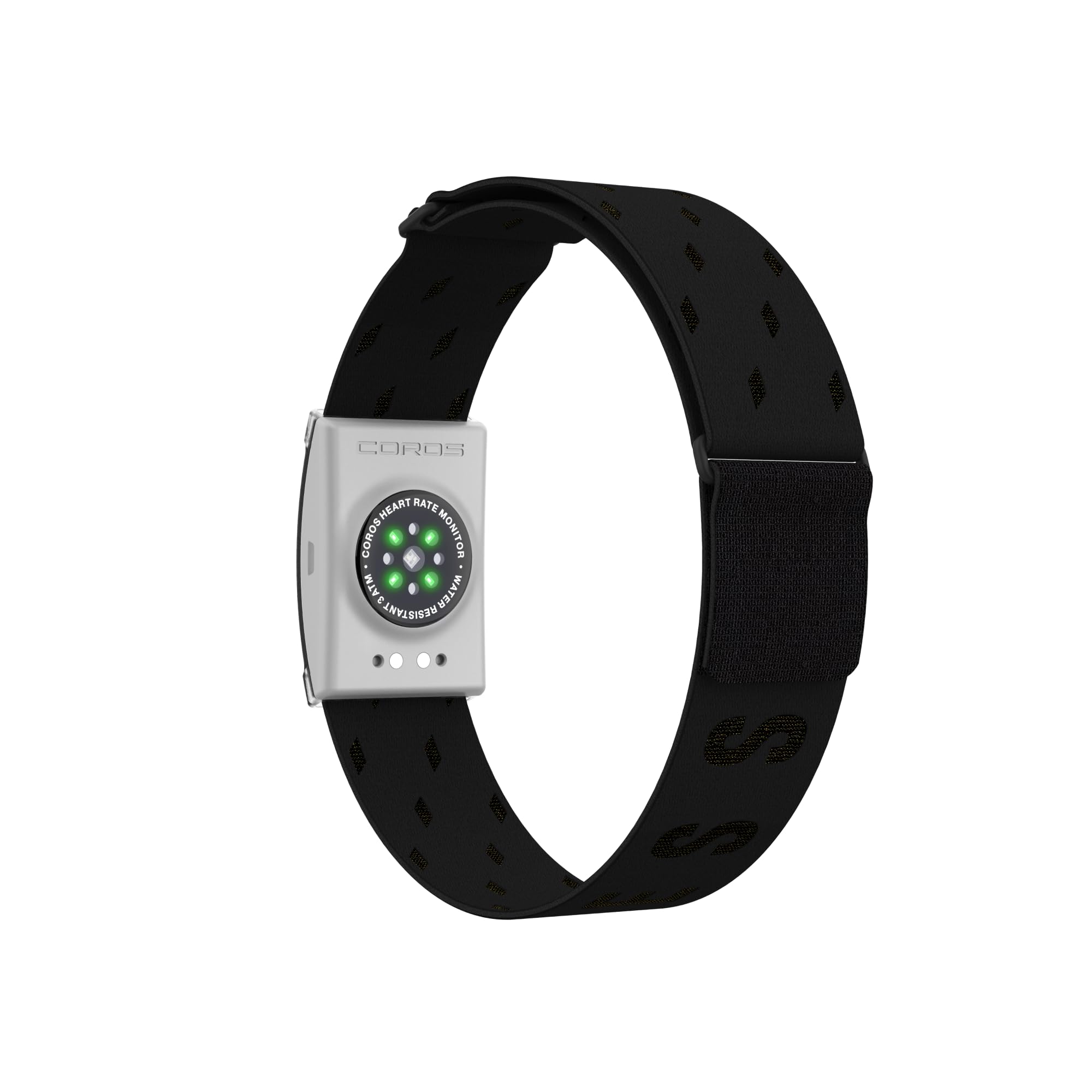
Imagine you’re grinding through hour three of a solo ride, and your chest strap starts slipping or chafing with every pedal stroke—the COROS Heart Rate Monitor is for that cyclist, using a woven Jacquard strap that resists stretching and washing out, laying flat on your bicep with a sliding buckle so there’s no Velcro or bulky clip digging in. Buyers report it is “super accurate, super comfy” and that it replaces both chest straps and wrist sensors without the data dropouts they experienced with a Wahoo TICKR chest strap.
The standout feature is wear-detection: there are no buttons or menus—the monitor wakes up when you slide it on and connects to your COROS watch or other devices instantly, pairing with up to three devices simultaneously (including non-COROS watches, bike computers, and indoor trainers). At 38 hours of active battery life, it sits between the Scosche and iGPSPORT on endurance, but charges fully in just two hours via a magnetic cable; one reviewer called it “accurate, comfortable, good value” and said it works flawlessly with a Garmin Edge bike computer, with no heart rate spikes or dropouts.
The catch is compatibility: the COROS monitor uses Bluetooth only—it does not support ANT+, so if your bike computer (like an older Garmin Edge or Wahoo ELEMNT) relies on ANT+, you will need to check if it accepts Bluetooth HR monitors, though for most modern setups this is a non-issue; it is a premium price, but the build quality and auto-wear detection set it apart—the Verity Sense is a better pick if you need multiple wearing positions, as it clips to goggles, while the COROS stays on your arm.
What stands out
- Auto-wear detection — no buttons, just slide it on and go
- Simultaneously pairs with up to 3 Bluetooth devices
- 38-hour battery charges fully in only 2 hours via magnetic cable
The trade-offs
- Bluetooth only — no ANT+ support for older bike computers
- Wash the strap regularly to prevent odor buildup
4. Polar H10 Heart Rate Monitor Chest Strap
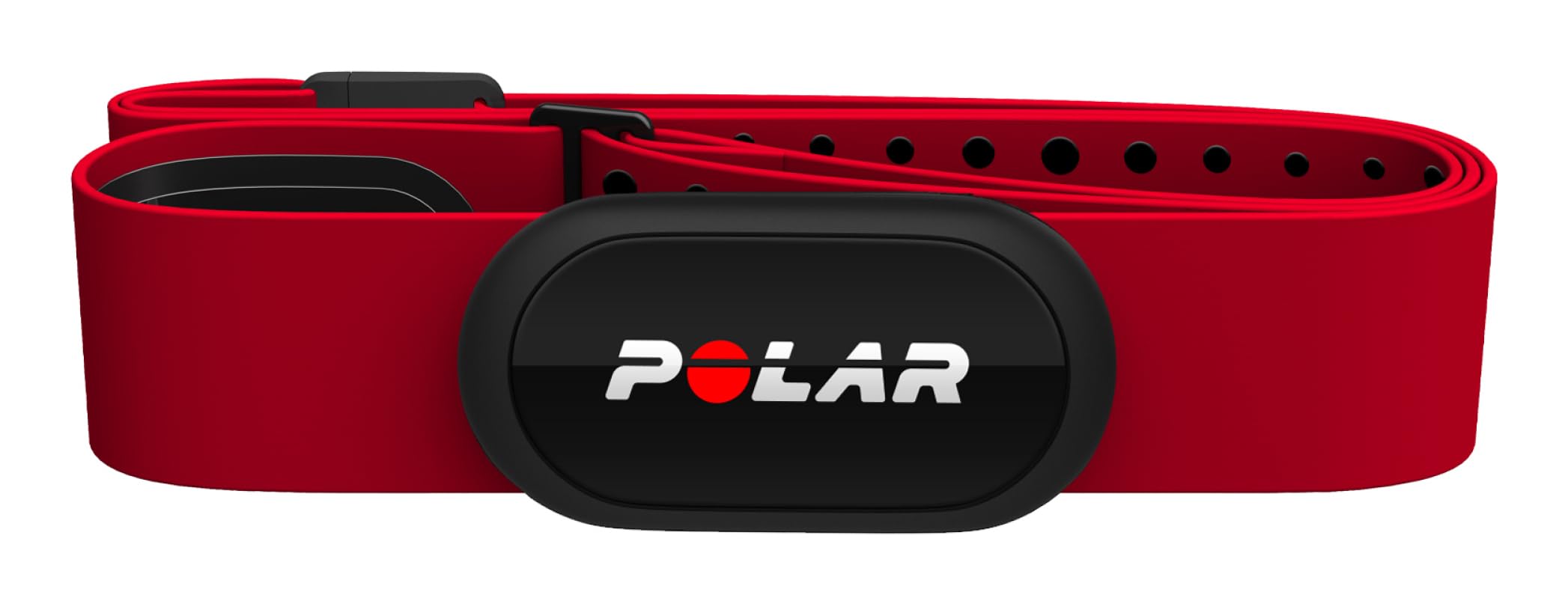
The single most important number for a chest strap is accuracy, and the Polar H10 scores it better than any wearable in this guide — it uses an ECG sensor (the same electrical signal detection as a hospital electrocardiogram) that delivers a 99.3% accuracy rate during cycling, according to one buyer’s testing. That means no lag, no drift, and no guesswork when you are hammering through a threshold interval on the trainer.
The downside you accept is wearing a strap around your chest versus a simple armband — some riders find it restrictive or uncomfortable for long rides, and one owner reported the strap can pull the snap out after about eight months. But the Polar H10 makes up for it with a 400-hour battery life (using a replaceable CR2025 coin cell) so you never need to plug it in; just pop a new battery in once a year. It also stores one session of heart rate data internally in its memory, meaning you can leave your phone or bike computer at home for a swim or a run and sync later.
If you demand the absolute best accuracy for zone-based training and do not mind the chest strap form factor, the Polar H10 is the price-to-performance champion — it costs no more than most armbands while delivering the gold standard of heart rate sensing. Just be aware that you may need a larger replacement strap if your chest is over 42 inches, which you have to order separately from Polar’s website. For steady-state riding, the Wahoo TRACKR offers similar convenience with rechargeability; choose the H10 if accuracy is non-negotiable.
The upsides
- ECG sensor gives 99.3% cycling accuracy — best in this roundup
- 400-hour battery from a single CR2025 coin cell — no recharging hassle
- Dual Bluetooth, ANT+, and 5 kHz connectivity for total compatibility
Keep in mind
- Chest strap may not fit chests over 42 inches out of the box
- A few owners mention strap degradation and connectivity issues after months of use
5. Polar Verity Sense

What you actually get at this lower price is a tiny 19-gram armband that can also clip to swim goggles, broadcasting live heart rate over two simultaneous Bluetooth channels and limitless ANT+ connections — it is lighter and more discreet than the Scosche Rhythm+ 2.0 (2.82 ounces), and customers note it works reliably with Garmin Fenix watches and Concept2 rowers once the initial pairing is dialed in.
The one-button design keeps things simple: press once to start recording a session (it stores data internally for later transfer), or pair it live to your bike computer or phone. The trade-off reported by users is that Polar’s own Beat and Flow apps can be frustrating — they disconnect without warning — but if you use third-party apps like Strava or Wahoo, it works great.
At about this price, you are paying for the flexibility to wear it on your upper arm, forearm, or even clipped to goggles — it does not measure HRV or RRi like the Scosche does, but if you have multiple fitness hobbies and want one monitor that does it all, the Verity Sense is the most versatile option in the group. pass on it if you need HRV data; pick it for multi-sport versatility — it is perfect for the budget buyer who wants one monitor that works across road cycling, indoor spin, and swimming.
Why we’d pick it
- Weighs only 19 grams — barely noticeable once on
- Works on upper arm, forearm, or clipped to swim goggles
- Dual Bluetooth channels and unlimited ANT+ connections
A few caveats
- Polar’s own apps are buggy — better with Strava, Wahoo, or Garmin
- Slightly less accurate than a chest strap during high-intensity intervals
6. Wahoo TRACKR Heart Rate Monitor

The Wahoo TRACKR is perfect for the indoor rider who wants a rechargeable chest strap that pairs instantly with Zwift and never needs a coin-cell battery swap — its high-capacity lithium battery delivers up to 200 hours of active use, and it charges via USB-C (the same cable as most modern smartphones and bike lights), so you never have to hunt for a CR2032 coin cell again. Buyers confirm it “works with Zwift out of the box, unlike cheaper options,” which is a huge plus for indoor riders who want a plug-and-play setup.
That 200-hour battery means you can ride every day for around two months before the LED indicator turns red, and the rest is straightforward: a soft, slim strap that keeps the sensor planted during high-cadence efforts, plus intuitive LEDs that flash to confirm heart rate detection and battery status. Reviewers appreciate that pairing with the Wahoo app and Cyclemeter is less finicky than the previous TICKR model, with no random disconnects.
The one limit worth noting: the strap may not fit larger users comfortably out of the box — a few buyers mention needing a third-party strap for a secure fit, which adds cost. If you are a larger rider or prefer a chest strap for indoor training and want to avoid disposable batteries, the TRACKR is the smartest choice in its class. It competes directly with the Polar H10 but wins on rechargeability, while the H10 wins on peak accuracy (ECG vs. optical). For most indoor riders, the TRACKR is the easier daily companion.
Strong points
- 200-hour rechargeable battery — charge via USB-C every two months
- Connects to Zwift, Wahoo app, and Cyclemeter without hassle
- LED indicator confirms detection, battery, and connection status
Before you buy
- Strap may feel snug for larger chest sizes — consider a third-party replacement
- Accuracy is very good but not quite at the Polar H10’s ECG level
7. Garmin HRM-Fit Heart Rate Monitor

The Garmin HRM-Fit is priced above the other picks, but it solves a real problem for women cyclists who find chest straps uncomfortable — it clips directly to the center of a medium- or high-support sports bra, eliminating the band around your ribcage entirely. Buyers rave that it is “very comfortable and easy on/off alternative to chest strap,” and one customer observed that once it is clipped to a well-fitting bra, you do not even notice it during a long ride or HIIT class.
What that premium gets you is more than just comfort: the HRM-Fit captures running dynamics (like vertical oscillation, ground contact time, and stride length — metrics that tell you how efficiently you are moving), and it can compute pace and distance for indoor treadmill runs. The battery lasts up to a full year (using a replaceable coin cell), which is a massive advantage over rechargeable armbands — no cables, no charging. One reviewer confirmed the battery held over a year with five uses per week.
The single reason to choose the HRM-Fit over everything else is the specific use case: you are a woman who wants the accuracy of a chest strap without the discomfort, and you want advanced form metrics that only a chest-mounted sensor provides. One limitation is that it requires a tight sports bra — longline and front-zip bras are not recommended, and large-chested buyers may find the unit feels bulky under a jersey. For the right rider, though, it is a game-changing solution that no armband can match. If you do not need the clip-on design, the Polar H10 gives similar accuracy at a lower price.
What we like
- Clips onto a sports bra — no chest strap pressure
- 1-year battery life from a replaceable coin cell
- Captures running dynamics like vertical oscillation and ground contact time
The downsides
- Requires a tight, well-fitting sports bra — not compatible with longline or front-zip styles
- One user highlighted the battery dropped to 80% after just three uses
Understanding the Specs
Optical vs. ECG Sensor
An optical sensor shines light into your skin and measures blood flow to calculate heart rate — it is found in armbands like the Scosche Rhythm+ 2.0 and iGPSPORT HR70. It is comfortable and easy to slide on, but it can lag 2-3 seconds during rapid heart rate changes, like a hard sprint. An ECG sensor (electrocardiography) reads the electrical signal of your heartbeats directly — found in chest straps like the Polar H10. It is more accurate in every scenario, especially during high-intensity intervals, but it requires a strap around your chest.
Battery Life and Recharging
Heart rate monitors use either replaceable coin-cell batteries (like the CR2025 in the Polar H10) that last 400 hours or built-in rechargeable lithium-ion cells (like the iGPSPORT HR70’s 65-hour battery). Coin-cell models require no cables — you swap the battery once a year — while rechargeable models need a USB cable every few weeks. The compromise: coin cells are wasteful but convenient; rechargeable models save money over time but need planning if you do multi-day tours.
Bluetooth vs. ANT+ Connectivity
Bluetooth is the standard for connecting to your smartphone, tablet, and most indoor fitness equipment like Peloton or Zwift. ANT+ is a separate low-power protocol used by most dedicated bike computers (Garmin Edge, Wahoo ELEMNT, Hammerhead Karoo). Many monitors support both, but some premium armbands (like the COROS) only support Bluetooth. If you use a bike computer, check that your monitor supports ANT+, or you will need a phone mount to see your heart rate.
Waterproof Rating (IP)
An IP (Ingress Protection) rating tells you how well the device resists dust and water. IP68 is the highest consumer standard — the Scosche Rhythm+ 2.0 has it, meaning it is fully dust-tight and can survive being submerged in over 1 meter of water for 30 minutes. Most other monitors are splash-proof (IPX5 or IPX7), which handles rain and sweat but not full submersion. If you ride in heavy rain or swim with the monitor, look for IP68.
FAQ
Should I get an armband or a chest strap for cycling?
Which heart rate monitor works best with a Garmin Edge bike computer?
Can I use a heart rate monitor with Peloton and Zwift?
Final Thoughts: The Verdict
For most riders, the best bike heart rate monitor winner is the Scosche Rhythm+ 2.0 because it nails the ideal balance of armband comfort, real-world accuracy, IP68 waterproofing, and dual Bluetooth/ANT+ connectivity at a mid-range price that beats the competition on pure versatility. If you want the absolute longest battery life in an armband and love haptic zone alerts, grab the iGPSPORT HR70. And for riders who demand ECG-grade precision and do not mind a chest strap, the Polar H10 is the undisputed accuracy king — at a price that matches most armbands.