
Our readers keep the lights on and the weekend projects moving. As an Amazon Associate, I earn from qualifying purchases.
Finding an 88-key digital piano that actually feels like an acoustic piano without emptying your savings account is the real challenge. You want weighted keys that respond to your touch, sound that fills the room, and a setup that doesn’t take over your living space — all without getting lost in specs like “hammer action” and “polyphony.”
I’m Rikta — the co-founder and writer behind FitlyFast. This guide is built by comparing the manufacturers’ published specifications and the patterns across verified customer reviews, so you get each pick’s real strengths and trade-offs instead of marketing spin.
Whether you are a beginner looking for your first serious instrument or an experienced player wanting a practice keyboard for home, this guide cuts through the noise to help you find the best 88 key digital piano for your specific needs and budget.
How To Choose The Best 88 Key Digital Piano
Choosing your first full-size digital piano comes down to three things: how the keys feel under your fingers, how many notes it can produce at once without cutting off, and whether the built-in speakers sound good enough for daily practice. The right choice depends on your playing level and where you will use it.
Weighted Keys vs Hammer Action
A weighted key simply resists your finger as you press it down, giving you some physical feedback. Hammer action goes further — it mimics the internal mechanism of an acoustic piano, where a small hammer actually strikes a string. For building proper finger strength and control, hammer action is the better choice, especially if you plan to eventually play on a real grand piano.
Polyphony — How Many Notes You Can Play at Once
Polyphony (po-LIF-uh-nee) is the maximum number of notes a digital piano can produce simultaneously. A single key press is one note, but holding a chord with the sustain pedal down stacks notes quickly. 64-note polyphony works fine for simple songs, but 128-note polyphony gives you room for complex classical pieces without any notes dropping off unexpectedly.
Speaker Power and Sound Quality
Don’t just look at wattage — the speaker configuration matters just as much. Two 20W speakers in a portable keyboard sound different than the same wattage in a cabinet-designed console. If you plan to practice without headphones most of the time, aim for at least 20W of speaker power and consider models with larger cabinets that naturally amplify bass frequencies.
Quick Comparison
On smaller screens, swipe sideways to see the full table.
| Model | Category | Best For | Key Spec | Amazon |
|---|---|---|---|---|
| AODSK B-83S | Home Console | Best Overall — Weighted hammer action | 128-note polyphony, 71.2 lbs | Amazon |
| STRICH SDP-300W | Home Console | Premium feel and features | 128 preset timbres, 25W x2 speakers | Amazon |
| Casio CDP-S160 | Portable | Lightweight practice on the go | 23.2 lbs, scaled hammer action | Amazon |
| Donner DDP-90 Pro | Home Console | Versatile beginner-to-intermediate | 238 tones, 200 rhythms, 128 polyphony | Amazon |
| Donner DDP-300 | Home Console | Bluetooth connectivity and surround sound | Graded hammer action, 128 polyphony | Amazon |
| Yamaha DGX-670B | Portable | Vast sound library and auto-accompaniment | 630 instrument voices, 263 styles | Amazon |
| Casio Privia PX-870 | Console | Authentic grand piano experience | Tri-Sensor II hammer action, 40W speakers | Amazon |
| Yamaha YDP105 | Console | Upright design with bench included | GHS weighted action, 10 voices | Amazon |
| Alesis Recital | Portable | Budget-friendly starter with great sound | 128-note polyphony, 15.7 lbs | Amazon |
| Ktaxon | Home Console | Budget-friendly weighted keys | 64-note polyphony, double Bluetooth | Amazon |
In‑Depth Reviews
1. AODSK 88-Key Weighted Keyboard Piano B-83S
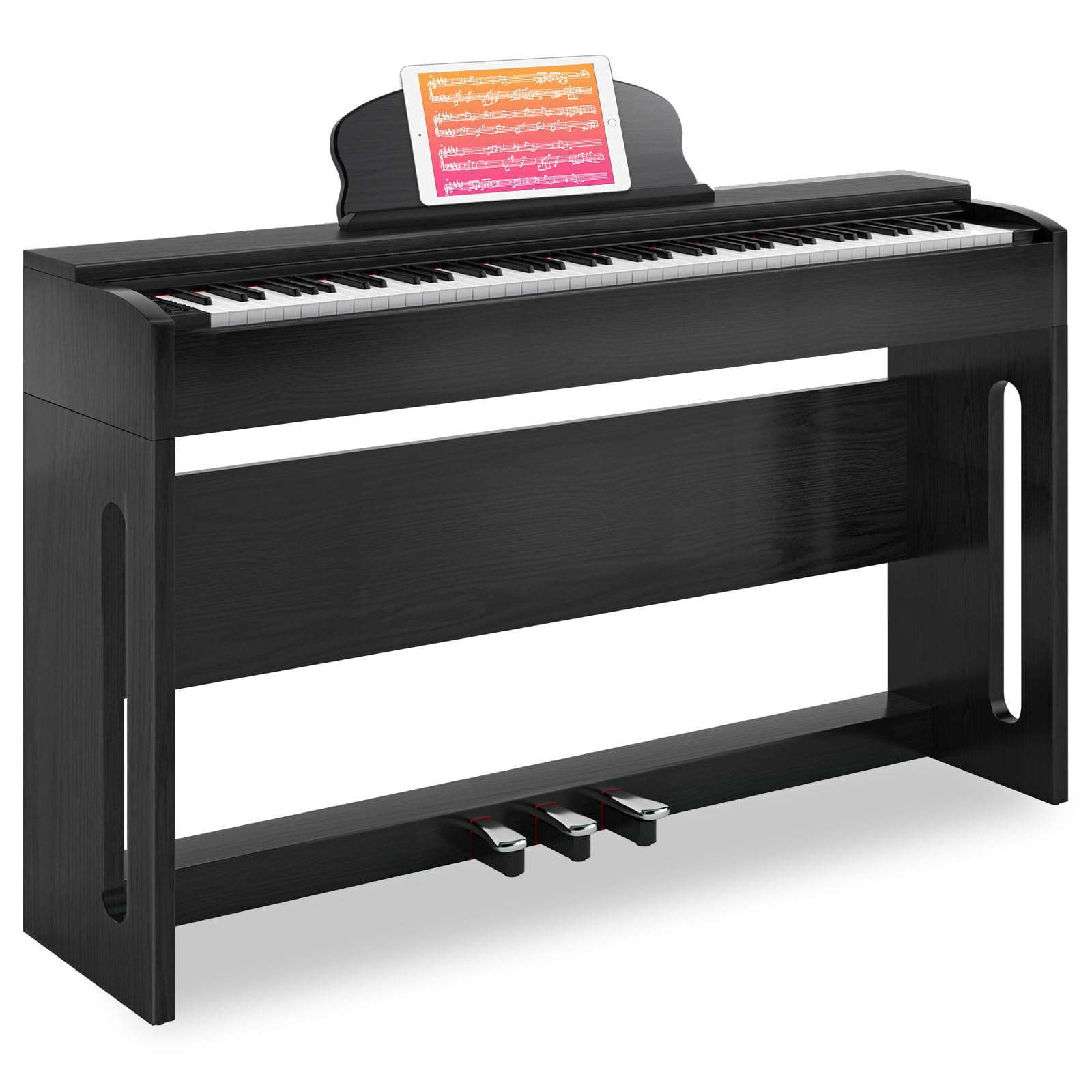
The AODSK B-83S gives you the most complete package for your money: fully weighted hammer action keys combined with 128-note polyphony (meaning you can hold a chord with the sustain pedal down and no note cuts off early, so complex classical passages ring out naturally). Buyers report after 5 months of ownership the piano remains “without any issues” and “looks great and sounds great.” The included triple pedal unit (soft, sustain, and sostenuto) and the furniture stand turn it into a permanent home fixture — 71.2 pounds means you set it up once and it stays put. Two headphone jacks let you and a partner practice silently, making this the smarter buy than the STRICH SDP-300W for buyers who want everything included.
2. STRICH Digital Piano SDP-300W

The STRICH SDP-300W edges past the AODSK on visual appeal and sonic firepower — its 25W x 2 speakers are more powerful than the AODSK’s unspecified speakers, filling a room without needing external amps, and it packs 128 preset timbres (instrument sounds) plus 200 drum rhythms for when you want variety beyond piano. The simulated ivory texture on the keys gives your fingers better grip during long practice sessions, mimicking the feel of a grand piano. One reviewer noted their AC power adapter failed in the first week, so check it immediately if you buy. If you value extra preset sounds and a wood-grain cabinet that looks like furniture over the AODSK’s included triple pedal, this is your pick.
3. Casio CDP-S160

At just 23.2 pounds, the Casio CDP-S160 is over 48 pounds lighter than the AODSK console, yet still delivers scaled hammer action (heavier in the bass keys, lighter in the treble) that owners mention feels “better than Yamaha 45/71/145.” Its scaled hammer action means the lower keys require more finger strength, just like a real grand piano, so you build proper technique even on a portable keyboard. It runs on 6 AA batteries or its included power adapter, so you can practice on a porch or in a dorm without a wall outlet. The Duet Mode splits the keyboard into two equal-pitch halves for teacher-student lessons. The catch is only 10 built-in tones and a basic included sustain pedal that one buyer called “only suitable for practice, not performance.” skip it if you need a huge sound library; grab it if you need a real weighted action you can carry anywhere.
4. Donner DDP-90 Pro
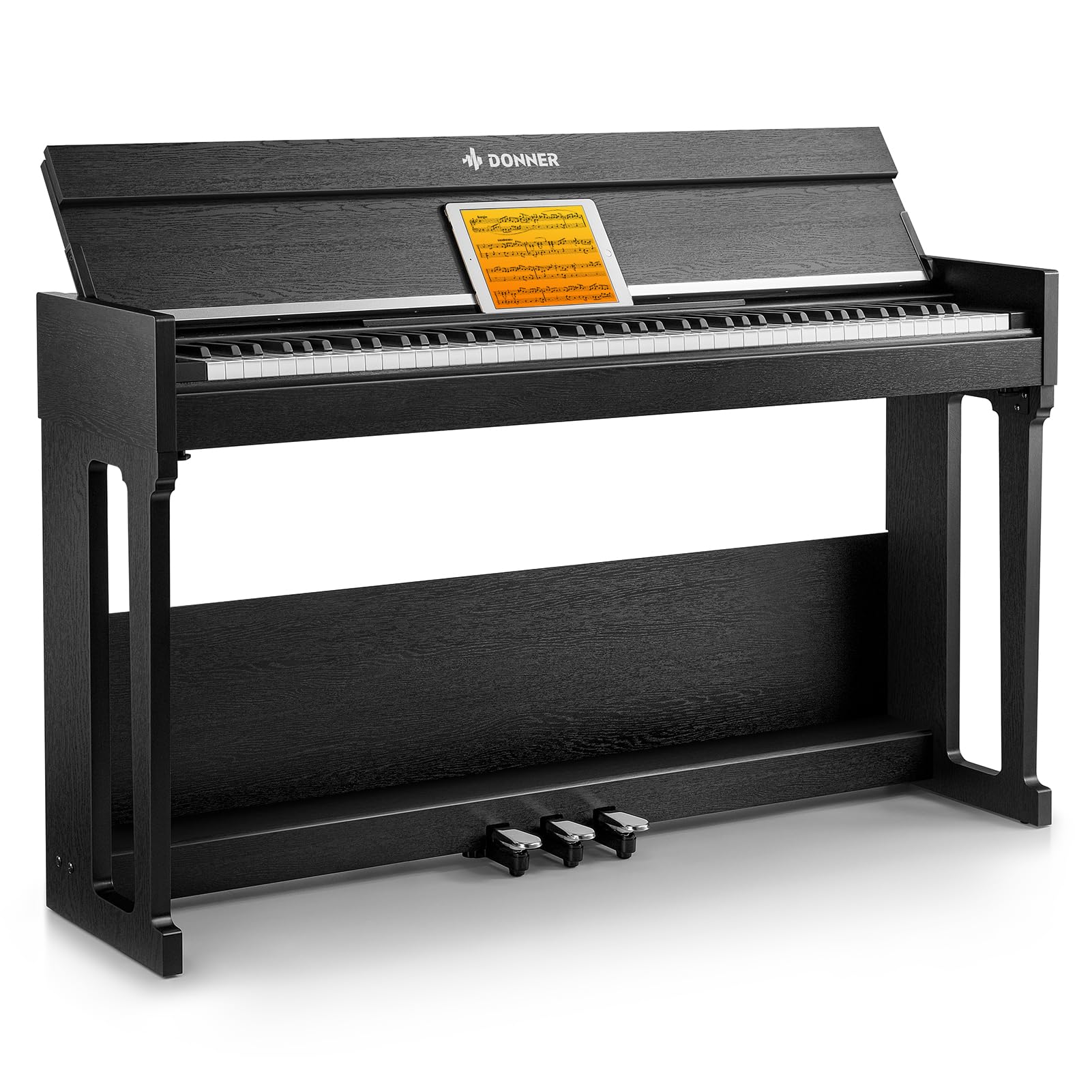
The single number that matters most to a beginner who has outgrown a basic keyboard is tone count, and the Donner DDP-90 Pro offers 238 tones and 200 rhythms — that is 228 more instrument sounds than the Casio CDP-S160, giving you organs, strings, synths, and world instruments to explore without ever touching a computer. The downside for this massive library is weight and build — at 75 pounds, this is a full console you set up once, and the key action, while hammer-weighted, feels slightly lighter than the AODSK or STRICH. One buyer mentioned high notes sounded “flat and tinny” and a single key had a sticking issue, though Donner’s customer service was responsive. The slow-close folding cover (protects fingers and keys) and USB-MP3 playback from a flash drive are features typically found on pianos costing considerably more. This is for the beginner who wants to explore hundreds of sounds and will not move the piano from its room for years.
5. Yamaha DGX-670B
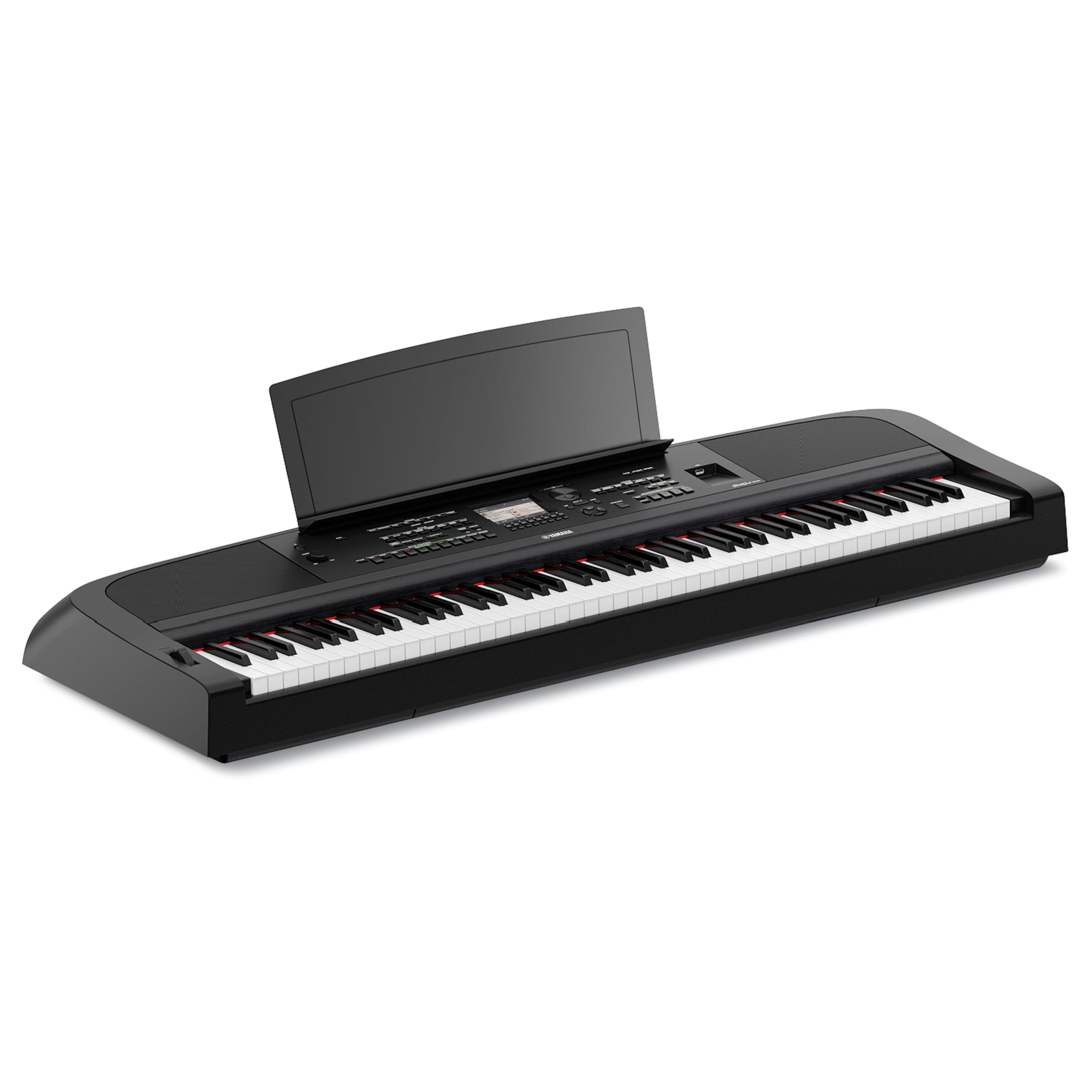
The Yamaha DGX-670B pulls ahead of the Donner DDP-90 Pro on sheer instrument count — 630 voices vs 238 — and adds 263 auto-accompaniment styles that create a full backing band as you play, adjusting the accompaniment intensity based on how hard you strike the keys. Its graded weighted action is heavier in the low keys and lighter in the high keys, emulating a real grand piano, and it samples sound from Yamaha’s flagship CFX concert grand for what one buyer called “the best digital piano I’ve ever had.” The furniture stand and bench are sold separately, adding to the total cost, and the keybed uses double sensors instead of triple sensors found on higher-end models. If you want to practice with a virtual band behind you and access hundreds of instrument sounds, this is the most versatile keyboard in this lineup and a better choice for gigging musicians than the AODSK.
6. Casio Privia PX-870
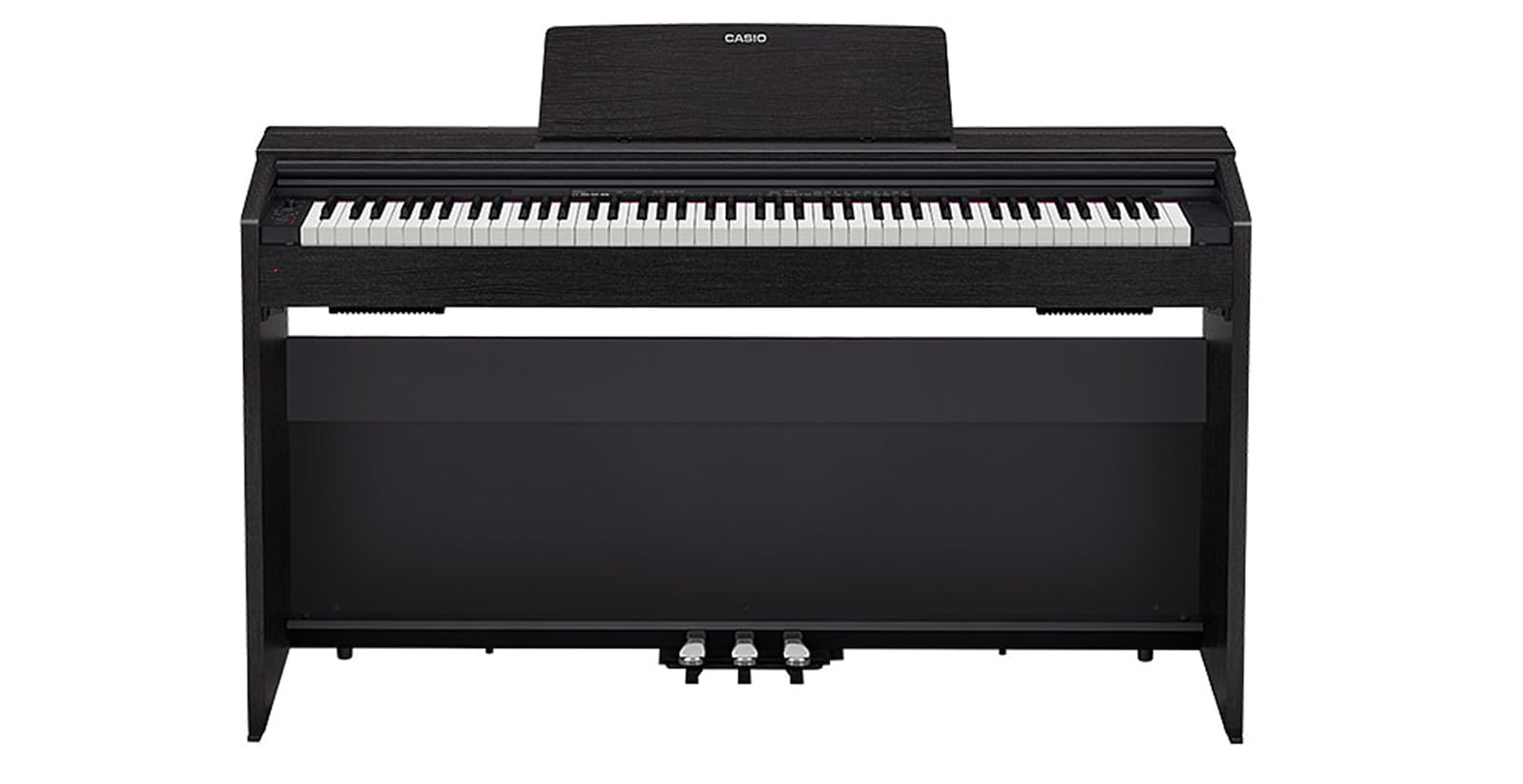
The Casio Privia PX-870 is the pick for the buyer who wants the closest thing to an acoustic grand without the maintenance — its Tri-Sensor II Scaled Hammer Action uses three sensors per key (most models use two) to detect your playing speed and dynamics with greater accuracy. Its 40W 4-speaker Sound Projection system fills a room more powerfully than any other model in this guide; buyers specifically praise the sound quality, with one saying it “rivals Yamaha pianos.” The AiR Sound Source adds detailed damper resonance and key-off simulation — subtle effects that happen when you release a key on a real piano — making your playing sound far more expressive than simpler digital pianos. The cabinet uses fiberboard rather than solid wood, and the plastic screw covers feel cheap, but advanced players will not outgrow this piano quickly, unlike the entry-level Alesis Recital.
7. Yamaha YDP105
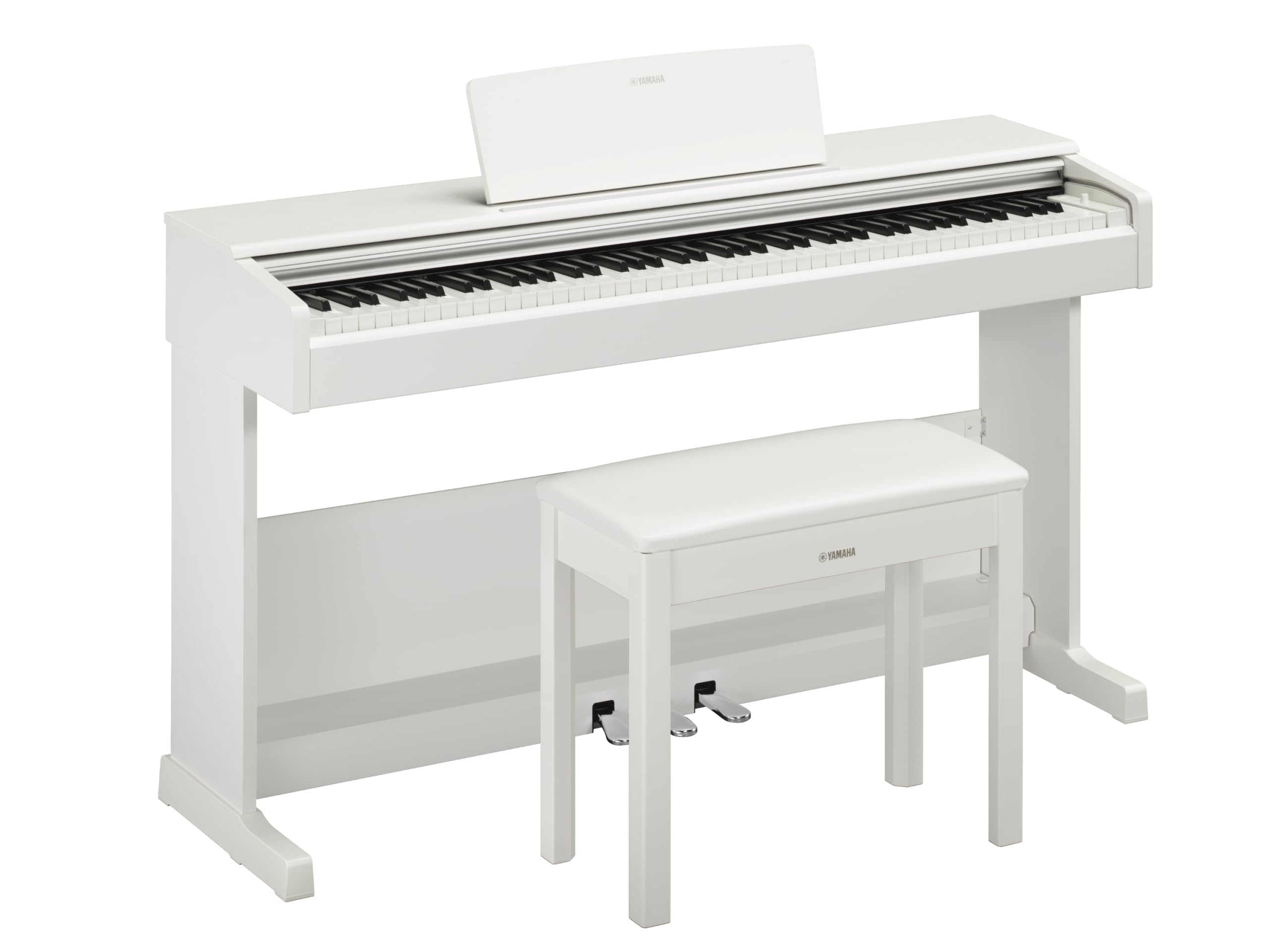
For roughly the same price as the Casio Privia PX-870, the Yamaha YDP105 gives you a different value proposition — it is the only console in this guide that includes a padded bench and a full 3-pedal unit from the factory, so you get a complete furniture setup out of the box. The Graded Hammer Standard (GHS) keyboard action with Touch Response gives you heavier bass keys and lighter treble keys, and the 10 instrument voices include a sampled grand piano that sounds bright and clear through the built-in stereo amplifier and speakers. Buyers describe the sound as “beautifully voiced” and note the GHS keys “feel acoustic-like.” What you give up versus the Casio Privia is sound complexity — the YDP105 has 10 voices and basic stereo speakers compared to the PX-870’s 40W multi-speaker system. At 82.7 pounds, it is the heaviest model here — set it up once and enjoy a traditional upright look with everything included.
8. Donner DDP-300

The Donner DDP-300 sits between the DDP-90 Pro and the Yamaha DGX-670B on price, but it carves out its own spot with Bluetooth MIDI connectivity — letting you connect wirelessly to composition apps on your phone or tablet without any cables. Its graded hammer action is paired with a dual-tweeter and subwoofer stereo system that produces what the manufacturer calls “warm, 3D surround sound,” with richer bass than the single-speaker models. Customers note the piano “plays, sounds, and feels like an acoustic piano” and that the partition mode (splits the keyboard into two equal-pitch sections) simplifies teacher-student lessons. The one reason to choose the DDP-300 over the DDP-90 Pro is Bluetooth and the audio system — if you plan to use piano learning apps on your iPad and want wireless freedom, this saves you from dealing with USB cables. Just know you give up the 238 tones of the DDP-90 Pro for 10 HD timbres instead. pass on it if you need hundreds of instrument voices; choose it if wireless app integration matters more.
9. Alesis Recital 88-Key

For the lowest entry price in this guide, the Alesis Recital gives you 88 full-sized semi-weighted keys, 128-note polyphony (matching the AODSK at a fraction of the price), and two built-in 20W speakers that buyers describe as having “fantastic sound/volume” — enough to fill a bedroom without external speakers. At just 15.7 pounds, it runs on 6 D cell batteries for practice anywhere without power. What you give up is the fully weighted hammer action — the keys are spring-loaded and semi-weighted, which one buyer accurately described as “not piano-like” compared to weighted models, though “better than synthesizers” for a beginner. It is the budget-friendly starter for the absolute beginner who wants 88 keys and 128-note polyphony at the lowest possible price, knowing they may upgrade to a weighted hammer-action piano within a year or two as their skills develop.
10. Ktaxon 88-Key Weighted Action

The Ktaxon brings weighted keys and double Bluetooth (both audio and MIDI) to a budget-friendly price point — reviewers point out the keys “feel like glass, full weight” and the included 3-pedal unit, dust cover, and note stickers create a complete home console experience that costs less than most portable keyboards in this list. The main sacrifice is polyphony: at 64-note polyphony (half the 128-note count of the Alesis Recital and AODSK), you may hear notes cut off during sustained chords with the pedal held down in complex music. The built-in 10W stereo speakers work fine for bedroom practice but are “not loud enough for performance,” according to buyers. This is for the budget-conscious buyer who absolutely wants weighted keys and a furniture stand but does not plan to play advanced classical repertoire — the weighted touch and included accessories make it unbeatable value for casual learning and practice.
Understanding the Specs
Hammer Action Vs Semi-Weighted
Hammer action keys use a small internal mechanism that mimics the feel of a real piano hammer striking a string — you feel resistance on the way down and a slight rebound on the way up. Semi-weighted keys use a spring system that provides some resistance but lacks the progressive weight change (heavier in the bass, lighter in the treble) that develops proper finger strength.
Polyphony — Why 128 Matters
Polyphony is the total number of notes your piano can produce at one time. Each key you press is one note, but holding the sustain pedal down adds every previous note to the count. A fast arpeggio (a broken chord played rapidly) can use 15-20 notes instantly. With 64-note polyphony, you risk hearing notes randomly drop out during complex pieces. 128-note polyphony gives you a comfortable safety margin for any classical or jazz repertoire.
Speaker Power and Configuration
Speaker wattage tells you how loud the piano can play, but the speaker arrangement matters just as much. A single 20W speaker sounds thin because it cannot produce both bass and treble clearly. A 2-speaker stereo system (left and right) gives you spatial depth. A system with tweeters (high-frequency drivers) and a subwoofer (low-frequency driver) produces the widest, most realistic sound — like the Donner DDP-300’s dual tweeter and subwoofer setup.
Pedal Types and What They Do
The sustain pedal (right) keeps notes ringing after you lift your fingers — essential for smooth legato playing. The soft pedal (left) lowers the volume and changes the timbre slightly. The sostenuto pedal (middle) holds only the notes you are pressing at the moment you press the pedal, allowing you to sustain a bass note while playing staccato in the right hand. Full 3-pedal units are standard for classical repertoire.
FAQ
Can I use headphones with any 88 key digital piano to practice silently?
How many built-in instrument voices do I actually need as a beginner?
Does Bluetooth matter for a digital piano, and what does it actually do?
Is 64-note polyphony enough for a beginner, or should I pay more for 128?
Do I need a furniture stand, or can I just put the keyboard on a table?
Final Thoughts: The Verdict
For most people, the best 88 key digital piano is the AODSK B-83S because it delivers fully weighted hammer action keys with 128-note polyphony, a furniture stand, and triple pedals — everything you need for realistic practice without paying premium console prices. If you want a portable option you can move between rooms and run on batteries, grab the Casio CDP-S160. And for the richest acoustic simulation with a 40W multi-speaker system, the standout is the Casio Privia PX-870.