
Our readers keep the lights on and the weekend projects moving. As an Amazon Associate, I earn from qualifying purchases.
That sickening twist of a weak ankle makes you brace for every uneven step. You need a brace that actively stops the roll, so you can walk or play without fear. This guide compares seven ankle supports built to stabilize weak ligaments and keep you moving.
I’m Rikta — the co-founder and writer behind FitlyFast. This guide is built by comparing the manufacturers’ published specifications and the patterns across verified customer reviews, so you get each pick’s real strengths and trade-offs instead of marketing spin.
This breakdown of the best ankle support for weak ankles helps you find the right fit without hype, whether you are healing from a sprain or managing chronic instability.
How To Choose The Best Ankle Support For Weak Ankles
Picking the right brace comes down to knowing what your ankle actually needs. A slip-on sleeve might feel fine for a minor ache, but if you have a history of sprains, you need something with active stabilization — like side splints or figure-eight straps — that stops your foot from rolling sideways. Here are the key factors to get right.
Support Level: Sleeve, Lace-Up, or Strap?
Sleeves are for mild compression and warmth. Lace-up braces give you a snug, customizable fit that cinches down around the entire joint. The most effective option for weak ankles is a brace that combines a lace-up base with an additional strap — usually a figure-eight or figure-six wrap — that locks the ankle bone in place and prevents inversion (rolling inward) and eversion (rolling outward).
Fit and Profile: Will It Fit Inside Your Shoe?
A bulky brace that does not fit inside your sneaker is useless for sports or daily wear. Look for a low-profile design that slides into your regular shoe without forcing you to go up a size. Open-heel designs also help by letting your heel sit naturally in the shoe pocket, which prevents the brace from bunching up and causing blisters.
Stabilizers: Removable vs. Fixed
Some braces come with plastic or metal stays (rigid inserts) on the sides of the ankle. Removable stays let you start with full protection during recovery and then dial back the stiffness as you regain strength. Fixed stays are fine if you have a chronic condition that demands constant rigid support, but they can be less comfortable for all-day wear.
Quick Comparison
On smaller screens, swipe sideways to see the full table.
| Model | Category | Best For | Key Spec | Amazon |
|---|---|---|---|---|
| AGPTEK Ankle Brace | Mid-Range | Quick, adjustable support for sports | 0.18 kg weight, removable splints | Amazon |
| Med Spec ASO Ankle Stabilizer | Premium | PT-approved recovery and prevention | 169 grams, figure-8 straps | Amazon |
| DonJoy Stabilizing Speed Pro | Premium | Transitioning from a cam boot | 0.17 kg, quick lace-up system | Amazon |
| MUELLER The One Ankle Brace | Premium | Figure-eight stability for daily wear | Speed lacing, grip coating | Amazon |
| Shock Doctor Ankle Stabilizer | Mid-Range | Low-profile fit for most shoes | 5 x 3 x 1 inch dimensions | Amazon |
| ProCare Stabilized Ankle Support | Mid-Range | Heavy-duty durability for sprains | 5.64 oz weight | Amazon |
| ACE Ankle Brace with Side Stabilizers | Budget | Light daily support on a budget | 0.01 oz weight | Amazon |
In‑Depth Reviews
1. AGPTEK Ankle Brace for Women Men
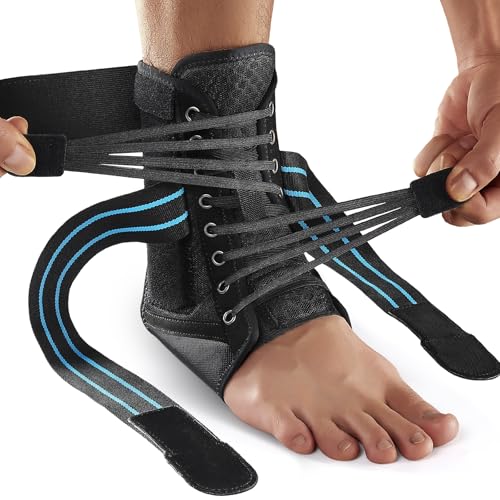
The AGPTEK weighs just 0.18 kilograms (about 6 percent lighter than the DonJoy) and is the top pick for anyone who needs adjustable support from recovery through sports. Its triple-support system wraps your ankle in 360 degrees of protection — combining removable side splints, an X-cross compression strap, and a top wrap — so you get rigid stabilization when you need it (keep the splints in during recovery) or flexible mobility when you feel stronger (take them out for sports).
Buyers report that the adjustable velcro straps save precious time compared to traditional lace-up braces, and after foot surgery one reviewer noted it was “better than the one my doctor gave me.” The honeycomb ventilation zones keep air moving, so your ankle does not get sweaty during a full day of wear. It fits into basketball shoes, hiking boots, and running sneakers without feeling bulky.
The only honest limit is that it runs a bit small — a few buyers suggest ordering one size up if your foot is on the wider side. But for the combination of adjustable support, low weight, and a fit that slides into your normal shoes, this is the brace most people should grab first.
Why it’s great
- Removable splints let you customize stiffness as you heal.
- 1-second fastening with hook-and-loop straps saves time over laces.
- Breathable honeycomb fabric prevents moisture buildup.
Good to know
- Tends to run small — consider sizing up for wide feet.
- Open-heel design may not suit users wanting full foot coverage.
2. Med Spec ASO Ankle Stabilizer
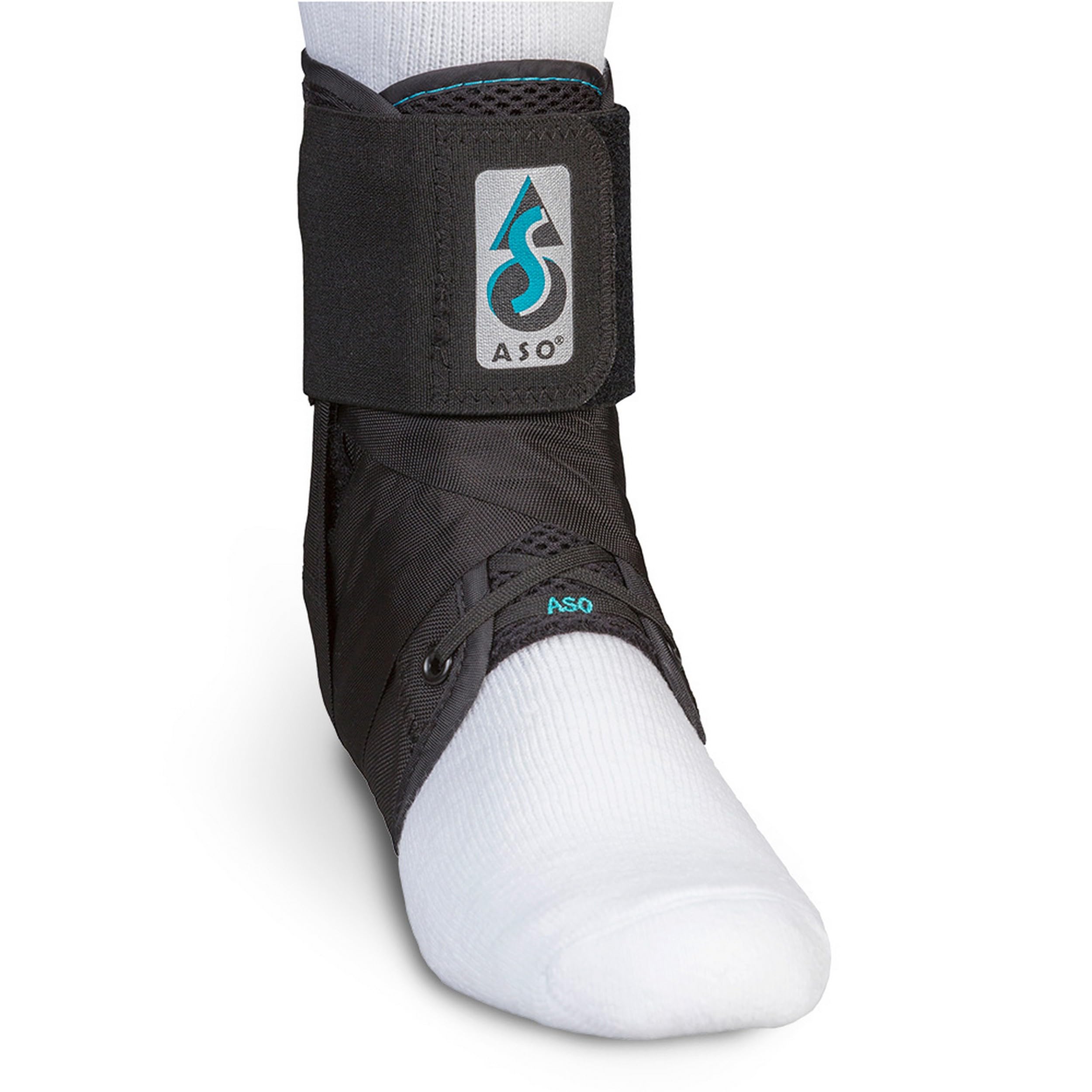
The Med Spec ASO beats the AGPTEK on one crucial front: its figure-eight strapping system is the gold standard for stopping your ankle from rolling sideways. Where the AGPTEK uses a triple wrap, the ASO applies direct crossed tension around the ankle bone itself — a design that physical therapists and athletic trainers consistently recommend. It weighs 169 grams, so it is in the same lightweight ballpark, but the ASO feels stiffer because the nylon fabric resists stretch over time.
Owners mention it provides “excellent compression and support” for old sprains and peroneal tendonitis, and that it fits comfortably under running shoes without rubbing. The CoolFlex padding keeps your skin dry even during sweaty games of basketball or volleyball. One reviewer with a bad ankle sprain called it “THE ankle brace you’re looking for” — and they were right that the adjustable laces, which have a sewn center to keep both sides even, make a huge difference in getting a balanced fit.
If you are dealing with a specific injury like peroneal tendonitis or chronic instability that a doctor or PT has diagnosed, and you want the most clinically proven stabilization, this is the one to choose over any other pick.
Where it shines
- Figure-eight straps actively prevent inversion and eversion sprains.
- Breathable, stretch-resistant nylon lasts through heavy use.
- Widely recommended by PTs and athletic trainers.
Worth noting
- Laces are long and take some practice to tie evenly.
- Does not fit slip-on shoes; best worn with lace-up sneakers.
3. DonJoy Stabilizing Speed Pro Ankle Support Brace

If you are transitioning from a cam boot after a serious injury, you need a brace that provides near-boot-level support without locking you into total immobility. The DonJoy Speed Pro delivers that with a quick lace-up system that one buyer mentioned takes just 10 seconds to apply, using velcro laces and two gathering tabs. The 800D ballistic nylon (a heavy-duty fabric usually found in tactical gear) and reinforced eyelets are built to survive the daily abuse of demanding athletes.
The removable medial and lateral stays (plastic strips on each side of the ankle) give you the option to dial back the stiffness as your ligaments heal. Customers note that it is “bulky but supportive and effective” and that the speed lace system is “superior” to older full-lace braces — one reviewer with severe Achilles tendonitis said it reduced their pain from a 9 to a 2-3 on a daily basis.
The D-rings that guide the laces can hit pressure points on some people, and the plastic stays may warp after months of heavy use. But for anyone coming off a walking boot or dealing with post-surgery recovery, this brace gives you the closest thing to a hard cast in a flexible package.
What stands out
- Quick 10-second application with velcro speed laces.
- Removable stays allow customization from full to moderate support.
- 800D ballistic nylon is extremely durable for daily use.
The trade-offs
- D-rings can dig into your foot at certain pressure points.
- Plastic stays may warp after several months of heavy use.
4. MUELLER Sports Medicine The One Ankle Brace

What matters most for weak ankles is how well a brace prevents inversion and eversion — the two motions that cause sprains. The MUELLER The One uses a figure-eight strapping system that directly targets those movements, combined with a speed lacing system that has fewer eyelets and flat laces so you can get it tight in seconds. The grip coating on the inside of the brace adds an extra layer of anti-slip security, so the brace stays put even during quick lateral cuts.
The catch you accept with this premium model is a more specific size range (it fits Men’s 9-11 or Women’s 10-12), so if you have very small or very large feet, you may not get a perfect fit. One owner reported that it was “too tight for my ankle and calf” because of swelling — but that is not the brace’s fault; it just means you need to measure carefully before buying. Buyers who got the right size report instant relief, with one calling it “amazing” for a mild sprain and saying it provided much firmer stability than an elastic band.
At this price point, you are paying for a brand with over 60 years of sports medicine history and a brace that survived a full year of daily volleyball and basketball wear for an active teen — the top-of-foot trim piece only tore at the seam after 12 months of hard use. That is a solid value for durable, daily support.
The upsides
- Figure-eight straps actively prevent ankle rolls.
- Speed lacing with fewer eyelets is fast to adjust.
- Grip coating keeps the brace in place during activity.
Keep in mind
- Limited size range may not fit very small or large feet.
- Can feel tight on swollen ankles — measure carefully.
5. Shock Doctor Ankle Stabilizer with Flexible Support Stays
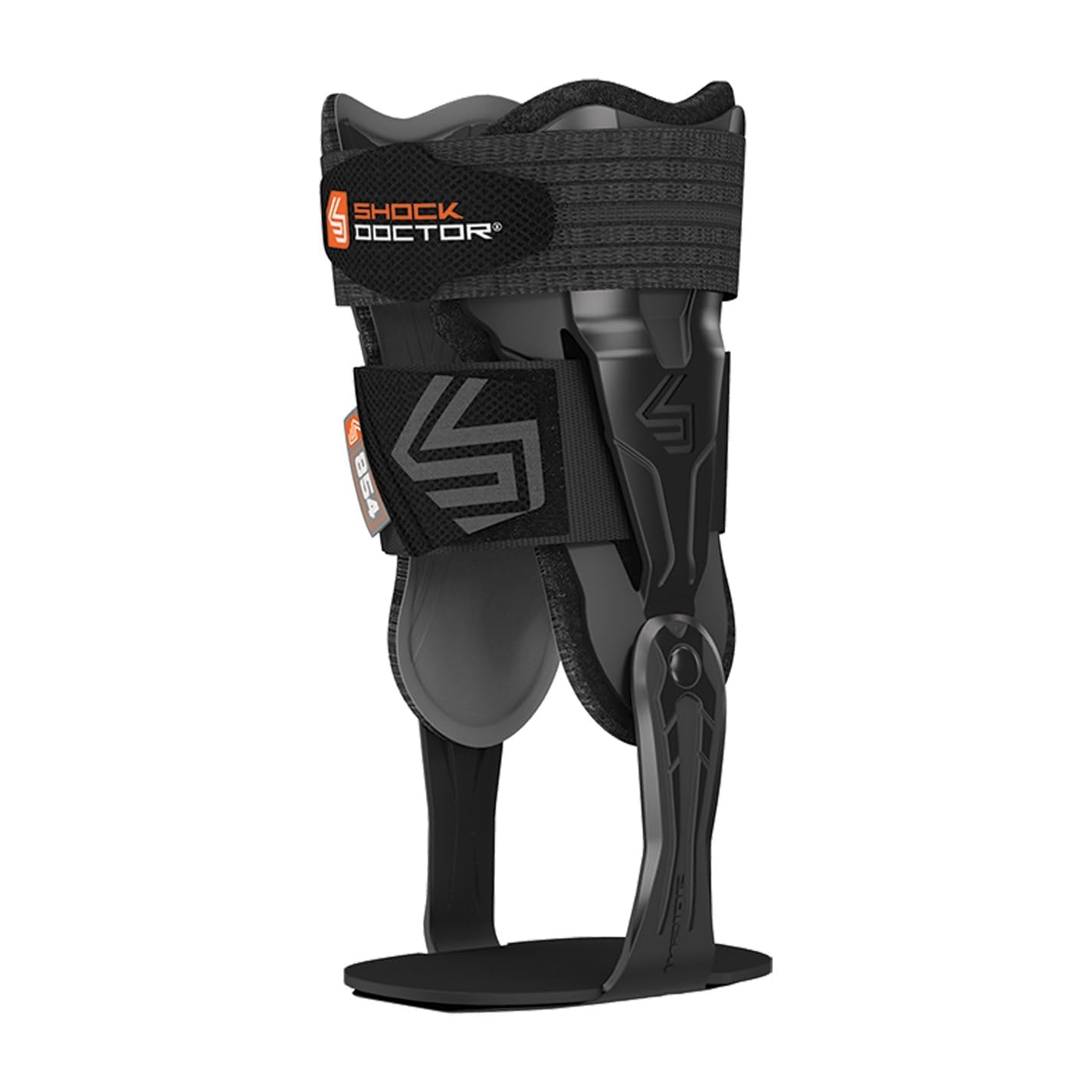
What you actually get at this lower price is a brace that disappears inside your regular shoes. Its dimensions are just 5 x 3 x 1 inches — making it more than three times smaller in volume than the ACE brace — and its low-profile design fits into nearly any sneaker, boot, or cleat without forcing you to go up a size. The speed-lace closure lets you tighten or loosen the fit in seconds, which is great for adjusting when your ankle swells during activity.
What you give up with this trim profile is raw stabilization power. Reviewers point out that while it provides “great support” and prevents rolling on mild sprains, it is “not supportive enough” for serious ankle injuries that need rigid, heavy-duty immobilization. The rear Velcro patch can also stick to your socks and cause wear over time. On the positive side, one reviewer with a size 14 extra-wide shoe said the largest size stretched to a near-perfect fit after initial tightness — so it works for big feet too.
The perfect buyer for this is someone with mild instability who wants to keep wearing their favorite shoes without a bulky brace ruining the fit. If you are a runner, a hiker on moderate trails, or a weekend pickleball player, this will give you enough support without feeling like a medical device — making it the exact budget buyer it is perfect for.
Why we’d pick it
- Extremely low profile fits into almost any shoe type.
- Speed-lace closure allows quick on-the-go adjustments.
- Flexible support stays prevent rolling without restricting motion.
A few caveats
- Not supportive enough for serious or post-surgery injuries.
- Rear Velcro can catch on socks and cause fabric pilling.
6. ProCare Stabilized Ankle Support Brace, Medium

This brace is perfect for the athlete or active person recovering from a moderate ankle sprain or tendonitis who needs maximum, long-lasting stabilization and is willing to trade quick on-and-off convenience for rugged durability.
At 5.64 ounces, the ProCare is bulkier than almost every other brace on this list — the ACE, for comparison, weighs just 0.01 ounces, making the ProCare over 564 times heavier. That weight comes from serious material: 800D ballistic nylon that can take daily abuse, full circumferential elastic straps that wrap around your tibia and fibula (the two lower leg bones), and reinforced eyelets that will not tear out. This is the brace your orthopedist would hand you after a sprain because it simply does not quit. Shoppers say it provides “excellent support for sprains, twists, tendonitis” and is “far better than ace bandages or slip-on braces.” One parent reported it worked perfectly for a 15-year-old who kept spraining his ankle during basketball season — the flexibility of the brace let him keep playing without re-injury. The removable articulated stays (curved plastic inserts that follow the shape of your ankle) let you dial down the support as you heal, and the universal fit means one brace works for either foot.
The downside is getting it on: three separate straps and long laces mean it takes longer to put on than the AGPTEK’s 1-second velcro system. But if durability and maximum stabilization are your top priorities — especially after a specific injury like a moderate sprain or tendonitis — the ProCare is built to last seasons, not weeks. Just be aware that its lengthy lacing and strapping process can be frustrating if you need to quickly get in and out of the brace multiple times a day.
Strong points
- 800D ballistic nylon and reinforced eyelets for extreme durability.
- Full circumferential elastic strap provides tibia/fibula compression.
- Removable articulated stays support healing at your own pace.
Before you buy
- Heavy and takes longer to put on than velcro-based braces.
- Long laces and three straps can be fiddly to adjust.
7. ACE Ankle Brace with Side Stabilizers
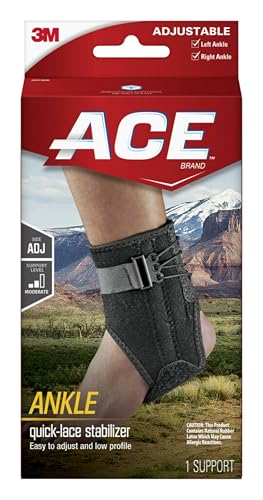
At this price, the ACE Ankle Brace with Side Stabilizers is the most lightweight option by far at just 0.01 ounces, making it feel like nothing on your foot — perfect if you hate the sensation of a heavy brace. It is also one of the simplest to use, with a hook-and-loop closure that takes seconds to secure. You get reinforced side stabilizers that limit lateral motion, adjustable compression, and a breathable design that keeps your skin dry.
What you give up is the intense stabilization of the ProCare or DonJoy. This is a moderate-support brace, meaning it will help wobbly ankles during pickleball, walking, or light jogging, but it may not be enough for full-court basketball or post-surgery recovery. One customer observed it was “excellent ankle support for weak ligaments” and that it lasted a full two years — impressive durability for the price. Another reviewer called it “comfortable all day, no chafing or blisters,” and noted it was flexible enough for running and climbing.
This brace is for anyone on a budget with mild to moderate instability who wants reliable daily support without a heavy feel. It is not the top performer, but for the price, it delivers the support needed to keep you moving without overspending. The one clear reason to choose it is its unmatched lightweight design and budget-friendly value for mild to moderate instability.
What we like
- Incredibly lightweight at just 0.01 ounces — you barely feel it.
- Reinforced side stabilizers limit rolling without being bulky.
- Breathable material keeps skin dry during extended wear.
The downsides
- Moderate support level, not ideal for severe instability.
- Some find it difficult to get a snug fit on the first try.
Understanding the Specs
Figure-Eight Straps vs. Basic Wraps
Figure-eight straps (also called criss-cross straps) wrap around your ankle bone in opposite directions to lock the joint from rolling inward or outward. Basic wraps or slip-on sleeves just provide general compression without targeting the specific motion that causes sprains. For weak ankles, figure-eight construction is the most effective design.
Removable Splints / Stays
These are rigid inserts, usually plastic or metal, placed on each side of the ankle. Removable splints let you start with maximum rigidity during healing and then remove them as your ligaments regain strength. Fixed stays cannot be removed, which is fine for chronic instability but can feel too stiff for daily wear.
Low-Profile Design
A low-profile brace is thin enough to fit inside your normal shoe without forcing you to buy a larger size. This is critical for sports and daily wear because a bulky brace will shift around inside the shoe, reduce stability, and cause blisters. Look for open-heel and slim-side designs to ensure a natural fit in your sneakers.
Weight and Material
Braces made from ballistic nylon (like 800D nylon) are extremely durable but heavier. Less expensive braces use thinner nylon or neoprene, which are lighter but may stretch out over time. Weight matters because a heavy brace can fatigue your leg muscles during long periods of activity, while a very light brace may not offer enough resistance against rolling.
FAQ
Can I wear an ankle brace in my regular shoes?
How tight should an ankle brace be for weak ankles?
Is a lace-up brace better than a slip-on for weak ankles?
How long does an ankle brace typically last?
Final Thoughts: The Verdict
For most people, the ankle support for weak ankles winner is the AGPTEK Ankle Brace because it combines removable splints, a quick velcro system, and a lightweight build that fits into your normal shoes. If you want the most clinically proven stabilization from a PT-approved design, grab the Med Spec ASO Ankle Stabilizer. And for transitioning out of a cam boot or managing severe post-surgery instability, the DonJoy Stabilizing Speed Pro gives you the closest thing to a hard cast in a flexible package.