
Our readers keep the lights on and the weekend projects moving. As an Amazon Associate, I earn from qualifying purchases.
Specs are compiled from manufacturer listings and verified buyer reviews and can change over time — please confirm the key details on the product page before buying.
Choosing a bonsai tree often feels like a gamble—will you get a thriving miniature tree or a stick in a pot that drops every leaf within a week? The real difference between success and disappointment lies in age, root health, and whether the variety matches your home’s light. This guide breaks down the best live bonsai trees you can buy, focusing on what keeps them alive and what kills them, so you pick one that actually grows instead of one that fails.
I’m Rikta — the founder and writer behind FitlyFast. This guide is built by comparing the manufacturers’ published specifications and the patterns across verified customer reviews, so you get each pick’s real strengths and trade-offs instead of marketing spin.
From flowering azaleas to forgiving succulents, these are standout options for a bonsai tree that arrives healthy and stays that way.
Quick Picks
- Brussel’s Bonsai – Live Trident Maple Bonsai Tree — Best Overall
- Brussel’s Bonsai – Live Green Mound Juniper Bonsai Tree — Premium Evergreen
- Brussel’s Bonsai – Live Satsuki Azalea Bonsai Tree — Best Value
- Brussel’s Bonsai – Live Dwarf Jade Bonsai Tree — Indoor Champion
- Brussel’s Bonsai – Small Chinese Sweet Plum Bonsai Tree — Indoor Elegance
- Brussel’s Live Harland Boxwood Outdoor Bonsai Tree — Hardy Outdoor
How To Choose The Best Bonsai Tree
Picking your first live bonsai depends on three things: where you plan to keep it, how much light that spot gets, and how much time you want to spend watering. Get those right, and the tree does most of the work.
Match the Species to Your Light
Indoor bonsai like the Dwarf Jade and Chinese Sweet Plum need bright, indirect light—think a well-lit desk or a windowsill that does not get scorching afternoon sun. Outdoor varieties like the Juniper, Boxwood, and Trident Maple need to live outside all year, including a cold winter dormancy period. Bringing an outdoor Juniper inside will kill it within weeks.
Age Beats Height Every Time
A 5-year-old tree with a thicker trunk and established root system is far more resilient than a younger one that is tall but thin. Older trees recover faster from shipping stress and are less likely to drop every leaf when you bring them home.
Check the Soil on Arrival
The most common killer of shipped bonsai is soil that stays too wet because of heavy peat moss packing. If the soil feels soggy when the tree arrives, consider repotting into a grittier mix with better drainage within the first week.
Quick Comparison
| Model | Best For | Age | Height | Weight | Amazon |
|---|---|---|---|---|---|
| Trident Maple | Outdoor Styling | 5 Years | 8–12 Inches | 7 Pounds | Amazon |
| Green Mound Juniper | Classic Evergreen | 3 Years | 6–8 Inches | 8 Pounds | Amazon |
| Satsuki Azalea | Outdoor Blooms | 5 Years | 5–8 Inches | 7 Pounds | Amazon |
| Dwarf Jade | Indoor Ease | 3 Years | 5–8 Inches | 3 Pounds | Amazon |
| Chinese Sweet Plum | Indoor Elegance | 5 Years | 6–10 Inches | 4 Pounds | Amazon |
| Harland Boxwood | Hardy Outdoor | 3 Years | 6–8 Inches | 6 Pounds | Amazon |
In‑Depth Reviews
1. Brussel’s Bonsai – Live Trident Maple Bonsai Tree
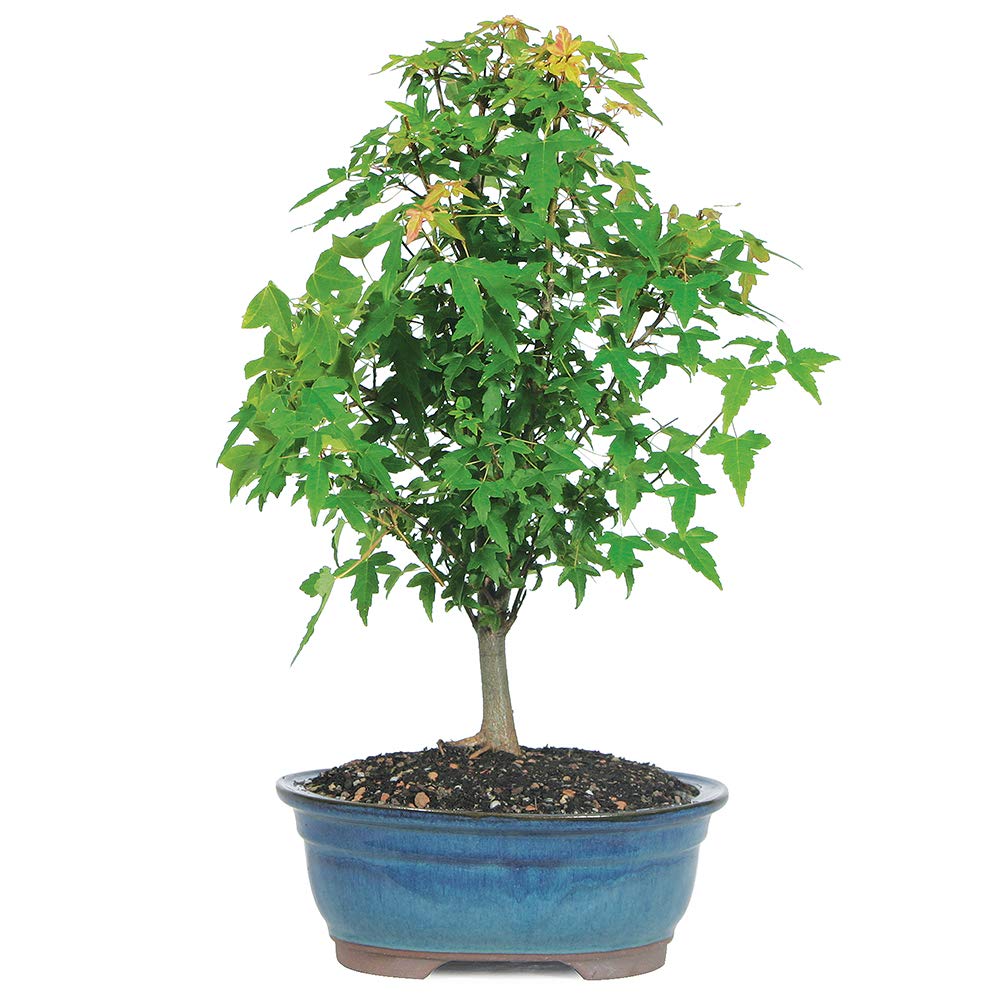
The Trident Maple that pairs seasoned age with a blank canvas for bonsai styling.
This is the one you buy when you want a real, 5-year-old tree with enough structure to shape yourself. It stands 8–12 inches tall, versus the Satsuki Azalea at 5–8 inches, so you get more trunk to work with and a more dramatic silhouette from day one.
Buyers report that the packaging keeps the pot secure and the tree arrived in great shape—one noted that the leaves looked droopy at first but perked up within two days once placed outside in Florida. Another owner bought a second one immediately. The only real risk is shipping stress if temperatures drop below 50°F during transit, but most trees bounce back with outdoor light.
This Trident Maple is taller and older than the Harland Boxwood at 5 years versus 3 years and 8–12 inches versus 6–8 inches, which gives you a more developed tree to start shaping. For an outdoor grower who wants pruning potential and fast recovery from shipping, this is a strong combo of age and value in the list.
Decades-head start: At 5 years old, you are getting a tree with a real trunk and branching structure, not a sprig. It recovers fast after transit, with multiple reviewers reporting it leafed out again in 2 days.
Outdoor-only rule: This is strictly an outdoor bonsai that needs winter dormancy. If you put it on an indoor desk, it will not survive the season.
Reach for this if: you are ready for outdoor bonsai with shaping potential and want a tree old enough (5 years) to survive rookie mistakes.
Look elsewhere if: your home has no outdoor patio or balcony, because this Maple needs real seasons to thrive.
2. Brussel’s Bonsai – Live Green Mound Juniper Bonsai Tree
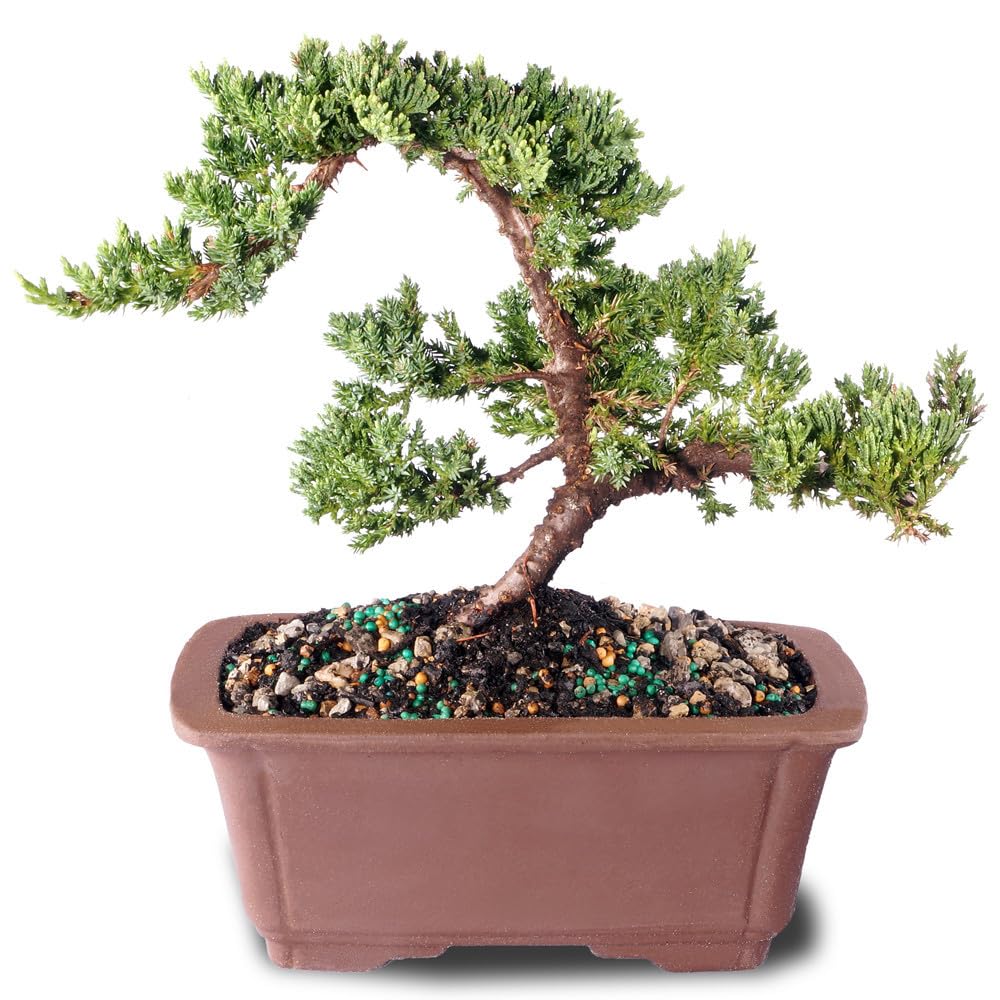
The classic evergreen silhouette that looks like a bonsai straight out of a Japanese garden.
This is the tree people picture when they say “bonsai”—dense green needles, a gnarled trunk, and a pot that looks like it has been part of the family for decades. It weighs 8 pounds, making it the heaviest pick here and feeling substantial in your hand. That heft comes from a mature root ball and thick pot, which anchors the tree on a patio.
Several buyers describe it as “gorgeous” and “exactly like the photo,” though one noted the tree measured only 6 inches tall instead of the stated 8 inches, with a piece of wire sticking out of the soil. The general consensus is that the medium size delivers a healthy, mature plant that thrives when left outside.
Unlike the Dwarf Jade below, which is lightweight at 3 pounds, the Juniper is an outdoor-only tree that needs full sun and a winter chill to stay green. It is simpler to keep alive than the azalea because it does not need blooms—it just stays evergreen and grows slowly with minimal fuss.
Real bonsai look from the start: The natural branching and evergreen density mean you get an instantly authentic display without years of training. Multiple buyers called it “spectacular” and “exactly like the photo.”
Size can vary slightly: A buyer reported theirs was 6 inches rather than the advertised 8, and the wire training stays visible. It is still a healthy tree, but set expectations.
The patio anchor: If you want a bonsai that looks mature from day one and can handle being left outside year-round, the Juniper is your easiest path.
skip it if: you live in a warm climate without a cold season, because this Juniper needs winter dormancy to survive.
3. Brussel’s Bonsai – Live Satsuki Azalea Bonsai Tree
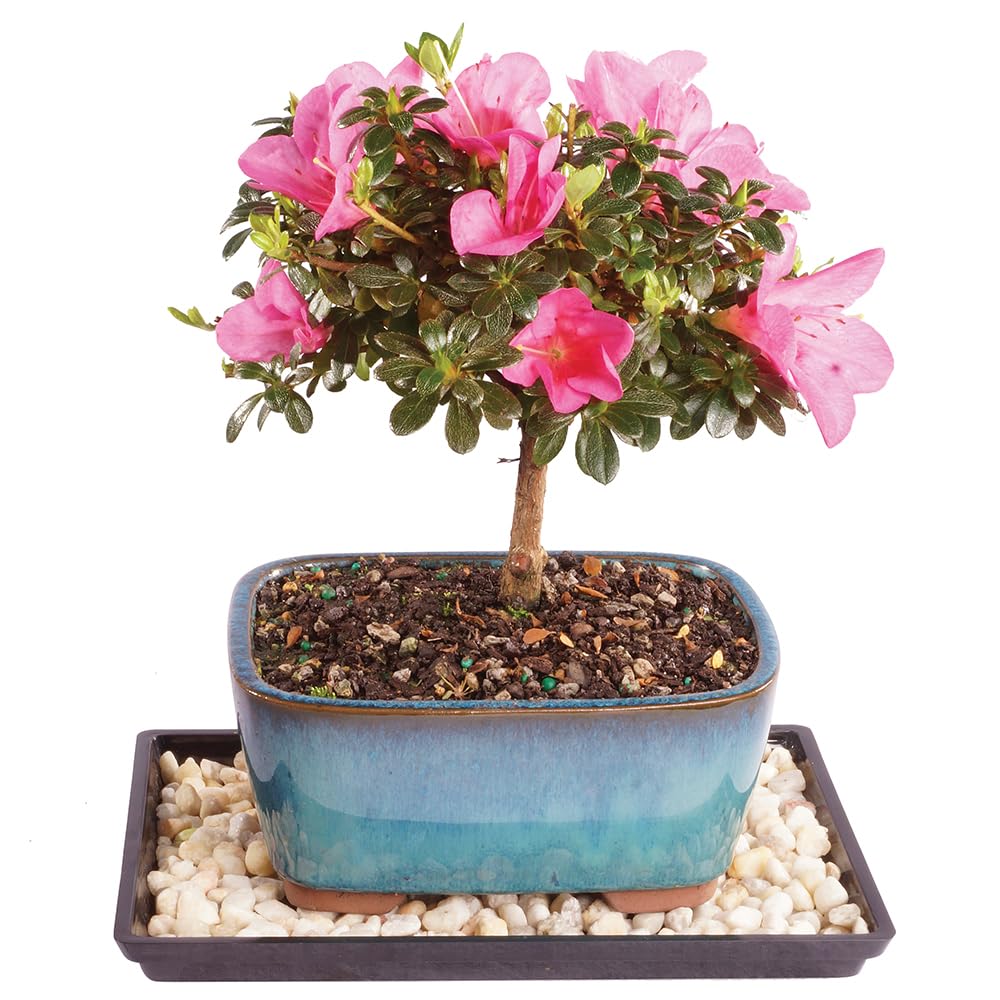
A flowering bonsai that packs 5 years of growth into a compact outdoor showpiece.
This Satsuki Azalea is a 5-year-old tree that blooms in spring, putting out vibrant flowers that transform your patio into a miniature garden. It stands 5–8 inches tall, which is 60% shorter than the Trident Maple, but that compact size is normal for a flowering bonsai and makes it ideal for a balcony rail or small table.
Buyers are mixed but mostly positive: one reviewer bought three bonsais from Brussel’s, calling the blueberry and Hawaiian umbrella “awesome and healthy,” but noted the Chinese plum died immediately despite following directions. Others say the tree arrived “very healthy” and “growing fast.” The risk is that some varieties within a single order can be more sensitive than others.
Compared to the Harland Boxwood, the Azalea needs more consistent moisture and sunlight to produce those spring blooms, but it rewards you with color the Boxwood never will. For the price, you get a 5-year-old flowering tree in a ceramic pot with a humidity tray, which is a solid value for a beginner who wants visible payoff from care.
Spring blooms guaranteed by age: At 5 years old, this tree is mature enough to flower reliably each spring, giving you color that no green-only bonsai can match. Reviewers confirm healthy, fast growth.
Some arrivals are sensitive: A buyer reported that their plum tree from the same seller died immediately despite perfect care. The Azalea itself seems sturdy, but shipping stress is a real possibility.
Grab this for: an outdoor flowering bonsai that is old enough (5 years) to bloom right away and comes with the pot and tray included at a mid-range price.
Pass if: you want a tree that stays green year-round without needing a seasonal bloom cycle, or if you are looking for an indoor desk plant.
4. Brussel’s Bonsai – Live Dwarf Jade Bonsai Tree
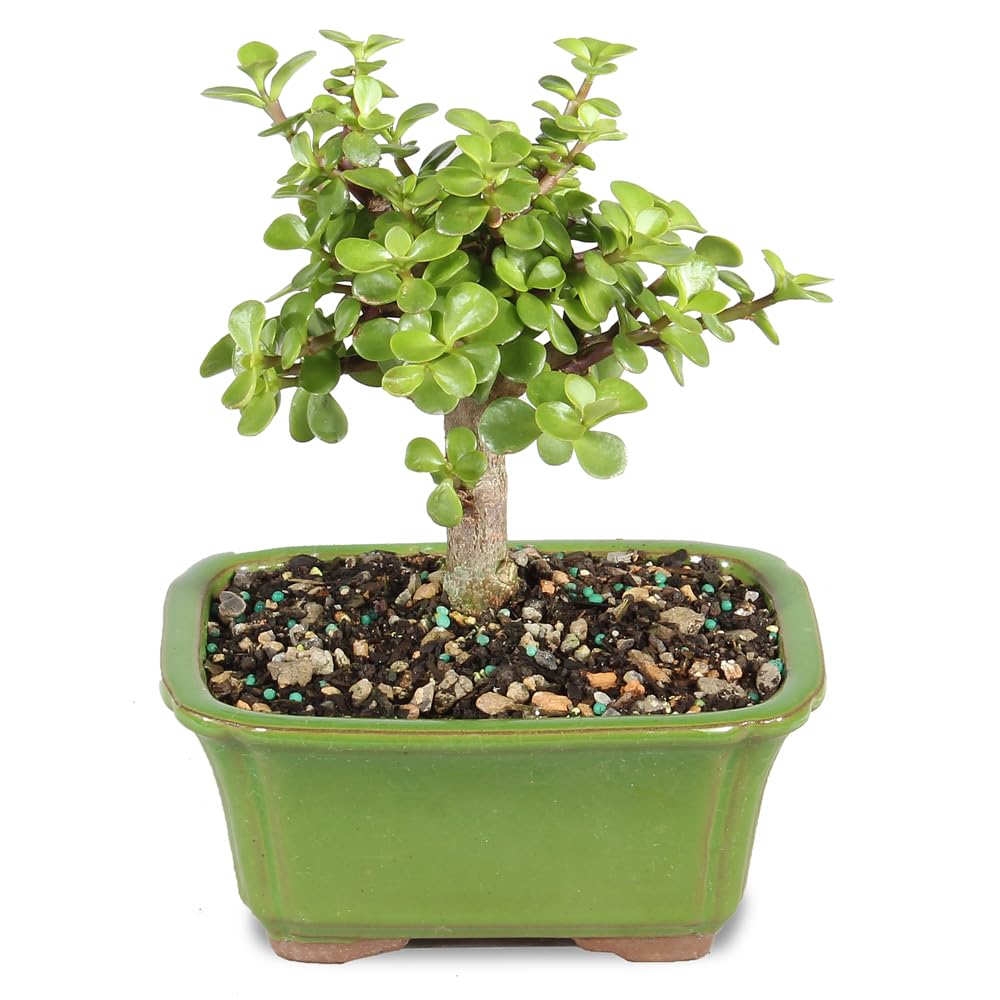
The succulent bonsai that forgives skipped waterings and sits happily on a desk.
This Dwarf Jade is the only indoor succulent bonsai on the list, making it the safest bet if you want a tree on your office desk or living room shelf. It weighs just 3 pounds, which is 2.7 times lighter than the Green Mound Juniper, so you can move it around easily. The thick woody trunk stores water, meaning you can water it once a week and it still looks happy.
Buyers widely praise the packaging and health of the tree—one reviewer called it “so cute” and noted it arrived with moist soil and no damage. However, one experienced buyer pointed out a serious issue: the soil mix is mostly peat, which stays too wet and can cause root hypoxia (a lack of oxygen around the roots, essentially suffocating them). They repotted into an 80% perlite/lava mix to save the severely stressed plant. This is a fix you can do in 10 minutes, but you should plan for it.
Unlike the Chinese Sweet Plum, which needs bright indirect light and blooms in summer, the Dwarf Jade thrives in lower indoor light and rarely drops leaves. For a first bonsai or a gift, the forgiveness factor is class-leading—just check the soil on arrival and consider repotting if it feels soggy.
True indoor survivability: As a succulent, it stores water in its trunk and leaves, so you can miss a watering and it will shrug it off. Multiple buyers confirm it arrived healthy and stayed that way.
Watch the soil on arrival: One detailed review flagged that the shipped soil is mostly peat, which can drown the roots if left saturated. Plan to repot into grittier mix within the first week for best long-term health.
Best for: a first-time bonsai owner who wants an indoor tree that is hard to kill and looks like a mini tree, not just a houseplant.
pass on it if: you are not willing to repot within the first week, because the peat-heavy soil from the nursery can cause root rot.
5. Brussel’s Bonsai – Small Chinese Sweet Plum Bonsai Tree
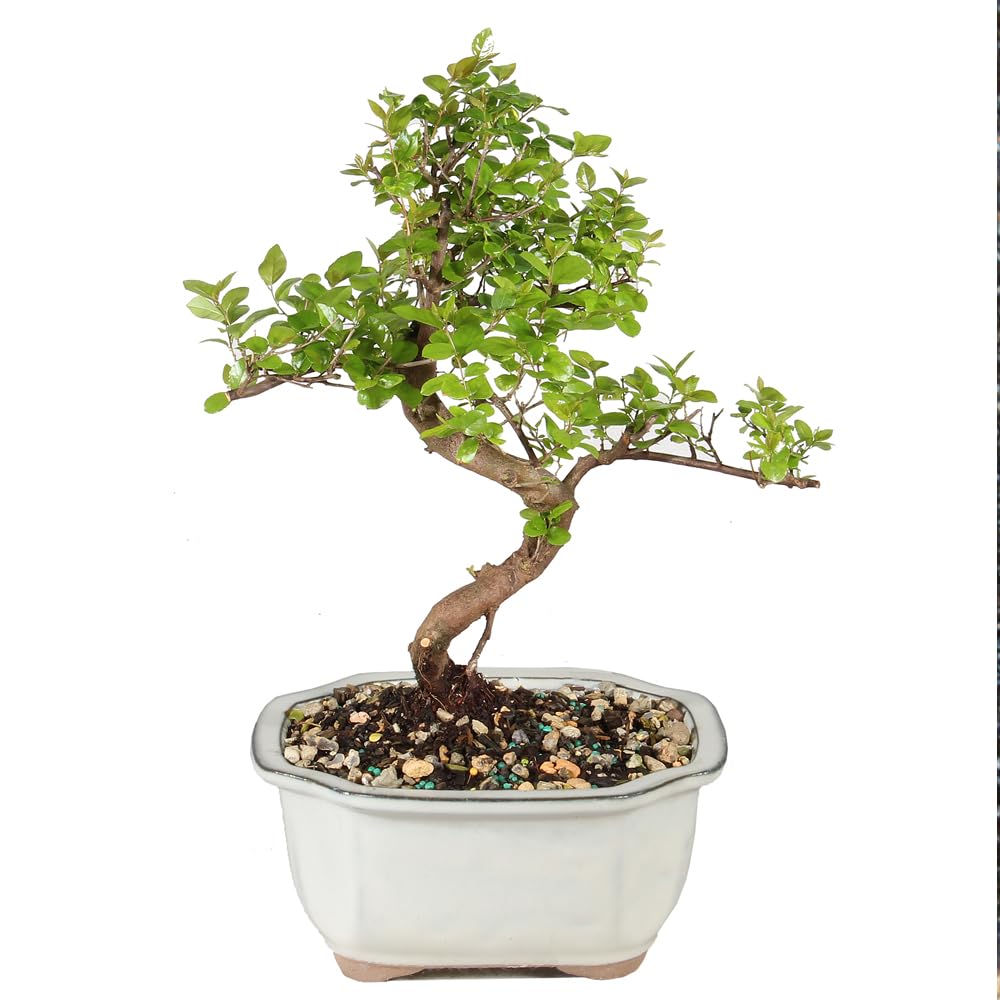
A 5-year-old indoor bonsai with glossy leaves that blooms in summer, not spring.
This Chinese Sweet Plum is one of only two indoor options here, and it stands out because it flowers in summer, giving you a second bloom season after the Azalea is done. It is a 5-year-old tree measuring 6–10 inches tall, planted in a stylish ceramic pot that looks like a piece of decor from the moment it arrives. At 4 pounds, it is heavier than the Dwarf Jade but still easy to move between a desk and a windowsill.
Buyers are generally very satisfied: one described it as “gorgeous” and noted the packaging protected the plant even when the box sustained a big dent. Another reviewer bought three bonsais and reported that the blueberry and Hawaiian umbrella “are awesome and healthy,” but the Chinese plum tree “died immediately despite following directions,” suggesting this specific variety may be more sensitive to transport changes than the others.
Compared to the Dwarf Jade, the Sweet Plum needs brighter light—indirect but plentiful—and more consistent watering. If you have a spot with good natural light and want a blooming indoor tree, the Sweet Plum rewards you with fragrant summer flowers. Just be prepared for a possible adjustment period as it acclimates to your home.
Summer bloomer for indoor spaces: Unlike most bonsai that flower in spring, this one waits until summer, extending your blooming season indoors. Buyers love the “gorgeous” glossy foliage and ceramic pot presentation.
Can be sensitive to shipping: One reviewer noted the plum tree died immediately despite following directions, while other bonsais in the same order thrived. The Sweet Plum may be a pickier variety than the Dwarf Jade.
Choose this if: you want an indoor tree that grows flowers in summer and comes in a decorative pot that makes it a natural centerpiece for a well-lit room.
Think twice if: your home has low light or you want a more forgiving, low-maintenance plant—the Dwarf Jade is easier for lower-light spaces.
6. Brussel’s Live Harland Boxwood Outdoor Bonsai Tree
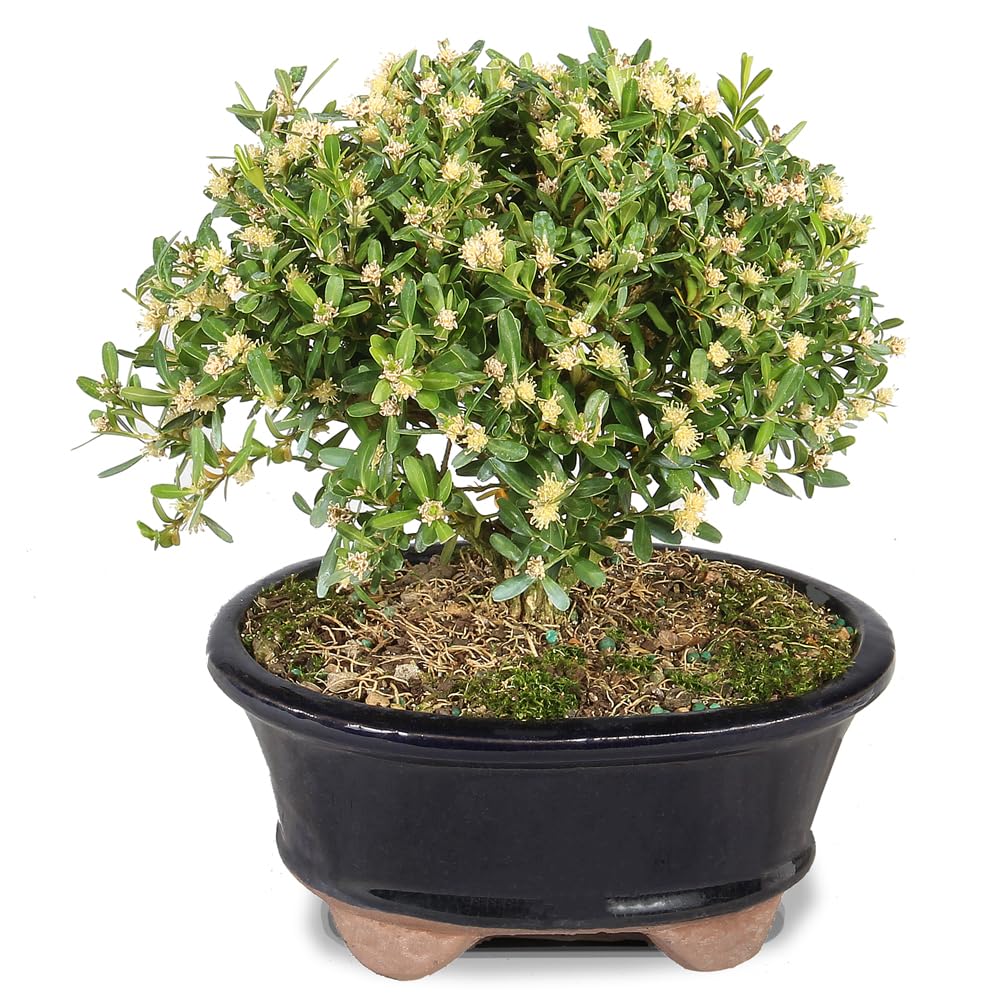
The textured-bark evergreen that smells as good as it looks—when it survives shipping.
This Harland Boxwood has striking ivory bark that contrasts with emerald leaves, and buyers describe the smell as “great” and the bark as “mesmerizing.” It is a 3-year-old tree standing 6–8 inches tall, planted in a ceramic pot that varies in color and style. At 6 pounds, it is heavier than the Dwarf Jade but lighter than the Juniper, making it a mid-weight outdoor option for a porch or garden.
The reviews here are a split story. Five-star owners mention the tree arrived “healthy, decent size” and was “one of the best bonsais I’ve bought anywhere.” But one buyer mentioned the tree “died within a week despite proper care,” noting the pot and tree were beautiful initially but could not be saved. This risk is real, especially with a 3-year-old tree that has less established roots to survive shipping shock.
Compared to the 5-year-old Trident Maple, this Boxwood is younger by 67%, meaning it is smaller and more vulnerable to transport stress. The Bark is genuinely one-of-a-kind on this list, but if you want a higher survival rate, the older trees tend to bounce back faster. For the price, you get a unique texture and a pot included—just be aware that the survival odds are not as high as with the 5-year-old picks.
Unique visual texture: The ivory bark and emerald leaves create a look no other tree on this list offers. Multiple customers note it smells great and looks “mesmerizing.”
Survival can be a coin flip: While many reviewers point out a healthy tree, at least one verified purchase died within a week despite proper care. The 3-year-old age makes it less resilient to shipping than older options.
Pick this for: the unique bark texture and fresh evergreen scent that stands out on a patio—the visual reward is real if the tree survives the trip.
Avoid it if: you want the highest chance of a tree that lives past the first month. The older Trident Maple or hardier Juniper are safer bets for beginners.
Understanding the Specs
Age vs. Height — Which Matters More?
Age determines how thick the trunk is and how established the root system has grown. A 5-year-old tree like the Trident Maple or Satsuki Azalea has a better chance of surviving shipping stress and acclimating to a new home than a 3-year-old tree like the Boxwood. Height is a secondary spec: a tall but young tree may be spindly, while a shorter 5-year-old tree is often denser and healthier.
Indoor vs. Outdoor
This is the single biggest survival factor. Indoor bonsai like the Dwarf Jade and Chinese Sweet Plum need bright, indirect light and a consistent temperature above 50°F. Outdoor bonsai like the Juniper, Boxwood, and Trident Maple need full sun, seasonal temperature changes, and a winter dormancy period where they rest in the cold. Bringing an outdoor tree inside will kill it slowly.
FAQ
Will a bonsai tree survive indoors in low light?
How do I know if my bonsai died from shipping or just needs time to adjust?
How often should I water a Dwarf Jade bonsai?
Is a 3-year-old bonsai too young to survive?
Why did my bonsai die within a week despite following the care guide?
Can I keep an outdoor bonsai on a balcony?
Do bonsai trees bloom every year?
What is the best bonsai for a complete beginner?
Final Thoughts: The Verdict
For the majority of shoppers, the best bonsai tree is the Brussel’s Live Trident Maple because its 5-year-old age and 8–12 inch height give you a mature, resilient tree that recovers fast from shipping and offers real shaping potential. If you want an indoor plant you can ignore for a day or two without guilt, grab the Dwarf Jade. And for outdoor evergreen simplicity that looks like a postcard, the Green Mound Juniper delivers a classic silhouette without the fuss of a flowering tree.
How We Picked
We do not accept paid placement. Every pick is matched to a real buyer and a real use-case; we do not hands-on test units.
Sources & Methodology
Specifications: manufacturer listings and product documentation. Review insights: verified customer reviews, as of July 2026. Pricing: not shown on this page (it changes often); check the current price via the retailer link.
As an Amazon Associate, FitlyFast earns from qualifying purchases. This does not affect which products we feature.