
Our readers keep the lights on and the weekend projects moving. As an Amazon Associate, I earn from qualifying purchases.
Specs are compiled from manufacturer listings and verified buyer reviews and can change over time — please confirm the key details on the product page before buying.
Walking on black ice, slushy lava fields, and rain-soaked Reykjavík cobblestones in the same day is a real test for any boot. The wrong pair leaves you with wet socks, numb toes, and a bruised heel before you reach the first waterfall. This guide focuses on the three specs that actually protect you on Iceland’s mixed terrain: waterproofing that holds up in a river crossing, insulation that stays warm in a freezing wind, and an outsole that grips wet rock.
I’m Rikta — the founder and writer behind FitlyFast. This guide is built by comparing the manufacturers’ published specifications and the patterns across verified customer reviews, so you get each pick’s real strengths and trade-offs instead of marketing spin.
From extreme cold-rated Kamik models to Gore-Tex-lined Rocky workhorses, here is a complete breakdown of the best boots for iceland that will keep your feet dry and warm across every landscape the country throws at you.
Quick Picks
- Kamik Greenbay 4 — Best Overall
- ROCKY Bearclaw Gore-Tex 200G — Premium Pick
- Columbia Men’s Bugaboot III — Best Value
- Kamik Nation Plus Snow Boot — Heavy Winter Pick
- KEEN Revel 4 Mid Height Polar Insulated Waterproof — Hiking Confidence
- ROCKY Sport Utility 600G Insulated Waterproof Boot — Top Performer
- TIDEWE Rubber Hunting Boots 800g — Wetland Warrior
- Columbia Men’s Burnsider Omni-Heat Infinity Hiking Boots — Commuter Choice
How To Choose The Best Boots For Iceland
Iceland isn’t a single climate — you might face dry cold in the morning, horizontal rain at lunch, and a river crossing by afternoon. That means your boots need to handle wet, cold, and slick surfaces all at once. Here is what separates a great travel boot from a miserable one.
Waterproofing Is Non-Negotiable
You will step in puddles, slush, mud, and streams. A waterproof membrane (seam-sealed nylon shell, Gore-Tex lining, or rubber construction) is the only thing that keeps your socks dry. Avoid any boot that says “water-resistant” — that label won’t survive a wet Icelandic trail.
Insulation: Match It to the Season
Insulation is measured in grams (200g, 600g, 800g) or a temperature rating like -40°C. For summer or shoulder-season Iceland, 200g insulation is enough. For winter or glacier hikes, look for 600g or higher. Over-insulate in summer and your feet will sweat, which then makes them cold.
Traction for Wet Rock and Ice
The outsole pattern matters. Deep, self-cleaning lugs (like a snow tread) give you grip on loose gravel and packed snow. A rubber compound that stays flexible in the cold helps you hold onto wet lava rock. Look for terms like “high-traction outsole” or “multi-directional lug design.”
Quick Comparison
| Model | Best For | Insulation | Waterproofing | Outsole Type | Amazon |
|---|---|---|---|---|---|
| Kamik Greenbay 4 | Extreme cold and deep snow | -40°C rated | Waterproof nylon shell | Thick treaded rubber | Amazon |
| KEEN Revel 4 Polar | All-day walking comfort | Thermal heat shield | Waterproof membrane | High-traction rubber | Amazon |
| Columbia Bugaboot III | Value-focused winter use | 200g | Waterproof leather upper | Injection molded rubber shell | Amazon |
| Kamik Nation Plus | Wet snow and slush | HEAT-MX liner, -40°C rated | Seam-sealed suede upper | SNOWTREAD self-cleaning lugs | Amazon |
| ROCKY Sport Utility 600G | Hunting and heavy work | 600g Thinsulate Ultra | Full-grain leather | Sport Utility outsole | Amazon |
| TIDEWE Rubber Hunting 800G | Wet boggy terrain | 800g | 7mm Neoprene & rubber | Flexible rubber sole | Amazon |
| Columbia Burnsider Omni-heat | Daily winter commutes | Omni-heat reflective | Waterproof construction | Cold-optimized tread | Amazon |
| ROCKY Bearclaw Gore-Tex 200G | Hiking and moderate cold | 200g Thinsulate | Gore-Tex membrane | BearClaw 3D self-cleaning lugs | Amazon |
In‑Depth Reviews
1. Kamik Greenbay 4
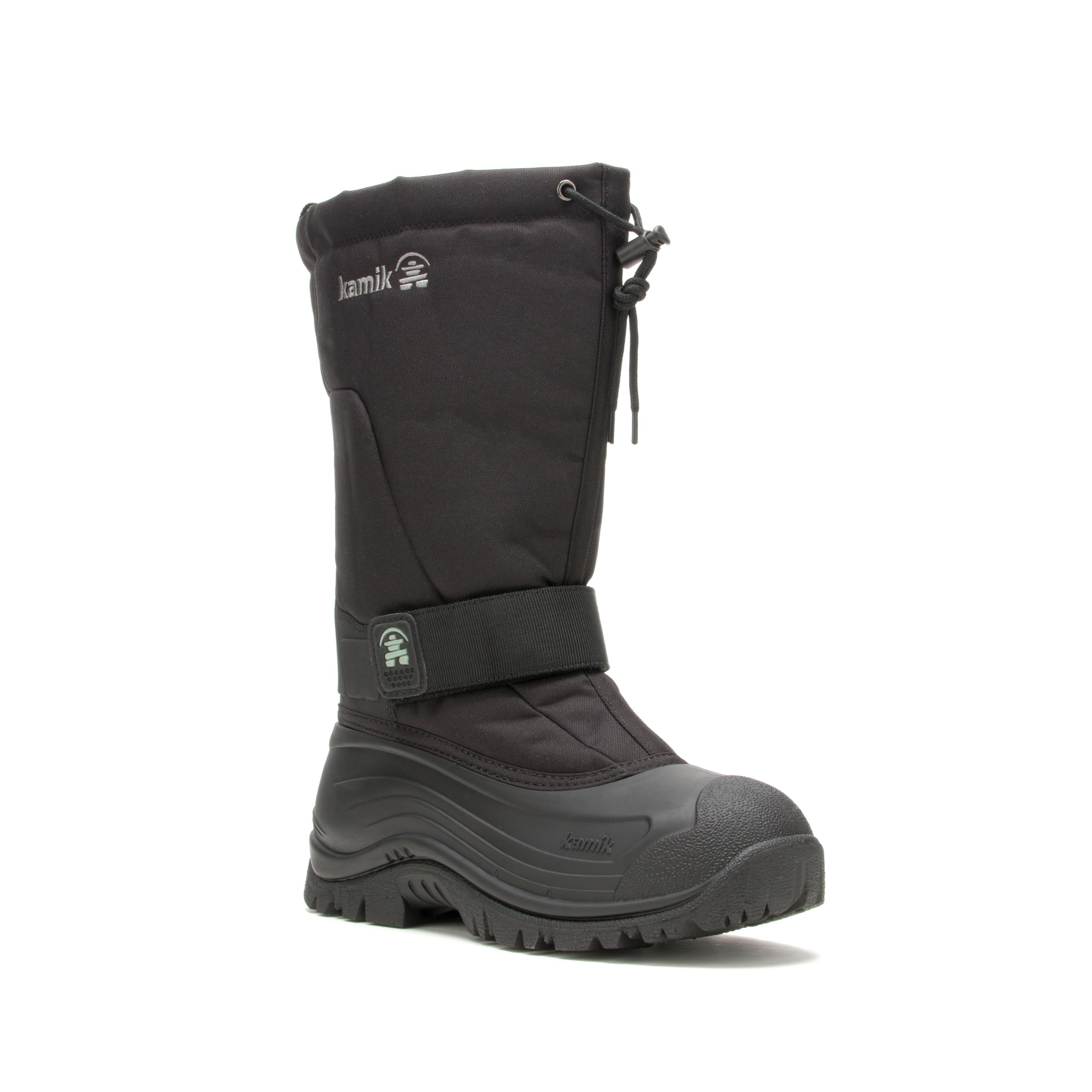
The cold-proof boot that laughs at -40°C while staying light enough to hike in.
You need a boot that shrugs off Iceland’s most punishing winter days, and the Kamik Greenbay 4 delivers that with an 8mm Thermal Guard liner (made from recycled materials) inside a waterproof nylon shell. The boot is rated down to -40°C — a full 4.0x the cold tolerance of the 200g Columbia Bugaboot III — so standing still at a glacier viewpoint or waiting for the northern lights won’t turn your toes into ice cubes. The removable felt liner is a clever touch: you pull it out to dry overnight, and the fact that it is removable means you can replace it when it wears out rather than trashing the whole boot.
The midfoot Velcro strap and bungee lace lock work together to keep snow out and the fit snug, while the thick treaded rubber outsole gives you purchase on icy paths and slick lava rock. The RubberHe shell (the lightweight rubber lower section) keeps water out without making the boot feel like you are carrying weights. The mid-calf height and round toe make it practical for everything from shoveling the car out of a snowy parking lot to a proper trail hike. Buyers report that the combination of a waterproof nylon shell and a removable felt liner makes these boots incredibly versatile across different winter conditions, holding up well even when used daily in wet snow.
The one trade-off? The felt liner, while warm, is not as quick-drying as synthetic insulation if you do manage to get water inside. You will want to let them air out fully between long wearing days. For the price point, this is a premium cold-weather performer that undercuts many competitors.
Cold Weather Armor
- Rated to -40°C with a removable felt liner
- Lightweight waterproof nylon shell with RubberHe lower for easy walking
- Adjustable snow collar and midfoot strap for a sealed fit
One Consideration
- Felt liner takes longer to dry if soaked compared to synthetic insulation
The cold-verdict: Reach for this if you are visiting Iceland in deep winter or spending time at high altitudes where temperatures drop well below freezing. It offers extreme cold protection in a surprisingly easy-to-walk package.
The trade-off to know: For wetter, near-freezing conditions where rain is more common than dry snow, the felt liner can absorb moisture. You will want to dry the liner overnight to keep it performing.
2. ROCKY Bearclaw Gore-Tex 200G

A full-grain leather hiker that breathes through the GORE-TEX lining so your feet stay dry without sweating.
If you are the type of traveler who wanders off the marked paths onto loose scree and wet moss, the Rocky Bearclaw gives you a traditional leather hiking boot that handles the abuse. The full-grain leather upper with tough nylon panels wraps your foot in durability, while the GORE-TEX fabric membrane (a thin layer that blocks liquid water but lets water vapor escape) keeps moisture out and your feet dry. The 200 grams of 3M Thinsulate Ultra Insulation provide moderate warmth — enough for Iceland’s shoulder seasons or cool summer days by the coast where the wind cuts through thinner boots.
The Goodyear welt construction (a traditional stitching method that attaches the upper to the sole with a sealed seam) means these boots can be resoled when the tread wears down, which is rare in this price tier. The BearClaw 3D outsole uses multi-directional self-cleaning lugs that grab loose gravel and wet rock without caking up with mud. The lace-to-toe pattern with eyelets, D-rings, and hooks gives you fine control over where the boot squeezes your foot — helpful when adjusting for thick wool socks. The cushioned Air-Port footbed is perforated for air circulation, so your feet feel ventilated on longer walks.
One thing to keep in mind: at 200g of insulation, this boot is not geared for standing still in Icelandic winter conditions. It is a walking boot for when you are moving and generating heat. Owners mention the bearclaw outsole gives excellent grip on slick surfaces, and they appreciate the durable construction that holds up after years of use in rough terrain.
Hard-Wearing Foundation
- Full-grain leather with Goodyear welt for longevity and resoling potential
- GORE-TEX membrane keeps feet dry without leading to sweaty buildup
- Multi-directional self-cleaning lugs provide reliable traction on mixed terrain
Winter Limitation
- 200g insulation is best for active use in moderate cold, not stationary winter waiting
Best suited for: Summer visitors and autumn hikers who want a durable, breathable boot for long walking days where warmth is secondary to dryness and support. It is a serious all-rounder for the price.
Think twice if: You plan to be outside in January or February without moving much — you will want at least 600g of insulation for that.
3. Columbia Men’s Bugaboot III
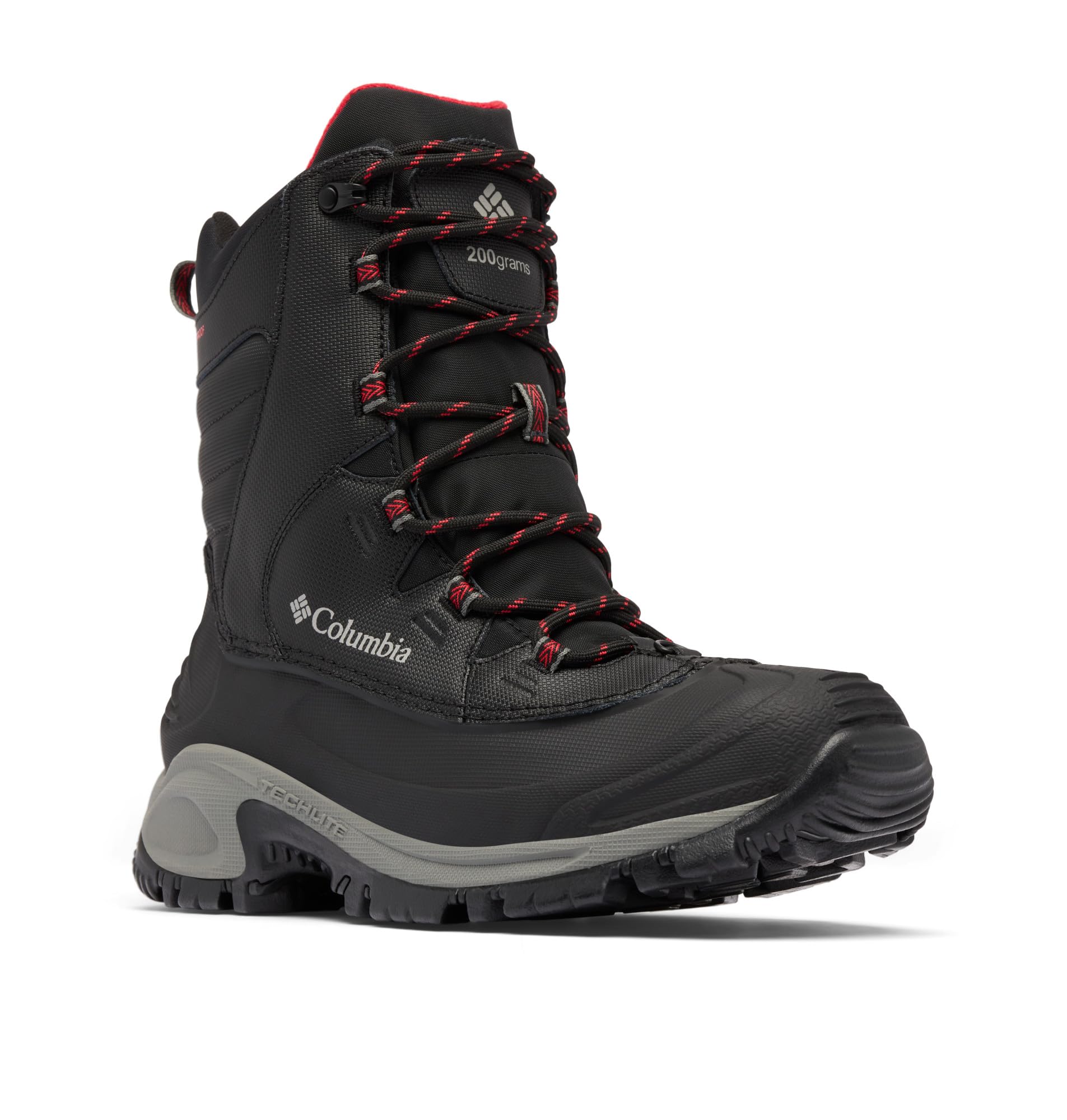
An all-leather winter boot at a budget-friendly price that handles rain, slush, and light snow.
If Iceland is on your radar for the September or April shoulder seasons, the Columbia Bugaboot III hits a balance between cost and performance. It uses a waterproof leather upper with seam-sealed construction so rain and puddle water stay outside, while 200g of insulation keeps your feet warm on days that hover around freezing without making you overheat when the sun breaks through. The injection-molded rubber shell and outsole work together to give you a solid waterproof barrier from the sole up to the ankle — a design detail that matters when you are walking through wet grass or shallow streams.
The sturdy lacing system lets you crank down the fit around thicker socks, and the cold-optimized tread pattern bites into packed snow and damp pavement. Columbia’s own data says sizes run small, so you should consider sizing up a half to a full size, particularly if you plan to wear thick wool hiking socks. The boot is available in multiple colors, so you can pick something that does not look purely like a work boot.
The catch is that 200g of insulation is not enough for standing still in an Icelandic winter storm. If you are visiting between November and February and plan to be outside for more than 30 minutes without walking briskly, you will feel the cold through the sole. Reviewers mention the boots are comfortable and waterproof for everyday winter use but suggest adding a warmer insole for truly cold days.
Smart Balance
- Waterproof leather upper with seam-sealed stitching keeps wet out
- 200g insulation is well-suited for active wear in mild winter conditions
- Injection molded rubber shell boosts waterproofing from the sole upwards
Winter Limit
- May not be warm enough for stationary use in deep winter temperatures below -10°C
Who it fits: Travelers on a budget who need a reliable, waterproof boot for a shoulder-season trip. It punches above its price point in build quality.
skip it if: You need to spend hours standing in extreme cold — look for a boot with at least 600g insulation.
4. Kamik Nation Plus Snow Boot
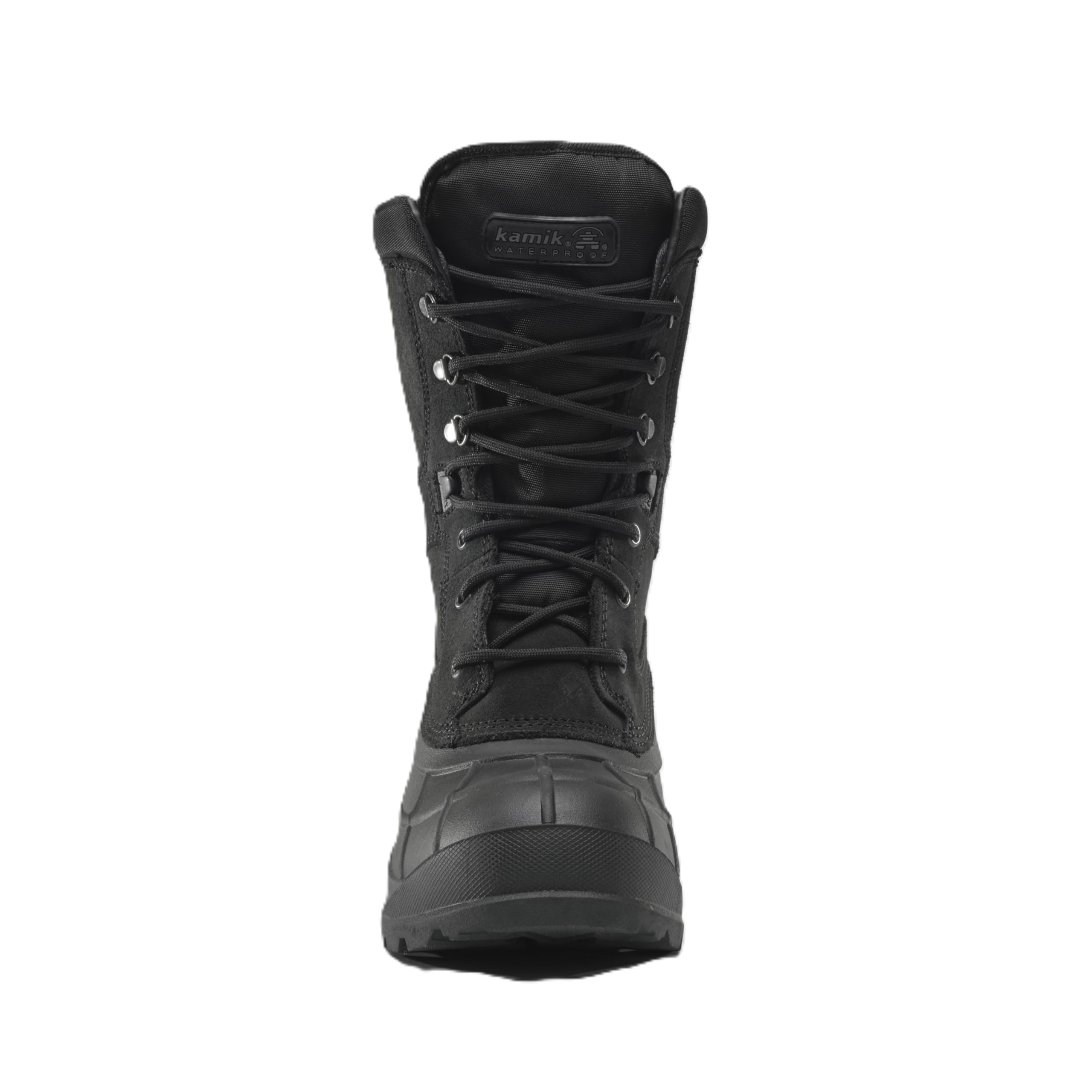
A seam-sealed suede boot that combines classic winter style with a -40°C rating for serious cold.
The Kamik Nation Plus is what you want when you need to look presentable at a Reykjavík café but also have the chops to handle a snowy trail. It uses a seam-sealed waterproof genuine suede upper — the leather is sourced from a tannery rated gold for water, energy, and waste management — so it holds up to wet slush without staining. The removable HEAT-MX sustainable thermal insulation liner is rated comfortable down to -40°C, matching the Greenbay 4’s cold tolerance. The moisture-wicking lining pulls sweat away from your skin so your socks stay drier, which makes a real difference when you are going in and out of heated buildings all day.
At 28.5 cm height and weighing 1633g per pair, these are full-cut boots that give your ankle plenty of coverage. The SNOWTREAD outsole uses deep self-cleaning treads that push mud and snow out as you step, so you keep traction on unstable surfaces. The waterproof and flexible synthetic rubber shell creates a sealed lower boot that stops water from seeping in through the sole. The lace-up closure with a midfoot hook-and-loop strap helps you lock the fit around your calf.
The trade-off is weight — at over 1.6 kg per pair, these are not the lightest travel companions. If you are packing for a multi-destination trip, they take up significant bag space and add weight to your carry-on. Customers note that the suede upper holds up well in wet conditions and the removable liner is appreciated for drying out overnight, but the boots are bulky for casual wear.
Cold Weather Complete
- Seam-sealed suede and rubber shell provide two-layer waterproofing
- HEAT-MX removable liner rated to -40°C for extreme warmth
- Deep self-cleaning SNOWTREAD outsole grips well in loose snow
Bulk Factor
- 1633g per pair makes them heavy for packing or long walks on hard pavement
Best for: Travelers who prioritize cold-weather performance over weight savings, and who will spend most of their outdoor time in snowy rather than rainy conditions. The suede also gives a more refined look than standard rubber hunting boots.
Consider instead if: You are carrying a single carry-on and need a lighter boot that still offers extreme cold protection.
5. KEEN Revel 4 Mid Height Polar Insulated Waterproof
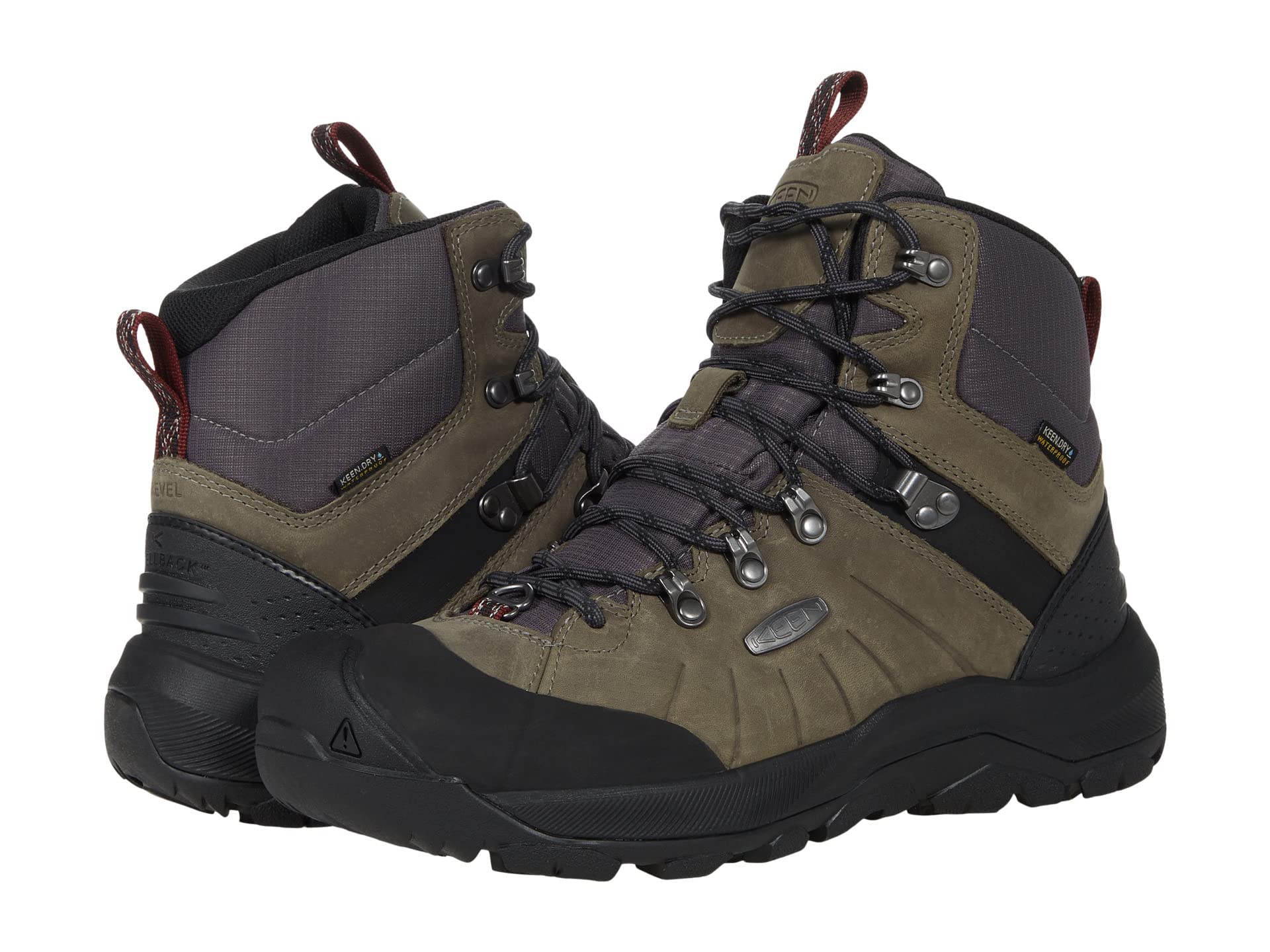
The mid-height boot built for comfort on long walks, with a thermal heat shield that traps warmth inside.
When your Iceland itinerary involves hours of walking on varied terrain — coastal paths, gravel roads, and wet grassy hills — the KEEN Revel 4 Polar focuses on the comfort side of cold-weather footwear. It uses waterproof breathable protection so your feet stay dry without building up clammy moisture inside. A thermal heat shield inside the boot captures the warmth your body generates and reflects it back to your foot, which is particularly useful when you are walking into a cold wind. The speed lace webbing system lets you tighten or loosen the fit quickly, which you will appreciate every time you stop to adjust after a stream crossing.
These boots are built on KEEN’s traditional wider footwear form, meaning they give your toes more room to splay out. That extra width is a benefit when you are wearing thick wool socks and your feet swell after a long day of hiking. The mid-height cut offers ankle support without making your legs feel restricted, and the outsole uses a high-traction rubber compound that holds on wet surfaces. The insulation level is not specified in grams, but the polar designation and the thermal shield indicate it is designed for active cold-weather wear.
The main point to note is that without a specific temperature rating or gram count in the data, the cold-weather performance is harder to quantify compared to the Kamik and ROCKY options. Reviewers appreciate the comfortable fit and reliable waterproofing, but note that for sub-freezing standing, you may want a warmer boot. The wider toebox may also feel loose if you have narrow feet.
Long Walk Specialist
- Thermal heat shield reflects body heat back to your feet
- Waterproof and breathable construction keeps sweat from building up
- Wider toebox accommodates thick socks and natural foot swelling
Cold Clarity Needed
- No specific gram insulation or temperature rating provided, making winter comparisons less precise
Who should wear them: Hikers and day-walkers who prioritize comfort and breathability over extreme cold-weather specs. Best for wet but not deeply frozen conditions.
Look elsewhere if: You need a certified -40°C rating or plan extended standing in deep winter cold.
6. ROCKY Sport Utility 600G Insulated Waterproof Boot

A full-grain leather workhorse with 600g Thinsulate that keeps your feet warm through an Icelandic blizzard.
For hikers and photographers who plan to stand still at a black-sand beach or a glacier lagoon for extended periods, the ROCKY Sport Utility 600G gives you the insulation depth to stay comfortable without fidgeting. It packs 600 grams of 3M Thinsulate Ultra Insulation (a lightweight synthetic fiber that traps warmth without adding bulk) between the full-grain leather upper and your foot. That is three times the insulation of the 200g Columbia Bugaboot III, making a real difference when you are stationary in a -10°C wind. The composite safety toe (a non-metallic reinforced toecap) protects your toes if you kick a rock or drop something heavy on your foot — a bonus if your Iceland trip involves any kind of manual work or climbing over uneven terrain.
The Sport Utility outsole is designed for traction on loose and uneven ground, and the waterproof construction keeps wet out at the seams. The brown full-grain leather has a classic work-boot look that blends into both trail and town settings. The package dimensions (4.5 Pounds per pair) give you a sense of the heft — these are substantial boots built for durability. Thinsulate insulation is also moisture-resistant, so even if water gets in through the laces, the insulation does not absorb it and lose its warmth.
One aspect to be honest about: these boots are heavy and stiff from the start. There is a real break-in period before the leather molds to your foot, which is typical of full-grain construction. Plan to wear them around the house for a week before your trip. Reviewers point out that the 600g Thinsulate provides excellent warmth in extremely cold conditions, and the composite toe is unobtrusive during long walks, but they agree the boots need dedicated break-in time.
Serious Warmth
- 600g 3M Thinsulate Ultra heads off cold during stationary use
- Full-grain leather and composite safety toe deliver rugged durability
- Moisture-resistant insulation retains warmth even in wet snow
Setup Time
- Stiff leather requires a break-in period before they become comfortable
- Heavy build (4.5 lbs) adds to packing weight and walking fatigue
Best for: Photographers, guides, and anyone who needs to stand still in cold conditions for hours. The 600g insulation is a clear step up for deep-winter functionality.
Skip them if: You want a packable, lightweight travel boot or you are only visiting Iceland in summer.
7. TIDEWE Rubber Hunting Boots 800g

A neoprene-and-rubber boot made for marshland, with 800g fleece insulation that is 4.0x the warmth of a 200g boot.
If your Iceland plan includes stepping into shallow rivers, walking through boggy meadows, or standing in wet grass for birdwatching, the TIDEWE Rubber Hunting Boot wraps your foot in a sealed 7mm neoprene upper (a flexible synthetic rubber that insulates even when wet) with a durable rubber lower shell. The 800g fleece liner provides a thick layer of warmth — compare that to the 200g Columbia Bugaboot III, and you get a 4.0x gap in insulation that becomes obvious when you are standing in near-freezing water. The adjustable cuff gusset lets you tighten the top so water does not slosh in over the rim, and the soft flexible rubber sole gives you good ground feel while remaining fully waterproof.
The removable insole and breathable construction inside the boot help manage moisture so your feet do not stew inside all day. The size range goes from 6 to 14, covering most foot sizes. The Next Camo G2 color pattern is designed for hunting concealment, but the boot is functional enough for Icelandic hiking regardless of the pattern. The rubber construction makes these boots virtually indestructible against punctures from sharp lava rock, and the 7mm neoprene stretches slightly for a snug fit around the calf.
The main drawback is that rubber-and-neoprene boots do not breathe well. On warmer days or during high-exertion hikes, your feet will sweat inside, which can then make them cold when you stop moving. These are best for short, wet excursions rather than full-day cross-country treks. Shoppers say the boots are extremely warm and effective in wet conditions, but some mention that the camo pattern is not subtle for travel wear.
Wet-Condition Specialist
- 800g fleece liner and 7mm neoprene provide extreme warmth in wet environments
- Rubber shell is fully waterproof and puncture-resistant against sharp rocks
- Adjustable cuff gusset seals out water at the top of the boot
Breathing Issue
- Non-breathable rubber construction causes sweat buildup during active hiking
Ideal for: Short, wet excursions where you know you will be standing in water or mud — think glacier lagoon edges and boggy trails. The insulation is a step above for near-freezing wet conditions.
Not for: Full-day hikes on dry trails where breathability matters more than pure waterproofing.
8. Columbia Men’s Burnsider Omni-Heat Infinity Hiking Boots
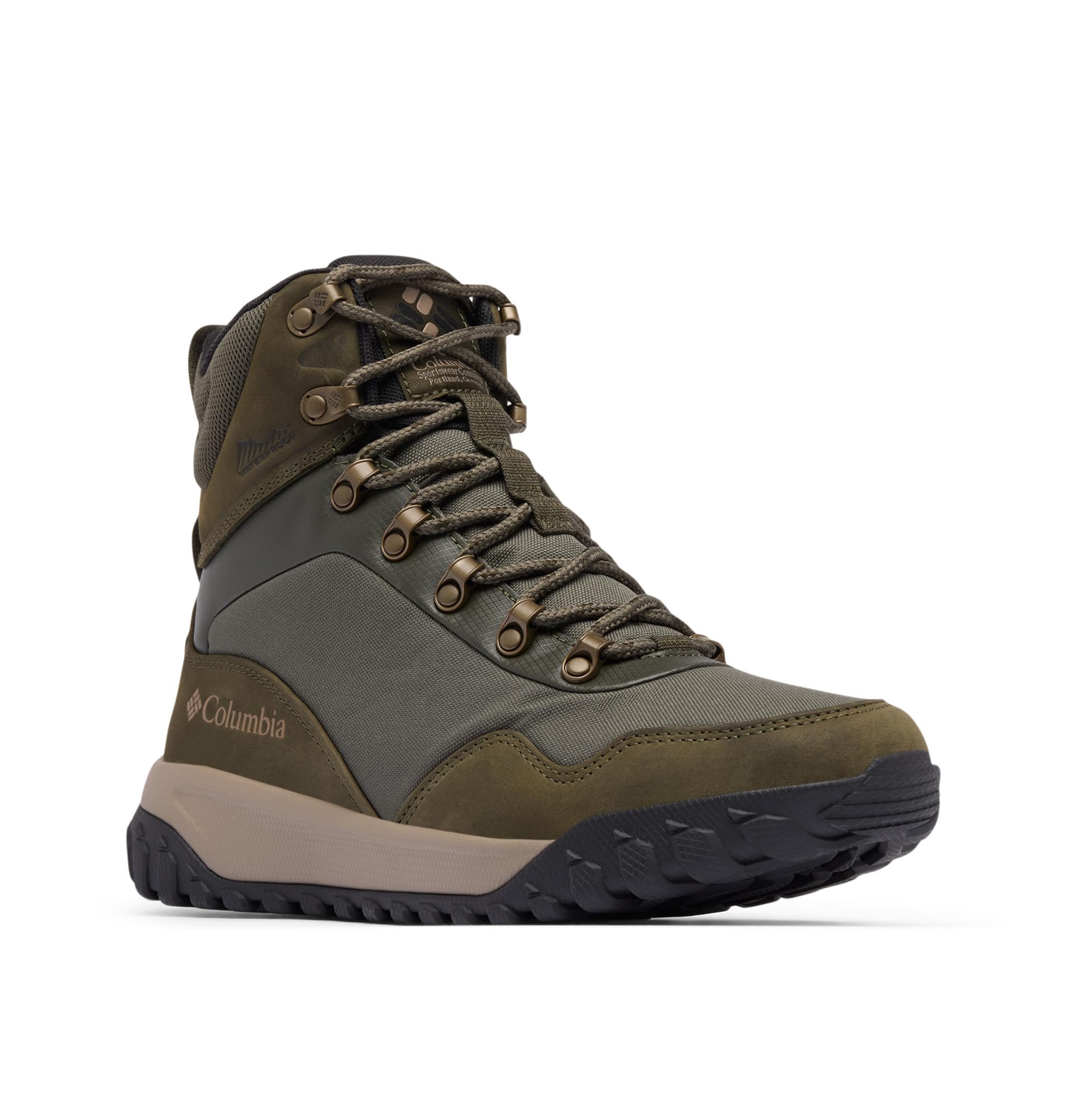
The insulated commuter boot that uses reflective foil technology to bounce your body heat back between walks.
If most of your Iceland time is split between a rental car and short walks to viewpoints, the Columbia Burnsider Omni-Heat Infinity makes the daily transition from driving to hiking comfortable. It uses Columbia’s Omni-heat reflective lining — a metallic dot pattern that reflects your body’s radiant heat back toward your foot, similar to an emergency blanket but built into the boot. Combined with waterproof construction, this boot keeps rain and slush out while retaining warmth without relying on layers of thick padding. The cold-optimized tread pattern is designed for wet pavement and packed gravel, giving you stable footing on the surfaces you will encounter between the car park and the trailhead.
The boot is built to be comfortable for your daily commute, which means it is less stiff and heavy than a traditional work boot. The cut and cushioning prioritize walking on hard surfaces, which is what you do on the paved paths around the Golden Circle and the walking trails in Reykjavík. Columbia offers these boots in multiple colors and sizes, so you can find a fit that works with your wardrobe. The Omni-heat technology is particularly effective when you are moving from cold outdoor air into heated interiors and back out again, because it does not trap heat excessively the way thick foam insulation can.
The trade-off is that Omni-heat reflective linings are less effective when you are stationary in extreme cold. If you are standing still for long periods in temperatures below -5°C, you may feel the cold more than you would in a 600g insulated boot. Buyers report the boots are comfortable right from the start and handle wet city conditions well, but recommend an additional insulating insole for true winter use.
Urban Winter Fit
- Omni-heat reflective lining bounces body heat without bulk
- Waterproof construction keeps rain and slush out during short walks
- Comfortable for driving and paved surfaces, with zero break-in time
Stationary Cold
- Reflective lining alone may not be enough for extended standing in sub-freezing weather
Who it is for: Travelers on a self-drive itinerary who will spend more time in the car than on the trail. It bridges the gap between a casual shoe and a winter boot.
Choose a different boot if: You plan to hike for hours in deep winter conditions where a higher gram-insulation boot is necessary.
Understanding the Specs
Insulation Rating
Insulation is measured in two ways: grams (200g, 600g, 800g) or a temperature rating like -40°C. The gram scale refers to the weight of the synthetic insulation in each boot — more grams means more trapped heat, but also more bulk. A 200g boot is fine for active walking in near-freezing weather. A 600g or 800g boot is what you need when you will be standing still in the cold, such as waiting for northern lights or watching birds at a lagoon. Temperature-rated boots (like the Kamik -40°C models) have been tested to keep your feet safe at that temperature, assuming you are wearing appropriate socks.
Seam-Sealed vs Water-Resistant
Seam-sealed construction means every stitch hole has been taped or sealed from the inside so water cannot seep through the seams. This is the waterproof standard for boots. “Water-resistant” means the fabric has a light water-repellent coating that will keep light rain out but will fail under sustained wetness or stepping in a puddle. For Iceland, always choose seam-sealed or a membrane like GORE-TEX. Rubber boots (like the TIDEWE) are naturally fully waterproof because there are no fabric panels, but they do not breathe.
FAQ
Do I need insulated boots for Iceland in summer?
Are rubber boots good for hiking in Iceland?
Will the Kamik Greenbay 4 fit if I have wide feet?
How do I dry wet boots in Iceland?
What is the difference between 200g and 800g insulation?
Can I use my own insoles with these boots?
Which boot is best for glacier hiking in Iceland?
Is Gore-Tex worth it for Iceland?
Final Thoughts: The Verdict
For the majority of shoppers, the best boots for iceland winner is the Kamik Greenbay 4 because it combines a -40°C temperature rating with a lightweight waterproof shell and a removable liner that you can dry overnight. If you want a full-grain leather boot built for long hiking days with Gore-Tex breathability, grab the ROCKY Bearclaw Gore-Tex 200G. And for standing still in deep winter wet conditions, the TIDEWE Rubber Hunting 800G gives you the highest insulation on this list in a fully waterproof shell.
How We Picked
We do not accept paid placement. Every pick is matched to a real buyer and a real use-case; we do not hands-on test units.
Sources & Methodology
Specifications: manufacturer listings and product documentation. Review insights: verified customer reviews, as of July 2026. Pricing: not shown on this page (it changes often); check the current price via the retailer link.
As an Amazon Associate, FitlyFast earns from qualifying purchases. This does not affect which products we feature.