
Our readers keep the lights on and the weekend projects moving. As an Amazon Associate, I earn from qualifying purchases.
Specs are compiled from manufacturer listings and verified buyer reviews and can change over time — please confirm the key details on the product page before buying.
Finding a bottle your baby will actually drink from — without fussing, getting gassy, or spitting up — can feel harder than the sleep deprivation. You need one that mimics breastfeeding (a feeding style that closely matches nursing), fights colic (excessive crying from gas or discomfort), and does not leak milk down your shirt at 2 AM. This guide compares materials, anti-colic systems, and flow rates so you can pick the right one the first time.
I’m Rikta — the founder and writer behind FitlyFast. This guide is built by comparing the manufacturers’ published specifications and the patterns across verified customer reviews, so you get each pick’s real strengths and trade-offs instead of marketing spin.
The right bottle makes feeding calmer and less messy. This guide helps you find the best baby bottle for your situation — whether you are dealing with colic, a picky latch, or just want something durable and easy to clean.
Quick Picks
- Dr. Brown’s Silicone Baby Bottle with Collapsible Insert Designed to Reduce Colic, 5 oz, Blue, 4-Pack — Best Overall
- Philips Avent PPSU Natural Baby Bottles with Medium Flow Nipples (Flow 3), 9oz, 2-Pack, SCY943/02 — Premium Silicone
- Philips Avent Natural Baby Bottles with Natural Response Nipples (Slow Flow, Flow 2), 4oz, 2-Pack, SCY900/02 — Latch-Friendly
- Pigeon PPSU Nursing Baby Bottle Wide Neck, Anti-Colic, Streamlined Body, 5 Oz (Pack of 2), Includes SS Nipples (0m+) — Reflux Relief
- Dr. Brown’s Anti-Colic Options+ Narrow Glass Baby Bottles 8 oz/250 mL, with Level 1 Slow Flow Nipple, 3 Pack, 0m+ with Blue Silicone Sleeves — Glass Durability
- Lansinoh Anti-Colic Baby Bottles, BPA-Free Plastic, 5 Ounces, 4 Count, Slow Flow Nipples (Size S) — Budget Champion
- Lansinoh Glass Baby Bottles, Anti-Colic, 8 Ounces, 4 Count, Includes 4 Medium Flow Nipples, Size M — Premium Glass
How To Choose The Best Baby Bottle
Every baby is different, but your choice usually depends on a few core trade-offs: material safety, anti-colic design, nipple flow, and how easy it is to clean. Here is what matters.
Material: Plastic, PPSU, Silicone, or Glass
Standard plastic bottles are lightweight and cheap, but some parents worry about microplastics. PPSU (polyphenylsulfone, a high-heat-resistant, BPA-free plastic) is a step up — it is durable and stain-resistant like glass but much lighter. Glass bottles are heavier but avoid plastic entirely and stay odor-free. Silicone bottles are a newer option that collapse as the baby drinks, which can reduce air intake.
Anti-Colic Systems: How They Work
Most bottles now have a vent to keep air out of your baby’s tummy. Some use a physical vent tube (like Dr. Brown’s), others a valve in the nipple (like Philips Avent), and silicone bottles physically collapse to push air out. A good anti-colic system can mean less gas, fussiness, and spit-up after a feed.
Nipple Flow Rates and Shape
Nipples come in different flow rates — slow, medium, fast — that match your baby’s age and sucking strength. A newborn almost always needs a slow flow (Level 1 or Size S) to avoid choking. The shape matters too: a wide, breast-shaped nipple makes it easier for a breastfed baby to switch back and forth without nipple confusion (trouble latching to a bottle after nursing).
Quick Comparison
| Model | Best For | Material | Capacity | Number of Items | Amazon |
|---|---|---|---|---|---|
| Philips Avent Natural Bottles (SCY900/02) | Breastfed Newborns | Plastic | 4 oz | 2 | Amazon |
| Dr. Brown’s Silicone Bottle | Colic & Spit-Up Reduction | Silicone | 5 oz | 4 | Amazon |
| Lansinoh Anti-Colic (Plastic) | Budget & Easy Cleaning | Plastic | 5 oz | 4 | Amazon |
| Philips Avent PPSU Natural Bottles (SCY943/02) | Durable PPSU Build | PPSU | 9 oz | 2 | Amazon |
| Pigeon PPSU Nursing Bottle | Natural Latch & Reflux | PPSU | 5 oz | 2 | Amazon |
| Dr. Brown’s Options+ Narrow Glass Bottles | Durable Glass & Nutrient Retention | Glass | 8 oz | 3 | Amazon |
| Lansinoh Glass Bottles | Premium Glass Set | Glass | 8 oz | 4 | Amazon |
In-Depth Reviews
1. Dr. Brown’s Silicone Baby Bottle with Collapsible Insert Designed to Reduce Colic, 5 oz, Blue, 4-Pack
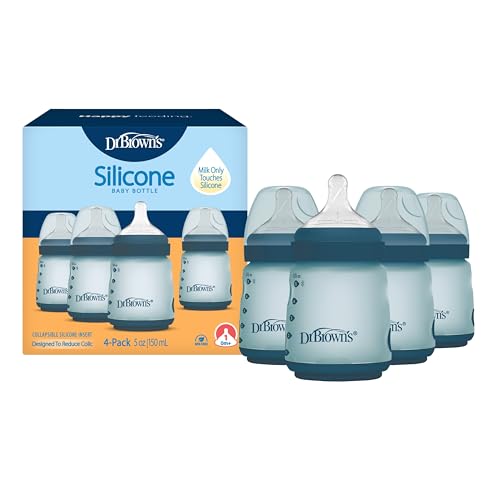
A silicone bottle that collapses with the feed to keep air out of your baby’s tummy.
This bottle uses a unique approach to fighting colic: instead of a vent tube (a separate plastic straw or stem), the silicone insert collapses as your baby drinks. Less air inside means less gas, less spit-up, and fewer burping sessions. One buyer reports it is “literally the best bottle that doesn’t make my breastfed baby spit up,” and the design keeps the flow consistent without extra parts. The breast-like nipple shape helps encourage a proper latch, making it a strong option if you are switching between breast and bottle.
The shell is durable, and the whole thing is lightweight for a 5-oz feeding. At 0.9 pounds for the pack of four, you get a full rotation without taking up much diaper-bag space. Buyers report the silicone feels a bit thin out of the package, but it uses reusable high-quality silicone that holds up to dishwasher and sterilizer cycles.
The included Level 1 slow flow nipples work with Dr. Brown’s existing wide-neck Options+ system, so you can swap nipples as your baby grows. The cap snaps on snugly and is leakproof, and the wide base keeps the bottle from tipping over when you set it down mid-feed.
This is the top pick because its collapsible insert minimizes air intake more directly than the vent tube in the Dr. Brown’s glass bottle below — fewer parts to lose, same colic relief.
Why it works
- Collapsible insert minimizes air intake to reduce colic
- Milk only touches food-grade silicone (a type safe for eating/drinking)
- Consistent flow rate from reliable nipples
- Leakproof cap with a snap-on bottom keeper
- Lightweight and stable enough for baby self-feeding later
The trade-offs
- Silicone material feels a bit flimsy to some
- Silicone bottle requires careful drying to avoid moisture issues
Reach for this if: your baby struggles with colic or spits up after feeds and you want a silicone design that keeps air out without a vent tube to clean.
Look elsewhere if: you prefer a firmer feel or need a larger capacity than 5 oz for older babies.
2. Philips Avent PPSU Natural Baby Bottles with Medium Flow Nipples (Flow 3), 9oz, 2-Pack, SCY943/02

A PPSU bottle that looks like glass but weighs like plastic.
This bottle upgrades from standard plastic to PPSU — a BPA-free (bisphenol-A free, a chemical linked to health concerns) material that resists heat up to 180°C (356°F), does not stain or hold odors, and feels break-resistant while staying lightweight. At 9 ounces, it holds 9 oz versus the 4 oz of the smaller Avent Natural set, making it a better fit for older babies or bigger feeds. The Natural Response nipple works by releasing milk only when your baby actively drinks, so you do not get a steady drip when they pause to breathe.
Owners mention it is “durable, lightweight, BPA-free PPSU resists stains/odor,” and the wide neck makes filling and cleaning simple. The anti-colic valve sits in the nipple and keeps air away from the tummy. Unlike some vented systems, there are no extra tubes or parts to scrub. Customers note the print does not fade or warp after dishwasher use.
If you are comparing this to the plastic Avent set below, the PPSU version is noticeably more scratch-resistant and survives sterilizer cycles without clouding. The medium flow (Flow 3) nipples are a step up from slow, so this works best for babies who already have some sucking strength. For a newborn, stick with the slow-flow 4-oz Avent set instead.
What stands out
- PPSU is BPA-free, heat-resistant (180°C), and resists stains and odors
- Natural Response nipple mimics breastfeeding — only releases milk when baby actively drinks
- Anti-colic valve reduces gas without extra parts
- Wide neck is easy to clean and leak-free
- Lightweight and scratch-resistant
What to know
- Pricier than standard plastic bottles
- Medium flow (Flow 3) is too fast for newborns
Perfect for: parents who want the safety of PPSU without the weight of glass, especially for babies past the newborn stage who need a larger 9-oz bottle.
skip it if: you need a slow flow for a newborn or are on a tight budget.
3. Philips Avent Natural Baby Bottles with Natural Response Nipples (Slow Flow, Flow 2), 4oz, 2-Pack, SCY900/02

A soft nipple that breastfed babies take without screaming.
This bottle’s defining feature is the Natural Response nipple — it releases milk only when your baby actively sucks, creating a rhythm that feels closer to nursing. One buyer put it plainly: “The nipple is soft like breast, so he didn’t reject it.” That makes it a go-to for parents who pump and need baby to accept the bottle. The slow flow (Flow 2) nipples are well-suited for newborns, and the anti-colic valve keeps air away from the tummy.
At 4 oz each, these bottles are compact and good for the first few months. The wide neck makes filling and hand-washing straightforward, and the no-drip design means you are not losing milk at midnight. It won the Best of The Bump Award 2024. The build is solid plastic, and the clear body lets you see the milk level easily.
Compared to the PPSU Avent set above, these are 4 oz versus 9 oz and made of standard plastic. But if you want a bottle that helps a breastfed baby latch without fuss, the soft breast-shaped nipple and slow flow make this a reliable starting point. The plastic will cloud over time, unlike the PPSU version, but the price is lower.
Why it wins with breastfed babies
- Natural Response nipple matches breastfeeding rhythm
- Soft, wide breast-shaped nipple mimics breast feel
- Slow flow (Flow 2) for newborns
- Anti-colic valve reduces gas
- No-drip design for less mess
Limitations
- Only 4 oz capacity — outgrown quickly
- Standard plastic, not as durable as PPSU or glass
Ideal for: newborns and breastfed babies who need a slow flow nipple that mimics breastfeeding to avoid nipple confusion.
Not the best for: older babies who need a larger 8-9 oz bottle.
4. Pigeon PPSU Nursing Baby Bottle Wide Neck, Anti-Colic, Streamlined Body, 5 Oz (Pack of 2), Includes SS Nipples (0m+)
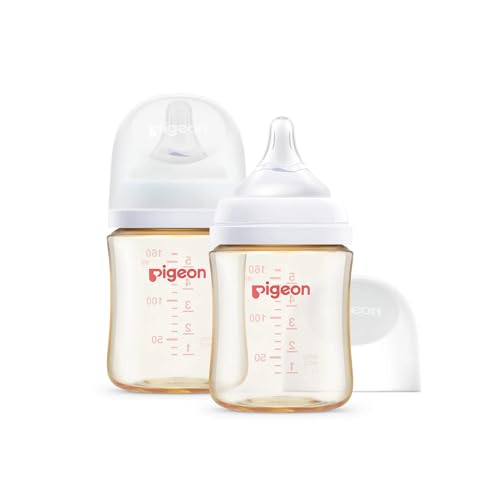
A PPSU bottle that helped one baby with reflux more than Dr. Brown’s did.
This Pigeon bottle is built on research into three natural sucking movements babies make. The nipple is designed to support smooth tongue motion. The SS nipple (0m+) is an extra-slow flow that is hard to find in many sets — one reviewer noted the “hard-to-find 0m+ nipples” let them start at birth with a very gentle flow. Parents report this bottle helps reduce gas and reflux compared to other brands, and the wide-neck body is easy to hold and clean.
The PPSU construction is lightweight, durable, and withstands sterilizing without clouding. At 5.4 oz (160 ml), it is a good mid-size for the early months. One buyer shared that switching from Dr. Brown’s to these bottles helped their newborn with “really bad reflux,” and the slow-flow nipples cut down on gas issues. The latch-on line (a visible marking on the nipple) helps guide a proper latch, which makes the breast-to-bottle transition smoother for younger babies.
Compared to the 4-oz Philips Avent set, the Pigeon offers PPSU instead of standard plastic and a larger 5.4-oz capacity. It is more expensive, but the 0m+ nipple makes it a specialized pick for the tiniest infants.
What makes it special
- Extra-slow SS nipple (0m+) for newborns with reflux
- PPSU is lightweight, durable, and heat-resistant
- Latch-on line helps guide proper latch for breastfed babies
- Wide neck for easy cleaning and filling
- Anti-colic design reduces gas
Things to consider
- Pricey compared to plastic alternatives
- Some reviewers point out limited room for formula mixing with 4 scoops
Best suited for: newborns with reflux or parents who want a PPSU bottle with an extra-slow start flow for breastfed babies.
Consider another if: you need a larger 8-9 oz capacity from the start.
5. Dr. Brown’s Anti-Colic Options+ Narrow Glass Baby Bottles 8 oz/250 mL, with Level 1 Slow Flow Nipple, 3 Pack, 0m+ with Blue Silicone Sleeves
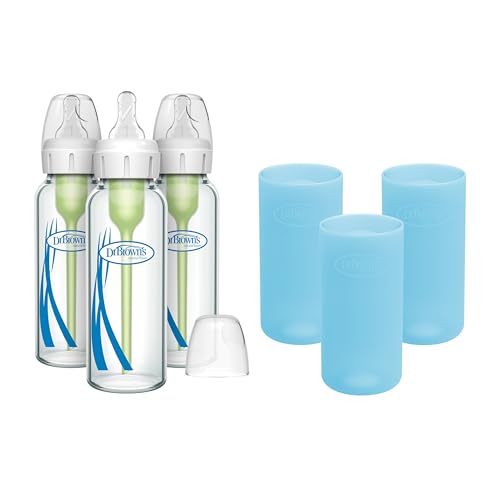
A glass bottle with a vent system that keeps nutrients intact and the flow consistent.
Dr. Brown’s famous anti-colic internal vent system goes into borosilicate glass (a type that resists heat and thermal shock) here — a material that handles hot and cold without shattering. The vent system is, according to the brand, clinically proven to reduce colic, spit-up, burping, and gas, and it also helps preserve the nutrients in breast milk or formula. One parent noted the vent system “reduces gas and spit-ups” and that the glass “is durable, cleaner, and odor-free vs. plastic.”
The 8-oz capacity gives you room for larger feeds as your baby grows. The blue silicone sleeve protects the glass from drops. The breast-like nipple shape encourages a proper latch. The narrow shape makes it easier for small hands to grip later on. Buyers agree the vent system adds extra parts to clean — five pieces total — but they feel the colic reduction is worth it. The bottle heats up faster than plastic and holds the temperature longer.
Compared to the silicone Dr. Brown’s above, this glass version is heavier and more fragile, but it avoids any potential silicone thinness issues and keeps milk free of plastic contact entirely. This is the pick if you want glass and trust the vent tube approach.
Why glass works here
- Borosilicate glass is heat- and thermal-shock-resistant
- Anti-colic vent system, per the brand, reduces colic, spit-up, and gas
- The vent system preserves milk nutrients
- Breast-like nipple shape for natural latch
- Blue silicone sleeve protects against drops
The extra work
- Five pieces to clean per bottle (more parts than most)
- Glass is heavier than plastic or silicone
Go for this if: you want the proven anti-colic vent system in a glass bottle that avoids plastic entirely and preserves nutrients.
pass on it if: you want to minimize cleaning time or need a lightweight bottle for on-the-go.
6. Lansinoh Anti-Colic Baby Bottles, BPA-Free Plastic, 5 Ounces, 4 Count, Slow Flow Nipples (Size S)
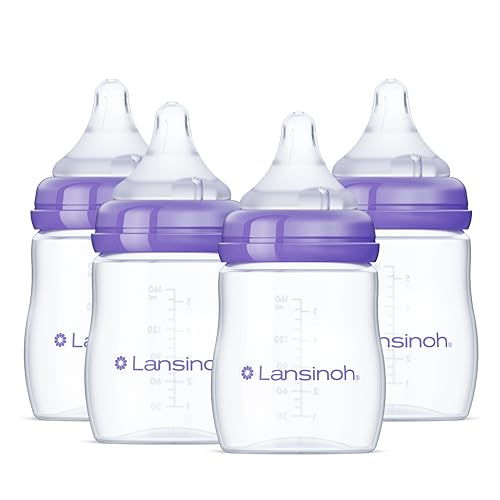
A budget-friendly four-pack that does not leak, is easy to clean, and has a proven anti-colic system.
Lansinoh delivers a lot of bottle for the money. The set comes with four 5-ounce plastic bottles, each with a slow flow nipple (Size S, for 1-3 months). One buyer summed up the longevity: “I’ve been using these for 8 months. They have worked very well!” The NaturalWave Nipple Air Ventilation System is, according to the brand, clinically proven to reduce colic by minimizing air intake. The nipple stretches with the baby’s sucking motion, giving them control over the flow.
The three-piece design (excluding cap) is mercifully simple — no vent tubes or extra silicone inserts. Reviewers consistently praise the easy cleaning and lack of leaking. The ultra-soft, strong silicone nipple has a wide, gentle slope that molds to the baby’s mouth, helping a secure latch.
Compared to the Dr. Brown’s silicone set (which also comes in a 4-pack), the Lansinoh is plastic and has a simpler design — fewer pieces to lose or assemble. The plastic feels less premium than PPSU, but for a budget-friendly entry point with a proven anti-colic system, this is the one to beat. As a budget pick, you trade material quality for price and simplicity.
Strengths
- 4-pack offers great value
- Clinically proven anti-colic air ventilation system (per the brand)
- 3-piece design is fast to clean
- No leaking reported even after months of use
- Nipple stretches with baby’s sucking for paced feeding
Trade-offs
- Standard plastic instead of PPSU or glass
- Only 5 oz capacity; outgrown by older babies
Best for: parents on a budget who want a reliable, easy-clean anti-colic bottle that lasts through the early months.
Not ideal if: you prefer a premium material like PPSU or glass, or need a larger 8-9 oz size from the start.
7. Lansinoh Glass Baby Bottles, Anti-Colic, 8 Ounces, 4 Count, Includes 4 Medium Flow Nipples, Size M
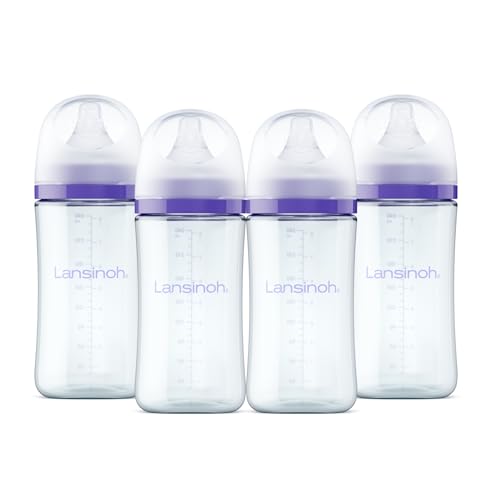
A premium 4-pack of borosilicate glass bottles that are lightweight, easy to clean, and anti-colic.
This is the glass upgrade to the Lansinoh plastic set. The borosilicate glass is designed to withstand extreme temperature changes — you boil all parts for at least 5 minutes before first use without worrying about cracking. Each bottle holds 8 ounces, which handles the biggest feeds from 3-6 months and beyond. The medium flow nipples (Size M) are appropriate for that age range, delivering milk at a pace babies control with their own sucking motion.
Buyers appreciate the “sturdy and high quality” feel, and that the bottles hold up to drops on the counter. The glass stays odor-free and does not cloud after sterilization. The nipple’s air ventilation system is, per the brand, clinically proven to reduce colic, limiting air intake to prevent gas and spit-up. The shape is comfortable to hold, and the oz markers are easy to read — a small but appreciated detail at 3 AM.
Compared to the Dr. Brown’s glass set above, the Lansinoh has fewer pieces to clean (4 vs 5) and comes in a 4-pack instead of a 3-pack. The nipple system is simpler, without a separate vent tube. The trade-off is that some buyers feel the Dr. Brown’s vent is more effective at reducing gas for colicky babies, though both have clinically proven systems (per the brands). If you want the simplest glass set with the most bottles per pack, this is your pick.
Strengths
- Borosilicate glass withstands temperature extremes and drops
- 4 bottles at 8 oz each is generous for the price
- Clinically proven anti-colic air ventilation system (per the brand)
- Minimal parts (4 pieces) — easy to clean
- Odor-free and stays clear after sterilizing
Trade-offs
- Glass is heavier than PPSU or silicone
- Medium flow nipples (Size M) are too fast for newborns
Ideal for: babies aged 3-6 months and beyond who need a larger 8-oz glass bottle with a simple, easy-to-clean anti-colic system.
it’s not for you if: you need a slow flow for a newborn or prefer the lighter weight of PPSU.
Understanding the Specs
Bottle Material: Plastic vs. PPSU vs. Silicone vs. Glass
The material affects weight, durability, safety, and how easy the bottle is to clean. Standard plastic (like in the Lansinoh and Avent Natural sets) is lightweight and affordable, but can cloud over time. PPSU (like in the Avent PPSU and Pigeon bottles) is a premium high-heat plastic that is BPA-free, resists stains and odors, and stays clear. Silicone (like in the Dr. Brown’s Silicone bottle) is soft and collapses to reduce air intake, but feels less rigid. Glass (like in the Dr. Brown’s and Lansinoh glass sets) is the most inert material — no worries about microplastics, easy to sterilize, and does not hold smells — but it is heavier and can break if dropped.
Nipple Flow Rate: Slow, Medium, Fast
Nipple flow rate controls how fast milk comes out. A slow flow (Level 1, Size S, or Flow 2) is best for newborns — it matches their weaker sucking strength and prevents gagging or choking. Medium flow (Flow 3, Size M, or Level 2) suits 3-6 month babies, and fast flow is for older infants. Using a flow that is too fast can cause choking, while too slow may frustrate a hungry baby. Many bottle sets include slow flow nipples from the start, so check the package before buying.
FAQ
How often should I replace baby bottle nipples?
Can I use a PPSU bottle for a newborn?
Do silicone bottles really help with colic?
What is the difference between PPSU and standard plastic?
Can I put glass baby bottles in the freezer?
How do I clean a bottle with a vent system?
Will a wide-neck bottle help with the breast-to-bottle transition?
What size bottle should I start with for a newborn?
Final Thoughts: The Verdict
If you want one dependable pick, the best baby bottle winner is the Dr. Brown’s Silicone Baby Bottle because its collapsible insert minimizes air intake for colic relief while keeping the flow consistent and the material safe. If you want a PPSU bottle with a breast-like nipple for a breastfed baby, grab the Philips Avent PPSU Natural Bottles. And for a premium glass set that avoids plastic entirely, the Lansinoh Glass Baby Bottles offer the most bottles per pack with a simple clean design.
How We Picked
We do not accept paid placement. Every pick is matched to a real buyer and a real use-case; we do not hands-on test units.
Sources & Methodology
Specifications: manufacturer listings and product documentation. Review insights: verified customer reviews, as of July 2026. Pricing: not shown on this page (it changes often); check the current price via the retailer link.
As an Amazon Associate, FitlyFast earns from qualifying purchases. This does not affect which products we feature.