
Our readers keep the lights on and the weekend projects moving. As an Amazon Associate, I earn from qualifying purchases.
Specs are compiled from manufacturer listings and verified buyer reviews and can change over time — please confirm the key details on the product page before buying.
Cold toes, wet socks, and a slippery sole can ruin a snow hike before it really begins. The line between a great day out and a miserable one starts at your feet. This guide cuts through the marketing to find the boots that actually keep you warm, dry, and stable on snow-covered trails.
I am Rikta, the writer behind FitlyFast. This guide compares the manufacturers’ published specs and patterns from verified customer reviews. You get each pick’s real strengths and trade-offs, not marketing spin.
Whether you face a deep backcountry trek or a quick walk through a winter storm, the right footwear makes the difference. Here is the breakdown of the boots for hiking in snow that earned a spot on this list.
Quick Picks
- Oboz Men’s Bridger 10″ Insulated B-DRY Hiking Boot — Warmest & Toughest
- THE NORTH FACE Men’s Bergen Leather Waterproof Hiking Boot — Premium Leather
- KEEN Men’s Revel III Mid Height Waterproof Insulated Hiking Boot — Comfort All Day
- Columbia Men’s Burnsider Omni-heat Infinity Hiking Boots — Thermal-Reflective
- Kamik Nation Plus Snow Boot — Sealed Suede
- Kamik Greenbay 4 Men’s Winter Boot — Budget Arctic
How To Choose The Best Boots For Hiking In Snow
Snow hiking boots are a balancing act. You need enough insulation to keep your feet warm when you stop for a break, but not so much that your feet sweat while you move. You also need a sole that bites into slippery surfaces without being so stiff that you cannot feel the ground. Here are the three specs that separate a good snow boot from a frustrating one.
Insulation Weight and Type
Insulation is measured in grams, and this number tells you how much synthetic fill is packed inside the boot. A higher gram count traps more heat, which is great for standing around in very cold conditions. For active hiking where you generate your own body heat, a moderate insulation level (around 200 to 400 grams) is often the balance. Look for materials like Thinsulate, which provide warmth without adding excessive bulk, or proprietary liners like KEEN’s Thermal Heat Shield that reflect your own body heat back at you.
Waterproofing and Seam Sealing
A boot that lets melting snow seep through is worse than no boot at all. The most reliable boots use a dedicated waterproof membrane — often a brand’s own name like B-DRY or Omni-Heat — sandwiched between the outer material and the inner liner. This membrane prevents liquid water from getting in while allowing water vapor (sweat) to escape. A seam-sealed construction, meaning the stitches are taped over, adds another layer of defense. You want both: a membrane and sealed seams.
Outsole Traction and Lug Pattern
The rubber outsole is what connects you to the snow, ice, and frozen dirt. Deep lugs (the rubber knobs on the bottom) are crucial for biting into soft snow and mud. A self-cleaning tread pattern, where the lugs are spaced widely apart, sheds snow and mud instead of packing it tight. For icy sections, look for outsoles with a high surface area of rubber lugs to maximize friction. Some boots use specific rubber compounds that stay flexible in extreme cold for better grip.
Quick Comparison
| Model | Best For | Insulation Type | Temperature Rating | Boot Height | Amazon |
|---|---|---|---|---|---|
| Oboz Bridger 10″ | Deep snow & extreme cold | 400g Freeze Guard | — (Burliest boot) | 10 inch | Amazon |
| North Face Bergen | Leather durability & grip | Insulated (generic) | — | Mid | Amazon |
| KEEN Revel III | All-day comfort & breathable waterproofing | Thermal Heat Shield | — | Mid | Amazon |
| Columbia Burnsider | Commute & cold-weather walking | Omni-Heat Infinity | — | Mid | Amazon |
| Kamik Nation Plus | Seam-sealed suede & deep tread | HEAT-MX | -40°C | 28.5 cm | Amazon |
| Kamik Greenbay 4 | Budget-friendly extreme cold | 8mm Thermal Guard | -40°C | Mid-calf | Amazon |
In‑Depth Reviews
1. Oboz Men’s Bridger 10″ Insulated B-DRY Hiking Boot
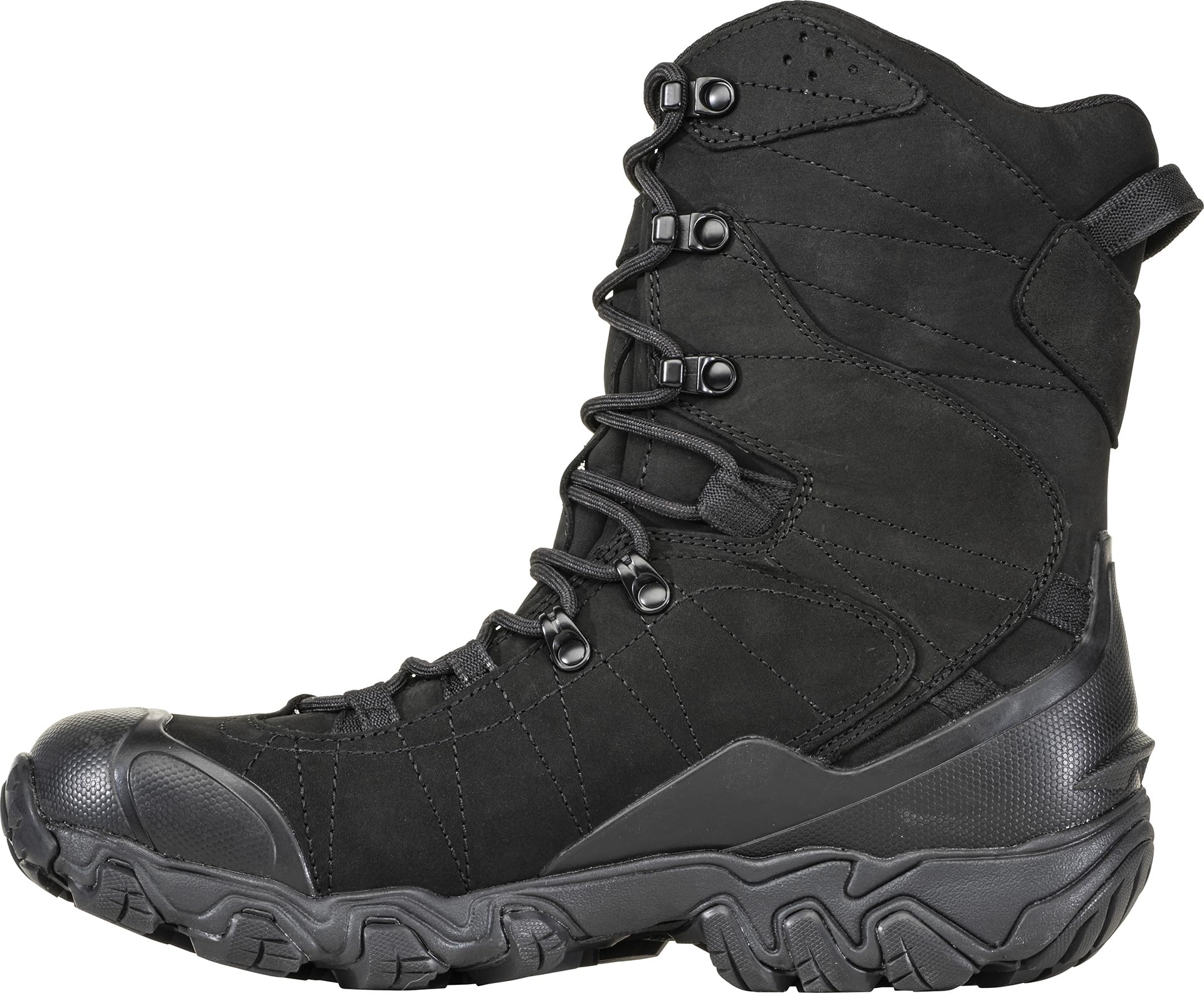
This boot delivers the most warmth and highest cut for deep powder and frozen tundra.
If you break trail through deep drifts, the Oboz Bridger 10″ laughs at the cold. Its 400 grams of Freeze Guard insulation (a thick synthetic fill that traps heat) keeps your feet warmer than any other boot here. A DWR-treated (Durable Water Repellent, a coating that makes water bead up) nubuck leather upper works with the B-DRY waterproof membrane to block melting snow, so your feet stay dry even when you posthole into a drift.
The boot stands 10 inches tall, while options like the KEEN Revel III are mid-height, which means you can wade through deeper snow without it spilling over the top. A molded rubber toe cap and a heel kick protect the leather from rocks and scrapes. The 12mm heel drop (the height difference between heel and toe) creates a stable platform for carrying a heavy pack or walking down steep, icy slopes. Buyers report that the TPU chassis (a firm thermoplastic polyurethane frame in the midsole) adds serious torsional stability, making this boot feel planted on uneven, frozen ground.
Where It Shines
- 400g Freeze Guard insulation provides the most warmth here
- 10-inch height blocks deep snow entry
- B-DRY membrane is fully waterproof yet breathable
- Gaiter D-ring lets you attach snow gaiters for extra protection
The Trade Off
- At 26.9 oz (763g) per boot, it is heavy — this is for power-hiking, not speedy day trips
- Stiff midsole may feel too rigid for casual pavement walking
Your deep-winter anchor: If you hike in snow that regularly tops your calf, the Bridger 10″ is the warmest, most protective boot here — no other pick offers this much insulation and this tall a collar.
The honest drawback: Buyers who only walk on packed trails or plowed paths will find the stiff chassis and heavy weight more boot than they need.
2. THE NORTH FACE Men’s Bergen Leather Waterproof Hiking Boot

Deep lugs and a leather upper give you serious grip on icy slopes.
You get a fully waterproof leather boot with decent insulation and a serious outsole. The 4.5mm lugs (the rubber knobs on the bottom) give you bite when you dig into a crusty snowpack or a muddy thaw. A non-PFC DWR (Durable Water Repellent treatment free of perfluorinated chemicals, making it more environmentally friendly) coating helps the leather shed moisture before it hits the waterproof layer.
The Bergen sits at mid-height, enough for most day hikes on snow-covered trails but falling short of the Oboz Bridger’s 10-inch protection for deep powder. Owners mention the leather is durable and breaks in relatively quickly for a full-grain style boot. The insulated construction keeps feet warm during active hiking in the 20s and 30s Fahrenheit, though if you stand still for long periods in sub-zero temps, the Oboz with its 400g insulation is the warmer choice.
What Stands Out
- 4.5mm lugs offer excellent grip on snow and ice
- Waterproof leather with non-PFC DWR is durable and responsible
- The North Face heritage of cold-weather innovation since 1966
What to Consider
- Mid height leaves your calf exposed in deep snow
- Not as heavily insulated as the 400g Oboz Bridger for extreme cold
Best for the leather purist: If you want a classic, durable leather boot that grips icy trails and sheds snow, the Bergen delivers. The deep 4.5mm lugs are a standout feature for traction on snow and ice.
skip it if: You need a tall boot to keep snow out on deep-powder hikes — the 10-inch Oboz Bridger is the better tool for that job.
3. KEEN Men’s Revel III Mid Height Waterproof Insulated Hiking Boot
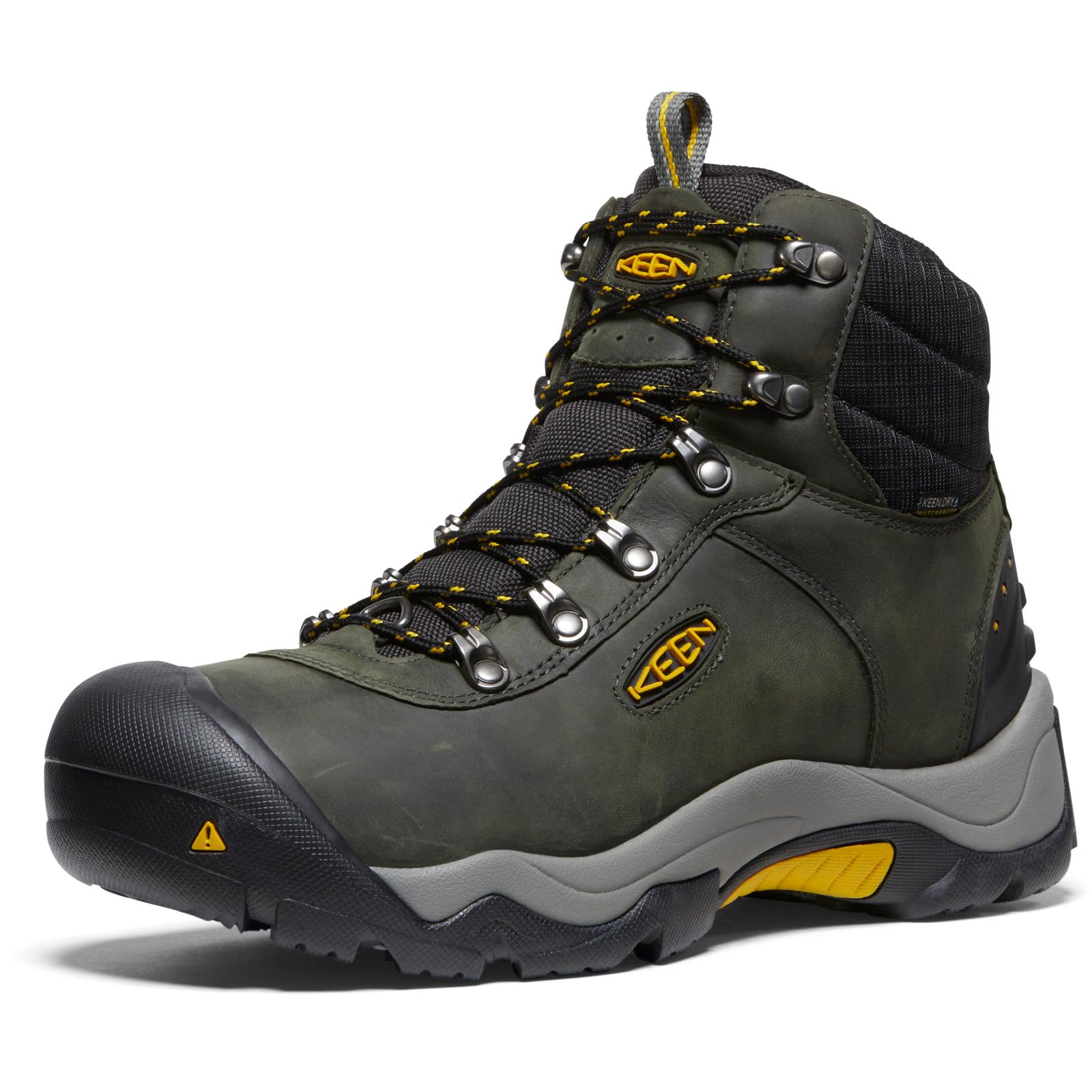
A naturally wider fit and reflective warmth make this a boot you can hike in all day.
KEEN builds the Revel III around a wider toe box that lets your toes splay as you walk. That alone makes this boot a standout if standard-width snow boots feel cramped. The Thermal Heat Shield lining (a reflective layer inside the boot that bounces your body heat back at your feet) adds warmth without heavy insulation bulk. The boot is fully waterproof and breathable, meaning it keeps melting snow out while letting sweat escape — a critical balance for a long day on the trail.
The Revel III uses a speed lace webbing system for a snug fit over your whole foot. The mid-height cut provides enough coverage for snow up to about 6 or 7 inches. At 1.31 pounds (595g) per boot according to the listed item weight, versus the Oboz Bridger’s 763g, it is a better choice for fast-paced day hikes where you generate constant body heat.
Why It Works
- Wider fit accommodates thick socks and wider feet comfortably
- Thermal Heat Shield reflects warmth without adding heavy insulation
- Waterproof and breathable membrane handles snow melt well
- Speed lace system for quick, secure adjustment
The Catch
- Less calf coverage than the 10-inch Oboz Bridger for deep snow
- Not as aggressively lugged as the North Face Bergen for icy traction
Your go-to for all-day hikes: The Revel III is the most comfortable boot for actually walking miles in snow, especially if you have wider feet. At 595g per boot versus the Oboz Bridger’s 763g, it is a strong choice for active use, and buyers also describe it as flexible from the start.
Reconsider if: You need a deep-snow monster for stationary cold or post-holing through drifts — the Oboz Bridger offers more insulation and a taller cuff.
4. Columbia Men’s Burnsider Omni-heat Infinity Hiking Boots
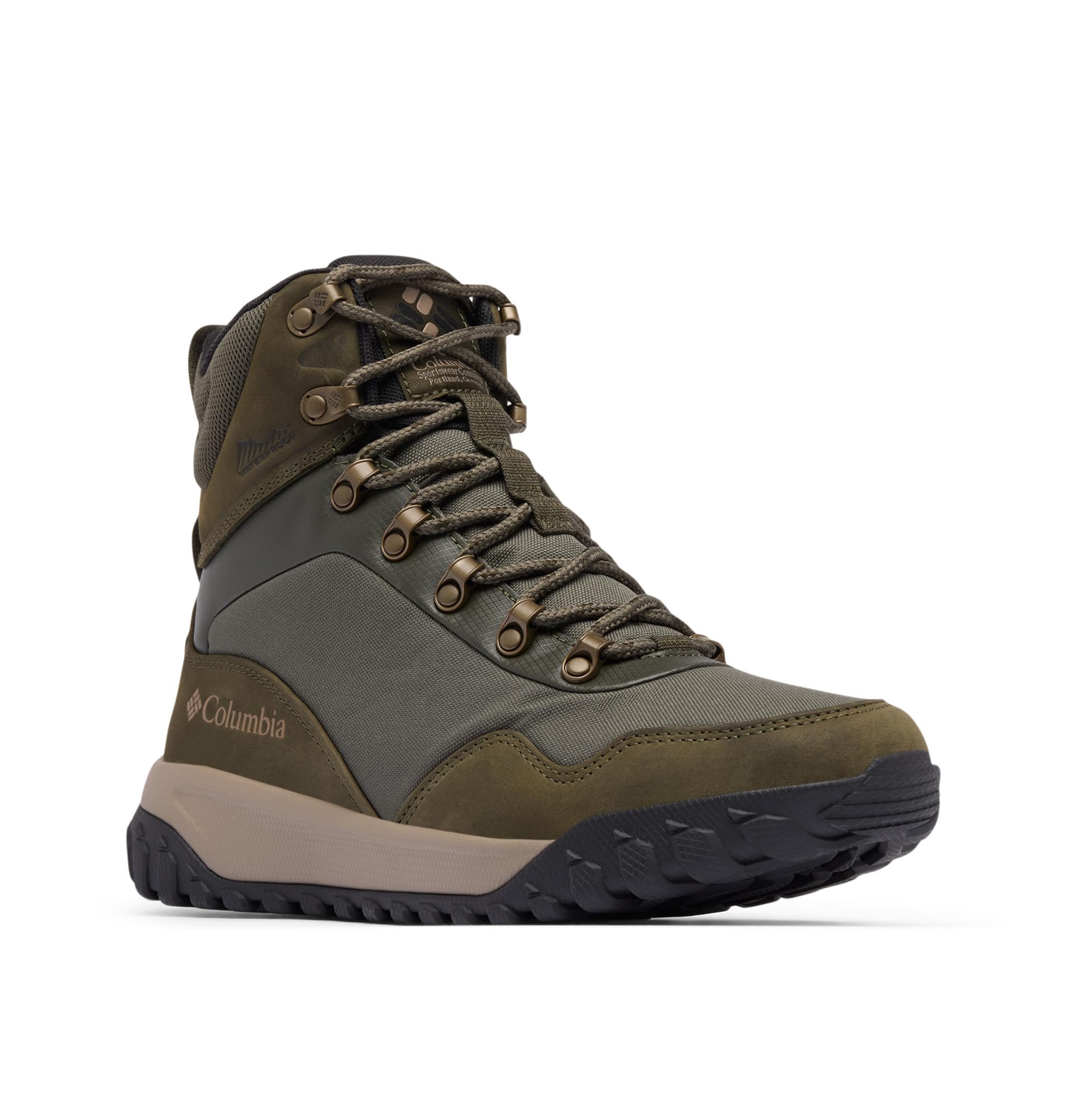
Columbia’s gold-dot reflective liner turns your own heat into walking warmth—less bulk than traditional insulation.
This boot is built for daily winter commutes and cold-weather walks. The Omni-Heat Infinity thermal-reflective lining (a pattern of gold dots that reflects body heat) is the standout feature. It traps warmth without the thickness of traditional insulation, offering a different approach than the Oboz Bridger’s 400g insulation. The boot is fully waterproof, so stepping into a slushy puddle or walking through light snow won’t leave you with wet feet.
The Burnsider is a mid-height boot, similar to the KEEN Revel III. It handles snow up to about 6 inches well, but deeper powder requires the taller Oboz or a pair of gaiters. Buyers who use this boot for everyday errands and shorter trails appreciate the blend of warmth and walkability. Unlike the stiffer, more aggressively lugged North Face Bergen, this Columbia boot feels more like a comfortable winter sneaker with serious cold-weather chops.
The Strength
- Omni-Heat Infinity lining reflects warmth for active cold-weather use
- Waterproof protection handles wet snow and slush
- Multiple color and size options for style flexibility
- Lightweight feel compared to heavily insulated boots
The Limitation
- Mid-height boot is not suited for deep powder or severe snow
- Less aggressive tread than the North Face Bergen for icy trails
Best for the cold commuter: If your snow hiking is mostly on packed trails, sidewalks, and well-traveled paths, the Burnsider’s thermal-reflective liner keeps you warm without the bulk of a heavy winter boot. It is a comfortable option for all-day wear.
Not the one for: Deep backcountry snow or technical icy climbs — the North Face Bergen or Oboz Bridger offer more traction, insulation, and height.
5. Kamik Nation Plus Snow Boot
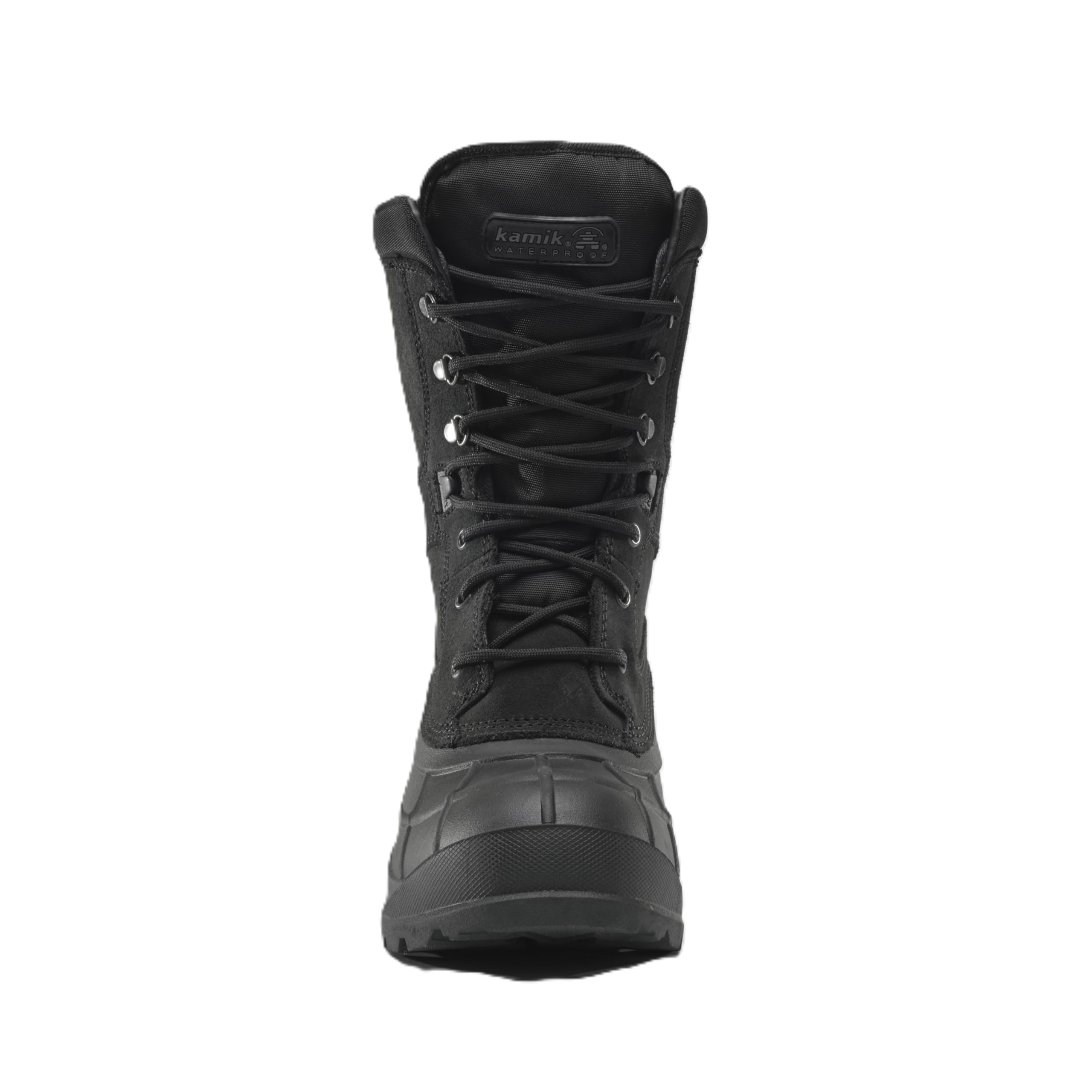
A seam-sealed suede upper and a -40°C rating at a price below most premium leather boots.
Kamik builds this boot around a seam-sealed waterproof genuine suede upper, meaning every stitch line is taped to prevent moisture from sneaking in. That is a level of water protection usually only found on more expensive boots. The HEAT-MX liner provides insulation that the maker says keeps feet comfortable down to -40°C (which is also -40°F), putting it in the same Arctic-ready league as the Kamik Greenbay 4. A waterproof and flexible synthetic rubber shell wraps the lower half, and the SNOWTREAD outsole uses deep, self-cleaning treads that shed packed snow to maintain grip.
At 1633g per pair (about 816.5g per boot), the Nation Plus still feels substantial. The 28.5 cm height gives you more calf coverage than the mid-height KEEN Revel III or Columbia Burnsider, which helps keep deep snow from spilling in while you break trail.
A removable thermal liner is a practical touch: you can pull it out to dry after a wet hike, extending the boot’s lifespan.
What Makes It Good
- Seam-sealed waterproof suede upper blocks snow melt effectively
- Rated to -40°C for extreme cold use
- Removable HEAT-MX liner for drying and customizable warmth
- 28.5 cm height provides good deep-snow protection
What’s Not Ideal
- Heavier than the mid-height picks like the KEEN Revel III
- Suede upper requires more care than synthetic or nubuck
For the cold-weather value hunter: The Kamik Nation Plus delivers a seam-sealed suede upper and a -40°C rating at a price well below what most premium leather boots cost. It is a strong rival to the similarly priced Kamik Greenbay 4, offering more premium materials in the upper.
Watch out if: You prefer a lightweight, flexible walking boot — the Nation Plus is built for stability in deep cold, not for casual strolls on pavement.
6. Kamik Greenbay 4 Men’s Winter Boot
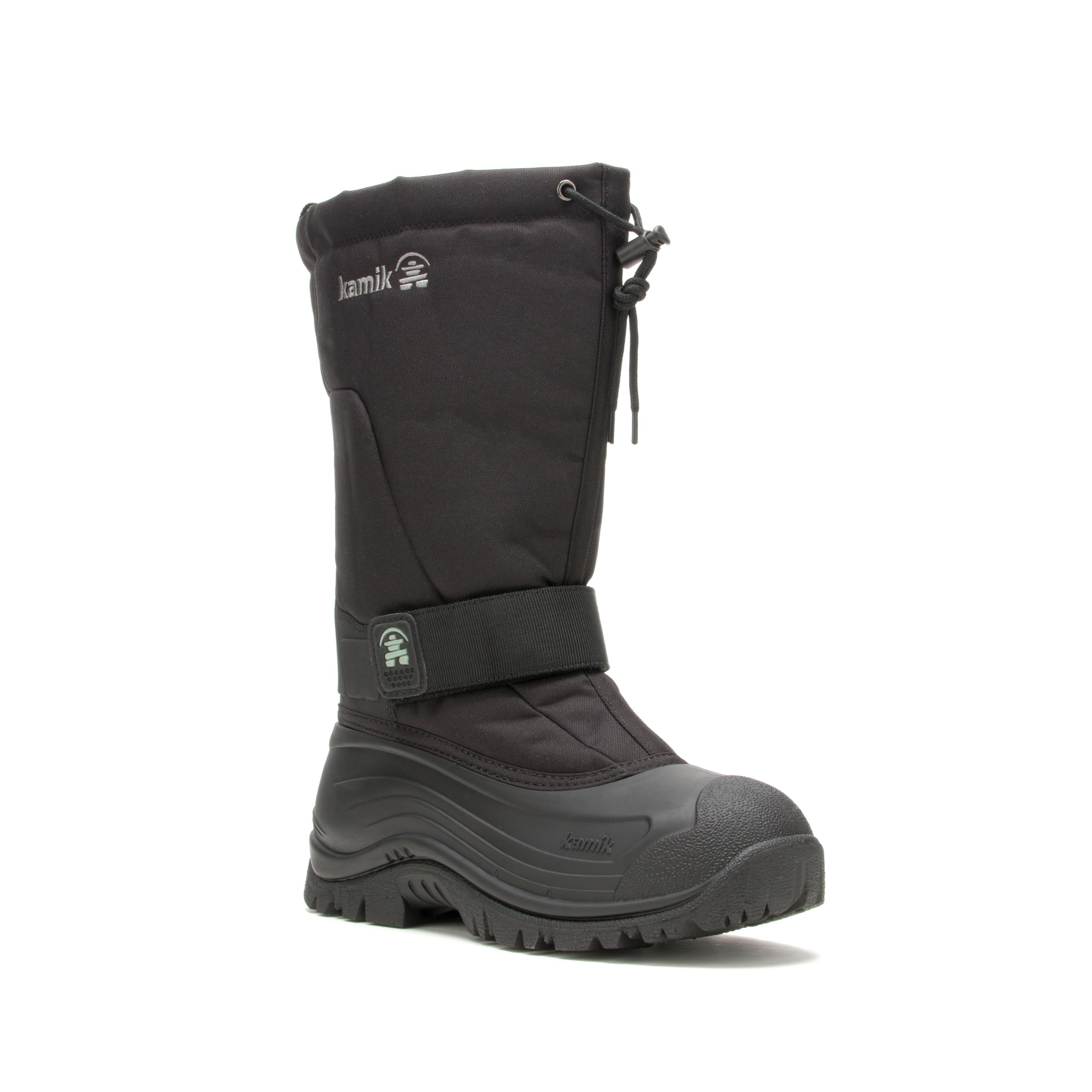
A Canadian-built budget boot that handles deep cold down to -40°C.
Kamik rates this boot to -40°C, the same extreme cold threshold as the Kamik Nation Plus. The 8mm Thermal Guard liner made from recycled materials traps a thick layer of warm air around your foot. A waterproof nylon shell keeps snow and slush out, while the adjustable snow collar with a bungee lace lock cinches the top tight to block snow entry. A midfoot hook-and-loop strap adds extra stability usually missing at this more affordable tier.
The lightweight RubberHe shell is a clever alternative to full rubber or heavy leather — it provides reliable waterproofing without making the boot feel like a lead weight. The thick treaded rubber outsole is designed for traction on slippery, icy surfaces. While the Greenbay 4 does not have the premium suede upper of the Nation Plus or the 400g insulation of the Oboz Bridger, it offers extreme cold protection at a lower price. Reviewers often mention the liner is removable, which is great for drying out after a wet day on the trail.
The Upside
- Rated to -40°C, matching much pricier boots
- 8mm Thermal Guard liner provides thick, eco-friendly warmth
- Adjustable snow collar and bungee lace lock seal out snow
- Lightweight RubberHe shell is durable yet flexible
The Downside
- Nylon upper is less durable and supportive than leather
- Not as much ankle support as taller or stiffer boots
The budget cold specialist: If you need a boot that can handle -40°C without breaking your wallet, the Greenbay 4 is your play. It is the most affordable way to get that temperature rating, though it trades some durability and support for the price.
Consider the upgrade if: You hike on rough, rocky terrain where a nylon upper would get torn up — the suede of the Kamik Nation Plus or the leather of the North Face Bergen will hold up better over time.
Understanding the Specs
Temperature Rating
This is a manufacturer’s estimate of the lowest temperature at which an average person can keep their feet warm while wearing the boot during light activity. A rating of -40°F or -40°C means the boot is designed for extreme Arctic-like conditions. The rating depends on your own circulation, your socks, and how active you are — standing still in a -40°F boot at -20°F will feel colder than walking briskly at the same temperature.
Waterproof Membrane
This is a thin layer inside the boot that blocks liquid water from getting in while allowing water vapor (sweat) to escape. Different brands call it different things: Kamik uses a seam-sealed construction on its suede boots, KEEN uses its own system, and The North Face combines a DWR coating with a waterproof membrane. The key is that the boot is advertised as waterproof, not just water-resistant.
Insulation Weight (grams)
The gram number tells you how much synthetic insulation is packed into the boot. More grams generally means more warmth, but also more bulk. 200g is good for active hiking in mild cold. 400g, like in the Oboz Bridger, is serious warmth for deep winter conditions and stationary use. Some boots, like the KEEN Revel III, use a reflective lining instead of thick fill to provide warmth with less weight.
Self-Cleaning Outsole
A tread pattern designed so that snow and mud fall out as you walk, instead of packing into the spaces between the lugs. This keeps your boot gripping the trail rather than skating on a packed layer of snow. Both Kamik models feature this, and it is a feature worth looking for if you hike in sticky, wet snow.
FAQ
Can I use regular hiking boots for snow hiking?
How do I know which insulation level is right for me?
Should I buy snow boots a size larger for thick socks?
What does a -40°F temperature rating really mean?
How important is a gaiter D-ring on a snow boot?
Which is better for snow hiking: leather or synthetic uppers?
How tall should my snow hiking boots be?
What is the difference between Omni-Heat and regular insulation?
Do I need to waterproof my new snow boots?
Why do some boots have a removable liner?
Final Thoughts: The Verdict
For most buyers, the boots for hiking in snow winner is the Oboz Bridger 10″ because it combines 400g insulation, a 10-inch height, and a fully waterproof B-DRY membrane into a single, stable package that handles deep snow and extreme cold better than any other boot here. If you want a lighter, more comfortable boot for active day hikes, grab the KEEN Revel III with its wider fit and reflective warmth. And for a classic leather option with serious traction, the standout is the North Face Bergen and its 4.5mm lugs.
How We Picked
We do not accept paid placement. Every pick is matched to a real buyer and a real use-case; we do not hands-on test units.
Sources & Methodology
Specifications: manufacturer listings and product documentation. Review insights: verified customer reviews, as of July 2026. Pricing: not shown on this page (it changes often); check the current price via the retailer link.
As an Amazon Associate, FitlyFast earns from qualifying purchases. This does not affect which products we feature.