
Our readers keep the lights on and the weekend projects moving. As an Amazon Associate, I earn from qualifying purchases.
Specs are compiled from manufacturer listings and verified buyer reviews and can change over time — please confirm the key details on the product page before buying.
You dig into the box, you see the pitch, you plant your back foot to swing — and then your ankle gives way. One bad step on the diamond can bench you for weeks. The right support changes that equation. It gives your ankle a stable partner that moves with you during slides, cuts, and sprints, not against you. This guide picks the best ankle braces for baseball by looking at the specs that keep you in the game and off the injured list.
I’m Rikta — the founder and writer behind FitlyFast. This guide is built by comparing the manufacturers’ published specifications and the patterns across verified customer reviews, so you get each pick’s real strengths and trade-offs instead of marketing spin.
To find the right ankle brace for baseball, you need to know which strap system, stabilizer type, and fit profile actually holds up during a nine-inning game.
Quick Picks
- Med Spec ASO Ankle Stabilizer — Best Overall
- Fitomo Ultra Thin Ankle Brace — Sneaker-Friendly
- AGPTEK Lace-Up Ankle Brace — Quick-Change Pick
- Fitomo Triple-Lock Ankle Brace — No-Slip Fit
- McDavid Phantom Ankle Brace — Lace-Free Choice
- Ultra 360 Lace Up Ankle Brace — Versatile Performer
- DonJoy Stabilizing PRO Ankle Brace — Durable Classic
How To Choose The Best Ankle Brace For Baseball
Picking an ankle brace for baseball is different from picking one for everyday walking. On the diamond you need a brace that stays locked in place during lateral slides, sudden stops, and explosive first steps, all while fitting comfortably inside your cleats. Here are the three things that matter most.
Strap System: Lace-Up vs. Figure-8 vs. Sleeve
The strap system determines how much control you have over tightness. Lace-up braces let you adjust tension across the whole foot and ankle, similar to how you cinch a shoe — great for a custom fit. Figure-8 straps focus compression on the ankle joint itself, mimicking the taping method athletic trainers use. Slip-on sleeves are the simplest option but offer the least adjustability, so they work best for mild support or as a preventive measure during low-risk practice.
Side Stabilizers: Removable vs. Fixed
Rigid splints along the sides of the brace prevent your ankle from rolling inward or outward — the most common injury mechanism in baseball. Some braces have removable stabilizers, which let you take them out for more natural movement during batting or base running and put them back in for high-intensity defensive drills. Fixed stabilizers are more secure but less flexible.
Profile and Shoe Fit
A brace that bulges out of your cleat is a brace you will stop wearing. The best baseball braces have a low-profile build — typically around 1.5mm to 2 inches of thickness — that slides into standard baseball and turf shoes without cranking up the pressure on your foot. Check the material too: breathable nylon and polyester panels help keep your foot from overheating between innings.
Quick Comparison
| Model | Best For | Strap System | Side Stabilizers | Weight | Amazon |
|---|---|---|---|---|---|
| Fitomo Figure-8 Brace | Slim shoe fit | Figure-8 + silicone grip | None (flexible panel) | Ultra-light | Check Price |
| Med Spec ASO Stabilizer | Pro-level stabilization | Lace-up + figure-8 | Yes (bilateral stays) | 169 Grams | Check Price |
| AGPTEK Lace-Up Brace | Quick on/off | Lace-up + hook & loop | Yes (removable) | 0.18 Kg | Check Price |
| Fitomo Triple-Lock Brace | Secure no-slip fit | Figure-8 + lace-up | Yes (removable) | — | Check Price |
| McDavid Phantom Brace | Lace-free convenience | Non-slip straps (lace-free) | Yes (plastic stays, fixed) | 0.05 Kg | Check Price |
| Ultra 360 Lace-Up Brace | Versatile sport use | Lace-up + figure-8 | Yes (integrated) | 0.06 Kg | Check Price |
| DonJoy Stabilizing PRO | Durable everyday wear | Full elastic strap | Yes (articulated, removable) | 5.6 oz | Check Price |
In‑Depth Reviews
1. Med Spec ASO Ankle Stabilizer
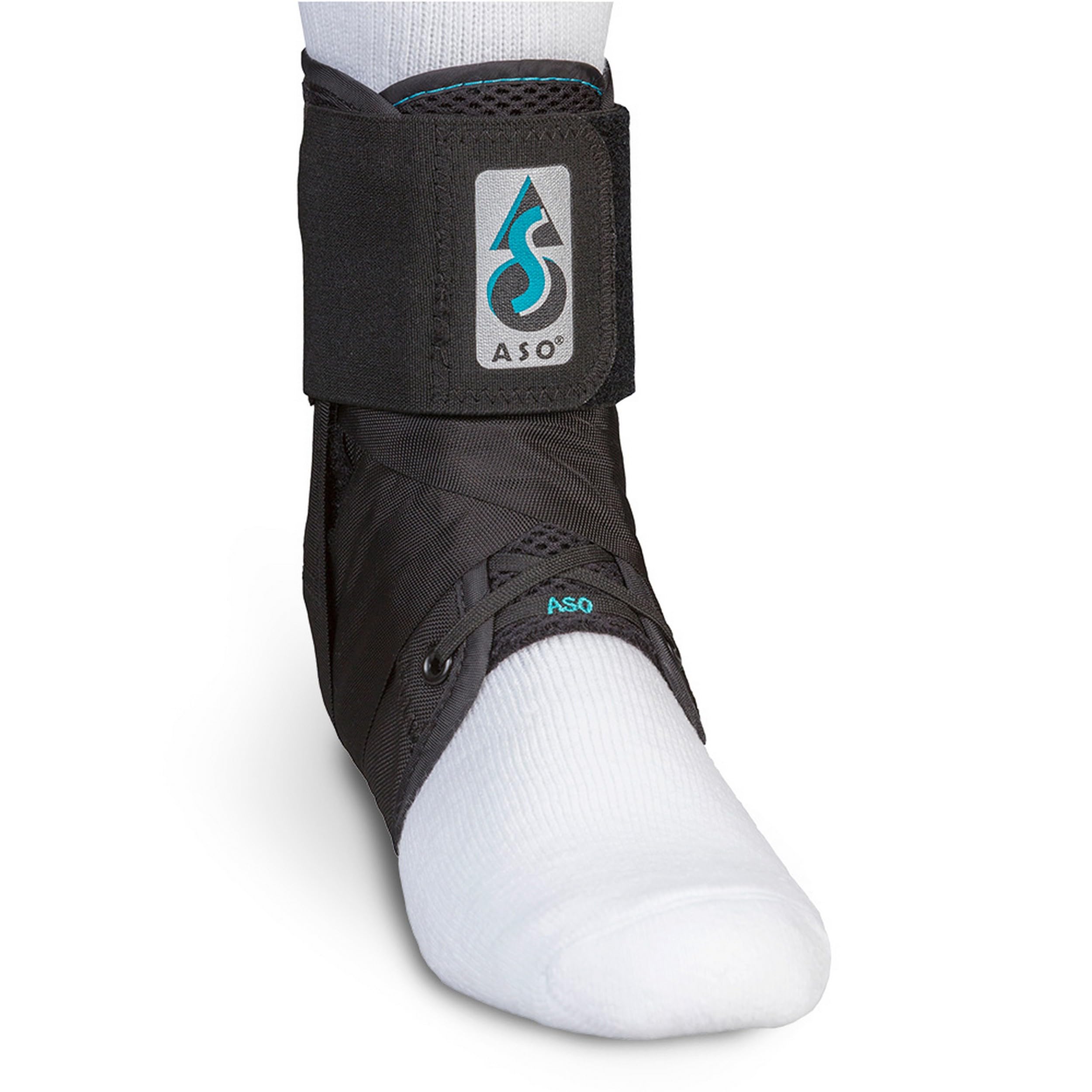
The pro-grade stabilizer that athletic trainers themselves reach for on the sideline.
If you twist your ankle during a play and need to stay in the game, this is the brace a team trainer would hand you. The Med Spec ASO gives you two layers of support. A lace-up closure lets you tighten it across your whole foot for a custom fit. Figure-8 straps then lock the ankle joint itself — mimicking the professional taping technique that stops painful rolls. One buyer reports that a physical therapist friend pointed to this brace as the only one offering real support compared to cheaper options.
It weighs 169 grams and uses CoolFlex padding and durable nylon that resists stretching over time, so it holds its shape through a full season. The brace fits easily into most athletic shoes. But one reviewer who plays tennis notes that slip-on shoes won’t work — you need laced gym shoes or cleats to get the fit right. The lace-up system includes a sewn center point in the laces, so you get an even knot every time without one side running longer than the other.
A reviewer described using it after a bad sprain and said it provided the support needed to walk safely without making deep bruising worse. Multiple long-term buyers report the Velcro holds strong even after years of use. Unlike the McDavid Phantom, which is lace-free, the ASO gives you full adjustability — loosen it for jogging or cinch it tight for a high-stakes game.
What makes it a top pick
- Lace-up plus figure-8 strap combo gives two layers of adjustment
- Durable nylon build resists stretching after months of play
- Well-documented long-term Velcro durability per buyer reports
One real limitation
- Does not fit slip-on shoes or casual footwear
- Several buyers mention needing help to put it on initially after injury
Reach for this if: you want the stabilization that athletic trainers and doctors rely on for sprains, tendonitis, and chronic ankle instability.
Think twice if: you want a slip-on brace you can put on without bending down or a design that disappears into casual sneakers.
2. Fitomo Ultra Thin Ankle Brace
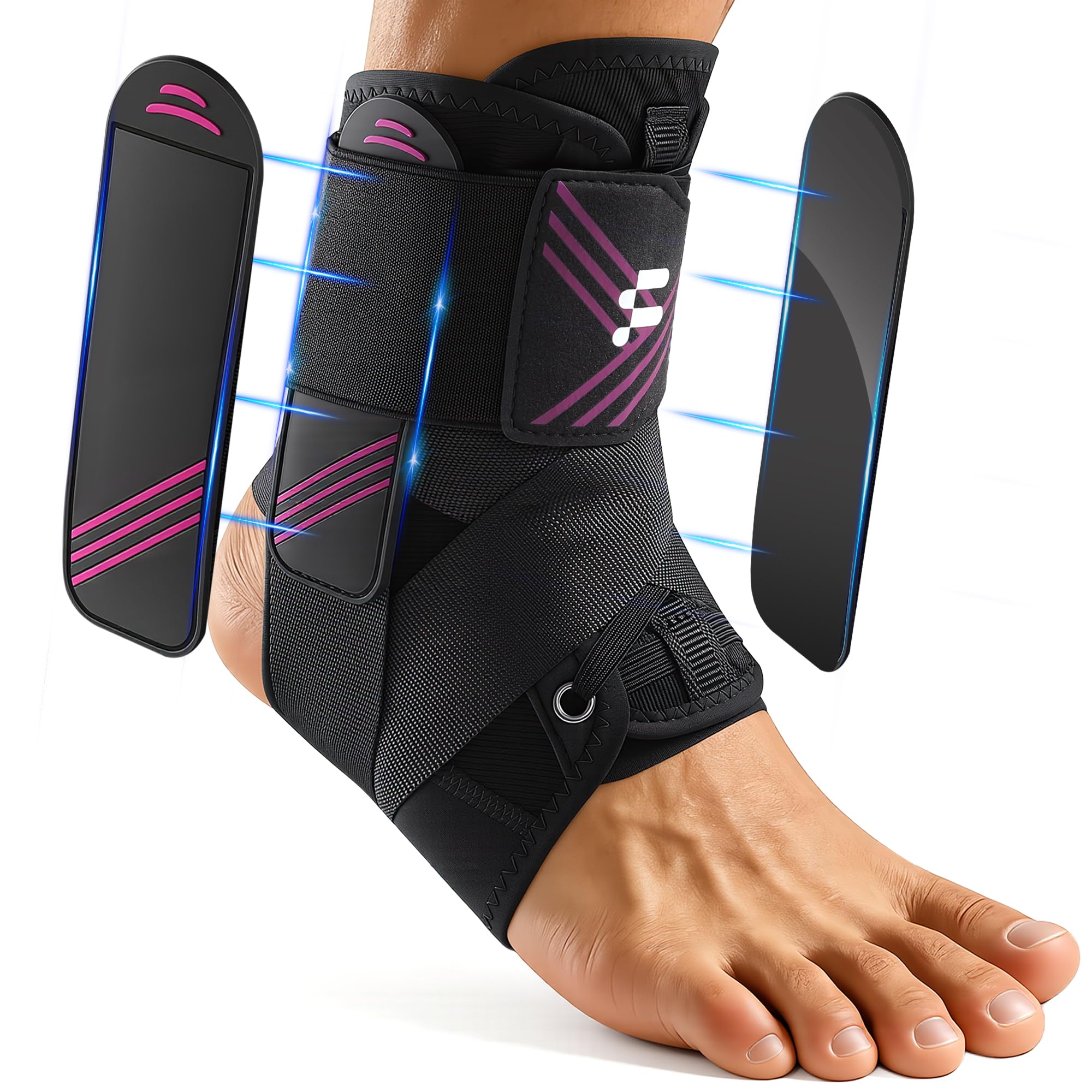
The paper-thin brace that hides under socks without sacrificing ankle control.
You can wear this brace and nobody will know it is there. The Fitomo measures just 1.5mm thick — a fraction of the bulk of a lace-up stabilizer like the AGPTEK. A visible ventilation grid helps stop your foot from sweating inside your cleat. It uses a 3-layer system: an inner silicone grip to hold it against your skin, a figure-8 stabilizing strap, and a flexible support panel that moves with your foot.
The trade-off for this thin profile is no hard side splints, so you get dynamic support, not rigid immobilization. Owners mention it works well for preventing common sprains during movement and for light recovery after an ankle roll. The material is 69% polyester, 17% nylon, and 11% plastic. One reviewer owns two of them — using one for daily support after repeated ankle trauma — and notes that after 3-4 months of near-daily use the elastic part started to stretch a little, but the price felt fair enough to just buy another.
Because it adds almost no height to your ankle, it fits into snug running shoes, baseball cleats, work boots, and casual sneakers without feeling cramped. If you play outfield and need lateral cutting ability but hate the chunky feel of a traditional brace, this is your move. Unlike the bulkier McDavid Phantom, which one reviewer says still takes about three minutes to fit into cleats, the Fitomo slides right in.
Why it stands out
- 1.5mm thickness fits into any shoe type without altering fit
- Air vents reduce heat and moisture buildup during long games
- FSA/HSA eligible for flexible spending accounts
The trade-off
- No hard stabilizers — not for serious post-surgery or high-grade sprain recovery
- Elastic may stretch over extended daily use, per buyer feedback
Perfect for: outfielders, runners, or anyone who needs light prevention and can’t stand a thick brace inside their cleats.
Not the one if: you need rigid stabilization for a fresh sprain or have a history of rolling your ankle hard during games.
3. AGPTEK Lace-Up Ankle Brace
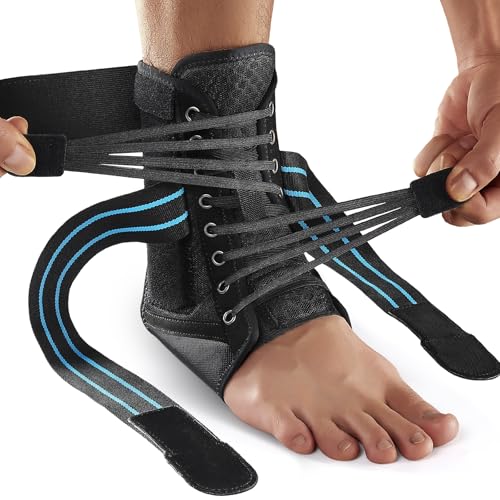
A fast-lacing stabilizer that clicks into place one second before you step to the plate.
Nobody wants to lose a minute between innings retying a brace. The AGPTEK solves that with a quick-lace system and dual-direction hook-and-loop fasteners that let you secure the brace in about one second. Customers note that the adjustable Velcro saves time compared to a standard lace-up brace. One reviewer says Medium fits a Women’s 10W perfectly. It weighs 0.18 kilograms and uses reinforced dual side stabilizers plus X-cross compression straps for 360-degree support.
The side stabilizers are removable — take them out during batting practice for more natural ankle movement and put them back in for defensive drills or games. The main body uses abrasion-resistant nylon Oxford fabric with honeycomb ventilation sections to keep your foot from overheating. The open heel design prevents rubbing inside your cleat while you run the bases. Unlike the Fitomo Ultra Thin, this brace has dedicated hard stabilizers on both sides, so it gives more structural support for someone coming back from a sprain.
The elastic laces adapt to both swollen and normal foot sizes, which is helpful during the acute phase of an injury. One reviewer says this was the third brace they tried — and the first one that actually fit correctly because the straps were long enough to wrap the way they should. Buyers also mention using it for pickleball, basketball, and volleyball, showing its versatility beyond baseball.
Strengths that matter
- One-second fastening with hook-and-loop — no lace-fumbling between plays
- Removable lateral splints for customizable support level
- Breathable honeycomb ventilation keeps feet cooler during doubleheaders
The honest catch
- Some users found the sizing runs small — measure carefully before ordering
- Durability over many months is not yet confirmed by long-term reviews
Pick this if: you want the speed of a hook-and-loop closure combined with the stability of removable hard splints for practice-to-game flexibility.
skip it if: you have a very high-arch foot or prefer a lace-free rear-entry design like the McDavid Phantom.
4. Fitomo Triple-Lock Ankle Brace
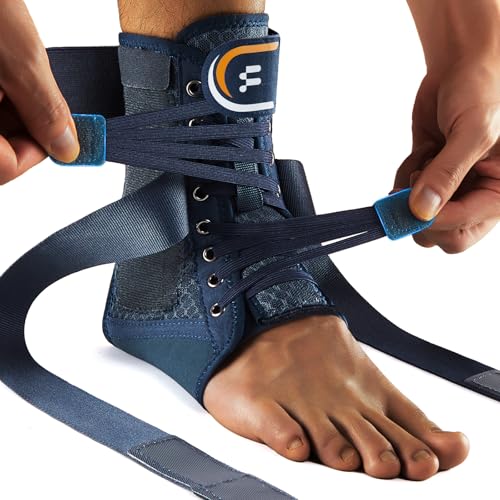
The figure-8 brace built to stay put during a full sprint to second base.
Nothing is more annoying than your brace sliding down inside your cleat mid-play. The Fitomo Triple-Lock fights that with top strap compression, dual removable side stabilizers, and cross straps that wrap around the ankle joint in a figure-8 pattern. The design is meant to prevent ankle rolling during movement — the exact motion that happens when you plant your foot to throw from the outfield.
The side stabilizers are removable. Wear the brace with full rigidity during a game, or take them out for a more flexible feel during warm-ups or daily walking. The materials are polyester, nylon, and plastic — the same as the Fitomo Ultra Thin — but with the added stabilizer structure that the thin brace lacks. Unlike the AGPTEK which uses a quick-lace system, this Fitomo model uses a figure-8 strap design that lets you fine-tune the compression level for different activities.
Its standout strength is that it stays secure without constant readjustment. Buyers who use this for basketball and workouts report that the fit reduces slipping or shifting, so you are not tugging at it between innings. The low-profile build fits inside most athletic shoes without bulk, making it a solid middle ground between the ultra-thin Fitomo and the boxier lace-up braces. It is also FSA/HSA eligible if you have a flexible spending account.
What works
- Triple-lock system with cross straps and stabilizers for multi-directional security
- Removable splints give flexibility to switch between recovery and sport mode
- Figure-8 strap design lets you dial in compression precisely
One drawback
- Fewer customer reviews available compared to the more established Med Spec ASO
- May feel slightly warmer than fully ventilated options like the AGPTEK honeycomb design
Go with this if: you need a brace that stays locked in place during base running and explosive lateral movements without needing constant tugging back up.
Look elsewhere if: you want a brace that is virtually invisible under thin socks — the Ultra Thin Fitomo is a better pick for that.
5. McDavid Phantom Ankle Brace
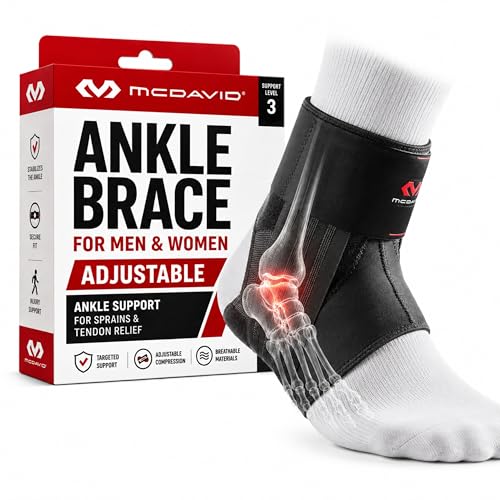
The slip-in brace that laces up zero times but still locks your ankle in play.
Not everyone wants to thread laces before a game. The McDavid Phantom eliminates that step with a rear-entry design and non-slip straps. It weighs just 0.05 kilograms — making it one of the lightest braces here, noticeably lighter than the Med Spec ASO at 169 grams. A low-profile construction lets it fit into tight cleats and turf shoes without the bulking problem many braces have. It is built for left and right ankles and includes plastic support stays and wraps for moderate stabilization.
The material layering includes nylon, polyester, SBR foam (a type of synthetic rubber foam used for padding), and spandex. The support stays are made from PE plastic (polyethylene, a common flexible plastic). One reviewer using this for basketball notes it fits well in a shoe, unlike many other braces, but reports that the inner plastic support cracked after about two months and started poking into their ankle — something to consider if you plan heavy daily use through a long season. Another buyer says it helped their son play soccer safely after a sprain, though it took about three minutes to fit into cleats because of the straps.
Reviewers point out it works for both sports stability and plantar fasciitis (arch) pain. The lace-free nature makes it a strong pick for catchers or infielders who need to get the brace on and off quickly between drills. Compared to the lace-up AGPTEK, the McDavid trades adjustability for speed — you cannot fine-tune the fit as precisely, but you can put it on in seconds.
What it does well
- Lace-free rear entry for fast on/off between innings
- Extremely lightweight at 0.05 kg — barely noticeable in cleats
- Provides arch support along with ankle stabilization, per buyer feedback
The known issue
- Internal plastic stays may crack after 2+ months of heavy use
- Not as adjustable as lace-up alternatives like the Med Spec ASO
Best for: athletes who value convenience and a lightweight feel over maximum adjustability — great for practice, batting, and quick changes.
Not ideal for: long-term daily rehab where you need the durability and fine-tuned compression of a lace-up stabilizer.
6. Ultra 360 Lace Up Ankle Brace
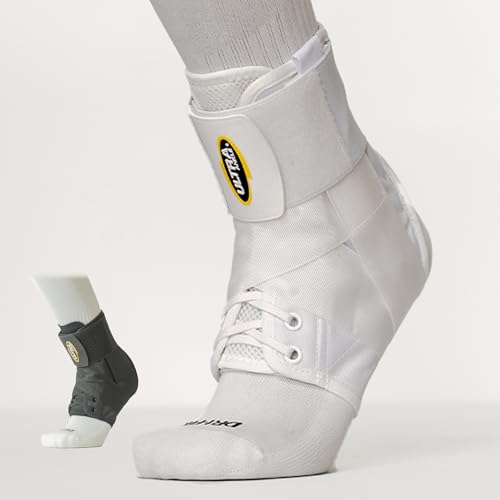
A lightweight lace-up brace that mimics athletic tape without the sticky mess.
The Ultra 360 is built to feel like a trainer taped your ankle before the game. Adjustable lace-up compression and figure-8 straps work together to stabilize the joint and reduce rolling. It weighs just 0.06 kilograms — lighter than the Med Spec ASO, similar to the McDavid Phantom — and uses a slim, breathable construction designed to fit into sneakers, cleats, and boots without adding bulk. The manufacturer markets it for volleyball, basketball, and running, but the support profile works well for baseball.
The lace-up design mimics the taping method, giving you control over tension from the top of your foot up through your ankle. The integrated figure-8 straps add an extra layer of stability targeting the ankle joint, the same approach used by the Med Spec ASO. It is designed for sprained ankles, mild instability, and tendonitis, and is FSA/HSA eligible. Unlike the DonJoy Stabilizing PRO which has been around since 2011, this is a more modern design at 0.06 kg with a contemporary lace-up and strap system.
The main limitation is fewer customer reviews than the most popular picks, so long-term durability data is harder to find. If you want a mid-weight brace that splits the difference between a minimalist sleeve and a heavy-duty lace-up stabilizer, the Ultra 360 sits in that balance.
Why it works
- Combines lace-up and figure-8 straps for dual-layer stabilization
- Low-profile fit works with cleats, turf shoes, and high-tops
- FSA/HSA eligible for flexible spending or health savings accounts
The downside
- Limited customer review data compared to more established models
- No removable stabilizers — the support level is fixed
Choose this if: you want a modern lace-up brace that is lighter than the ASO but offers a similar taping-inspired strap architecture.
Hold off if: you want the proven track record of a brace that athletic trainers have used for years — the Med Spec ASO has deeper buyer history.
7. DonJoy Stabilizing PRO Ankle Brace

A ballistic-nylon tank of a brace that has been holding up since 2011.
The DonJoy Stabilizing PRO is built from 800D ballistic nylon — the same tough fabric used in high-end luggage and military gear — making it the most abrasion-resistant brace in this lineup. It is built for heavy use and features a reinforced eyelet area that resists tearing from repeated lace tightening. The brace includes removable articulated medial and lateral stays (splints that move with your ankle’s natural motion) that enhance proprioception — your body’s awareness of its own position in space — and stability. You can dial the support level up or down depending on the activity.
A full circumferential elastic strap (a strap that goes all the way around) wraps around the top of the brace to secure the strapping system and add compression to the tibia and fibula — the two lower leg bones on either side of your ankle. This is a low-profile design that fits inside your shoe without the bulky feel of older braces. It has been on the market since November 2011, giving it a longer track record than any other brace here. However, it is also the only product with zero featured customer reviews in the data provided, so immediate buyer feedback on this specific model is unavailable for reference.
At 5.6 ounces, it is heavier than the McDavid Phantom and Ultra 360, but that weight comes from the durable ballistic nylon and articulated stays. If you are a player who wears through gear quickly and wants one brace that can survive multiple seasons in your bag, the DonJoy is built for that. The removable stays also let you use it as a flexible sleeve for practice and a rigid stabilizer for games, similar to the AGPTEK but in a tougher package.
The big strength
- 800D ballistic nylon offers extreme durability against abrasion and tear
- Removable articulated stays for adjustable support between practice and games
- Full elastic strap adds tibia/fibula compression for enhanced stability
The big weakness
- Heavier and bulkier than newer, slimmed-down competitors
- No recent customer reviews available to confirm real-world performance
Buy this if: you prioritize toughness over weight and want a classic brace with a proven material that can survive being thrown in and out of a gear bag every day.
Pass on this if: you want the lightest, most breathable option — the Fitomo Ultra Thin or McDavid Phantom are better for low-bulk needs.
Understanding the Specs
Lace-Up vs. Figure-8 Support
Lace-up braces let you tighten the whole brace across your foot and ankle, similar to lacing a shoe for a custom fit. Figure-8 straps wrap around the ankle joint directly, mimicking the athletic tape technique trainers use to prevent the ankle from rolling. Many top braces combine both systems — you lace for overall fit and cinch the figure-8 strap for targeted joint security.
Removable Side Stabilizers
These are the rigid plastic or composite splints on the sides of the brace. When left in, they physically block the ankle from rolling inward or outward — the most common sprain mechanism. When removed, the brace becomes more flexible for daily walking, batting, or less intense movement. If you need one brace for both recovery and light sport, removable stabilizers give you two options in one product.
Weight and Profile
Weight is measured in kilograms or grams and directly affects whether you notice the brace during a game. Lighter braces around 0.05-0.06 kg are easier to forget about but may offer less structural support. Heavier braces (0.18 kg or 5.6 oz) usually include thicker padding and more sturdy stabilizers. Profile refers to the thickness of the brace — a low-profile design (like 1.5mm or a slim build) fits into cleats without forcing you to loosen your laces or buy a larger shoe size.
FSA/HSA Eligibility
Some ankle braces qualify as eligible medical expenses under flexible spending accounts (FSA) and health savings accounts (HSA). This means you can use pre-tax dollars from those accounts to pay for the brace. Look for the “FSA HSA Approved” label on the product page if you plan to purchase through an employer-sponsored health benefit plan.
FAQ
Can I wear an ankle brace inside my baseball cleats?
Which ankle brace type is best for preventing ankle rolls during baseball?
How tight should an ankle brace be for baseball?
Can I use a basketball ankle brace for baseball?
How long does an ankle brace typically last with regular baseball use?
Should I wear the brace on both ankles or just the weak one?
How do I clean my ankle brace without damaging it?
Can an ankle brace help with Achilles tendonitis in baseball players?
What size ankle brace do I need for baseball cleats?
Is a lace-up brace better than a sleeve brace for baseball?
Final Thoughts: The Verdict
For most players, the ankle brace for baseball winner is the Med Spec ASO Ankle Stabilizer because its combination of lace-up adjustment, figure-8 strapping, and durable nylon build gives you the professional-grade stabilization that athletic trainers and doctors trust for game-day protection. If you want an ultra-thin brace that disappears inside your cleats for light prevention, grab the Fitomo Ultra Thin Ankle Brace. And for a quick fastening system with removable stabilizers that let you switch between practice mobility and game-day rigidity, the AGPTEK Lace-Up Brace is a strong value choice that buyers consistently praise for fit and ease of use.
How We Picked
We do not accept paid placement. Every pick is matched to a real buyer and a real use-case; we do not hands-on test units.
Sources & Methodology
Specifications: manufacturer listings and product documentation. Review insights: verified customer reviews, as of July 2026. Pricing: not shown on this page (it changes often); check the current price via the retailer link.
As an Amazon Associate, FitlyFast earns from qualifying purchases. This does not affect which products we feature.