
Our readers keep the lights on and the weekend projects moving. As an Amazon Associate, I earn from qualifying purchases.
Specs are compiled from manufacturer listings and verified buyer reviews and can change over time — please confirm the key details on the product page before buying.
The biggest worry for a new gardener is picking a plant that simply won’t survive your particular yard, windowsill, or schedule. You want something that forgives missed waterings, doesn’t demand a PhD in soil science, and actually shows off its colors. That search ends with varieties that thrive on neglect while rewarding you with fast growth and noticeable beauty from day one.
I’m Rikta — the founder and writer behind FitlyFast. This guide is built by comparing the manufacturers’ published specifications and the patterns across verified customer reviews, so you get each pick’s real strengths and trade-offs instead of marketing spin.
Whether you have a sunny patch, a shady corner, or a simple pot indoors, these picks are chosen to survive your learning curve. This is your practical, no-nonsense list of the best beginner garden plants that actually grow well for people who are just starting out.
Quick Picks
- Organo Republic 16 Perennial Wildflower Seeds Mix — Best Overall
- Bonnie Plants Big Boy Tomato Live Vegetable Plants – 4 Pack — Top Performer
- Best Deal on Amazon 9-Pack Hosta Bare Root Perennial Plants — Low-Light Champ
- Clovers Garden Lantana Camara Flowers – Two Live Plants — Pollinator Magnet
- Creeping Jenny Live Plant (Lysimachia nummularia) – 2 Plants Per Pack — Groundcover Value
- Live Wandering Jew Plant – Tradescantia Zebrina Starter Plants – Pack of 10 — Indoor Trailer
- Chocolate Cherry Sunflower Seeds – Heirloom & Non-GMO – Package 50+ Seeds — Tall Statement
How To Choose The Best Beginner Garden Plants
Not all plants are equal when you are learning the ropes. Some ask for daily fussing; others practically grow themselves. Here is what separates a confidence-building first plant from a disappointment.
Match Light, Not Guesswork
Your yard or balcony has a specific amount of direct sun. A plant that demands “full sun” needs at least 6 hours of it daily. Put a full-shade hosta in a sunny spot and it scorches; put a sunflower in deep shade and it flops. Look at your space for a few days and count the hours of direct sunlight before you pick.
Perennials vs Annuals — The Effort Payoff
A perennial (like hosta or creeping jenny) comes back year after year from the same roots, so you plant once and enjoy for seasons. An annual lives one summer and needs replanting. For a beginner who wants to see long-term reward without starting over each spring, perennials are the smarter bet.
Your Zone Matters More Than the Picture on the Pack
The USDA Hardiness Zone tells you whether a plant survives your local winter cold. A plant rated for Zone 3 handles deep freezes; one rated for Zone 8 will not. Every plant label lists a zone range — stick with one that fits your zone, or you are fighting the climate from day one.
Quick Comparison
| Model | Best For | Mature Height | Light Need | Water Need | Amazon |
|---|---|---|---|---|---|
| Organo Republic Wildflower Mix | Instant color & pollinator garden | 15 Inches | Full Sun to Partial | Regular | Amazon |
| Bonnie Big Boy Tomato | Edible harvest in mid-season | 10 Feet | Full Sun | Regular | Amazon |
| Hostas 9-Pack by Gardening4Less | Shady spots & low-care groundcover | 20-60 Inches (spread) | Full Shade | Regular | Amazon |
| Lantana Camara by Clovers Garden | Repelling mosquitoes & attracting hummingbirds | 4 to 8 Inches (at ship) | Full Sun | Regular | Amazon |
| Creeping Jenny (Lysimachia nummularia) | Trailing groundcover & erosion control | 4 Inches | Sun to Partial Shade | Regular | Amazon |
| Wandering Jew (Tradescantia Zebrina) | Indoor hanging baskets & fast trailing | 18 Inches | Bright Indoor Light | Regular | Amazon |
| Chocolate Cherry Sunflower | Dramatic tall blooms & pollinators | 5 Feet | Full Sun | Regular | Amazon |
In‑Depth Reviews
1. Organo Republic 16 Perennial Wildflower Seeds Mix

The scatter-and-wait mix that turns bare soil into a pollinator magnet.
This is the pure volume champion for anyone who wants a meadow without the math. You get over 100,000 seeds from 16 different perennial varieties — including Black-Eyed Susan, Purple Coneflower, and Shasta Daisy — all heirloom and non-GMO. The mature height tops out around 15 inches, so you get a manageable mat of color rather than a towering jungle. Buyers report fast germination in roughly one week after scattering over good soil and watering, with blooms building over several months.
Unlike the smaller seed packets in this list, this bag gives you enough to cover a substantial patch of ground or a large meadow border. The resealable bag and QR-code growing guide make the process approachable for a first-timer. Start with a small test patch to see how your soil responds.
Meadow-Maker Strengths
- 100,000+ seeds covers large area easily
- 16 perennial varieties for season-long bloom sequence
- Resealable bag with QR-code guide for beginners
Seed Germination Risk
- Some owners mention zero germination — old seed stock is a possibility
- Requires good soil prep and consistent watering for success
Who this fits: Anyone who wants to turn a bare patch of yard into a buzzing, colorful wildflower garden without planting individual plugs.
Who should think twice: If you need guaranteed instant coverage or have heavy clay soil that stays wet, live plants will be more forgiving than seeds.
2. Bonnie Plants Big Boy Tomato Live Vegetable Plants – 4 Pack

The tomato that turns a single plant into a summer of sandwiches.
If you want to grow something you can eat, this is the starter. You get four live Big Boy tomato plants that produce smooth, bright red fruit up to 32 ounces each — that is a sandwich-slicer you cut with a steak knife. The vines are indeterminate, meaning they keep growing and producing fruit until the first frost hits. Fruits mature about 78 days after planting, so you get a mid-season harvest. Customers note the plants often arrive looking a bit rough after shipping but bounce back within a couple of days after planting in full sun.
Compared to the sprawling height of the Chocolate Cherry Sunflower (which grows to 5 feet), the Big Boy can stretch up to 10 feet tall and needs a sturdy cage or stake from day one. That height is the main commitment — you must support it. One reviewer noted that while their beefsteak and green peppers arrived fine, the Big Boy plants showed heat stress. Give them full sun, regular watering, and a solid cage, and they will reward you heavily.
Harvest-Ready Pick
- Produces large 32 oz fruit, perfect for slicing
- Indeterminate vines continue fruiting until frost
- Live plants skip the seed-starting step for beginners
Space & Support Needed
- Vines reach 10 feet — requires tall stakes or cage
- Arrival plants can show heat stress; need immediate planting
Best for: The beginner who wants the satisfaction of harvesting their own big tomatoes in one season without starting from seed.
Reality check: You must have a sunny spot with a strong support system — without a cage these heavy vines will flop and break.
3. Best Deal on Amazon 9-Pack Hosta Bare Root Perennial Plants

The shade-garden hero that comes back bigger every single year.
If your yard has a dark, damp corner where nothing else grows, hostas are the answer. This pack drops nine bare-root plants into your soil, each spreading 20 to 60 inches wide with heart-shaped rich green foliage. They are rated for USDA Hardiness Zone 3 to 8, so they handle cold winters without fuss. Purple or white bell-shaped blooms appear in mid-to-late summer on tall stems. Reviewers point out that all plants sprout in a few days after planting and grow quickly — one reviewer bought two packs and had all 18 plants grow successfully.
Unlike the Creeping Jenny (which stays at 4 inches tall as a groundcover), hostas build vertical presence with broad leaves. They thrive in full shade or half-sun/half-shade, making them the perfect companion for north-facing walls or under trees. The bare roots arrive small but alive; plant them right away and they will be 2 to 6 times larger within a week. The only downside is that they are bare roots, not potted plants, so you need to get them in the ground or a container immediately.
Shade Specialist
- Thrives in full shade where most flowers fail
- Hardy in Zone 3 to 8 — survives freezing winters
- 9 bare roots cover a large area affordably
Planting Window
- Bare roots arrive dormant and must be planted immediately
- Foliage only — flowers are mild and short-lived (2 weeks)
Great for: Anyone with a shady yard or north-facing bed who wants reliable green texture that returns year after year without replanting.
Not for: Gardeners who want showy flowers all season — hosta blooms are a brief summer accent, not the main event.
4. Clovers Garden Lantana Camara Flowers – Two Live Plants
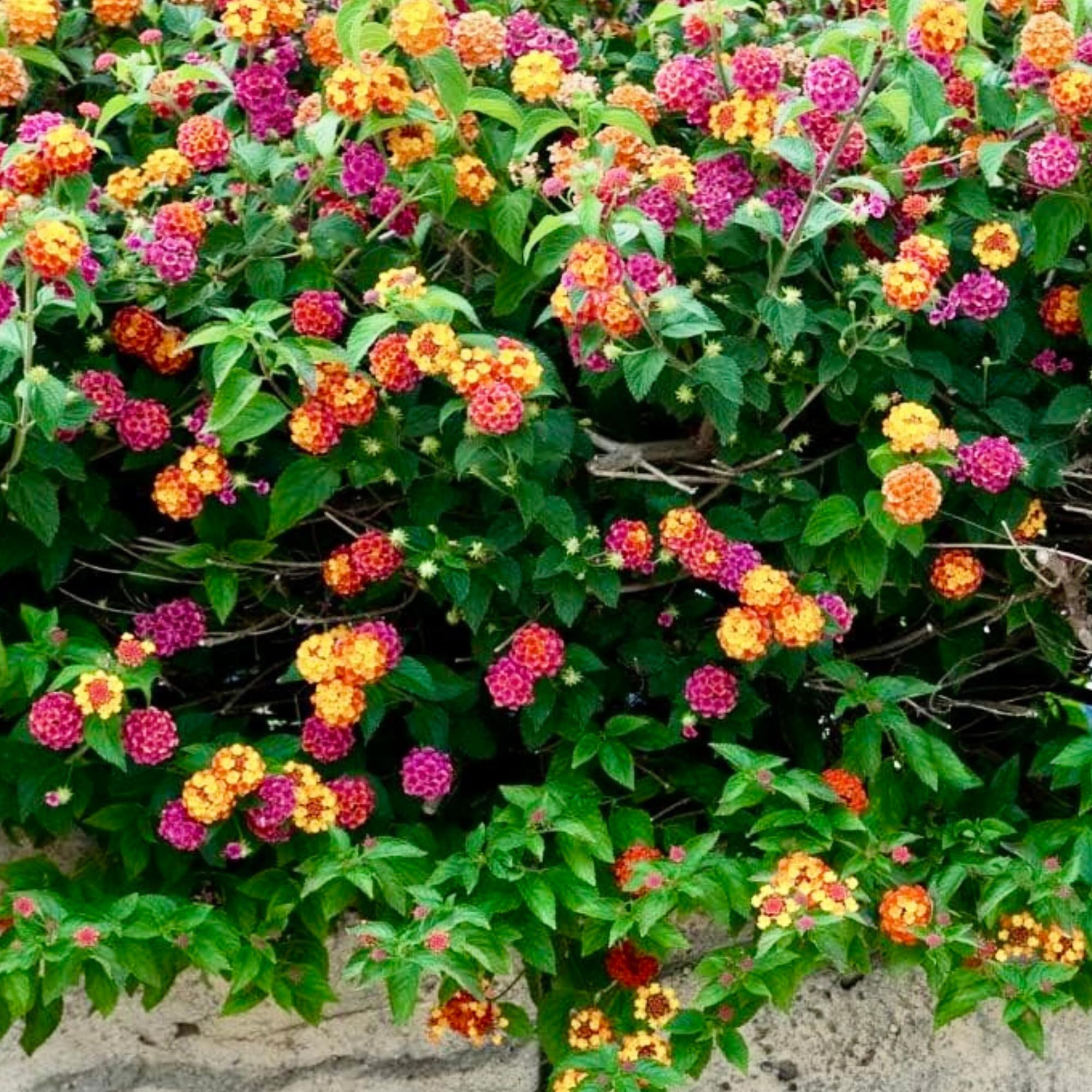
The sun-loving bloomer that brings hummingbirds while repelling mosquitoes.
Lantana is the double-duty plant that attracts butterflies and hummingbirds while providing a natural mosquito-deterring barrier in your yard. You get two live plants in 4-inch pots, each 4 to 8 inches tall, non-GMO and free of neonicotinoids. They need full sun and loamy soil with regular watering. The “10x Root Development” claim means they establish faster than typical nursery transplants. Shoppers say these as the best live plants they have received — very healthy and well-packaged, with one reviewer calling it within the top 3 best mail-order plant experiences they have ever had.
However, one verified buyer had a very different experience, calling the plants “gross, rotten, and more than half dead” — so quality control on arrival can vary. Unlike the forgiving Creeping Jenny that revives with soaking, Lantana may not bounce back if it ships in poor condition. Plant them in full sun and give them a liquid bloom booster if growth stalls. Once established, they flower quickly and thrive even in hot climates like South Florida.
Dual-Benefit Blooms
- Attracts hummingbirds and butterflies while deterring mosquitoes
- Live potted plants arrive ready to transplant
- Non-GMO and neonicotinoid-free
Shipment Gamble
- Mixed arrival quality — some plants arrive rotten or half-dead
- Needs full sun and loamy soil; not for shade or heavy clay
Reach for this if: You want a low-maintenance flowering plant that pulls double duty — feeding pollinators while naturally discouraging mosquitoes around your patio.
Look elsewhere if: You want guaranteed healthy arrival or you have a shady yard — Lantana demands full sun and consistent packing quality.
5. Creeping Jenny Live Plant (Lysimachia nummularia) – 2 Plants Per Pack

The chartreuse carpet that fills bare ground faster than any seed mix.
Creeping Jenny is the solution for bare soil between stepping stones, the edges of a pond, or any spot where you want a dense, weed-suppressing mat of bright green. This pack gives you 2 live plants in 1-pint pots, each growing to about 4 inches tall but spreading up to 18 inches wide. It is a trailing perennial groundcover that thrives in sun or partial shade with regular watering. Buyers report that the plants often arrive bigger than expected — one buyer got a 4-pack and noted one was wilted but revived quickly after soaking and shade. The coin-shaped leaves give it the nickname “moneywort.”
Compared to the tall 5-foot Chocolate Cherry Sunflower, Creeping Jenny stays low and spreads horizontally. It is a fast grower once established, and it tolerates a variety of soils. The main risk is that a second purchase from the same seller may arrive in worse condition than the first — one disappointed buyer noted the second batch was not as healthy. Still, for erosion control or filling gaps, this is an affordable, low-risk starter that shows visible results within a week.
Spreading Champion
- Spreads 18 inches wide from a single plant, suppressing weeds
- Bright chartreuse foliage adds color even without flowers
- Thrives in sun or partial shade
Consistency Concern
- Quality varies between orders — second purchase may arrive weaker
- Needs regular watering; not drought-tolerant
Perfect for: Filling bare patches, softening pond edges, or trailing over container rims with a fast-spreading, low-maintenance perennial.
Watch out for: It can become invasive in some climates — keep it contained or it will take over neighboring plants.
6. Live Wandering Jew Plant – Tradescantia Zebrina Starter Plants – Pack of 10
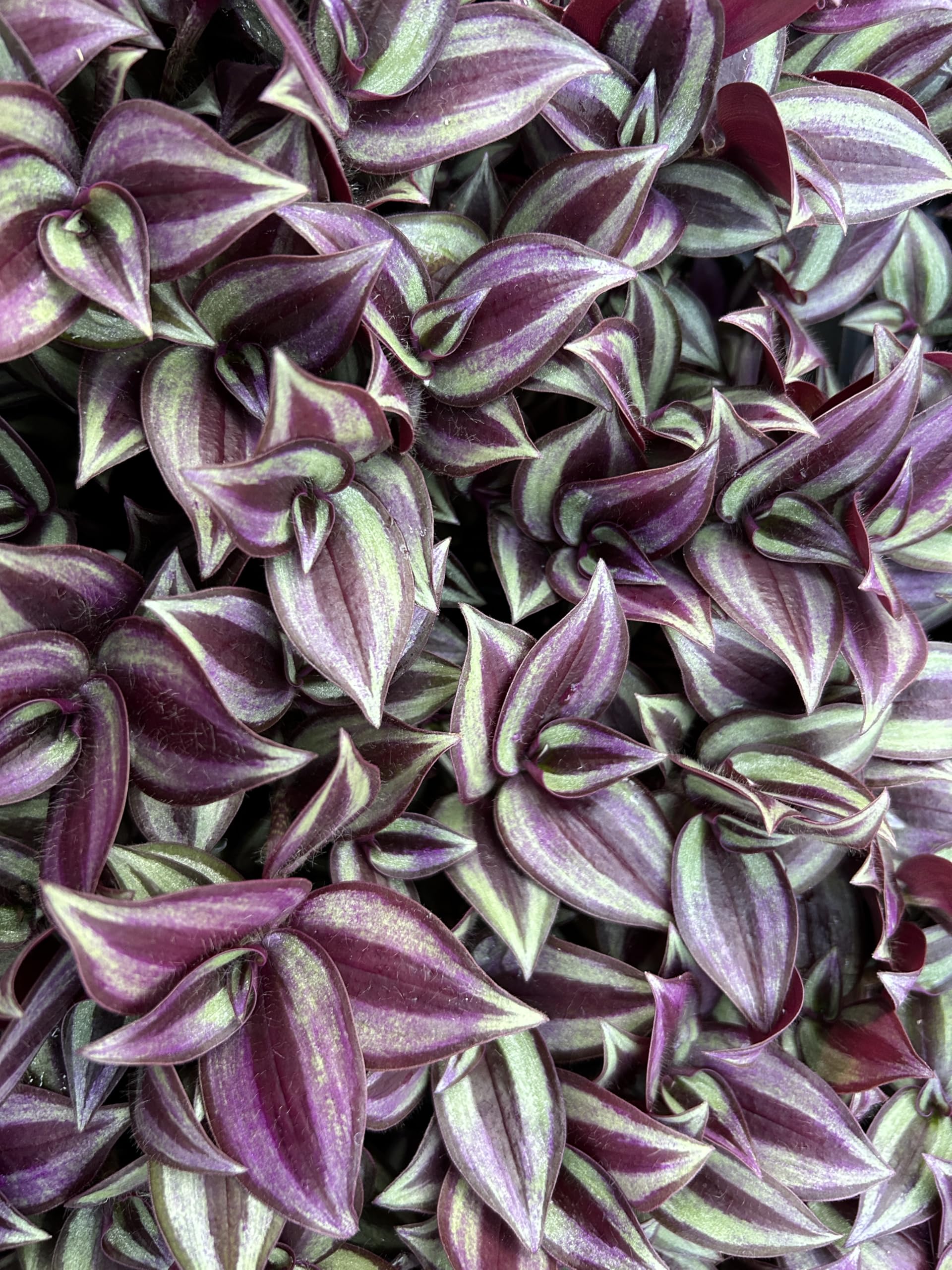
The fast-growing trailer that turns a shelf into a purple cascade.
This is the indoor beginner plant that actually looks like you know what you are doing. You get 10 live starter plants with fully rooted systems, not unrooted cuttings, featuring bold purple and silver variegated foliage. These Tradescantia zebrina will trail over hanging baskets or shelf planters, reaching 18 inches in height with time. They thrive indoors in bright, indirect light and need only regular watering. Buyers rave about the value — 10 plants for the price of one at a nursery — and note they are sturdy, healthy starters with strong roots. One buyer mentioned their plants arrived 6 days early, slightly thirsty from heat, but revived and rooted without issues.
Unlike the Creeping Jenny that stays 4 inches tall, this plant grows upright and then trails, making it ideal for hanging displays. The main trade-off is that shipping live plants is risky: one buyer had 7 out of 10 healthy plants with established roots, 2 with broken stems, and 1 dead with underdeveloped roots. The seller was responsive and replaced the damaged ones, but you may lose a few in transit. For the price and the vibrant colors, most buyers find it worth trying.
Purple Powerhouse
- 10 rooted starters for nursery price of 1 — excellent value
- Striking purple and silver foliage adds instant visual drama
- Fast-growing and easy to propagate from cuttings
Shipping Fragility
- Some arrive with broken stems or dead roots
- Needs bright indirect light; will lose color in dim corners
Best for: Apartment dwellers and office plant lovers who want a fast, trailing statement plant that costs a fraction of boutique nursery prices.
skip it if: You have no patience for shipping casualties — live plants in transit can arrive damaged even with careful packaging.
7. Chocolate Cherry Sunflower Seeds – Heirloom & Non-GMO – Package 50+ Seeds

The dramatic dark bloom that towers over your garden and draws every eye.
If you want height and a conversation piece, this is your seed pack. Each sunflower grows to about 5 feet tall with rich purple-chocolate colored blooms. You get 50 heirloom, non-GMO seeds from Marde Ross & Company — a licensed California nursery since 1985. Plant them 1/2 inch deep, space them 8 to 12 inches apart, and give them full sun with regular water. They bloom in summer and attract pollinators. Owners mention they are fast to begin growing, with shoots appearing in just a few days while other flowers are still dormant.
The biggest risk here is germination failure. One owner reported that seeds failed to germinate after following the instructions exactly (1/2 inch depth, cover, water), and the company did not respond to multiple emails. Another reviewer gave 1 star for the same reason. Compared to the Organo Republic wildflower mix with 16 varieties, this is a single-species gamble — if your batch is bad, you get nothing. The 50-seed count is generous, so plant extra and thin later. For the cost, it is a low-stakes bet on a beautiful payoff.
Drama in a Seed
- Stunning 5-foot plants with unique chocolate-purple blooms
- Non-GMO and heirloom — seeds can be saved for next year
- Fast germination visible in days (when seeds are viable)
Germination Roulette
- Some batches have zero germination — bad seeds possible
- Company did not respond to customer complaints about failures
Go for it if: You want a dramatic, tall sunflower with unique coloring and you are willing to accept the small risk of a bad seed batch.
pass on it if: You need guaranteed results or you cannot handle the disappointment of seeds that simply do not sprout despite following directions.
Understanding the Specs
Mature Height & Spread
This tells you how big the plant will get at full size. A 4-inch Creeping Jenny stays low as a mat; a 10-foot tomato vine needs a tall cage. Match the final size to your available space. A plant that outgrows its spot is more work, not more fun.
Sunlight Exposure Requirements
This is the most common beginner mistake. “Full Sun” means 6+ hours of direct sun daily. “Full Shade” means no direct sun at all. “Partial Shade” means morning sun or dappled light. Put a full-shade hosta in a sunny spot and the leaves bleach; put a full-sun Lantana in shade and it will not bloom. Check your spot, then pick a plant that matches.
USDA Hardiness Zone
A plant rated for Zone 3 survives winter temperatures down to -40°F; a plant for Zone 8 survives only down to 10°F. If you buy a plant outside your zone, it either freezes in winter or fails to get enough chill hours. Look up your zone online (enter your zip code) and only buy plants rated for it or colder.
Perennial vs Annual
A perennial returns from its roots year after year — you plant once and enjoy for seasons. An annual lives one growing season and dies, requiring replanting. For beginners who want a lasting garden without starting over each spring, perennials like hostas, Creeping Jenny, and the Organo Republic wildflower mix are the smarter investment.
FAQ
What is the easiest beginner garden plant that grows almost anywhere?
Can I grow these plants in pots or containers?
How often should I water these plants?
What does USDA Hardiness Zone mean for my garden?
Will these plants come back every year?
My seeds did not sprout — what went wrong?
Why did my live plant arrive looking wilted or damaged?
Can I plant these in full shade under a tree?
Are these plants safe for pets?
What is the difference between a bare root plant and a potted plant?
Final Thoughts: The Verdict
Across the board, the best beginner garden plants winner is the Organo Republic 16 Perennial Wildflower Seeds Mix because it gives you the highest volume of seeds for a low up-front cost, covers a large area, and attracts pollinators without any prior gardening knowledge. If you want something edible and reliable, grab the Bonnie Plants Big Boy Tomato 4-Pack for a summer of homegrown sandwiches. And for shady spots where nothing else thrives, the Hostas 9-Pack by Gardening4Less is the forgiving choice that comes back stronger each year.
How We Picked
We do not accept paid placement. Every pick is matched to a real buyer and a real use-case; we do not hands-on test units.
Sources & Methodology
Specifications: manufacturer listings and product documentation. Review insights: verified customer reviews, as of July 2026. Pricing: not shown on this page (it changes often); check the current price via the retailer link.
As an Amazon Associate, FitlyFast earns from qualifying purchases. This does not affect which products we feature.