
Our readers keep the lights on and the weekend projects moving. As an Amazon Associate, I earn from qualifying purchases.
Specs are compiled from manufacturer listings and verified buyer reviews and can change over time — please confirm the key details on the product page before buying.
Finding a running shoe that actually supports your arch without feeling like a brick is the real challenge — most either let your foot roll inward or jam a hard plastic post under your midfoot. This guide cuts through the foam and marketing to three stability shoes engineered to hold your foot in a natural, aligned position, whether you’re logging daily miles or standing on concrete for eight hours straight.
I’m Rikta — the founder and writer behind FitlyFast. This guide is built by comparing the manufacturers’ published specifications and the patterns across verified customer reviews, so you get each pick’s real strengths and trade-offs instead of marketing spin.
Your arch deserves better than a generic insole. After digging into the specs and real ownership feedback for the most reliable arch support running shoes on the market, here is what actually holds up mile after mile.
Quick Picks
- Saucony Men’s Hurricane 24 Sneaker — Best Overall
- ASICS Women’s GT-1000 14 Running Shoes — Best Value
- Hoka Mens Arahi 8 — Premium Pick
How To Choose The Best Arch Support Running Shoes
The term “arch support” gets thrown around loosely, but in a running shoe it means built-in stability technology — not a removable insole. You want a shoe that keeps your foot from rolling inward (overpronation) without forcing your arch into an unnatural position. Three things separate the real deal from the rest.
Look for a Stability Frame, Not Just a Post
Older stability shoes used a hard medial post — a firm chunk of foam on the inner side that felt like stepping on a rock. Modern designs use a guidance system or an H-frame that wraps the midfoot, giving support without the harsh edge. The Saucony Hurricane 24 uses a PWRRUN frame around a softer PWRRUN PB core, while the Hoka Arahi 8 relies on its H-Frame technology for a smoother ride.
Stack Height and Offset Matter for Your Arch
A higher stack (more foam underfoot) can feel plush, but it also raises your foot off the ground, which can make some arches feel unstable if the shoe lacks sidewalls. The offset — the difference between heel and toe height — changes where your arch loads. The Hurricane 24 uses a 6mm offset with a 38/32mm stack, a moderate drop that works well for midfoot strikers. Lower offsets (4-6mm) tend to engage your arch more naturally than a steep 10-12mm drop.
Weight Is a Real Trade-Off
Maximum stability shoes weigh more because they pack more foam and structure. The Hoka Arahi 8 comes in at 2.19 pounds per pair, while the ASICS GT-1000 14 weighs only 1.44 pounds — a noticeable difference if you’re logging fast 5K’s. The Hurricane 24 sits at 10.6 ounces (302g) per shoe. Heavy shoes feel secure on long runs but can drag on speed days. Choose your trade-off based on your primary distance.
Quick Comparison
| Model | Best For | Stability Tech | Weight (per pair) | Offset / Stack | Amazon |
|---|---|---|---|---|---|
| Saucony Hurricane 24 | Long distance & heavy runners | Dual PWRRUN PB & PWRRUN Frame | 1.33 lbs | 6mm (38/32mm) | Amazon |
| ASICS GT-1000 14 | Lightweight daily trainer | 3D Guidance System | 1.44 lbs | — | Amazon |
| Hoka Arahi 8 | All-day standing & walking | H-Frame technology | 2.19 lbs | — | Amazon |
In‑Depth Reviews
1. Saucony Men’s Hurricane 24 Sneaker
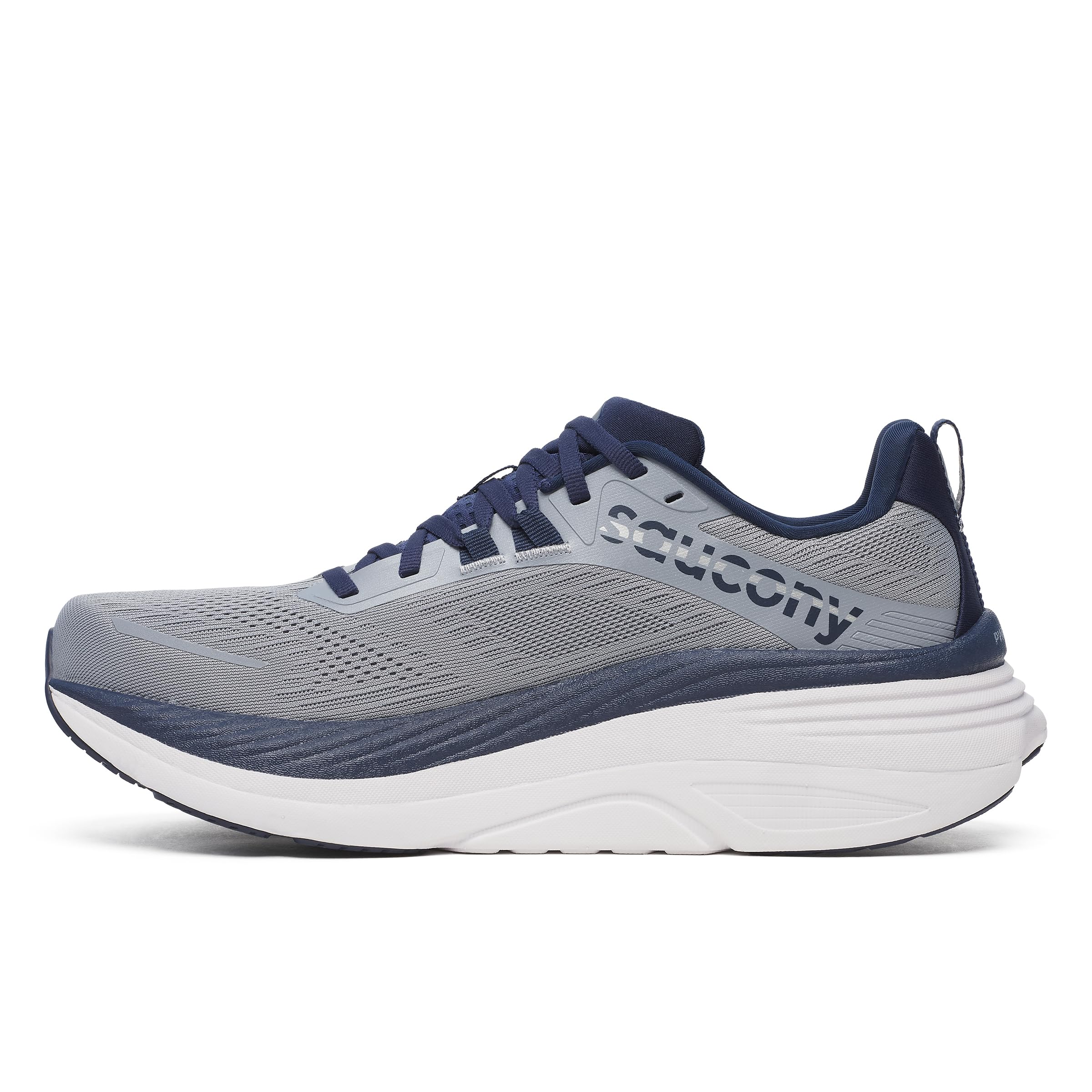
The max-cushion distance eater that disappears under your foot after break-in.
This is the shoe that serious distance runners gravitate toward when they need arch support without a punishing ride. Saucony stacks two foams inside the Hurricane 24 — a plush, energy-returning PWRRUN PB core wrapped by a firmer PWRRUN frame — so you get stability built into the structure rather than a hard plastic post jabbing your arch. The broader base and higher sidewalls (they call it CenterPath Technology) cradle your foot and keep your stride from rolling inward, even when fatigue sets in at mile 18. At 10.6 ounces (302g) per shoe, it is heavier than a racing flat, which you trade for protection on long days.
Buyers report this shoe “can easily handle 20 milers and a 2 hour zone 2 sesh with ease,” which lines up with the dual-foam design meant to absorb impact over hours. The trade-off is the break-in period: a few owners mention it feels “a little stiff and clunky getting started,” then loosens into a supportive ride. The Hurricane carries noticeable heft, but the foam payoff on pavement makes up for it. The offset sits at 6mm (38/32mm stack), a moderate drop that keeps your arch engaged naturally without pitching you forward.
This is the pick if you are a bigger runner or you log long miles and want structure that doesn’t fight your foot. skip it if you want a lightweight trainer for short, fast runs — that is the ASICS territory.
What you get with the Hurricane
- Dual-cushioning with PWRRUN PB core for energy return and PWRRUN frame for stability
- 6mm offset and 38/32mm stack give a balanced, protective platform for distance
- Roomy toe box and breathable mesh, as customers note the fit works for wider feet
The honest trade-offs
- Build feels clunky before break-in
- One reviewer noted slight staining on arrival
- Not ideal for 5K PR attempts due to the weight
Best for distance runners: If your week includes double-digit miles or long zone 2 sessions, the Hurricane’s dual-foam stability holds up without beating your arches.
Skip for speed work: The weight and break-in stiffness make it a poor choice for short, fast runs — look at the ASICS GT-1000 14 for a lighter daily trainer.
2. ASICS Women’s GT-1000 14 Running Shoes
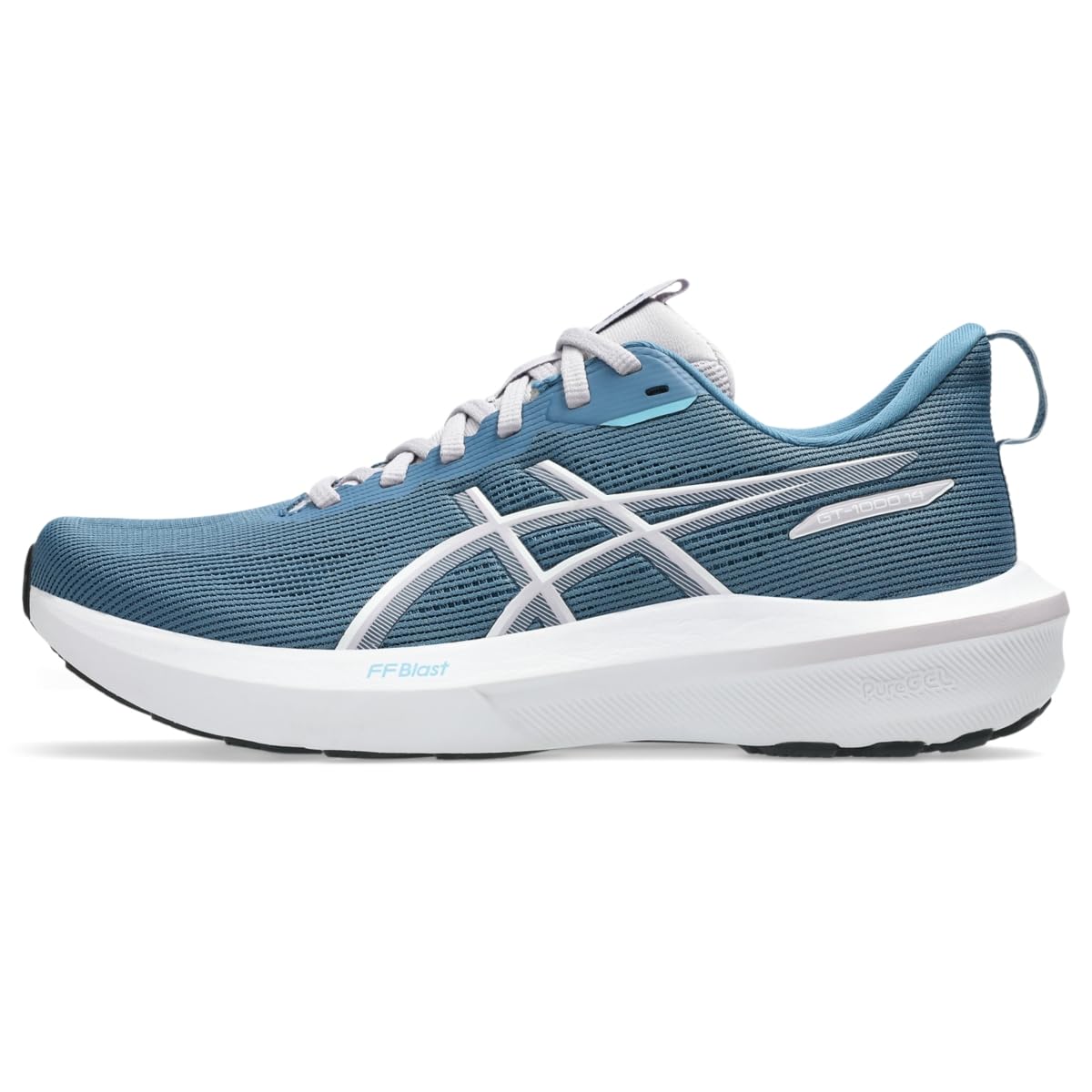
The featherweight stability shoe that walks like a cloud and runs true to size.
If you want arch support that doesn’t weigh you down, the GT-1000 14 is the lightest pick here at just 1.44 pounds per pair — that is 0.75 pounds lighter than the Hoka Arahi 8 above, a massive real-world difference when you’re on your feet all day. ASICS uses its FF BLAST midsole foam for a soft, bouncy feel, and pairs it with a 3D Guidance System that boosts stability without adding bulk. The synthetic rubber outsole gives good traction, and reviewers confirm the shoe fits true to size with a lightweight breathable upper.
One buyer mentioned “the stability provides good support and the soles have good traction,” calling them comfortable for both walking and running. Another reviewer who switched from a different brand said these shoes fixed a knee injury because the GT-1000 “feels like there is a slight build up on the inside of the shoe” that controls overpronation without being aggressive. The catch is the heel outsole extends slightly wider than some prefer, and while the arch support is present, it is less pronounced than the Saucony Hurricane 24’s dual-foam frame — so heavy overpronators may want more structure. The 3D Guidance System is subtle, which makes it ideal for mild to moderate pronation but not severe cases.
This is your pick if you are a walker or a daily runner who wants stability in a package that feels like a neutral shoe. Grab the Saucony Hurricane above if you need max support for longer distances and heavier body weight.
Why this one shines
- Extremely light at 1.44 pounds per pair; the Hoka Arahi 8 weighs 2.19 pounds per pair
- FF BLAST midsole delivers cloud-like cushioning that reviewers call comfortable for all-day wear
- Available in wide widths for broader feet, per buyer feedback
Where it falls short
- Subtle stability — less pronounced arch support than the Hurricane 24’s dual-foam frame
- Heel outsole flares wider than some buyers prefer visually
- Not for severe overpronators who need a rigid medial post
Great for walkers and light runners: The lightweight build and subtle 3D Guidance System make this an easy daily shoe for mild overpronation.
Not enough for heavy miles: The stability is gentler than the Hurricane’s, so if you need aggressive arch correction, spring for the Saucony.
3. Hoka Mens Arahi 8
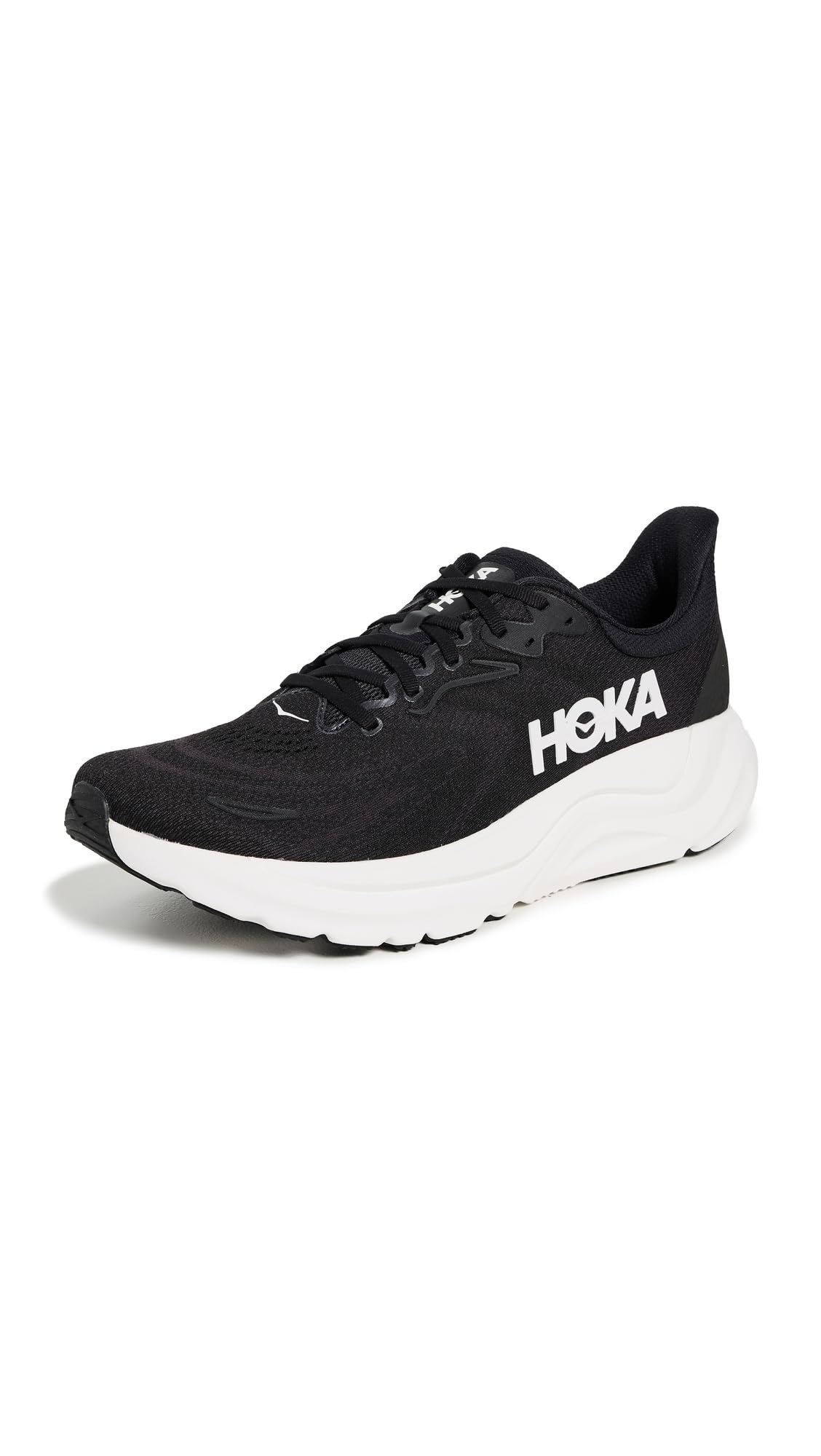
The stability shoe that feels soft underfoot but locks your stride in place.
The Hoka Arahi 8 takes a different route to arch support than the Saucony Hurricane. Instead of a dual-foam frame, Hoka uses an H-Frame technology — a stabilizing system woven through the midsole that combats overpronation while keeping the foam soft. The result is a shoe that feels pillowy under the arch but still prevents your foot from rolling inward. At 2.19 pounds per pair, it is heavier than the ASICS GT-1000 14 (1.44 pounds), but buyers who stand all day say that weight translates to rock-solid stability. The double jacquard mesh upper uses 62% recycled nylon, and the podular outsole design improves ground contact.
One buyer who stands 8 to 9 hours a day and walks 3.5 to 5 miles daily said “reliable support is a necessity” and praised the Arahi 8 for having “arch support is prominent yet soft and comfortable” with a heel that is “securely cradled on all sides.” The bevel at the heel encourages a natural heel-to-toe strike, which takes a little adjustment if you are used to a flatter platform. The trade-off is that the H-Frame is less overt than the Hurricane’s wide base — you feel the support more as a gentle guidance than a rigid cage, so very heavy overpronators might find the Hurricane more reassuring.
This is the premium pick for people who spend hours on their feet, not just runners. If you walk or stand for work and want the softest possible stable ride, the Arahi 8 delivers. The Saucony Hurricane is a better choice if you are a heavier runner logging long miles and need the most aggressive structure.
What stands out
- H-Frame technology provides stability without a hard medial post, keeping the ride soft
- Buyers love the “prominent yet soft” arch support and secure heel cradle
- Eco-friendly jacquard upper uses recycled materials
What to know
- Heavier than the ASICS GT-1000 14 (2.19 vs 1.44 pounds) — noticeable on faster runs
- Heel bevel encourages a specific gait that takes a short adjustment period
- Premium price point reflects the H-Frame and recycled materials
Best for all-day standing and walking: The soft H-Frame support is ideal if you are on concrete for hours and need arch support without a jarring post.
Skip for speed training: The 2.19-pound weight and the pronounced heel bevel are not built for tempo runs — the Saucony Hurricane handles distance better.
Understanding the Specs
Stability Technology
This is the internal structure that prevents overpronation (your foot rolling inward too much). Some shoes use a dual-density foam frame (the Saucony Hurricane 24), others use an H-Frame that wraps the midsole (Hoka Arahi 8), and some use a 3D Guidance System that subtly guides the foot (ASICS GT-1000 14). You want a system that feels supportive, not intrusive — a hard plastic post is outdated.
Stack Height and Offset
Stack height is the amount of foam between your foot and the ground — more foam means more cushion but also more instability if the shoe lacks sidewalls. Offset (or drop) is the difference between heel and toe height. A lower offset (4-6mm) encourages a more natural midfoot strike and engages your arch, while a higher offset (10-12mm) shifts load to the heel. The Hurricane 24 uses a 6mm offset with a 38/32mm stack, a balanced middle ground.
Weight and Its Real Cost
Every ounce of foam and structure adds weight, and that weight adds up over miles. The ASICS GT-1000 14 at 1.44 pounds per pair feels light on quick runs, while the Hoka Arahi 8 at 2.19 pounds gives more stability but more fatigue on speed days. For daily walking or standing, the extra weight is a non-issue; for racing, it is a dealbreaker.
Foam Type
Different foams feel different under the arch. PWRRUN PB (Saucony) is a lightweight, energy-returning polyether foam that feels bouncy. FF BLAST (ASICS) is a softer, cloud-like foam made from a polymer compound. EVA (common in stability frames) is firmer and more durable. A dual-foam setup (soft core + firm frame) gives you the plush feel with structure — the Hurricane 24 is the prime example.
FAQ
Do I need arch support running shoes if I have flat feet?
Can I use arch support running shoes just for walking?
What is the difference between stability and motion control shoes?
How long do Arch Support Running Shoes typically last?
Will the Saucony Hurricane 24 fit wide feet?
What does a 6mm offset mean for my arch?
Can I remove the insole in these shoes and use my own orthotic?
Hoka Arahi 8 vs Saucony Hurricane 24 — which has softer arch support?
How do I know if I need arch support running shoes?
Can I use these for daily casual wear?
Final Thoughts: The Verdict
For most runners and walkers, the clear winner among the top arch support running shoes is the Saucony Hurricane 24 because its dual-foam PWRRUN PB and PWRRUN frame system delivers protective arch support that holds up over 20-mile days without feeling stiff after break-in. If you want a lightweight daily trainer that disappears on your foot, grab the ASICS GT-1000 14. And for all-day standing and walking with the softest possible stability, the standout is the Hoka Arahi 8.
How We Picked
We do not accept paid placement. Every pick is matched to a real buyer and a real use-case; we do not hands-on test units.
Sources & Methodology
Specifications: manufacturer listings and product documentation. Review insights: verified customer reviews, as of July 2026. Pricing: not shown on this page (it changes often); check the current price via the retailer link.
As an Amazon Associate, FitlyFast earns from qualifying purchases. This does not affect which products we feature.