
Our readers keep the lights on and the weekend projects moving. As an Amazon Associate, I earn from qualifying purchases.
Specs are compiled from manufacturer listings and verified buyer reviews and can change over time — please confirm the key details on the product page before buying.
You want a wetsuit that keeps you warm without costing a month’s rent, and you don’t need to be a pro diver to find one that fits right and holds up. The trade-off is simple: pay a premium for a brand name, or find the hidden gems that deliver real warmth and flexibility without the markup. This guide shows you exactly which affordable suits perform where it counts — in the water.
I’m Rikta — the founder and writer behind FitlyFast. This guide is built by comparing the manufacturers’ published specifications and the patterns across verified customer reviews, so you get each pick’s real strengths and trade-offs instead of marketing spin.
Whether you are hitting the surf, going for a chilly lake swim, or getting your first scuba certification, the affordable wetsuit you choose determines how long you stay comfortable and how much you enjoy your time in the water. This guide picks the best value options from real data.
Quick Picks
- Cressi Men’s Morea Scuba Diving Wetsuit — Best Overall
- Seaskin 3mm Front Zip Full Wetsuit — Solo Diver’s Pick
- Owntop 5mm Diving Suit — Cold Water Specialist
- Aunua 5mm Fullsuit — Extreme Cold Value
- ZCCO 3mm Full Sleeve Dive Skin — Big & Tall Champion
- OMGear 3mm Full Body Wetsuit — Budget All-Rounder
- DyungTec Camo 3mm Spearfishing Suit — Camo Specialist
How To Choose The Best Affordable Wetsuit
Picking the right wetsuit without overspending depends on understanding a few key specs that directly affect your comfort in the water. You want warmth, flexibility, and a fit that doesn’t flush through with cold water every time you move.
Neoprene Thickness
This is the single most important spec. A 3mm suit is the most versatile for water temperatures from the low 60s to mid-70s Fahrenheit — it balances warmth with flexibility for swimming, surfing, and warmer dives. A 5mm suit is for colder water, typically between the mid-40s and low 60s, but it is stiffer and harder to put on. Do not buy a 5mm if you are mostly in warm summer lakes or tropical water; you will overheat and fight the suit.
Zipper Type: Front vs Back
A back zipper is the most common on affordable wetsuits and is generally reliable, but it often requires help to zip up. A front zipper is easier to manage on your own and often creates a better seal at the neck, reducing cold water entry. For solo use, particularly in colder water, a front zip model is worth prioritizing.
Seam Construction
Flatlock seams are standard on budget suits — they are comfortable against the skin but let some water pass through, making them best for warmer water. Glued and blind stitched (GBS) seams, found on higher-end affordable suits, are warmer because the stitch only goes halfway through the neoprene, significantly reducing water entry. If you are diving in water under 60°F, look for GBS or taped seams.
Quick Comparison
| Model | Best For | Thickness | Material | Zip Type | Amazon |
|---|---|---|---|---|---|
| Cressi Morea | Brand Quality & Fit | 3mm | Ultraspan Neoprene | Back Zip | Amazon |
| Seaskin Front Zip | Easy Solo Entry | 3mm | Neoprene, Nylon | Front Zip | Amazon |
| Owntop 5mm | Cold Water Warmth | 5mm | Neoprene, Nylon | Front Zip | Amazon |
| Aunua 5mm | Extreme Cold & Value | 5/4mm | SuperStretch Neoprene | Front Zip | Amazon |
| ZCCO 3mm | Big & Tall Sizing | 3mm | Neoprene | Back Zip | Amazon |
| OMGear 3mm | Budget All-Rounder | 3mm | Neoprene, Nylon | Back Zip | Amazon |
| DyungTec Camo | Spearfishing Camo | 3mm | Neoprene, Nylon, Spandex | Back Zip | Amazon |
In‑Depth Reviews
1. Cressi Men’s Morea Scuba Diving Wetsuit

Italian engineering that brings premium warmth and flexibility to a budget-friendly price.
The Cressi Morea stands apart from the other affordable options here because of how it tailors the neoprene for performance. Its arms and legs use a stretchy Ultraspan Neoprene that makes putting the suit on and moving your shoulders much easier, while the chest area uses a denser, rubberized neoprene to trap body heat where it matters most. This is a 3mm suit rated for typical water temperatures in the 70s Fahrenheit, and buyers report spending three hours in 80°F water comfortably — proof of how well the material and anatomical cuts work together.
Unlike the budget-focused options from OMGear or ZCCO, the Cressi uses an Aquastop flap behind the dorsal YKK zipper to reduce cold water trickling down your back, a detail usually reserved for suits twice its price. It also features overlock cuffs at the wrists and ankles and knee pads for protection against bumps and scratches. The catch is sizing runs small — one reviewer at 6’1″ and 210 lbs ordered an XXL when they normally wear an XL — so you must check the size chart closely, using your chest and waist measurements from the data. At 33 inches for the chest size on the listed model, it prioritizes a snug performance fit over comfort-sizing.
Why It Leads the Pack
- Ultraspan Neoprene in arms and legs provides noticeably easier mobility than standard neoprene.
- Aquastop flap on the back zipper minimizes water entry for better warmth retention.
- Trusted brand with consistent quality and anatomical cuts that adapt to different body shapes.
The Catch
- Runs small — most reviewers recommend ordering one size up from your usual fit.
- Back zipper design requires help to zip up, unlike the front-zip Seaskin model.
Who should buy it: Anyone who wants a reliable 3mm suit from a legendary dive brand and is willing to follow the size chart precisely for a snug performance fit.
Who should pass: Divers who need a suit to fit a significantly larger chest or waist than the listed 33-inch chest spec without going up two sizes.
2. Seaskin 3mm Front Zip Full Wetsuit

A front-zip design that lets you suit up alone and keeps cold water out.
The Seaskin is one of the few budget-friendly suits to use a front zipper, which is a standout if you don’t have a buddy to help you. This design makes getting in and out of the suit far easier than the back-zip alternatives, and it creates a better seal at the neck to prevent the sudden flush of cold water that can ruin a dive. The suit uses a 3mm three-layer fabric with an outer imported nylon layer for stretch, a middle neoprene core for heat insulation, and a soft inner lining that is close to the skin for extra comfort. Buyers specifically note the flat-lock stitched seams hold up well and the suit provides excellent defense against sea lice and jellyfish stings.
Compared directly to the Cressi Morea, the Seaskin offers a simpler neoprene construction — it lacks the differentiated stretch zones of the Cressi’s Ultraspan material — but compensates with that front-zip convenience and a very generous size range. One reviewer at 6’4″ and 215 lbs found an XX-Large fit perfectly with full range of motion, while another at 5’7″ and 200 lbs found the XXL snug in the bust but baggy in the legs. At a 34-inch chest and 29-inch waist for the Small size, the sizing is more forgiving than the Cressi, but the trade-off is that the suit can feel loose in some areas for certain body shapes.
The Front-Zip Advantage
- Front zipper is much easier to operate alone compared to traditional back-zip designs.
- Excellent warmth for water around 60°F, with a soft inner lining that adds comfort.
- Durable flat-lock seams and three-layer fabric construction for lasting use.
Keep in Mind
- Some users with taller torsos or larger busts report the suit fits snugly in the chest.
- Wrist and ankle areas can leave gaps, allowing some water entry without gloves.
The bottom line: Pick this over the Cressi if solo entry is your priority and you are okay with a simpler neoprene build in exchange for front-zip ease.
3. Owntop 5mm Diving Suit

Thick 5mm neoprene that keeps an experienced diver warm through days of cold-water dives.
When the water temperature drops below 60°F, a 3mm suit starts to let the chill through, and that is where the Owntop 5mm shines. It uses a 5mm neoprene body with 4mm CR neoprene cuffs at the wrists and ankles to reduce water flushing, and the front YKK zipper makes getting into this thicker suit still manageable by yourself. One reviewer who has been diving for 25 years was surprised by the quality and warmth, wearing it for 4 dives a day over 5 days in 70°F water and calling it unbeatable value. Another buyer — a towboat recovery captain — reported it kept them warm and comfortable in 40-degree water.
However, the thickness that makes it warm also makes it stiff. Unlike the more flexible 3mm suits from Cressi or Seaskin, this suit requires more effort to put on and take off. One reviewer noted that a size Large was tight in the chest even for a medium-sized wearer, and that they needed help removing the first arm. The temperature rating from the data is 10 Degrees Celsius (50°F), so it is a serious cold-water tool, not a summer swim suit. The UPF50+ protection and resistance to jellyfish and coral scratches are useful bonuses for reef diving.
Why Go 5mm
- 5mm neoprene body provides substantial warmth in water as cold as 50°F (10°C).
- 4mm CR cuffs at the wrists and ankles help minimize water entry at the extremities.
- Front zipper design makes self-donning more practical for a thick suit.
The Real Trade-Off
- Significantly less flexible than 3mm suits, making arm movement and removal more difficult.
- Sizing can be tight; users recommend referencing chest, waist, and hip measurements carefully.
Your move: If you regularly face 50°F water, this is your budget cold-water tool. But for anything warmer than 60°F, skip it and get a 3mm Seaskin instead for real flexibility.
4. Aunua 5mm Fullsuit
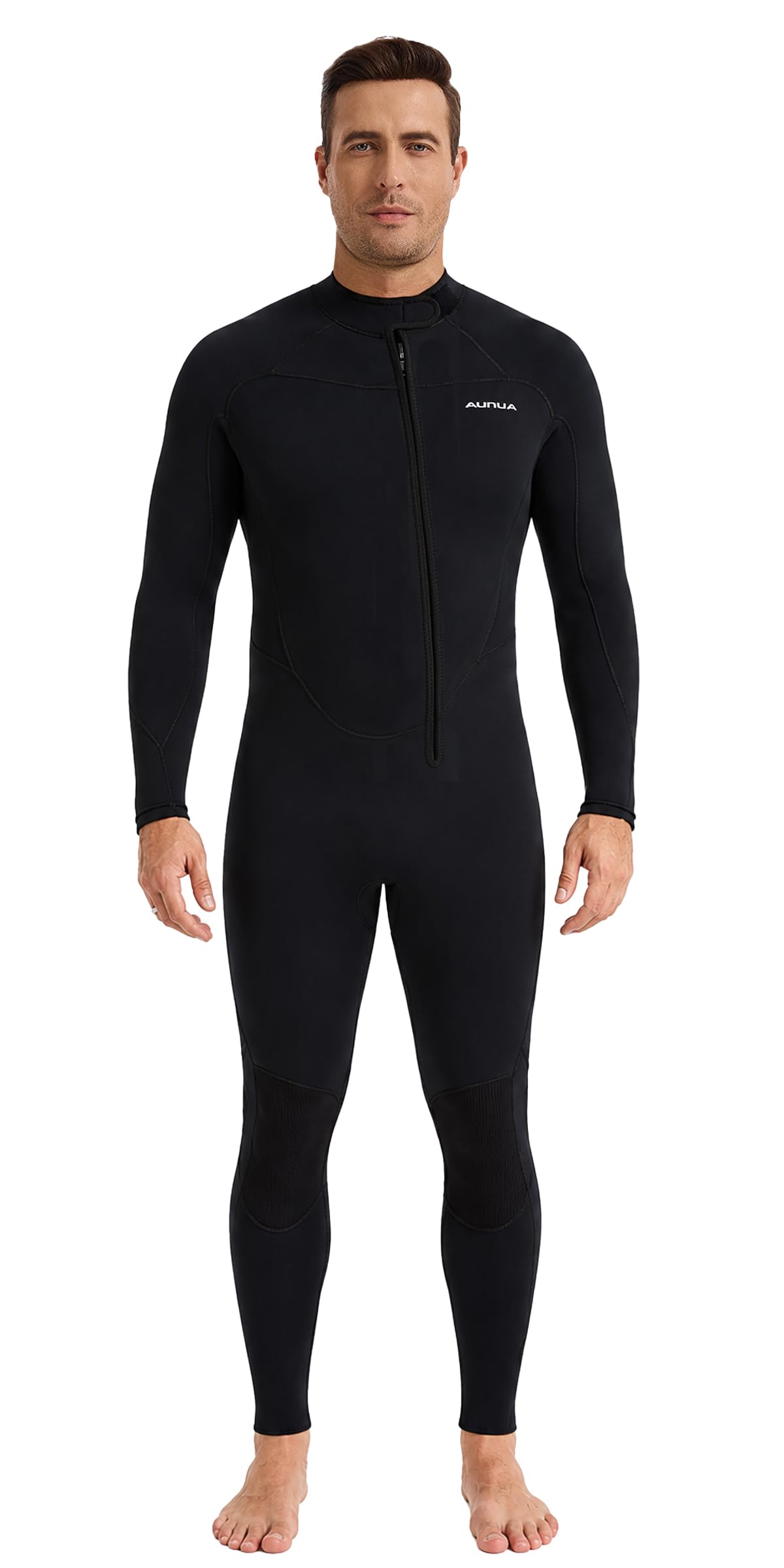
GBS seams and SuperStretch neoprene that punch well above their weight class.
The Aunua is the only suit in this affordable range to feature glued and blind stitched (GBS) seams, a construction method where the stitch only passes halfway through the neoprene. This makes the seam far more flexible and significantly reduces water entry compared to standard flatlock seams used on the OMGear and DyungTec suits. Combined with a 5/4mm thickness (5mm body, 4mm arms) and a rating for water as cold as 44°F, this suit is built for cold surf and serious winter conditions. One buyer mentioned it performed just as well as their Scuba Pro gear that cost three times as much, and another praised the front zip for not restricting movement.
While the warmth and flexibility are impressive for the price, there are some practical trade-offs. The suit lacks wrist and ankle zippers, which some reviewers wished they had for easier removal. One user at 5’6″ and 135lbs found a Small fit correctly per the size chart but noted that the snug neck, while crucial for warmth, takes some getting used to. The material is a mix of 90% neoprene and 10% nylon, and it does require hand washing in cold water and air drying flat. If you need a suit for the coldest conditions on a budget, this is your pick.
Standout Features
- GBS seams significantly reduce water entry, keeping you warmer than flatlock alternatives.
- SuperStretch neoprene provides a high degree of flexibility for a 5mm suit.
- Rated for water as cold as 44°F, making it the warmest option in the lineup.
Minor Downsides
- No wrist or ankle zippers, which can make the suit harder to remove after a long session.
- The snug neck fit, while essential for warmth, may feel restrictive to some users.
Who wins here: Cold-water divers on a tight budget who know GBS is worth hunting for. The Aunua is the warmest per dollar by far — just be ready to wrestle it off without ankle zips.
5. ZCCO 3mm Full Sleeve Dive Skin

Specifically built to fit larger frames without charging a premium for extended sizing.
The ZCCO 3mm wetsuit is one of the few options that reliably fits taller and heavier body types straight off the rack. One reviewer at 6’4″ and 280 lbs bought it as their first wetsuit and found it comfortable, noting it made floating easy but required weights to help stay under. Another at 5’11” and 247 lbs said the 4XL fit nicely, comparing it favorably to a Cressi 3XL that was slightly tighter. The smooth skin neoprene inner at the collar, arms, and legs helps stick tightly to your skin to reduce water entry, and the heavy-duty YKK back zipper with a hook-and-loop closure is easy to operate. The material is listed as ultra-stretch neoprene for flexibility.
The trade-off here is that the sizing runs big, which is great for larger users but can be problematic for average or slimmer builds. One athletic 5’7″ male at 130 lbs ordered a Small based on the chart and found it significantly too large, with visible looseness around the knees and hips. The brand advises using weight as the first reference factor, followed by height. Unlike the OMGear suit, which fits a 37-inch chest (9% larger), the ZCCO is designed for a looser, more comfortable fit rather than a performance-tight squeeze, so it is better for recreational use than for competitive surfing or diving.
Big Guy Approved
- XL and 4XL sizes genuinely accommodate taller, heavier builds up to 6’4″ and 280 lbs.
- Smooth skin inner seals at collar, arms, and legs reduce cold water flush effectively.
- Ultra-stretch neoprene provides good flexibility for a budget suit.
Watch Out For
- Sizing runs very large; slim or athletic builds may find even the Small too loose for proper thermal performance.
- Flatlock seams let more water through than GBS seams, making it a warmer-water suit.
Money quote: If you are 6’4″ and 280 lbs, this is the affordable wetsuit you have been hunting for. If you are built like a runner, the loose fit will leave you cold.
6. OMGear 3mm Full Body Wetsuit

A proven performer that held up to a 5.25-mile swim and delivered full shoulder mobility.
The OMGear is the entry-level workhorse of this list, and its customer reviews tell a consistent story of surprising quality for the cost. One owner reported swimming 5.25 miles in a UK lake with water in the high 50s to low 60s°F, wearing an XXL that provided a perfect fit with no crotch pull, full shoulder range, and no chafing after using Vaseline. Another reviewer compared it favorably to a suit they had used before. The 3mm neoprene material is a blend of 90% neoprene and 10% stretchy nylon with UPF 50+ sun protection, and the back zipper design is straightforward. The temperature rating is 60 Degrees Fahrenheit, making it suitable for the warm side of cold water.
However, the value comes with real limitations. At a chest size of 37 Inches and a waist of 29.9 Inches, the suit has a noticeably different shape than the DyungTec camo model (34-inch chest, 31.2-inch waist — a 4% larger waist size), meaning it is roomier in the chest but narrower in the waist. Owners mention the initial chemical smell from the glue, which is common for neoprene, and there is a warning from multiple reviewers that the suit runs tight, especially for people with curves or a larger chest — one 5’7″, 155lb athletic woman found the Large too loose in the armpits and chest but expected the Small might not fit her curves either. It is a solid starter suit, but it demands careful size chart consultation.
Why It Works
- Proven real-world performance from a 5.25-mile open water swim without chafing or restriction.
- UPF 50+ sun protection and durable construction that one buyer compared to a suit.
- Very affordable entry point for trying a full 3mm wetsuit.
The Reality Check
- The 37-inch chest and 29.9-inch waist sizing means it fits a specific body shape — not for everyone.
- Initial chemical smell is expected and needs airing out before first use.
- Not ideal for very cold water; rated for 60°F and above.
Verdict: The cheapest ticket to a functional 3mm suit, but only if your measurements line up with its 37-inch chest. If you need a different shape, the DyungTec or Seaskin may fit better.
7. DyungTec Camo 3mm Spearfishing Suit

A purpose-built camo suit that kept one diver warm for 35 minutes in 50°F water.
The DyungTec Camo is the only suit here that prioritizes a full-body camouflage pattern for spearfishing and underwater hunting, and it backs up the aesthetic with practical design choices. It features extra padding in the chest and knees for body protection against rocks and wrecks, a classic crewneck design that protects the neck from zipper chafing, and a heavy-duty YKK back zipper with hook-and-loop closure. The material blend is 80% neoprene, 10% nylon, and 10% spandex, which one customer observed made the suit comfortable and not restrictive for sink-leg techniques. Another buyer specifically mentioned it kept them warm in 50°F water for 35 minutes, which is a solid performance for a 3mm flatlock suit.
Compared to the OMGear suit (which has a 37-inch chest vs the DyungTec’s 34-inch chest — a 9% larger chest), the DyungTec is cut slimmer across the chest but offers a 31.2-inch waist that is 4% larger than the OMGear’s 29.9-inch waist. This shape tends to suit leaner, athletic torsos better. The temperature rating is 59 Degrees Fahrenheit, just one degree cooler than the OMGear’s 60°F rating. The main complaint from reviewers is that the neck could be slightly tighter to prevent cold water entry, and one XL user at 5’10” and 200 lbs found the neck and shoulders tight, requiring some trimming. This is a niche tool for spearfishing, not a general-purpose swim suit.
Built for the Hunt
- Full-body camo pattern aids in spearfishing and underwater stealth.
- Extra chest and knee padding provides protection against underwater terrain.
- Flatlock seams and crewneck design prevent chafing during extended wear.
Consider This
- 34-inch chest is a slimmer cut than the OMGear’s 37-inch chest — not ideal for broader builds.
- The neck seal could be tighter; some users report water entry at the neckline.
- Flatlock seams make it less warm than a GBS-sealed suit for very cold water.
The call: If you spearfish, the camo and padding are worth the trade-offs. For anyone else, the Seaskin is warmer and more versatile for the same money.
Understanding the Specs
Neoprene Thickness
The number you see, like 3mm or 5mm, refers to the thickness of the neoprene foam layer. A thicker suit traps more body heat but restricts your movement more. For water from the low 60s to mid-70s Fahrenheit, 3mm is the balance. For water below 60°F, you want 5mm. Some suits use variable thickness (5/4mm), meaning a thicker core and thinner arms for a balance of warmth and flexibility.
Seam Construction
This determines how much water seeps into your suit. Flatlock seams lie flat against your skin and are comfortable, but the needle holes allow water flow, making them best for warm water. Glued and blind stitched (GBS) seams glue the neoprene together first, then stitch only halfway through, creating a warmer, more flexible, and more water-resistant seam. For cold-water diving or surfing, prioritize GBS construction.
FAQ
How tight should an affordable wetsuit fit?
Can I use a 3mm wetsuit in 50 degree water?
What is the difference between a front zip and a back zip wetsuit?
How do I choose the right size for an affordable wetsuit?
Why does my new wetsuit smell like chemicals?
Will a cheap wetsuit last as long as an expensive one?
What does UPF 50+ mean on a wetsuit?
Can I wear an affordable wetsuit for scuba diving?
How do I care for an affordable wetsuit to make it last longer?
Is it better to get a chest zip or a back zip for cold water?
Final Thoughts: The Verdict
If you want one dependable pick, the winner in the affordable wetsuit category is the Cressi Morea because it delivers premium Italian design, differentiated neoprene zones for warmth and flexibility, and a trusted brand reputation at a mid-range price. If you want the easiest solo use, grab the Seaskin Front Zip. And for the coldest water on a budget, the standout is the Aunua 5mm with GBS seams.
How We Picked
We do not accept paid placement. Every pick is matched to a real buyer and a real use-case; we do not hands-on test units.
Sources & Methodology
Specifications: manufacturer listings and product documentation. Review insights: verified customer reviews, as of July 2026. Pricing: not shown on this page (it changes often); check the current price via the retailer link.
As an Amazon Associate, FitlyFast earns from qualifying purchases. This does not affect which products we feature.