
Our readers keep the lights on and the weekend projects moving. As an Amazon Associate, I earn from qualifying purchases.
Specs are compiled from manufacturer listings and verified buyer reviews and can change over time — please confirm the key details on the product page before buying.
You likely ignore that slim space hugging your house — until all you see is bare siding and dust. The trick is picking a plant that thrives in tight quarters: less soil, tricky light, and your home’s shadow. That is what this guide solves.
I’m Rikta, the writer behind FitlyFast. This guide compares manufacturer specs and common buyer feedback so you see real strengths and trade-offs, not marketing spin.
After matching six shrubs to side-yard conditions, the key is pairing your spot’s size, hardiness zone (the coldest temperature a plant survives), and sunlight to the right plant. That approach turns finding bushes for side of house into a confident decision rather than a guess.
Our Picks at a Glance


How To Choose The Best Bushes For Side Of House
That strip between your house and the fence feels like leftover space. But picking a bush that thrives depends on three simple checks. Get these right, and you avoid a plant that outgrows its spot or fades in its first season.
Mature Size Is Your First Filter
The biggest mistake is falling for a pretty plant without checking how wide it gets. A side yard between two walls gives less air and root room. Look at the expected height and width at maturity (listed in inches). Leave at least 18 inches between the plant and your siding so air can move behind it. A bush that reaches 48 inches wide will quickly block a narrow walkway.
Sunlight Hours On That Wall
Your side yard might get six hours of direct sun, or it could be shaded by a fence or tree. Shrubs come with a sunlight label — “full sun,” “part shade,” or “sun to part shade.” Match that to what your spot actually gets. A full-sun plant in deep shade will stretch thin and rarely bloom.
Evergreen vs. Deciduous For Year-Round Looks
If you want the side yard to stay covered in winter, pick an evergreen that keeps its leaves (like the Boxwood Wintergreen or the Nandina). Deciduous shrubs, like the Spirea, drop leaves in cold months — you get spring-to-fall color but bare stems in winter. Both work, but know what you are choosing so January’s view does not surprise you.
Quick Comparison
| Model | Best For | Mature Height | Item Weight | USDA Zones | Amazon |
|---|---|---|---|---|---|
| Obsession Nandina★ Best Overall | Year-round color | 48 Inches | 8.8 Pounds | 6-10 | Amazon |
| Double Play Doozie SpireaTop Performer | Compact blooms | 24-36 Inches | 8.8 Pounds | 3-8 | Amazon |
| Eleanor Taber Indian Hawthorn | Pink spring flowers | 4 Feet | 6 Pounds | 7-11 | Amazon |
| Autumn Twist Azalea | Re-blooming color | 54 Inches | 5 Pounds | 6a-10b | Amazon |
| Boxwood Wintergreen | Classic hedge | 60 Inches | — | 4-9 | Amazon |
| Gold Mop Cypress | Golden foliage | 5 Feet | — | 4-8 | Amazon |
In‑Depth Reviews
1. Southern Living 2 Gal. Obsession Nandina Shrub
Our pick — over 4.5★ from 900+ verified ratings; the strongest balance of quality and price.
The colorful backbone that fills a narrow strip with zero fuss.
You get two plants in this order (number of pieces: 2), each reaching a solid 48 inches tall — tall enough to hide a foundation or low window without blocking it fully. The Obsession Nandina keeps its multicolor leaves (bright red, green, and coppery blends) through the seasons, though it is a slow grower and does not produce blossoms, so the visual interest comes entirely from the foliage. One reviewer noted the plants ship fast: “Ordered 4; shipped Mon, delivered Fri.”
This shrub is evergreen (keeps its leaves year-round) in USDA zones 6-10, meaning it stays green in warmer climates, though one reviewer notes it loses some leaves in winter. Unlike the Gold Mop Cypress (which grows just 10 inches from the pot at delivery), this Nandina comes in at 48 inches expected plant height — a 4.8x height gap — so you get a much more visible plant right away. Set it in sun to part shade, water twice a week until it settles, then once a week after that.
What makes it a winner
- 48-inch mature height fills the space quickly
- Evergreen with vibrant leaf color across seasons
- Low maintenance after establishment
Things to consider
- Non-flowering (no blossoms at all)
- Slow growth rate reported by multiple buyers
- Delivery can cause damage if box is handled roughly
Reach for this if: you want a low-maintenance evergreen that delivers immediate height and reliable color without needing to water or prune constantly.
Better to skip if: you are hoping for spring flowers or need a compact plant under 3 feet tall — the Nandina grows to 48 inches.
2. Proven Winners 2 Gal. Double Play Doozie Spirea Shrub
A compact bloomer that punches above its size with nonstop flowers.
If your side yard gets full sun and you want color from spring right through fall, the Double Play Doozie Spirea delivers red-to-purple flowers over a tidy mound that stays 24-36 inches tall and wide. That compact footprint (mature size 24-36″ W x 24-36″ H) makes it a natural fit for a narrow planting bed where you cannot spare width. It is deciduous — it drops leaves in winter — so count on bare stems during the cold months, but the rest of the year is a show.
Buyers consistently note the plant arrives in “excellent condition” and even starts blooming on the porch before it goes in the ground. At 8.8 pounds item weight, this Spirea matches the Nandina’s weight but in a much shorter package, so it is root-heavy and built to establish quickly. It thrives in USDA zones 3-8, meaning it can handle cold winters that would kill the Hawthorn (zone 7-11) and the Azalea (zone 6a-10b). Space plants 24 inches apart for a hedge effect, and give it moderate water until rooted.
Blazing color, smaller frame: the Spirea leads the list for sheer bloom duration — spring to fall — in a bush that stays under 3 feet, perfect for tight corners where a 4-foot Nandina would crowd the walkway.
Best suited for: homeowners in cold climates (zones 3-8) who want a low-growing shrub that blooms all season without taking over the side yard.
The trade-off: deciduous means no leaves in winter — the bare stems will show until new growth arrives in spring.
3. Eleanor Taber Indian Hawthorn (2.5 Quart) Pink Blooming Evergreen Bush
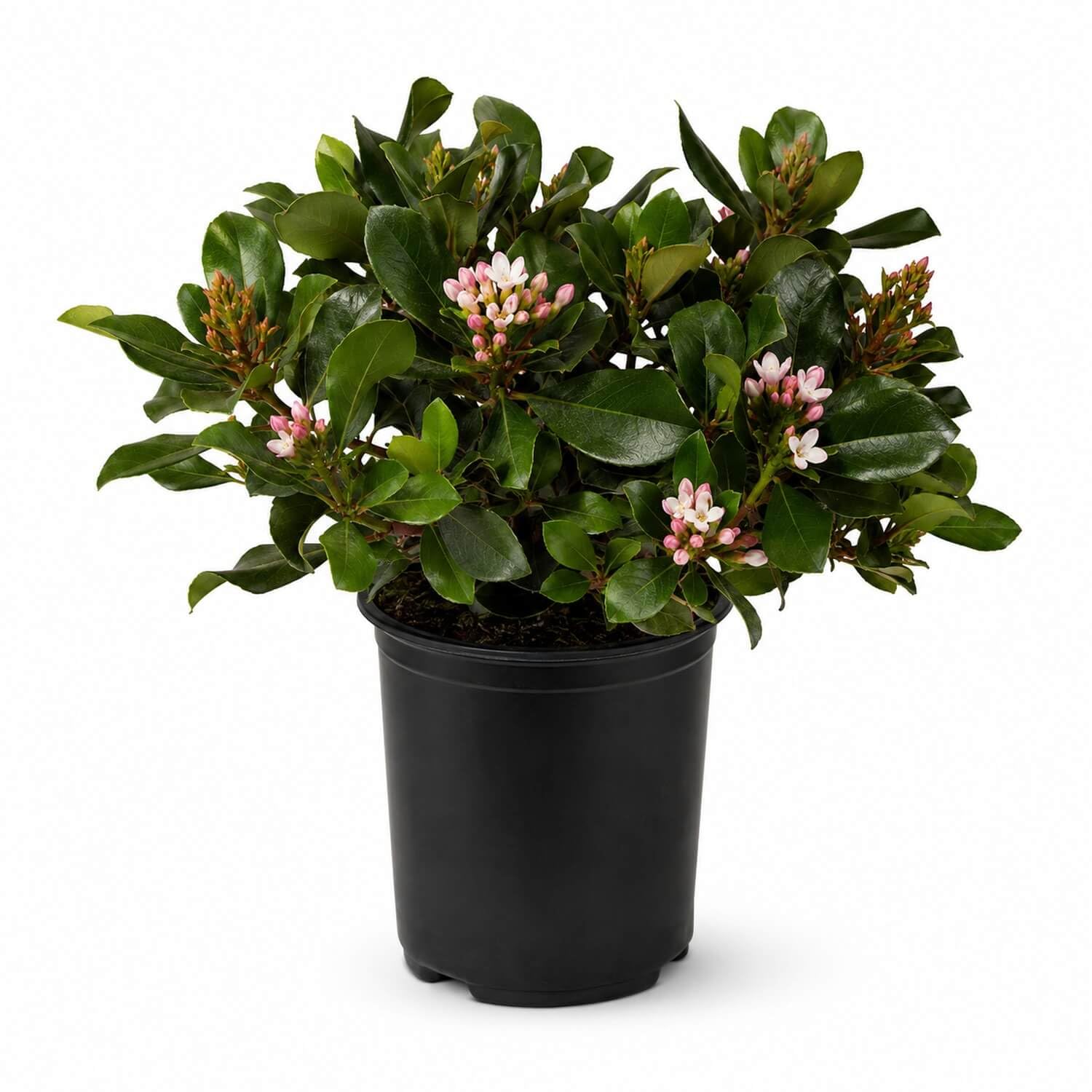
A lush evergreen with pink spring blooms that outperforms pricier mail-order plants.
This Indian Hawthorn gives you the rare combo of evergreen foliage (glossy dark green that turns purplish in cold) plus abundant clusters of pink flowers in spring. It matures to about 3-4 feet tall and wide (expected plant height: 4 Feet), keeping a compact rounded shape that fits naturally against a foundation without needing heavy pruning. One buyer put it plainly: “I paid 30 dollars plus shipping for this plant and around 60 dollars plus shipping for the others – this plant is larger and in better condition.”
It grows best in USDA zones 7-11 and prefers full sun to partial shade. The item weight of 6 pounds is lighter than the 8.8-pound Nandina, but the root ball is substantial for a 2.5-quart pot. Unlike the Spirea (which drops leaves in winter), the Eleanor Taber holds its greenery year-round — that matters if your side yard is visible from the street or a window you look through daily. The moisture needs are low once it settles: water 2-3 times per week the first season, then 1-2 times weekly in year two, and only during extreme heat after that.
Why it stands out
- Evergreen with pink blooms — best of both worlds
- Good-sized plant on arrival, per multiple reviews
- Drought tolerant once established
Watch out for
- Limited to warmer zones (7-11 only)
- Slower to establish in full shade vs partial sun
Your pick if: you live in a warm climate (zone 7+) and want an evergreen that actually flowers — the Hawthorn gives you pink blossoms in spring and green leaves the rest of the year.
Not your pick if: you are in a cold zone — this shrub will not survive a hard freeze below zone 7.
4. Encore Azalea 1 Gal. Autumn Twist Azalea Shrub

The re-blooming azalea that stretches the color season into fall.
Most azaleas flower once in spring and call it a year. The Autumn Twist breaks that pattern with repeat blooms in spring, summer, and fall, with magenta-purple and white flowers that pop against the dark evergreen leaves. It matures to a wide spread (48″ W x 54″ H), making it a solid choice for a corner spot where you can let it fill out rather than a tight passage. One reviewer described the payoff: “Spring planting; 3-4 inches new branch growth; bloomed mid-October in zone 6 with gorgeous flowers.”
At 5 pounds item weight, this Azalea is noticeably lighter than the 8.8-pound Nandina (a 76% heavier competitor), so the plant is smaller on arrival — expect a 1-gallon pot with a young shrub. It grows in USDA zones 6a-10b and needs partial sun for best flowering. Unlike the Spirea above, this is evergreen, so the leaves stick around through winter even in colder parts of its range. Buyers caution that quality can be hit or miss — one received a near-dead plant while another got a “beautiful, healthy” shrub — so inspect it quickly on arrival.
The good
- Three-season blooms (spring, summer, fall)
- Evergreen — keeps leaves in winter
- Established fast with new growth in weeks
The risk
- Variable plant condition reported by buyers
- 54-inch mature height may be too tall for under a window
Go for it when: you have the width to let this azalea spread and you want flowers that keep coming until frost.
Skip it for: a narrow side passage — the mature width of 48 inches will crowd a tight space fast.
5. Boxwood Wintergreen, 1 Gallon

The classic formal hedge that grows tall but can be a bit narrow on arrival.
Boxwood is the go-to evergreen for a tidy, traditional hedge, and the Wintergreen variety reaches a mature size of 36″ W x 60″ H — tall enough to screen a low window or define a property line along the side of the house. It thrives in USDA zones 4-9 and adapts to full sun or part shade, so it works on almost any side of a house. The Wintergreen name refers to its ability to hold a rich green color even through cold months.
Buyers report a common theme: the plant is “taller but skinny; expected fuller.” One reviewer says it shows new growth after two weeks and calls the value “good size for the price.” Unlike the Gold Mop Cypress (which grows 5 feet wide but only 10 inches tall on delivery), the Boxwood grows upright first and fills out over time. No item weight is listed in the data, but a 1-gallon pot is typically manageable with one hand. If you want a dense wall quickly, you may need to plant them closer than the recommended spacing and prune to encourage branching.
Strengths
- Very cold-hardy down to zone 4
- Tolerates both sun and part shade
- Good value for a classic evergreen
Limitations
- Tends to arrive skinny — needs time to fill out
- No flowers or seasonal color change
Ideal for: a straight line of cheap evergreens along a fence line where you can wait a season or two for fullness.
Not ideal for: instant privacy — you will see gaps between plants for the first year.
6. Gold Mop, 1 Gallon

The budget-friendly golden spreader that fills tough bare spots with color.
If you have a patch of side yard where “nothing will grow,” the Gold Mop Cypress has a real track record. One buyer mentioned ordering “over 2 dozen of these plants for our front yard where nothing will grow until now” — and they arrived healthy and perfectly shaped. This is an evergreen with bright golden foliage that stays colorful year-round, maturing to 5 feet tall and 8 feet wide, so give it room to sprawl. It likes full sun and loam soil in zones 4-8.
The expected plant height on delivery is just 10 inches tall in the 1-gallon pot — that is a 4.8x height difference from the 48-inch Nandina — so you are getting a starter plant, not an instant screen. Number of pieces: 1. But multiple buyers confirm the plants are “healthy & beautiful” and packed without shipping damage. Unlike the Boxwood (which grows skinny), the Gold Mop has a naturally rounded, mounding shape that looks full from the start. Water it well until it establishes roots, then it becomes fairly self-sufficient.
What works
- Proven to grow where other plants fail
- Bright golden color stands out in a landscape
- Excellent value for the quality, per multiple reviews
What to expect
- Very small on arrival — 10 inches tall at pot
- Needs full sun to hold its golden color
- Does best in zones 4-8, not for hot southern climates
Best for the budget-conscious: if you are filling a large area or a problem spot, buying multiple Gold Mops gives you uniform golden coverage while staying affordable.
The patience factor: these arrive small — expect to wait a season or two for them to reach their full spreading width.
Understanding the Specs
Mature Height and Width
Every shrub listing includes an expected mature size — like “48 Inches” tall or “24-36″ W x 24-36″ H.” The width matters most for a side yard. If the bush spreads to 48 inches wide, it will eat up over half of a 6-foot gap between your house and the fence. Always check that the final width at maturity fits the space you have, not just the height that catches your eye on the tag.
USDA Hardiness Zone
The zone number tells you the coldest winter temperature a plant can survive. A shrub labeled for zones 7-11 will die in a zone 6 winter. The label looks like “USDA zones 4-9” or “Zones 6-10.” Find your local zone by zip code online before you buy — it is the single most important number for whether the plant lives past its first winter. Side yards that face north will also stay colder and wetter than south-facing spots, so zone is not the whole story.
FAQ
How far from the house should I plant bushes on the side?
Can I plant different bushes together along one side of the house?
What is the difference between evergreen and deciduous for a side yard?
How often should I water new bushes on the side of the house?
Will these bushes damage my house foundation?
Which bush is best for a narrow side yard that is mostly shaded?
How long does it take for a 1-gallon shrub to reach full size?
Can I plant bushes on the side of the house in the fall or winter?
Final Thoughts: The Verdict
If you want one dependable pick, the bushes for side of house winner is the Southern Living Obsession Nandina because it arrives as two healthy plants with 48-inch mature height, evergreen color across the seasons, and low watering needs once established — a complete solution for that blank wall. If you want nonstop flowers in a compact frame, grab the Proven Winners Double Play Doozie Spirea. And for a warm-climate evergreen that actually blooms pink, the standout is the Eleanor Taber Indian Hawthorn.
How We Picked
We do not accept paid placement. Every pick is matched to a real buyer and a real use-case; we do not hands-on test units.
Sources & Methodology
Specifications: manufacturer listings and product documentation. Review insights: verified customer reviews, as of July 2026. Pricing: not shown on this page (it changes often); check the current price via the retailer link.
As an Amazon Associate, FitlyFast earns from qualifying purchases. This does not affect which products we feature.