
Our readers keep the lights on and the weekend projects moving. As an Amazon Associate, I earn from qualifying purchases.
Specs are compiled from manufacturer listings and verified buyer reviews and can change over time — please confirm the key details on the product page before buying.
A 2×72 belt grinder (a sanding machine that uses a 2-inch-wide, 72-inch-long sanding belt) is the heart of any serious knife-making or metalworking shop. The wrong one fights you on belt tracking (the adjustment that keeps the belt centered on the wheels), stalls under a heavy cut, or burns through belts — leaving you frustrated and stuck with mediocre results. This guide breaks down the real trade-offs between motor power, VFD (variable frequency drive — the electronic controller that lets you change belt speed smoothly) quality, build stiffness, and grinding versatility across six machines so you can pick the one that earns its place on your bench.
I’m Rikta — the founder and writer behind FitlyFast. This guide is built by comparing the manufacturers’ published specifications and the patterns across verified customer reviews, so you get each pick’s real strengths and trade-offs instead of marketing spin.
Whether you are profiling a bevel (the angled edge) on a hunting knife or deburring (smoothing sharp edges) a batch of steel brackets, finding the right 2×72 belt grinder depends on how the machine balances motor torque (twisting force), speed control, rigidity, and the grinding modes you actually use.
Our Picks at a Glance
How To Choose The Best 2×72 Belt Grinder
Choosing a 2×72 grinder is not just about picking a motor — the frame rigidity, the quality of the VFD, the platen (flat metal backing plate) design, and the included grinding accessories all determine whether the machine delivers consistent results or wastes your time with tracking issues. Here is what to check before you buy.
Motor Power and Amperage
You want a motor that does not bog down when you lean into thick steel — the amperage rating tells you how much torque (twisting force) it can sustain under a heavy load. A 1500-watt motor (the standard for this class of grinder) that draws 10 amps (units of electrical current) can keep cutting through thick steel without bogging down (slowing or stalling), so your work keeps moving. In contrast, a 3-amp motor will struggle on heavy stock removal (taking off a lot of metal at once). The higher the amperage, the more aggressive the grinder can be without overheating.
Variable Frequency Drive (VFD) Quality
A VFD (variable frequency drive) lets you change belt speed smoothly — from a slow crawl for detailed sharpening up to a fast cut for rough grinding. But not all VFDs are built the same. A sealed control box keeps dust out of the electronics, while an unsealed box is a known failure point (a weak spot that often breaks). Look for a VFD that matches the motor’s power rating (typically 2.2 kW — 2.2 kilowatts of power) and offers stable speed control without surging (jerky speed changes).
Build Construction and Weight
Heavier machines with a thick steel frame and welded joints resist vibration, which keeps your grind lines crisp and your belts tracking true (running centered). A machine that weighs 110 lb (pounds) is solid enough for most work, but a 187-pound machine is on another level — it barely shifts even under heavy side pressure, so you get cleaner bevels (angled edges). Weight is your friend here.
Grinding Modes and Included Accessories
The best machines offer at least three grinding modes: a flat platen (flat metal backing plate) for straight bevels, a small wheel attachment for hollow grinds (curved, scooped-out bevels), and a contact wheel (a rubber-covered wheel) for curved profiles. Check what comes in the box — extra sanding belts in different grits (coarseness levels, like 60, 100, and 180 grit) and a work rest can save you from buying essentials separately.
Quick Comparison
| Model | Best For | Amperage | Max RPM | Weight | Amazon |
|---|---|---|---|---|---|
| Jinlida JLD10-5★ Best Overall | Best Overall Value | 10 Amps | 3000 RPM | 110 lb | Amazon |
| Goldsand Jld10-5Budget Champion | Budget Entry | 3 Amps | 2900 RPM | 110.7 lb | Amazon |
| VEVOR JLD10-8 | Economy Starter | 5 Amps | 2900 RPM | 110.7 lb | Amazon |
| Jinlida JLD10-7S | Premium Versatility | 10 Amps | 3000 RPM | — | Amazon |
| Jinlida Jld-2×72 | Heavy-Duty Beast | 10 Amps | 3000 RPM | 187 lb | Amazon |
| INTBUYING 190129 | Specialized Pro | 2 Amps | — | — | Amazon |
In‑Depth Reviews
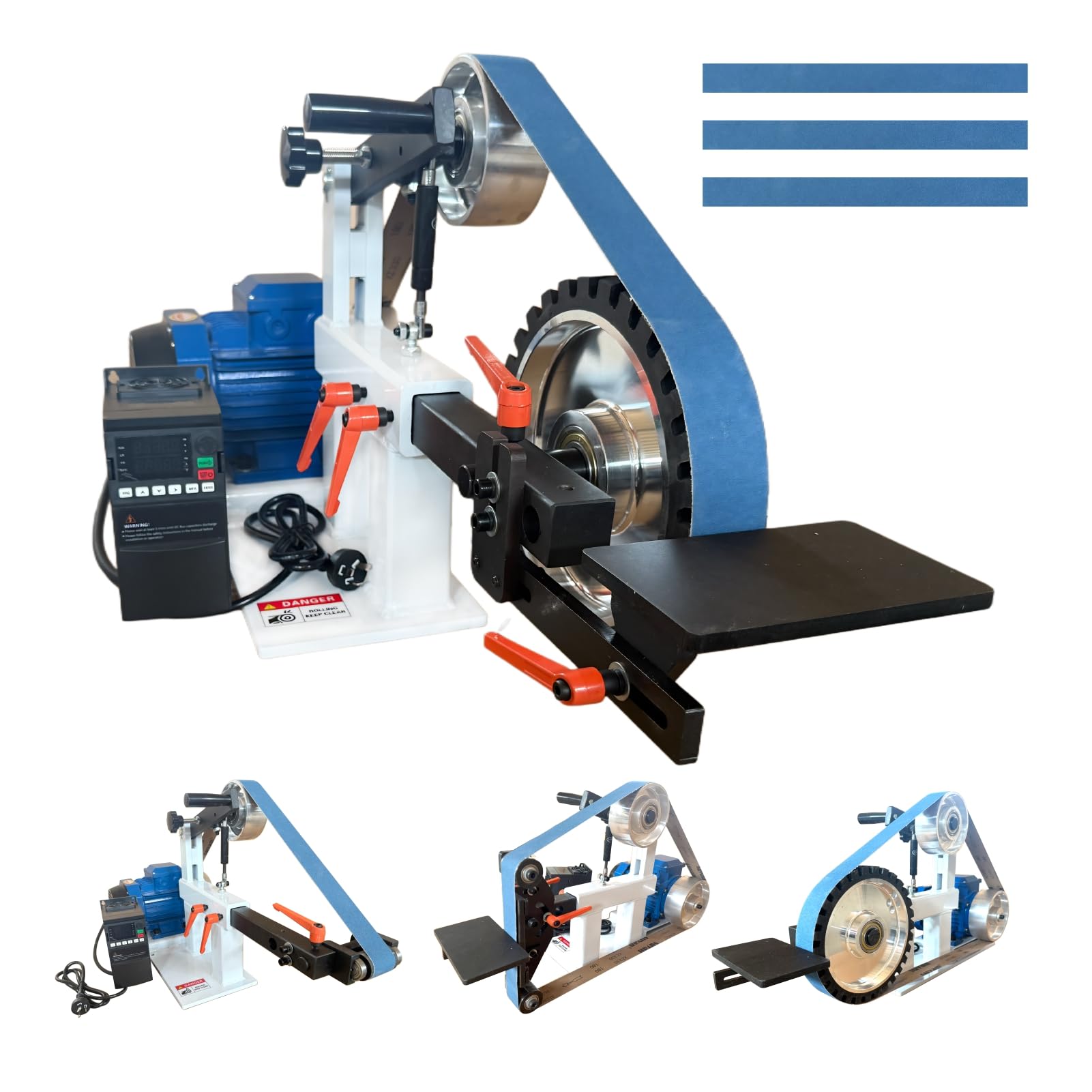
1. Jinlida JLD10-5 Belt Grinder Sander with VFD
This grinder draws 10 Amps — more than three times the 3 Amps of the Goldsand — so it keeps cutting hard without stalling, and its 110-pound welded frame stays planted under heavy side pressure.
The 1500-watt motor spins up to 3000 RPM (revolutions per minute — how many times the belt wheel turns per minute), while the Goldsand and VEVOR spin at 2900 RPM, giving you a quicker cut when you need it. The VFD lets you dial the belt speed from a slow crawl for sharpening up to full speed for aggressive stock removal, all smoothly. The 110-pound welded steel frame holds it steady, and buyers report it “eats steel for breakfast” while staying easy to set up.
The kit arrives with three grinding modes — circular (for curved surfaces), flat (for straight bevels), and arc (for contoured shapes) — plus three zirconia corundum belts (a long-lasting abrasive material) in 100, 180, and 240 grit so you can go from rough deburring to fine polishing without a separate purchase. The included transformer steps 110V (standard US household voltage) up to 220V (higher voltage for more motor torque) to run the motor correctly. One honest trade-off buyers point out: the VFD control box is not sealed, so dust can get inside over time. Several owners mention this as a weak spot they plan to protect themselves. This is a common issue — unlike the Jinlida JLD10-7S which also lacks sealed electronics but compensates with a 2.2 kW VFD and dual positioning.
At 3000 RPM with a 10-amp motor and a solid chassis, this grinder gives you the torque and speed range to handle everything from aggressive stock removal to detailed edge work — with the one caveat that you should shield the electronics from grinding dust. If you need sustained high-torque cutting day in and day out without worrying about electronics, the 187-pound Jinlida Jld-2×72 offers more mass and vibration resistance, but at a higher price and permanent bench footprint.
What Stands Out
- 10 Amps for sustained heavy cutting without bogging
- Includes transformer for 110V shops
- Three grinding modes and three belt grits included
Know Before You Buy
- VFD control box is not dust-sealed
- Requires a dedicated 30-amp circuit per some buyers
This is the best value for most knife makers and metalworkers. It delivers pro-level torque and versatility at a price that undercuts many competitors, as long as you are comfortable adding a dust shield for the electronics.
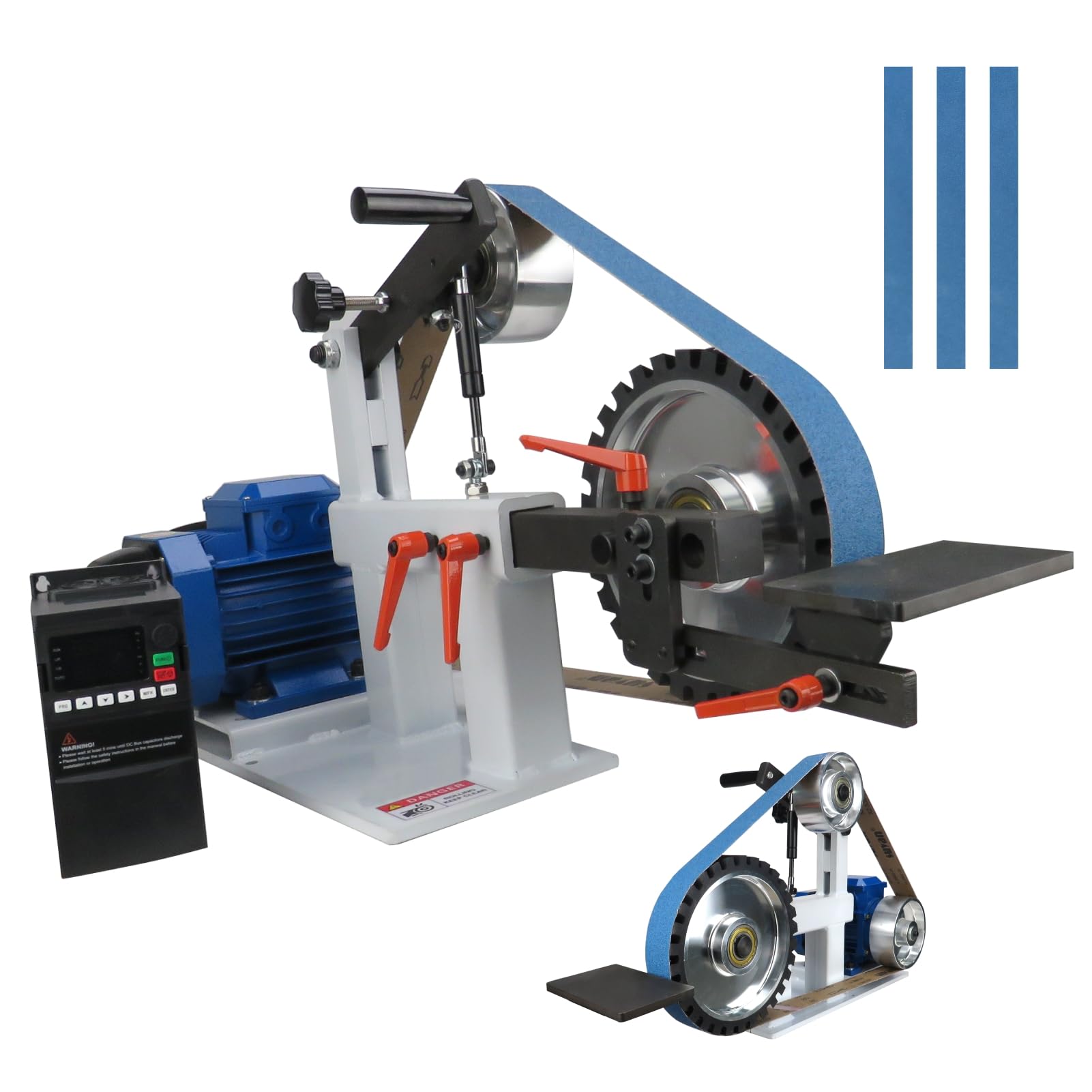
2. Goldsand Jld10-5 Belt Grinder Sander
A 1500-watt motor and VFD speed control in a 110.7-pound frame for buyers who want the 2×72 format without paying for high amperage they do not need.
The Goldsand runs the same 1500-watt motor platform as the heavier-hitting Jinlida but draws only 3 Amps, which means it is better suited for light-to-medium stock removal than aggressive hogging. It spins at 2900 RPM with a VFD that lets you dial in the right speed for polishing versus grinding. The 110.7-pound steel frame with welded joints keeps vibration low, and owners mention it runs “smooth and stable under load.”
You get three belt grits (100, 180, 240) and three grinding modes — flat platen (flat metal backing plate), arc, and circular — so you can handle a variety of shapes. The included transformer converts 110V to 220V, but one reviewer noted the inverter (the VFD) setup was not clear at purchase time, calling it “the only thing I didn’t like.” The VFD is easy to use, though the control panel is separate rather than integrated into the machine body. This is a key difference from the Jinlida JLD10-5, which draws 10 Amps and can sustain far heavier cuts on thick steel without stalling.
For a shop that does moderate work — knife sharpening, deburring, shaping — and values the VFD for speed control without paying for top-tier amperage, this machine delivers real capability at a sharp price. If you later find you need more torque for heavy stock removal, you will want to upgrade to a 10-amp model like the Jinlida.
What Works
- Variable speed via VFD for finish control
- Solid steel frame at 110.7 lb resists vibration
- Three grinding modes and belts included
What to Watch
- 3-amp motor can stall on heavy cuts (the Jinlida draws 10 Amps)
- Inverter setup for 110V may surprise some buyers
Ideal for hobbyists and light-production users who need VFD versatility and a stable platform but do not plan to hog off large amounts of steel daily. This is your entry point into the 2×72 world without the premium price tag.
3. Jinlida JLD10-7S Professional Belt Grinder Sander
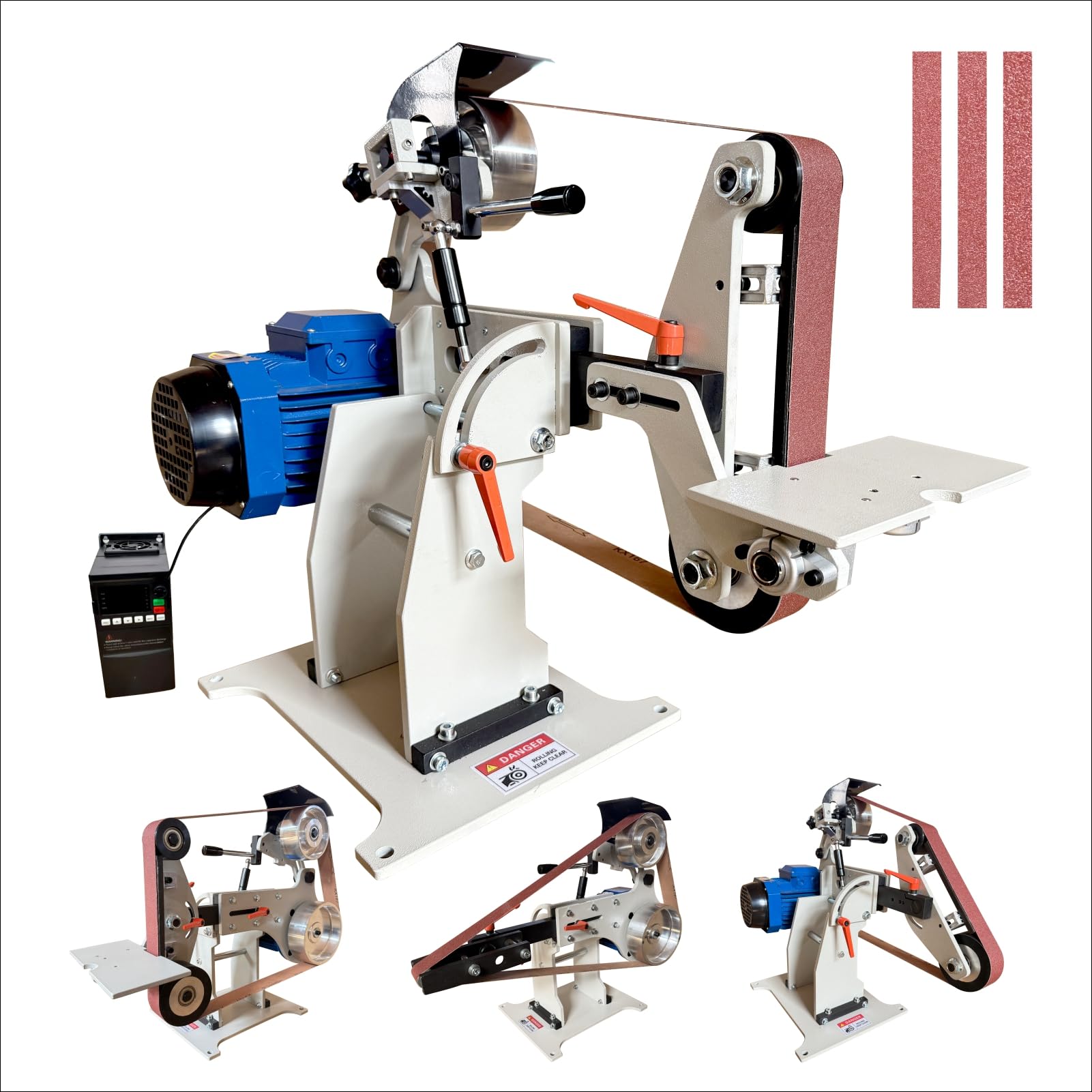
A 2.2 kW VFD — versus the standard 1.5 kW drive — and vertical-or-horizontal positioning give pro shops more control and flexibility than the Jinlida JLD10-5 can offer.
This Jinlida model steps up to a 2.2 kW VFD — a larger drive rated above the standard 1.5 kW VFD on many competitors — giving you stepless speed control (smooth adjustment with no fixed steps) from 0 to 2800 RPM. The 1500-watt motor pulls 10 Amps, matching the top current draw in this lineup, so it handles thick steel without bogging. Customers note it is “super quiet” compared to other machines in this class and that the variable speed controller works smoothly from 1 to max.
Unlike most grinders that only sit vertically, this one operates in both vertical and horizontal positions, which gives you more options for long or awkward workpieces. It comes with two professional grinding kits covering circular, flat, and arc grinding, plus belts in 60, 100, and 180 grit. One buyer who owns a Pheer 454 (a high-end professional brand) said this machine “will keep up with my Pheer 454” — high praise from a serious maker. The downside: the separate transformer and VFD switch are “inconvenient” to locate, and the control box needs a spark guard for the top idler wheel (the top wheel the belt runs over).
Between the 10-amp motor, the oversized VFD, and the ability to run flat or vertical, this grinder gives a pro shop the torque and positioning freedom to handle a wider range of jobs than most. If you need a simpler, single-box setup, the Jinlida JLD10-5 offers similar torque without the separate components.
Why It Stands Out
- 2.2kW VFD for smooth 0-2800 RPM control
- Vertical and horizontal operation
- Draws 10 Amps for heavy stock removal
Considerations
- Separate VFD switch and transformer are not integrated
- Some reviewers point out error codes without a manual for troubleshooting
Reach for it if you are a knife maker or metalworker who wants pro-level torque, dual positioning, and a VFD that can run a 2.2 kW load without hiccups. This machine rewards those who are comfortable with a separate transformer and VFD enclosure.
4. Jinlida Jld-2×72 Belt Grinder Sander
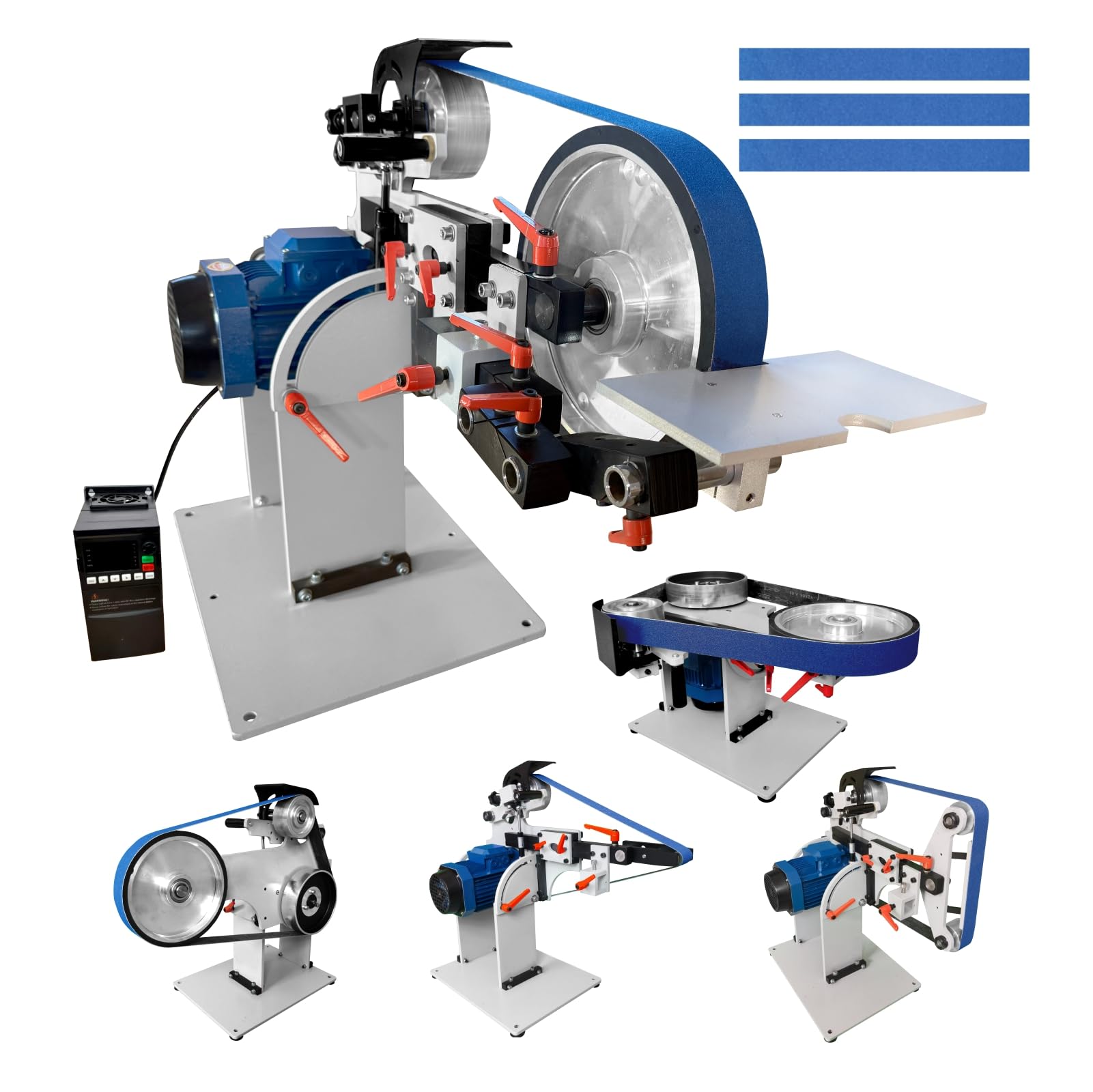
At 187 pounds — versus the Jinlida JLD10-5’s 110 pounds — this machine stays planted and cuts without vibration, even through 1/2-inch rebar (steel reinforcement bar) at 65% power.
This is the heaviest machine in the lineup at 187 pounds — compared to the Jinlida JLD10-5’s 110 pounds — and that mass translates directly into vibration-free grinding. The 1500-watt motor draws 10 Amps and spins up to 3000 RPM. Buyers describe it as “built like a tank” and say it tears through 1/2-inch rebar and 1/4-inch steel at 65% power without stalling. The thick plate steel frame gives it the rigidity to hold perfect tracking under heavy side pressure.
It ships with three grinding heads (circular, flat, and arc) plus zirconia corundum belts (a durable abrasive) in 60, 100, and 180 grit. The machine supports both vertical and horizontal orientation, and a detachable workbench lets you adjust your position. One professional bladesmith buyer reported that it handles “bevels and sharpening” with fine speed adjustments and calls it comparable to machines at triple the price. The only hiccup from reviews: the paint on the work table arms was too thick, requiring a little sanding for the arms to slide smoothly. Unlike the Goldsand and VEVOR, which weigh 110.7 pounds and can shift under heavy side pressure, this machine barely moves.
For a shop where every hour counts and you need a machine that stays planted and keeps cutting without vibration, this 187-pound grinder delivers industrial-grade stability that lighter frames cannot match. Its 187-pound weight means it is a permanent bench fixture, not portable — so only choose it if you have a dedicated spot.
The Big Upsides
- 187 lb frame for near-zero vibration
- 10 Amps for unstoppable stock removal
- Vertical and horizontal modes with three grinding heads
Small Gripes
- Thick paint on work table arms may need sanding to fit
- At 187 lb it is a permanent bench fixture, not portable
This is the machine for high-volume shops that need aggressive cutting day after day without losing tracking or walking away. The weight is the price of stability — and it delivers.
5. VEVOR JLD10-8 Belt Grinder Sander

A 1500-watt motor that draws 5 Amps — a middle ground between the 3-amp Goldsand and the 10-amp Jinlida — and a built-in converter for standard 110V outlets make this an easy first step into 2×72 grinding.
The VEVOR runs at 2900 RPM and draws 5 Amps — a middle ground between the 3-amp Goldsand and the 10-amp Jinlida models. The included 110V-to-220V converter means you can plug into a standard wall outlet without special wiring, and the VFD gives you belt speed control. The frame is a welded steel chassis at 110.7 pounds, which gives decent stability.
It comes with three sanding belts in 100, 180, and 240 grit plus three grinding moulds for circular, arc, and flat work. Shoppers say it does “clean hollow grinds” (curved, scooped-out bevels) and is easy to adjust for tracking. However, several reviews mention that the electronics come in an unsealed plastic box and that the power supply quality is suspect — one buyer mentioned “the electronics are questionable” and doubts they will last years of heavy service. A few units arrived with no power at all, though VEVOR’s brand support is generally responsive. This is a more pronounced risk than the similar unsealed box on the Jinlida JLD10-5, which has no reported DOA (dead on arrival — arrived not working) units in customer reviews.
At this price point, the VEVOR gives you a functional 2×72 grinder with VFD and convertible voltage — just be aware that the electronics enclosure may need some DIY weatherproofing if your shop gets dusty. It is a solid starter machine, but the Goldsand offers a more reliable path with the same 110.7-pound frame and fewer electronic quality concerns.
What You Get
- Plug-and-play with standard 110V outlet
- VFD speed control and three grinding modes
- Solid 110.7 lb welded frame
What’s Risky
- Unsealed electronics box prone to dust damage
- Some units arrived dead on arrival
This is for a first-time 2×72 buyer who wants VFD control and 110V convenience without stepping up to premium pricing. But plan to add dust protection for the electronics from day one.
6. INTBUYING 220V 2HP Variable Speed 2X72 Belt Grinder

This machine accepts both 2×72 and 2×48 inch belts and has a hydraulic tension arm for quick swaps, but the VFD is a known early-failure weak point.
This INTBUYING grinder runs on 220V power only — no included step-up transformer for 110V shops, unlike every other machine in this guide. The motor is rated at 2HP (horsepower), and it accepts both 2×72 and 2×48 inch belts, giving you some belt size flexibility. The frame is designed for professional knife makers and includes a base for installation. It also has a hydraulic tension arm (a lever system using fluid pressure) to make belt swaps convenient.
Real-world reliability, however, is a glaring issue. The VFD has a pattern of early failure: one owner reported it fried after about 10 hours of use, another said it failed within a week of purchase. A third machine arrived with a bent hydraulic tension arm, and the manufacturer refused a replacement because the warranty had expired by a month. The VFD is a known weak point, and several buyers recommend budgeting for a higher-quality replacement drive immediately. This level of reported failure is not present in any of the other machines reviewed here — even the VEVOR’s questionable electronics do not show this pattern of complete early burnout.
If you have a 220V shop, can source a better VFD from the start, and want the belt-size flexibility plus the hydraulic tension arm, this machine has potential — but the out-of-box reliability is a serious gamble. For most buyers, the Jinlida JLD10-5 or the Goldsand offer far more dependable performance for less hassle.
The Upside
- Accepts both 2×72 and 2×48 belts
- Hydraulic tension arm for quick belt changes
The Catch
- VFD fails early on many units
- 220V only with no step-up transformer included
- Hydraulic arm arrived bent on some units
Only for an experienced fabricator with 220V access who plans to replace the VFD immediately and can inspect the build quality on arrival. This is a project machine, not a grab-and-go tool.
Understanding the Specs
Motor Amperage
The amperage rating tells you how much current (electrical flow) the motor can draw under load. A 10-amp motor like the one on the Jinlida JLD10-5 can sustain aggressive cuts on thick steel without overheating, so you do not have to stop and let the motor cool down. A 3-amp motor on the Goldsand will struggle with the same work. More amps means more real-world torque for stock removal (taking off metal quickly).
VFD (Variable Frequency Drive)
The VFD controls belt speed by varying the frequency of power sent to the motor. A good VFD lets you dial from a slow crawl for sharpening up to a fast cut for grinding — and it keeps that speed steady under load, so your cuts stay consistent. A 2.2 kW VFD (2.2 kilowatts of power capacity) is larger than a 1.5 kW drive and gives you more headroom for torque (twisting force) at low speeds, which helps when grinding hardened steel.
FAQ
Do I need a 220V outlet for a 2×72 belt grinder?
What size circuit breaker do I need for a 2×72 belt grinder?
How important is machine weight for a belt grinder?
What is the difference between a VFD and a simple speed controller?
Can I use 2×72 belts on a 2×48 machine?
What does a three-in-one grinding mode mean for my work?
How long do the sanding belts last on a 2×72 grinder?
Is a 2×72 belt grinder worth it for a hobbyist knife maker?
What is belt tracking and why does it matter?
Final Thoughts: The Verdict
For most buyers, the 2×72 belt grinder winner is the Jinlida JLD10-5 because it combines a 10-amp motor with 3000 RPM top speed, a VFD, and three grinding modes at a price that undercuts many competitors while still delivering pro-level torque. If you want a machine built for heavy production and near-zero vibration, grab the Jinlida Jld-2×72. And for a budget-friendly entry into the 2×72 format with VFD control, the Goldsand Jld10-5 gives you the essential features without the premium price tag.
How We Picked
We do not accept paid placement. Every pick is matched to a real buyer and a real use-case; we do not hands-on test units.
Sources & Methodology
Specifications: manufacturer listings and product documentation. Review insights: verified customer reviews, as of July 2026. Pricing: not shown on this page (it changes often); check the current price via the retailer link.
As an Amazon Associate, FitlyFast earns from qualifying purchases. This does not affect which products we feature.