
Our readers keep the lights on and the weekend projects moving. As an Amazon Associate, I earn from qualifying purchases.
Specs are compiled from manufacturer listings and verified buyer reviews and can change over time — please confirm the key details on the product page before buying.
A chalky, faded gel coat doesn’t mean your boat needs a new paint job. A quality buffer polisher removes years of oxidation and restores a deep, wet-looking shine in a single afternoon. But with speeds ranging from 800 RPM to over 7000 RPM, and weights from 4 to 13 pounds, grabbing the wrong one will either wear you out or burn through your clear coat.
I’m Rikta — the founder and writer behind FitlyFast. This guide is built by comparing the manufacturers’ published specifications and the patterns across verified customer reviews, so you get each pick’s real strengths and trade-offs instead of marketing spin.
Whether you are maintaining a weekend runabout or a 40-foot cabin cruiser, these are the seven best buffer polisher for boats options that deliver professional results without a professional price tag.
Our Picks at a Glance

How To Choose The Best Buffer Polisher For Boats
Choosing the correct machine determines whether you achieve a mirror finish or create a spider-webbed mess. Focus on power, the type of motion (rotary vs. dual-action), pad size, and the overall weight you can handle for a full day on the water.
Rotary vs. Dual-Action (DA)
A rotary buffer spins in a single circle, like a angle grinder. It cuts fast and is the tool of choice for pros who need to remove heavy oxidation from gel coat. The catch is it can burn through paint if you stay in one spot too long. A dual-action (DA) polisher spins and oscillates at the same time. It is safer for beginners and leaves fewer holograms, but it takes longer to correct deep damage. For the average non-professional boat owner, a DA polisher is usually the smarter, safer bet.
Backing Plate and Pad Size
A larger backing plate (6.5 to 7 inches) covers more square footage quickly, making it ideal for vast, flat hull sides. A smaller plate (3 to 5 inches) lets you get into tight spots around vents, rub rails, and curved bow sections. Many kits offer a 6-inch loop backing plate, which gives a solid middle ground for the majority of boat surfaces.
Weight and Ergonomics
Polishing a boat is an upper-body workout. A 13-pound machine (like a professional rotary) will deliver immense power, but you will feel it in your shoulders after an hour. A 4 to 5-pound cordless or compact DA is far less fatiguing, though you trade some raw cutting force. If you are working on a 25-foot cruiser alone, lighter is better. If you have a small daysailer and want the fastest cut, weight is not as big of a concern.
Quick Comparison
| Model | Best For | Max Power | Speed Range | Item Weight | Amazon |
|---|---|---|---|---|---|
| Makita 9237CX2★ Best Overall | Pro-grade heavy correction | 1200W | Variable dial | 13 lb | Amazon |
| DEWALT DWP849Premium Pick | Heavy daily pro use | 12 Amps | 600–3,500 RPM | 9.59 lb | Amazon |
| Shurhold 3101 | Beginner-friendly dual action | 120V corded | 2,500–6,500 OPM | 5 lb | Amazon |
| Maxshine M15 Pro | Long-throw paint correction | 1000W | 2,500–5,000 OPM | 5.2 lb | Amazon |
| Maxshine M312 | Tight spots & detailing | 550W | 2,000–5,500 OPM | 4.1 lb | Amazon |
| Cordless Polisher (Avhrit) | Portable quick touch-ups | 300W | up to 5,500 RPM | 4.2 lb | Amazon |
| Cordless Buffer (Jruav) | Budget DIY waxing | 900W | 800–7,230 RPM | 7.4 lb | Amazon |
In‑Depth Reviews
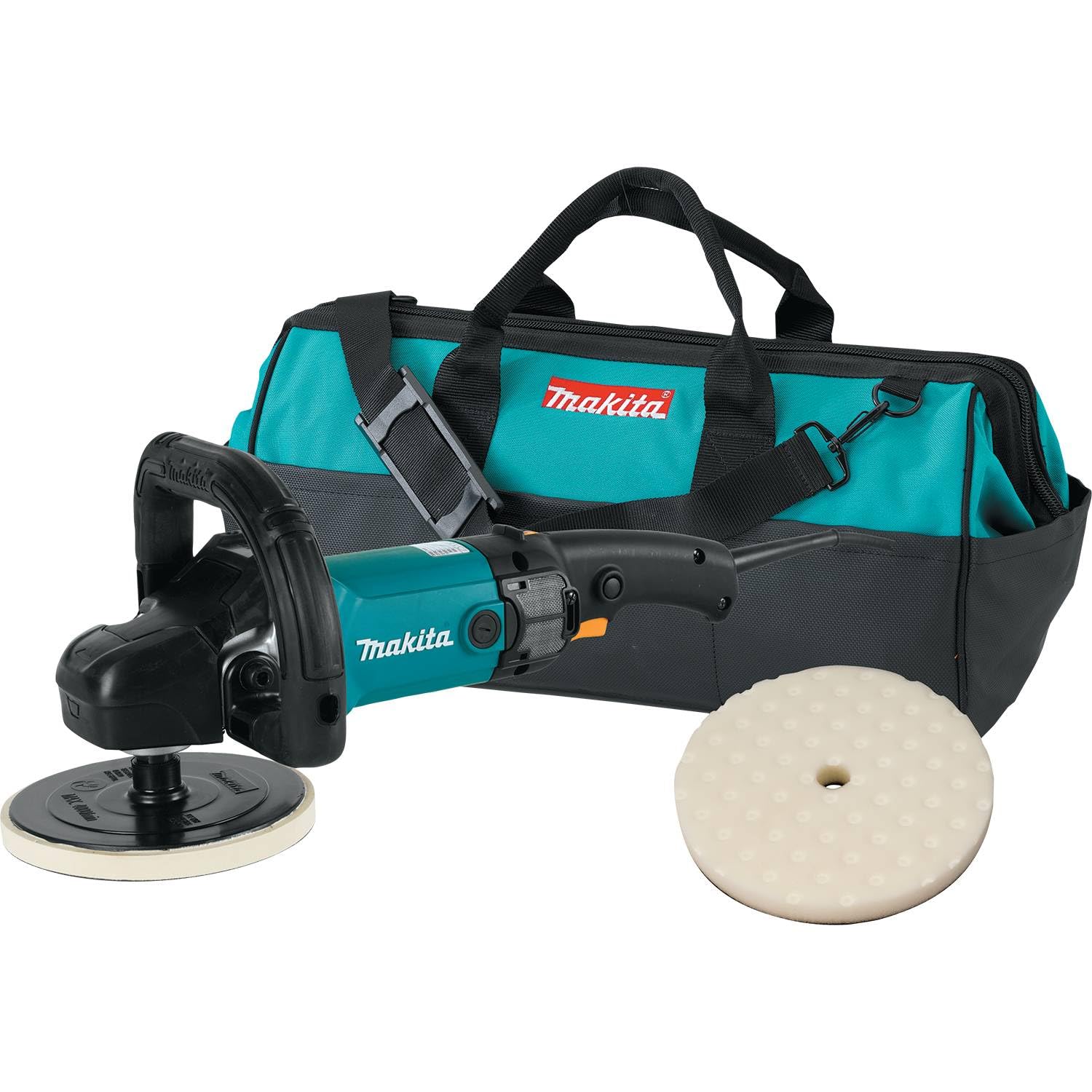
1. Makita 9237CX2 7″ Polisher
Our pick — over 4.5★ from 400+ verified ratings; the strongest balance of quality and price.
Professional boat detailers have relied on this workhorse for two decades.
This is a 1200-watt rotary buffer, meaning it spins in a single direction to cut through heavy oxidation fast. The crowd favorite — 4.7 stars across 413 ratings — and the reason is simple: it takes the abuse of everyday buffing nonstop. What wins people over is the sheer build quality. The rubberized loop handle and gear housing protect delicate boat surfaces from accidental dings, while the soft start feature ramps up slowly so you do not sling polish everywhere the second you pull the trigger. The wire mesh intake covers keep wool fibers from the polishing pad out of the motor, which is the kind of longevity detail that makes a fourth repeat buyer over 20 years a common story.
The trade-off is its 13-pound weight. At 13 pounds, this is the heaviest machine on the list, and you will feel it after a few passes on a tall hull side. It is also a true rotary, so if you are a novice, you need to keep it moving to avoid burning the gel coat. The variable speed dial and trigger let you match the speed to the application, and the externally accessible brushes mean you can service it yourself after heavy use. The kit includes a 7-inch backing pad, an 8-inch white hook-and-loop foam polishing pad, a side handle for two-handed control, a hex wrench, and a tool bag to carry it all.
The Pro’s Machine
- 1200W motor plows through tough oxidation on 40-foot cruisers.
- Variable speed dial + soft start for precise control and less polish fling-off.
- Wire mesh intake covers protect the motor from wool fiber debris.
The Weight Trade-Off
- 13 pounds gets heavy during long overhead or side-panel sessions.
- Rotary action requires skill; a beginner can burn clear coat if stationary.
Reach for this if: you want the fastest correction power and a machine that has been known to outlast a five-year mission in a pro shop.
Look elsewhere if: you are not experienced with a forced-rotation buffer, or you want something lighter for a full day of weekend detailing.
2. DEWALT Variable Speed Polisher (DWP849)
This polisher endures eight-hour shifts on the water as a pro marine detailer’s daily tool.
You get a polisher that can handle daily abuse from a pro, according to 59 owners who mention quality first. This 12-amp corded electric polisher uses a variable speed thumb control (a dial on the trigger that lets you change speed while working) so you can slow down to 600 RPM (rotations per minute) for applying wax or speed up to 3,500 RPM for heavy cutting, and the constant-speed electronics keep that speed locked in even under deep pressure. The crowd favorite — 4.6 stars across 991 ratings — makes it the most-reviewed machine in this lineup, and one verdict from the review pages sums it up: “a professional boat detailer uses it daily for 8+ hours and beats it up for a living.”
There is a reason the adjustability and the weight show up as mixed feedback — this is a heavy, powerful rotary. At just under 10 pounds, it is lighter than the Makita, but it still requires two hands and a bit of muscle for overhead work. The variable speed thumb control is convenient, but a small number of owners find the switch unreliable over time. It comes with a 2-position side handle and a backing pad, so factor in the cost of additional pads and compounds. For straight-line correction on hulls and decks, the power and smooth trigger response are tough to top.
Marine-Shop Ruggedness
- 12-amp motor has the torque to cut through heavy oxidation without bogging down.
- Variable speed from 600 to 3,500 RPM covers waxing, polishing, and cutting.
- Fits 7 to 9-inch pads for wide coverage on flat surfaces.
The Daily Load
- Near 10 pounds; long sessions on vertical surfaces require arm strength.
- Variable speed switch reliability gets mixed feedback from some long-term owners.
Grab this if: you polish boats for a living and need a rotary that survives daily submersion in compound dust.
Think twice if: you prefer a safer dual-action motion or a cordless setup for working around the water.
3. Shurhold 3101 Dual Action Random Orbital Buffer Polisher Starter Kit

A complete kit that turns a faded 18-foot Bayliner into a showpiece in a single afternoon.
The thing everyone raves about is how easy this dual-action polisher is to use. Unlike a rotary, the random orbit motion means you can hand this to a friend who has never polished a boat and they will not burn through the gel coat. The kit comes with the polisher, a 6.5-inch foam pad, a 16-ounce bottle of Pro Polish Wax, a microfiber towel, and a carrying bag. The speed dial goes from 2,500 to 6,500 OPM, so you set it low for wax application, mid for light polishing, and high for stripping oxidation. Owners consistently report polishing an 18 to 23-foot boat in roughly two hours, with a deep shine that makes salt water bead off for months.
One caveat from the water: the power button is a push-down-and-slide design that takes a moment to get used to, but it also prevents accidental shut-offs during a pass. The 20-foot cord is a real asset when your boat is sitting in the driveway and your nearest outlet is in the garage. The crowd favorite — 4.5 stars across 303 ratings — and a common scene is a 33-year-old sailboat brought back to life after 16 hours of work with this machine. The kit is well-curated for a first-time buyer; you literally need nothing else but an extension cord and some patience.
All-In-One Simplicity
- Dual-action motion is nearly impossible to burn gel coat with — a safe first machine.
- Comes with everything: polisher, pad, wax, towel, and carry bag.
- 5 pounds plus a rubberized body for comfortable non-slip control.
The Limits
- Dual-action cuts slower than a rotary for deep oxidation removal.
- Power switch has a push-and-slide action; a few owners find it initially awkward.
Buy this if: you are new to boat polishing or just want a safe, complete kit to keep your gel coat looking good without a steep learning curve.
skip it if: you have heavy, neglected oxidation that needs the brute-force cut of a high-torque rotary.
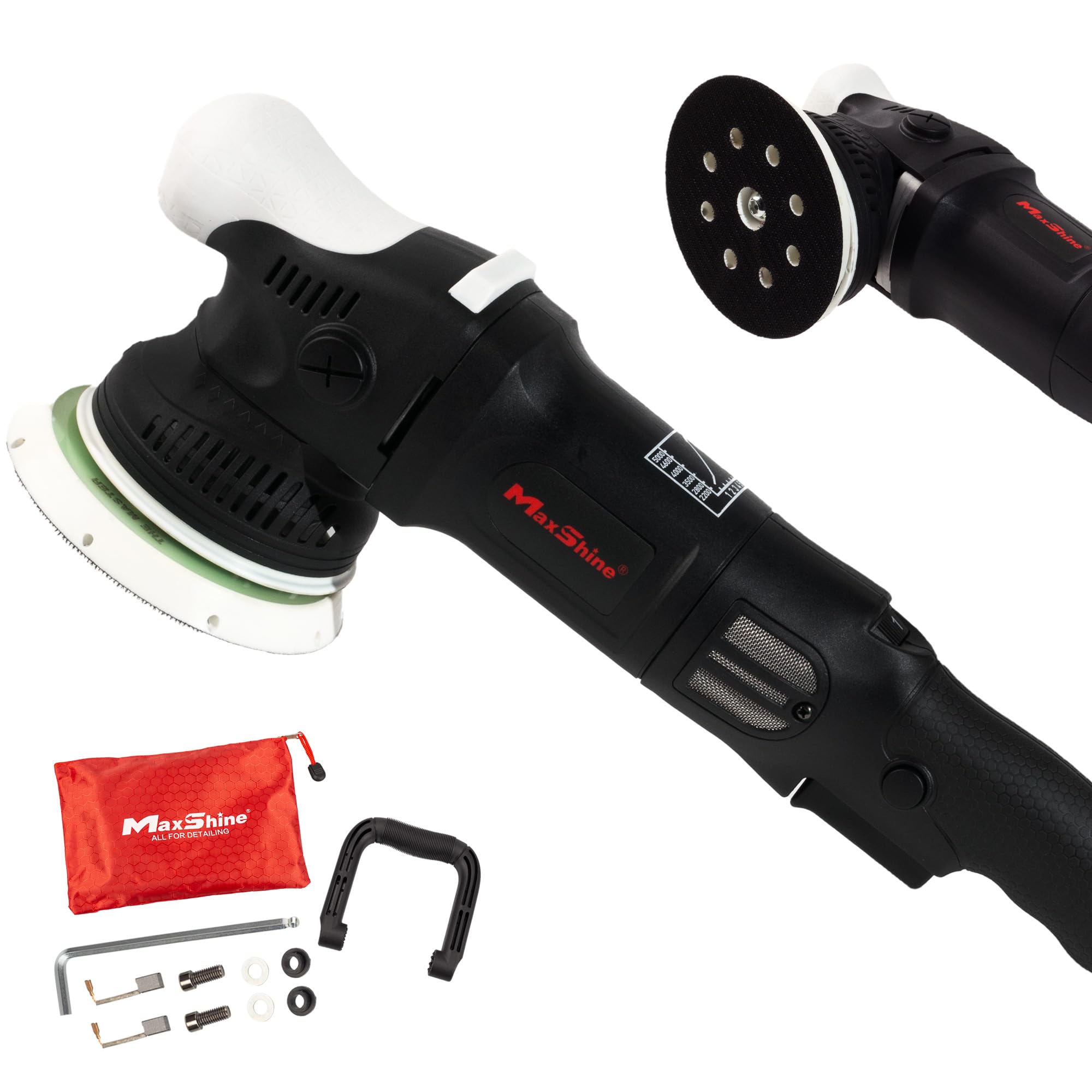
4. Maxshine M15 Pro Dual Action Polisher
Long-throw power that matches the big names for half the entry fee.
This is the rare machine where buyers line up to say it performs as well as a Rupes or Flex polisher that costs twice as much. The 1000-watt motor and 15mm long throw stroke (the distance the pad moves in an orbit) mean each pass covers more surface area and cuts faster than a standard 8mm DA (dual-action) polisher, making it a strong choice for removing scratches and swirl marks from boat gel coat. The crowd favorite — 4.6 stars across 401 ratings — and what wins people over is quality (41 mentions) and performance (29 mentions). The variable speed control ranges from 2,500 to 5,000 OPM (orbits per minute), giving you fine control across cutting, polishing, and finishing stages.
The most-discussed issue is stability on curves. The long throw can cause the polisher to stall or hesitate when you lean into a tight crease or a sharp radius on a bow. Many owners solve this by using a smaller pad or adding a minor spacer, and the stall function actually protects the paint from burning, which is a safety benefit dressed up as a quirk. At 5.2 pounds, it is light enough for a full day of detailing, and the ergonomic low-vibration grip keeps fatigue at bay. The kit includes a 5-inch backing plate and adjustment tools, so you can start correcting paint right from the start.
The Speed Advantage
- 1000W + 15mm throw cuts correction time compared to standard 8mm DA polishers.
- Variable speed trigger gives fingertip control across waxing, polishing, and cutting.
- Users report results comparable to Rupes and Flex at roughly half the cost.
Know the Quirk
- Tends to stall on tight curves and creases; requires a patient touch around boat edges.
- Mixed feedback on vibration — some owners find it smooth, others want lighter grips.
Pick this if: you want professional-grade correction speed without the professional price tag, and you work mostly on flat hull sides.
Pass if: your boat has highly contoured surfaces and you need a machine that tracks smoothly through every curve without hesitation.
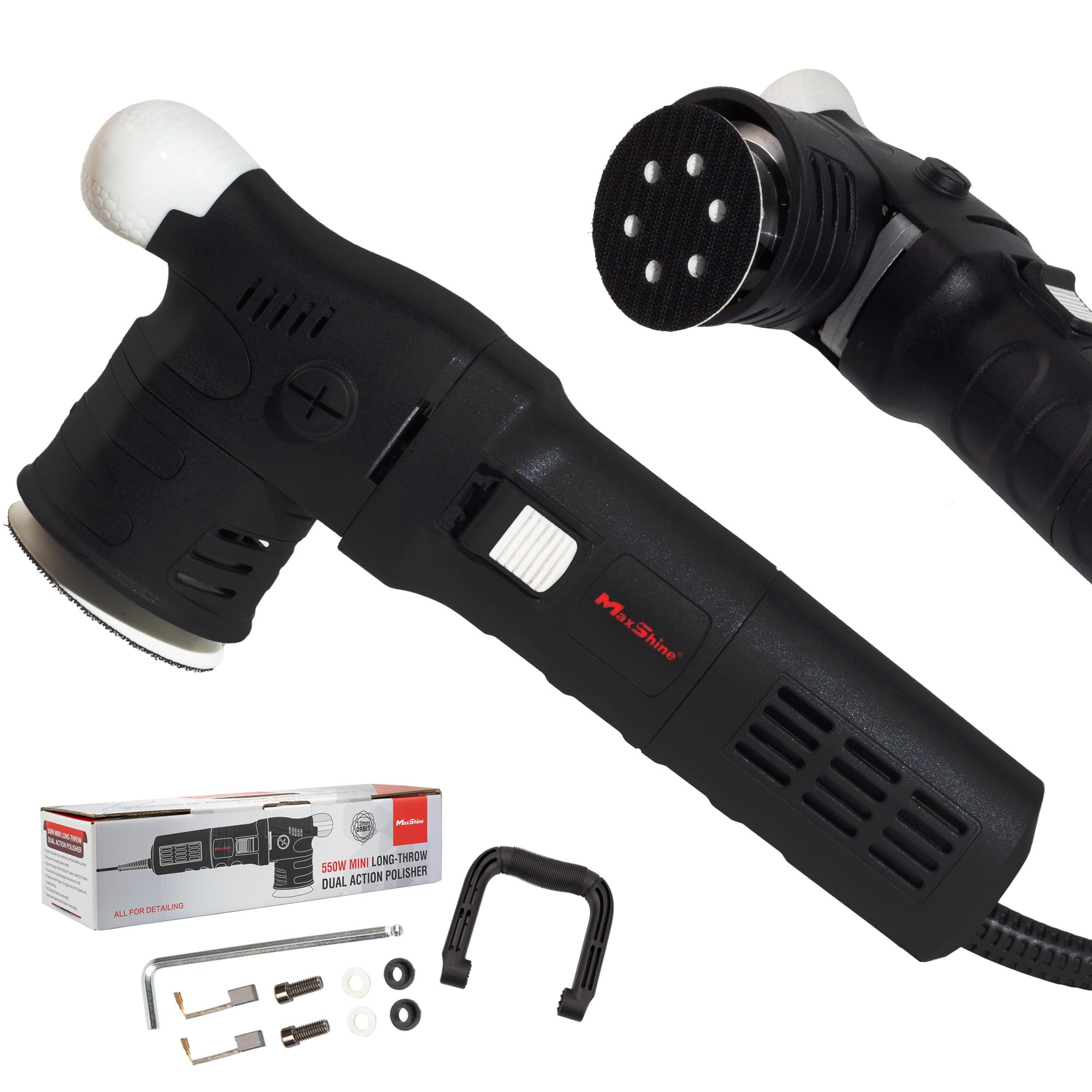
5. Maxshine M312 Dual Action Polisher
This nimble polisher reaches tight spots that full-size machines cannot access.
Size is the feature that gets the most praise (11 mentions), and it is easy to see why. The M312 packs a 550-watt motor into a body that weighs just 4.1 pounds and uses a 3-inch backing plate. That means it slides perfectly between deck cleats, around radar arches, and over the tight compound curves of a modern hull. The 12mm orbit action is a balanced long throw that efficiently removes swirls and light oxidation without bouncing around. The crowd favorite — 4.5 stars across 133 ratings — and owners describe it as the most-used polisher in their arsenal for spot correction.
The trade-off for that compact size is coverage area. A 3-inch pad is not designed to polish a 40-foot hull in one go — it is built for precision work. The smoothness gets mixed feedback, with some noticing the rubberized grip can feel loose or damaged in shipping. The 6-speed control ranges from 2,000 to 5,500 OPM, so you can set a low speed for applying a thin layer of wax over a small repair area and a high speed for correcting a scratch on a gunwale. The corded electric power means you will never run out of battery mid-job, though you do need to manage the cable to avoid dragging it across wet paint.
Ideal for Intricate Work
- Ultra-light at 4.1 pounds for fatigue-free one-handed control in tight spaces.
- 3-inch pad fits where a 6-inch pad won’t — around vents, rails, and curved bow sections.
- 12mm long throw delivers faster correction than basic 8mm DA polishers.
Not a Hull Machine
- 3-inch backing plate makes it slow for large, flat hull panels.
- Some units arrive with minor grip or rubberized coating damage from shipping.
Reach for this if: you detail boats professionally and need something for the fine work around hardware, badges, and narrow stringers.
Stick with a larger DA if: your plan is to buff the entire side of a 30-foot cruiser in a single session.
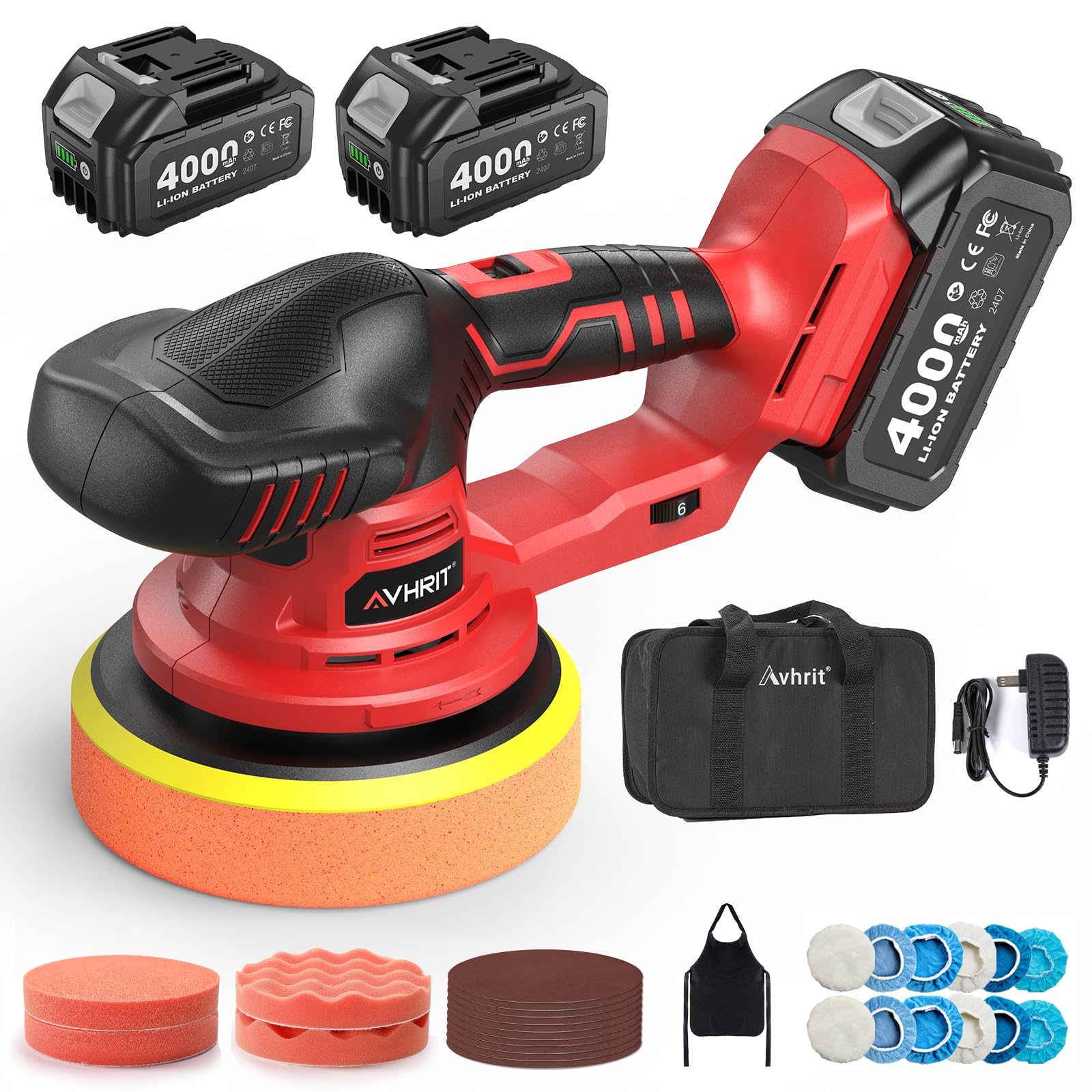
6. Updated Cordless Polisher with 2×4.0Ah Batteries (Avhrit)
Buff a hull without extension cords or outlet hunting thanks to cordless freedom.
A 300-watt motor is modest compared to the corded giants, but the real story here is the removal of the cord. The Avhrit kit comes with two 4.0 Ah 21V batteries and a quick charger, so you can charge one pack while you drain the other. Buyers report this setup removed acid rain spots and baked-on bird droppings from paint that a professional shop had deemed hopeless. The update over the previous AT02 model bumps the top speed to 5,500 RPM, and the 8mm random orbit keeps the finish swirl-free. The kit even includes a D-handle that is designed to be comfortable for novices and left-handed users.
The honest constraint is power. At 300 watts, it is three times less powerful than the Makita (1200W) and it weighs a third as much at 4.2 pounds. It is not the tool for tackling deep, neglected oxidation across a 40-foot cabin cruiser. But for light seasonal touch-ups, a quick wax after every few outings, or emergency stain removal on the dock, the convenience of a battery-powered machine is unbeatable. The kit is generous: two foam pads, two waffle pro foam pads, two knitted wool pads, ten polishing bonnets, five sandpapers, and a carrying bag.
Fuss-Free Portability
- Cordless with two 4.0 Ah batteries for continuous work without waiting for a charge.
- Surprisingly effective at removing acid rain, water spots, and bird etching.
- Full detailing kit included — pads, bonnets, sandpaper, and bag.
Know Your Limits
- 300W is less than one-third the power of the top corded rotary machines.
- Slower for heavy oxidation removal; better suited to maintenance and light correction.
Grab this if: you want to polish your boat away from the garage without dragging out a generator or long extension cords.
pass on it if: your boat has heavy chalking and deep gel coat damage that needs a high-torque, continuous-run machine.
7. Cordless Buffer Polisher for Car Detailing, 7230 RPM (Jruav)
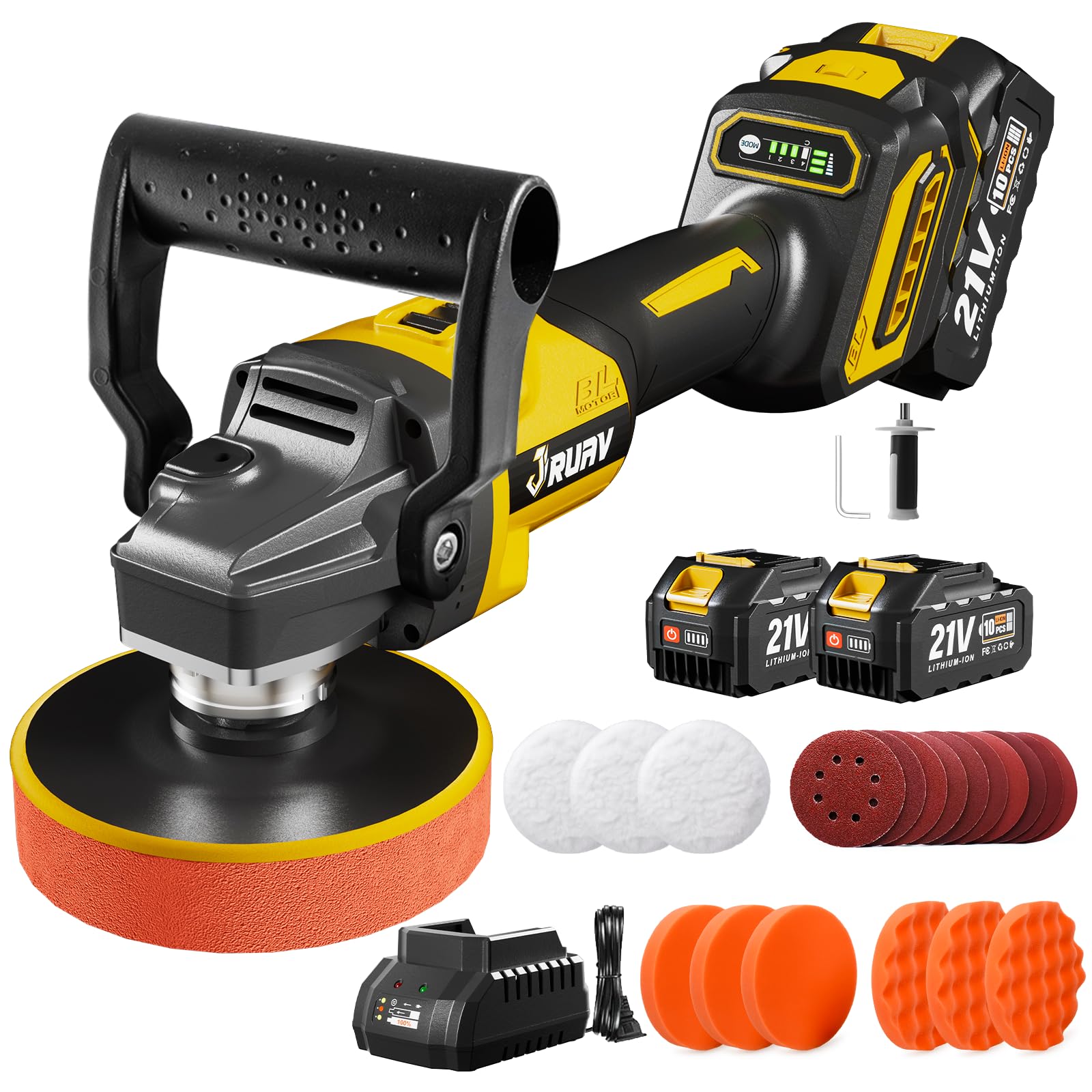
This cordless option spins faster than most corded rotaries for aggressive cutting.
The standout number here is 7,230 RPM — that is 31% more top-end speed than the Avhrit works at. The Jruav uses a 900-watt motor and two 21V 4.0 Ah batteries that the maker claims each recharge in 90 minutes. It has six speed settings that range from a gentle 800 RPM for applying wax up to that ultra-high 7,230 RPM for aggressive cutting. The kit includes a staggering 29 pieces: multiple foam pads, wool pads, bonnets, sandpaper, and a handle. For the budget-conscious boat owner who wants a single kit to handle everything from waxing to sanding, the value proposition is hard to ignore.
The honest picture from the crowd is more mixed. Value for money gets a positive nod (7 mentions), but battery life is the most-discussed aspect (10 mentions) and it carries a mixed verdict — several owners find the runtime disappointingly short, some reporting only about five minutes of heavy use per battery. Reliability draws a negative note, with a few units cutting out after several minutes of operation. The speed range is genuine, but the staying power is a leap of faith. It is a passable budget pick if you are polishing a small dinghy or kayak, but any serious work on a mid-sized cruiser demands more endurance.
Speed on a Budget
- Top speed of 7230 RPM beats many corded rotaries for aggressive cutting.
- 29-piece kit with every pad and bonnet a first-time buyer could want.
- Six speed settings from 800 RPM (waxing) to 7230 RPM (cutting).
Staying Power Questions
- Battery runtime is the top complaint — some owners get only around five minutes per pack.
- Reliability is a concern; a small number of units stop working after a few uses.
Consider this if: your budget is tight and you are tackling a small boat or a single maintenance polish per season.
Look elsewhere if: you need consistent runtime for a full day of detailing or you want a machine with a proven long-term track record.
Understanding the Specs
Watts vs. Amps — What Powers the Cut
Wattage tells you the raw electrical power driving the motor. A 1200-watt rotary delivers a deep, consistent cut that chews through years of oxidation on a gel coat. A 550-watt DA polisher works slower, but it also generates less heat, which makes it safer for a beginner. Amps (amperage) measure the same thing in a different unit — a 12-amp corded polisher is similar in power to a 1200- to 1400-watt machine. More power means faster correction, but it also means more weight and a steeper learning curve.
RPM vs. OPM — The Motion Matters
A rotary buffer spins in a circle measured in RPM (revolutions per minute). A dual-action polisher oscillates and spins, measured in OPM (oscillations per minute). Higher RPM on a rotary means more aggressive cut, but it also risks burning paint if you hover. Higher OPM on a DA means more polishing action, but the random orbit spreads that energy out to prevent holograms and heat buildup. For a boat’s thick gel coat, both work — just understand that a rotary is a scalpel and a DA is a slow cooker.
Backing Plate Size (3″ vs. 5″ vs. 7″)
The backing plate is the disc that holds the foam or wool pad onto the polisher. A 7-inch plate covers a lot of area quickly, perfect for the long flat hull of a ski boat. A 3-inch plate is for detail work around deck fittings, rub rails, and tight bow curves. Most buy one machine and a second backing plate to swap, giving you both a wide and a narrow setup from the same motor.
Rotary vs. Dual Action (DA) — Which Safer?
A rotary (like the Makita or DEWALT) spins in a single direction. It corrects fast, but if you hold it still, the friction builds into the gel coat and can burn a visible ring. A dual-action (like the Shurhold or Maxshine machines) adds a random wobble. Even if you stay in one spot, the motion is constantly shifting so the heat never concentrates in one place. For any first-time boat polisher, a DA is the safer investment.
FAQ
Can I use a car buffer on my boat?
Should I get a rotary or a dual-action polisher for my boat?
Will a cordless polisher last long enough to do a whole boat?
What size backing plate is best for a boat?
Is 1000 watts enough to buff a boat?
How long does a buffer polisher typically last?
Can I ruin my boat’s gel coat with a buffer?
What is a long-throw polisher and do I need it for a boat?
Should I use a wool pad or a foam pad on my boat?
What is the difference between a buffer and a polisher?
Final Thoughts: The Verdict
For most owners, the best overall buffer polisher for boats is the Makita 9237CX2 because 1200 watts of rotary power with a soft start control handles everything from a quick wax-up to a full oxidation restoration — and owners routinely buy a second one when the first finally wears out after years of heavy use. If you want a safer dual-action that is easier on the arms and the gel coat, the Shurhold 3101 comes as a complete starter kit that makes a weekend job feel like a professional detail. And for the best cordless freedom on smaller craft or touch-ups, the Avhrit Cordless Polisher gives you battery convenience with a generous set of pads and two spare batteries to keep you running all afternoon.
How We Picked
We do not accept paid placement. Every pick is matched to a real buyer and a real use-case; we do not hands-on test units.
Sources & Methodology
Specifications: manufacturer listings and product documentation. Review insights: verified customer reviews, as of July 2026. Pricing: not shown on this page (it changes often); check the current price via the retailer link.
As an Amazon Associate, FitlyFast earns from qualifying purchases. This does not affect which products we feature.