
Our readers keep the lights on and the weekend projects moving. As an Amazon Associate, I earn from qualifying purchases.
Specs are compiled from manufacturer listings and verified buyer reviews and can change over time — please confirm the key details on the product page before buying.
Finding a sleeping bag that won’t weigh you down on the trail but still saves your budget can feel like a guessing game. A bag that is too heavy ruins a hike, one that is too cold ruins a night, and paying double for a name brand isn’t always the answer. This guide cuts through the noise and lines up nine genuine choices for a budget sleeping bag for backpacking — each one balances weight, warmth, and pack size without the premium price tag.
I’m Rikta — the founder and writer behind FitlyFast. This guide is built by comparing the manufacturers’ published specifications and the patterns across verified customer reviews, so you get each pick’s real strengths and trade-offs instead of marketing spin.
if you need a featherlight down bag for three-season treks or a rugged synthetic for damp weather, the right budget sleeping bag for backpacking is here — backed by real owner experience, not just spec sheets.
Our Picks at a Glance


How To Choose The Best Budget Sleeping Bag For Backpacking
Picking the wrong bag usually depends on one mistake — chasing a low price that hides a heavy, bulky, or poorly insulated package. A true backpacking bag needs to hit three targets at once: light enough to carry all day, small enough to fit in your pack, and warm enough for the coldest night you expect. Here is what actually matters.
Weight and Packed Size Rule Everything
On the trail every ounce adds up. A bag over three pounds can dominate an otherwise light pack, and a bag that won’t compress down to the size of a football will crowd out your food, tent, and layers. Look for a packed size under 10 inches in diameter and a total weight under three pounds for true backpacking portability. Down bags typically win here, but modern synthetic fills can also squeeze surprisingly small.
Know Your Temperature Rating — Comfort vs. Limit
Every sleeping bag carries two numbers. The comfort rating is the lowest temperature at which a cold sleeper can stay warm. The limit rating is where it gets uncomfortable but survivable. If you sleep cold, always go by the comfort number, and remember that budget bags may lean optimistic on their limit rating. A bag rated for 40°F is usually comfortable down to about 50°F for most people.
Down vs. Synthetic — Choose by Your Climate
Down fill (measured in fill power, like 550 or 650) packs lighter and lasts longer, but it is useless when wet and takes forever to dry. Synthetic fill like 3M Thinsulate or Cirroloft retains warmth even damp and dries fast, making it the smart pick for humid forests, rainy seasons, or canoe trips where moisture is guaranteed. If you mostly hike dry western trails, down wins; if you camp in damp weather, go synthetic.
Quick Comparison
| Model | Best For | Weight | Fill Material | Temp Rating | Amazon |
|---|---|---|---|---|---|
| iClimb 3M Thinsulate★ Best Overall | Best Overall | 2.4 lbs | 3M Thinsulate | 41°F Comfort | Amazon |
| Kelty Cosmic SyntheticTrusted Build | Trusted Build | 2 lbs 6 oz | Cirroloft Synthetic | 40°F Limit | Amazon |
| Naturehike DownFeatherweight | Featherweight | 1.3 lbs | 650FP Duck Down | 52°F Comfort | Amazon |
| TETON LEEF | Cold Weather | 3.45 lbs | Micro Fibre | 30°F (model) | Amazon |
| QEZER Down 600FP | Roomy Down | 1.54 lbs | 600FP Duck Down | 59°F Comfort | Amazon |
| Klymit Wild Aspen | Deep Freeze | 3.7 lbs | Thermapro Synthetic | 0°F Limit | Amazon |
| TETON Sports ALTOS | Versatile Mummy | 3.5 lbs | Synthetic | 20°F Limit | Amazon |
| QEZER Down 0°F | All-Season Down | 3.64 lbs | 600FP Down | 0°F Limit | Amazon |
| Kelty Cosmic 20 Down | Premium Budget | 3 lbs | 550FP DriDown | 20°F Limit | Amazon |
In‑Depth Reviews
1. iClimb 3M Thinsulate Insulation Mummy Sleeping Bag
The synthetic lightweight that punches above its price in warmth and packability.
What wins people over here is the warmth-to-weight ratio that feels like a cheat code at this price. The 3M Thinsulate filling (a synthetic fiber that absorbs less than 1% of its weight in water) traps body heat while letting moisture escape — the same tech used in high-end cold-weather gear. At 2.4 lbs it is noticeably heavier than the featherlight Naturehike down bag (1.3 lbs), but it can shrug off damp conditions that would flatten a down bag, and its comfort rating of 41°F is solid for three-season use.
The thing everyone raves about is that the 20D nylon fabric is soft against your skin and blocks the wind. A double-layer construction with cinchable draft collar and curved baffles stops cold spots from forming. An internal pocket holds your phone, and the two-way anti-snag YKK zipper has a Velcro keeper so you don’t wake up halfway unzipped. The compression sack shrinks it to a respectable 10.6 x 7.9 inches — small enough for most packs. The recurring gripe is the zipper; it can snag the liner if you rush it, so treat it gently and it will behave.
Owners took this bag on a week-long Quetico canoe trip and into sub-freezing camps at 4,000 meters and came back praising it. It stretches to about 6’3″ before feeling tight, so taller hikers should check the 82-inch length. For a synthetic bag that costs well under the premium tier, it delivers real backcountry warmth without the wet-weather anxiety that comes with down.
Thinsulate warmth
- 3M Thinsulate stays warm even damp
- Comfortable down to 41°F with no cold spots
- Soft 20D nylon feels good against skin
- Compression sack packs it small enough for a pack
Mummy squeeze
- Zipper needs gentle handling to avoid snagging
- Too snug for some above 6’3″
- Slippery fabric can slide on an air mattress
best for: Hikers who camp in mixed weather and want synthetic confidence without paying premium prices.
think twice if: You prioritize the absolute lightest pack weight — the Naturehike down saves another 1.1 lbs.
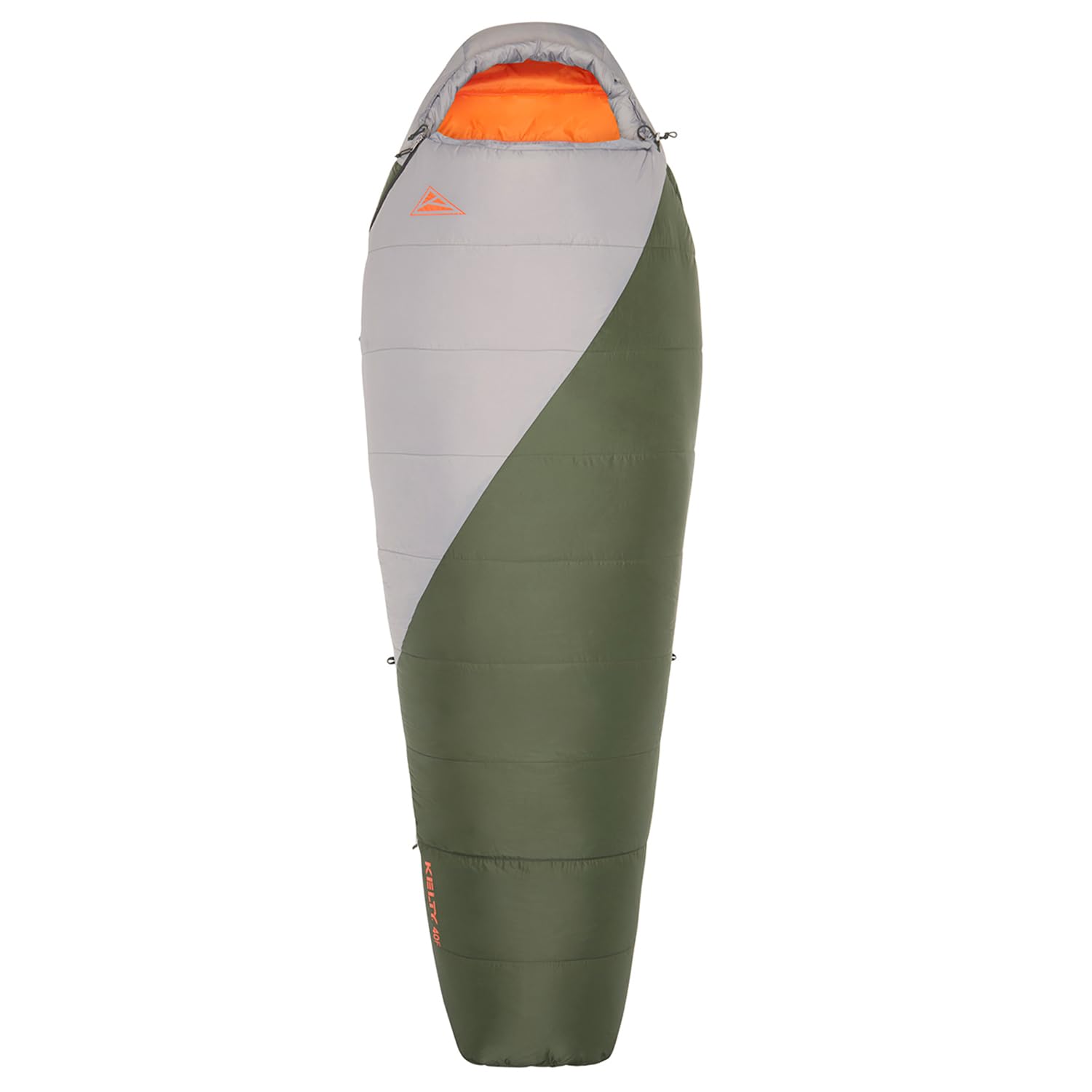
2. Kelty Cosmic Synthetic Fill 40 Degree Backpacking Sleeping Bag
A no-surprises synthetic from a brand that has been making reliable gear since the 50s.
Kelty’s Cirroloft synthetic fill provides reliable warmth even in cold, damp conditions — it maintains its loft to avoid the cold spots that cheaper bags develop. One owner reported that it kept them warm during a 36°F evening sleep on a spring backpacking trip in Pennsylvania, backing up the 40-degree limit rating. At 2 lbs 6 oz it is nearly identical in weight to the iClimb above, but its 78 x 31-inch dimensions give a slightly trimmer fit that is 4 inches shorter and 1.6 inches narrower than the iClimb’s 82 x 32.6 inches.
Comfort is the most-mentioned positive, and the soft taffeta liner feels nice against bare legs. The natural footbox gives your toes room to wiggle without feeling like a straightjacket. An integrated compression stuff sack is included, and Kelty uses PFC-free fabrics for anyone conscious about environmental chemistry. The catch is that the fit runs snug in the chest and shoulders for broader builds — one 5’11” / 220 lb owner found it tight around the upper body, so it is better suited for average to slim frames.
As buyers report, this is a good lightweight bag for the money with smooth zippers and durable material that packs small. It is not a winter bag (the 40-degree rating is honest), but for mild fall, spring, and summer backpacking it delivers exactly what a trusted outdoor brand promises — reliability without flash.
Synthetic value
- Cirroloft fill holds warmth in damp conditions
- Soft taffeta liner is comfortable
- Integrated compression sack works well
- PFC-free fabrics are a nice touch
40° limit
- Tight in chest and shoulders for bigger builds
- Trim fit may not suit wide-shouldered sleepers
reach for this if: You want a proven brand with a no-drama synthetic bag that works for average frames in mild weather.
look elsewhere if: You need a roomy cut or a bag that pushes below 35°F without a liner.
3. Naturehike Ultralight Backpacking RDS Down Sleeping Bag
The sub-1.5-pound down bag that disappears into your pack and saves your back.
At just 1.3 lbs this is the lightest bag on the list — a full 1.1 lbs lighter than the iClimb, which means you can stuff it into the bottom of a daypack and hardly feel it. The 650 fill power RDS-certified duck down (Responsible Down Standard, meaning it is sourced ethically) provides a lofty, cloud-like feel that owners describe as thick and wrapping. The packed size is a tiny 4.7 x 10.2 inches — about the volume of a large water bottle. One owner packed it for Red Cross shelter deployment and called it perfect for that.
The warmth is impressive for the weight, with 68 owners praising it specifically. The 52°F comfort rating means it is best for mild summer nights and warm three-season use; owners advise adding 15 to 20 degrees to the rating for realistic comfort if you sleep cold. The 20D400T nylon fabric is wear-resistant and water-repellent, and the YKK two-way zipper runs smoothly without snagging the liner. The bag can also unzip completely to lie flat as a quilt — a versatile option for hot nights.
One trade-off is that down loses its insulating power when wet, so this is a dry-weather bag. The compression sack is included, but storing it loosely (not compressed) between trips keeps the down fluffy. For anyone counting grams on a long thru-hike, this is the budget down bag that makes the premium ones feel overpriced.
reach for this if: You obsess over pack weight and want a genuine ultralight down bag that fits in a corner of your pack.
think twice if: You regularly camp in rain or high humidity — down fails when wet, and this bag has no synthetic backup.
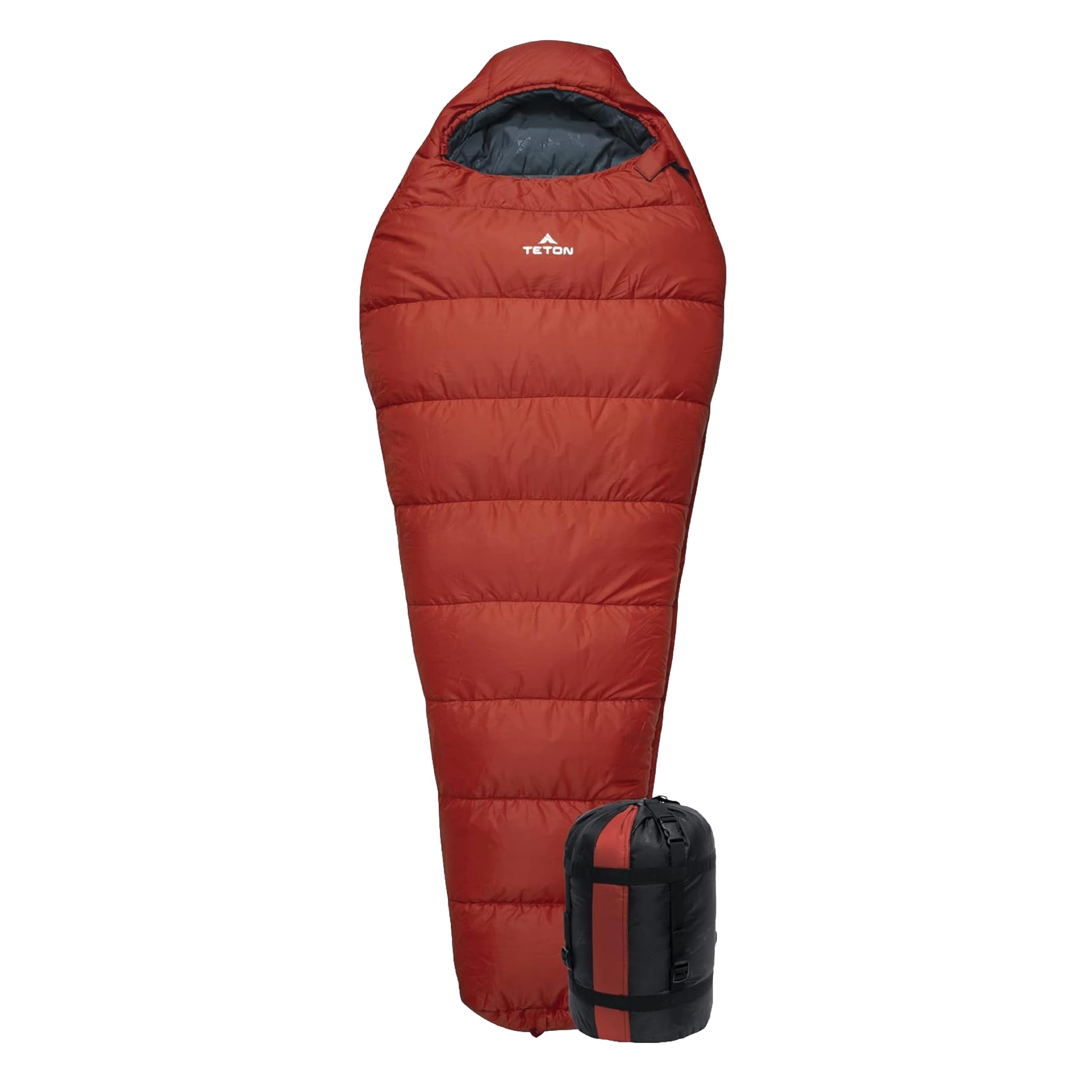
4. Teton LEEF Lightweight Mummy Sleeping Bag
A warm, durable mummy bag that handles real cold without the real price.
Warmth is the top praise here — 57 owners single it out. The Teton LEEF uses Micro Fibre fill in a roomier mummy cut that gives your shoulders and legs more space than traditional mummy bags. It comes in 0, 20, and 30-degree temperature ratings; the 30-degree version weighs 3.45 lbs and is built to handle sub-freezing conditions. One owner reported sleeping comfortably down to 10°F (with wind chill) after two years and 60-plus nights of use, and the bag held its shape without losing loft.
The compression sack reduces the bag to a manageable size for backpacking — though several owners note that repacking it is the most challenging part of owning it. The fit receives mixed feedback: some say it has room to spare, while others at 5’6″ found it a bit cramped. The 81 x 21-inch dimensions are narrow compared to the iClimb’s 82 x 32.6 width, so it is a true mummy profile that favors efficient heat retention over sprawling room.
The zipper quality draws some negative comments, so careful use is recommended. At 3.45 lbs it is the heavy end of backpacking territory — more suited for short hikes or bike-camping than ultra-long miles. But for the price, it is one of the best cold-weather values available, especially if you pick the 0 or 20-degree version for winter trips.
reach for this if: You need a true cold-weather bag on a budget and don’t mind a few extra ounces for real warmth.
look elsewhere if: Weight is your top priority — this is the heaviest bag on the list at 3.45 lbs.
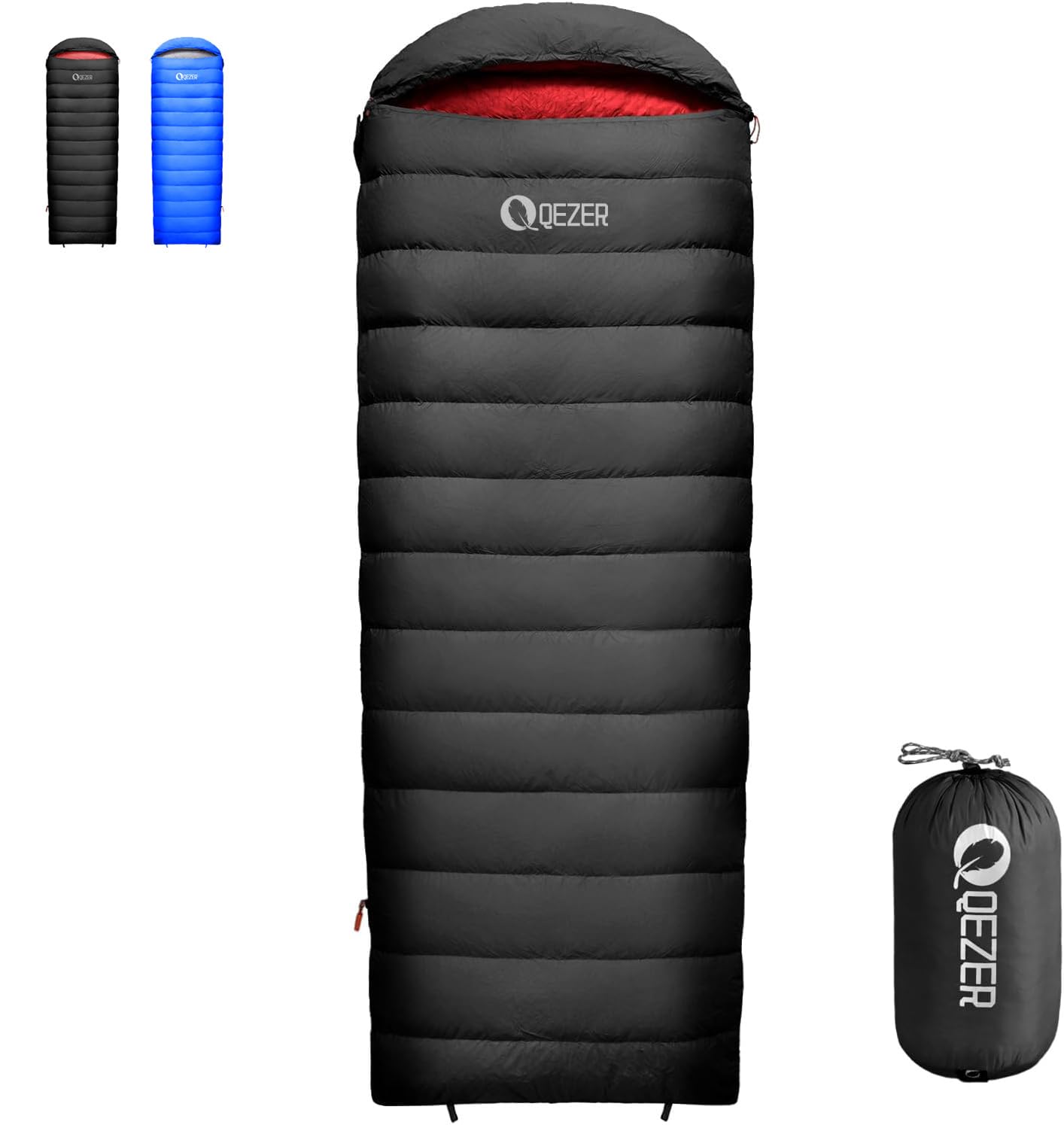
5. QEZER Down Sleeping Bag 600 Fill Power
A spacious semi-rectangular down bag that doesn’t sacrifice packability.
Most budget down bags force you into a tight mummy cut, but this QEZER uses a semi-rectangular shape that measures 30.71 x 82.68 inches — noticeably roomier than the iClimb’s 32.6-inch max width and much wider than the Teton LEEF’s 21 inches. The 600 fill power duck down filling (0.66 lbs of it) provides a comfort temperature of 59°F with a limit of 45°F, and owners mention it keeps them warm in 40-50 degree weather. The dual zipper design and added chest insulation help trap heat despite the looser fit.
At just 1.54 lbs it is only slightly heavier than the Naturehike (1.3 lbs) and packs down to 10.63 x 5.51 inches — nearly identical to the Naturehike despite the roomier shape. The 400T 20D high-density nylon is tear-resistant and moisture-proof. The bag can also be zipped together with a matching second bag to form a double sleeping bag for two. The zipper quality gets mixed feedback; some owners find it functional but not premium.
The biggest caveat is that the 45°F limit rating means it is a warm-weather bag — not for cold nights below 40°F. One scout owner noted the outer fabric is thin and picked up a small hole from a splinter, so treat the shell with care. For summer backpackers who hate feeling strapped into a mummy bag, this is the budget down option that gives you space to move.
reach for this if: You want a roomy down bag that packs nearly as small as a mummy and lets you sprawl.
think twice if: You camp in sub-40°F weather — this bag is built for warm nights only.
6. Klymit Wild Aspen Lightweight Mummy Sleeping Bag

The true zero-degree synthetic that keeps you alive in freezing conditions.
When the forecast hits single digits, this is the budget bag that answers. The Klymit Wild Aspen is rated to 0°F limit and uses dual layers of lightweight Thermapro synthetic fill inside a water- and abrasion-resistant micro polyester shell. One owner reported comfortable sleep at 28°F with a 4.5R pad and noted the draft tubes effectively blocked cold air. It is the heaviest bag on the list at 3.7 lbs, but that weight is the price of genuine cold-weather protection — it is 1.3 lbs heavier than the iClimb and over 2 lbs heavier than the Naturehike.
The fully adjustable deep pocket hood wraps around your head and the zipper draft tube seals out drafts. The included compression stuff sack reduces it to 17 x 9 x 9 inches, which is bulky but manageable for winter packs. The warmth earns 33 positive mentions, but the size draws sharp mixed feedback — the regular length runs about 70 inches, which means it is 12 inches shorter than the iClimb and genuinely too short for anyone over 5’9″. One 5’9″ owner called it unwearable for their height. The zipper also catches occasionally, so it requires patience.
The catch is honest: this bag is phenomenal for shorter hikers who need extreme warmth on a budget, but tall campers will find it cramped. It is a niche pick, but within that niche it outperforms bags costing twice as much.
reach for this if: You are under 5’9″ and need a genuine 0°F bag that won’t break your savings.
look elsewhere if: You are taller than 5’9″ — the regular size simply does not fit.
7. TETON Sports ALTOS 20 Degree Sleeping Bag

A roomy mummy that splits the difference between comfort and packability.
TETON Sports redesigned the ALTOS with extra shoulder and leg room and a built-out footbox — it is 84 x 32 inches, making it 2 inches longer and 2 inches narrower than the iClimb but much more spacious in the shoulders than traditional mummies. The synthetic fill is lofty and compressible, and the bag packs down to about two-thirds the size of typical 20°F bags, according to owners. At 3.5 lbs it is heavier than many backpackers prefer, but it fits easily into a 55L internal frame pack.
The warmth-to-weight ratio is praised; one owner used it on the Pacific Crest Trail and called it affordable and cozy. Another noted it dried well after being soaked in a typhoon — a real advantage of synthetic fill. The 20-degree limit rating means it is comfortable for spring and fall conditions but gets too hot above 30°F. A few owners mention that warmth can leak out when moving around at night, so pairing with a good sleeping pad is essential.
The compression sack uses heavy-duty straps to cinch it tight. The fabric feels nice on the skin, and an internal pocket holds a phone. For hikers who want a roomy mummy that can handle a wide range of cool-weather trips without the drama of down, the ALTOS is a solid mid-range choice.
reach for this if: You want a roomier mummy cut that still compresses well for backpacking in cool conditions.
think twice if: You need a bag under 3 lbs — this one stays at 3.5 lbs.
8. QEZER Down Sleeping Bag 0°F 600 Fill Power

Down warmth at zero degrees without the usual hundred-dollar premium.
This QEZER brings 600 fill power down to the 0°F temperature range — a rarity in the budget space. At 84.65 x 31.89 inches it is almost exactly as long as the iClimb (82 inches) and slightly narrower in width, but the trapezoidal footbox gives your feet plenty of room to move. The packed size is 14.96 x 7.48 inches, which is impressively compact for a 0°F bag. One owner used it in brutal Colorado snow and freezing rain at 8,000+ feet and stayed warm in single-digit temperatures.
The 400T tear-resistant nylon fabric prevents down from leaking out, and the thick insulated zipper flap stops snags. The zipper pull has a clever design that doesn’t catch on the liner. Two bags can be zipped together for a double sleeping bag. An inner mesh storage bag is included, though one owner reported it ripped on first use — the main compression sack is built tougher with nice buckles. The weight of 3.64 lbs is heavy for backpacking, but reasonable for winter trips where warmth is the priority.
The catch is that this is a down bag in a cold-weather role — if it gets wet, it loses its insulation power. For dry, cold winter camping it is exceptional value; for wet winter conditions, the Klymit synthetic would be safer. The snug fit works well for average builds; a 6’1″ owner found it comfortable without pinning their arms.
reach for this if: You need a true 0°F down bag for dry winter backpacking and want to keep costs down.
think twice if: You camp in wet, snowy conditions — synthetic is safer when moisture is guaranteed.
9. Kelty Cosmic 20 Down Mummy Sleeping Bag

Kelty’s do-it-all down bag that earned its fan-favorite status honestly.
The Cosmic 20 Down is the most popular bag in Kelty’s lineup for good reason. It uses 550 fill Kelty DriDown — a treated down that resists moisture better than standard down — inside trapezoidal baffles that improve thermal efficiency. At 3 lbs it is a full 1.7 lbs heavier than the Naturehike down but rated for 20°F limit, compared to Naturehike’s 52°F comfort. One owner’s daughter took it on a Virginia backpacking trip in April and stayed warm in 16°F weather — a real-world test that matches the 20-degree limit.
The dual zippers with an anti-snag draft tube allow you to vent from the bottom when you get too warm. The zippered internal stash pocket fits a phone or headlamp. The recycled shell and liner fabrics plus PFAS-free DWR (a water-repellent coating without the forever chemicals) make this the most environmentally conscious bag on the list. The softness and zipper quality both earn high marks. The stuff sack works well, and the bag compresses to a reasonable 8.3 x 7.8 inches.
A minority note that 3 lbs is heavier than expected for a down bag, especially compared to the Naturehike’s 1.3 lbs, but the payoff is the ability to handle temperatures down to 20°F with confidence. For backpackers who want a single bag that covers spring, fall, and winter trips and are willing to carry a few extra ounces for real warmth, this is the premium budget pick that owners keep buying.
reach for this if: You want a versatile down bag that handles 20°F nights and carries Kelty’s quality reputation.
think twice if: You are counting every gram for ultralight summer trips — the Naturehike or QEZER 600FP are lighter and cheaper.
Understanding the Specs
Fill Power (for Down Bags)
This number (550, 600, 650) measures how many cubic inches one ounce of down can loft. A higher number means more warmth per ounce, so a 650-fill bag can be lighter than a 550-fill bag at the same warmth level. Lower fill power (550) is heavier but often more durable and less expensive. For budget bags, 550-650 fill power is the balance — good warmth without the premium price of 800-fill down used in ultralight specialty bags.
Temperature Rating — Comfort vs. Limit
Two numbers appear on every bag. The comfort temperature is where a cold sleeper can sleep comfortably. The limit temperature is survivable but chilly. Budget bags sometimes advertise the limit temperature because it looks better. If you sleep cold, always use the comfort rating when deciding — add 10-15°F to the limit rating for a realistic comfort estimate. A bag rated 20°F limit is usually comfortable down to about 30-35°F for most people.
FAQ
Can I use a summer sleeping bag for cold-weather backpacking?
What is the difference between a mummy bag and a rectangular bag for backpacking?
How do I clean a down sleeping bag?
How long does a budget sleeping bag last for backpacking?
Can I use a sleeping bag without a sleeping pad?
Is a 40-degree bag warm enough for spring backpacking?
What is a draft collar and why do I need one?
How small should a sleeping bag pack for backpacking?
Can I use a budget bag for winter camping?
What is the best way to store a sleeping bag between trips?
Final Thoughts: The Verdict
If you want one dependable pick, the budget sleeping bag for backpacking winner is the iClimb 3M Thinsulate because it delivers the best balance of warmth, weight, and synthetic reliability without needing to baby it. If you want the absolute lightest pack weight for summer trips, grab the Naturehike Ultralight Down. And for cold-weather backpacking where every degree counts, the Klymit Wild Aspen (for shorter hikers) or the {“@context”: “https://schema.org”, “@graph”: [{“@type”: “ItemList”, “name”: “9 Best Budget Sleeping Bag For Backpacking”, “url”: “https://fitlyfast.com/best-budget-sleeping-bag-for-backpacking/”, “numberOfItems”: 9, “itemListElement”: [{“@type”: “ListItem”, “position”: 1, “name”: “iClimb 3M Thinsulate Insulation Mummy Sleeping Bag”, “url”: “https://fitlyfast.com/best-budget-sleeping-bag-for-backpacking/#product-1”}, {“@type”: “ListItem”, “position”: 2, “name”: “Kelty Cosmic Synthetic Fill 40 Degree Backpacking Sleeping Bag”, “url”: “https://fitlyfast.com/best-budget-sleeping-bag-for-backpacking/#product-2”}, {“@type”: “ListItem”, “position”: 3, “name”: “Naturehike Ultralight Backpacking RDS Down Sleeping Bag”, “url”: “https://fitlyfast.com/best-budget-sleeping-bag-for-backpacking/#product-3”}, {“@type”: “ListItem”, “position”: 4, “name”: “Teton LEEF Lightweight Mummy Sleeping Bag”, “url”: “https://fitlyfast.com/best-budget-sleeping-bag-for-backpacking/#product-4”}, {“@type”: “ListItem”, “position”: 5, “name”: “QEZER Down Sleeping Bag 600 Fill Power”, “url”: “https://fitlyfast.com/best-budget-sleeping-bag-for-backpacking/#product-5”}, {“@type”: “ListItem”, “position”: 6, “name”: “Klymit Wild Aspen Lightweight Mummy Sleeping Bag”, “url”: “https://fitlyfast.com/best-budget-sleeping-bag-for-backpacking/#product-6”}, {“@type”: “ListItem”, “position”: 7, “name”: “TETON Sports ALTOS 20 Degree Sleeping Bag”, “url”: “https://fitlyfast.com/best-budget-sleeping-bag-for-backpacking/#product-7”}, {“@type”: “ListItem”, “position”: 8, “name”: “QEZER Down Sleeping Bag 0°F 600 Fill Power”, “url”: “https://fitlyfast.com/best-budget-sleeping-bag-for-backpacking/#product-8”}, {“@type”: “ListItem”, “position”: 9, “name”: “Kelty Cosmic 20 Down Mummy Sleeping Bag”, “url”: “https://fitlyfast.com/best-budget-sleeping-bag-for-backpacking/#product-9”}]}, {“@type”: “Product”, “position”: 1, “name”: “iClimb 3M Thinsulate Insulation Mummy Sleeping Bag”, “image”: “https://m.media-amazon.com/images/I/61mZExIpKDL.jpg”, “brand”: {“@type”: “Brand”, “name”: “iClimb”}, “url”: “https://www.amazon.com/dp/B09ZQQWLYM/?tag=fitlyfast00-20”, “offers”: {“@type”: “Offer”, “url”: “https://www.amazon.com/dp/B09ZQQWLYM/?tag=fitlyfast00-20”}}, {“@type”: “Product”, “position”: 2, “name”: “Kelty Cosmic Synthetic Fill 40 Degree Backpacking Sleeping Bag”, “image”: “https://m.media-amazon.com/images/I/51XWnnV7C7L.jpg”, “brand”: {“@type”: “Brand”, “name”: “Kelty”}, “url”: “https://www.amazon.com/dp/B082P5VGGT/?tag=fitlyfast00-20”, “offers”: {“@type”: “Offer”, “url”: “https://www.amazon.com/dp/B082P5VGGT/?tag=fitlyfast00-20”}}, {“@type”: “Product”, “position”: 3, “name”: “Naturehike Ultralight Backpacking RDS Down Sleeping Bag”, “image”: “https://m.media-amazon.com/images/I/71GN3c9d62L.jpg”, “brand”: {“@type”: “Brand”, “name”: “Naturehike”}, “url”: “https://www.amazon.com/dp/B0F4CD1T13/?tag=fitlyfast00-20”, “offers”: {“@type”: “Offer”, “url”: “https://www.amazon.com/dp/B0F4CD1T13/?tag=fitlyfast00-20”}}, {“@type”: “Product”, “position”: 4, “name”: “Teton LEEF Lightweight Mummy Sleeping Bag”, “image”: “https://m.media-amazon.com/images/I/61rZdgz-jEL.jpg”, “brand”: {“@type”: “Brand”, “name”: “Teton”}, “url”: “https://www.amazon.com/dp/B09LMMMLP5/?tag=fitlyfast00-20”, “offers”: {“@type”: “Offer”, “url”: “https://www.amazon.com/dp/B09LMMMLP5/?tag=fitlyfast00-20”}}, {“@type”: “Product”, “position”: 5, “name”: “QEZER Down Sleeping Bag 600 Fill Power”, “image”: “https://m.media-amazon.com/images/I/61Y119k9U+L.jpg”, “brand”: {“@type”: “Brand”, “name”: “QEZER”}, “url”: “https://www.amazon.com/dp/B0DZCQ432W/?tag=fitlyfast00-20”, “offers”: {“@type”: “Offer”, “url”: “https://www.amazon.com/dp/B0DZCQ432W/?tag=fitlyfast00-20”}}, {“@type”: “Product”, “position”: 6, “name”: “Klymit Wild Aspen Lightweight Mummy Sleeping Bag”, “image”: “https://media.amazon.com/images/I/71ITEupcFzL.jpg”, “brand”: {“@type”: “Brand”, “name”: “Klymit”}, “url”: “https://www.amazon.com/dp/B084R5X1Z5/?tag=fitlyfast00-20”, “offers”: {“@type”: “Offer”, “url”: “https://www.amazon.com/dp/B084R5X1Z5/?tag=fitlyfast00-20”}}, {“@type”: “Product”, “position”: 7, “name”: “TETON Sports ALTOS 20 Degree Sleeping Bag”, “image”: “https://media.amazon.com/images/I/51gjm7aMDkL.jpg”, “brand”: {“@type”: “Brand”, “name”: “TETON”}, “url”: “https://www.amazon.com/dp/B075JD2WGZ/?tag=fitlyfast00-20”, “offers”: {“@type”: “Offer”, “url”: “https://www.amazon.com/dp/B075JD2WGZ/?tag=fitlyfast00-20”}}, {“@type”: “Product”, “position”: 8, “name”: “QEZER Down Sleeping Bag 0°F 600 Fill Power”, “image”: “https://media.amazon.com/images/I/61nF4ajwcrL.jpg”, “brand”: {“@type”: “Brand”, “name”: “QEZER”}, “url”: “https://www.amazon.com/dp/B0B5QSGSZ2/?tag=fitlyfast00-20”, “offers”: {“@type”: “Offer”, “url”: “https://www.amazon.com/dp/B0B5QSGSZ2/?tag=fitlyfast00-20”}}, {“@type”: “Product”, “position”: 9, “name”: “Kelty Cosmic 20 Down Mummy Sleeping Bag”, “image”: “https://media.amazon.com/images/I/61EMiPuNqzS.jpg”, “brand”: {“@type”: “Brand”, “name”: “Kelty”}, “url”: “https://www.amazon.com/dp/B08MJLN8PJ/?tag=fitlyfast00-20”, “offers”: {“@type”: “Offer”, “url”: “https://www.amazon.com/dp/B08MJLN8PJ/?tag=fitlyfast00-20”}}, {“@type”: “FAQPage”, “mainEntity”: [{“@type”: “Question”, “name”: “Can I use a summer sleeping bag for cold-weather backpacking?”, “acceptedAnswer”: {“@type”: “Answer”, “text”: “Only if you combine it with a liner, warm clothes, and a high-R-value pad, but it is not recommended for temperatures below its comfort rating. A bag rated for 50°F comfort will leave you shivering at 35°F. It is safer to match the bag’s comfort rating to the coldest night you expect on your trip.”}}, {“@type”: “Question”, “name”: “What is the difference between a mummy bag and a rectangular bag for backpacking?”, “acceptedAnswer”: {“@type”: “Answer”, “text”: “A mummy bag is tapered to follow your body shape — it saves weight and retains heat better because there is less air to warm. A rectangular bag is more comfortable for side sleepers and people who move around, but it is heavier and harder to keep warm. For backpacking, mummy bags are almost always the better choice because every ounce and every degree of warmth counts.”}}, {“@type”: “Question”, “name”: “How do I clean a down sleeping bag?”, “acceptedAnswer”: {“@type”: “Answer”, “text”: “Use a front-loading washing machine on a delicate cycle with cold water and a special down cleaner — never regular detergent, which strips the natural oils. Dry it on low heat with clean tennis balls in the dryer to break up clumps. Spot-cleaning and airing out between trips is better, since frequent washing reduces loft over time.”}}, {“@type”: “Question”, “name”: “How long does a budget sleeping bag last for backpacking?”, “acceptedAnswer”: {“@type”: “Answer”, “text”: “With proper care — storing it loosely (not compressed), keeping it dry, and cleaning it rarely — a budget synthetic bag can last 30-50 trips before losing noticeable loft. A down bag can last 50-80 trips if kept dry. The zipper and shell fabric usually wear out before the insulation fails, so handle the zipper gently and patch small holes early.”}}, {“@type”: “Question”, “name”: “Can I use a sleeping bag without a sleeping pad?”, “acceptedAnswer”: {“@type”: “Answer”, “text”: “You can, but you will lose a lot of heat through the ground — a sleeping pad provides insulation (measured in R-value) that prevents the cold earth from sucking your body heat. For backpacking, a pad with an R-value of at least 2 is essential for mild weather and 4+ for cold weather. The bag’s bottom insulation compresses under your weight and provides little warmth without a pad.”}}, {“@type”: “Question”, “name”: “Is a 40-degree bag warm enough for spring backpacking?”, “acceptedAnswer”: {“@type”: “Answer”, “text”: “It depends on your sleeping style and the specific night. A 40-degree limit bag is usually comfortable down to about 50°F for most people. For spring nights that can dip into the 30s, a 20-degree bag or a 40-degree bag with a liner and thermal base layers is safer. If you sleep warm, a 40-degree bag stretched with extra clothing can work for mild spring trips.”}}, {“@type”: “Question”, “name”: “What is a draft collar and why do I need one?”, “acceptedAnswer”: {“@type”: “Answer”, “text”: “A draft collar is a cinchable ring of insulation around the neck area that prevents warm air from escaping through the opening when you move at night. Without one, heat can rush out every time you shift, leaving you cold. Budget bags that include a draft collar (like the iClimb) perform significantly better at their temperature rating than those that skip it.”}}, {“@type”: “Question”, “name”: “How small should a sleeping bag pack for backpacking?”, “acceptedAnswer”: {“@type”: “Answer”, “text”: “A good backpacking bag should compress to about the size of a football — roughly 8-10 inches in diameter and 10-12 inches long. This size fits comfortably in a 40-60 liter pack alongside your tent and food. Bags that pack to 15 inches or more are better suited for car camping. The down bags on this list (Naturehike, QEZER, Kelty Cosmic Down) all hit the 8-10 inch target.”}}, {“@type”: “Question”, “name”: “Can I use a budget bag for winter camping?”, “acceptedAnswer”: {“@type”: “Answer”, “text”: “You can use a budget 0°F bag (like the Klymit Wild Aspen or QEZER 0°F down) for winter camping, but you must pair it with an appropriate pad (R-value of 4+), warm base layers, and a bivvy or tent that blocks the wind. Budget bags are less efficient than premium winter bags, so plan to add a liner or extra clothing if the forecast hits below the bag’s comfort rating.”}}, {“@type”: “Question”, “name”: “What is the best way to store a sleeping bag between trips?”, “acceptedAnswer”: {“@type”: “Answer”, “text”: “Always store your bag loosely in a large cotton or mesh storage sack, never compressed in the stuff sack. Compression damages the loft of both down and synthetic fills over time. Hang it in a closet or lay it flat in the storage bag. For down bags, keep it in a dry space — moisture is the enemy of loft and can cause mildew.”}}]}]}