
Our readers keep the lights on and the weekend projects moving. As an Amazon Associate, I earn from qualifying purchases.
Specs are compiled from manufacturer listings and verified buyer reviews and can change over time — please confirm the key details on the product page before buying.
You do not need to spend a fortune to get a camera that takes great photos. The real secret to a budget digital camera is not what it lacks — it is how well it handles the things you actually use every day, like zooming in on a distant sign or capturing a kid’s soccer game. The trick is knowing which specs separate a genuinely useful camera from a frustrating toy.
I’m Rikta — the founder and writer behind FitlyFast. This guide is built by comparing the manufacturers’ published specifications and the patterns across verified customer reviews, so you get each pick’s real strengths and trade-offs instead of marketing spin.
After digging through the specs and thousands of owner experiences, these five cameras represent the smartest ways to spend your money on a budget digital camera without sacrificing image quality or versatility.
Our Picks at a Glance

How To Choose The Best Budget Digital Camera
Picking the right entry-level camera means focusing on the specs that actually change your photos, not the marketing numbers. Here is what to prioritize in this price range.
Optical Zoom vs. Digital Zoom
Optical zoom uses the lens to magnify the image without losing quality. Digital zoom simply crops and enlarges the picture, which makes it grainy. In this price bracket, a higher optical zoom count — from 4x up to 52x — is the single biggest feature separating a versatile camera from a basic snapshot tool.
Sensor and Image Stabilization
A 16-megapixel sensor is the standard here, but the real differentiator is Optical Image Stabilization (OIS). OIS physically shifts the lens to counteract shaky hands, which matters a lot when you are zoomed in. Without it, distant shots come out blurry.
Battery Type: AA vs. Lithium-Ion
Cameras that run on standard AA batteries are convenient because you can buy replacements anywhere, but they drain faster and add weight. Lithium-ion batteries hold a charge longer and are rechargeable, but they require a wall outlet or power bank to top up. Your choice depends on if you want instant availability or longer runtime between charges.
Quick Comparison
In‑Depth Reviews
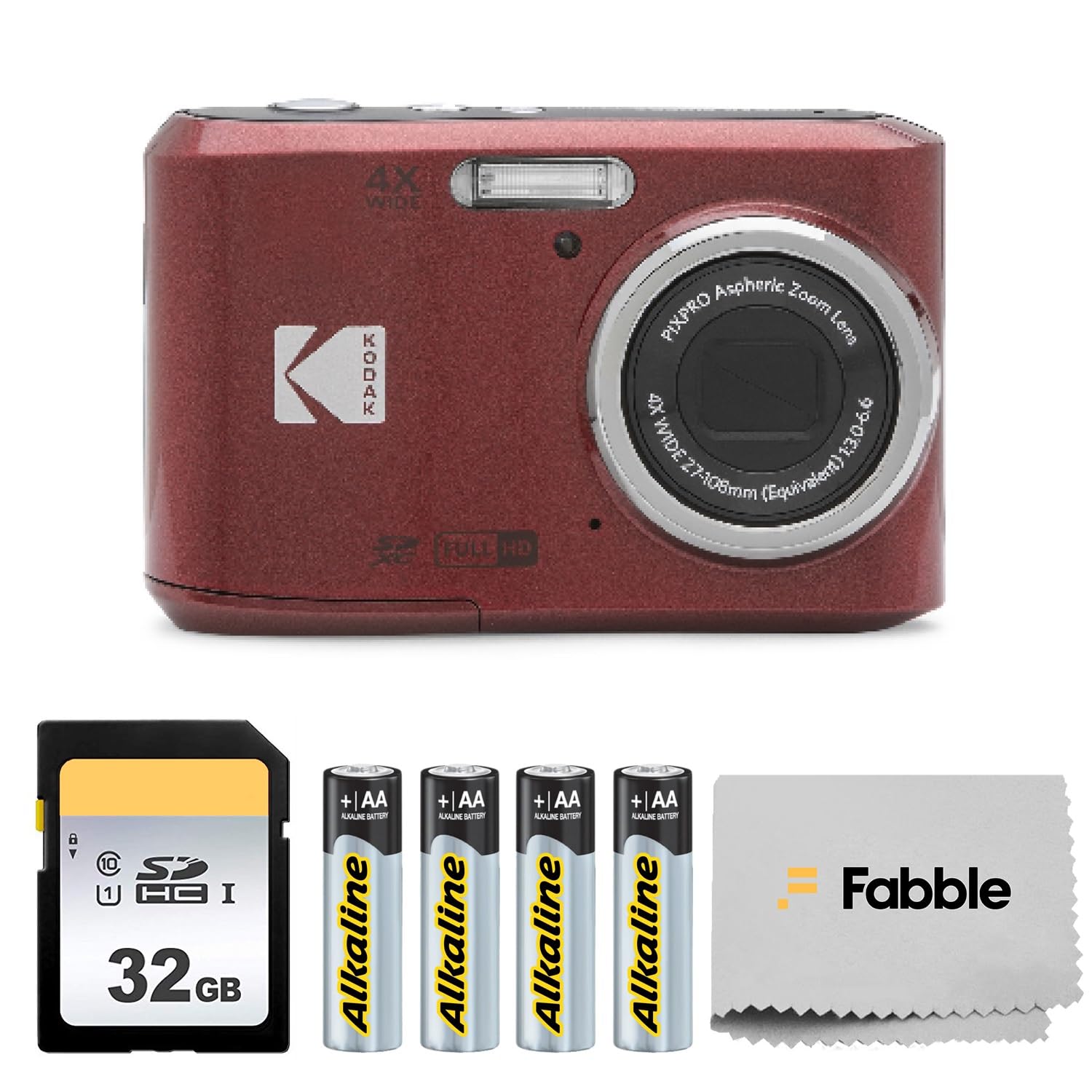
1. KODAK PIXPRO AZ528 16MP Digital Camera
The 4x optical zoom (the lens magnifies the scene without losing quality) and the 16-megapixel sensor produce “sharp daylight photos” with “simple menus,” as customers note.
This is the lowest-cost ticket into the dedicated-camera world, and it earns its place with surprising reliability for the price. It runs on AA batteries, which is a double-edged sword: you can find replacements anywhere, but a set drains quicker than a lithium-ion pack. The bundle sweetens the deal with 32GB SD card, four AA batteries, and a lens cloth, so nothing else is needed to start shooting.
Where it falls short is low-light performance — the small sensor struggles after sunset, and the 2.7-inch LCD screen is small compared to the 3-inch screens on the AZ255 and AZ528. The 4x zoom is the shortest in this lineup; the AZ255’s 25x zoom is more than six times more reach. Still, for a beginner or a child who just wants a fun camera that does not rely on a phone, this is a solid entry.
The Upside
- Everything included in the box — 32GB SD card, AA batteries, wrist strap, cleaning cloth
- Lightweight and pocket-sized for easy everyday carry
- Simple menus make it truly point-and-shoot for absolute beginners
The Trade-offs
- Only 4x optical zoom — far less reach than the 25x on the AZ255
- AA batteries drain faster than lithium-ion; low-light image quality is weak
Ideal for: young kids, first-time camera owners, or anyone wanting a no-fuss backup camera for daytime use.
Not for: evening events, indoor sports, or anyone who needs to zoom in on distant subjects.
2. KODAK PIXPRO AZ255 16MP Digital Camera
You get a 25x optical zoom (the lens magnifies the image without losing quality) that brings faraway subjects into clear view — something the FZ55’s 5x zoom cannot touch.
This camera lets you capture a sweeping landscape and then zoom straight into a bird on a distant branch, all without swapping lenses. The 16-megapixel CMOS sensor (a type of image chip) keeps daytime shots sharp, and the Optical Image Stabilization (OIS — a mechanism that shifts the lens to counter shaky hands) helps those long-zoom photos stay crisp. Reviewers confirm call it “awesome for the price” and say it “takes pictures of the moon.”
The trade-off is the battery system. It runs on four AA batteries, which is convenient for instant refills anywhere, but runtime is shorter than a dedicated lithium-ion pack. The 3-inch LCD screen is 11% larger than the 2.7-inch display on the FZ45, which makes composing shots noticeably easier. If you want the most zoom for your money in this price tier, this is the clear winner.
What Makes It Stand Out
- Massive 25x optical zoom reaches subjects other budget cameras cannot touch
- 24mm wide-angle lens is 17% wider than the FZ55’s 28mm, capturing more in every frame
- Optical Image Stabilization keeps zoomed shots usable without a tripod
Who Should Think Twice
- AA batteries run down faster than lithium-ion packs during heavy use
- Picture quality and reliability reviews are mixed — some units have inconsistent performance
Reach for this if: you want to photograph distant wildlife, sports, or the moon without spending on a DSLR.
Look elsewhere if: you need reliable all-day battery life on a single charge and prefer a rechargeable pack.
3. Canon PowerShot ELPH 360 HS
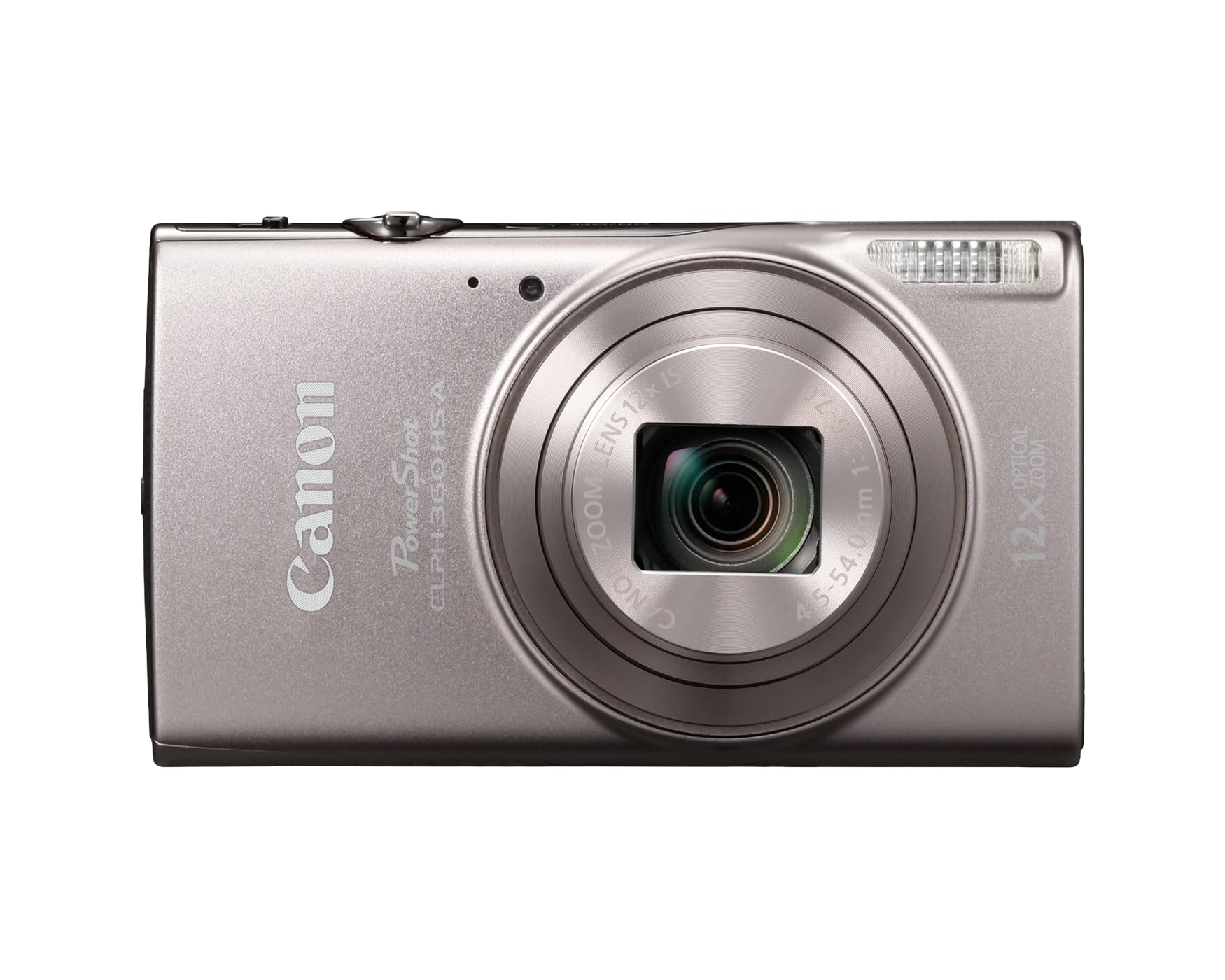
The 20.2-megapixel sensor (the chip that captures light) paired with Canon’s DIGIC 4+ Image Processor (a dedicated computer chip for handling images) delivers noticeably richer photos than the 16-megapixel competitors, especially in dim indoor light.
The 12x optical zoom with Optical Image Stabilizer gives you solid reach — not as far as the AZ255’s 25x, but enough for concerts and school events — and the 3.0-inch LCD makes framing easy. Buyers report it takes “good pictures in sunlight and in poorly lit basements,” and many call it “the perfect affordable camera.”
The catch is the battery. The lithium-ion pack is rated for around 1 hour of continuous use, so you will want a spare for a full day out. It also uses microSD cards rather than standard SD, which is fine for data transfer but easy to overlook if you already own full-size memory cards. The built-in Wi-Fi and NFC (near-field communication, a tap-to-connect feature) make sharing photos to your phone fast, a feature the cheaper Kodak models lack.
Why It Wins Fans
- 20.2MP sensor and DIGIC 4+ processor produce sharper, truer colors than 16MP rivals
- 12x optical zoom with image stabilization handles distant subjects well
- Built-in Wi-Fi and NFC for easy photo sharing straight from the camera
What Holds It Back
- Battery life is short — roughly 1 hour of shooting before needing a recharge
- Uses microSD cards, not the more common full-size SD cards
Best for: anyone who prioritizes image quality and compact carrying over extreme zoom reach.
Not ideal if: you need all-day battery without packing a spare or you rely on full-size SD cards.
Understanding the Specs
Optical Zoom (4x to 52x)
This is the most important number on a budget digital camera. Optical zoom uses the lens to magnify the scene without losing image quality — unlike digital zoom, which simply crops the photo and makes it blurry. A 4x zoom is fine for tabletop shots and family portraits, while a 25x or 52x zoom lets you photograph wildlife, sports players, or the moon from a hundred yards away. In this price range, the zoom range is the single biggest factor in what you can actually shoot.
Image Stabilization (OIS)
When you zoom in, every tiny hand shake becomes a big blur. Optical Image Stabilization (OIS) moves a lens element to counteract that motion, so a handheld shot at full zoom stays sharp. Without OIS, you need a tripod or a very steady surface once you go past 10x zoom. It is a spec you feel the moment you try to capture a distant bird or a concert performer.
FAQ
How much optical zoom do I really need in a budget digital camera?
Are AA battery cameras better than lithium-ion battery cameras?
Will a budget digital camera take better photos than my smartphone?
What does the megapixel count actually mean for a cheap camera?
Do these cameras record decent video?
What memory card should I buy for a budget digital camera?
Is optical image stabilization (OIS) necessary?
Which budget digital camera is best for a child or teenager?
Final Thoughts: The Verdict
For most people, the budget digital camera winner is the KODAK PIXPRO AZ255 because it delivers a massive 25x optical zoom and a 24mm wide-angle lens at a price that undercuts anything comparable. If you want better image quality in a pocketable body, grab the Canon PowerShot ELPH 360 HS. And for maximum reach into wildlife and sports, the KODAK PIXPRO AZ528 with its 52x zoom is the one to reach for.
How We Picked
We do not accept paid placement. Every pick is matched to a real buyer and a real use-case; we do not hands-on test units.
Sources & Methodology
Specifications: manufacturer listings and product documentation. Review insights: verified customer reviews, as of July 2026. Pricing: not shown on this page (it changes often); check the current price via the retailer link.
As an Amazon Associate, FitlyFast earns from qualifying purchases. This does not affect which products we feature.