
Our readers keep the lights on and the weekend projects moving. As an Amazon Associate, I earn from qualifying purchases.
Specs are compiled from manufacturer listings and verified buyer reviews and can change over time — please confirm the key details on the product page before buying.
Brown rice is the stubborn cousin of white rice — it takes longer, scorches easily, and often lands on the plate undercooked or gummy. A machine purpose-built for whole grains solves that by holding a steady, precise temperature long enough to get every kernel tender without burning the bottom. That is exactly what this guide covers.
I’m Rikta — the founder and writer behind FitlyFast. This guide is built by comparing the manufacturers’ published specifications and the patterns across verified customer reviews, so you get each pick’s real strengths and trade-offs instead of marketing spin.
The key is fuzzy logic (a small computer that senses temperature and moisture inside the pot) — it adjusts heat automatically so brown rice gets the long, gentle simmer it needs. Here is your honest, research-backed look at the best brown rice cooker for your kitchen and your budget.
Our Picks at a Glance


How To Choose The Best Brown Rice Cooker
Not every rice cooker handles brown rice well. The bran layer on brown rice needs a longer, more controlled simmer than white rice. Here are the specs that separate a keeper from a disappointment.
Fuzzy Logic Makes the Real Difference
A basic cooker runs at full power until a thermostat clicks it off — that scorches brown rice every time. Fuzzy logic (a small computer in the machine) senses the temperature and moisture inside the pot. It adjusts the heat up and down automatically, so the rice stays at a gentle simmer for the full 45–60 minutes brown rice needs. The result is fluffy, never burnt.
Ceramic vs. Standard Non-Stick Coating
Standard non-stick pots work fine at first, but they can scratch and peel over time. A ceramic (or ceramic-coated) inner pot is harder, more heat-stable, and free of PTFE and PFOA (two chemicals often used in older non-stick coatings). It cleans up just as easily, and it resists the wear that comes from frequent brown-rice cooking cycles.
Capacity: Match It to Your Household
Cookers are measured by cups of uncooked rice. A 3.5-cup machine is comfortable for one or two people (and fits on a small counter). A 5.5- to 6-cup model is the balance for a family of four with leftovers. Go up to 10 or 20 cups if you batch-cook for the week or entertain often.
Quick Comparison
| Model | Best For | Capacity | Key Feature | Pot Material | Amazon |
|---|---|---|---|---|---|
| Cosori 10 Cup | Best Overall | 10 cups | 18-in-1 / Fuzzy Logic | Ceramic Non-Stick | Amazon |
| Martha Stewart 8 Cup | Everyday Family Cooking | 8 cups | Fuzzy Logic / 9 Modes | Ceramic Non-Stick | Amazon |
| COMFEE’ 12 Cup | Value with Versatility | 6 cups | 11 Presets / Fuzzy Logic | Non-Stick | Amazon |
| TOSHIBA 5.5 Cup | Precision Cooking | 5.5 cups | 15 Functions / 3D Heating | Ceramic Non-Stick | Amazon |
| Yum Asia Kumo | Low-Carb / Healthy | 5.5 cups | YumCarb / 5 Rice Functions | Ceramic Coated | Amazon |
| Aroma 20-Cup (ARC-1290C) | Large Gatherings | 20 cups | 9 Modes / Lift-Out Pot | Ceramic Non-Stick | Amazon |
| Aroma 12-Cup (ARC-1296C) | Mid-Size Household | 2.75 quarts | 9 Modes / Rapid Heat | Ceramic Non-Stick | Amazon |
| Narcissus 3.5 Cup | Small Kitchen / Solo Cook | 3.5 cups | Compact / Delay Start | Non-Stick | Amazon |
In‑Depth Reviews
1. Cosori Rice Cooker 10 Cup
Our pick — over 4.5★ from 5,500+ verified ratings; the strongest balance of quality and price.
The machine that makes perfect brown rice feel like a push-button accident.
The Cosori earns the top spot because it gives you fluffy brown rice with zero guesswork. It uses fuzzy logic (a smart chip that reads the temperature and moisture in the pot and adjusts the heat accordingly) so every batch cooks evenly. You get 18 cooking modes, including dedicated settings for brown and white rice, plus texture options so you can dial in exactly how firm or soft you like the grains. The ceramic non-stick inner pot is dishwasher-safe, which is the kind of detail that wins people over. The thing everyone raves about is the performance — it simply does not miss.
At 1000 watts, the Quick Rice mode handles white rice fast, but the brown rice cycle runs on its own patient schedule. The 24-hour keep-warm and delay timer mean you can load it in the morning and come home to a hot, ready pot. Buyers report it as “great value” and simpler than the pricier Cuckoo brand, and that balance of price and reliability is why nearly six thousand owners give it a 4.8-star average. The only catch: there is no dedicated on/off switch — you unplug it to power down — which catches some people off guard at first. If that physical switch is a deal-breaker, you might prefer the simpler Narcissus, though you lose the fuzzy logic.
Three thousand six hundred thumbs up: The performance and rice quality together draw the most praise — over 560 owners single out those two traits, and the consensus is that every batch comes out fluffy and even.
The honest trade-off: The lack of a power button is a minor quirk. If you deeply care about a physical off switch, this will annoy you weekly, but the cooking results themselves are hard to argue with.
Your top choice if: You want a low-maintenance machine that handles brown rice, white rice, grains, oatmeal, and even sautéing, all from one solid base.
skip it if: You need a smaller cooker for a dorm or a tiny kitchen — the 10-cup footprint (12.3 x 10.6 x 9.2 inches) demands a solid counter spot.
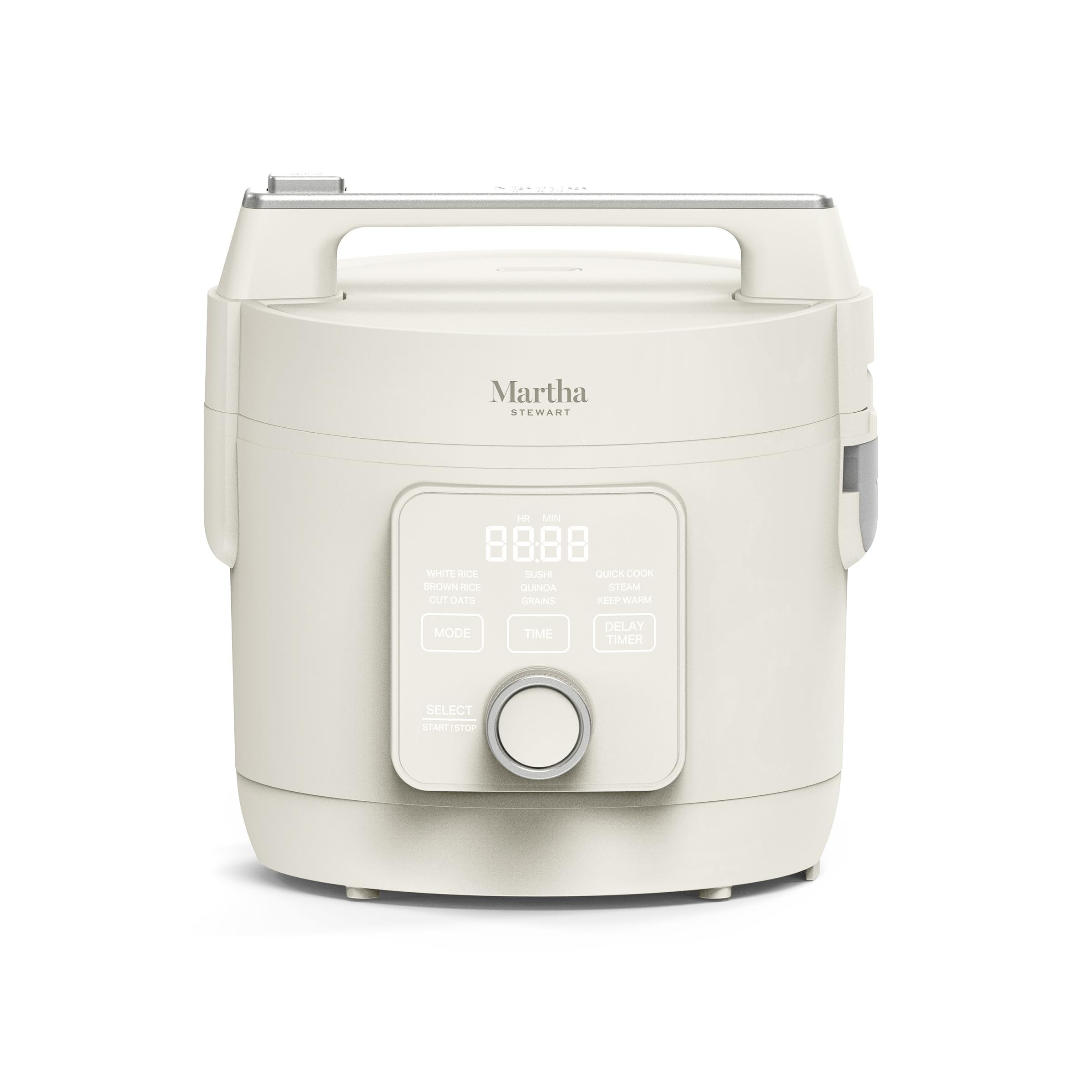
2. Martha Stewart Rice Cooker, 8 Cup
simple to use cooking with a designer look that earns counter space.
Brown rice is where this cooker makes its case. The fuzzy logic (the automatic heat-adjusting computer) and a dedicated Brown Rice mode handle the long simmer cycle, while the 8-cup (cooked) capacity is the balance for a family of four with leftovers. Owners mention that the one-touch operation replaced inconsistent smaller cookers, and the nonstick ceramic interior rinses clean in seconds. The quickest praise comes from the performance — it is the most-discussed positive, with 30 owners mentioning it directly.
Nine cooking modes cover white rice, sushi rice, quinoa, steel-cut oats, and a steaming rack for vegetables on top. The delay timer schedules cooking from 30 minutes up to 24 hours ahead, and the keep-warm holds for 12 hours. What you lose compared to the Cosori is the sheer volume of functions (18 vs 9), but what you gain is a compact footprint (9.9 x 9.9 inches) that sits neatly on a standard counter. The ceramic bowl and accessories are dishwasher-safe, so cleanup is a non-event. Think of this as the more stylish, slightly smaller sibling to the Cosori — if looks matter and you don’t need 18 functions, this is your machine.
Three minutes of effort per meal: The ease of cleaning is a consistent win — the removable bowl wipes clean, and the interior lid lifts out for a thorough wash.
The catch on capacity: Four cups uncooked yields eight cups cooked. If you regularly feed five or more, you will need a second batch. This is a four-person machine that can stretch to five in a pinch.
Reach for this if: You cook for a family, want a beautiful-looking appliance, and need a dedicated brown-rice cycle that delivers fluffy grains without guesswork.
Think twice if: You batch-cook huge volumes for the week — the 10-cup Cosori above will save you a cycle.
3. COMFEE’ Rice Cooker, 12 Cups Cooked
Fuzzy logic at a price that undercuts most competitors by a wide margin.
The COMFEE’ uses the same fuzzy logic brain as many premium models — it senses moisture and adjusts temperature throughout the cook cycle — but sells for significantly less. The 6-cup uncooked capacity (12 cups cooked) fits most families, and the 11 presets include brown rice, white rice, sushi, porridge, soup, and steam. A 30-minute fast-cook function handles white rice in a hurry. The performance is the top-rated aspect, with 93 owners calling it out, and the overall rating of 4.6 stars across nearly 900 owners confirms that it punches well above its price bracket.
Where it saves you money is in the details: the inner pot is standard non-stick (not ceramic, so less durable over time), the lid is plastic, and the LCD touch panel is simple rather than flashy. None of those things affect how the rice turns out, but they affect how it feels in the hand. Owners note that the instruction manual is sparse — several mention having to Google water ratios for brown rice — so be prepared to experiment with your first batch. The removable inner lid and steam valve make cleanup straightforward. For the budget-conscious, this beats the basic on/off cookers handily, but the Martha Stewart above feels more premium for not much more.
The numbers that convince: 93 owners praise the performance, 41 mention reliability, and the rice quality gets 62 mentions — though that aspect is marked mixed, meaning some find the texture less consistent than pricier fuzzy-logic machines. For the price, it is still a bargain.
The pinch point: The keep-warm function runs a bit hot for some tastes, drying rice left in it for several hours. Use the 24-hour delay timer to finish cooking just before you eat rather than holding for long stretches.
Best for: Anyone who wants fuzzy-logic reliability without spending over. It outperforms basic cookers handily.
Not for: Purists who want a ceramic pot or who dislike experimenting with water ratios — this one needs a little dialing in for brown rice.
4. TOSHIBA OriginTaste Rice Cooker, 5.5 Cup
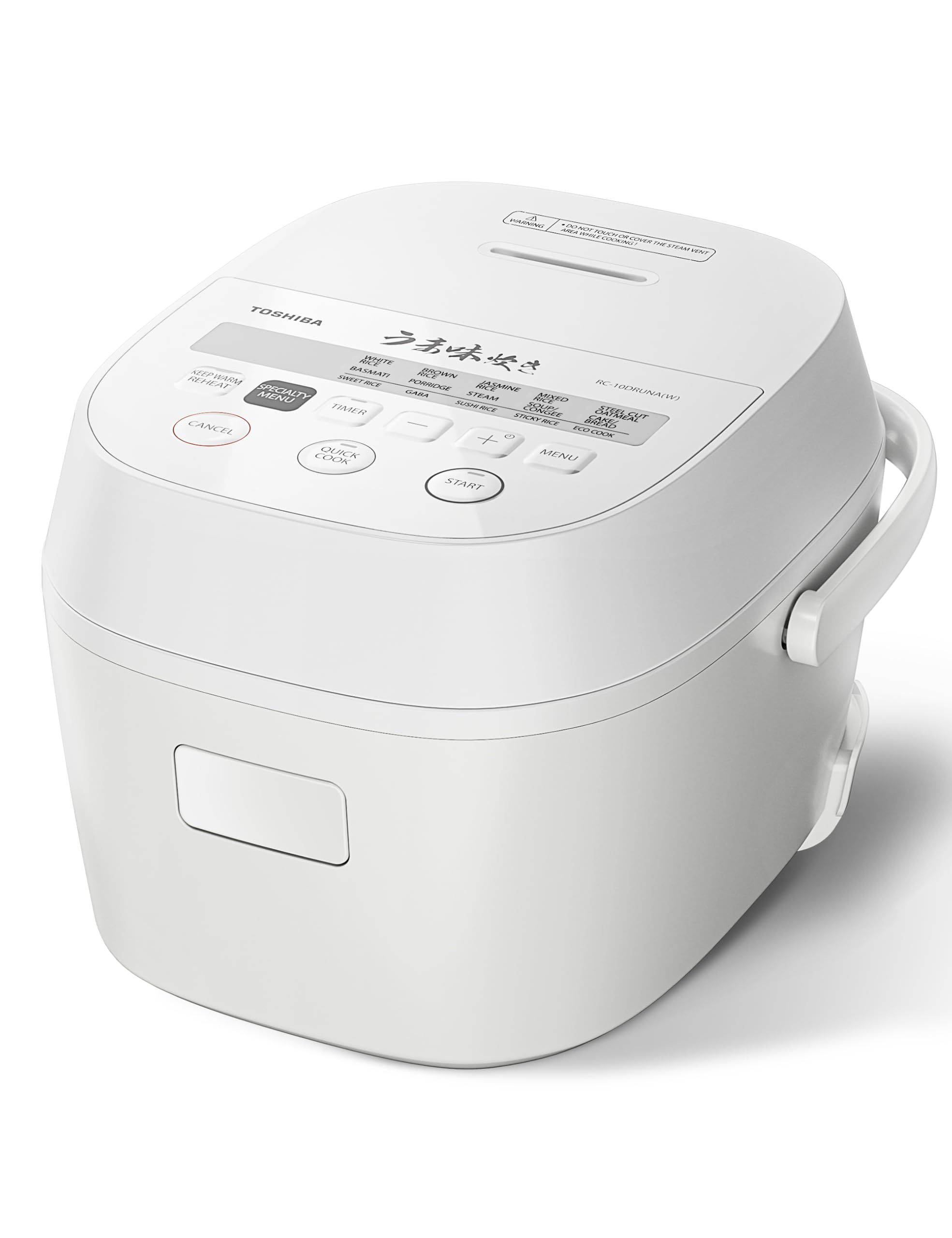
Japanese engineering that delivers textbook-perfect rice on every cycle.
The Toshiba uses 3D heating technology — heat wraps around the entire pot rather than just the bottom — which matters for brown rice because the bran layer needs consistent temperature all the way up the sides to cook evenly. The 3.1mm thick ceramic non-stick pot is one of the heaviest in this roundup, and it holds heat steadily. Fifteen cooking functions cover the full spectrum: Brown Rice, GABA Brown (a sprouted brown rice setting that increases nutrients), Jasmine, Basmati, Quinoa, Steel-Cut Oats, and even Cake. The large LCD display shows a real-time clock and a countdown timer, which is a rare convenience.
Customers note that it makes “textbook perfect rice every single time” and call out the build quality as exceptional. The inner cooking bowl is PFOA/PFAS-free, and the steam vent cap and valve are removable for cleaning. The 24-hour delay timer and automatic keep-warm round out the feature set. The main trade-off: the 5.5-cup uncooked capacity serves a family of four comfortably but will not handle large batch-cooking sessions without a second run. The precision here rivals the Cosori, but the smaller capacity means the Cosori wins for volume cooks.
What 58 owners agree on: The build quality is the standout — that thick ceramic pot and the stainless steel inner lid (not plastic) give it a premium feel that justifies the price.
The honest caveat: The weight (3.9 kg / 8.6 lb) makes it the heaviest machine here. It stays put on the counter, but you will not want to lift it in and out of a cabinet regularly.
Choose this if: You want the most sophisticated brown-rice cooking possible from a countertop machine, including the option to sprout your grains via the GABA Brown setting.
Pass if: You need an 8- or 10-cup capacity — this is a four-person machine, and the price jump to Toshiba’s larger models is steep.
5. Yum Asia Kumo YumCarb Rice Cooker

A 2mm ceramic bowl and a low-carb cycle built for the health-conscious cook.
The Yum Asia Kumo stands out for its YumCarb function, which the brand claims can reduce starch content by approximately 25% through a separate boiling-and-draining step. This is a genuinely useful trick if you manage carb intake. The 5-layer, 2mm thick Ninja ceramic-coated inner bowl is noticeably more sturdy than the thin non-stick pots on budget models, and the 3D surround heating wraps the entire cooking chamber for even heat on the long brown-rice cycle. Five dedicated rice functions (white, long grain, short grain/sushi, brown rice, and YumCarb) plus steam, porridge, and slow-cook modes cover most daily needs. Compared to the Cosori, you get fewer total functions but a unique low-carb capability no other pick here offers.
Owners describe the results as “restaurant-quality” and consistently praise the ceramic-coated pot for being easy to clean and non-stick. The Korean-designed ‘Smart Button’ control panel with a crisp LED display is intuitive enough to use without the manual. The brown rice setting runs around 60 minutes, and while one owner noted that their brown rice came out slightly crunchy and needed 40 extra minutes, the majority report perfect texture with the standard cycle. The 1-liter (5.5-cup) capacity is versatile for one to five people.
What wins people over: The YumCarb feature is a genuine differentiator — several owners switched from standard cookers specifically for this function and report that the rice still tastes and feels like normal brown rice, just with less carbohydrate impact.
The real trade-off: The price sits at the upper end of mid-range. If you do not need the low-carb function, the Cosori or Toshiba above offer broader cooking functions for a similar or slightly higher cost.
Grab this if: You regularly cook brown rice and want to pull back on carbs without switching to cauliflower rice or skipping grains entirely.
Skip if: You just want a simple, large-capacity cooker — the YumCarb process adds an extra step you would not use.
6. AROMA 20-Cup Slow Cook Rice Cooker (ARC-1290C)
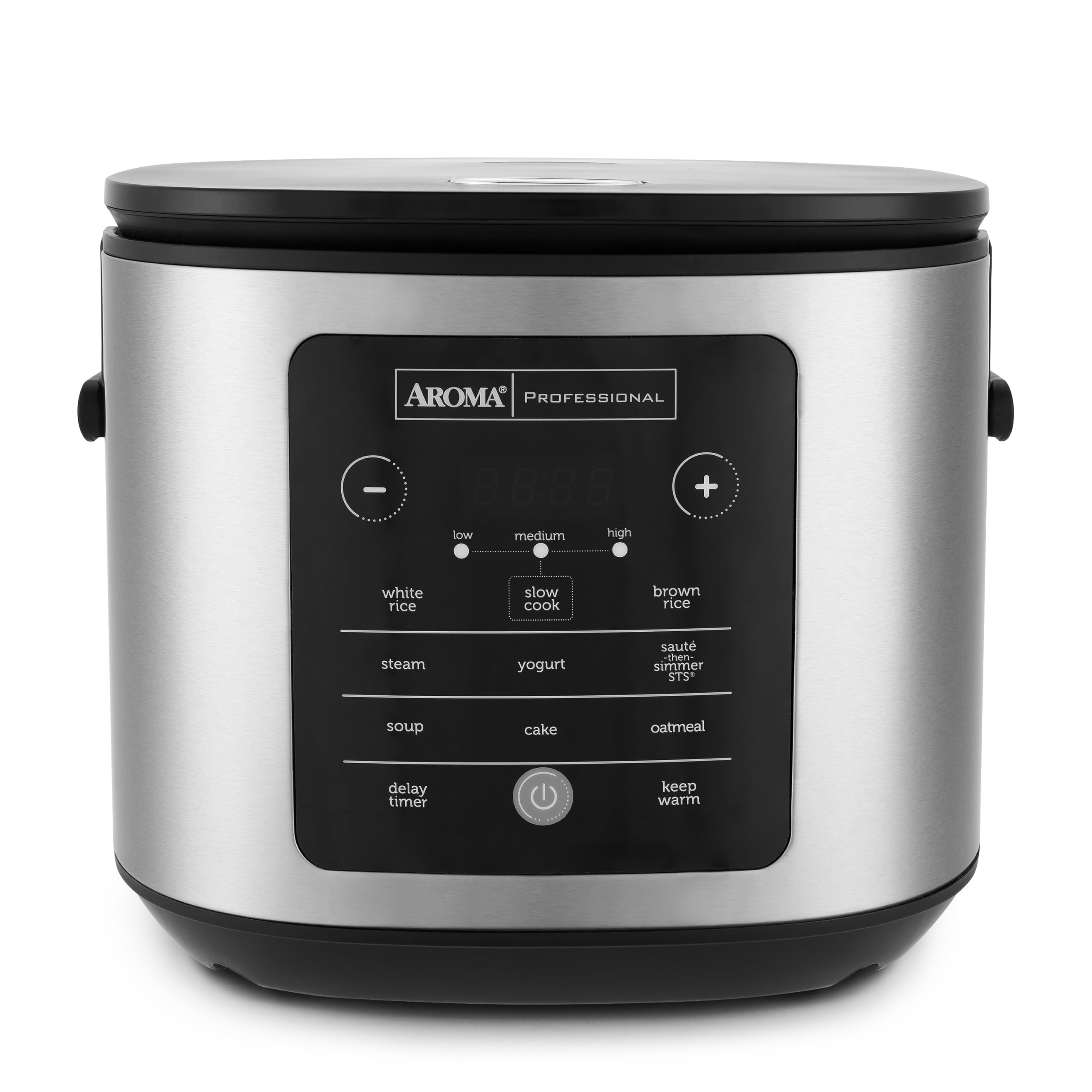
A 20-cup beast that goes from stovetop to tabletop with built-in handles.
The Aroma ARC-1290C is built for volume. The 20-cup uncooked capacity (roughly 40 cups cooked) is more than five times the size of the Narcissus 3.5-cup machine — a genuine 5.7x gap — and it handles batch-cooking for large families or meal-prep enthusiasts with ease. Nine cooking modes cover steam, slow cook, sauté, simmer, whole grains, yogurt, and oatmeal. The HeatFlow Pro technology heats faster and more evenly around the entire pot, and the PFAS-free CoreCoat ceramic lining makes cleanup manageable even after a full 20-cup batch.
The cleverest design feature is the lift-out inner pot with built-in handles. You carry the pot directly to the table for serving, then snap the matching silicone lid over the top to store leftovers in the fridge. It saves a dish and keeps the cooked rice from drying out. The quality is the top-rated aspect, with 19 owners calling it out, and the performance has 12 mentions. The durability gets mixed feedback — a few owners reported that the lid broke on arrival, which seems to be a packaging or handling issue rather than a design flaw. If you need this much volume, it is class-leading, but the Cosori is a smarter buy for most households.
What family cooks love: The serve-and-store system is genuinely useful — you cut out an entire transfer step when cooking for a crowd, and the silicone lid seals well enough to skip plastic wrap.
The honest warning: The lid durability is a mixed topic. A small number of units arrived with a cracked lid, so inspect yours immediately on delivery. Aroma’s US-based customer service in San Diego handles replacements, but it is an inconvenience to deal with.
Perfect for: Anyone who batch-cooks brown rice weekly, hosts dinners, or wants a multicooker that can serve soup, oatmeal, and steamed vegetables from one appliance.
Too much if: You cook for one or two — the footprint (13.4 x 11.6 x 9.4 inches) and 20-cup capacity will be wasted on small portions, and the hand-wash-only care instruction is a chore at this size.
7. AROMA 12-Cup Slow Cook Rice Cooker (ARC-1296C)
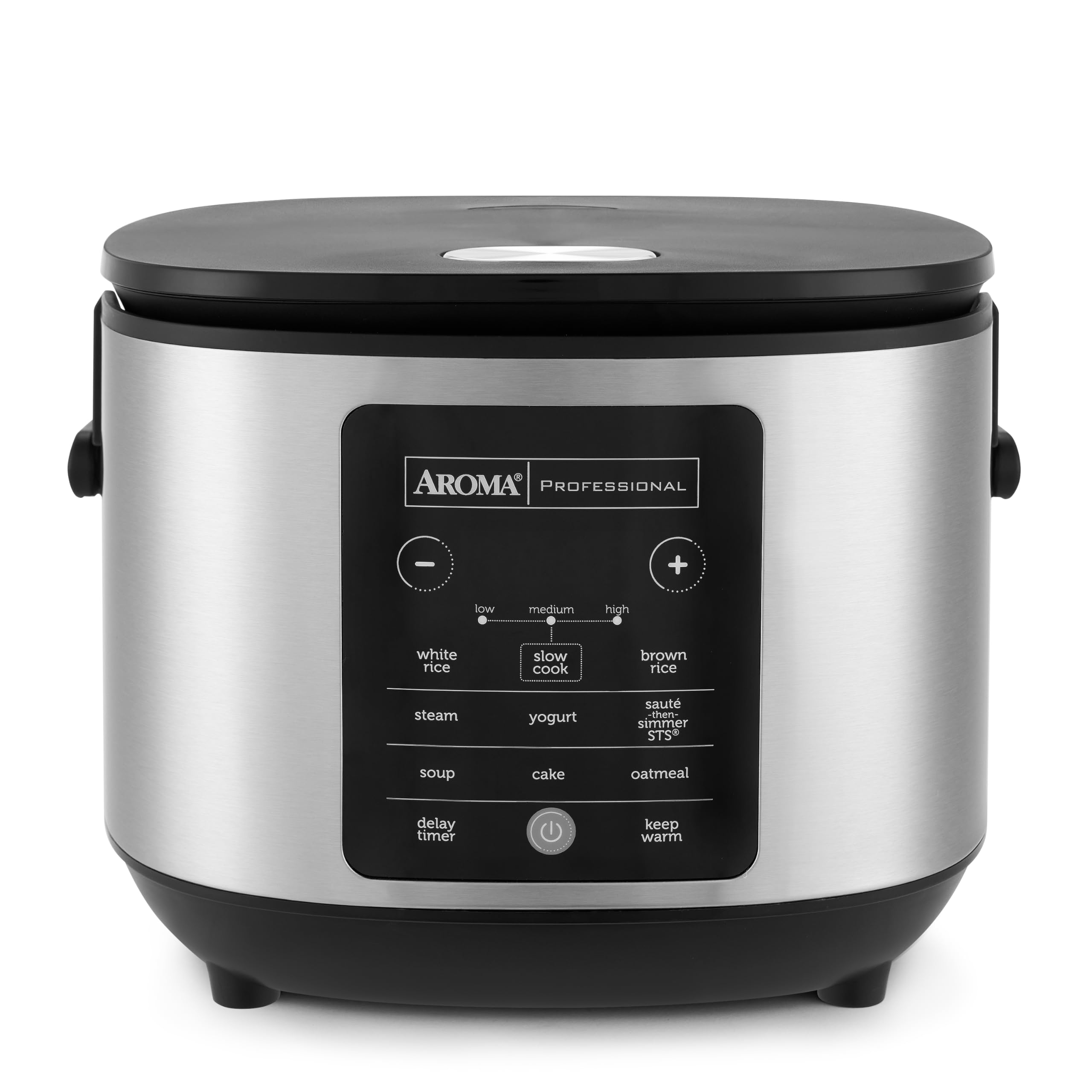
The same clever serve-and-store idea, scaled down for everyday meals.
The ARC-1296C is the smaller sibling of the 20-cup Aroma above, but it keeps all the same features: nine cooking modes, HeatFlow Pro rapid heating, PFAS-free CoreCoat ceramic pot, and the lift-out handles with silicone storage lid. The 2.75-quart capacity (12 cups cooked) is the right size for a household of three or four who eat rice a few times a week. The size is the most mixed aspect — 7 owners mention it as a negative, saying it is “very small” for a “12-cup” label. That 12-cup figure is the cooked volume; the uncooked capacity is roughly 3.5 cups, which explains the confusion. The Martha Stewart offers more straightforward capacity labeling and a similar footprint.
The quality ranks as the top positive aspect (16 mentions), and the functionality is close behind (14 mentions). Owners describe it as “Asian approved” for its ability to produce good rice reliably, and several chose it over traditional Asian brands after reading positive reviews. The design is space-saving at 10.6 x 12.5 x 7.75 inches, and the compact footprint is one of the smallest in this roundup for the cooked yield. The hand-wash-only care is a small annoyance, but the non-stick ceramic wipes clean easily.
What wins owners over: The build quality and functionality together get 30 mentions — people buy this because it looks and feels well-made, and it delivers consistent rice without fuss.
The real-world catch: The “12-cup” labeling in the title refers to cooked rice (6 cups uncooked is the standard industry language, but this unit’s uncooked capacity is roughly 3.5 cups). If you need a full 6-cup uncooked batch, this one will not do it. Read the capacity as 2.75 quarts (cooked).
Best for: A couple or small family who want the Aroma serve-and-store convenience but do not need the 20-cup monster and want something that fits on a standard counter.
Not for: Anyone who needs a full 6-cup uncooked (12-cup cooked) batch — the numbers are misleading if you do not check quarts vs cups.
8. Narcissus 3.5-Cup Rice Cooker
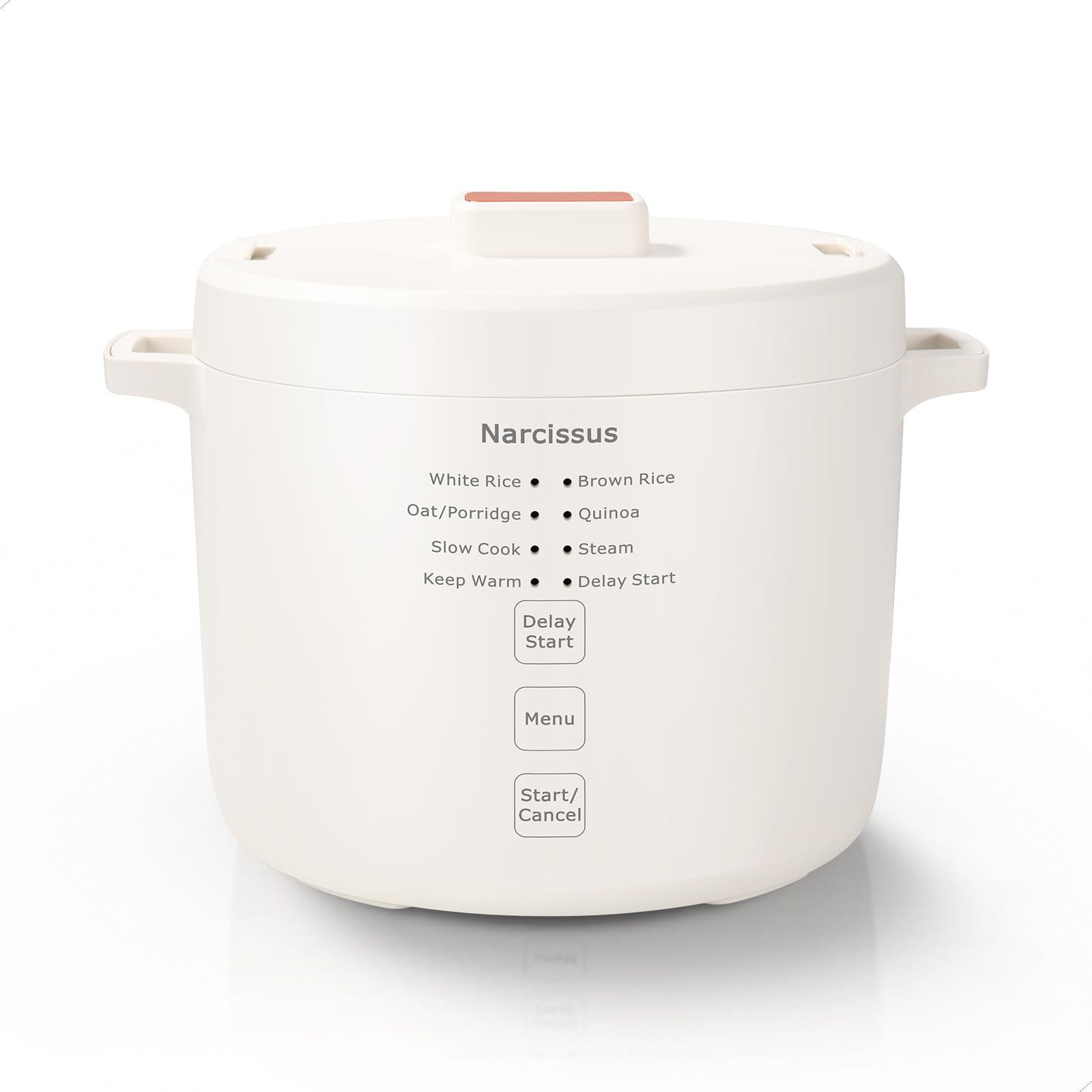
A pint-sized powerhouse for solo cooks who still want fluffy brown rice.
The Narcissus 3.5-cup cooker is the smallest entry here, measuring just 9.4 x 7.8 x 7.4 inches — a 58% smaller footprint than the Cosori 10-cup machine, to put a number on it. The 1.8-liter pot handles 3.5 cups uncooked (about 7 cups cooked), which is exactly right for one or two people who eat rice as a side most nights. The smart cooking system uses water-level tick marks inside the pot — you fill grain to one line, water to the matching mark, and the machine handles the rest. The rice quality is the top positive aspect, with 66 mentions, and the functionality is close at 34 mentions.
Beyond brown rice, this machine slow-cooks soups, steams vegetables on the included tray, and even lets you cook rice and steam a dish simultaneously. The auto-warm function holds the finished rice for up to 12 hours, and the delay start lets you set it up to begin cooking 8 hours later. Reviewers point out that it makes “perfect brown rice, quinoa, and lentils” without leaking or sticking, and that it is “well made” for the price. The common observation is that the cooking time is slower than a stovetop — about 28 minutes for 1 cup of rice — and there is no digital timer display, just a beep when done. If counter space is your biggest constraint, this is the honest answer; if you want fuzzy logic precision, save up for the Cosori.
Why small-kitchen owners buy it
- Fits on a cramped counter or inside a cabinet with room to spare
- Cooks brown rice, quinoa, lentils, oatmeal, and soups — real versatility in a tiny package
- Auto-warm keeps rice ready for 12 hours without drying it out
Two real limitations
- No digital timer — you hear a beep when it finishes, but you cannot see a countdown
- The included plastic steamer basket stained in one owner’s experience with carrots, suggesting it is not the most durable accessory
Go for this if: You live alone or cook for two, your kitchen space is tight, and you want a straightforward machine that makes good brown rice without taking over your countertop.
Pass if: You cook for three or more regularly, or if a countdown timer and digital display matter to your cooking rhythm — the Narcissus is refreshingly simple but also a bit basic.
Understanding the Specs
Fuzzy Logic
A fuzzy logic cooker uses a small computer to read the temperature and moisture levels inside the pot continuously. It then adjusts the heat up and down automatically throughout the cooking cycle. For brown rice, this matters because the bran layer takes longer to soften than white rice — a basic on/off thermostat would burn the bottom while the center stays hard. Fuzzy logic keeps the heat steady and controlled, so every grain finishes tender at the same time.
Ceramic vs. Standard Non-Stick Coating
Standard non-stick (often PTFE-based) pots work fine when new but can scratch and peel over time, especially with the long cooking cycles brown rice demands. Ceramic coatings are harder, more heat-stable, and free of PTFE and PFOA. They release food just as easily, but they resist the wear that comes from repeated high-heat cycles. Most mid-range and premium cookers now use ceramic or ceramic-coated inner pots for this reason.
Keep Warm & Delay Timer
A keep-warm function holds the rice at a safe serving temperature (usually around 140–170°F) after cooking finishes. For brown rice, which dries out faster than white rice, a good keep-warm setting makes a big difference — the best models hold without scorching the bottom layer. A delay timer lets you load the cooker hours ahead. The machine waits to start cooking so the rice finishes at a set time. Look for 12- to 24-hour delay windows if you want to prep in the morning for an evening meal.
Heating Technology: Bottom vs. 3D
Basic rice cookers heat only from the base, which works fine for white rice but can leave brown rice unevenly cooked because the heat never reaches the top of the grain bed. 3D heating (also called surround or three-dimensional heating) wraps the pot with heat from the bottom, sides, and sometimes the lid. This matters most for brown rice because it cooks the entire batch at the same temperature, eliminating the ring of undercooked grains you sometimes get from a single-element heater.
FAQ
Can I use a regular rice cooker for brown rice?
How long does brown rice take in a rice cooker?
What is the water-to-rice ratio for brown rice in a cooker?
Should I soak brown rice before cooking?
Can I cook other grains like quinoa or oatmeal in a brown rice cooker?
Does a ceramic inner pot really make better rice?
What capacity do I need for a family of four?
How do I clean a rice cooker after making brown rice?
Is a fuzzy logic rice cooker worth the extra money?
Final Thoughts: The Verdict
If you want one dependable pick, the best brown rice cooker winner is the Cosori 10 Cup because it combines a crowd-pleasing 4.8-star rating across thousands of owners with genuine fuzzy logic, an 18-in-1 function set, and a ceramic pot that cleans up easily — all at a price that beats most premium competitors. If you want a beautiful, simple to use machine for family meals, grab the Martha Stewart 8 Cup. And for the ultimate in precision and build quality, the TOSHIBA 5.5 Cup with 3D heating is the one to reach for.
How We Picked
We do not accept paid placement. Every pick is matched to a real buyer and a real use-case; we do not hands-on test units.
Sources & Methodology
Specifications: manufacturer listings and product documentation. Review insights: verified customer reviews, as of July 2026. Pricing: not shown on this page (it changes often); check the current price via the retailer link.
As an Amazon Associate, FitlyFast earns from qualifying purchases. This does not affect which products we feature.