
Our readers keep the lights on and the weekend projects moving. As an Amazon Associate, I earn from qualifying purchases.
Specs are compiled from manufacturer listings and verified buyer reviews and can change over time — please confirm the key details on the product page before buying.
You plug in your dynamic mic, crank the gain on your interface, and your recording sounds like a distant radio station in a windstorm. That hiss and thin tone are not your mic’s fault. They are why a separate mic preamp exists — a dedicated clean boost that sits between your mic and recorder, feeding your signal the voltage it needs to sound full without adding noise. The best budget mic preamp for most people is the Coda MB-1, because it gives you +25dB of clean gain with a -70dB noise floor at a price that leaves room for a better mic. This list shows you the alternatives that also deliver.
I’m Rikta — the founder and writer behind FitlyFast. This guide is built by comparing the manufacturers’ published specifications and the patterns across verified customer reviews, so you get each pick’s real strengths and trade-offs instead of marketing spin.
Whether you podcast from a spare bedroom or track vocals on a tight budget, the right budget mic preamp can turn a lifeless signal into something worth recording — without breaking your bank.
Our Picks at a Glance


How To Choose The Best Budget Mic Preamp
A budget mic preamp delivers a clean, usable signal without costing hundreds of dollars. Your choice depends on your microphone type, interface, and recording environment.
Match the Preamp to Your Microphone
Dynamic and ribbon mics are the main targets for inline boosters. These passive microphones put out a low signal that often forces your interface’s preamp to run at its maximum, noisy limit. A dedicated preamp (delivering +25dB or +28dB of clean gain) lets you keep your interface gain knob much lower, so the noise stays down. Condenser microphones already have their own internal amplifiers, so they generally do not need an inline booster.
Read the Noise Floor Number
A preamp’s noise floor is measured in dBu. The lower the number, the less hiss the preamp adds. A preamp with an EIN (Equivalent Input Noise, or how much hiss the device creates on its own) of -130.5dBu is very quiet. On the other end, a -70dB noise floor — a different measurement scale — is still fine for spoken word and music. Your new preamp’s noise floor must be lower than your interface’s built-in preamp.
Understand Phantom Power Requirements
Every inline preamp in this list needs 48V phantom power from your interface or mixer to work. These units do not have their own power supply; they pull power directly from the XLR cable. That means they will not work with gear that lacks phantom power, like some portable recorders or older mixers. If your interface has a phantom power switch, you are set.
Consider the Form Factor
Some preamps are built like a small, rugged box — the Coda MB-1 is 7 inches long and built for pedalboard use. Others are ultra-slim inline barrels — the sE Electronics DM1 is just 0.43 inches wide. If you need a portable setup that slips into a bag, a slim inline design is best. If you have a stationary desk setup, a larger box is easier to connect and disconnect.
Quick Comparison
| Model | Best For | Gain Boost | Noise Floor | Form Factor | Amazon |
|---|---|---|---|---|---|
| Coda MB-1★ Best Overall | Static desk & pedalboard use | +25dB | -70dB | Box (7 in) | Amazon |
| Triton Audio FetHeadTop Performer | Studio & live condenser/dynamic mics | — | — | Inline (5.05 in) | Amazon |
| sE Electronics DM1Compact Pick | Ultra-portable setups | +28dB | — | Inline (3.76 in) | Amazon |
| Focusrite Solo 3rd Gen | Complete interface upgrade | 56dB Range | — | Desktop interface | Amazon |
| UA Volt 1 | Vintage tone seekers | — | — | Desktop interface | Amazon |
| Cloudlifter CL-1 | Shure SM7B owners | +25dB | — | Inline & box | Amazon |
| Focusrite Solo 4th Gen | Latest interface tech | 120dB Dynamic Range | — | Desktop interface | Amazon |
| MAONO AME2C Pro | All-in-one podcast studio | 60dB | — | Desktop mixer | Amazon |
| TOPPING E2x2 | Cleanest possible signal | — | -130.5dBu EIN | Desktop interface | Amazon |
In‑Depth Reviews
1. Coda MB-1 Mic Preamp
The rugged metal box that brings dead quiet to dynamic mics — it delivers +25dB of gain with a -70dB noise floor, so you can boost a quiet voice without hiss underneath.
This is the preamp that owners call a “budget Cloudlifter” that performs perfectly. The Coda MB-1 gives you +25dB of clean gain while keeping the noise floor (the background hiss the device adds) at -70dB. That spec matters because it means you can boost a quiet voice without hearing a layer of noise underneath. It works only with dynamic and ribbon microphones — the listing clearly says it does not work with condenser mics — and needs 48V phantom power from your interface. The build is a rugged aluminum case measuring 7 x 3 x 2.25 inches. Some owners say it is too big for a guitar case, but it is built to survive stage and studio life. As buyers report, it “boosts Sennheiser MD-441/E935 output for Bose S1 Pro; clarity improved from muddy at 100% gain to superb at 40%.” You stop fighting your interface’s noisy gain knob.
Sound quality is what people praise most, with 27 owners singling it out. Performance (24 mentions) and value for money (23 mentions) follow close behind. One owner with a Rode PodMic said it worked perfectly and they did not need to spend triple on the Cloudlifter CL-1, which provides the same +25dB gain. Another noted the aluminum enclosure includes XLR cable protection brackets and can attach to a mic stand with velcro. The trade-off is the size: it is too large for a guitar case, and it lacks a volume control or internal battery.
What wins people over
- Clean +25dB gain with a -70dB noise floor — no added hiss
- Rugged aluminum build built for stage use
- Owners consistently say it rivals expensive alternatives like the Cloudlifter CL-1 in performance
The honest caveats
- Large box form factor (7 inches) is not portable for a guitar case
- Requires external 48V phantom power supply
- Does not work with condenser microphones
Pick this for: A desk or pedalboard setup where you need a tough, quiet booster for dynamic mics and do not want to pay for a name brand.
Think twice if: You need ultra-portability or you are using a condenser microphone — this one is not for you.
2. TRITON AUDIO FetHead Phantom
The FET-style in-line that works with condenser mics too — it reduces your interface gain requirement and improves audio quality without raising the noise floor.
The FetHead is built differently than the Coda MB-1. It works with condenser microphones as well as dynamics, which broadens its appeal. Owners using it with an AT2035 and a Steinberg UR22 mk2 report that it “provides needed gain for AT2035 with Steinberg UR22 mk2; reduces interface gain requirement, improves audio quality without raising noise floor.” The core benefit: you turn your interface gain knob down from noisy territory to a clean zone, and the audio lifts noticeably. At 68 g and 5.05 x 1.25 x 1.2 inches, this inline preamp is light enough to sit on the XLR cable near the mic without adding noticeable weight. At 68 g, the FetHead is lighter than the sE DM1 at 80 g.
Performance is what owners praise most, with 44 mentioning it. Sound quality (13 mentions) and noise level reduction (12 mentions) follow. The build uses a metal enclosure and a collet mechanism, which some owners found slightly loose in a few units — but the function itself is unaffected. The FetHead works with any phantom-powered mic and can be placed inline near the mic to reduce noise pickup from long cable runs. It has an excellent rating across many owners.
Best for versatility: If you own both dynamic and condenser mics and want one inline preamp that handles both, this is the most flexible pick in the list.
Small build caveat: The collet mechanism on a rare unit arrives not fully tight — check it on arrival, but it does not affect performance.
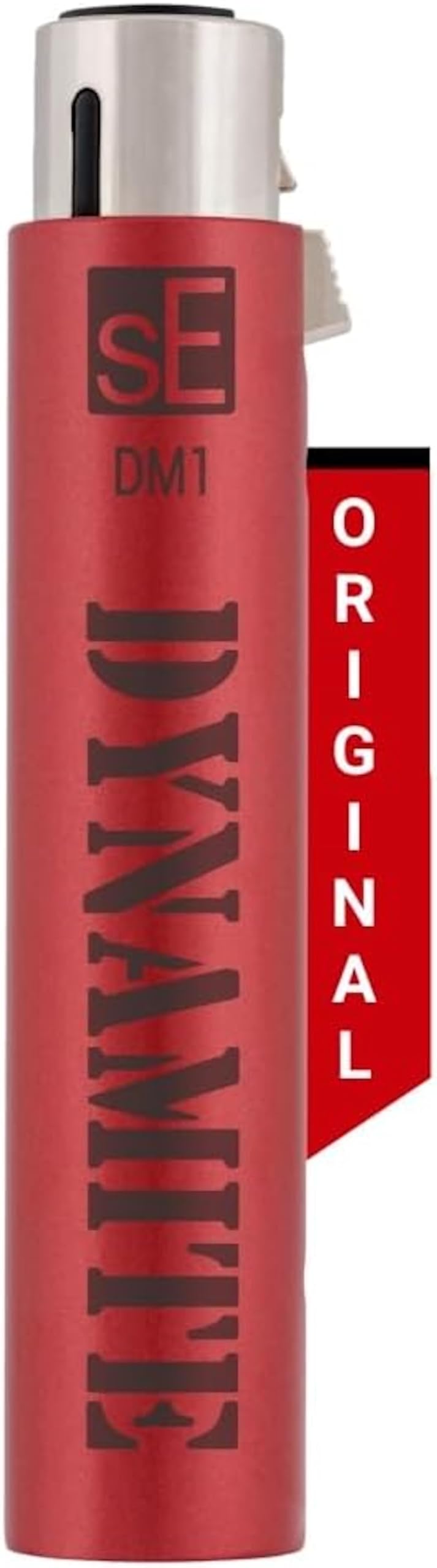
3. SE ELECTRONICS DM1 Dynamite
The ultra-slim Class-A amp that delivers +28dB of clean gain — the most of any inline preamp here — in a body that is 86% smaller than the Coda MB-1.
This is the highest gain you get from any inline preamp in this list: +28dB of clean, transparent boost from a Class-A (a high-quality amplifier circuit) FET design. It measures just 3.76 x 0.43 x 0.43 inches and weighs 80 g, making it the most portable option here. Owners pair it with dynamic mics like the RODE Podmic and report that it fixed crackling and humming issues when used with a Scarlett Solo 3rd Gen — they dialed the gain back from maximum to 30%, and the noise disappeared. As owners mention, it “significantly amplifies soft vocals, improves quality; allows gain reduction to 30%, reduces noise.” Your interface preamp stops screaming, and your recording sounds clean.
Performance is the top aspect, with 35 owners noting it. Gain (20 mentions) and quality (16 mentions) are next. The DM1 uses gold-plated XLR connectors and a transformerless design to keep the signal clean and free of RF interference. The ultra-slim body fits in a compact bag or even a large pocket — ideal for mobile podcasters.
Best for portability: The smallest and highest-gain inline preamp here — perfect for traveling podcasters or mobile recording.
Slight bulk note: At 80 g and 3.76 inches, it is still a bit longer than some expect behind a mic; attach it to the stand with velcro for a tidy setup.
4. Focusrite Scarlett Solo 3rd Gen

The interface that is also a preamp upgrade — 56dB of gain range with switchable Air mode, so you get clean headroom before the gain knob gets noisy.
The Scarlett Solo 3rd Gen is a full audio interface, not just a preamp. It includes one XLR mic preamp with a 56dB gain range, a Hi-Z instrument input, and 24-bit/192kHz recording. The 56dB gain range means you have a lot of clean headroom before you hit the noisy top of the gain knob. The switchable Air mode adds a high-frequency lift that brings clarity to vocals and acoustic instruments. Owners consistently praise the “clean, crisp sound quality” and note it is “reliable for vocals and editing” with “easy setup and solid build.” It has an excellent rating across a huge number of ratings, making it the most proven choice in this entire list.
The benefit is that you replace your entire signal chain: preamp, converter, and playback system in one box. You also get a software bundle including Pro Tools Intro+, Ableton Live Lite, and Cubase LE. It weighs 12.32 ounces and measures 5.65 x 3.77 x 1.71 inches. The only real complaint is a minor one: it pops up a welcome folder every time you connect it to a computer. That is a small price for a preamp that has proven itself with tens of thousands of owners.
What makes it the crowd favorite
- High-quality preamp with 56dB gain range and switchable Air mode
- Complete interface — records, monitors, and powers your mic
- Proven reliability with an enormous base of happy owners
A few owner notes
- Repeated pop-up folder when connecting to a computer (minor nuisance)
- No MIDI input for synths
Pick this if: You need a complete interface upgrade with a proven, clean preamp and do not want to mess with inline boosters.
skip it if: You already own a good interface and only need an inline gain boost for one dynamic mic.
5. Universal Audio Volt 1

The interface that brings UA’s classic 610 tube preamp character to your home studio — it adds a warm, rich tone that a clean inline booster cannot provide.
The Volt 1 is an audio interface, but its preamp is the headline: a Vintage mode that emulates the sound of UA’s classic 610 tube preamp. That gives your recordings a warm, rich character that a clean inline booster like the Coda MB-1 simply cannot provide. It records at up to 24-bit/192kHz and includes a built-in headphone amp and MIDI I/O. Owners say the “clean sound, quiet preamp, compact, premium build” make it a top choice, and the “vintage 610 tube emulation” is the feature that separates it from the Focusrite Solo. Audio quality is the most-praised aspect (38 mentions), followed by sound quality (30 mentions).
The Volt 1 weighs 544 g (1.2 lb) and measures 5.12 x 5.71 x 1.97 inches. It includes the LUNA DAW, Ableton Live Lite, and Melodyne in the box. It works with Mac, Windows, iPad, and iPhone (needs external power and a Lightning to USB Camera Adapter for iOS). The preamp is clean when Vintage mode is off, but the character it adds when switched on is the reason to buy it over the Focusrite Solo. The only catch: you need an external power supply for mobile use with an iPad.
Best for character: If you want your recordings to have a touch of tube warmth without buying a separate hardware preamp, this is the pick.
Mobile note: Requires external power and an adapter for iPad/iPhone — not a truly mobile plug-and-play device.
6. Cloud Microphones Cloudlifter CL-1

The preamp that turned the SM7B into a podcast legend — +25dB of transparent gain with a reputation that makes it the safe choice.
The Cloudlifter CL-1 set the standard for inline boosters. It delivers +25dB of clean, transparent gain for passive dynamic and ribbon microphones, needing only 48V phantom power to work. Its fame comes from the Shure SM7B pairing: owners say it “enhances the sound so well that when I play back the recording I can hear things that I can’t hear without the microphone.” One owner with perfect hearing noted the SM7B with the Cloudlifter “hears better than the human ear.” This result made the Cloudlifter a staple in pro studios and podcasting setups.
Mic quality is the most-praised aspect (10 mentions), followed by compatibility (8 mentions), particularly with the SM7B. The build is alloy steel, and this bundle includes two 10-foot XLR cables and a microfiber cloth. The CL-1 is made in the USA and designed for long cable runs, reducing noise pickup over distance. It costs more than the Coda MB-1, which also gives +25dB gain, but the reputation is undeniable. The device has no switches or controls — just a clean boost.
Best for SM7B owners: If you own or plan to own a Shure SM7B, this is the preamp that makes it shine — owners swear by the pairing.
Price consideration: It costs more than budget alternatives like the Coda MB-1, but the build quality and history are top-tier.
7. Focusrite Scarlett Solo 4th Gen
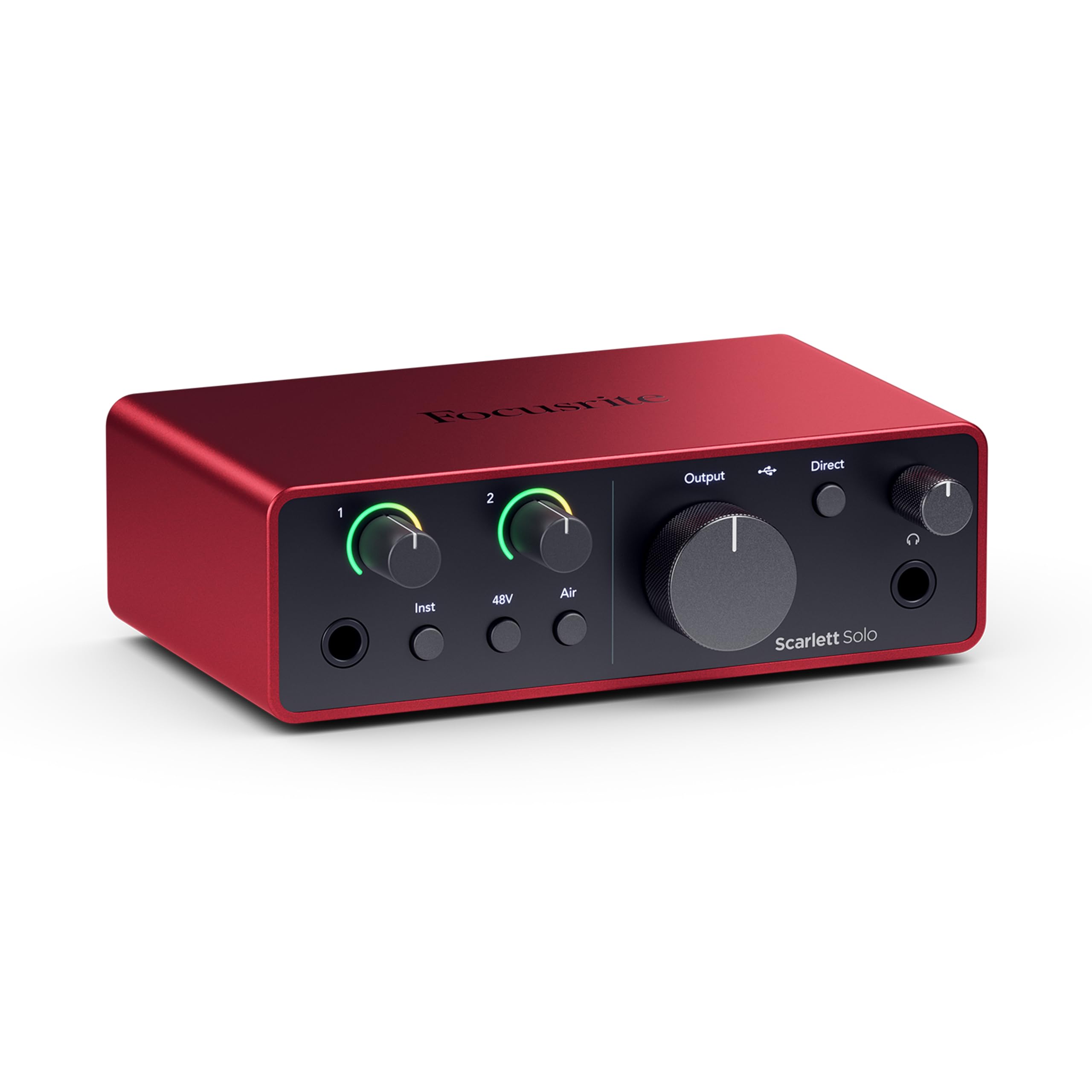
The fourth generation brings a 120dB dynamic range — that is flagship-grade headroom — and a richer Air mode that pushes vocals to the front of the mix.
The Scarlett Solo 4th Gen is an evolution of the 3rd Gen. The headline spec is the 120dB dynamic range, a figure that places it alongside Focusrite’s best interfaces. The improved Air mode adds “musical presence and rich harmonic drive” to vocals and guitars. Owners consistently describe the preamps as “clear, warm, clean” and note the “outstanding sound quality” and “near-zero latency.” One owner using a RODE dynamic mic said the preamp sounded “excellent” and the setup was “plug-and-play.”
You get a preamp that handles quiet microphones with less noise than the 3rd Gen, plus a headphone amp owners call “strong” and “very loud.” It includes Pro Tools Intro+, Ableton Live Lite, Cubase LE, and the Hitmaker Expansion bundle. The unit weighs 14.4 ounces and measures 5.63 x 1.83 x 3.78 inches. A few owners note that preinstalled firmware can cause a headphone/XLR conflict until updated, and the included USB cable is USB-A to USB-C, not USB-C to USB-C.
What it brings to the table
- 120dB dynamic range — flagship-grade converters in a compact interface
- Improved Air mode adds rich harmonic drive to recordings
- Strong headphone amp with near-zero latency monitoring
Setup notes
- Needs a firmware update on first setup to avoid XLR/headphone conflict
- Includes USB-A to USB-C cable, not USB-C to USB-C
Pick this if: You want the latest generation of Focusrite’s preamp technology with the wide dynamic range that professional studios use.
Think twice if: You are on a strict budget and do not need the extra dynamic range — the 3rd Gen is still excellent.
8. MAONO AME2C Pro Bundle

The complete podcast studio in a box — a 10-channel mixer with a 60dB preamp and a free dynamic mic included.
The AME2C Pro is a full podcasting bundle: a 10-channel digital audio interface, a XLR dynamic microphone, a boom arm, cables, and a table clamp. The preamp offers up to 60dB of ultra-low noise gain and supports 48V phantom power for condenser mics, with 3-level mic gain adjustment. The built-in 32-bit chipset and DENOISE function keep the signal clean. Owners say it has “professional sound quality” and their voice “comes through with clarity and richness.” Quality is the most-praised aspect (15 mentions), followed by value for money (12 mentions).
This is not a simple inline preamp — it is a complete production center with 11 customizable sound pads, 6 reverb modes, 12-step auto-tune, and sidechain/loopback functions. It connects via USB-C to your computer, with a LIVE-OUTPUT for smartphone streaming. The 6.35mm instrument input lets you record guitar or bass. The trade-off is reliability: the mix of positive (12 mentions) and mixed feedback (12 mentions) on reliability suggests that an occasional unit has issues with the sound pads or connectivity. It is feature-packed but not as bulletproof as a simple inline preamp like the Coda MB-1.
Best for starting podcasters: Everything you need in one box — the preamp, the mic, and all the effects — for a single price.
Reliability note: A small number of customers note issues with the sound pads after a few months; check the warranty terms and test everything on arrival.
9. TOPPING E2x2 OTG

The USB interface with an ultra-linear preamp so quiet it measures -130.5dBu EIN — the cleanest signal path in this list, with almost no hiss at any volume.
The TOPPING E2x2 OTG puts the preamp spec first. Its EIN (Equivalent Input Noise, or the noise the preamp creates on its own) is -130.5dBu, which is as low as you will find at this price. That number means the preamp adds almost no hiss to your signal. Owners using it for car audio tuning with REW (Room EQ Wizard, a measurement software) confirmed it “measures very clean.” One owner who upgraded from a Scarlett Solo 2i2 noted it had “no audio dropouts on mobile/OTG” and the “built-in control center with mix channels” was a clear improvement.
The preamp is paired with a headphone amp that delivers 580mW x 2 at 32 ohms — enough to drive high-impedance headphones like the DT990 Pro 250ohm, as one owner confirmed. It supports 192kHz/24-bit recording and playback, has an optical output, and works with Windows, Mac, iOS, and Android via USB-C. It includes dual mobile streaming, zero-latency monitoring, and independent mixer controls. The unit weighs 1.2 pounds and measures 5.08 x 7.36 x 1.97 inches. It comes with a 2-year warranty. The design is bare-bones — no big software bundle — but for the cleanest signal, it is a top contender. Compared to the Coda MB-1, which is a simple inline booster, the E2x2 is a full interface that gives you control over your entire signal path.
What makes it special
- Ultra-low noise preamp with -130.5dBu EIN — the quietest in this list
- Powerful headphone amp can drive high-impedance pro headphones
- Dual mobile streaming via USB-C with zero-latency monitoring
A few things to note
- Bare-bones design — no extensive plugin bundle included
- Limited number of owners so far (but those who have it love it)
Pick this if: You want the cleanest possible signal path from a desktop interface and plan to drive high-impedance headphones.
Think twice if: You need a big software bundle or a large number of inputs/outputs.
Understanding the Specs
Gain Boost in Decibels (dB)
This is how much the preamp amplifies your microphone’s signal. A higher number lets a quiet mic — like a ribbon or passive dynamic — get loud enough for your interface without going into its noisy upper range. The sE DM1 offers +28dB, the Coda MB-1 offers +25dB. Both are enough to bring a quiet mic to life without adding hiss.
Noise Floor and EIN
This is how much hiss the preamp itself adds. A lower number is better. The Coda MB-1 has a -70dB noise floor, which is very usable. The TOPPING E2x2 has an EIN of -130.5dBu — that is exceptionally quiet, so the signal it sends to your recorder is almost as clean as the room you are in. Compare this to your interface’s built-in preamp: if you must turn the gain past 80%, you are hearing your interface’s noise floor, not your mic’s signal.
FAQ
Will an inline preamp work with my condenser microphone?
Does every inline preamp need phantom power to function?
What is the difference between a preamp and an audio interface?
Can I use an inline preamp with a Bluetooth mixer or portable recorder?
How many decibels of gain do I actually need?
What does EIN mean and why does it matter?
Is the Cloudlifter CL-1 worth the extra money over the Coda MB-1?
Will an inline preamp work with a long XLR cable run?
Final Thoughts: The Verdict
For the majority of shoppers, the budget mic preamp winner is the Coda MB-1. It delivers +25dB of clean gain with a -70dB noise floor at a price that lets you keep half your budget for a better mic. If you want an ultra-portable booster with the highest gain, grab the sE