
Our readers keep the lights on and the weekend projects moving. As an Amazon Associate, I earn from qualifying purchases.
Specs are compiled from manufacturer listings and verified buyer reviews and can change over time — please confirm the key details on the product page before buying.
Finding a gaming TV that keeps up with fast motion without emptying your wallet is trickier than it sounds. A cheap set that lags or blurs during a crucial fight scene can ruin the whole experience — you want the fluid frames and console-ready ports without the flagship price tag.
I’m Rikta — the founder and writer behind FitlyFast. This guide is built by comparing the manufacturers’ published specifications and the patterns across verified customer reviews, so you get each pick’s real strengths and trade-offs instead of marketing spin.
Every TV here runs at a fast 120Hz or 144Hz, supports VRR (Variable Refresh Rate, which stops screen tearing by matching the TV’s refresh rate to your console’s frame rate) and comes from real-world buyer data — so you can trust your next budget tv for gaming will deliver smooth action from day one.
Our Picks at a Glance

How To Choose The Best Budget TV For Gaming
Not all cheap TVs handle gaming well. A good gaming set needs a fast screen, low lag, and modern ports — three things budget models often skip. Here is what to look for so you do not waste money on a set that stutters the minute you plug in a console.
Refresh Rate: 120Hz or 144Hz
This is the single biggest spec for gaming. A standard 60Hz TV refreshes the image 60 times per second, which can make fast movement look blurry. At 120Hz or 144Hz, the screen updates twice as often (or more), keeping motion smooth and sharp during racing games, shooters, and sports. Every TV on this list runs at least 120Hz, with some hitting 144Hz.
VRR (Variable Refresh Rate) and ALLM (Auto Low Latency Mode)
VRR syncs the TV’s refresh rate to the frame rate coming from your console or PC, which stops screen tearing (that horizontal split across the picture). ALLM automatically drops the TV into its lowest-lag mode the moment you launch a game, so you never have to dig through menus. Both features matter if you play competitive games.
HDMI 2.1 Ports
To run 4K at 120Hz or 144Hz, you need HDMI 2.1 — the older 2.0 standard caps out at 4K 60Hz. At least one port is essential for PS5, Xbox Series X, or a high-end gaming PC. Models with four HDMI 2.1 inputs let you connect multiple devices without swapping cables.
Panel Type: QLED vs Mini-LED
QLED (Quantum Dot LED) boosts color volume and brightness compared to standard LED TVs, making games look more vibrant. Mini-LED takes it further by using thousands of tiny backlights that can dim in precise zones, giving you deeper blacks and better contrast in dark game scenes. Both are strong options at a budget-friendly price point.
Quick Comparison
| Model | Best For | Refresh Rate | HDMI 2.1 | Panel Type | Amazon |
|---|---|---|---|---|---|
| Hisense 55″ E7★ Best Overall | Best Overall Gaming Value | Native 144Hz | 4 | Hi-QLED Mini-LED | Amazon |
| TCL 55″ T7 QLEDTop Performer | Top-Rated QLED for PC & Console | 120Hz Panel (144Hz Gaming) | 1 (eARC) | QLED | Amazon |
| iFFALCON 55″ U85 | Highest Refresh & HDMI 2.1 Count | Native 144Hz | 4 | Mini-LED | Amazon |
| TCL 55″ QM64L | Premium Mini-LED Brightness | 144Hz | 1 (eARC) | QD-Mini LED | Amazon |
| Sony 43″ BRAVIA 3 II | Best Small-Screen for PS5 | 120Hz | 4 | LED (XR Processor) | Amazon |
| Roku 55″ Pro Series | Easiest Interface & FreeSync | 120Hz | 1 (eARC) | QLED (Mini-LED backlight) | Amazon |
| Hisense 55″ U6 Pro | Best Built-in Sound & Anti-Glare | Native 144Hz | 1 (eARC) | Hi-QLED Mini-LED | Amazon |
In‑Depth Reviews
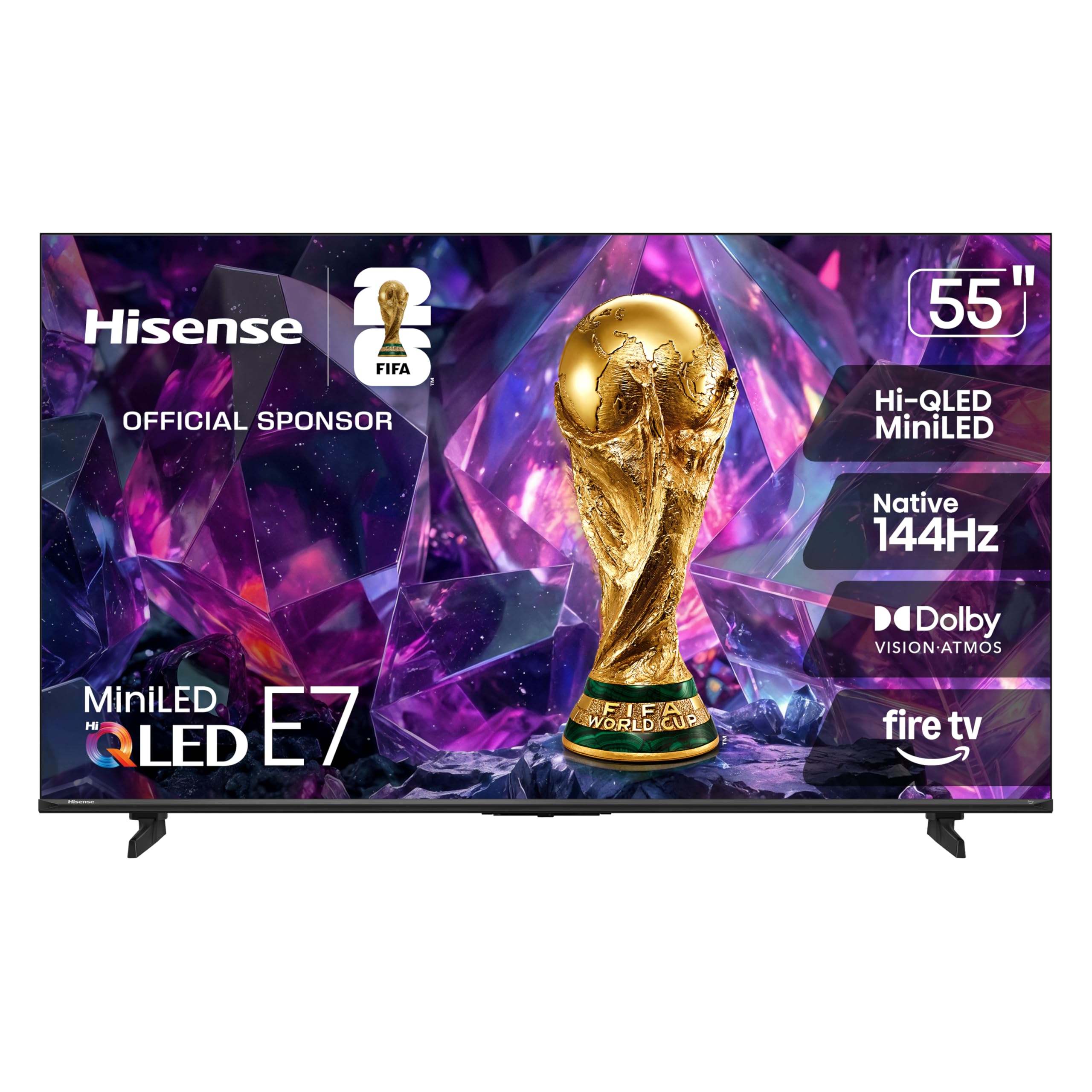
1. Hisense 55″ E7 Cinema Series Hi-QLED Mini-LED 4K UHD Smart Fire TV (55E7SF)
The gaming TV that packs Mini-LED contrast and a native 144Hz panel at a price that undercuts everything else.
This is the set that rewrites what “budget” means for gamers. The Hi-QLED Mini-LED backlight uses precise light zones to punch up contrast — so dark space scenes show deep blacks while stars pop brightly. Picture quality is what owners praise most, with vivid colors and sharp 4K detail that makes fast-paced action easy to follow, as one buyer described it: “Excellent upgrade with rich colors, smooth motion, and clear fast-paced scenes.” The native 144Hz refresh rate keeps racing and shooter games fluid without the blur you get from a standard 60Hz screen.
It supports Dolby Vision and Dolby Atmos (dual Dolby coverage) and includes Dolby Vision IQ, which adjusts brightness based on room light. The AI Picture engine tweaks contrast and color scene by scene — no manual menus to dig into during a game. With over 170 ratings holding a strong 4.4-star average, the crowd consensus is that this delivers picture quality and value that competes with sets costing much more. The catch: a small number of buyers report Wi-Fi connectivity hiccups and occasional black-screen crashes that require a power cycle. These issues appear in a slim minority of units, but the Hisense Fire TV experience is otherwise quick and intuitive.
What wins people over
- Native 144Hz Game Mode for ultra-smooth action
- Mini-LED backlight delivers real contrast and deep blacks
- Dolby Vision + Dolby Atmos for rich gaming
- AI picture & smooth motion (MEMC) reduce blur
What to know going in
- Occasional Wi-Fi disconnects reported by a few owners
- Rare black-screen crashes needing a power cycle
- Fire TV OS may conflict with existing Echo devices
Reach for this if: you want Mini-LED picture quality and a rapid 144Hz refresh without paying the premium for a flagship brand — it is the strongest value in the whole list.
Think twice if: you rely on Wi-Fi for streaming and cannot tolerate any dropouts — a handful of owners hit connection problems with this model.
2. TCL 55″ T7 4K QLED Google TV with 144Hz Gaming (55T7)
A QLED color powerhouse that PC and console gamers alike call stunning for the price.
If you are a PC gamer who plays titles like Crimson Desert or a console owner running a PS5, this TCL QLED set earns near-universal praise for its picture quality. The quantum dot technology covers nearly the entire DCI-P3 color space (the Hollywood color standard), so game environments and character skins look rich and lifelike. Owners specifically report that PC gaming at 4K 120Hz is “no lag/blur” and that the set handles 1080p up to 240Hz for competitive play — a huge range from a budget-friendly panel.
The 120Hz panel refresh rate combines with Motion Rate 480 and MEMC frame insertion to keep fast sports and racing games blur-free. Google TV with built-in Chromecast and Apple AirPlay 2 makes it easy to cast from any device. With nearly 600 ratings and a stellar 4.4-star score, the review consensus is clear: this TV punches well above its cost. The caveat: the HDMI eARC port is the only full-bandwidth HDMI 2.1 input, and some PC users note the TV does not wake properly from power save when connected via HDMI — they need to unplug and replug the cable. If your setup is primarily one console or PC, this is a minor annoyance; if you swap between multiple inputs daily, it may frustrate.
Buyers love
- Rich QLED color covering the DCI-P3 color space
- 120Hz panel with 144Hz gaming support for PC/console
- Motion Rate 480 keeps sports and racing crisp
- Google TV with Chromecast and AirPlay 2 built-in
Worth noting
- Only one HDMI 2.1 port (eARC)
- PC wake-from-sleep issue over HDMI on some units
- Requires internet/Google setup before using HDMI inputs
Best for: PC gamers and console players who prioritize color accuracy and smooth motion above all — the QLED panel and 144Hz support make this a standout at the price.
Not ideal for: users who switch between multiple 4K 120Hz devices — the single HDMI 2.1 input limits multi-console setups.
3. iFFALCON 55″ 4K MiniLED Smart TV with 144Hz VRR 240Hz (55U85)
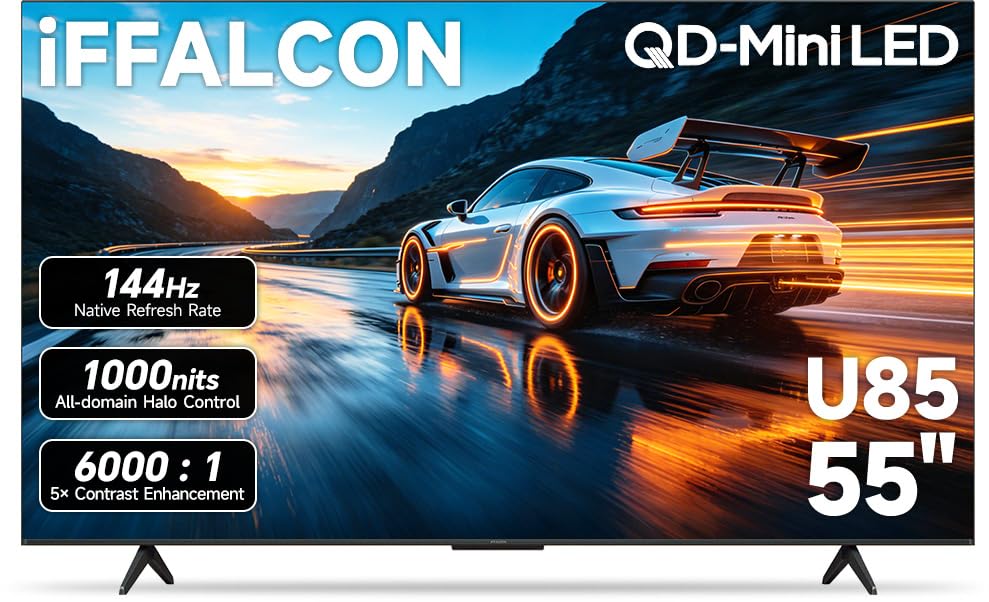
A TCL subsidiary that matches the QM6k spec-for-spec at a -plus discount.
This set is the stealth value pick. iFFALCON is a TCL subsidiary, and owners confirm this Mini-LED TV is “identical to TCL QM6k” for a significant savings. The native 144Hz panel with VRR up to 288Hz (4K at 48–144Hz, upscaled 240Hz) and FreeSync Premium Pro certification gives you near-zero screen tearing and low input lag for serious competitive play. The 4x HDMI 2.1 ports let you connect a PS5, Xbox Series X, PC, and soundbar simultaneously — a luxury you rarely see at this price point.
The built-in audio setup is just as generous: a 2.1-channel system with a 20W woofer and two 15W tweeters delivering 50W total with Dolby Atmos and DTS Virtual:X. Owners call the sound “best ever” for a built-in system, describing it as having a “big sub woofer build in.” The Google TV interface earns praise too — owners say it is smoother and more responsive than Samsung or LG smart platforms. The downside: a few owners received defective units (white static screen or power failure) with unresponsive support, though Amazon returns resolved the issue. The set also runs slightly thicker than premium ultra-slim models, though that is a minor compromise for the feature density here.
Standout features
- 4x HDMI 2.1 ports — connect every console at once
- Native 144Hz with VRR up to 288Hz & FreeSync Premium Pro
- 50W 2.1-channel audio with built-in woofer and Dolby Atmos
- Identical to TCL QM6k at a substantial discount
Heads-up
- Isolated reports of defective units and tough support
- Slightly thicker chassis compared to premium slim models
- Lesser-known brand may worry first-time buyers
Reach for this if: you need multiple HDMI 2.1 ports for a full gaming setup and want built-in sound good enough to skip an external soundbar.
Look elsewhere if: you want a major-name brand with proven long-term reliability — iFFALCON’s defect rate, though low, has generated some support frustration.
4. TCL 55″ QM64L Series Mini LED QLED 4K HDR Smart Fire TV (55QM64L)
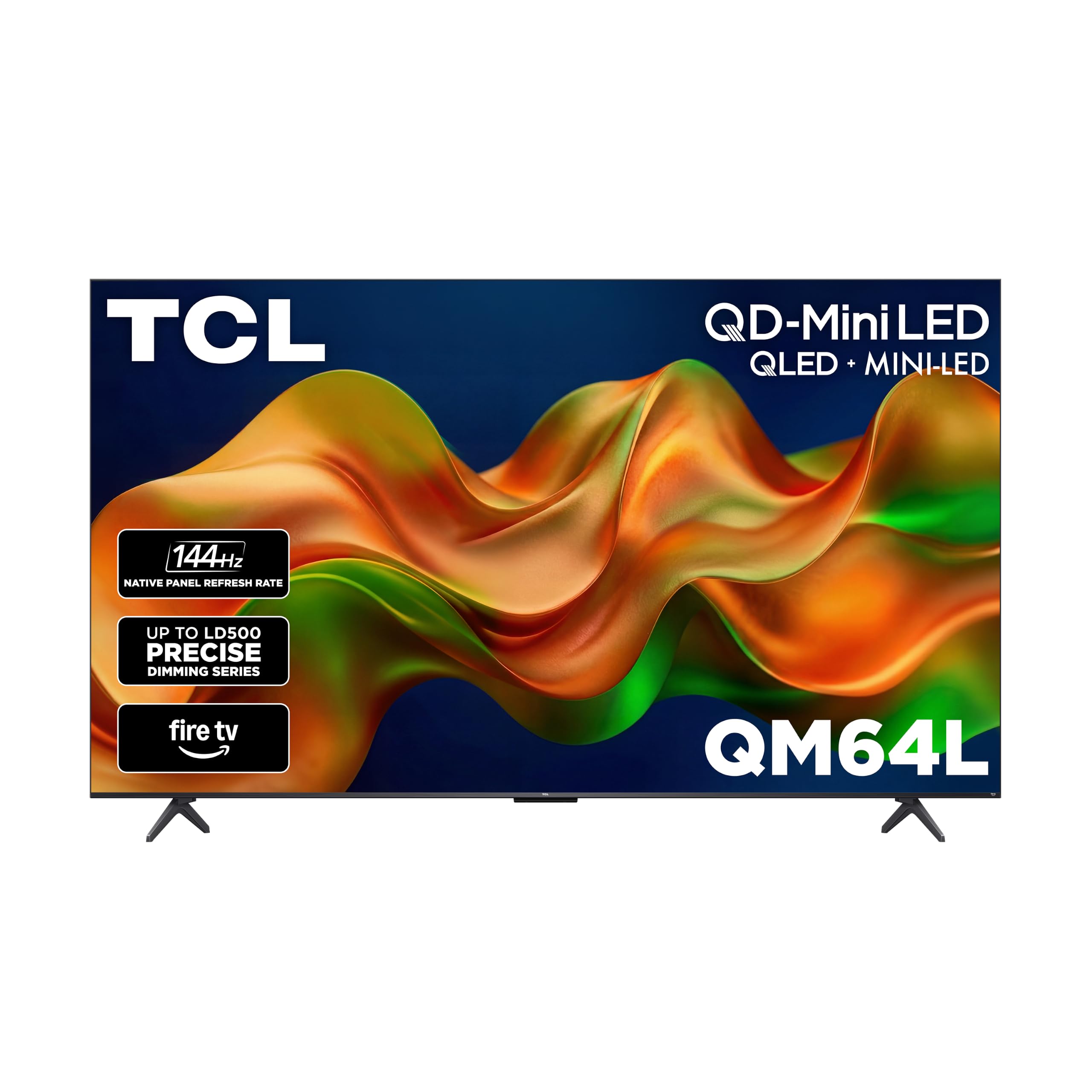
The brightest Mini-LED in its class — visible even on a sunny covered patio.
The TCL QM64L sits at the top of the brightness stack. Its QD-Mini LED technology with the TCL Halo Control System delivers what the maker calls “high brightness Pro” — vivid enough that owners mention using it on a covered patio in direct sunlight without losing the picture. For gaming, that means HDR highlights (explosions, sun flares, neon signs) look punchy and defined rather than washed out. The 144Hz refresh rate and Game Mode keep fast shooters and racing games responsive.
The Enhanced QLED coating promises a lifespan of 100,000 viewing hours, and the 23-bit backlight controller in the Halo System helps prevent the halo effect around bright objects on dark backgrounds. Local Dimming Pro adapts dynamically to on-screen content for deeper blacks in dark game scenes. On the software side, Fire TV with Alexa+ and the backlit remote make navigation easy, and owners call the setup “quick and simple.” A few users hit bugs — the TV sometimes shuts down after a two-minute pause, requiring a full app restart, and the interface can feel slower than expected. For the highest brightness in this budget range, though, it is tough to top.
Where it shines: extreme brightness that stays clear in bright rooms — Mini-LED with Halo Control System gives you deep blacks and vivid highlights that few budget TVs can match.
Where it stumbles: occasional software sluggishness and auto-shutdown after pausing content — not a dealbreaker, but noticeable if you are used to snappier smart TV platforms.
Best for: gamers who watch or play in bright rooms and want a screen that fights glare while delivering rich HDR — the highest brightness of any set on this list.
skip it if: you want a dead-simple interface without occasional app glitches — the Fire TV software here has a few rough edges.
5. Sony 43″ BRAVIA 3 II LED 4K HDR Smart Google TV with Gemini (K-43XR30M2)
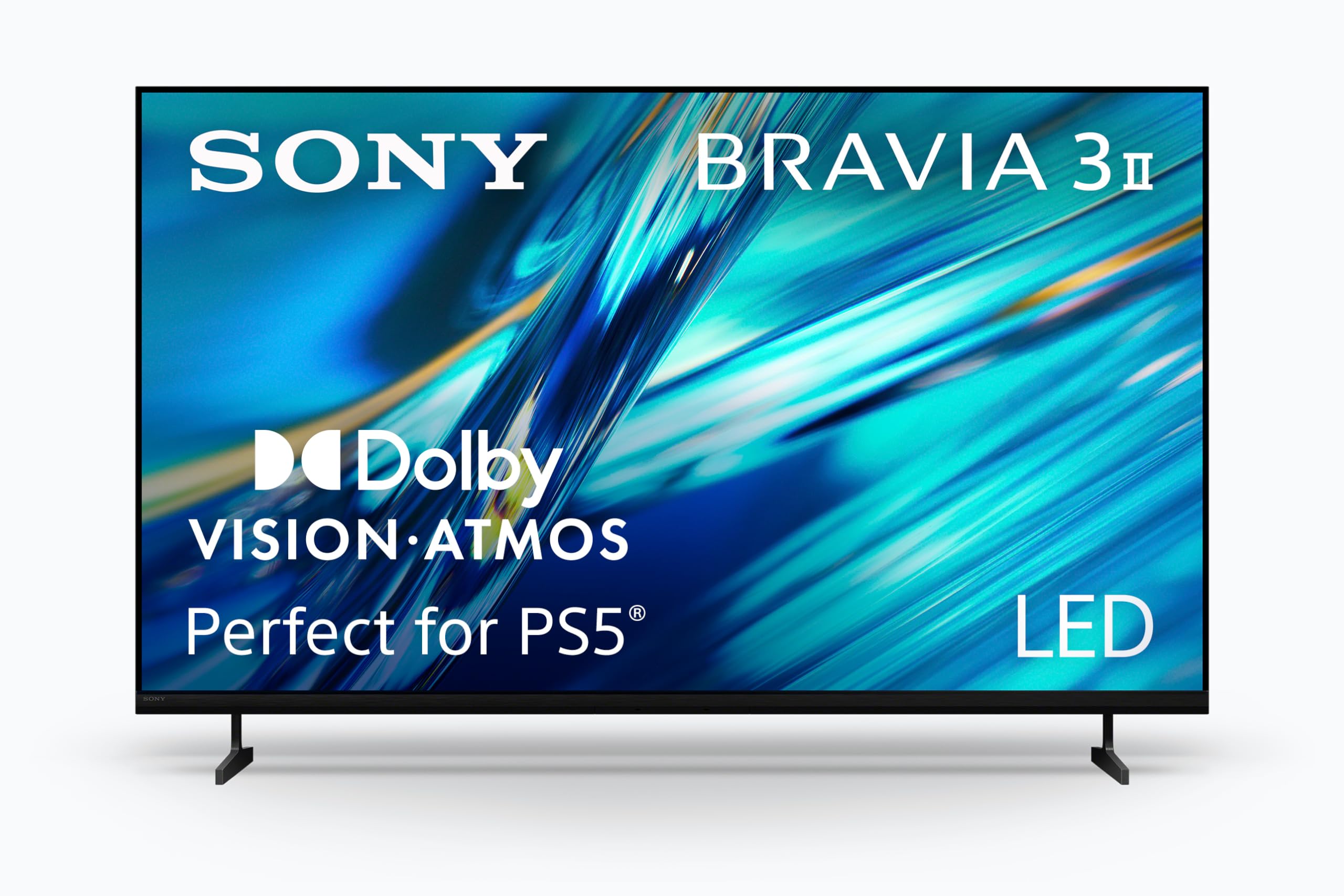
Sony’s XR processor and PS5-exclusive features in a compact, 43-inch gaming package.
Sony brings its AI-powered XR Processor to the budget-friendly BRAVIA 3 II line, and the difference shows. The chip uses AI scene recognition to tune color, contrast, and clarity in every frame — so a dark cave in Elden Ring retains shadow detail without crushing blacks, while a bright outdoor level stays vivid. The 120Hz refresh rate with Motionflow XR keeps fast action blur-free. For PlayStation 5 owners, exclusive features include Auto HDR Tone Mapping and Auto Genre Picture Mode, which automatically adjust settings when you launch a game versus a movie.
The 43-inch size makes it a rare pick for smaller spaces — desks, bedrooms, or apartment living rooms where a 55-inch would dominate. Google TV with Gemini lets you search by voice naturally. The sound gets the most mixed feedback: some owners find it good for a built-in system, while others call it disappointing and recommend a soundbar. The X-Balanced Speakers (oval-shaped) deliver deeper bass than typical oval drivers, but overall audio still falls short of the bigger sets on this list. Compatibility notes: the TV works well with YouTube TV and Apple AirPlay, but a few owners hit a recurring bug where the audio output resets from external speakers to the TV speakers after being off.
What makes it special: the XR Processor with AI scene recognition and exclusive PS5 features (Auto HDR, Auto Genre Mode) — no other budget TV tune picture this intelligently.
The trade-off: at 43 inches, it is the smallest screen here — perfect for a desk but not rich for a large living room. The sound also divides opinion.
Reach for this if: you are a PS5 owner with a desk setup who values AI-processed picture quality above raw brightness or size — the XR engine is genuinely a step ahead.
Consider another pick if: you need a living-room centerpiece or rich built-in sound — the Sony’s audio and 43-inch screen feel more personal than cinematic.
6. Roku 55″ Pro Series 4K QLED RokuTV with Backlit Remote (120Hz)
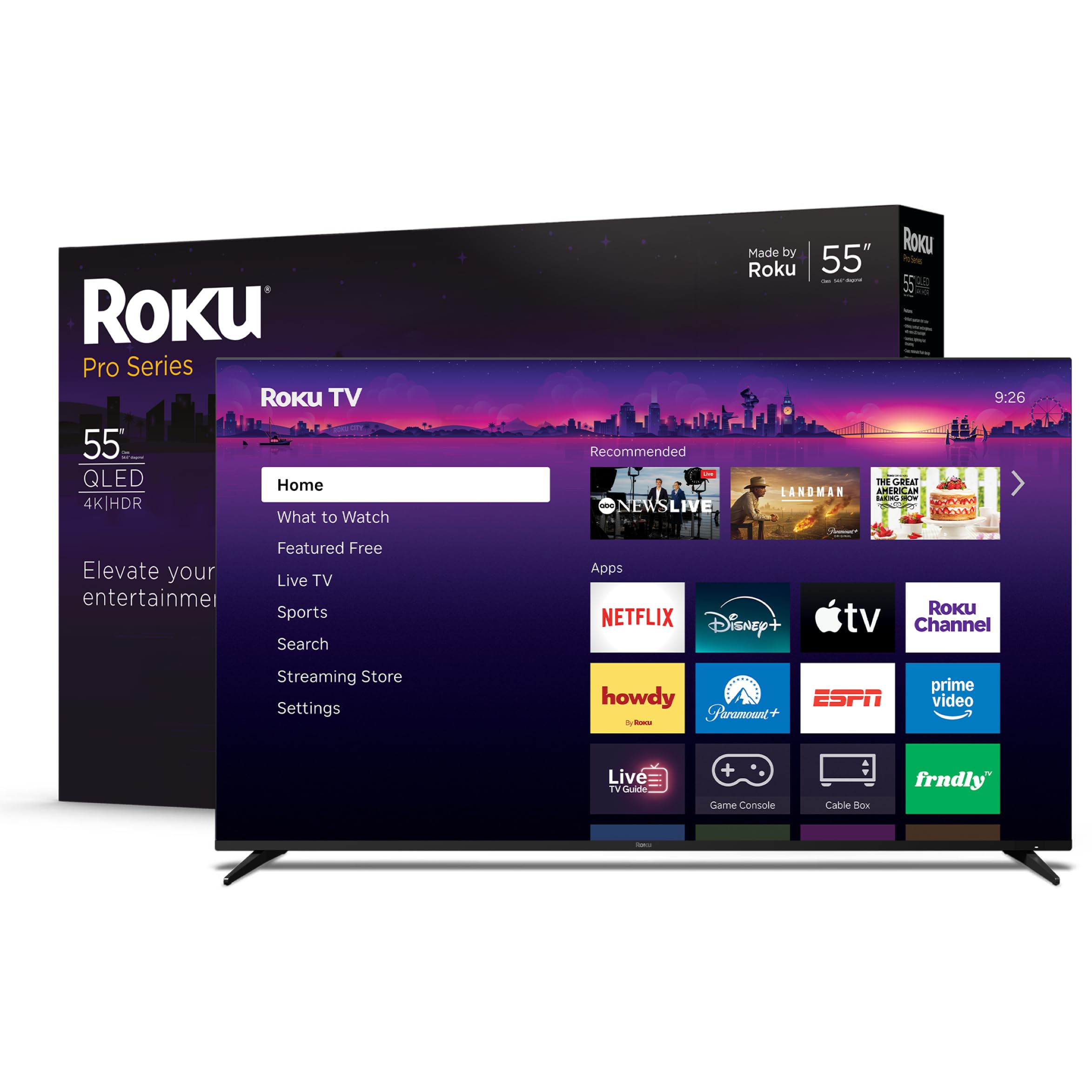
The TV that proves simpler is faster — Roku OS meets FreeSync Premium Pro for tear-free gaming.
If you are tired of cluttered smart TV menus, the Roku Pro Series is a breath of fresh air. The Roku OS is widely considered the simplest to navigate — no bloatware, no confusing categories, just your apps in a grid. Pair that with a 120Hz refresh rate and FreeSync Premium Pro, and you get tear-free, low-lag gaming without having to dig through settings. The backlit Roku Voice Remote Pro is rechargeable and includes hands-free voice controls, so you can launch a game or switch inputs without fumbling for buttons in the dark.
The QLED panel with thousands of Mini-LEDs for backlight creates vivid highlights and deeper darks — picture quality is the single most praised feature, with owners calling it “stunning” and “great color clarity.” Side-firing speakers with Dolby Atmos provide room-filling sound without a soundbar, and the set can be paired wirelessly with Roku audio devices for a fuller home theater. The biggest downsides: a small number of customers note brown spots appearing on the screen after a few weeks (likely a factory defect, handled by Amazon returns), and the Roku ecosystem forces paid subscriptions for commercial-free experiences on some apps. For pure ease of use and a clean, fast gaming experience, this is the pick.
What owners love most: the picture quality (the top-aspect by a wide margin) combined with the dead-simple Roku interface — no learning curve, just play.
The honest caveat: a few units develop screen defects (brown spots) early on, and Roku’s support for hardware issues can be slow — Amazon returns are the safer route if you hit trouble.
Best for: anyone who wants a gaming TV that just works without fuss — the cleanest smart TV interface combined with 120Hz and FreeSync Premium Pro.
Think twice if: you prefer Google TV or Fire TV’s app selection — Roku’s app ecosystem is slightly less flexible, and some free services require paid workarounds.
7. Hisense 55″ U6 Pro Series Mini-LED ULED 4K HDR Gaming Smart Fire TV (55U6SF Pro)
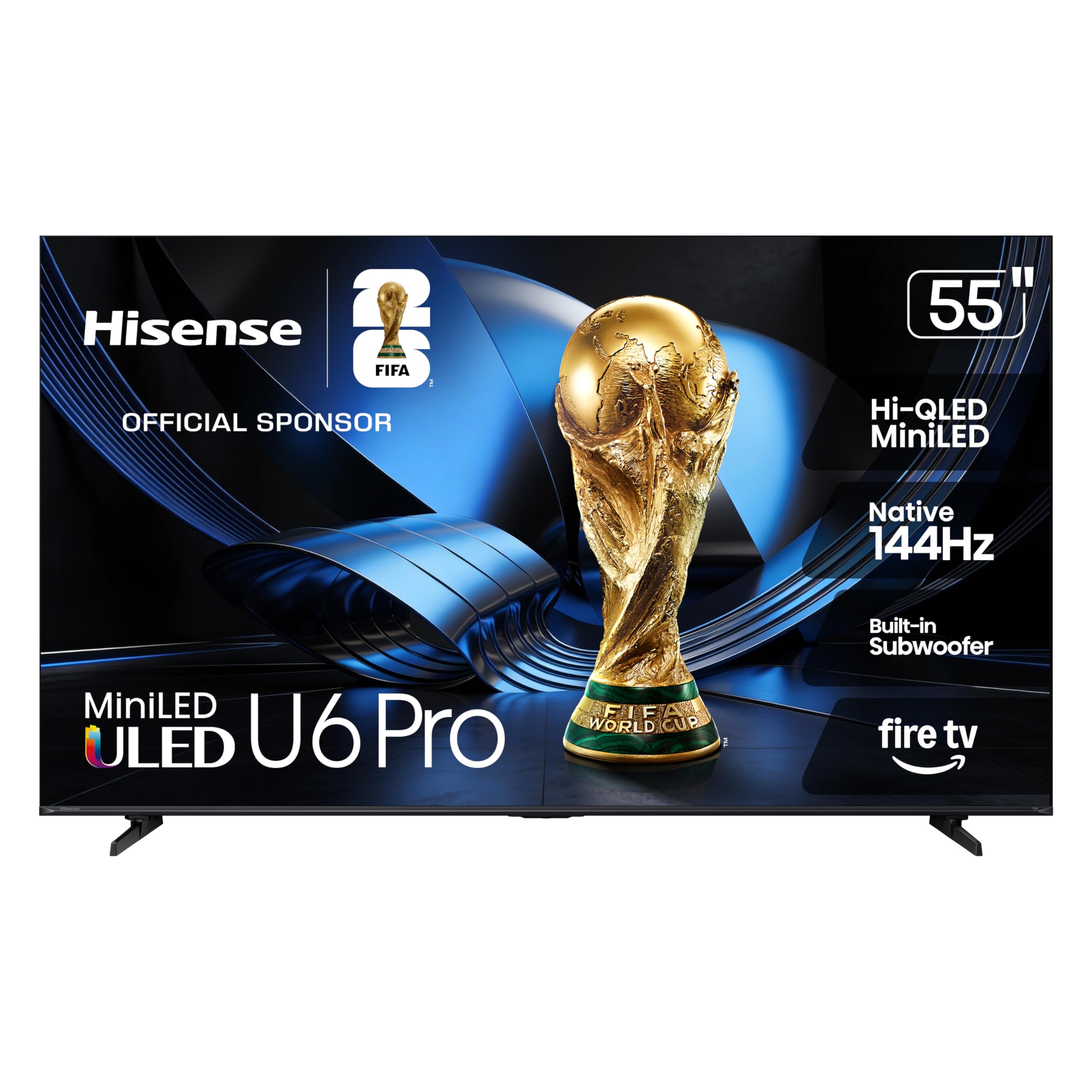
Mini-LED picture, a real subwoofer, and an anti-glare screen that fights bright rooms.
The Hisense U6 Pro is the complete “no extras needed” package. Its built-in subwoofer delivers deep bass for explosions, soundtracks, and cinematic effects — reviewers point out the sound is so good that many skip a soundbar entirely. The Mini-LED backlight with Hi-QLED technology produces striking contrast and vivid, lifelike colors. Gamers will appreciate the native 144Hz refresh rate that keeps fast-paced titles (from racing sims to shooters) buttery smooth with zero lag reported by owners.
The anti-reflection and glare-free coating is a standout — bright rooms or windows do not wash out the picture, making it a strong option for a living room with natural light. The display is also Pantone Validated for color accuracy, so skin tones and game environments look natural. The Hi-View AI Engine automatically adjusts brightness and contrast depending on what you are watching (movies, sports, gaming). The recurring complaint: a portion of units have arrived missing accessories like the power cord, remote, or feet — which is frustrating but usually resolves through Amazon. The initial setup also needs two people for lifting, but once it is up, the experience wins nearly universal praise.
What stands out: the built-in subwoofer means you get rich bass without buying a soundbar — a rare feature at this price, and owners rave about it.
The risk: some units arrive incomplete (missing cables or stand parts) — inspect the box immediately and contact Amazon for replacement if anything is missing.
Reach for this if: you want punchy built-in sound and a glare-free screen for a bright room — this is the most self-contained gaming TV on the list.
Pass if: you want a guaranteed complete box the first time — the occasional missing accessory is a known pattern you may hit.
Understanding the Specs
Refresh Rate (120Hz vs 144Hz)
The refresh rate is how many times per second the screen redraws the image. A standard TV runs at 60Hz, which means the image updates 60 times per second. For gaming, 120Hz or 144Hz doubles (or more) that rate, making fast motion look smoother and cutting down on blur. Every TV on this list runs at 120Hz or 144Hz, which is the single most important spec for a gaming TV. A 144Hz panel gives you headroom for future titles and competitive PC gaming at higher frame rates.
VRR, FreeSync, and ALLM
VRR (Variable Refresh Rate) lets the TV’s refresh rate match the frame rate coming from your console or PC in real time, preventing screen tearing (that horizontal split across the picture). FreeSync Premium Pro is AMD’s version of VRR that also supports HDR gaming. ALLM (Auto Low Latency Mode) automatically switches the TV into its lowest-lag picture mode when it detects a game signal — so you do not have to dive into settings every time you turn on your console. If you play competitive shooters or racing games, you want all three.
HDMI 2.1 Ports
To run 4K resolution at 120Hz or 144Hz, you need an HDMI 2.1 port. Older HDMI 2.0 ports are capped at 4K 60Hz. The more HDMI 2.1 ports a TV has, the more devices (PS5, Xbox Series X, PC, soundbar) you can connect at full speed without swapping cables. A single HDMI 2.1 port is okay for a one-console setup, but four ports (like the iFFALCON 55U85 offers) give you a full command center.
Mini-LED vs QLED
Both are LED technologies that improve picture quality beyond standard LED. QLED (Quantum Dot LED) uses a layer of quantum dots to produce richer, more vibrant colors — especially reds and greens — making games look punchier. Mini-LED takes the backlight itself and shrinks the LEDs down, so the TV can pack many more tiny lights into the screen. This allows precise local dimming — turning off individual zones to create deep blacks while keeping bright areas bright. Mini-LED generally gives you better contrast, while QLED gives you better color volume. Some TVs combine both (QD-Mini LED) for the best of both worlds.
FAQ
What is the cheapest refresh rate I should accept for gaming?
Will these budget TVs work with PS5 or Xbox Series X at 4K 120Hz?
What is the difference between native 144Hz and a 120Hz panel that supports 144Hz gaming?
Is a 43-inch TV too small for gaming?
Do I need a soundbar with these budget gaming TVs?
How important is VRR for console gaming?
Can I use these TVs as a computer monitor?
Which TV on this list has the best built-in sound?
How long do budget gaming TVs typically last?
Which budget gaming TV is best for a bright room?
Final Thoughts: The Verdict
For most people, the budget tv for gaming winner is the Hisense 55″ E7 because it delivers Mini-LED contrast, native 144Hz refresh, and Dolby Vision/Atmos at a price that undercuts rivals with the same spec sheet. If you want TCL’s QLED color accuracy and a top owner rating, grab the TCL 55″ T7. And for the highest HDMI 2.1 port count and built-in subwoofer sound that replaces a soundbar, the iFFALCON 55″ U85 is the one to reach for. With 120Hz-plus panels, VRR, and HDMI 2.1 across every pick, you can game confidently without overspending.
How We Picked
We do not accept paid placement. Every pick is matched to a real buyer and a real use-case; we do not hands-on test units.
Sources & Methodology
Specifications: manufacturer listings and product documentation. Review insights: verified customer reviews, as of July 2026. Pricing: not shown on this page (it changes often); check the current price via the retailer link.
As an Amazon Associate, FitlyFast earns from qualifying purchases. This does not affect which products we feature.