
Our readers keep the lights on and the weekend projects moving. As an Amazon Associate, I earn from qualifying purchases.
Specs are compiled from manufacturer listings and verified buyer reviews and can change over time — please confirm the key details on the product page before buying.
Finding a real carbon frame that doesn’t demand a second mortgage is the dream, but the fear of a fragile, flexy, or poorly-finished bike stops most people from pulling the trigger. This guide highlights models with genuine T800 carbon, reliable groupsets, and verified owner feedback. Every bike here uses a T800 carbon fiber frame, and we have matched them to specific riding goals so you know exactly which one to buy.
I’m Rikta — the founder and writer behind FitlyFast. This guide is built by comparing the manufacturers’ published specifications and the patterns across verified customer reviews, so you get each pick’s real strengths and trade-offs instead of marketing spin.
Whether you are hunting for your first fast bike or a race-ready upgrade that leaves cash in your pocket, the right budget carbon road bike balances a lightweight T800 frame with a reliable groupset like Shimano 105 or SORA, and our breakdown shows you exactly where each model excels — and where it cuts corners.
Our Picks at a Glance
How To Choose The Best Budget Carbon Road Bike
Buying a budget carbon road bike requires smart trade-offs. The frame is carbon, but groupset, brakes, wheels, and assembly vary significantly.
Choose Your Groupset Level
The groupset controls shift smoothness and maintenance frequency. Shimano SORA (18-speed) is the entry point — reliable, durable, and perfect for new riders. Shimano Tiagra (20-speed) adds one more gear and a slightly slicker feel. Shimano 105 (22 or 24-speed) is the enthusiast balance: it offers pro-level shift quality and a wider gear range without the pro-level price tag. If you plan to ride competitively or do long weekend centuries, aim for 105.
Brake Type: Rim vs. Mechanical Disc vs. Hydraulic Disc
Rim brakes are light and simple but lose stopping power in wet conditions. Mechanical disc brakes (cable-actuated) give you better modulation and all-weather performance. Hydraulic disc brakes offer the strongest, most consistent stopping power with the least hand effort — a real advantage on long descents. Most budget carbon bikes now come with disc brakes, but double-check whether they are mechanical or hydraulic, as hydraulic models are pricier and heavier to maintain but far superior in feel.
Assembly & Fit Considerations
Most direct-to-consumer carbon bikes arrive 90% pre-assembled, but “ready in 15 minutes” is optimistic for a first-timer. Look for models with clear video instructions and proper torque specs. Pay attention to frame sizing: many budget brands use generic geometry that can feel aggressive. If you are between sizes or shorter than 5’2″, read owner reviews about seat post trimming and reach — one buyer here at 4’11” found the perfect fit after cutting the seat shaft. An occasional unit may arrive with minor tuning issues (brake rub, derailleur alignment), so factor in a local shop visit if you are not comfortable with basic adjustments.
Quick Comparison
| Model | Best For | Groupset / Speeds | Weight | Brake Type | Amazon |
|---|---|---|---|---|---|
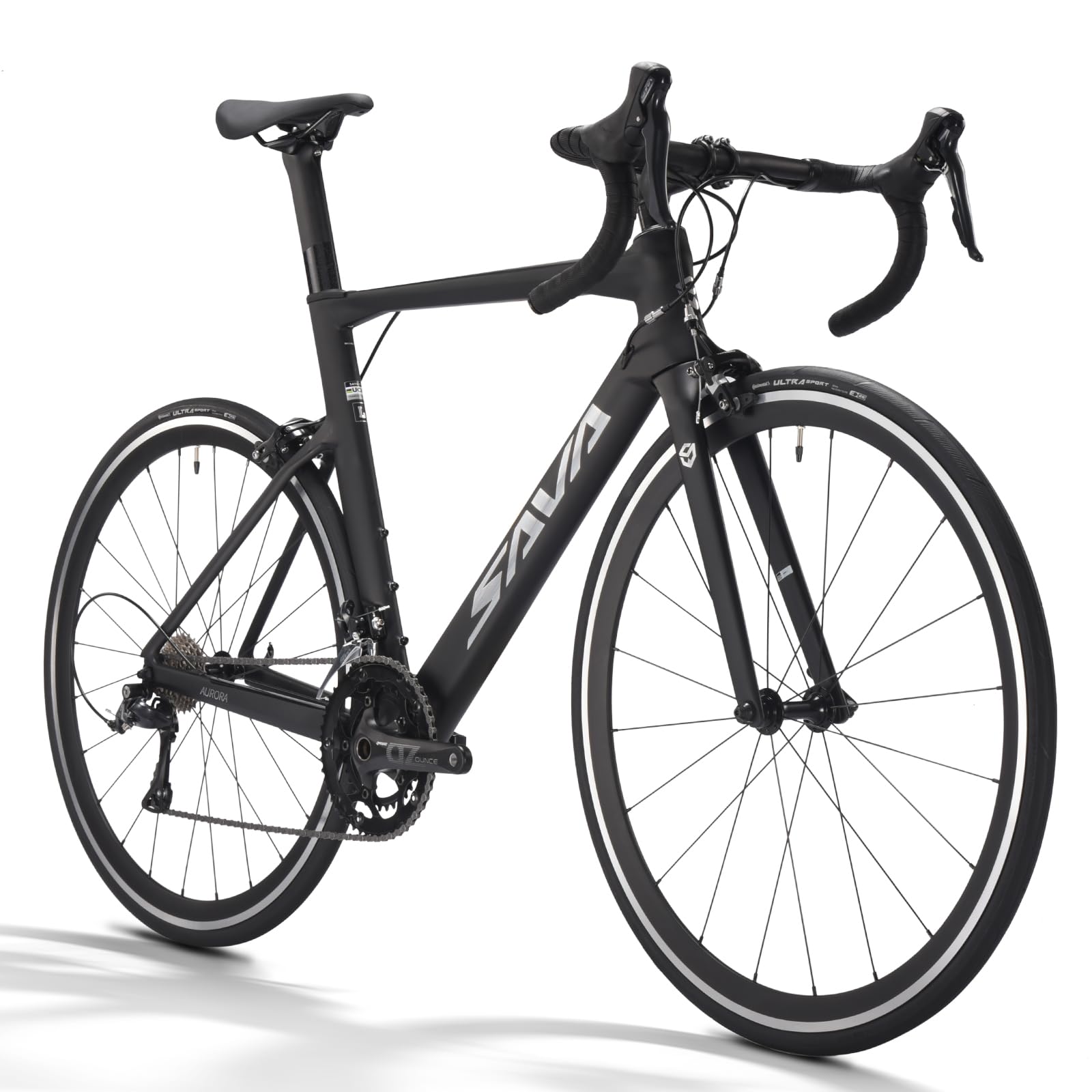
| SAVADECK Carbon Road Bike (SORA)★ Best Overall | Absolute entry-level value | Shimano SORA 18-sp | 8.9 kg (19.6 lb) | Dual V-Brake | Amazon |
In‑Depth Reviews
1. SAVADECK Carbon Road Bike for Beginners (SORA 18-Speed)
The entry-level champion that doesn’t compromise on the frame.
At 8.9 kg (19.6 lb), this is the bike that proves a real T800 carbon fiber frame is accessible without entering a lottery. The frame is claimed to be five times harder than aluminum alloy at the same volume, which means you feel stiffness in the bottom bracket when you stomp on the pedals, not flex. The wind tunnel-designed aero shaping and full internal cable routing are details you would not expect at this level, and they help the bike cut through air without looking like a science experiment.
The Shimano SORA 18-speed groupset is the perfect teacher for a new road rider — it shifts reliably and predictably, and it is durable enough to survive learning mistakes. One rider at 4’11” found the fit perfect after trimming the seat shaft, and the 90% pre-assembly means you can be riding within 15 minutes. Owners consistently praise the quality, with build quality and appearance being the most-discussed strengths. The catch is that it uses dual V-brakes rather than discs, so wet-weather stopping requires more planning, and the saddle angle may slip on some units. For the first carbon bike buyer who prioritizes weight and frame quality over brake tech, this is the one.
What wins people over
- Ultra-light T800 carbon frame at a compelling entry price point
- Wind tunnel-tested aero frame with full internal cable routing for reduced drag
- 90% pre-assembled, ready in about 15 minutes with basic tools
- Continental Ultra Sport II tires offer excellent grip and puncture resistance
Honest trade-offs
- Dual V-brakes are less powerful in wet conditions than disc brakes
- SORA groupset is entry-level — less crisp than Tiagra or 105
- Seat may not hold its angle; a few buyers report it slipping
Grab it if: you want the lightest possible entry into carbon without spending extra on disc brakes you may not need yet.
Think twice if: you ride often in rain or plan to race — you will want the hydraulic disc brakes and 105 shifting of the picks above.
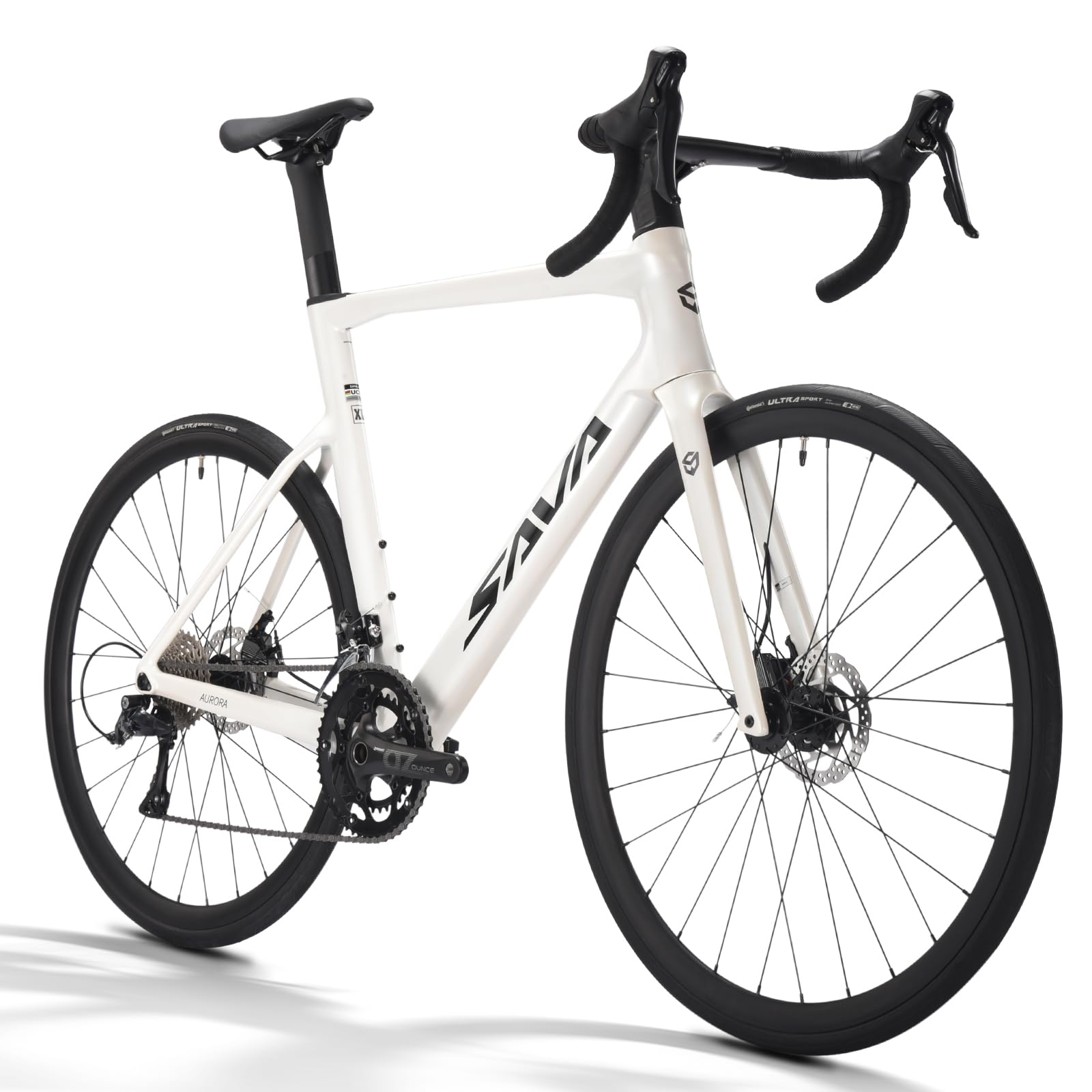
2. SAVADECK Carbon Disc Road Bike (SORA R3000 18-Speed)
SORA reliability with all-weather stopping power.
This version swaps the V-brakes for bilateral oil disc brakes (mechanical disc, cable-actuated), giving you far more controlled braking in the rain or on descents. The trade-off is a slightly higher weight of 9.6 kg (21.1 lb) compared to the V-brake model — an 8% increase — because disc brake frames need extra reinforcement and the calipers themselves add mass. The build quality is the most praised aspect, and the bike is described as super light and super fast by owners, with one 78-year-old rider calling it a steal after swapping from a traditional bike.
The Shimano SORA R3000 groupset remains smoothkes are a significant step up from mechanical discs: they provide strong, consistent stopping power with minimal hand effort, which makes a real difference on long descents. The 700x25C JETTY PLUS tires include an anti-skid design on both sidewalls, adding grip when you lean into a high-speed turn. Assembly is straightforward (10 minutes for some owners), though the included pedals are basic and most riders swap them for SPD. A few owners noted a loud freewheel cassette that needed unmixed grease — a quick shop fix. This is the balance for riders who value the full carbon experience without wanting to touch the drivetrain.
Highlights
- Full T800 carbon frame, fork, seat post, and wheelset for optimal weight and vibration damping
- Shimano R7120 24-speed with hydraulic disc brakes offers elite-level shifting and stopping
- Anti-skid JETTY PLUS tires provide confident cornering grip at speed
- Build quality and value for money are the most praised aspects by owners
Potential friction points
- Stock pedals are basic; budget for SPD replacements
- Manual is not very helpful — rely on online assembly videos
- Freewheel cassette may need professional lubrication to quiet it down
Ideal for: the rider who wants a turnkey full carbon bike with hydraulic discs and does not want to upgrade anything for at least a season.
Not for: someone who insists on a known brand name on the downtube — the performance is there, but the badge is not.
