
Our readers keep the lights on and the weekend projects moving. As an Amazon Associate, I earn from qualifying purchases.
Specs are compiled from manufacturer listings and verified buyer reviews and can change over time — please confirm the key details on the product page before buying.
Finding a pair of passive speakers that sound great without draining your wallet is the real challenge in budget audio. You want clear vocals, tight bass, and a build that doesn’t rattle, and you want it all without throwing money at a big-box brand name. This guide cuts through the noise to find the pair that actually delivers for your money.
I’m Rikta — the founder and writer behind FitlyFast. This guide is built by comparing the manufacturers’ published specifications and the patterns across verified customer reviews, so you get each pick’s real strengths and trade-offs instead of marketing spin.
Whether you are building your first stereo system or upgrading a desktop setup, these are the top contenders for the title of best budget passive speakers you can buy right now.
Our Picks at a Glance

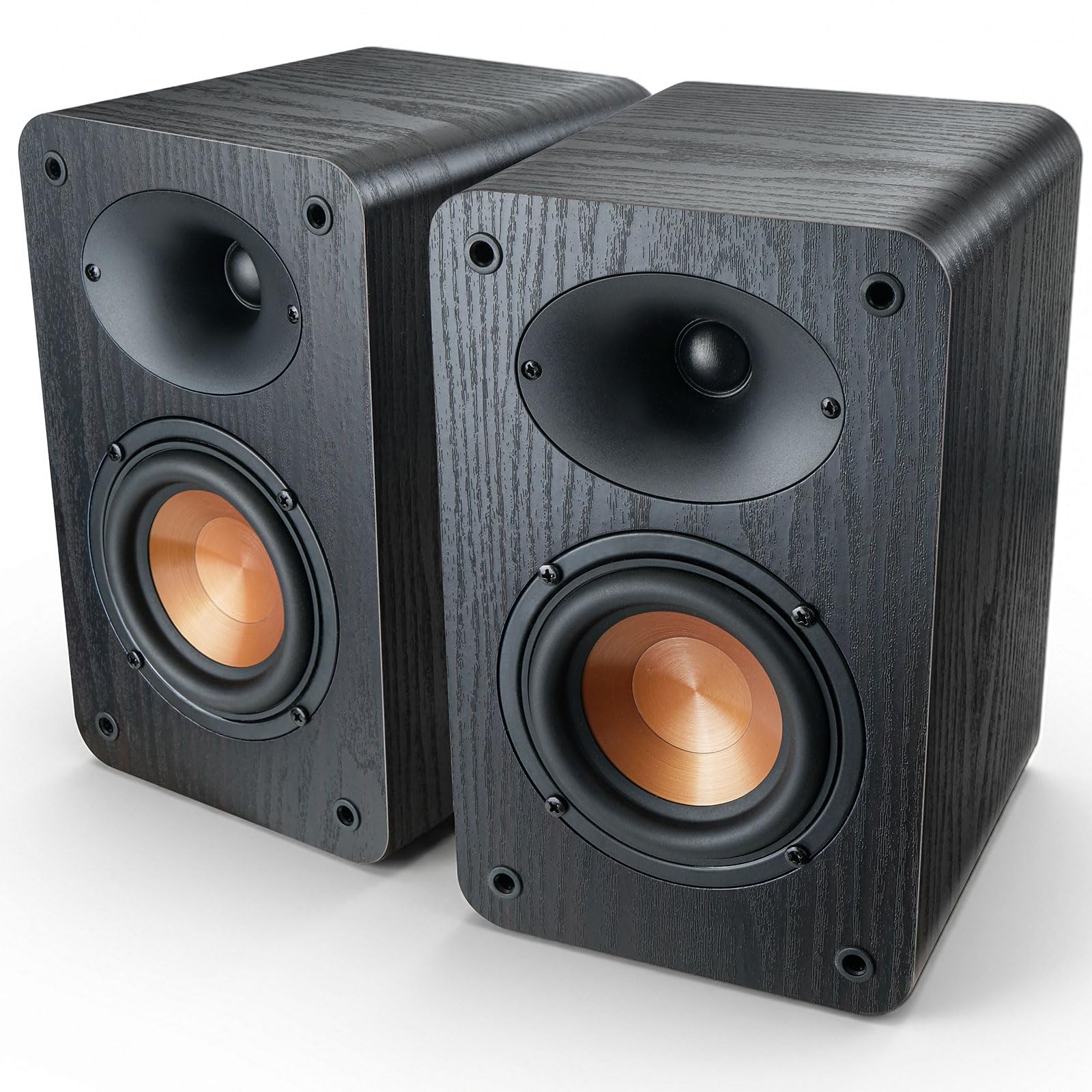
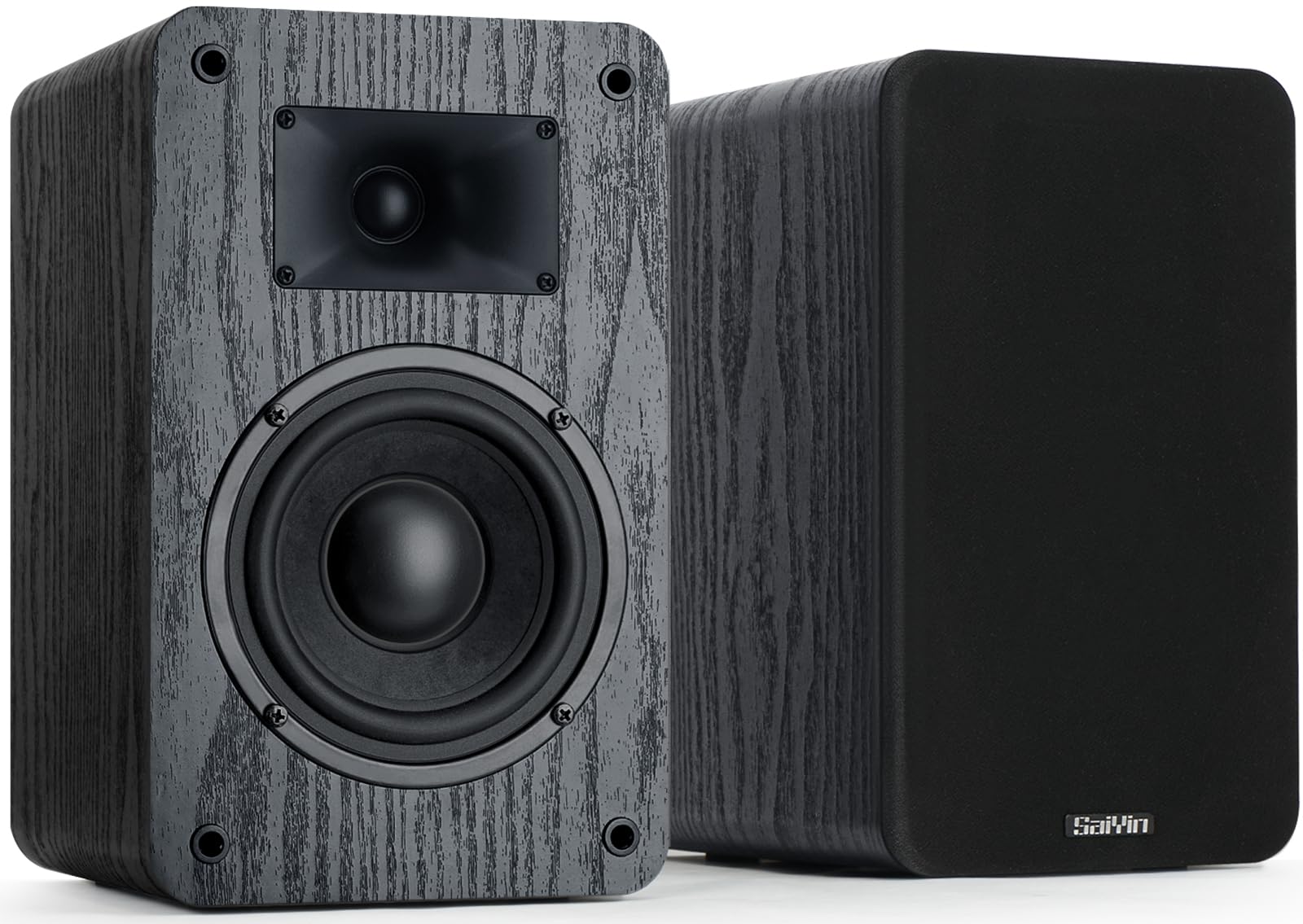
How To Choose The Best Budget Passive Speakers
Picking the right passive speakers is about matching the speaker to your room, your amplifier, and your music taste. A speaker that sounds boomy in a small office might sound thin in a living room. Here is what you need to check.
Woofer Size and Bass Response
The woofer is the big driver that handles bass and lower midrange. A 4-inch woofer produces tighter bass best suited for a desktop, while a 6.5-inch woofer pushes more air and delivers deeper low-end without needing a subwoofer. For a medium living room, aim for at least a 5-inch woofer.
Impedance and Sensitivity
Impedance (measured in ohms) tells your amplifier how much resistance the speaker offers. A 4-ohm speaker draws more current than an 8-ohm one, so you need an amplifier that is rated to handle 4-ohm loads. Sensitivity (dB SPL) tells you how loud the speaker gets with one watt; higher sensitivity means louder volume from a weak amplifier.
Driver Materials and Tweeter Type
A silk dome tweeter usually delivers smoother, less fatiguing highs for long listening sessions. A soft-dome tweeter does a similar job but can vary in transparency. The woofer cone material — whether paper, fiberglass, or Kevlar — affects rigidity and how cleanly the bass reproduces without distortion.
Quick Comparison
| Model | Best For | Woofer Size | Power Handling (RMS) | Impedance | Amazon |
|---|---|---|---|---|---|
| Dayton Audio B40★ Best Overall | Desktop / Nearfield | 4-inch | 30W | 8 ohm | Amazon |
| RIOWOIS Passive BookshelfCompact Champ | Small Rooms / Spaces | 4-inch | 40W (80W peak) | 4 ohm | Amazon |
| Saiyin 5″ WooferBest Value | Critical Listening | 5-inch | 40W per speaker | 4 ohm | Amazon |
| Dayton Audio B65 | Living Room / TV | 6.5-inch | 60W | 8 ohm | Amazon |
| Pyle 5.25″ | Versatile / Value | 5.25-inch | 50W per speaker (100W peak) | 6 ohm | Amazon |
| Rockville RockShelf 68C | Home Theater | 6.5-inch | 50W per speaker (200W peak) | 8 ohm | Amazon |
| HiVi-Swans Oasis 140 | Audiophile Starter | 4-inch metal dynamic | 50W peak per speaker | 4 ohm | Amazon |
| NEUMI BS5 | Front-Port Placement | 5-inch fiberglass | — | 8 ohm | Amazon |
| Micca RB42 | Bass / Compact HiFi | 4-inch long-throw | — | 8 ohm | Amazon |
In‑Depth Reviews
1. Dayton Audio Classic B40 Bookshelf Speakers
The budget king that punches well above its price on a desktop.
You get a 2-way passive design with a 4-inch woofer and a 1-inch soft-dome tweeter, handling 30W RMS per speaker. For a small desk or a nearfield PC setup, the clarity on vocals and instruments is what wins people over, with buyers reporting a clean, balanced sound that is best paired with a subwoofer for deeper bass.
The build uses wood veneer cabinets and integrated keyhole mounting points for wall installation, backed by a 5-year warranty. At 4.5 stars across a solid base of reviews, this is the crowd favorite for a reason.
What wins people over
- Incredible value for the price; sound quality is the #1 praise
- Easy setup that accepts banana plugs
- 5-year warranty for confidence
The honest trade-off
- Lacks deep bass; a subwoofer is recommended for full-range sound
- Muddy low end near its limits without an amplifier
Reach for this if: you are building a nearfield desktop system or need entry-level surrounds that sound clear and cost almost nothing.
Look elsewhere if: your room is medium or larger and you want bass without a subwoofer — the 4-inch woofer has its limits.
2. RIOWOIS Passive Bookshelf Speakers
Small-box bass that surprised an auto shop.
A silk dome horn tweeter drives crisp highs while a rear-mounted bass reflex port pushes the low end deeper than its 4-inch woofer suggests. The peak power hits 80W (40W RMS), and a 4-ohm impedance means you need an amplifier that can handle that load.
Buyers report that these “rattle my wrench drawer” in a large auto shop — clean, full sound that outperforms a typical Bluetooth speaker setup. The furniture-grade cabinet includes hand-sanded rounded edges, and the built-in wall-mount bracket has foam padding to reduce vibration against the wall.
The honest limit: it ships without speaker wire, and the bass rolls off at 57Hz, meaning a subwoofer is recommended for deep low-end. It sits at 4.7 stars across 30+ ratings, making it a very strong contender.
Who it beats: anyone wanting a compact pair that sounds bigger than it measures, perfect for an enclosed patio or small office.
The real catch: you need to factor in the cost of an amplifier and speaker wire, both sold separately.
3. Saiyin 5″ Woofer Passive Speaker
Audiophile-grade sound on a budget that reveals detail in every track.
A 5-inch woofer and a 20mm silk dome tweeter combine to deliver 40W per speaker at 4 ohms, hitting up to 83dB SPL for a punchy, responsive sound. The frequency response range of 55Hz-20kHz captures bass nuances and extends beyond the human hearing limit for airy highs.
Owners mention “crisp” mids and “impressive bass and volume for a budget setup,” especially when paired with a Fosi mini amp. The cabinet measures 6.5 inches wide by 10.6 inches high — compact enough for a desktop while still filling a small room.
Standout feature: the 55Hz low-end extension is impressive for a 5-inch woofer, reducing the immediate need for a subwoofer in small rooms.
Note for shoppers: this is a 4-ohm speaker; verify your amplifier is rated for 4-ohm loads to avoid damage.
4. Dayton Audio Classic B65 Bookshelf Speakers

The bigger brother that fills a living room without a subwoofer.
Step up to a 6.5-inch woofer with 60W RMS power handling and you get “surprising” bass performance for the price — customers note it fills a “fairly large room” without needing a sub. The 1-inch soft-dome tweeter handles the highs, and the wood veneer cabinet with integrated keyhole mounts makes wall installation straightforward.
It shares the same 5-year warranty as the B40, and the build quality is a standout with 16 out of 74 ratings praising it. The honest note: the mids can feel thin compared to the treble and bass, so equalization may be needed for vocal-heavy music.
Why owners recommend it
- Surprising bass depth for movies and TV without a subwoofer
- Clear, balanced sound with decent high-frequency response
- Beautiful wood veneer finish that blends with decor
The shortcoming
- Lacking audio midsection; vocals can sound thin
- Struggles with certain female vocals at specific frequencies
Best for: TV and movie watching in a medium room where you want bass without a separate subwoofer.
Skip if: you are an audiophile focused on vocal clarity in the mids — you might find the thin midrange frustrating.
5. Pyle 5.25″ Home Audio Speakers

Vintage styling with tight, modern bass that outperformed 80s towers.
A 5.25-inch woven glass fiber woofer and a 0.75-inch silk dome tweeter deliver 50W RMS per speaker (100W per pair) and a 200W peak. The 65Hz-20kHz frequency range covers the essentials, and the 6-ohm impedance sits neatly between 4 and 8, making it compatible with most receivers.
Build quality is a major selling point: 12mm MDF with a farmhouse wood grain finish, magnetic grills, and gold-plated 5-way binding posts. Buyers called these a “surprisingly good” upgrade from 80s-era Kenwood towers, noting “good, tight bass and crisp highs” that eliminated the boominess of their previous setup.
The edge: the 12mm MDF cabinet is sturdier than many budget competitors, reducing cabinet resonance at higher volumes.
Worth noting: speaker wire is included, which saves you a small trip to the store.
6. Rockville RockShelf 68C V2

Kevlar woofers in a budget enclosure that sound way more expensive than they are.
The standout feature here is the 6.5-inch Kevlar cone woofer — a material usually found in far pricier speakers — paired with a 1-inch silk dome tweeter. It handles 50W RMS per speaker (100W per pair) with a 200W peak, and the 8-ohm impedance is a safe choice for most receivers and surround-sound systems.
The MDF cabinet in a dark wood grain finish includes rounded corners and magnetic detachable grills for a clean look. Reviewers point out “surprising bass for a sealed bookshelf” and call it “the best at this price,” noting it sounds identical to a more expensive Pyle model but costs less. Buyers recommend pairing it with a 50-100W amplifier for a small to medium room.
The difference maker: Kevlar woofers are stiffer than paper or fiberglass, which means cleaner low-end reproduction with less distortion.
A fair warning: one reviewer noted these are “remarkably bright sounding” and would benefit from a subwoofer to fill in the lowest lows.
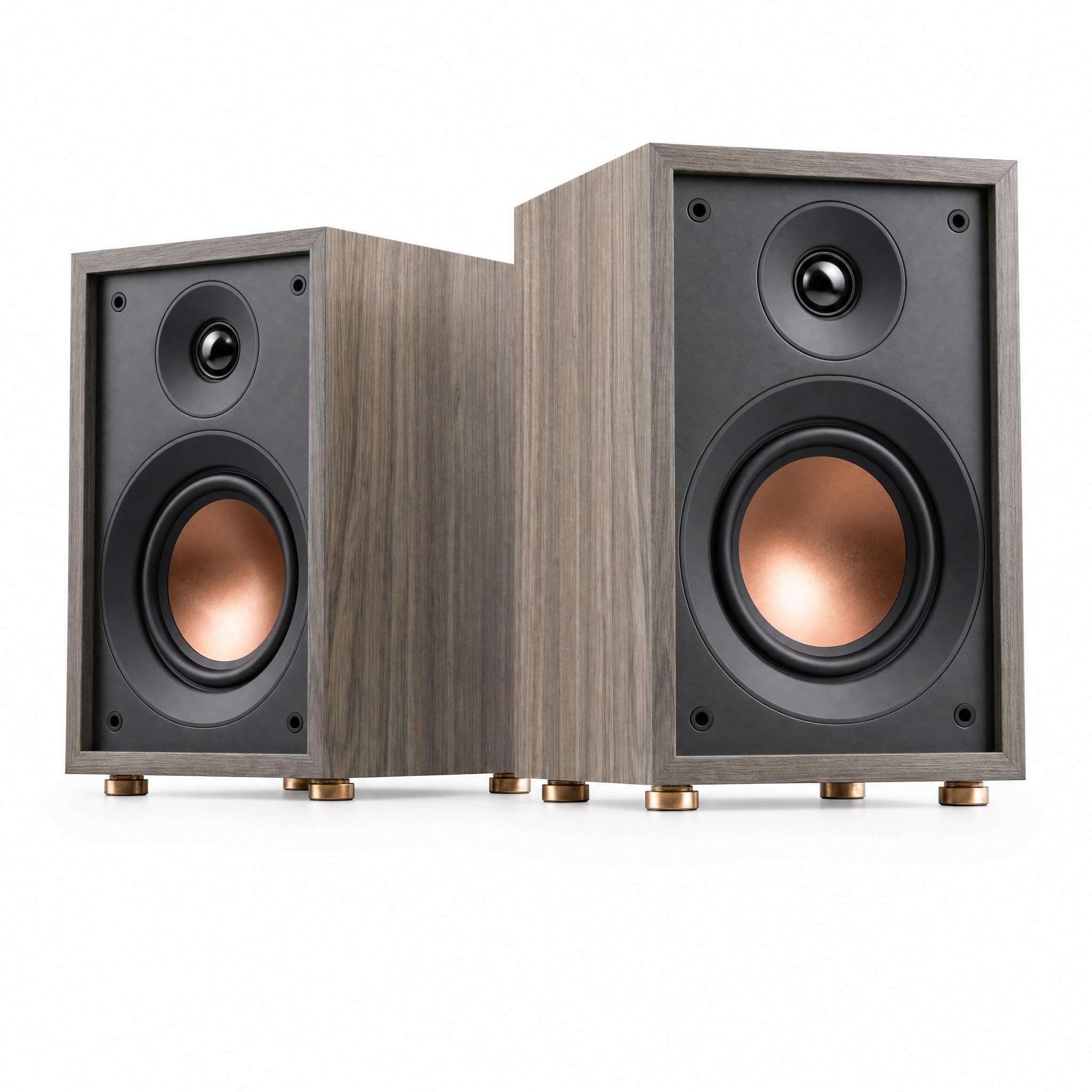
7. HiVi-Swans Oasis 140
Studio-grade sound from a brand that audiophiles actually trust.
HiVi-Swans brings serious engineering to the budget segment — a 2-way, fourth-order inverted phase speaker system (a design that aligns sound waves for clarity) with a 20mm soft dome tweeter (up to 20kHz) and a 4-inch metal dynamic woofer, each handling a peak of 50W. The 4-ohm impedance requires a compatible amplifier, but the reward is a natural, punchy bass and an rich soundstage.
Build quality is immediately noticeable: substantial gold-plated binding posts and a grey fabric mesh that gives a “soft healing” texture. The aggregated buyer consensus calls these “well-built” with “excellent sound quality” that scales with better amplification. They require a 10-20 hour break-in period, after which the deep, quick bass and clean tweeter come alive.
The specialist edge: many users report these outperform the Sony SSCS5 and ELAC BS41 in direct comparisons for a fraction of the price.
Who should reconsider: sound quality gets mixed reviews from some — at low volumes the sound can lack clarity, so these reward listeners who drive them louder with a good amp.
8. NEUMI BS5 Passive Bookshelf Speakers

The front-ported champion that sits flush against your wall without complaint.
A 5-inch fiberglass woofer with a rubber surround and a 1-inch silk dome tweeter with an integrated waveguide produce a smooth, extended treble response with accurate imaging. The clever design choice here is the front-ported cabinet — because the port fires forward, you can place these speakers right against a wall without the bass turning muddy, a massive advantage over rear-ported competitors.
The enclosure uses rounded vertical corners to reduce baffle diffraction (sound distortion from the cabinet edges), and the magnetic grill system eliminates unsightly mounting holes. The aggregated buyer consensus is clear: these are “excellent speakers for the price,” outperforming models that cost more. At 4.7 stars across 400+ reviews, it is among the most trusted picks in the category.
The biggest wins
- Front-ported design allows tight wall placement with no bass muddiness
- Excellent dialogue clarity and musical immersion for movies and music
- Great stereo imaging in nearfield setups
The trade-off to know
- Treble is laid-back and rolled off, which some may find lacking sparkle
- Bass is slightly inconsistent and choked by the cabinet; wall placement helps
Perfect for: anyone with limited shelf depth where speakers must sit close to or against a wall — the front port solves a real placement headache.
Think twice if: you want immediate punchy highs and heavy bass without a subwoofer.
9. Micca RB42 Reference Bookshelf Speakers

The tiny box that defies physics with bass you feel in your chest.
The Micca RB42 is a legend at this price point. A long-throw 4-inch woofer with a heavy steel frame and a vented pole piece pushes bass that owners say “defies physics.” A 0.75-inch silk dome tweeter using a neodymium magnet handles the highs, while a 10-element crossover (a circuit that splits frequencies) with high-grade film capacitors and air core coils ensures transparency and tonal balance.
The catch is power: these speakers are inefficient and need clean wattage (50-60W recommended) to shine. With the right amp, shoppers say a “rich, warm sound” that fills a 20×20-foot room with surprising authority, handling EDM and rock without distortion at moderate levels. The build is sturdy with magnetic grilles and a dark walnut finish. At 4.8 stars across 800+ ratings, it is the highest-rated passive speaker in this entire list.
The honest verdict: if bass from a compact speaker is your priority, nothing in this budget tier beats the RB42.
skip it if: you have a weak receiver — these need a proper amplifier to show what they can do, and the woofer can bottom out at high volumes without a subwoofer to handle the load.
Understanding the Specs
Impedance (Ohms)
This measures how much electrical resistance the speaker creates for your amplifier. An 8-ohm speaker is the easy, universal choice — most receivers handle it without issues. A 4-ohm speaker demands more current from the amp, so you need to check that your amplifier is rated for 4-ohm loads before buying, otherwise your amp may overheat or distort.
Power Handling (RMS vs Peak)
RMS is the continuous wattage a speaker can handle safely — the real number to match to your amplifier. Peak wattage is a burst rating for short moments. A speaker rated at 50W RMS needs an amplifier that delivers 50W per channel to sound its best; too little power causes clipping, while too much can physically damage the drivers.
FAQ
Do I really need an amplifier for passive speakers?
Can I use 4-ohm speakers with my old 8-ohm receiver?
What size woofer do I need for my room?
Why is a silk dome tweeter better than a regular tweeter?
How close to the wall can I place rear-ported speakers?
Can I use budget passive speakers for a home theater setup?
What kind of speaker wire do I need?
Do these speakers work with a turntable?
What does “sensitivity” mean in spec sheets?
Final Thoughts: The Verdict
Across the board, the budget passive speakers winner is the Dayton Audio Classic B40 because it delivers clear, balanced sound at the lowest entry price with a 5-year warranty and the most consistent owner satisfaction. If you want deeper bass from a compact box, grab the Micca RB42 — its long-throw 4-inch woofer is legendary for a reason. And for a no-compromise wall-friendly design, the NEUMI BS5 is the one to reach for, with its front-ported cabinet that lets you push it right up against the wall.
How We Picked
We do not accept paid placement. Every pick is matched to a real buyer and a real use-case; we do not hands-on test units.
Sources & Methodology
Specifications: manufacturer listings and product documentation. Review insights: verified customer reviews, as of July 2026. Pricing: not shown on this page (it changes often); check the current price via the retailer link.
As an Amazon Associate, FitlyFast earns from qualifying purchases. This does not affect which products we feature.