
Our readers keep the lights on and the weekend projects moving. As an Amazon Associate, I earn from qualifying purchases.
Specs are compiled from manufacturer listings and verified buyer reviews and can change over time — please confirm the key details on the product page before buying.
Spraying a leafy tree sapling with a general weed killer often just singes the leaves — the roots stay alive and push new growth back up within weeks. A proper brush killer travels through the plant’s vascular system (the internal pipeline that moves water and food) from leaf tip to the deepest root, stopping regrowth for good. The difference between an effective product and a waste of money depends on the active-ingredient mix, concentration, and whether the formula includes a surfactant.
I’m Rikta — the founder and writer behind FitlyFast. This guide is built by comparing the manufacturers’ published specifications and the patterns across verified customer reviews, so you get each pick’s real strengths and trade-offs instead of marketing spin.
Tired of hacking at saplings only to see them sprout back thicker? This roundup of the best brush killer for trees shows you exactly which herbicide matches your land, your budget, and your patience level.
Our Picks at a Glance

How To Choose The Best Brush Killer For Trees
The right brush killer depends on the target species and the surrounding vegetation. A pasture full of multiflora rose needs a different chemistry than a fence line choked with poison ivy or a patch of invading tree saplings. Here are the key factors to weigh before you buy.
Active Ingredient: Glyphosate vs. Triclopyr vs. 2,4-D
Glyphosate is a non-selective killer — it stops every green thing it touches, so you need to keep it off your lawn and ornamentals. Triclopyr is more selective for woody brush and broadleaf weeds, often sparing grass around fence rows. Products combining 2,4-D with triclopyr (like Crossbow) give you a broader spectrum on tough vines and trees. Choose a product that kills the target brush while sparing desirable plants.
Concentration and Surfactant
Higher active-ingredient percentages mean you use less product per gallon of water. A 41% glyphosate concentrate, for instance, stretches much further than a 18% ready-to-use spray. The surfactant (a built-in wetting agent) helps the chemical penetrate the waxy leaf cuticle of plants like poison ivy and blackberry. Without it, the liquid beads up and runs off before it can do its job — so look for a product that either includes surfactant or tells you to add a few drops yourself.
Coverage and Scale
A 32-ounce bottle at a 4-ounce-per-gallon rate covers about 8 gallons of spray mix — enough for a small yard or a strip of fence line. A 2.5-gallon jug, mixed at the same rate, handles several acres and major regrowth. Select a container size that matches the treatment area to avoid running short or wasting product.
Quick Comparison
| Model | Best For | Active Ingredient | Volume | Coverage | Amazon |
|---|---|---|---|---|---|
| Albaugh Gly Star Plus★ Best Overall | Large-scale total vegetation kill | 41% Glyphosate + Surfactant | 2.5 gal | See label | Amazon |
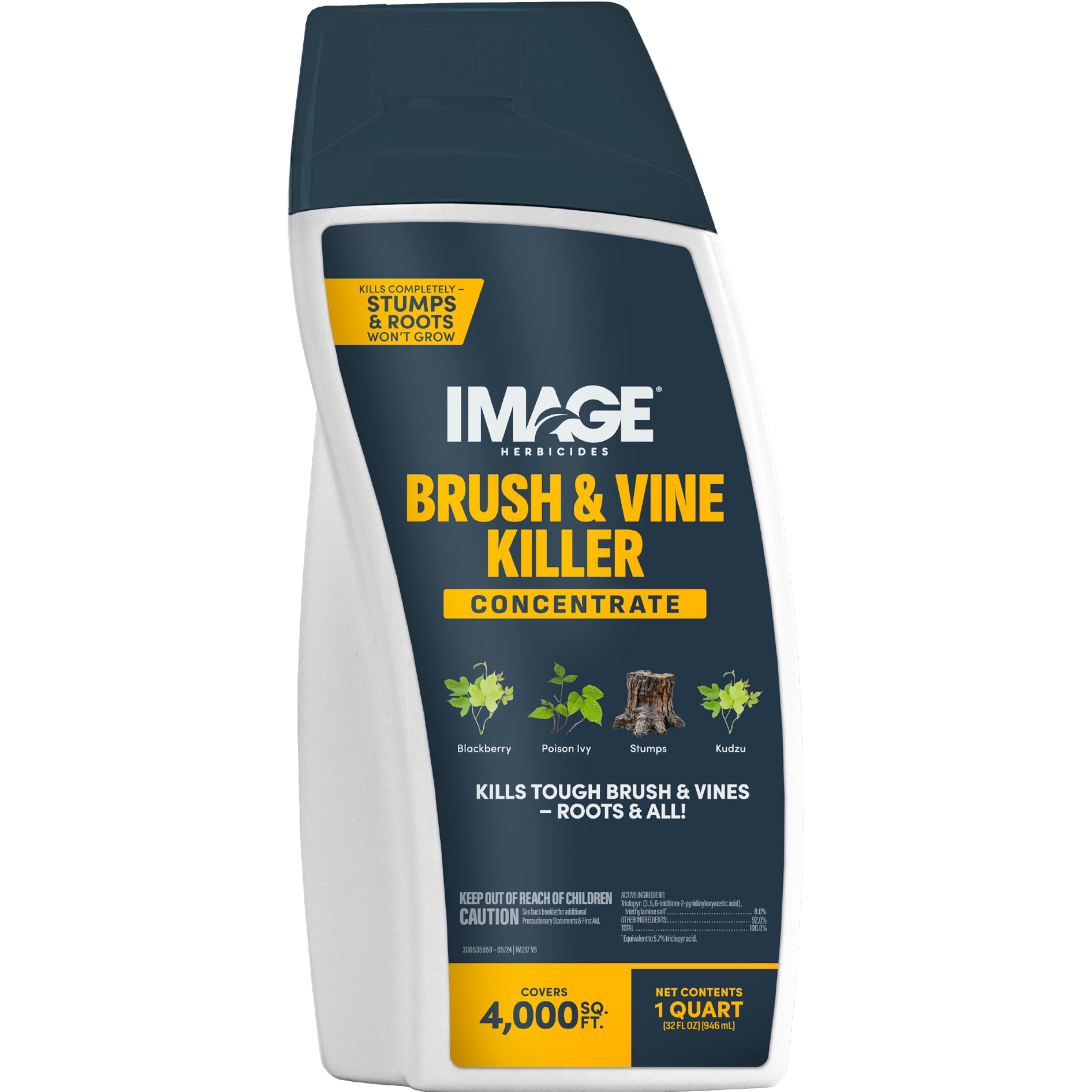
| Image Brush & Vine KillerBest Value | Poison ivy, kudzu, and blackberry | Triclopyr-based | 32 oz | 4,000 sq ft | Amazon |
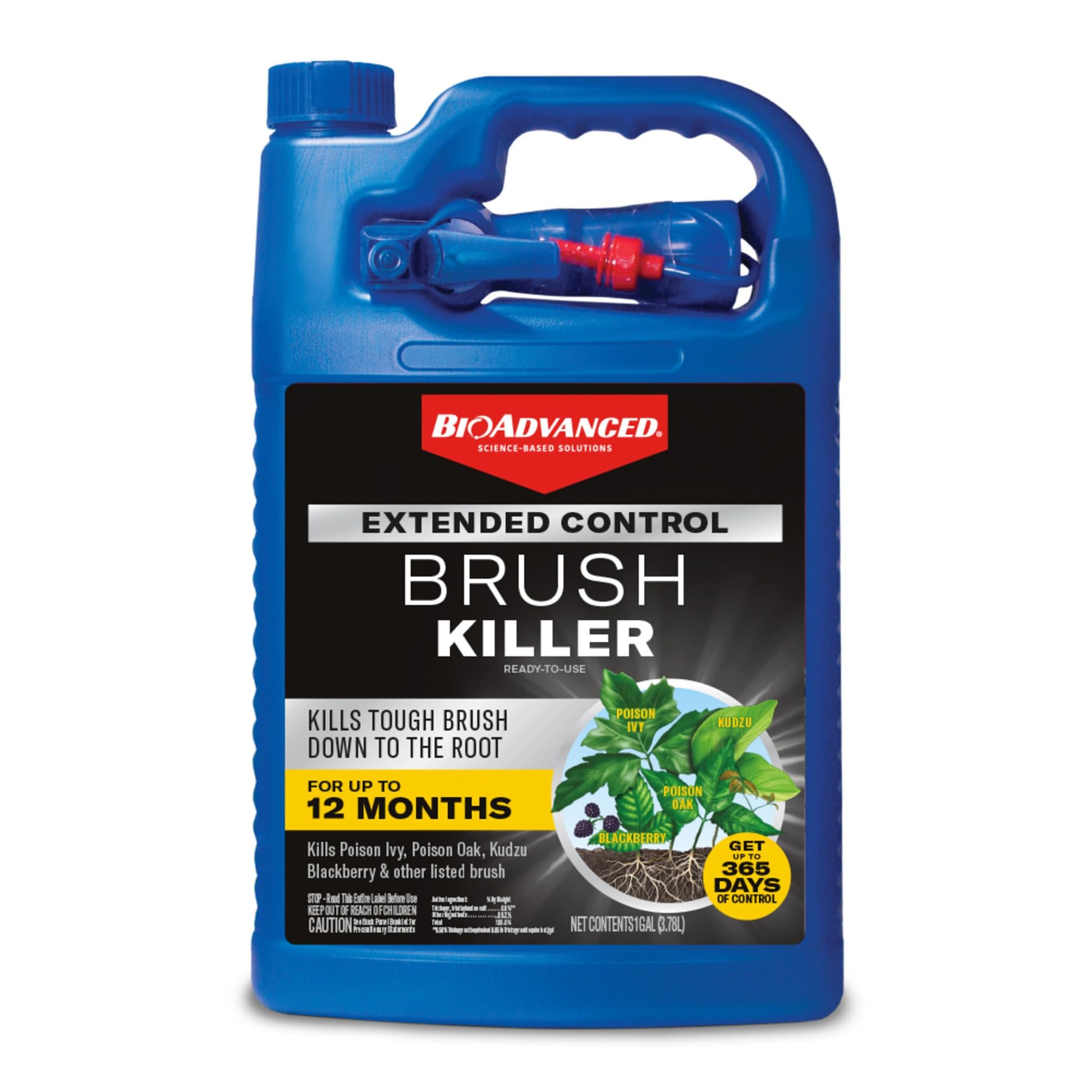
| BioAdvanced Extended ControlConvenience Pick | Spot treatments with 365-day claim | Penetrating formula | 1 gal | 500 sq ft | Amazon |
| Southern Ag Triclopyr 8.8% | Large bushes and stumps | 8.8% Triclopyr | 1 gal | 4,096 sq ft | Amazon |
| Bonide Poison Ivy & Brush Killer | Lawn-safe broadleaf brush control | Triclopyr-based | 128 oz | 240+ weed types | Amazon |
| Crossbow Herbicide | Fence rows and pasture brush | 2,4-D + Triclopyr | 1 gal | ~1 acre | Amazon |
| Roundup Pro Herbicide | Industrial rights-of-way and large lots | 50.2% Glyphosate | 2.5 gal | 435,600 sq ft | Amazon |
| Remedy Specialty Herbicide | Pasture restoration and prickly pear | Triclopyr | 1 gal | Selective acreage | Amazon |
| Southern Ag Crossbow | General tree and brush control | Garlon + 2,4-D | 128 oz | 2.23 acres | Amazon |
In‑Depth Reviews
1. Albaugh Gly Star Plus Herbicide (2.5 Gallons) Glyphosate Concentrate (41%) with Surfactant
Our pick — over 4.5★ from 450+ verified ratings; the strongest balance of quality and price.
The 2.5-gallon jug that brings commercial-grade chemistry to a backyard war.
This jug gives you the same active ingredient — 41% glyphosate — as Roundup Ultra, but with a surfactant already mixed in. A surfactant (a wetting agent) helps the herbicide soak through the waxy surface of leaves like poison ivy and blackberry, so the chemical reaches the roots instead of beading up and dripping off. With this jug, you skip one mixing step. The formula is non-selective, so it kills every green plant it touches, but it has no residual soil activity (it does not linger in the ground), so you can safely plant new grass or flowers about a week after spraying. Note that this product is labeled for commercial applications (not for residential turf use as defined by the manufacturer), so check your local regulations and your specific application area before buying.
Buyers report mixing about 2.5 ounces per gallon of water and seeing visible effects on most annual weeds within 2-4 days, while tougher perennial brush takes 7 or more days to fully die back. The jug holds 320 fluid ounces and weighs 15 pounds, which tells you this is serious material for serious acreage. Over 70 owners highlight that it wipes out tough brush and trees. The catch: it cannot ship to CA, MT, NV, OR, WA, or WY.
Total vegetation control
- Effectiveness is called out the most — over 70 owners highlight that it wipes out tough brush and trees
- Value for money is the second-most discussed positive; a 2.5-gallon concentrate beats buying premix
- Versatility — owners use it on lake lily pads, tree bases, and fence lines with equal success
Non-selective formula
- Not labeled for residential use, so some municipalities may restrict where you apply it
- Non-selective — overspray onto lawn or ornamentals kills them too
- No shipping to six western states
Heavy-duty users: Anyone with a large property, heavy brush, or a long fence line who wants maximum value per gallon and is comfortable with a commercial-grade concentrate.
Casual gardeners: You live in a restricted shipping state or you need a selective product that spares grass around your treatment spots.
2. Image Brush & Vine Killer Concentrate, 32 oz
A targeted triclopyr concentrate that goes after the worst vines without torching your entire yard.
This 32-ounce bottle uses triclopyr chemistry (a selective herbicide that targets broadleaf brush and vines while leaving most grasses alone), so it is a better fit when you need to kill brambles along a fence line without completely sterilizing the soil. It covers 4,000 square feet when mixed according to the label. At a 2-pound item weight, this is a compact, easy-to-store bottle.
Owners mention using a 4-ounce-per-gallon mix for standard brush and bumping up to 5 ounces per gallon on tougher patches like Himalayan blackberry — noting that the leaves turn brown and dry by week four with good results. For horsetail weed (a stubborn perennial), owners say other products failed but this one delivered. The catch: this concentrate lacks a built-in surfactant. Several owners add a squirt of dish soap to the tank mix to help the liquid penetrate the waxy leaf surface. Plan on mixing in a surfactant yourself for best results on poison ivy and kudzu.
Targeted vine killer: A homeowner fighting a specific vine or brush patch who wants a compact, low-cost concentrate that spares nearby grass when used carefully. Think twice if you need a one-deal-with-all solution for mixed vegetation across several acres — a larger non-selective jug is a better fit.
3. BioAdvanced Extended Control Brush Killer Spray – 1 Gal Bottle | Ready-to-Use
The grab-and-go sprayer that the manufacturer claims prevents regrowth for a full year from one application.
If mixing concentrates feels like a chemistry lab you do not have time for, this ready-to-use 1-gallon bottle is the convenience option. You just attach the built-in sprayer, aim at the target, and squeeze. The penetrating formula (a mix designed to soak into the plant) is designed to kill poison ivy and kudzu from the root up, and the manufacturer claims rainproof protection after just 4 hours, so you do not have to watch the weather forecast obsessively. It covers up to 500 square feet — a much smaller area than the concentrates cover. This is a spot-treatment tool, not an acreage solution.
Customers note that it effectively killed regrowth from a bush stump after 2 months, and that it is the only thing that wiped out thistles. The catch: effectiveness is the most-discussed aspect among owners, and it lands as mixed — meaning for every owner who sees perfect results, there is another who applied it three times to bamboo, saplings, and poison ivy with no lasting effect. The nozzle output is limited, so covering a large brush patch takes time and multiple refills. The product carries no explicit pet-safety labeling — owners advise keeping dogs away from the treatment area for at least a week.
Season-long barrier: This bottle suits a homeowner with a small, contained brush problem — a single stump, a patch of ivy — who wants zero mixing hassle. If you have acres to treat, the Albaugh Gly Star Plus will save you time and money at a much lower cost per square foot.
4. Southern Ag Brush Killer 8.8% Triclopyr (Vines, Hard-to-Control Plants, Stump Sprouts), 1 Gallon

High-concentration triclopyr for the overgrown bushes that laugh at general-purpose weed killers.
This 1-gallon jug packs 8.8% triclopyr (a selective herbicide for woody brush and broadleaf weeds), formulated for thick, woody brush like large overgrown bushes, stubborn stump sprouts, and invasive vines that have had years to establish a root system. It covers 4,096 square feet — a big step up from a ready-to-use sprayer that covers just 500 square feet — so a single gallon stretches much further across your property. Owners confirm it works on poison ivy, oak, sumac, briars, and even East Texas yaupon when the mix is bumped up to 8 ounces per gallon. The typical approach: spray the foliage, wait a day or two, then cut the bush down — the chemical kills the roots so the stump does not sucker back.
The most consistent praise from owners is its performance on large, overgrown bushes. However, effectiveness is the most-discussed aspect, and it is marked as mixed by Amazon’s own AI read — some reviewers point out barely yellowed weeds after the first application and suspect dilution issues. Another recurring concern is the lack of product labeling — several owners received the jug with no directions or ingredients printed on it, making it hard to verify what you are spraying until you research the product online. If you do buy this, check the jug immediately upon arrival and photograph the label area.
Stubborn brush: Someone who already knows triclopyr is their weapon of choice and needs a 1-gallon concentrate for a serious overgrowth problem, especially large bushes and tree stumps. Consider a different product if you need clear labeling and instructions on the bottle itself.
5. Bonide 332 Herbicide Poison Ivy & Brush Killer Bk-32 Concentrate, 128 oz

A broadleaf specialist that wipes out poison ivy and brush without wrecking your fescue or Bermuda grass.
Bonide’s BK-32 is formulated for residential turf use — meaning you can spray it on broadleaf weeds and woody brush growing right inside your lawn without destroying the grass itself. It is safe for Bluegrass, Fescues, Rye, Bent, Bermuda, Bahia, and Zoysia lawns when used as directed. The concentrate targets over 240 types of weeds, including poison ivy, kudzu, wild blackberries, thistle, and clover. You mix it with water and apply through a tank or hose-end sprayer, and the label says it also works as a stump killer when applied undiluted directly onto a freshly cut stump with a paintbrush.
Owners consistently call out value for money and ease of use as the top positives. The reported technique for heavy vines: apply on a hot, sunny day with no rain in the forecast for 48 hours, saturate the leaves and stems, and the triclopyr moves through the root system for a permanent kill. The downside: effectiveness is the most-discussed aspect, but it carries a mixed verdict — it works great on poison ivy and oak, but some owners needed 2-3 treatments for stubborn ground ivy, and a few reported it made the foliage whimper without killing the root. The product also has a strong chemical smell, so owners recommend full protective gear (an N-95 mask and gloves) during application.
Hikers: A homeowner who wants a triclopyr-based concentrate that can go straight onto the lawn without killing the grass, and who is willing to apply on the right weather day for best results. skip it if you need a non-selective total vegetation killer for gravel drives or fence lines where grass preservation is irrelevant.
6. Crossbow Herbicide Brush Killer 1 Gallon
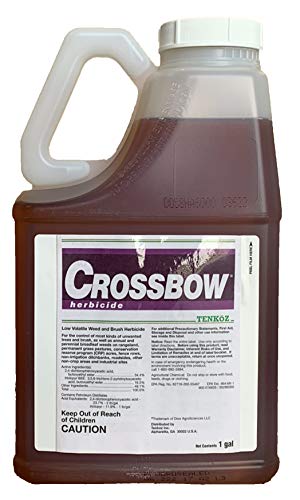
A 2,4-D and triclopyr blend that farmers recommend for quick, lasting brush control on a full acre.
Crossbow combines 2,4-D (a common broadleaf herbicide) and triclopyr to create a broad-spectrum herbicide specifically for brush and trees along fence rows, around pastures, and on rights-of-way. The manufacturer says it covers approximately 1 acre per gallon, making it a solid mid-scale option. Shoppers say seeing results the same day on poison ivy and weeds, with the dead area remaining intact for months — some say up to 2 years in one spot. The consensus is that it works faster and lasts longer than straight glyphosate products, and it does not require you to weed-whack first.
Effectiveness is the overwhelming praise point, with owners calling it excellent for clearing brush out of fence rows and noting it kills everything green by the next day. The chemical has a strong odor, so apply on a non-windy day and wear protective gear. One recurring note: it is safe for grass, so pasture owners use it to clear brush without losing their grazing ground. The value-for-money side gets mixed marks — it works, but it is not the cheapest option per gallon compared to straight glyphosate concentrate like the Albaugh Gly Star Plus.
Broadleaf buster: A property owner with a mix of pasture and fence-line brush who wants a fast-acting, grass-safe herbicide that covers about an acre per jug. If you need to cover multiple acres, the Roundup Pro or Albaugh Gly Star Plus offer better value per square foot.
7. Roundup Pro Herbicide Industrial Weed Control, 2.5 Gal.

The highest glyphosate concentration in this lineup — 50.2% — for industrial jobs that leave nothing to chance.
This is the pro-grade Roundup that contractors and land managers use for rights-of-way, forestry, and roadside vegetation control. At 50.2% glyphosate (a non-selective enzyme inhibitor that stops plant growth), it is more concentrated than the Albaugh Gly Star Plus (which is 41%), so you use less product per tank and it covers a staggering 435,600 square feet — about 10 acres — per 2.5-gallon jug. The active ingredient inhibits an enzyme found only in plants, so it moves through the vascular system to the roots. On most annual weeds, you see visible wilt within 2-4 days; perennial brush and trees take 7 or more days.
Owners call it the most potent mix they have found — it killed aggressive cottonwood roots in one day with no re-treatment needed. The ease of use and value for money both get strong positive marks from the thousands of owners who have bought it. The formula dries in about 3 hours, making it a good fit for rainy climates — one Florida owner mentioned this was the deciding factor. The catch: this is a non-selective, water-soluble concentrate that must be diluted before application, and it provides no residual soil control — seeds in the ground will still germinate. Expect to mix your own batch each spray session.
Farm operations: A landowner or manager dealing with 10+ acres of mixed brush, saplings, and perennial weeds who wants the highest concentrate available to minimize refills and trips to the hardware store. Not the best fit if you are treating a small yard or want a product that spares grass — this kills everything green it touches, with zero selectivity.
8. Remedy Specialty Herbicide Weed Killer & Brush Control, 1 Gallon
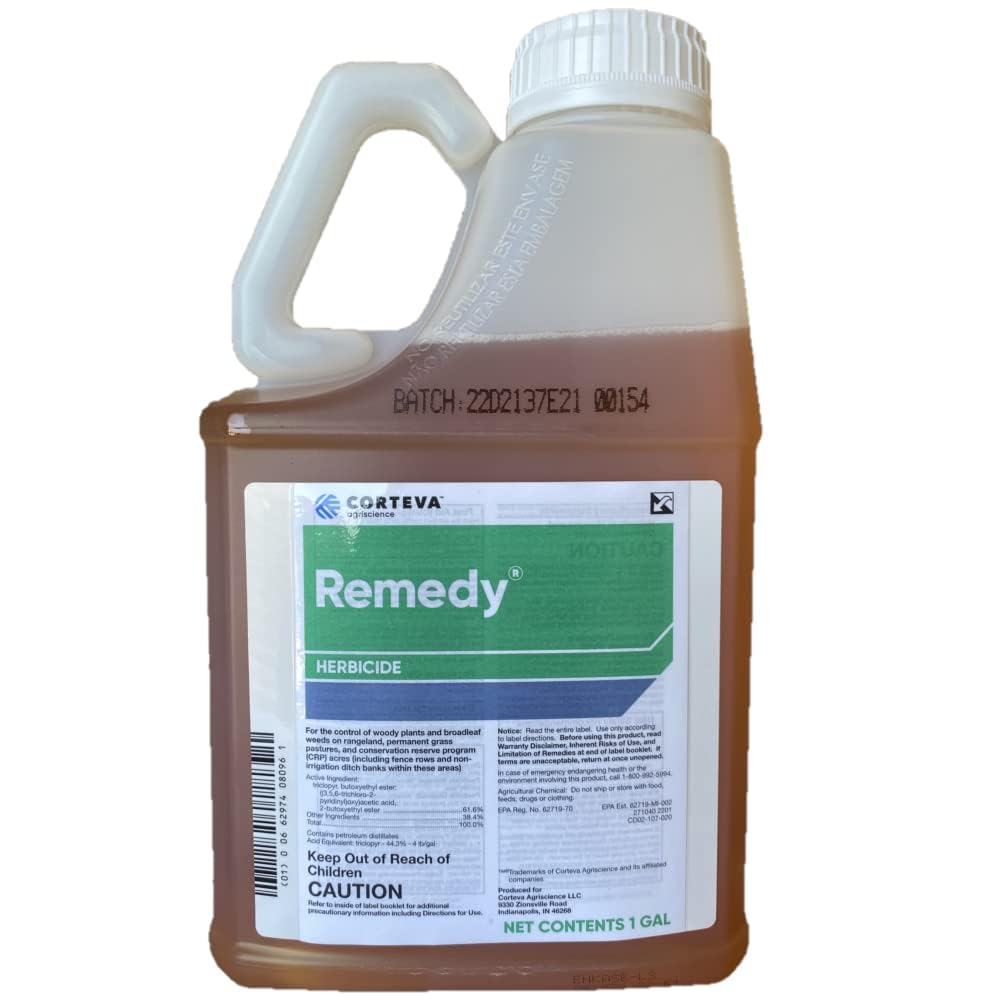
The pasture-proven triclopyr formula that annihilates prickly pear and cogon grass without killing your grass.
Remedy is a top-rated pasture herbicide from Dow AgroSciences, formulated with triclopyr for selective broadleaf and woody brush control in rangeland, pasture, and along fence lines. It works on the entire plant — roots and top growth — without harming grass when used as directed. Owners use it for everything from prickly pear cactus control to multiflora rose and honey locust trees. A common basal bark technique: mix 1 part Remedy with 3 parts diesel and spray the lower trunk or freshly cut stump to stop resprouting completely.
Effectiveness is the most-discussed positive among the hundreds of reviews, with owners reporting it absolutely annihilated their cogon grass problem and wiped out weeds along the fence line after a couple of weeks. The product is safe to use around children and pets when applied according to the label and allowed to dry. The big trade-off is price — owners describe it as expensive, but note that one gallon lasts for 100+ weekly lawn treatments in Florida. It has a low-odor formula compared to many brush killers, which is a welcome feature during long spraying sessions.
Rangeland ready: A pasture or rangeland owner who needs a selective, grass-safe herbicide for invasive brush and trees, and who is willing to pay a premium for a professional-grade product that lasts. Think twice if your budget is tight and you are okay with a non-selective glyphosate product that will also kill the surrounding grass — the Albaugh Gly Star Plus costs less per gallon.
9. Southern Ag Crossbow Specialty Herbicide Low Volatile Weed & Brush Herbicide, 128oz

A Garlon and 2,4-D blend that makes up to 96 gallons of spray solution for broad tree and brush control.
Southern Ag’s Crossbow is a specialty herbicide that targets unwanted trees, brush, and broadleaf weeds across up to 2.23 acres per 128-ounce bottle. The active ingredients — Garlon (triclopyr) and 2,4-D — form a low-volatile combination that penetrates waxy leaves and woody bark. Owners use it for English ivy, poison oak, blackberry vines, and small trees growing along driveways and fence rows. A 1% solution (about 1.28 ounces per gallon) typically shows results in about a week when applied on a warm, dry day, making it a very economical choice for covering large areas.
Effectiveness is the standout praise across the hundreds of reviews, with owners calling it the best weed killer they have ever used and noting it killed everything including 8-foot weeds and small trees within 48 hours. The short 3-day soil half-life (meaning it breaks down relatively quickly compared to some persistent herbicides) means you can replant sooner — it has no glyphosate or neonicotinoids. The most common application trick: paint the cut vine stems of ivy and shrubs so the chemical kills the attached growth without harming the desirable tree the vine is climbing. One caveat from owners: effectiveness can vary by soil type — it performed great on brown Ohio soil but less consistently on rich Illinois black soil. The strong odor is also noted, so avoid spraying in windy conditions.
Windy days: A landowner with a mix of tree saplings, brush, and broadleaf weeds across a couple of acres who wants a fast-acting, low-residual product that makes nearly 100 gallons of spray mix from one bottle. Consider another option if you are treating a monoculture brush patch and want a selective product — this is more of a general brush and broadleaf killer with some variation in results.
Understanding the Specs
Glyphosate vs. Triclopyr
Glyphosate is a non-selective systemic herbicide — it travels from the leaves to the roots of every plant it touches, killing the whole organism. It is the best choice when you want to clear everything from a patch of ground, such as a new garden bed or a gravel driveway. Triclopyr is more selective for woody brush and broadleaf weeds; it spares most grasses and is the go-to for poison ivy, blackberry, and tree stumps growing near lawn areas. Many premium products (like Crossbow) blend both for a wider kill spectrum.
Surfactant
A surfactant is a wetting agent added to herbicide to help the liquid spread across and penetrate the waxy cuticle of a leaf instead of beading up and rolling off. Many brush plants — poison ivy, kudzu, blackberry — have especially waxy leaves that repel plain water. A product with a built-in surfactant (like the Albaugh Gly Star Plus) saves you a step and a separate purchase. If your concentrate does not include one, you can add a few drops of dish soap to the tank mix, or buy a standalone non-ionic surfactant.
Ready-to-Use vs. Concentrate
Ready-to-use (RTU) products come pre-mixed in a spray bottle and require no measuring, mixing, or extra equipment. They are convenient for spot treatments of a few square feet. Concentrates must be diluted with water in a tank sprayer before application. A 1-gallon concentrate might make 10 to 30 gallons of finished spray, making concentrates far more economical for larger areas. RTU bottles typically cover 500–1,000 square feet; a 1-gallon concentrate can handle 4,000+ square feet.
Residual Activity
Residual activity means the herbicide remains active in the soil after application, preventing new seeds and sprouts from germinating for a period of time. Most brush killers labeled for trees are non-residual: they kill the existing vegetation through leaf and root contact but do not create a lasting barrier in the soil. This is important if you plan to replant in the treated area within a few weeks. Products with 2,4-D often have a shorter soil half-life (days to a couple of weeks), while some pre-emergent herbicides can linger for months.
FAQ
What is the best time of year to apply brush killer to trees?
How long does brush killer take to kill a tree?
Can I use brush killer around my pets or livestock?
Will brush killer kill grass if I accidentally spray it?
What is the difference between glyphosate and triclopyr?
Can I use brush killer on a freshly cut stump to prevent regrowth?
Why do some brush killers have a surfactant and others do not?
How much brush killer do I need for my property?
Is it safe to spray brush killer near a well or pond?
Can I mix brush killer with other herbicides for a stronger effect?
Final Thoughts: The Verdict
Across the board, the brush killer for trees{“@context”: “https://schema.org”, “@graph”: [{“@type”: “ItemList”, “name”: “9 Best Brush Killer For Trees”, “url”: “https://fitlyfast.com/best-brush-killer-for-trees/”, “numberOfItems”: 9, “itemListElement”: [{“@type”: “ListItem”, “position”: 1, “name”: “Albaugh Gly Star Plus Herbicide (2.5 Gallons) Glyphosate Concentrate (41%) with Surfactant”, “url”: “https://fitlyfast.com/best-brush-killer-for-trees/#product-1”}, {“@type”: “ListItem”, “position”: 2, “name”: “Image Brush & Vine Killer Concentrate, 32 oz”, “url”: “https://fitlyfast.com/best-brush-killer-for-trees/#product-2”}, {“@type”: “ListItem”, “position”: 3, “name”: “BioAdvanced Extended Control Brush Killer Spray – 1 Gal Bottle | Ready-to-Use”, “url”: “https://fitlyfast.com/best-brush-killer-for-trees/#product-3”}, {“@type”: “ListItem”, “position”: 4, “name”: “Southern Ag Brush Killer 8.8% Triclopyr (Vines, Hard-to-Control Plants, Stump Sprouts), 1 Gallon”, “url”: “https://fitlyfast.com/best-brush-killer-for-trees/#product-4”}, {“@type”: “ListItem”, “position”: 5, “name”: “Bonide 332 Herbicide Poison Ivy & Brush Killer Bk-32 Concentrate, 128 oz”, “url”: “https://fitlyfast.com/best-brush-killer-for-trees/#product-5”}, {“@type”: “ListItem”, “position”: 6, “name”: “Crossbow Herbicide Brush Killer 1 Gallon”, “url”: “https://fitlyfast.com/best-brush-killer-for-trees/#product-6”}, {“@type”: “ListItem”, “position”: 7, “name”: “Roundup Pro Herbicide Industrial Weed Control, 2.5 Gal.”, “url”: “https://fitlyfast.com/best-brush-killer-for-trees/#product-7”}, {“@type”: “ListItem”, “position”: 8, “name”: “Remedy Specialty Herbicide Weed Killer & Brush Control, 1 Gallon”, “url”: “https://fitlyfast.com/best-brush-killer-for-trees/#product-8”}, {“@type”: “ListItem”, “position”: 9, “name”: “Southern Ag Crossbow Specialty Herbicide Low Volatile Weed & Brush Herbicide, 128oz”, “url”: “https://fitlyfast.com/best-brush-killer-for-trees/#product-9”}]}, {“@type”: “Product”, “position”: 1, “name”: “Albaugh Gly Star Plus Herbicide (2.5 Gallons) Glyphosate Concentrate (41%) with Surfactant”, “image”: “https://m.media-amazon.com/images/I/41Cr4CZKymL.jpg”, “brand”: {“@type”: “Brand”, “name”: “Albaugh”}, “url”: “https://www.amazon.com/dp/B0BSNZNF7J/?tag=fitlyfast00-20”, “offers”: {“@type”: “Offer”, “url”: “https://www.amazon.com/dp/B0BSNZNF7J/?tag=fitlyfast00-20”}}, {“@type”: “Product”, “position”: 2, “name”: “Image Brush & Vine Killer Concentrate, 32 oz”, “image”: “https://m.media-amazon.com/images/I/71qyuD2PiQL.jpg”, “brand”: {“@type”: “Brand”, “name”: “Image”}, “url”: “https://www.amazon.com/dp/B000VIWQC6/?tag=fitlyfast00-20”, “offers”: {“@type”: “Offer”, “url”: “https://www.amazon.com/dp/B000VIWQC6/?tag=fitlyfast00-20”}}, {“@type”: “Product”, “position”: 3, “name”: “BioAdvanced Extended Control Brush Killer Spray – 1 Gal Bottle | Ready-to-Use”, “image”: “https://m.media-amazon.com/images/I/71JA3trQOtL.jpg”, “brand”: {“@type”: “Brand”, “name”: “BioAdvanced”}, “url”: “https://www.amazon.com/dp/B0CNQ5L5TS/?tag=fitlyfast00-20”, “offers”: {“@type”: “Offer”, “url”: “https://www.amazon.com/dp/B0CNQ5L5TS/?tag=fitlyfast00-20”}}, {“@type”: “Product”, “position”: 4, “name”: “Southern Ag Brush Killer 8.8% Triclopyr (Vines, Hard-to-Control Plants, Stump Sprouts), 1 Gallon”, “image”: “https://m.media-amazon.com/images/I/61Du+Hmxc7L.jpg”, “brand”: {“@type”: “Brand”, “name”: “Southern”}, “url”: “https://www.amazon.com/dp/B007PJWPCA/?tag=fitlyfast00-20”, “offers”: {“@type”: “Offer”, “url”: “https://www.amazon.com/dp/B007PJWPCA/?tag=fitlyfast00-20”}}, {“@type”: “Product”, “position”: 5, “name”: “Bonide 332 Herbicide Poison Ivy & Brush Killer Bk-32 Concentrate, 128 oz”, “image”: “https://m.media-amazon.com/images/I/617U7U+XnLL.jpg”, “brand”: {“@type”: “Brand”, “name”: “Bonide”}, “url”: “https://www.amazon.com/dp/B00YOVPJZ2/?tag=fitlyfast00-20”, “offers”: {“@type”: “Offer”, “url”: “https://www.amazon.com/dp/B00YOVPJZ2/?tag=fitlyfast00-20”}}, {“@type”: “Product”, “position”: 6, “name”: “Crossbow Herbicide Brush Killer 1 Gallon”, “image”: “https://m.media-amazon.com/images/I/413JrATEPyL.jpg”, “brand”: {“@type”: “Brand”, “name”: “Crossbow”}, “url”: “https://www.amazon.com/dp/B094F1XQHB/?tag=fitlyfast00-20”, “offers”: {“@type”: “Offer”, “url”: “https://www.amazon.com/dp/B094F1XQHB/?tag=fitlyfast00-20”}}, {“@type”: “Product”, “position”: 7, “name”: “Roundup Pro Herbicide Industrial Weed Control, 2.5 Gal.”, “image”: “https://m.media-amazon.com/images/I/71Ztuj6XNzL.jpg”, “brand”: {“@type”: “Brand”, “name”: “Roundup”}, “url”: “https://www.amazon.com/dp/B008IP2DWC/?tag=fitlyfast00-20”, “offers”: {“@type”: “Offer”, “url”: “https://www.amazon.com/dp/B008IP2DWC/?tag=fitlyfast00-20”}}, {“@type”: “Product”, “position”: 8, “name”: “Remedy Specialty Herbicide Weed Killer & Brush Control, 1 Gallon”, “image”: “https://m.media-amazon.com/images/I/514sQRCnvGL.jpg”, “brand”: {“@type”: “Brand”, “name”: “Remedy”}, “url”: “https://www.amazon.com/dp/B004GH6WZ0/?tag=fitlyfast00-20”, “offers”: {“@type”: “Offer”, “url”: “https://www.amazon.com/dp/B004GH6WZ0/?tag=fitlyfast00-20”}}, {“@type”: “Product”, “position”: 9, “name”: “Southern Ag Crossbow Specialty Herbicide Low Volatile Weed & Brush Herbicide, 128oz”, “image”: “https://m.media-amazon.com/images/I/81hcX7OWLrL.jpg”, “brand”: {“@type”: “Brand”, “name”: “Southern”}, “url”: “https://www.amazon.com/dp/B01CPX5QYO/?tag=fitlyfast00-20”, “offers”: {“@type”: “Offer”, “url”: “https://www.amazon.com/dp/B01CPX5QYO/?tag=fitlyfast00-20”}}, {“@type”: “FAQPage”, “mainEntity”: [{“@type”: “Question”, “name”: “What is the best time of year to apply brush killer to trees?”, “acceptedAnswer”: {“@type”: “Answer”, “text”: “The most effective application window is late summer through early fall, when plants are moving sugars to their roots. At that time, a systemic herbicide like glyphosate or triclopyr gets pulled deep into the root system for a complete kill. Spring applications work too, but you may need a second treatment on tough species.”}}, {“@type”: “Question”, “name”: “How long does brush killer take to kill a tree?”, “acceptedAnswer”: {“@type”: “Answer”, “text”: “Speed depends on the concentration, the species, and the weather. Most annual weeds show visible wilt within 2 to 4 days. Tough perennial brush and small trees typically take 7 to 14 days to fully die back, and some tough stumps may need a follow-up application after 4 to 6 weeks. Patience is key — the chemical works by translocating through the plant’s system, not by burning leaves on contact.”}}, {“@type”: “Question”, “name”: “Can I use brush killer around my pets or livestock?”, “acceptedAnswer”: {“@type”: “Answer”, “text”: “Most herbicides are labeled as safe for children and pets once the spray has dried completely on the vegetation — typically 2 to 4 hours. However, the BioAdvanced and many general-purpose brush killers do not carry explicit pet-safety labeling. Owners often keep dogs away from treated areas for a week as a precaution. Always read the product label and follow the drying-time instructions for pet safety.”}}, {“@type”: “Question”, “name”: “Will brush killer kill grass if I accidentally spray it?”, “acceptedAnswer”: {“@type”: “Answer”, “text”: “Non-selective products like the Albaugh Gly Star Plus and Roundup Pro kill every green plant they touch, including grass. Selective triclopyr products like Bonide BK-32 and Remedy are formulated to kill broadleaf weeds and brush while sparing lawn grasses such as fescue, Bermuda, and Zoysia when used as directed. Crossbow also offers some grass safety. Match the product to the area: non-selective for gravel drives and fence lines, selective for in-lawn brush.”}}, {“@type”: “Question”, “name”: “What is the difference between glyphosate and triclopyr?”, “acceptedAnswer”: {“@type”: “Answer”, “text”: “Glyphosate is a non-selective systemic that blocks an enzyme essential for plant growth, killing every plant it touches. Triclopyr is a selective systemic that mimics a natural plant growth hormone, causing uncontrolled growth that kills the plant — it targets broadleaf plants and woody brush while leaving most grasses unharmed. For trees and woody vines, many users prefer triclopyr because it is more effective on waxy, woody species and spares surrounding grass.”}}, {“@type”: “Question”, “name”: “Can I use brush killer on a freshly cut stump to prevent regrowth?”, “acceptedAnswer”: {“@type”: “Answer”, “text”: “Yes. This is called stump treatment and is very effective. Apply undiluted concentrate (or a strong mix) to the entire outer ring of the freshly cut stump — the cambium layer — within minutes of cutting. The Bonide BK-32 and the Southern Ag Triclopyr are both labeled for this method. For species that sucker from roots (like black locust and sumac), you may also need to spray the root suckers as they emerge.”}}, {“@type”: “Question”, “name”: “Why do some brush killers have a surfactant and others do not?”, “acceptedAnswer”: {“@type”: “Answer”, “text”: “A surfactant is a wetting agent that helps the herbicide penetrate the waxy leaf cuticle. More expensive or professional-grade products often include a built-in surfactant system so you do not have to buy and mix one separately. Budget-friendly or basic concentrates may omit it to keep the price down. If your concentrate does not have one, you can add a few drops of dish soap per gallon of spray mix, or purchase a specific non-ionic surfactant from a garden supply store.”}}, {“@type”: “Question”, “name”: “How much brush killer do I need for my property?”, “acceptedAnswer”: {“@type”: “Answer”, “text”: “For a small yard with a few patches of poison ivy or saplings, a 32-ounce concentrate (covering about 4,000 square feet) is usually enough. For a quarter-acre to several acres of heavy brush, a 1-gallon to 2.5-gallon concentrate is more appropriate. The Roundup Pro covers 435,600 square feet per 2.5-gallon jug — about 10 acres at standard mix rates. Measure your target area and check the product’s coverage spec to avoid running short mid-job.”}}, {“@type”: “Question”, “name”: “Is it safe to spray brush killer near a well or pond?”, “acceptedAnswer”: {“@type”: “Answer”, “text”: “Most glyphosate-based products (like Albaugh Gly Star Plus and Roundup Pro) have no soil residual activity and bind tightly to soil particles, so they pose minimal risk to groundwater when used as directed. Still, you should never mix or spray within 50 feet of a wellhead or open water source. Avoid spraying on windy days to prevent drift, and do not apply before heavy rain that could cause runoff into a pond or stream. The product label will include specific environmental precautions — follow them strictly.”}}, {“@type”: “Question”, “name”: “Can I mix brush killer with other herbicides for a stronger effect?”, “acceptedAnswer”: {“@type”: “Answer”, “text”: “Some products are designed for tank mixing — the Remedy Specialty Herbicide and the Southern Ag Crossbow both list compatible tank mixes on their labels (for example, Remedy can be mixed with GrazonNext or ForeFront HL). In general, mixing triclopyr with 2,4-D products broadens the weed and brush spectrum. Never mix two products unless both labels explicitly allow it, as certain combinations can cause a chemical reaction or reduce effectiveness. When in doubt, use each product alone according to its label.”}}]}]}