
Our readers keep the lights on and the weekend projects moving. As an Amazon Associate, I earn from qualifying purchases.
Specs are compiled from manufacturer listings and verified buyer reviews and can change over time — please confirm the key details on the product page before buying.
A sewing machine on a tight budget usually means one of two things: a fantastic starter that teaches you the ropes without costing a fortune, or a frustrating piece of plastic that jams on the second hem. The difference depends on stitch count, metal vs. plastic parts, and brand reliability with beginners. This guide separates the real winners from the noise so you buy a machine that actually sews.
I’m Rikta — the founder and writer behind FitlyFast. This guide is built by comparing the manufacturers’ published specifications and the patterns across verified customer reviews, so you get each pick’s real strengths and trade-offs instead of marketing spin.
Whether you are mending a pair of jeans, piecing a quilt, or learning the very first stitch, finding the perfect budget sewing machine means ignoring the fluff and focusing on the few specs that actually matter for your skill level and fabric plans.
Our Picks at a Glance


How To Choose The Best Budget Sewing Machine
Choosing a budget sewing machine depends on separating essential specs from marketing fluff. A high stitch count is useless if the machine tangles on a basic cotton seam. Prioritize build quality, threading ease, and practical stitch applications.
Built-in Stitches and Applications
A machine with 12 to 37 stitches is more than enough for most home projects. What you want to look at is the number of stitch *applications* — which is how many different ways you can use those stitches (straight, zigzag, blind hem, stretch, decorative). A machine like the SINGER M3300 delivers 97 applications from 23 stitches, giving you much more versatility than a machine that just lists a high stitch count without the variety.
Frame Material and Durability
This is the biggest reliability indicator at a budget price point. A metal internal frame keeps the needle aligned and prevents the machine from “walking” across your table when you sew at higher speeds. Many budget machines use plastic frames to save weight and cost, which is fine for very light use, but a heavy-duty metal frame — like the one in the SINGER MX60 — gives you skip-free stitching on tougher materials like denim and multiple layers.
Ease of Use Features
For a beginner, the difference between a frustrating first project and a successful one often depends on a single feature: the needle threader. Look for an automatic needle threader, which pushes the thread through the eye of the needle for you. The top-loading, jam-resistant drop-in bobbin is another must-have — it is far easier to set up and monitor than a side-loading or front-loading bobbin, which is a frequent source of tension issues and jams mentioned in reviews.
Quick Comparison
| Model | Best For | Stitches | Frame Material | Weight | Amazon |
|---|---|---|---|---|---|
| Stoigeld SM-725★ Best Overall | Entry-Level Kit | 12 | Plastic | 4.2 lbs | Amazon |
| Brother GX37Also Great | Best Overall Beginner | 37 | Metal & Plastic | 10.1 lbs | Amazon |
| Brother XM3700Best Value | Best Value | 37 | Metal & Plastic | 12.5 lbs | Amazon |
| SINGER M3300 | Versatile Stitch Applications | 23 | Metal & Plastic | 13.6 lbs | Amazon |
| SINGER MX60 | Durable Metal Frame | 6 | Metal (Heavy-Duty) | 5 kg | Amazon |
| MOWLIE Sewing Machine | Ultra-Compact Starter | 12 | ABS Plastic | 4.2 lbs | Amazon |
| StitchMaster Pro | Twin Needle Projects | 14 | Metal | — | Amazon |
| AXE YAMAZAKI MM-10 | Japanese Design & Travel | 12 | ABS, Alloy Steel, Iron | 4.6 lbs | Amazon |
In‑Depth Reviews
1. Stoigeld Sewing Machine for Beginners SM-725
Everything you need to start sewing comes in one box — machine, threads, and practice fabric.
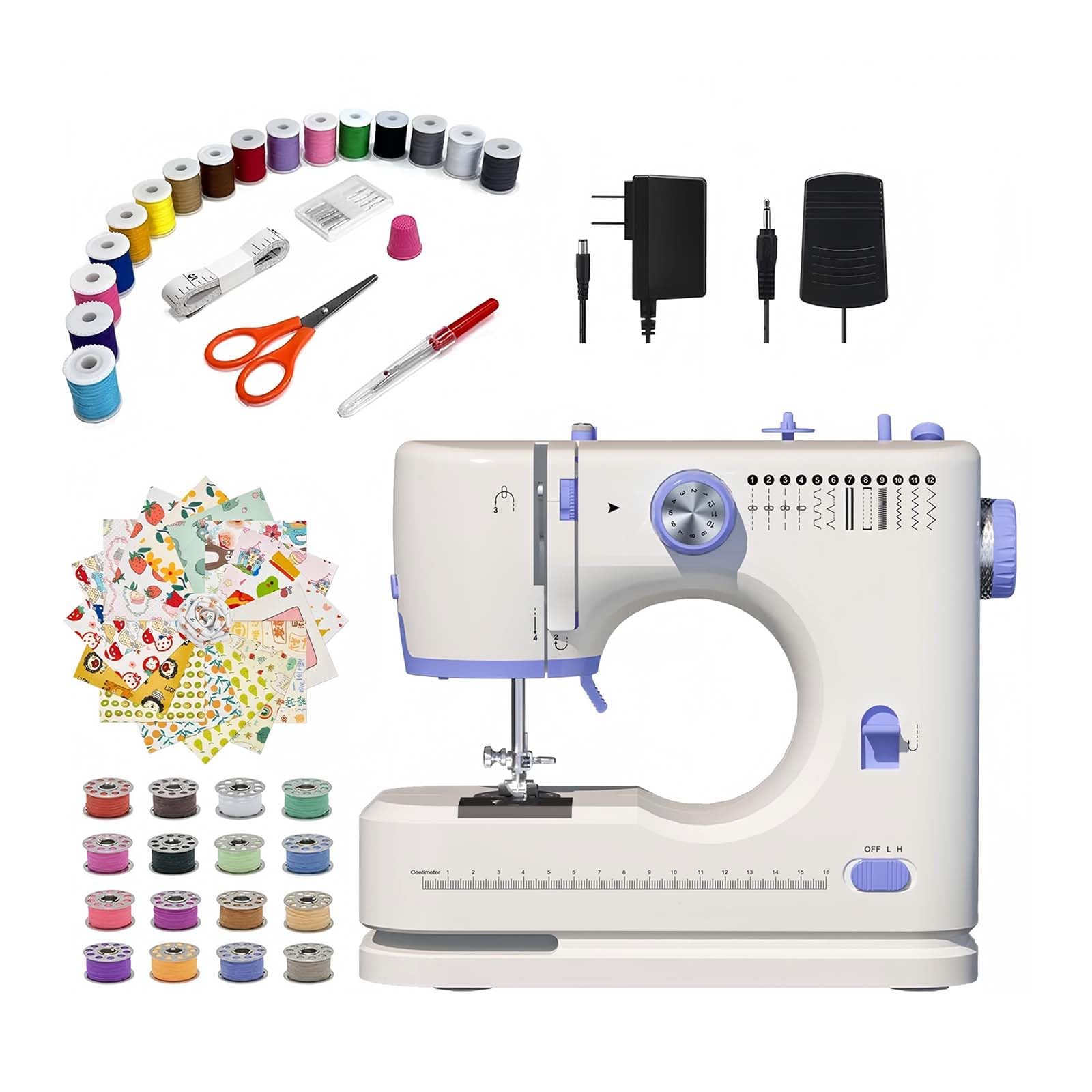
The Stoigeld SM-725 is built as a complete starter bundle. It includes 32 pieces of sewing thread and 20 pieces of practice fabric so a beginner can start stitching right away without buying extra supplies. The machine itself is compact (10.3 x 9.5 x 4.4 inches) and very light at just 4.2 pounds, making it easy to store or bring to a class. It offers 12 built-in stitches, a 4-step buttonhole, and a reverse function for locking stitches.
This machine is strictly for light fabrics like thin cotton and linen, up to 4 to 6 layers. It will struggle with thick denim or heavy materials, and the manufacturer is clear about that. The two-speed (high and low) control is helpful for beginners who want to learn at a slower pace. It runs on AC power and comes with a standard pedal, power cord, bobbins, and needles.
While many owners love it for simple repairs and small projects, the negative experiences are notable: some buyers report the machine jams frequently and uses up a lot of thread. As one owner put it, “Frequent jamming used much thread in 2 months.” The plastic construction and entry-level design mean it is a casual tool, not a long-term investment. It is best approached as a very low-cost learning tool for kids or occasional craft use.
The bottom line: A genuinely affordable way to test if sewing is for you, with the bonus of included materials. Just keep your expectations aligned with light fabrics only, and be ready for potential jamming if you push it too far.
Best for: absolute beginners or teens who want to try sewing on light materials without a big investment.
Not for: anyone planning to sew denim, multiple layers, or who needs a machine that will last for years of regular use.
2. Brother GX37 Sewing Machine
The crowd-favorite workhorse trusted by beginners and teachers alike.
This machine is a classroom staple for good reason. The GX37 packs 37 unique built-in stitches, an auto-size buttonhole, and a drop-in top bobbin that is famously jam-resistant. The automatic needle threader is the feature owners rave about most — it pushes the thread right through the eye, saving a ton of frustration for new sewists. At 10.1 pounds, it is light enough to move around but still feels solid, with a metal frame that keeps the needle stable when you push through denim or multiple layers.
The thing everyone points to is the included accessory set: six sewing feet (zigzag, zipper, blind stitch, buttonhole, button sewing, and a 6-pack of feet), a needle set, and bobbins. It also comes with Brother At Your Side support, which means free technical help over the phone or live chat for the life of the machine — a genuine safety net if you hit a tension snag. The only real compromises are a dim LED light and a plastic presser foot lever that feels a bit light, but neither stops it from producing consistent, balanced seams.
It is outright lighter and more compact than the SINGER M3300 (10.1 lbs vs 13.6 lbs), making it easier to tote to a class or store in a small closet. The GX37 beats the XM3700 on overall popularity and long-term feedback, and the nearly 5,200 ratings confirm it is a trusted staple in the budget tier.
The Beginner’s Dream
- Auto needle threader works reliably and saves time.
- 37 built-in stitches give real variety for mending, quilting, and crafts.
- Drop-in bobbin is easy to load and jam-resistant.
- Brother lifetime technical support included.
The Honest Downsides
- LED work light is dimmer than ideal.
- Plastic presser foot lever feels less durable than metal.
- Requires a screwdriver to change the needle — not tool-free.
Your best bet if: you want the most well-rounded, beginner-friendly machine with enough stitch variety to grow into and a brand known for support.
Think twice if: you need to sew heavy canvas or multiple layers of denim regularly — step up to a heavier-duty model for that.
3. Brother XM3700 Sewing Machine
Almost the same features as the top pick, at an even easier price to swallow.
The XM3700 is essentially the GX37’s equally capable sibling with the same core DNA: 37 built-in stitches, a one-step auto-size buttonhole, and a jam-resistant drop-in top bobbin. It also includes the automatic needle threader that beginners love. It comes with five sewing feet (zigzag, zipper, blind stitch, buttonhole, and button sewing) plus a twin needle and a white accessory pouch. The free arm lets you sew cuffs and sleeves without wrestling the fabric.
At 12.5 pounds, it is a bit heavier than the GX37, which some owners see as a sign of stability. The machine handles light to medium fabrics smoothly and handles simple projects like hemming, mending, and basic quilting with no fuss. The built-in stitches cover straight, zigzag, blind hem, and decorative patterns, giving you more than enough for 90% of home projects. Like the GX37, it runs on 120 volts and comes with Brother’s lifetime technical support.
For the price, it is a near-perfect entry point. The main reason it sits second is that the GX37 has a bigger review pool showing consistent long-term satisfaction, but the XM3700 is a fantastic alternative if you find it at a lower price.
The real trade-off: The automatic needle threader has a bit of a learning curve — as owners put it: “a bit tricky to master but works well mastered.” Once you get the hang of it, you are set.
Grab this for: a reliable, fully-featured starter machine that leaves room to grow into more complex projects without breaking your budget.
skip it if: you want a machine with more than 37 stitches or a heavier-duty metal frame for thick fabrics — you will want to look at the mid-range options.
4. SINGER M3300 Sewing Machine

23 stitches that stretch into 97 applications — versatility is the name of the game here.
The SINGER M3300 takes a different approach to stitch selection. Instead of just offering a raw count, it breaks its 23 built-in stitches into 97 stitch applications. This covers basic, stretch, and decorative stitches, meaning you can handle sheer fabrics, thick denim, and everything in between with confidence. The one-step buttonhole is a real time-saver: you just place the button in the foot, and the machine stitches a perfectly sized hole automatically.
The built-in needle threader helps with quick setup, though some owners mention it can be finicky. The adjustable stitch length and width give you control for applique, basting, and other detail work. At 13.6 pounds, it is the heaviest machine on this list, which translates to stability on your table. The accessory kit is generous, with multiple feet, bobbins, and a seam ripper included. It runs on standard electric power and is designed for garments, mending, and alterations.
The biggest consistent complaint across reviews is the side-loading bobbin mechanism. A number of customers note jamming issues, particularly early on. Most overcame it with practice or a trip to a repair shop, but it is a notable friction compared to the drop-in bobbins on the Brother machines. The auto-thread feature is also hit-or-miss for some.
The honest verdict: If you value stitch versatility and the simplicity of a one-step buttonhole over the convenience of a drop-in bobbin, the M3300 delivers incredible output. Just be prepared for a slight learning curve with the bobbin and check the tension early on.
Best for: sewists who want maximum stitch applications for creative projects and need to handle a variety of fabric weights.
Consider alternatives if: you are a pure beginner and want the easiest possible bobbin system — the Brother drop-in bobbins are more forgiving.
5. SINGER MX60 Sewing Machine
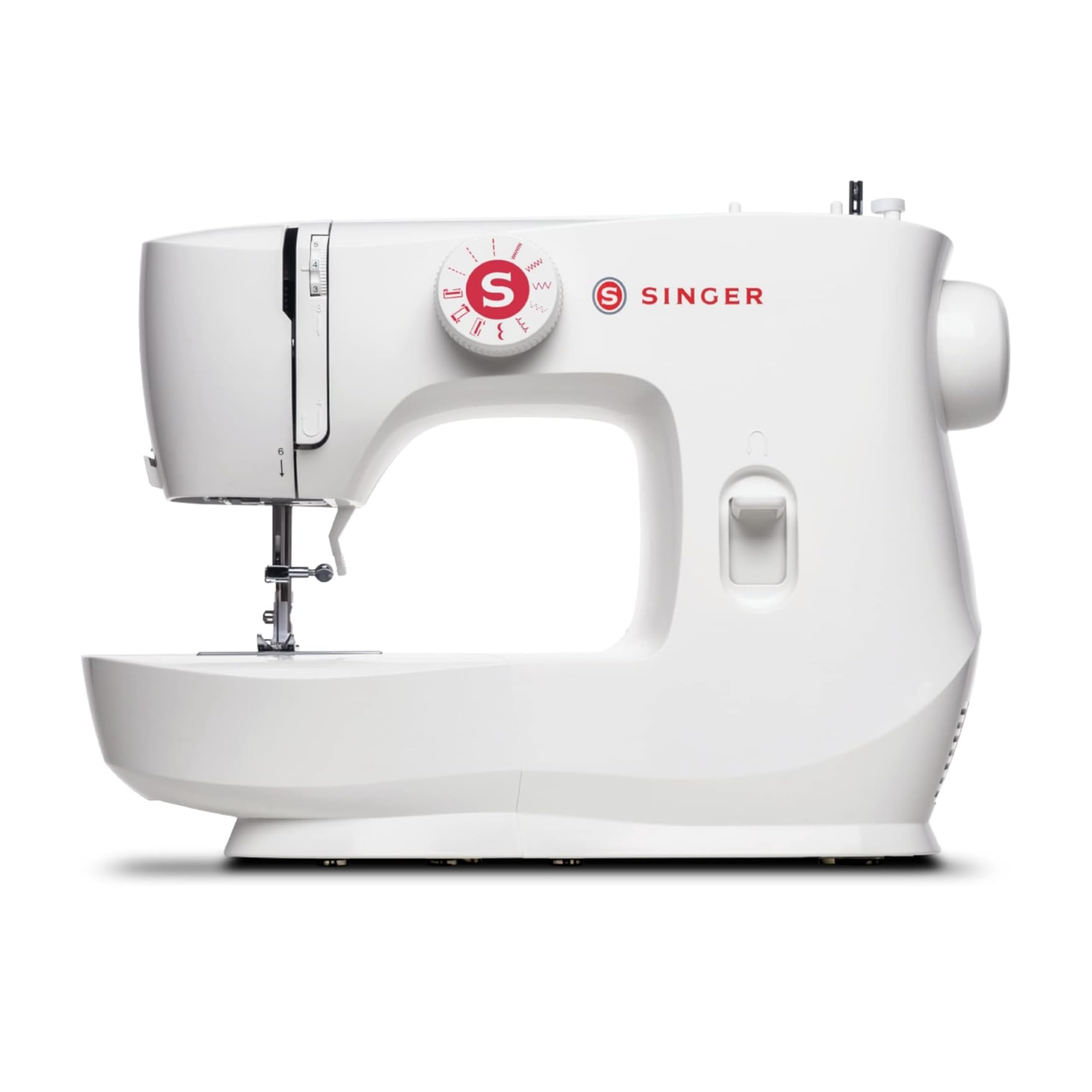
A no-frills machine with a heavy-duty metal frame that refuses to budge.
The MX60 strips away the bells and whistles to focus on one thing: stable, skip-free sewing. It has only 6 built-in stitches that deliver 57 stitch applications, which covers the basics (straight, zigzag, buttonhole) plus decorative options. The real star here is the heavy-duty metal internal frame. This keeps the machine planted on your table and the needle perfectly aligned, even when you are pushing through multiple layers of fabric. It is a noticeably more solid build than most machines at this price.
It is compact and portable, designed for smaller spaces and easy transport to sewing classes. The preset stitch length and width make it intuitive for beginners. The included accessory kit is practical: an all-purpose foot, zipper foot, buttonhole foot, darning plate, seam ripper, needles, and four Class 15 bobbins. It is best for fashion projects, quilting, crafts, and mending.
That said, the mixed feedback on reliability is real — some owners experience jamming, thread bunching, or bobbin issues early on. As reviewers point out, the machine can be “lightweight and plastic construction” with snags in the bobbin area if you push it too hard on heavy seams. The 4.5-star rating across 5,700+ reviews shows most people are satisfied, but it is not as universally praised as the Brother alternatives. It is a good pick if the metal frame is your priority and you are comfortable with a little trial and error.
Why the Frame Matters
- Heavy-duty metal frame provides skip-free stitching and table stability.
- Compact and lightweight for its build quality; easy to carry.
- 57 stitch applications from just 6 base stitches is efficient.
What to Watch For
- Some shoppers say jamming and bobbin issues; reliability is mixed.
- Very limited stitch count compared to other options at similar prices.
- Plastic components in the bobbin area can snag if overworked.
Reach for this if: you want a durable, stable platform for basic sewing and quilting without complicated features.
pass on it if: stitch variety is important to you, or you want the absolute lowest chance of a frustrating jam — the Brother machines are more consistent.
6. MOWLIE Sewing Machine for Beginners
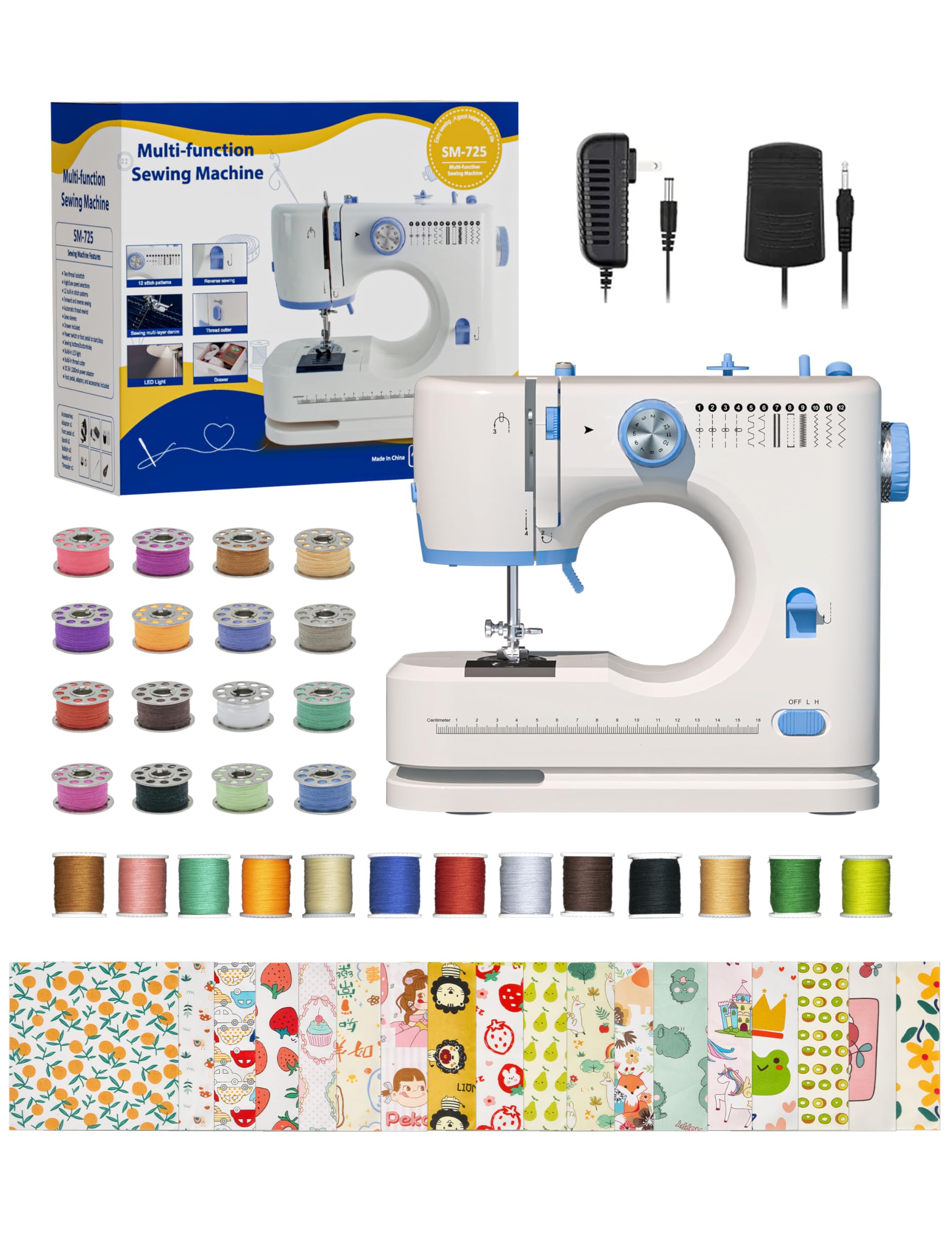
At 4.2 lbs, this machine is compact enough to tuck into a bookshelf when not in use.
The MOWLIE sewing machine is designed with portability as the priority. It measures just 10.3 by 9.5 by 4.4 inches and weighs only 4.2 pounds, making it one of the lightest options on the list. It runs on dual power: you can use the foot pedal for hands-free operation or the push-button switch right on the machine. It is powered by a DC 6V/1200mA adapter and includes 20 pieces of 7-by-7-inch practice fabric and a complete thread kit.
With 12 built-in stitch patterns, it covers straight and decorative stitches for clothing repairs and DIY crafts. The reverse sewing function keeps your stitches firm. The ABS plastic body is durable enough for its class, and the clear threading guide helps beginners get started. Owners consistently praise the compact size and ease of use, with many noting it works smoothly on light fabrics like cotton. The included accessories make it a ready-to-go gift for teens or crafters.
The trade-off is that this machine is strictly for light fabric projects. It will not handle heavy denim or thick layers. One unit arrived damaged for a single reviewer, but the seller responded quickly. The majority of feedback is very positive, with the machine being called a “terrific little machine” for teaching children or making doll clothes.
The Portability Payoff
- Extremely lightweight and compact — perfect for small spaces.
- Dual operation modes: foot pedal or push-button for flexibility.
- Includes practice fabric and thread kit for immediate use.
The Limitation
- Only suitable for light fabrics; struggles with thicker materials.
- Plastic build, not designed for heavy-duty or long-term daily use.
Ideal for: teaching kids, doing quick hems, and small craft projects where space and weight are the main constraints.
Not recommended for: regular garment sewing on varied fabrics or anyone who wants a machine that will grow with their skills.
7. StitchMaster Pro Sewing Machine
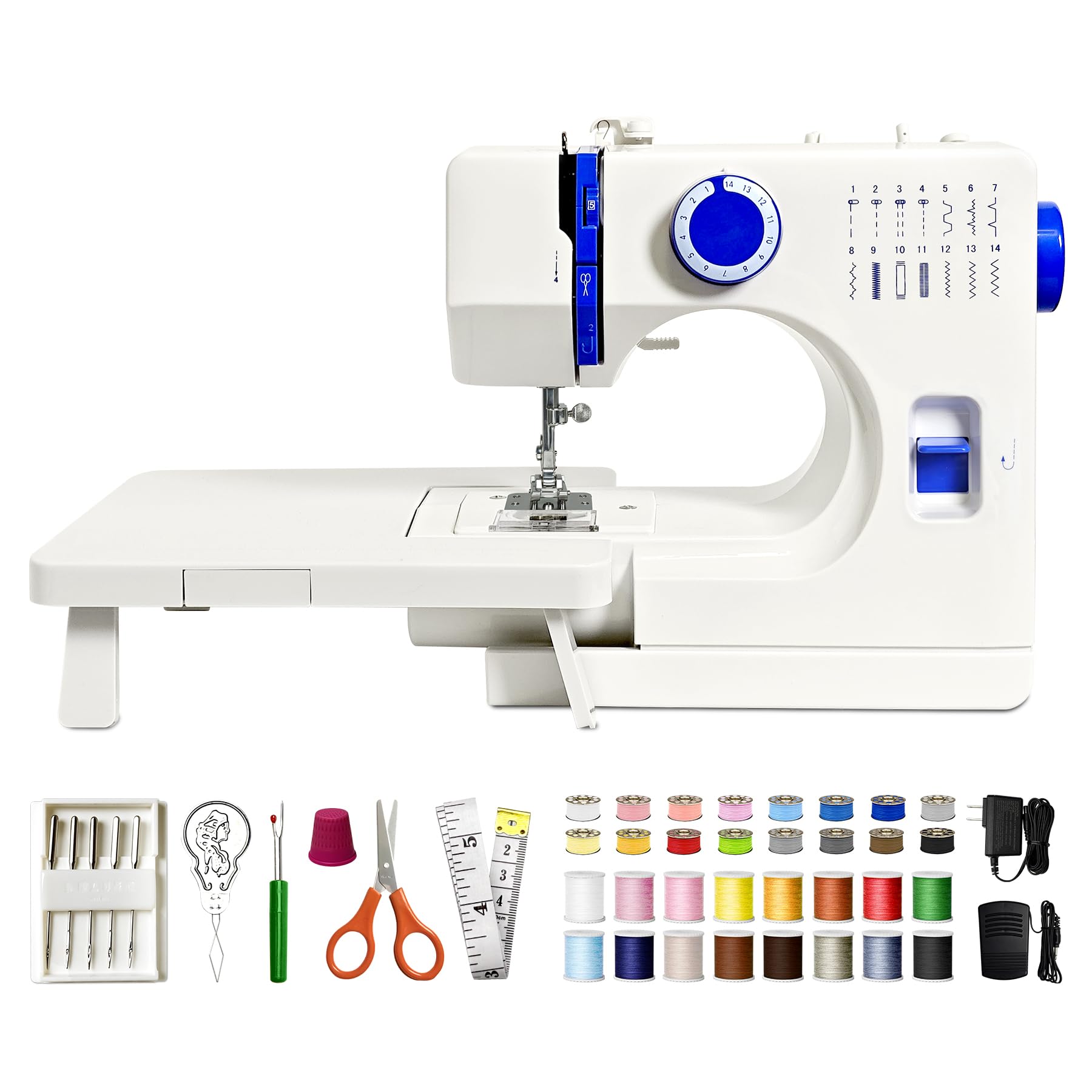
A twin-needle compatible machine that opens up hemming and decorative stitching options.
The StitchMaster Pro is a 14-stitch machine that stands out for its compatibility with a twin or double needle. This allows you to sew two parallel lines at once, which is great for hemming knits and creating decorative effects. It also includes a dual-speed control: low speed for precise work on delicate fabrics, and high speed for efficient sewing on thicker materials like denim. The metal construction adds to its stability, though it is still lightweight enough for home use.
The machine is beginner-friendly, with color-coded threading guides and auto-tension adjustment that removes guesswork. It offers two control modes — a foot pedal for traditional sewing or a one-touch button for younger crafters. The complete starter kit includes 12 thread spools, six needles (universal, denim, and embroidery), scissors, a measuring tape, and a seam ripper. It even comes with a 2-year warranty and access to free video tutorials.
The honest feedback from owners is that while it is great for beginners and light projects, the plastic parts can make it loud when working with thick fabrics. As one buyer put it: “Plastic parts make it loud with thick fabrics.” There was also a report of a bent needle arm after heavy use. This machine is best treated as a step up from the cheapest entry-level models, but not a substitute for a heavy-duty machine.
Who it is for: A beginner who wants to try twin-needle stitching and values an all-in-one kit with many accessories. The dual-speed control is a genuine help for learning control.
Grab this for: learning twin-needle techniques and having a complete accessory set ready to go from the start.
Avoid if: you regularly sew heavy denim or thick layers — the plastic components may not hold up.
8. AXE YAMAZAKI MM-10 Sewing Machine
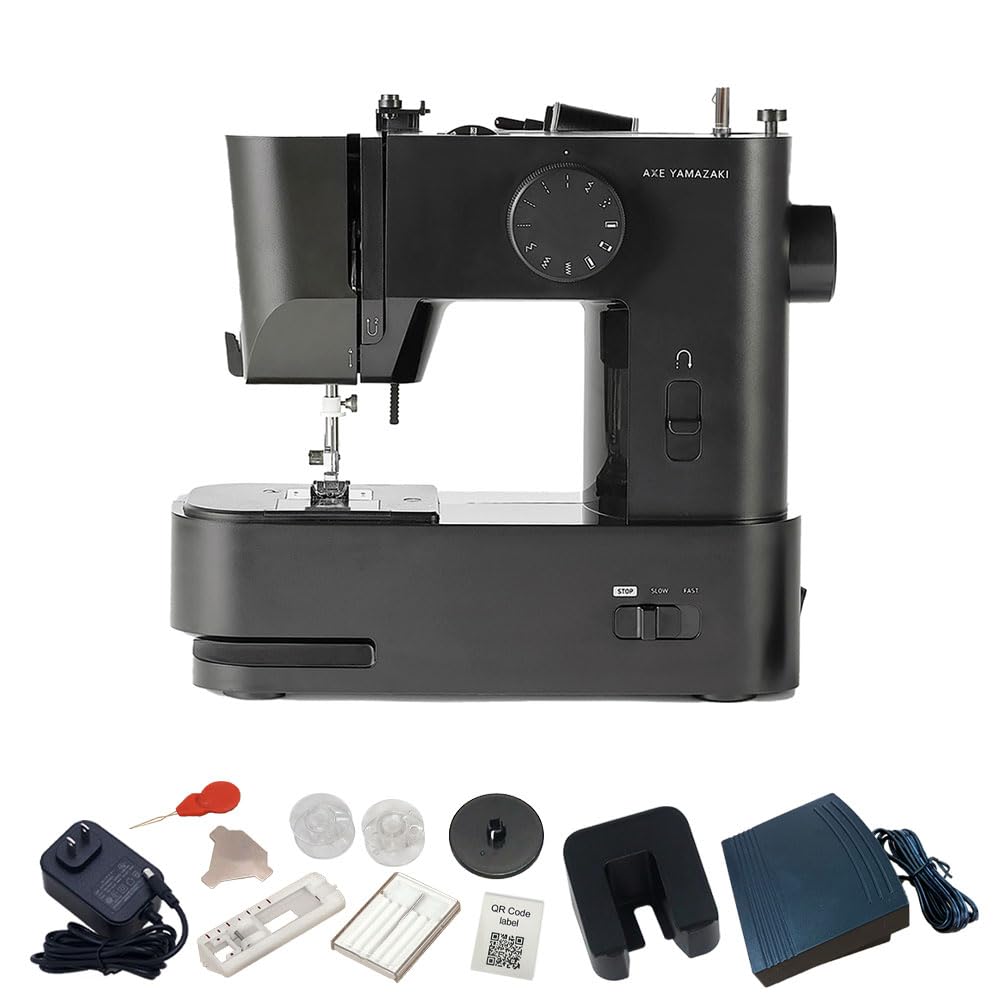
A Japanese-designed mini machine that is about the size of a fashion magazine.
The AXE YAMAZAKI MM-10 is a tiny, lifestyle-oriented sewing machine from a brand founded in Japan in 1946. It is only 11.7 inches wide and weighs 4.6 pounds, with the footprint of a large espresso machine. It runs on both a 120V AC adapter and four AA batteries, which makes it truly portable for camping, travel, or retreats. The 12 stitch patterns are selected by turning a dial, and it offers two speed settings controlled by either a foot pedal or a one-touch button on the machine.
The stitch quality is surprisingly good for its size. Owners note that it sews well on light to medium fabrics, and the included accessories (foot pedal, spool pin cap, needle, bobbins, buttonhole foot, AC adaptor) cover the basics. It also has a free arm for sewing cylindrical items like sleeves. A QR code on the machine links to instructional videos, which is a nice touch for beginners. The safety needle cover doubles as a smartphone stand for watching those tutorials.
The catch is the price — it is the most expensive machine on this list, and some owners feel it is overpriced for its size and plastic construction. “Cute but defective” and “tension issues” appear in a few reviews. It is best viewed as a premium portable backup machine or a stylish second machine for small craft projects, not a primary workhorse. The stitch quality is the most praised aspect, but the reliability is a bit more mixed.
The Appeal of Portability
- Ultra-compact and lightweight at 4.6 lbs; fits any workspace.
- Operates on batteries or AC power, with or without the foot pedal.
- Japanese design and engineering with a focus on compact form.
The Trade-Off
- More expensive than other mini machines without a clear performance benefit.
- Some units have tension or motor issues; reliability is not as proven as bigger names.
- Not a full replacement for a standard machine — best as a travel companion.
Best for: sewists who travel often, have limited storage, or want a stylish second machine for light, on-the-go projects.
Think twice if: you need a primary sewing machine for daily use — a standard full-size Brother or SINGER will offer better reliability and features for the same or less money.
Understanding the Specs
Built-in Stitches vs. Stitch Applications
A machine may say it has 6 stitches, but those 6 stitches can be used in different lengths and widths to create dozens of applications — the SINGER MX60 delivers 57 applications from 6 base stitches. Conversely, a machine with 37 stitches may not offer as many practical applications per stitch. Look for the total applications number if you want versatility for different fabrics and techniques.
Metal Frame vs. Plastic Frame
The internal frame is what gives a sewing machine its stability and durability. A metal frame (sometimes called a “heavy-duty metal frame”) keeps the needle aligned and prevents the machine from vibrating or walking across your table as you sew. A plastic frame is lighter and cheaper but can wobble on thicker seams, leading to skipped stitches. For a budget machine, a hybrid of metal and plastic is common and acceptable.
FAQ
Can a budget sewing machine sew denim or multiple layers of fabric?
What is the difference between a drop-in bobbin and a side-loading bobbin?
How many stitches do I really need as a beginner?
What does a free arm do on a sewing machine?
Is an automatic needle threader worth it?
Should I buy a machine with a metal or plastic frame?
What accessories should come with my first sewing machine?
Can I use a budget sewing machine for quilting?
How do I prevent my sewing machine from jamming?
What is a twin needle used for?
Final Thoughts: The Verdict
For the majority of shoppers, the budget sewing machine winner is the Brother GX37 because it combines 37 versatile stitches, a reliable automatic needle threader, and a proven track record with over five thousand happy owners. If you want the best value with nearly identical features, grab the Brother XM3700. And for travel or storage, the Brother SM1704 with its included hard case is the one to reach for. A drop-in bobbin and auto needle threader prevent the top frustrations that drive beginners away.
How We Picked
We do not accept paid placement. Every pick is matched to a real buyer and a real use-case; we do not hands-on test units.
Sources & Methodology
Specifications: manufacturer listings and product documentation. Review insights: verified customer reviews, as of July 2026. Pricing: not shown on this page (it changes often); check the current price via the retailer link.
As an Amazon Associate, FitlyFast earns from qualifying purchases. This does not affect which products we feature.