
Our readers keep the lights on and the weekend projects moving. As an Amazon Associate, I earn from qualifying purchases.
Specs are compiled from manufacturer listings and verified buyer reviews and can change over time — please confirm the key details on the product page before buying.
Finding a solid pair of 6×9 speakers that won’t blow your monthly budget is the real challenge. You want clearer vocals, a bit of bass kick, and something that actually fits your car’s factory holes without a headache. This guide cuts through the noise to find the budget-friendly 6×9 speakers that deliver real value.
I’m Rikta — the founder and writer behind FitlyFast. This guide is built by comparing the manufacturers’ published specifications and the patterns across verified customer reviews, so you get each pick’s real strengths and trade-offs instead of marketing spin.
You want great sound without spending a fortune, but power, clarity, and build quality vary a lot between budget 6×9 speakers — so here is how the top contenders compare among the best budget 6×9 speakers.
Our Picks at a Glance

How To Choose The Best Budget 6X9 Speakers
Buying cheap speakers shouldn’t mean buying bad sound. A few key specs separate the gems from the duds when you are working with a limited budget.
Prioritize Sensitivity (dB Over Watts)
Peak power numbers (like “500 watts”) look impressive on the box, but if you are running a factory head unit, you will never get close to that. What really matters is sensitivity, measured in dB. A speaker rated at 92 dB will play much louder on your stock stereo’s low power than an 87 dB speaker will, without needing an amplifier.
Check the Mounting Depth
6×9 speakers are deeper than smaller sizes. Before you buy, measure the space behind your factory speaker grille. A mounting depth of 3.2 inches is common, but some cars have shallower pockets. A speaker that is too deep will hit the window track or other hardware.
Know Your Way (2-Way vs 3-Way vs 4-Way)
More “ways” means more drivers handling different frequencies. A 2-way has a woofer and a tweeter. A 3-way adds a midrange driver for clearer vocals. A 4-way splits the highs even further. For budget-minded buyers, a solid 3-way from a reputable brand often gives the best balance without extra cost.
Quick Comparison
| Model | Best For | Sensitivity | Peak Power | Mounting Depth | Amazon |
|---|---|---|---|---|---|
| Pioneer TS-F6935R★ Best Overall | Budget-Friendly Clarity | 87 dB | 230W | — | Amazon |
| BOSS CH6930BBass King | Best Bass on a Budget | 92 dB | 400W | 3.2″ | Amazon |
| BOSS CH6940BHigh-Output Champ | Big Power Upgrade | 92 dB | 500W | 3.1″ | Amazon |
| Alpine SXE-6926S | Reliable Brand Fit | — | 280W | — | Amazon |
| Pioneer TS-A6961F | Full-Range Response | 92 dB | 450W | — | Amazon |
| Kenwood KFC-6966S | Loud & Reliable | — | 800W | 3″ | Amazon |
| CT Sounds BIO-6X9-COX | Compact & Clean | — | 200W | — | Amazon |
| Kenwood KFC-6996PS | 5-Way Sound Field | — | — | — | Amazon |
| Polk Audio DB692 | Premium Clarity & Build | — | 450W | — | Amazon |
In‑Depth Reviews
1. PIONEER F-Series TS-F6935R 6″ x 9″ 3-Way Car Speakers 230W Max
Pioneer’s budget king that swaps raw power for pure, distortion-free clarity.
This is the pair you pick when clean sound matters more than window-rattling volume. The 3-way design splits the audio across a woofer, midrange driver, and tweeter, so you get clear vocals and smooth treble even at a modest 87dB sensitivity rating. It handles 230W max power (30W nominal), making it a perfect match for a factory stereo that isn’t pushing high wattage. The whole thing is designed around being an easy factory replacement — buyers report installations in a 1966 Impala and a 2004 Civic Coupe with no modifications needed, calling it a “direct fit.”
The catch is that low-power clarity comes at a cost in deep bass. Without an amplifier, the lows lack punch compared to higher-sensitivity rivals. Durability also gets a few mixed notes — a small number of owners mention the speakers blowing out under heavy use. But the crowd is overwhelmingly positive: sound quality is the most-praised aspect by a wide margin (81 mentions), followed closely by overall quality (56 mentions). For a straightforward swap that immediately brightens your car’s sound, these Pioneers are nearly impossible to beat.
Pioneer’s balanced clarity
- crisp sound without distortion at higher volumes.
- Slots into most cars without trimming or new brackets.
- Excellent value for a trusted brand name at this price point.
Limited bass depth
- Low sensitivity means less volume on stock head units compared to 92dB rivals.
- Bass is polite rather than punchy — you will want a subwoofer for thump.
- A few reports of durability issues over time.
reach for these if: you prioritize clear, balanced sound and an easy, no-hassle installation in a daily driver.
think twice if: you need chest-thumping bass or plan to run them on a high-powered amp without careful tuning.
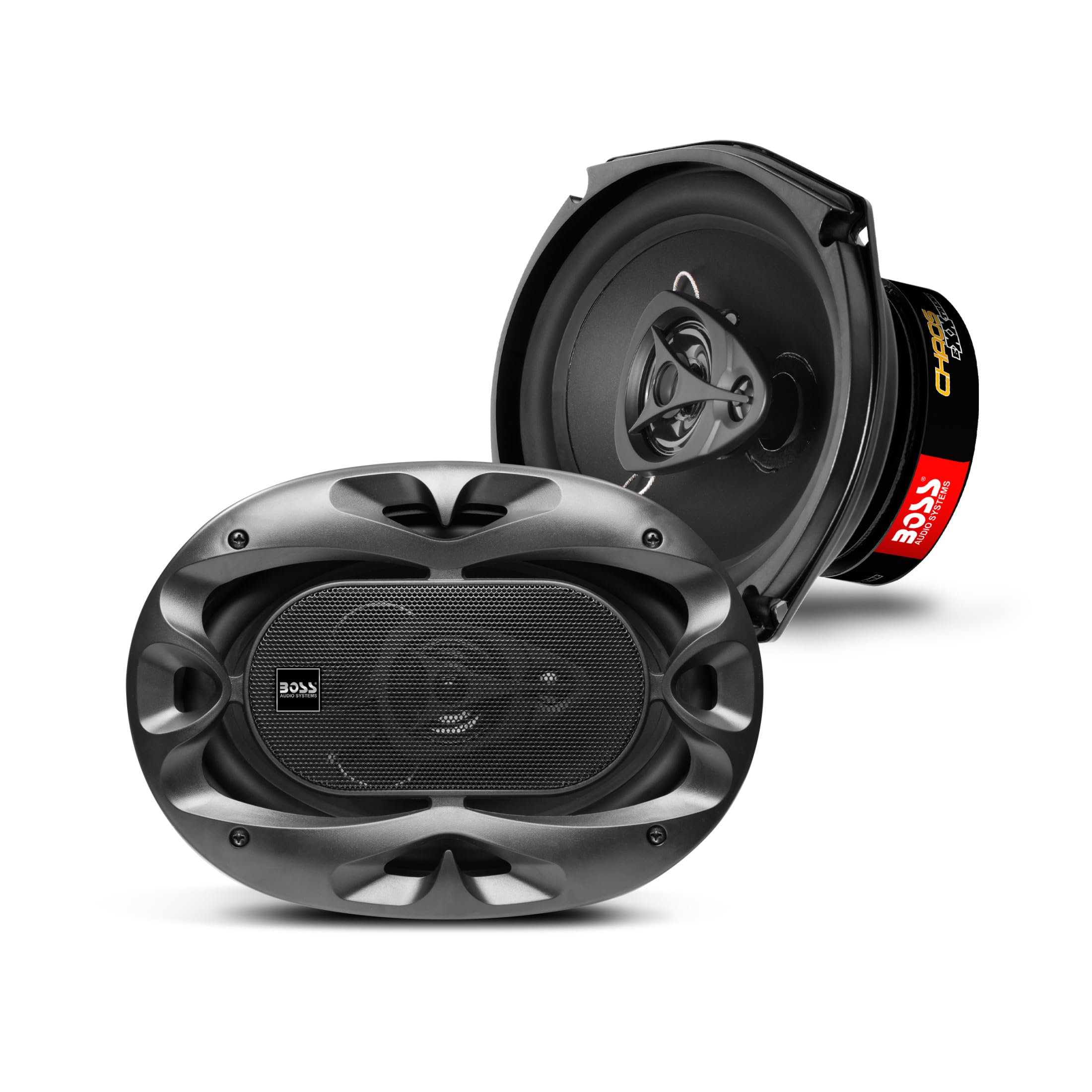
2. BOSS Audio Systems CH6930B 6 x 9 Car Speakers, 400 Watts Per Pair, 3 Way
The BOSS that brings surprising low-end weight without needing an amp upgrade.
If you want bass that hits hard without spending a lot, this pair from BOSS is your answer. The 92dB sensitivity is a full 5dB higher than the Pioneer above, which translates to noticeably louder output with the same power. That efficiency, combined with a 50Hz frequency response floor, means the low end actually has presence. A reviewer who paired them with a 200W BOSS amp in a Jeep TJ noted that the bass was so good it made a cheap 10-inch subwoofer feel unnecessary. The 3-way coaxial design uses a poly injection cone and a 0.75-inch piezo tweeter to keep the highs clean. At 6.2 lbs per pair and a 3.2-inch mounting depth, these are fairly substantial units.
The main hiccup — and it comes up repeatedly — is the fitment. A few owners mention that the actual frame is slightly smaller than a true 6×9, requiring some adjustments or trimming to fit properly. The sound quality (22 mentions) and value for money (13 mentions) are the most-discussed positives. BOSS backs these with a 3-year platinum warranty, which is generous for the price tier. The sensitivity advantage makes them a strong pick over the 87dB Pioneer if your factory stereo could use a volume boost.
Budget-friendly power: High sensitivity (a measure of how efficiently the speaker turns power into volume) delivers real bass even on your factory stereo, and the 3-year warranty backs it up. Just plan for extra installation time — some customers note needing minor fitment adjustments.
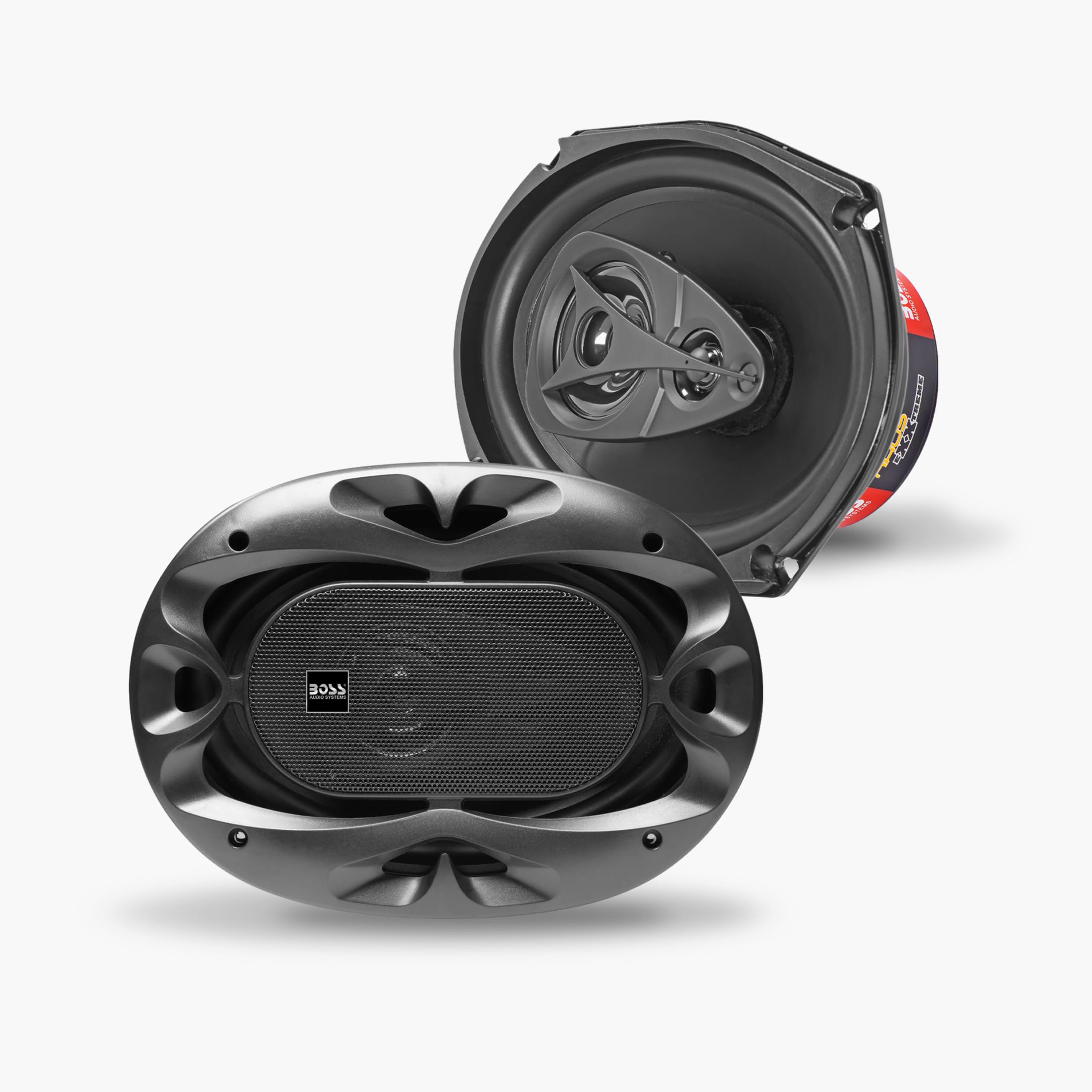
3. BOSS Audio Systems CH6940B 6 x 9 Car Speakers, 500 Watts Per Pair, 4 Way
A 4-way brute that holds 500 watts and still sounds clean.
Stepping up from the CH6930B, this BOSS model adds a fourth driver — splitting the treble between a 1-inch polyimide tweeter (a lightweight, heat-resistant dome) and a 0.5-inch piezo (a crystal-based driver) — for more detailed high-frequency sound. The 92dB sensitivity stays high, so it plays loud without a monster amp, and the peak power handling jumps to 500W per pair (up 100W from the 3-way). The 1.25-inch voice coil handles the extra thermal load. Owners who dropped these into a 1994 Dodge Ram 1500 paired with a Pioneer head unit reported “clear sound with good highs, lows, and non-distorted bass.” Build quality (9 mentions) and value for money (8 mentions) get consistent positive marks.
At a pair weight of 6.4 lbs, it is only 0.2 lbs heavier than the CH6930B, but the mounting depth is slightly shallower at 3.1 inches. That makes it a better option for tighter door pockets. Fitment is less of a complaint here versus the 3-way sibling — the top positive aspect after sound quality is simply “fit.” BOSS includes the same 3-year platinum warranty for confidence. If you plan to add an amplifier later, this 4-way gives you the most power headroom — sharper highs than the CH6930B, and more room to grow.
who it fits: Shallow mounting spaces and ears that crave detailed highs without distortion.
a fair heads-up: The 500W peak rating is best treated as headroom — you will get the cleanest results by feeding it a reasonable 50-100W RMS.
4. Alpine SXE-6926S 6×9 2-Way Coaxial Speakers (Pair)

The Alpine badge brings dependable sound and a near-perfect factory fit.
Alpine is a name car audio enthusiasts trust, and the SXE-6926S brings that reputation to a budget-friendly package. This is a 2-way coaxial design — simpler than the 3-way and 4-way speakers above, but often more cohesive for a simple upgrade. Rated at 280W peak power (45W RMS) with a 4-ohm impedance, it is a direct swap for most factory 6×9 locations. The frequency response dips to 40Hz, which is deeper than many competitors at this price. Owners have installed these in a 2007 Accord EXL and a 1971 Dodge Demon, with many noting they are a “perfect fit.”
The simplicity of a 2-way design means you lose the dedicated midrange driver, but the combination of a long-fiber natural pulp woofer and a mylar foam tweeter produces crisp, clear highs without harshness. Sound quality is the standout feature (57 mentions), and value for money (24 mentions) is strong. The most common negative feedback is around durability — 8 mentions flag that the speakers didn’t last as long as expected. For a well-known brand that fits like OEM, these are a solid middle-ground choice.
a good pick for: Anyone who values brand consistency and a drop-in installation for a classic car or daily driver.
keep in mind: The 45W RMS rating is lower than the competition, so it is best paired with a modest factory stereo rather than a high-power aftermarket amp.
5. Pioneer A-Series Standard TS-A6961F 6″ x 9″ 4-Way Coaxial Speakers 450W Max

Pioneer’s A-Series steps up with a 4-way layout and a staggering 29Hz low-end reach.
This is the most sophisticated Pioneer on our list, and it easily justifies the step up in cost. The 4-way design uses separate drivers for bass, mids, and two levels of treble, resulting in remarkably accurate sound reproduction. The standout spec is the frequency response: it reaches down to 29Hz and up to 28kHz, giving you subwoofer-like extension in a coaxial speaker. The 92dB sensitivity ensures that deep bass actually plays loud without a separate amp. Owners who built custom sealed enclosures for a Sprinter van reported they had to reduce the bass via EQ because it was so powerful it eliminated their need for a dedicated subwoofer.
Pioneer includes multi-fit installation adapters right in the box, which is a thoughtful touch for tricky installations. The most-praised aspect is sound quality (48 mentions), followed by value for money (18 mentions). At 450W max power (90W RMS), this pair has genuine headroom for amplifier upgrades down the line. The fit aspect gets mixed feedback — mostly because the included adapters don’t fit every vehicle perfectly. But for someone who wants near-full-range sound from a passive speaker, this is the most capable performer in the mid-range bracket.
Pioneer’s best value: A 4-way design with 29Hz bass extension that legitimately replaces a small subwoofer in sealed enclosures — rare at this price point.
6. Kenwood KFC-6966S 800W Max 6″ x 9″ 3-Way 4 ohms impedance Car Stereo Coaxial Speakers Pair

Kenwood’s workhorse 6×9 with an 800W peak rating and decades of owner trust.
With over 700 ratings and a 4.4-star average, the KFC-6966S is the most-reviewed speaker in our list. That volume of feedback tells you it is a proven commodity. The 3-way design uses a polypropylene mid-woofer cone and a foam/rubber surround for durability and clean mid-bass. The top-mount depth is a compact 3 inches, and the cutout dimensions (6-1/16″ x 8-3/4″) give you a reliable template for measuring your car’s openings. Sound quality is the #1 aspect praised (109 mentions), and value for money (39 mentions) follows close behind.
The downside is the mixed reports on fitment (35 mentions). Some owners find them a perfect match, while others — particularly in a 2001.5 Ram — note compatibility issues. Additionally, the connectors may not match your car’s plugs, requiring minor splicing. Installation is generally described as easy (20 mentions), but plan for 30 minutes of wiring work per side. At 90W RMS per pair with a 35Hz low-end, these Kenwoods are excellent for someone who wants loud, clear sound with the reassurance of a massive user base confirming their reliability.
why they are so popular: Proven reliability and a massive owner community that confirms loud, clean performance for the money.
one thing: The included spacers and wiring may not be plug-and-play for your specific vehicle — check the connector type first.
7. CT Sounds BIO-6X9-COX 6×9 Inch Coaxial Car Speakers, 200 Watts Max, Pair

A boutique audio brand squeezes balanced, warm sound into a pure 2-way coaxial.
CT Sounds is less of a household name than Pioneer or Kenwood, but the owner feedback suggests they punch above their weight. This is a 2-way design with a polypropylene woofer and a silk dome tweeter — the latter being a notable feature at this price. Silk tweeters are known for producing smoother, less fatiguing highs than metal or piezo tweeters. The total system power is 200W max (100W RMS total), which is lower than most competitors, so these are best suited to factory-level power or a modest amp. The 4-ohm impedance per speaker keeps it compatible with standard systems.
Fitment is the most mixed aspect — some owners say they fit perfectly, while others report a poor match for their vehicle. Sound quality (53 mentions) and value for money (21 mentions) are the clear strengths. The built-in grilles, premium wiring, and screws make installation straightforward. If you are building a system around a quality head unit and care about smooth, fatigue-free highs rather than maximum brute volume, the BIO-6X9-COX is a dark horse worth considering.
ideal for: Listeners who prioritize smooth, natural treble over raw loudness, especially in a smaller car or truck.
check first: The 100W RMS total system power is modest — do not expect it to keep up with a dedicated 4-channel amp pushing hard.
8. Kenwood KFC-6996PS 6″ x 9″ 5-way Speakers

Kenwood’s 5-way design with a diamond-array cone that fights distortion at high volumes.
This is the most complex driver layout in the group — 5 separate ways to handle frequencies, from a dedicated woofer through multiple tweeters. Kenwood’s Sound Field Enhancer widens the stereo image, and the diamond-array pattern on the woofer cone is designed to reduce cone flex and distortion at high output. The result is a speaker that excels at loud, clear playback. Owners swapping these into a Toyota Sienna noted they were so clear they “don’t need a subwoofer,” and a Camry owner said “cymbals hit hard.” The feedback heavily praises sound quality (53 mentions) and value (14 mentions).
The “crisp highs” are a common theme, but the bass response is not overwhelming — one owner pointed out that on a rear shelf install, the low end is good but not huge. Fitment is a mixed bag (5 mentions), with some reporting a perfect fit and others noting incompatibility with certain vehicles like the Corolla. At 4.6 stars out of 640 ratings, it holds one of the highest approval ratings here. If you listen to a lot of acoustic, rock, or classical music and want crisp, detailed highs, this 5-way is a fantastic choice.
Five-way versatility: Five separate drivers and Sound Field Enhancer create a wide, airy soundstage that makes your car feel bigger than it is.
9. Polk Audio DB692 DB+ Series Coaxial Marine 6×9 Speaker for Car & Boat

Polk’s IP56-rated marine speaker that brings premium sound to cars, trucks, and boats alike.
If your budget stretches a little further, the DB692 is the best-built and most versatile speaker in this list. The 3-way design uses a polypropylene woofer cone and a 1/2-inch silk dome super tweeter, delivering a frequency response from 30Hz to 22kHz. The 150W RMS power handling is the highest continuous rating here — it genuinely handles a big amplifier. But the killer feature is the IP56 marine certification: the coated steel basket, UV-testing, and salt-fog testing mean it can live in a boat, a motorcycle fairing, or a door that sees rain, and it will survive. The proprietary Dynamic Balance laser-imaging technology ensures distortion-free sound across the entire volume range.
Sound quality is the dominant positive feedback by a huge margin — 160 mentions, more than any other speaker on the list. Quality (76 mentions) and value for money (52 mentions) round out the top three. Owners rave about the “crisp highs” and “punchy bass,” with many using them for custom portable Bluetooth builds. Durability is the only mixed aspect (20 mentions), but that is mostly tied to the speaker’s capability to handle submersion (you need to silicone the magnet if you plan to float them). For the budget-conscious buyer who wants a speaker that outperforms its price in every way, this is the ultimate upgrade.
who should buy this: Anyone who wants true premium sound, the highest RMS power handling, and a speaker that survives the elements — cars, boats, ATVs, or DIY projects.
a small note: The slightly smaller-than-standard hole pattern may need minor trimming for a perfect fit in some factory locations.
Understanding the Specs
Sensitivity (dB)
This is the most important number for budget buyers. It tells you how loud the speaker will play with a given amount of power (measured as 1 watt from 1 meter away). A 92 dB speaker is significantly louder than an 87 dB speaker on the same head unit — you hear the difference immediately. Higher sensitivity means you don’t need to spend money on a separate amplifier to get satisfying volume.
RMS Power vs Peak Power
Peak power (the big number on the box like “500W”) is a short burst the speaker can handle before damage. RMS power (Continuous) is the real-world number — how much power the speaker can handle for hours of listening. A speaker rated at 150W RMS can take a serious amp. A speaker rated at 30W RMS is best suited to your factory radio. Always compare RMS ratings for a fair comparison.
Mounting Depth & Fitment
6×9 speakers are deeper than round 6.5-inch speakers. Before buying, reach behind your factory speaker and measure the available space from the mounting surface to the nearest obstruction (window track, metal bracing). A mounting depth of 3.1 to 3.2 inches is standard. If your car has shallow pockets, look for a speaker with a depth of 3 inches or less.
Number of Ways (2-Way, 3-Way, 4-Way, 5-Way)
This tells you how many separate drivers handle different parts of the sound spectrum. A 2-way has a woofer for lows and a tweeter for highs. A 3-way adds a midrange driver for clearer vocals. A 4-way or 5-way splits the high frequencies even further for more detailed treble. More ways can mean better separation, but a well-designed 2-way can sound better than a poor 4-way — the brand’s engineering matters most.
FAQ
Will 6×9 speakers fit in the same spot as my factory 6×8 or 5×7 speakers?
Do I need an amplifier for budget 6×9 speakers?
Which number matters more: RMS power or peak power?
What is the best mounting depth for 6×9 speakers in rear decks?
Are marine-rated 6×9 speakers worth it for my car?
How do I tell if a 3-way or 4-way speaker is actually better than a 2-way?
Can I run 6×9 speakers with a 4-ohm impedance on any car stereo?
What tools do I need to install budget 6×9 speakers at home?
Why do some budget 6×9 speakers sound muddy at low volume?
Final Thoughts: The Verdict
For most drivers, the budget 6×9 speakers winner is the Pioneer TS-F6935R because it delivers the clearest, most balanced sound for the lowest price with the easiest installation — a true zero-headache upgrade. If you want real bass thump on stock power, grab the BOSS CH6930B with its 92dB sensitivity and 3-year warranty. And for someone who wants the best build quality and versatility (including marine use), the Polk DB692 is the one to reach for.
How We Picked
We do not accept paid placement. Every pick is matched to a real buyer and a real use-case; we do not hands-on test units.
Sources & Methodology
Specifications: manufacturer listings and product documentation. Review insights: verified customer reviews, as of July 2026. Pricing: not shown on this page (it changes often); check the current price via the retailer link.
As an Amazon Associate, FitlyFast earns from qualifying purchases. This does not affect which products we feature.