
Our readers keep the lights on and the weekend projects moving. As an Amazon Associate, I earn from qualifying purchases.
Specs are compiled from manufacturer listings and verified buyer reviews and can change over time — please confirm the key details on the product page before buying.
You want a yard full of fluttering wings, but not every flowering shrub actually draws butterflies in. The Encore Azalea Autumn Bonfire 3 Gal is the top pick because it pumps out red blooms for three seasons from a compact 3-foot frame — a reliable nectar source backed by 4.3 stars from over 500 buyers. This guide breaks down each bush by its real specs, honest trade-offs, and who it works best for, so you can pick the one that fits your garden without the guesswork.
Our Picks at a Glance

How To Choose The Best Bushes For Butterflies
A bush that draws butterflies must offer two things: nectar-rich flowers and a reliable bloom period (the weeks or months it actually flowers). The right choice depends on your local climate, your garden space, and how many months of activity you want.
Prioritize continuous bloomers
A bush that flowers once for a few weeks supports a quick burst of butterfly activity, but a reblooming variety (a bush that flowers multiple times per season) keeps your yard busy from spring through fall, when butterflies are most active.
Match your hardiness zone
Every bush has a USDA zone range (a numbered guide to winter lows, from coldest zone 1 to warmest zone 13) that tells you whether it survives your winters. Check your local zone before buying so a bush doesn’t die back in the first cold season.
Look for compact sizes that fit your space
A larger bush produces more flowers and attracts more butterflies, but a compact variety (a shorter, narrower plant) is easier to manage in smaller yards or container gardens. Think about how much room you have and if you want a hedge, a border accent, or a standalone centerpiece.
Quick Comparison
| Model | Best For | Bloom Period | Mature Height | USDA Zones | Amazon |
|---|---|---|---|---|---|
| Encore Azalea Autumn Royalty 1 Gal★ Best Overall | Evergreen structure with pink blooms | Spring to Fall | 5 feet | 6-10 | Amazon |
| Encore Azalea Autumn Bonfire 3 GalAlso Great | Compact, reblooming red color | Spring to Fall | 3 feet | 6a-10b | Amazon |
| Greenwood Nursery Grand CascadeBest Bloom Show | Large, cascading blooms all season | Summer to Fall | 6 feet | 5-10 | Amazon |
| Perfect Plants Black Knight 1 Gal | Fragrant, dark purple flowers | Summer | — | 5-9 | Amazon |
| Pugster Buddleia True-Blue 2 Gal (Pugster Blue) | Compact butterfly bush with true-blue flowers | Spring to Fall | 24 inches | 5-9 | Amazon |
| Pugster Amethyst Buddleia 2 Gal | Purple blooms for butterflies and hummingbirds | Spring to Summer | 24 inches | 5-10 | Amazon |
| Red Pixie Lilac Shrub | Fragrant, compact reblooming lilac | Spring-Summer | — | 3-7 | Amazon |
| Florida Foliage Buddleia Black Knight 3-Pack | Budget-friendly multi-pack | Summer | — | — | Amazon |
In‑Depth Reviews
1. Encore Azalea Autumn Royalty 1 Gal
Our pick — over 4★ from 750+ verified ratings; the strongest balance of quality and price.
A fast-growing evergreen (a plant that keeps its leaves year-round) that throws deep pink blooms for months and asks almost nothing in return.
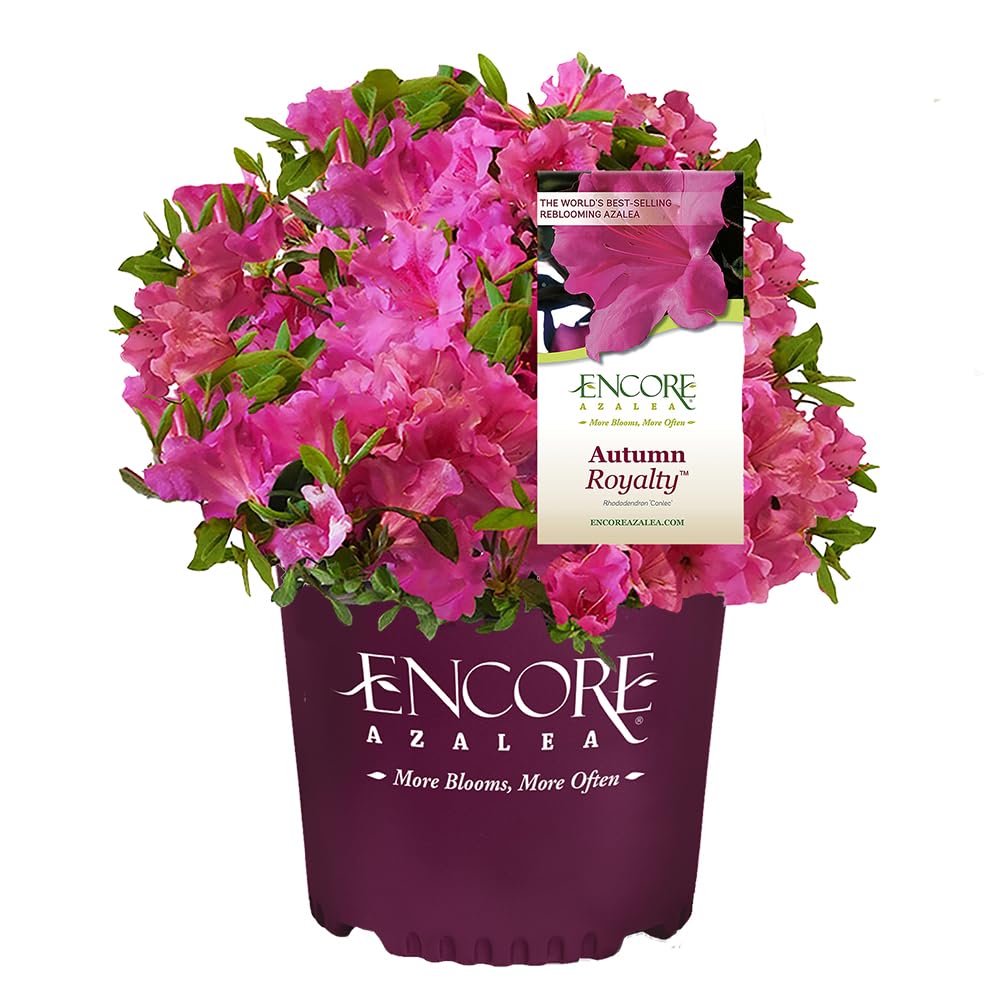
The Autumn Royalty is a reblooming evergreen azalea, meaning it keeps its leaves year-round while pushing out large deep pink flowers from spring through fall. It can reach 4 feet tall and 4.5 feet wide, making it a good candidate for a foundation planting or a mass border. Unlike the smaller but heavier Autumn Bonfire (15 pounds in a 3-gallon pot), this one ships in a 1-gallon container and weighs only 5 pounds — a much lighter, more manageable plant on arrival. It requires essentially no pruning and does not even need deadheading (removing old spent flowers), which means you get months of butterfly-attracting blooms without spending your weekends with shears. It is hardy in USDA zones 6-10 and prefers partial shade for optimal flowering, though it can handle full sun.
The honest trade-off is that this bush grows to 5 feet, so it outpaces the compact 3-foot Autumn Bonfire. If you have a small space, it may outgrow your plan. But the 4.4-star average across roughly 750 owners makes this among the most trusted entry-level butterfly bushes you can buy. Owners mention that it arrives “healthy” and “beautiful” — with one noting it arrived with blooms already — and that it takes off quickly when planted in a sunny spot.
Tight spaces: You want a low-effort, year-round evergreen that grows into a substantial flowering shrub without any deadheading.
Large impact: You are limited to a compact 3-foot space — this one needs room to spread to its full 4.5-foot width.
2. Encore Azalea Autumn Bonfire 3 Gal
This dwarf azalea (a small, compact shrub) pumps out red blooms from spring straight through fall without needing a second thought.
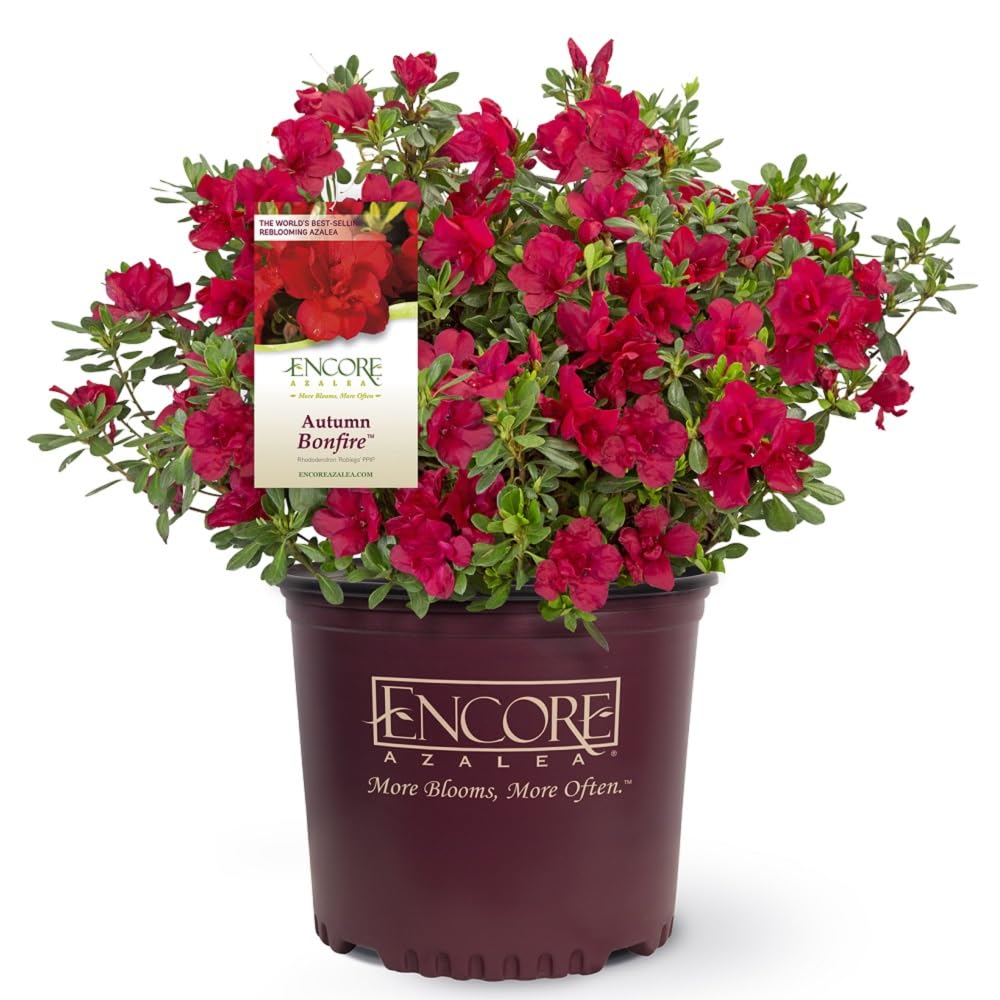
The Autumn Bonfire tops out at just 3 feet tall and 3 feet wide — small enough for a patio container or a tight border, but dense enough to create a real butterfly magnet. Unlike many azaleas that flower once and call it a year, this one reblooms (produces fresh flowers across multiple seasons) across three seasons, giving butterflies a steady food source from spring through fall. Around 49 owners single out its healthiness more than any other trait, and another 46 praise its appearance. It is hardy in USDA zones 6a-10b (handling winters as cold as -10°F) and needs 4-6 hours of sunlight to hit peak bloom production. At 15 pounds in its 3-gallon pot, it is significantly heavier than the 5-pound Encore Azalea Autumn Royalty — a sign of how mature and root-filled this plant is on arrival.
The honest trade-off? The durability gets mixed marks — around 25 owners flag branches arriving broken or the plant failing to return after winter. A few owners in colder parts of zone 6 (areas with winter lows near -10°F to 0°F) found it did not come back the following year. The fix is simple: consider a protected planting spot if you are in the 6a-6b range. For the crowd favorite in this category — 4.3 stars across 500+ owners — the Autumn Bonfire leads for anyone wanting a low-maintenance reblooming bush that packs visual punch.
Vibrant fall color
- Reblooms spring, summer, and fall — nonstop butterfly attraction
- Compact 3×3 foot mature size fits small gardens and containers
- Hardy in USDA zones 6a-10b with 4-6 hours of sun needed
Needs space
- Fragile during shipping — some buyers report broken branches on arrival
- Not guaranteed to survive colder edge of zone 6 winters without extra care
- Heavy 15-pound pot means shipping can be rough on the stems
Fall showstopper: You want a small, low-fuss azalea that keeps butterflies visiting from spring until frost and fits in a patio pot or a front border.
Small gardens: You garden in a zone colder than 6a, because this bush may struggle through harsh winters without winter protection.
3. Grand Cascade Butterfly Bush (Greenwood Nursery) 1x Pint Pot
The showstopper that sends out cascading 14-inch lavender flower spikes on a fast-growing frame — larger than any other bloom in this lineup.
The Grand Cascade is a Buddleia davidii variety (a type of butterfly bush known for long flower spikes) built for drama. Its honey-scented blossoms reach 12 to 14 inches long and 4 inches thick — easily the largest individual flower spikes in this list, topping even the deep purple blooms of the Black Knight. The bush grows 5 to 6 feet tall and 7 to 8 feet wide, making it the biggest footprint in this list. It is a fast-growing deciduous shrub (a plant that loses its leaves in winter but regrows them in spring), so it roars back each spring. It blooms from summer through fall, and notably, it keeps flowering even as other butterfly bushes begin to wind down in mid-summer, which extends the butterfly season deep into autumn. It is deer resistant and attracts bees, butterflies, and hummingbirds. Hardy in USDA zones 5 through 10, it prefers full sun and fertile, moist, well-drained soil. The 4.2-star average across 200+ owners backs its reputation, though the pint pot size means it starts small — buyers confirm it is a healthy, well-packaged starter that doubles in size quickly once planted.
The honest catch is its sprawl. At 7 to 8 feet wide, this is not a bush for tight corners — you need to space multiples 7 to 9 feet apart. It also ships as a smaller pint pot, so you are getting a young plant that needs time to reach its full size. But its cascading flower spikes and honey scent set it apart from any compact buddleia on this list.
Quick coverage: Gardeners with room to spare who want an enormous, fragrant flower display that outlasts other buddleias into fall.
Controlled gardens: Small-space or container gardeners — this bush needs a 7-to-8-foot spread to fully open up.
4. Perfect Plants Black Knight Butterfly Shrub 1 Gal
The richly scented butterfly bush with near-black purple flowers that pollinators flock to all summer long.
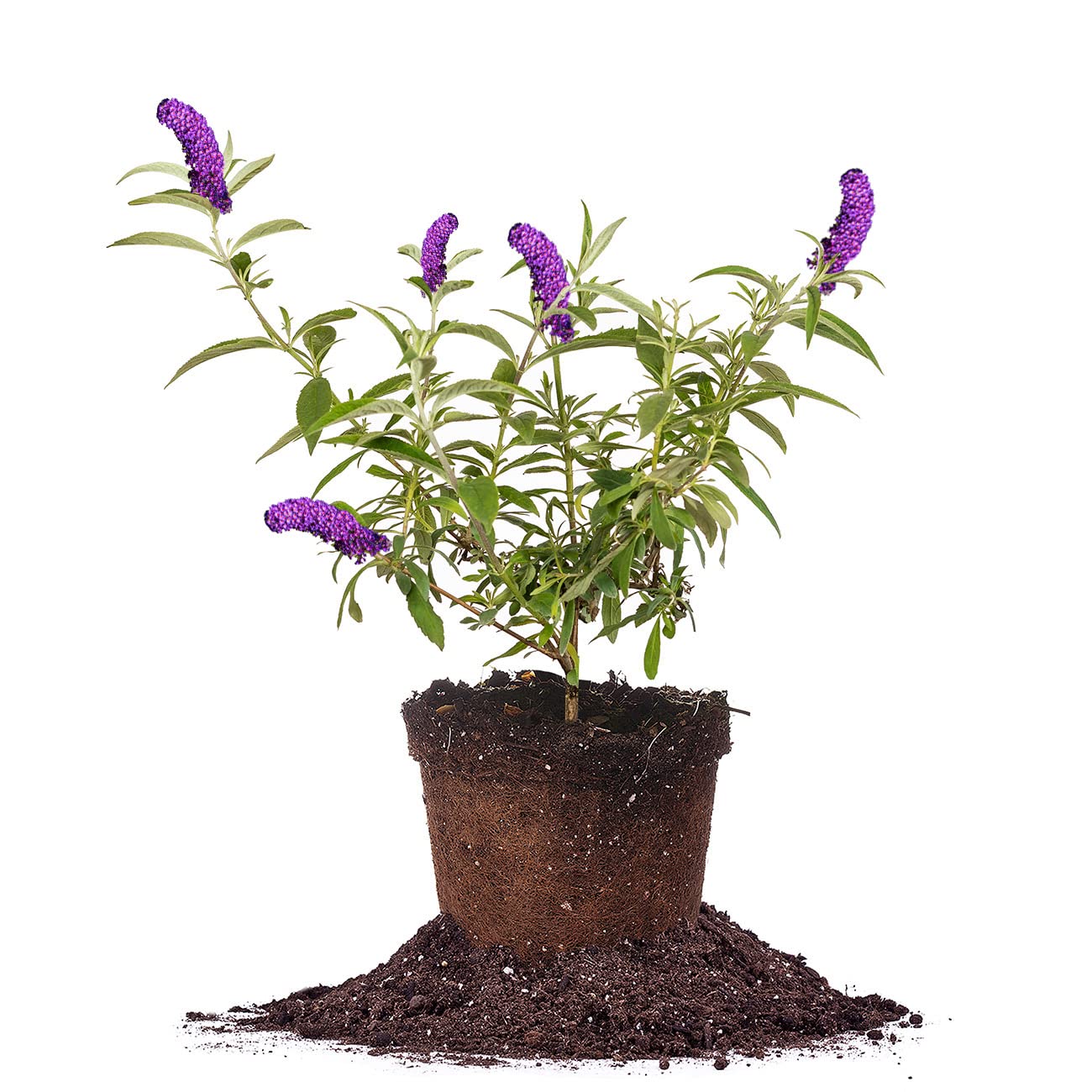
Black Knight is a classic butterfly bush selection (a Buddleia variety known for deep purple color), and Perfect Plants delivers it as a 1-gallon potted shrub with an exceptional track record. The deep purple flowers are famously fragrant, giving your garden a sweet scent that pulls in butterflies, bees, and hummingbirds from across the block. This shrub is heat and drought tolerant once established — a strong choice for southern gardens that bake through long summers. It is hardy in USDA zones 5-9 and thrives in full sun. The health of these plants is the top positive aspect by a wide margin, with 71 owners calling it out, followed by 48 praising the appearance. Customers note it arrives “packaged very well” and “healthy and alive,” often blooming soon after planting. The data does not give a specific mature height, but the brand indicates it is a standard butterfly bush selection, meaning it will grow larger than compact 24-inch varieties like the Pugster.
The recurring trade-off here is that some plants arrive dry or as twigs — roughly 18 owners flag moisture content as a mixed experience. Keep a bucket of water ready for a soak the minute it lands, as many successful owners recommend, especially if you order in very hot or cold weather.
Butterfly magnet: Southern gardeners who want a fragrant, drought-hardy butterfly bush with deep purple color and reliable summer blooms.
Low maintenance: You are in a very cold or hot shipping window, because transit stress can leave the plant dry unless you act fast.
5. Pugster Buddleia, True-Blue Flowers, 2 Gal. (Pugster Blue)

A true-blue butterfly bush that stays under 30 inches tall — nearly half the height of a standard buddleia, so it fits small spaces and containers.
The Pugster Blue from Proven Winners is a compact buddleia (a short butterfly bush variety) that tops out at 24-30 inches wide and 24 inches tall. It blooms from spring through fall with true-blue flowers — a rare color in the butterfly-bush world — that attract pollinators all season long. It is hardy in USDA zones 5-9 and prefers full sun to part shade. The 2-gallon container arrives with a shipping height of 12-18 inches, making it a substantial starter plant. Reviewers point out that it arrived in a “very well-done package” and that it “has already grown a couple of inches since I planted it.” In southern Michigan, one owner reports it is thriving and attracting butterflies. It is deciduous (loses leaves in winter and pushes new growth in spring). A notable comparison: the Pugster Blue weighs 8.8 pounds, which is 76% heavier than the 5-pound Encore Azalea Autumn Royalty — a sign of its dense, root-filled pot. This makes it a better instant-impact option than the lighter Autumn Royalty for small gardens.
The honest downside is delivery consistency — roughly 3.9 stars across 250 owners shows it does not please everyone, and some plants arrive with bent tops or broken branches due to the box being smashed during shipping. If you order during a rough transit season, be ready to nurse a damaged plant back. But for compact blue flowers that keep butterflies coming, this is a top contender.
Unique color: You want a small, container-friendly butterfly bush with rare true-blue blooms that flower from spring through fall.
Tall borders: You cannot risk a bruised plant on arrival — some shipments suffer box damage that bends the top growth.
6. Red Pixie Lilac Shrub

A rare reblooming lilac with deep pinkish-red flowers that survives harsh winters down to zone 3 — colder than any buddleia or azalea on this list.
Most lilacs bloom once for a few fragrant weeks in spring and then stop. The Red Pixie Lilac breaks that mold by reblooming from spring through summer, producing its signature deep pinkish-red flowers twice per season. It is compact and dense, making it a good match for small gardens, patios, and containers. The heavenly lilac scent fills the air, and the blooms attract both butterflies and bees. What really separates it is its cold hardiness: it thrives in USDA zones 3-7 (handling winter lows down to -40°F), tolerating harsh winters that would kill a buddleia or azalea. It is also drought-resistant once established and resistant to common pests and diseases. Shoppers say it arriving as a “healthy plant” and “growing really good,” with one noting it reached about 2 feet tall shortly after planting. With 4.1 stars across 29 ratings, it has a smaller sample size, but the feedback is consistently positive.
The catch is size — some owners found it very small for the money at arrival, and the data does not list a mature height. Given that it is a compact lilac, expect a gradual grower that may take a season or two to fill out. For northern gardeners who need a pollinator-friendly bush that laughs at winter, this is a standout choice.
Small gardens: Cold-climate gardens in zones 3-7 that want a compact, reblooming lilac with strong fragrance and butterfly appeal.
Continuous color: You need an instant, large bush — this one starts small and grows at a moderate pace.
7. Pugster Amethyst Buddleia 2 Gal

A Proven Winners buddleia in a 2-gallon pot that butterflies and hummingbirds simply cannot ignore, with purple blooms instead of the Pugster Blue’s color.
The Pugster Amethyst is the sibling of the Pugster Blue but with purple blooms instead of blue. It shares the same compact size — 24 inches tall and wide — making it another great choice for small gardens, borders, or container planting. It is hardy in USDA zones 5-10 and blooms spring through summer with flowers that attract butterflies and hummingbirds. Like the other Proven Winners shrubs here, it is deciduous (loses leaves in winter) and ships dormant (in a resting state) if ordered between mid-fall and mid-spring. The 4.1-star average across 429 ratings reflects strong buyer satisfaction, with owners consistently calling it “beautiful” and “larger than expected.” One reviewer noted that it was “blooming away during this awful heat” on a deck, and that “the bumblebees love it.” At 8.8 pounds in its 2-gallon pot, it is identical in weight to the Pugster Blue, which suggests the same sturdy root system.
The honest trade-off matches the Pugster Blue: shipping can be rough. A handful of buyers report the plant arriving wilted or leggy with brown leaves. The typical advice from successful owners is to plant it promptly and give it a few weeks to bounce back — most do. If you want a compact butterfly bush that doubles as a hummingbird magnet, this is a reliable pick from a respected nursery brand.
Container plant: You want a compact, proven buddleia variety that draws hummingbirds as reliably as butterflies and fits a small garden space.
Mass planting: You need a guaranteed picture-perfect arrival — a small percentage of plants arrive wilted from the stress of transit.
8. Buddleia Black Knight 3 Live Plants (Florida Foliage)
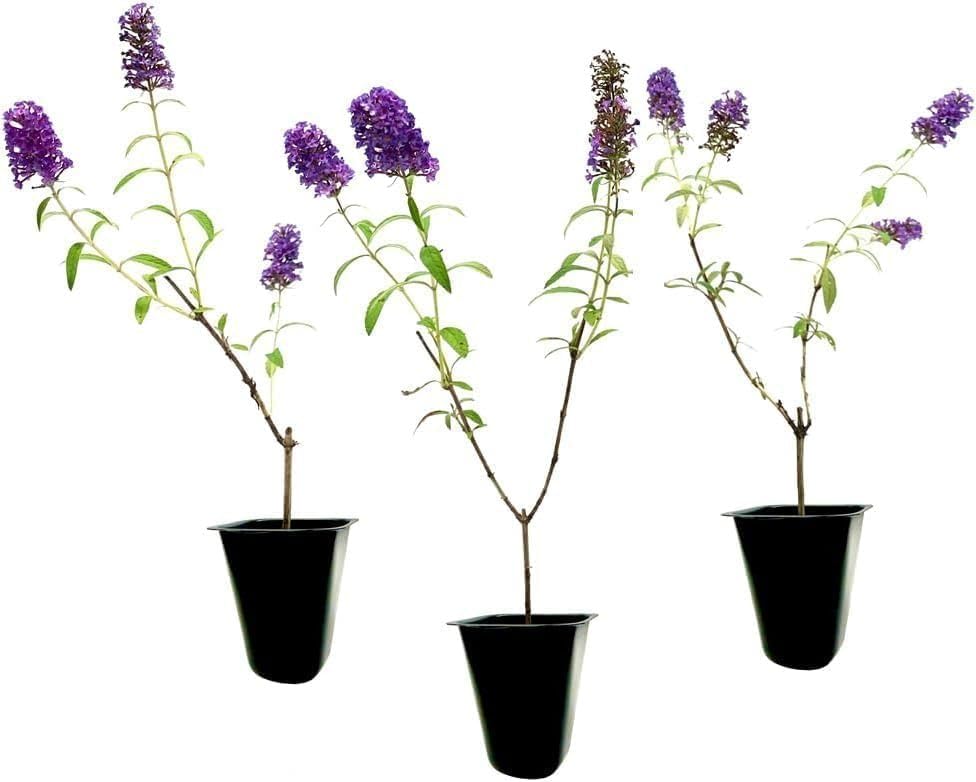
This bundle gives you three Black Knight butterfly bushes — each about a foot tall on arrival — for a per-plant cost that beats any single-container purchase.
Each plant in this Florida Foliage bundle is a Buddleia ‘Black Knight’ — the same deep-purple, fragrant butterfly bush variety that draws butterflies, bees, and hummingbirds. It is drought tolerant once established and thrives in full sun. As a perennial (a plant that returns year after year), it will come back each season in the right climate. The 3.6-star average across a modest 49 ratings suggests it is a mixed bag on arrival condition, but the value proposition is clear: three plants for the price of one premium potted bush.
The honest reality is that these plants need more attention on arrival than a well-established 2-gallon container. Several owners mention plants arriving “dead, dying and broken” or “dry, brittle stems.” Others found that soaking them in water immediately turned them around within hours. One buyer mentioned that “nice size plants would have developed into nice plants if arrived healthy.” The takeaway is that this is a budget-friendly gamble — your success depends on your willingness to nurse the plants through the first week. If you have the patience and a good spot to plant all three, it is a cost-effective way to establish a pollinator patch.
Traditional choice: Budget-focused gardeners who are willing to revive stressed plants and want three butterfly bushes for the price of one.
Modern look: Anyone who expects picture-perfect arrivals or cannot give immediate post-delivery care like soaking and shade recovery.
Understanding the Specs
Bloom Period
This tells you which months your bush will be producing flowers — the nectar source for butterflies. A “spring to fall” bloomer gives you a consistent supply of food across the entire active butterfly season. A “summer only” bloomer gives you a shorter window. For maximum butterfly traffic, look for reblooming (flowering multiple times per season) or long-season varieties that cover at least two seasons.
Mature Height and Spread
This is the final size your bush will reach after a few growing seasons, not the size it ships as. A compact 24-inch bush fits a container or small border, while a 6-foot-tall buddleia needs room to spread. Always check this number against your planting space, because a bush that is too large for its spot will need constant pruning to stay in bounds, which can reduce flowering the same season.
USDA Hardiness Zones
This number range tells you which winter temperatures your bush can survive. Zone 5 handles winters down to -20°F, while zone 10 never sees frost. If your local zone is colder than the bush’s listed range, it will likely die back or die completely during winter. Always match the plant’s zone range to your location before ordering — it is the single most important factor for long-term survival.
Container Size (Gallon)
This is the pot size the plant ships in, and it directly affects how mature the root system is. A 1-gallon pot holds a young starter plant, while a 3-gallon pot holds a much more established shrub. A larger container generally means a faster start in your garden, but it also makes for a heavier, more expensive package. If you want instant impact, go for larger container sizes.
FAQ
What is the best bush for attracting butterflies?
Will a butterfly bush survive winter in zone 5?
How long does it take for a butterfly bush to start blooming after planting?
Can I plant a butterfly bush in a container?
What is the difference between a butterfly bush and a butterfly weed?
Do butterfly bushes need full sun or shade?
How often should I water a newly planted butterfly bush?
Can I prune my butterfly bush to keep it small?
Final Thoughts: The Verdict
Across the board, the bushes for butterflies winner is the Encore Azalea Autumn Bonfire 3 Gal because it is a compact, reblooming shrub with red flowers that keep butterflies visiting from spring through fall, backed by 4.3 stars from hundreds of owners. If you want a fragrance-forward butterfly magnet with near-black purple blooms, grab the Perfect Plants Black Knight 1 Gal. And for the compact, true-blue buddleia that fits a small space, the Pugster Blue 2 Gal is the one to reach for.
How We Picked
We do not accept paid placement. Every pick is matched to a real buyer and a real use-case; we do not hands-on test units.
Sources & Methodology
Specifications: manufacturer listings and product documentation. Review insights: verified customer reviews, as of July 2026. Pricing: not shown on this page (it changes often); check the current price via the retailer link.
As an Amazon Associate, FitlyFast earns from qualifying purchases. This does not affect which products we feature.