
Our readers keep the lights on and the weekend projects moving. As an Amazon Associate, I earn from qualifying purchases.
Specs are compiled from manufacturer listings and verified buyer reviews and can change over time — please confirm the key details on the product page before buying.
Planting bushes that birds actually want is the one move that turns a quiet yard into a year-round sanctuary, and the secret is choosing species that deliver both shelter and a natural food supply — so you get the flutter of wings without constantly refilling a feeder. The challenge is picking varieties that survive your local winters, arrive healthy, and produce berries or blooms fast enough to hold a flock’s interest through fall and winter.
I’m Rikta — the founder and writer behind FitlyFast. This guide is built by comparing the manufacturers’ published specifications and the patterns across verified customer reviews, so you get each pick’s real strengths and trade-offs instead of marketing spin.
if you need a privacy screen, a compact accent, or a winter berry machine, this roundup of the best bushes for birds gives you eight proven choices that deliver food, cover, and year-round beauty without the guesswork.
Our Picks at a Glance


How To Choose The Best Bushes For Birds
The best bird-attracting bush for your yard depends on three things: what the birds in your region eat, how much room you have, and whether the plant can survive your coldest winter. Focus on these four factors and you will pick a winner every time.
Hardiness Zone Matching
Every bush ships with a USDA (U.S. Department of Agriculture) Hardiness Zone range — that is the coldest temperature region a plant can survive. If you plant a zone 8 shrub in zone 4 ground, it will die the first winter. Check your zone at planthardiness.ars.usda.gov and buy only bushes that include your zone in their range.
Berry Production vs. Bloom Production
Birds feed on berries in fall and winter when insects are gone. Bushes like Winterberry and Nandina provide that food. Bloom-only shrubs like Spirea and Butterfly Bush attract pollinators in summer but do not produce lasting fruit. Mix both types so birds get nectar in warm months and berries when they need calories most.
Mature Size and Growth Rate
A bush that reaches 40 feet tall is wrong for a 4-foot-wide foundation bed. Read the mature height and width before buying. Fast growers like Thuja Green Giant add 3 feet per year, so they fill space quickly but need room. Compact options like the Pugster Buddleia stay around 2 feet tall and work in tight spots.
Pollinator Requirements for Fruit
Some berry-producing bushes, like Ilex verticillata ‘Winter Red’, are female and need a nearby male plant to produce fruit. Without a male pollinator, you get leaves and no berries — and no birds. Check each product’s pollination needs before ordering a single plant.
Quick Comparison
| Model | Best For | Mature Height | USDA Zones | Berry / Bloom Season | Amazon |
|---|---|---|---|---|---|
| Winterberry (Ilex verticillata)★ Best Overall | Winter bird food + screen | 8–10 ft | 3–8 | Bright red berries fall–winter | Amazon |
| Obsession NandinaBest Value | Year-round color + low hedge | 48 in | 6–10 | Red foliage all seasons | Amazon |
| Bridal Wreath SpireaPollinator Friendly | Spring blooms + deer resistance | 4–6 ft | 4–9 | White blooms spring | Amazon |
| Double Play Doozie Spirea | Compact re-blooming hedge | 24–36 in | 3–8 | Red-to-purple blooms spring–fall | Amazon |
| Pugster Amethyst Buddleia | Butterfly + hummingbird magnet | 24 in | 5–10 | Purple blooms spring–summer | Amazon |
| Thuja Green Giant Arborvitae | Fast privacy screen + shelter | 40 ft | 5–9 | Evergreen, no significant bloom | Amazon |
| Blue Chiffon Rose of Sharon | Tall late-summer bloomer | 96–144 in | 5–9 | Blue blooms spring–fall | Amazon |
| Monarch Blue Knight Butterfly Bush | Late-summer nectar source | 4–5 ft | 5–10 | Blue-purple blooms summer–fall | Amazon |
In‑Depth Reviews
1. Ilex verticillata ‘Winter Red’ (Winterberry) Shrub
Our pick — over 4.5★ from 500+ verified ratings; the strongest balance of quality and price.
Keeps songbirds fed in January when snow covers everything else.
If your goal is birds at the window in winter, this is the bush. The Ilex verticillata ‘Winter Red’ produces masses of bright red berries that last from fall through winter, giving chickadees, cardinals, and robins food when feeders run low. It arrives in a #3 Size Container (a 3-gallon pot) at roughly 2 feet tall, fully rooted with soil. Buyers consistently report it arrives “≥2 ft tall, bushy, healthy” with berries already on the branches. Plant it in USDA Zones 3–8 and expect a mature height of 8–10 feet with an equal spread — a serious screen that doubles as a winter pantry. The berries stay visible on bare branches, so birds spot them easily. Compared to the Thuja Green Giant below, this is a slower grower but delivers a food source that a purely evergreen screen cannot.
The catch is pollination. This is a female variety and needs a male Winterberry (like ‘Blue Prince’) nearby to set fruit. Without a pollinator partner, you get a handsome shrub with zero berries. The thing that wins owners over is the plant’s health on arrival — packed impeccably with moist soil and vibrant green spineless leaves. An occasional box takes a bump during shipping, but the overwhelming feedback is that these hollies arrive looking better than what local nurseries sell for more money.
What makes it a bird magnet
- Bright red berries last through winter — a critical cold-weather food for songbirds
- 8–10 ft mature size provides dense nesting cover
- Arrives healthy with berries already set (buyers report “very satisfied”)
- Thrives in zones 3–8 across a wide temperature range
The one thing to plan for
- Female only — requires a separate male Winterberry for pollination
- Mature spread equals its height (8–10 ft wide), so give it room
The surest bird bet: Pick this if winter wildlife is your priority and you have space for a 10-foot hedge plus a male companion plant.
Think twice if: You are working with a small foundation bed or want a bush that produces berries without a second purchase.
2. Southern Living 2 Gal. Obsession Nandina Shrub
A low-maintenance color machine that birds love and you can ignore.
This is the easiest bush on the list for a gardener who wants instant vibrancy without fuss. The Obsession Nandina delivers striking bright red foliage across all seasons, and at 48 inches tall it stays manageable as a low hedge or foundation accent. Owners mention it shows color “in just a few weeks” and arrives “moist & happy just like it was in a nursery.” It is non-flowering, so the red you see is leaf color, not blooms. That means no deadheading, no pruning schedule — just water twice a week until established and it runs on autopilot. Birds use Nandina for dense cover, and the red berries (which appear on some varieties) provide winter food.
The trade-off mentioned most often is size perception: a few owners described the plants as “very small” on arrival, while others were surprised by how full they were. At 8.8 pounds per 2-gallon pot, this shrub is noticeably heavier than the 5-pound Bridal Wreath Spirea — a 76% weight gap — which reflects the root mass and soil. It ships year-round and fits USDA Zones 6–10, so warm-climate gardeners get the best performance. The durability reviews are mixed, with some noting that delivery handling can knock branches loose, but the overwhelming majority call it gorgeous and healthy.
Why owners rave
- Vibrant red foliage that holds color all year without deadheading
- Compact 48-inch height fits small spaces and entryways
- Low maintenance — water only once weekly after establishment
- Arrives healthy and well-packaged (128 owners praise its condition)
What to watch for
- Size can be hit-or-miss on arrival; some find it smaller than expected
- Loses all leaves in winter in colder zones (deciduous)
Reach for this if: You want simple to use year-round color in a compact size and do not want to prune or fuss.
Look elsewhere if: You need a bush that produces berries immediately or you are gardening in zone 5 or colder.
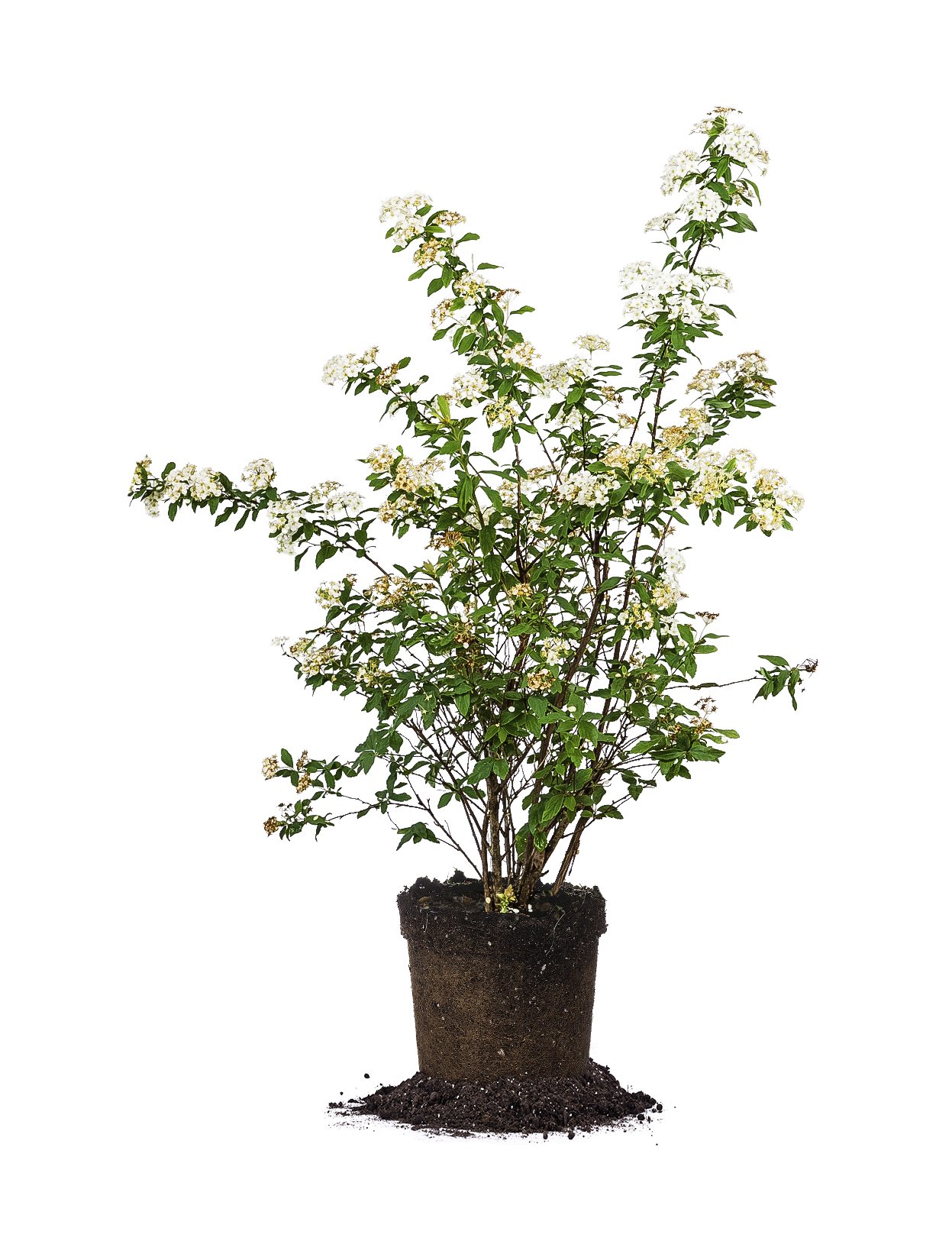
3. Perfect Plants Bridal Wreath Spirea (Spiraea prunifolia)
Spring’s white waterfall that bees love and deer leave alone.
This is the bush that stops neighbors mid-walk. The Bridal Wreath Spirea explodes with cascading double white flowers each spring, covering arching branches so densely the green disappears. It draws butterflies and bees — and by extension, the insect-eating birds that follow. The shrub itself is deer resistant, which matters enormously if you garden in a suburban area where deer treat landscaping like a buffet. It ships in a 1-Gallon pot weighing 5 pounds — a chunk lighter than the 8.8-pound Winterberry — and customers note roots that are “strong and healthy” with growth of “at least 6 inches by end of summer.” The real draw is the fall show: green summer foliage transitions to red and orange before dropping for winter.
It thrives in Zones 4–9, tolerates powdery mildew (a common fungal disease) and root rot, and asks for only light pruning after blooming. What wins people over is the sheer vitality of the plant on arrival — the feedback is consistent that it arrives “healthy, huge, well-packaged” even when the box takes a beating. One owner even noted that after a dog broke a branch, the shrub “continued to grow like nothing happened.” The hard reality is that bloom season is brief in mid-spring, and after that it is a green mound until fall color appears. For nectar-hungry birds migrating through, that spring window is gold.
What makes it a garden star
- Masses of double white flowers in spring that pollinators swarm
- Deer resistant — a rare trait that saves you from fencing
- Vigorous root system; reviewers point out rapid growth within weeks
- Fall red-orange foliage adds a second season of interest
The honest limit
- Flowering window is a few weeks in spring only
- Packaging can be beat up in transit; some branches arrive bent
The right pick for: A deer-plagued yard where you want a dramatic spring bloom that feeds bees and birds alike.
Not ideal if: You need a bush that provides winter berries or year-round bird cover.
4. Proven Winners 2 Gal. Double Play Doozie Spirea

Pumps out red-purple flowers from spring to frost — unlike the single-bloom Bridal Wreath Spirea.
Most spireas flower once. This one keeps going. The Double Play Doozie Spirea produces red to purple flowers from spring through fall, giving pollinators — and the birds that hunt them — a consistent nectar source across months. It stays compact at 24–36 inches tall and wide, making it a natural for foundation plantings, container gardens, or a low border that you can actually see over. The Proven Winners brand ships a 2-gallon pot at 8.8 pounds, and owners consistently say the plant arrives “full and healthy appearing with russet tips and blooms on many branches.” One buyer even noted that after a three-week wait to plant, the shrub “stayed alive on my enclosed porch and even started to bloom.”
The premium here is bloom duration. Against the Bridal Wreath Spirea’s one-week spring display, this Doozie covers nearly half the year in color. It thrives in Zones 3–8, tolerates full sun to partial shade, and is deciduous — it drops leaves in winter. The most frequent owner feedback is pure surprise at the size and health of the plant on arrival, with several saying it looks “not little like most of the ones you get from mail order.” The foliage transitions to warm tones in fall, and the re-blooming habit means you deadhead once and get another wave. For bird-friendly gardens, the steady insect traffic from months of blooms is the real win.
Why it stands out
- Blooms from spring to fall — not just one short burst
- Compact size (24–36 in) fits tight spaces and containers
- Arrives large and healthy; buyers call it “beautiful” and “lush”
- Survived hard freeze according to owner reports
The catch
- Deciduous — no winter cover or color
- Ships dormant in winter, so spring arrival may look bare
Best for: A gardener who wants months of pollinator activity in a tidy, low-growing package.
skip it if: You need a winter food source (berries) or a privacy screen above 3 feet.
5. Proven Winners 2 Gal. Pugster Amethyst Buddleia

A dwarf butterfly bush that packs a full-size punch of purple blooms.
If hummingbirds and butterflies are what you want in your yard, this is the bush that draws them in. The Pugster Amethyst Buddleia sends up dense purple flower spikes from spring to summer, and at just 24 inches tall it works where a full-size butterfly bush would overwhelm a small garden. The blooms are honey-scented, and shoppers say that “the bumblebees love it” even during intense summer heat. It ships in a 2-gallon pot at 8.8 pounds and is rated for USDA Zones 5–10, making it a solid choice for both moderate and warm climates. The blooms provide nectar that attracts the insects birds eat, especially during migration.
The nuance here is that this variety blooms on new wood, so spring pruning encourages more flowers — and more bird visits. It is deciduous, losing leaves in winter, and may ship dormant if ordered mid-fall to mid-spring. The feedback is more varied than other picks: while many call it beautiful and healthy, a noticeable minority received plants that arrived “leggy with brown leaves” or wilted. This is partly a handling risk during hot shipping — a risk you accept with any mail-order shrub.
What owners love
- Purple blooms that butterflies, bees, and hummingbirds swarm
- Compact 24-inch size fits patios and small beds
- Bloomed all through a hot summer, per multiple owners
- Honey-scented flowers near sitting areas
Honest caveats
- Arrival condition can be inconsistent — some plants arrive wilted
- No berries for winter bird food
Reach for it when: You want a small-space pollinator powerhouse that hummingbirds cannot ignore.
Think twice if: You need a bush that survives hot-weather shipping without risk, or you want winter bird interest.
6. 10 Thuja Green Giant Arborvitae (7-10 Inch Trees)

The living wall that rockets skyward 3 feet every year.
This is not a berry bush — it is a shelter bush. The Thuja Green Giant Arborvitae is the fastest-growing evergreen screen you can buy, adding up to 3 feet of height per year and reaching a mature size of 40 feet tall and 15 feet wide. For birds, that means dense year-round cover from predators and weather, plus nesting sites that deciduous bushes cannot offer in winter. The package ships 10 potted saplings that arrive 7–10 inches tall, and buyers report that “full sun trees grew from 8″ to ~3.5 ft” in just 16 months. Plant them 6–7 feet apart for a quick privacy screen that doubles as a bird sanctuary.
The value here is striking when you compare it to nursery prices. Owners note it is “excellent value” for the same number of trees at a garden center. It is hardy in Zones 5–9 and thrives in loam soil (a balanced mix of sand, silt, and clay) with moderate watering. The most common owner feedback is that the saplings arrive “hydrated and alive” even in 93°F weather, with well-developed root systems. The mixed feedback comes around size — some find them larger than promised, others smaller. And an evergreen screen this big needs serious space: 40 feet tall is too much for a tiny suburban lot. For bird lovers, the lack of berries is offset by the unbeatable winter cover that keeps flocks safe from hawks and cold winds.
The growth advantage
- Fastest grower on this list — 3 feet per year in full sun
- Evergreen year-round cover for birds in every season
- 10 plants per pack for a full screen at a fraction of nursery cost
- Arrives well-rooted and hydrated, per most buyers
Size reality check
- Mature height of 40 feet demands serious space
- No berries or blooms — shelter only, not a food source
Best for: Large properties where a fast evergreen privacy wall is more important than berry production.
Not for: Small lots, foundation plantings, or anyone who wants visible flowers or fruit.
7. Proven Winners 2 Gal. Blue Chiffon Rose of Sharon (Hibiscus)

A towering shrub that drapes itself in ice-blue blooms from spring to fall — taller than the compact Double Play Doozie.
This is for the gardener who wants height plus flowers. The Blue Chiffon Rose of Sharon matures at 8–12 feet tall (96–144 inches) and produces soft blue, ruffled blooms continuously from spring through fall. For birds, those blooms draw bees and butterflies all season, and the dense branching provides nesting cover at eye level. It arrives in a 2-gallon container at 8.8 pounds, and owners mention it arrives “healthy, with tons of buds” and often blooms within days of planting. It thrives in USDA Zones 5–9 and tolerates full sun to part shade.
The appeal of this shrub vs. the shorter Double Play Doozie is the sheer scale — it creates a living screen that the compact spirea cannot match. But the feedback is less uniform. While many owners call it “gorgeous” and show photos of abundant flowers, a notable portion report plants arriving in poor condition, with “brown leaves” or buds that fall off after shipping. The color itself also divides opinion: most love the ice-blue tone, but some find it less vivid than expected. If you order in hot weather, late-summer shipping stress is a real risk. For bird habitat, the combination of tall structure and long bloom season makes it a strong choice if you accept the shipping gamble.
Why it earns a spot
- Continuous blue blooms from spring to fall — rare for a tall shrub
- Mature height of 8–12 ft creates real visual impact and bird cover
- Arrives with buds ready to open, per many delighted owners
- Hardy in zones 5–9 with full sun tolerance
What to know before buying
- Shipping condition is inconsistent — some arrive stressed or with yellowing leaves
- Deciduous, so no winter leaf cover
Grab this if: You want a tall, long-blooming shrub that makes a statement and draws pollinators all season.
Hesitate if: Reliable plant condition on arrival is your top priority, or you want winter interest.
8. Greenwood Nursery Monarch Blue Knight Butterfly Bush (3x Pint Pots)
Feeds birds, bees, and butterflies when other bushes are done for the season.
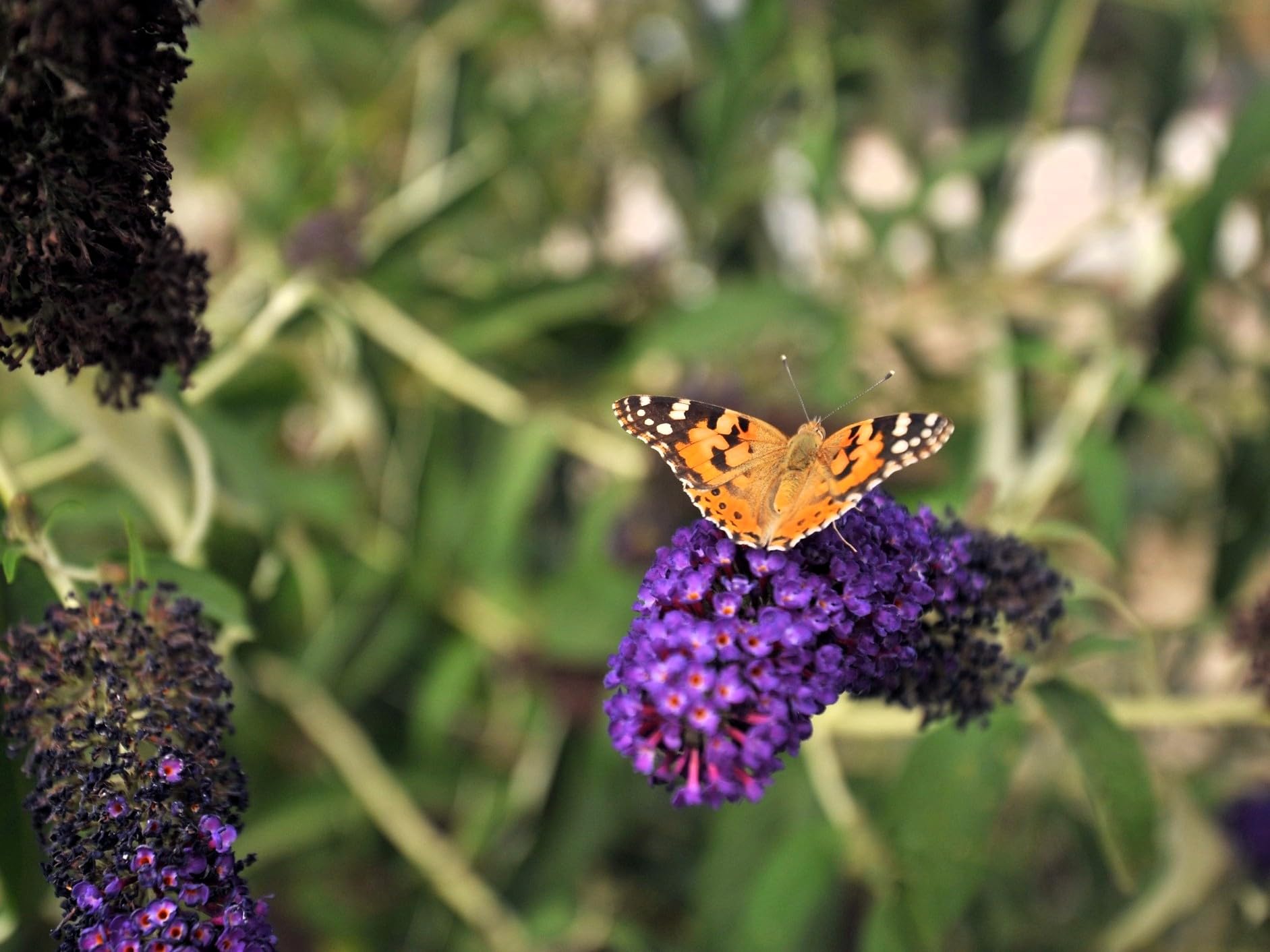
Most flowering shrubs finish by mid-summer. The Blue Knight Butterfly Bush starts in late summer and runs through early fall, when monarchs are migrating and birds need a last calorie push before winter. It produces 10- to 12-inch panicles (long clusters) of lavender-to-blue-purple flowers that are honey-scented, and it reaches 4–5 feet tall with a spread of up to 6.5 feet wide. This package includes three pint pots, so you get a small grouping to create a decent patch of color. It is part of the Monarch Butterfly Bush Collection developed by Walters Gardens and is rated for Zones 5–10.
The honest trade-off is size at delivery. These are pint pots — small — and several owners note the plants were “smaller than expected” even though the listing is clear about the container size. One owner reported that after repotting, the plants “doubled in size in one week in full sun,” so give them good soil and they respond fast. The Greenwood Nursery ships with a 14-day guarantee, and the feedback on packaging is positive (“well-packaged, healthy”). A rare owner lost all three plants within five days, which sounds like a heat-stress issue in transit. For bird-friendly gardens, the Blue Knight’s late-season nectar is its superpower — it bridges the gap between summer flowers and the berry-producing winter bushes you plant alongside it.
The late-season edge
- Blooms late summer into fall when most other shrubs are finished
- Honey-scented blue-purple flowers attract hummingbirds and monarchs
- Fast grower — customers note doubling in size within a week after repotting
- Three pots in one order for a fuller planting group
What to expect
- Pint pots are genuinely small; expect a baby plant, not a mature shrub
- A minority arrive dead; 14-day guarantee covers this but it is a hassle
Reach for this if: You need a nectar source that fires up when summer flowers fade and you have space for a 5-foot bush.
Look elsewhere if: You want instant size on arrival or a bush that provides winter berries and cover.
Understanding the Specs
USDA Hardiness Zone
This is the single most important number for any bush you buy online. It tells you the coldest climate a plant can survive. A bush labeled Zone 5 will die in a Zone 3 winter. Check your zone at planthardiness.ars.usda.gov before buying, and never push a plant more than one zone colder than its rating. Most bird-friendly bushes cover zones 3 through 9, but always verify against your zip code.
Berry vs. Bloom Production
Birds eat berries in fall and winter when insects are gone — Winterberry and Nandina deliver that. Bloom-only shrubs like Spirea and Butterfly Bush provide nectar that attracts the insects birds eat in spring and summer. A fully bird-friendly yard mixes both types so there is food every season. A bush with no bloom and no berry (like Thuja) provides only shelter, which is still valuable but not a food source.
Pollination Requirements
Some berry-producing bushes are female-only and will not set fruit without a male pollinator planted nearby. Winterberry ‘Winter Red’ needs a male holly like ‘Blue Prince’ to produce its signature red berries. If you buy a single female bush with no male nearby, you get a green shrub with zero berries. Always check the pollination notes — berry bushes often come in male and female varieties.
Mature Height and Spread
A 40-foot Arborvitae is a bad fit for a 5-foot-wide bed. Always check the mature dimensions. Compact options like the Pugster Buddleia (24 inches) or Double Play Spirea (24–36 inches) suit small gardens and containers. Tall options like the Rose of Sharon (8–12 feet) and Winterberry (8–10 feet) make good screens but need room. Fast growers like Thuja Green Giant add 3 feet per year and fill space quickly, so give them the distance they need from the start.
FAQ
Will any bush on this list survive a zone 3 winter?
Do I need a male and female plant to get berries?
Which bush attracts the most hummingbirds?
How long does it take for a Thuja Green Giant to become a privacy screen?
Can I plant these bushes in containers on a patio?
Which bush stays green all winter for bird cover?
Are any of these bushes toxic to dogs or cats?
What is the difference between a 1-gallon pot and a #3 container?
Which bush flowers the longest during the year?
How often should I water a newly planted bird bush?
Final Thoughts: The Verdict
If you want one dependable pick, the bushes for birds winner is the Ilex verticillata Winterberry because it delivers both winter bird food in the form of bright red berries and dense nesting cover at 8–10 feet tall, all while arriving healthy and already berried from the nursery. If you want instant year-round color with almost no maintenance, grab the {“@context”: “https://schema.org”, “@graph”: [{“@type”: “ItemList”, “name”: “8 Best Bushes For Birds”, “url”: “https://fitlyfast.com/best-bushes-for-birds/”, “numberOfItems”: 8, “itemListElement”: [{“@type”: “ListItem”, “position”: 1, “name”: “Ilex verticillata ‘Winter Red’ (Winterberry) Shrub”, “url”: “https://fitlyfast.com/best-bushes-for-birds/#product-1”}, {“@type”: “ListItem”, “position”: 2, “name”: “Southern Living 2 Gal. Obsession Nandina Shrub”, “url”: “https://fitlyfast.com/best-bushes-for-birds/#product-2”}, {“@type”: “ListItem”, “position”: 3, “name”: “Perfect Plants Bridal Wreath Spirea (Spiraea prunifolia)”, “url”: “https://fitlyfast.com/best-bushes-for-birds/#product-3”}, {“@type”: “ListItem”, “position”: 4, “name”: “Proven Winners 2 Gal. Double Play Doozie Spirea”, “url”: “https://fitlyfast.com/best-bushes-for-birds/#product-4”}, {“@type”: “ListItem”, “position”: 5, “name”: “Proven Winners 2 Gal. Pugster Amethyst Buddleia”, “url”: “https://fitlyfast.com/best-bushes-for-birds/#product-5”}, {“@type”: “ListItem”, “position”: 6, “name”: “10 Thuja Green Giant Arborvitae (7-10 Inch Trees)”, “url”: “https://fitlyfast.com/best-bushes-for-birds/#product-6”}, {“@type”: “ListItem”, “position”: 7, “name”: “Proven Winners 2 Gal. Blue Chiffon Rose of Sharon (Hibiscus)”, “url”: “https://fitlyfast.com/best-bushes-for-birds/#product-7”}, {“@type”: “ListItem”, “position”: 8, “name”: “Greenwood Nursery Monarch Blue Knight Butterfly Bush (3x Pint Pots)”, “url”: “https://fitlyfast.com/best-bushes-for-birds/#product-8”}]}, {“@type”: “Product”, “position”: 1, “name”: “Ilex verticillata ‘Winter Red’ (Winterberry) Shrub”, “image”: “https://m.media-amazon.com/images/I/81qxv4oeQIL.jpg”, “brand”: {“@type”: “Brand”, “name”: “Ilex”}, “url”: “https://www.amazon.com/dp/B07HFSFLZ4/?tag=fitlyfast00-20”, “offers”: {“@type”: “Offer”, “url”: “https://www.amazon.com/dp/B07HFSFLZ4/?tag=fitlyfast00-20”}}, {“@type”: “Product”, “position”: 2, “name”: “Southern Living 2 Gal. Obsession Nandina Shrub”, “image”: “https://m.media-amazon.com/images/I/81dzO4vDlsL.jpg”, “brand”: {“@type”: “Brand”, “name”: “Southern”}, “url”: “https://www.amazon.com/dp/B084ZT5T35/?tag=fitlyfast00-20”, “offers”: {“@type”: “Offer”, “url”: “https://www.amazon.com/dp/B084ZT5T35/?tag=fitlyfast00-20”}}, {“@type”: “Product”, “position”: 3, “name”: “Perfect Plants Bridal Wreath Spirea (Spiraea prunifolia)”, “image”: “https://m.media-amazon.com/images/I/81dLcdgdjBL.jpg”, “brand”: {“@type”: “Brand”, “name”: “Perfect”}, “url”: “https://www.amazon.com/dp/B06Y42M86F/?tag=fitlyfast00-20”, “offers”: {“@type”: “Offer”, “url”: “https://www.amazon.com/dp/B06Y42M86F/?tag=fitlyfast00-20”}}, {“@type”: “Product”, “position”: 4, “name”: “Proven Winners 2 Gal. Double Play Doozie Spirea”, “image”: “https://m.media-amazon.com/images/I/91aFbnvkjkL.jpg”, “brand”: {“@type”: “Brand”, “name”: “Proven”}, “url”: “https://www.amazon.com/dp/B08KTVCBJ4/?tag=fitlyfast00-20”, “offers”: {“@type”: “Offer”, “url”: “https://www.amazon.com/dp/B08KTVCBJ4/?tag=fitlyfast00-20”}}, {“@type”: “Product”, “position”: 5, “name”: “Proven Winners 2 Gal. Pugster Amethyst Buddleia”, “image”: “https://m.media-amazon.com/images/I/81b-+ULcNwL.jpg”, “brand”: {“@type”: “Brand”, “name”: “Proven”}, “url”: “https://www.amazon.com/dp/B08557284G/?tag=fitlyfast00-20”, “offers”: {“@type”: “Offer”, “url”: “https://www.amazon.com/dp/B08557284G/?tag=fitlyfast00-20”}}, {“@type”: “Product”, “position”: 6, “name”: “10 Thuja Green Giant Arborvitae (7-10 Inch Trees)”, “image”: “https://m.media-amazon.com/images/I/91CVRH2b7LL.jpg”, “brand”: {“@type”: “Brand”, “name”: “10”}, “url”: “https://www.amazon.com/dp/B000VONYTY/?tag=fitlyfast00-20”, “offers”: {“@type”: “Offer”, “url”: “https://www.amazon.com/dp/B000VONYTY/?tag=fitlyfast00-20”}}, {“@type”: “Product”, “position”: 7, “name”: “Proven Winners 2 Gal. Blue Chiffon Rose of Sharon (Hibiscus)”, “image”: “https://m.media-amazon.com/images/I/71MrBJXiFpL.jpg”, “brand”: {“@type”: “Brand”, “name”: “Proven”}, “url”: “https://www.amazon.com/dp/B089DMWZ41/?tag=fitlyfast00-20”, “offers”: {“@type”: “Offer”, “url”: “https://www.amazon.com/dp/B089DMWZ41/?tag=fitlyfast00-20”}}, {“@type”: “Product”, “position”: 8, “name”: “Greenwood Nursery Monarch Blue Knight Butterfly Bush (3x Pint Pots)”, “image”: “https://m.media-amazon.com/images/I/71SPAMFjh+L.jpg”, “brand”: {“@type”: “Brand”, “name”: “Greenwood”}, “url”: “https://www.amazon.com/dp/B0D2G728S1/?tag=fitlyfast00-20”, “offers”: {“@type”: “Offer”, “url”: “https://www.amazon.com/dp/B0D2G728S1/?tag=fitlyfast00-20”}}, {“@type”: “FAQPage”, “mainEntity”: [{“@type”: “Question”, “name”: “Will any bush on this list survive a zone 3 winter?”, “acceptedAnswer”: {“@type”: “Answer”, “text”: “Yes — the Winterberry and Thuja Green Giant both handle zone 3 winters. The Double Play Spirea also works in zone 3. The Nandina and Butterfly Bush varieties listed here need warmer zones (5 or 6 minimum), so they are not suited for the coldest northern climates.”}}, {“@type”: “Question”, “name”: “Do I need a male and female plant to get berries?”, “acceptedAnswer”: {“@type”: “Answer”, “text”: “Only for the Winterberry (Ilex verticillata). It is a female variety and needs a male holly like ‘Blue Prince’ within about 50 feet to produce berries. The other berry-producing shrubs on this list, including the Nandina, do not require a separate pollinator to fruit.”}}, {“@type”: “Question”, “name”: “Which bush attracts the most hummingbirds?”, “acceptedAnswer”: {“@type”: “Answer”, “text”: “The Pugster Amethyst Buddleia and the Monarch Blue Knight Butterfly Bush are the top two picks for hummingbirds. Both produce dense, nectar-rich flower spikes that hummers visit repeatedly. The Rose of Sharon also draws them with its large blue blooms, but the butterfly bushes are more reliable magnets.”}}, {“@type”: “Question”, “name”: “How long does it take for a Thuja Green Giant to become a privacy screen?”, “acceptedAnswer”: {“@type”: “Answer”, “text”: “In full sun, reviewers point out growth from 8 inches to about 3.5 feet in 16 months. At 3 feet of growth per year, a 7-inch sapling can reach 6–7 feet in about two growing seasons. Space them 6–7 feet apart for a solid screen at maturity.”}}, {“@type”: “Question”, “name”: “Can I plant these bushes in containers on a patio?”, “acceptedAnswer”: {“@type”: “Answer”, “text”: “Yes, the compact picks work well in containers. The Pugster Buddleia (24 inches), Double Play Spirea (24–36 inches), and Nandina (48 inches) all grow well in large pots. The Winterberry and Thuja Green Giant grow too tall (8–40 feet) for container life and need open ground.”}}, {“@type”: “Question”, “name”: “Which bush stays green all winter for bird cover?”, “acceptedAnswer”: {“@type”: “Answer”, “text”: “Only the Thuja Green Giant Arborvitae on this list is evergreen — it keeps its green needles through winter and provides dense year-round shelter. All other bushes here are deciduous and will lose their leaves in cold months, though the Winterberry keeps its bright red berries on bare branches for birds to eat.”}}, {“@type”: “Question”, “name”: “Are any of these bushes toxic to dogs or cats?”, “acceptedAnswer”: {“@type”: “Answer”, “text”: “Nandina berries contain compounds that can be toxic to pets if eaten in large quantities. The other bushes on this list are not known to be highly toxic, but no plant is completely safe for curious chewers. Check with your vet and the ASPCA (American Society for the Prevention of Cruelty to Animals) poison control list if your pet is prone to eating garden plants.”}}, {“@type”: “Question”, “name”: “What is the difference between a 1-gallon pot and a #3 container?”, “acceptedAnswer”: {“@type”: “Answer”, “text”: “A #3 container holds about 3 gallons of soil, so the plant inside is significantly larger — typically 2–3 feet tall with a well-established root ball. A 1-gallon pot holds much less soil and usually ships a smaller, younger plant. The Winterberry comes in a #3 container; the Bridal Wreath Spirea ships in a 1-gallon pot. Bigger containers cost more but give you a more mature bush on arrival.”}}, {“@type”: “Question”, “name”: “Which bush flowers the longest during the year?”, “acceptedAnswer”: {“@type”: “Answer”, “text”: “The Double Play Doozie Spirea and the Blue Chiffon Rose of Sharon both bloom from spring through fall, giving you the longest flower window of any bush on this list. The Monarch Blue Knight blooms later — late summer into fall — which makes it shorter in duration but valuable for filling the gap when other flowers have faded.”}}, {“@type”: “Question”, “name”: “How often should I water a newly planted bird bush?”, “acceptedAnswer”: {“@type”: “Answer”, “text”: “Most bushes on this list need watering twice per week for the first few weeks until the root system establishes. After that, once per week is usually enough. The Thuja Green Giant needs consistent moisture — owners recommend a drip system 2–3 times per week in dry weather. Always check the soil moisture at 2 inches deep before watering again.”}}]}]}