
Our readers keep the lights on and the weekend projects moving. As an Amazon Associate, I earn from qualifying purchases.
Specs are compiled from manufacturer listings and verified buyer reviews and can change over time — please confirm the key details on the product page before buying.
Every ounce you carry up the trail is a pound you feel on the descent, and a tent that looks cheap on paper can still be the one that keeps you dry when the weather turns. The real question for a budget-minded backpacker isn’t just price — it’s how much weight you’re willing to trade for comfort, and which features actually matter when you’re pitched on a ridgeline at dusk.
I’m Rikta — the founder and writer behind FitlyFast. This guide is built by comparing the manufacturers’ published specifications and the patterns across verified customer reviews, so you get each pick’s real strengths and trade-offs instead of marketing spin.
Finding a reliable budget backpacking tent means balancing packed weight, floor space, and weather protection without breaking your wallet or your back.
Our Picks at a Glance

How To Choose The Best Budget Backpacking Tent
Buying a backpacking tent on a budget means deciding what to compromise on before you even start comparing models. Weight, space, and weather protection pull against each other, and the cheapest option is rarely the lightest or the driest.
Weigh the trail weight, not the box weight
The number that matters is the minimum trail weight — the tent, poles, and fly only, without the stuff sack and stakes. Your back feels that difference on mile eight, not in the parking lot, so check the spec sheet for the trail figure before you fall for a heavier bargain.
Check the floor and fly coatings
A waterproof rating like PU 3000mm tells you how much water pressure the fabric resists before leaking. For real storms, you want a high rating on both the rain fly and the bathtub floor, plus factory-sealed seams so rain can’t sneak through the stitching.
Decide between freestanding and trekking-pole
Freestanding tents pitch anywhere and can be moved after setup, but they carry extra pole weight. Trekking-pole shelters save serious ounces if you already hike with poles, though they need a good stake-out to stand properly.
Quick Comparison
| Model | Best For | Trail Weight | Floor Area | Packed Size | Amazon |
|---|---|---|---|---|---|
| Clostnature 4 Season★ Best Overall | Cold-weather camping | 5.33 lbs | 32.3 sq ft | 16.5″ x 5.9″ | Amazon |
| KAZOO UltralightLightest Pick | Ultralight solo trips | 3.3 lbs | 20.75 sq ft | 20″ x 6″ | Amazon |
| Naturehike Cloud River 2/3PMost Versatile | Group comfort | 6.8 lbs | 42.6 sq ft | 20.5″ x 6.3″ | Amazon |
| ALPS Lynx 1 | Solo durability | 3.3 lbs | 20 sq ft | 17″ x 5″ | Amazon |
| Featherstone 1P | All-in-one value | 3.2 lbs | 21.6 sq ft | — | Amazon |
| Naturehike Cloud Up 3P | Spacious 2-3 person | 6.3 lbs | 42.6 sq ft | 16.9″ x 6.7″ | Amazon |
| Kelty Grand Mesa 2P | Trusted brand quality | 4.4 lbs | 30 sq ft | 16″ x 7″ | Amazon |
| Kelty Discovery Trail | Beginner-friendly | 5.4 lbs | 46 sq ft | — | Amazon |
| LANSHAN 1-2P | Ultralight trekking | 2.1 lbs | 26.1 sq ft | 12.6″ x 4.7″ | Amazon |
| OneTigris COSMITTO 2P | Two-person comfort | — | 30.96 sq ft | 23.6″ x 6.3″ | Amazon |
| Marmot Crane Creek 2P | Premium build | — | 32.3 sq ft | — | Amazon |
In‑Depth Reviews
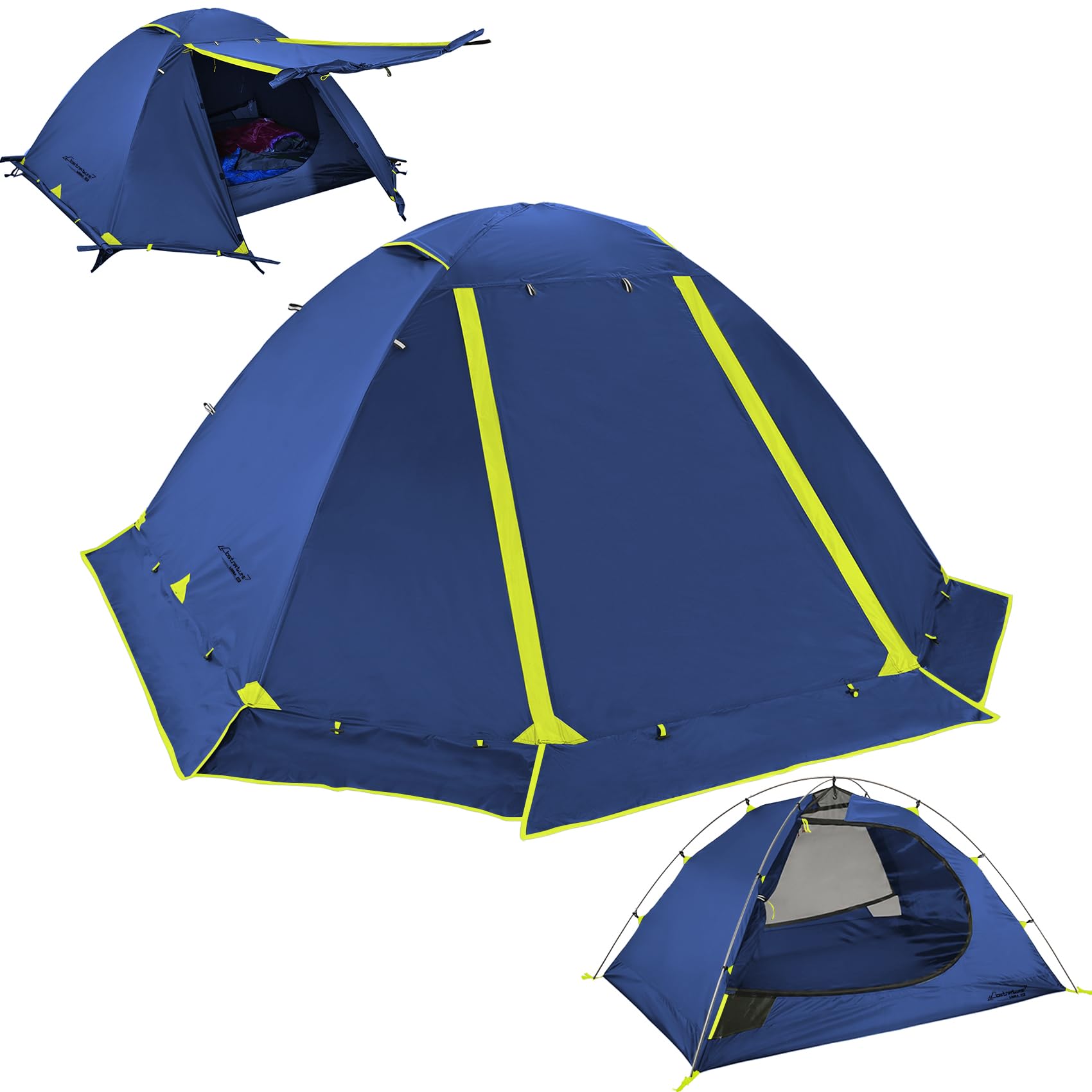
1. Clostnature 4 Season Backpacking Tent
A four-season shelter that pitches in three minutes and still leaves room for a dog at the foot of your bag.
Buyers report it stayed completely dry through a 41°F night at 100% humidity, and the two D-shaped doors make entry and exit genuinely convenient.
Weighing 6.28 lbs total, or 5.33 lbs at minimum trail weight with just fly, inner, and poles, it’s not the lightest option here — but it’s the sturdiest for the money. The PU 5000 coating on the polyester rain fly and bathtub floor, plus factory-sealed seams, is real weather insurance.
Two aluminum poles make setup a one-person job, and buyers who took it motorcycle camping found it packs small at 16.5 inches by 5.9 inches. The size earns the most praise — nearly fifty owners single out the roominess — and easy setup runs a close second. The trade-off is the thin rain fly: a few owners note it rips easily, so treat it gently and consider a repair plan.
Why it earns the top spot
- Real 4-season protection with PU 5000 fly and sealed seams
- Roomy 32.3 sq ft floor fits two plus gear or a small dog
- Pitches in about 3 minutes with two aluminum poles
Where it asks for care
- Thin rain fly can rip if snagged, so handle it gently
- Ventilation is good but runs hot in summer conditions
- Stakes are the weak link — some bend in hard ground
Reach for this if: you camp in cold or wet conditions and want a roomy, dependable shelter without paying premium prices.
Look elsewhere if: you’re counting every ounce for long treks — this one carries real weight and a delicate fly.
2. KAZOO Waterproof Ultralight Tent
A 3.3-pound solo shelter that held its own at 12,500 feet in rain and came out 2 degrees warmer inside.
The weight is the headline here, and it earns it: 3.3 lbs total, a full 1.9x lighter than the Clostnature above. That’s the difference between a breezy day hike and a grind, especially when you pack the whole thing into its 20-inch by 6-inch carrying bag and barely feel it on your back.
Owners mention staying dry through heavy storms at 12,500 feet, with the interior measuring 2 degrees warmer than outside. The floor is tighter at 36 inches wide by 83 inches long for 20.75 square feet, so this is honestly a one-person shelter, not a two-person standby. The double-layer design pairs a B3 mesh inner with a 210T Ripstop rain fly rated above 3000mm, and every joint gets a waterproof coating to stop leaks.
Setup is the thing people rave about most — the single integrated aluminum pole with clip attachments goes up in minutes, and owners praise both the easy assembly and the quality of the recycled fabric. The honest catch: it’s short for anyone over 5’8″, and the groundsheet runs a bit large, letting water run under the fly unless you’re careful with placement.
Built for the ounce-counters: this is the lightest shelter in the lineup, perfect for solo hikers who measure pack weight in grams and want recycled, durable materials.
Who should pass: taller sleepers and anyone expecting a true two-person interior will feel cramped.
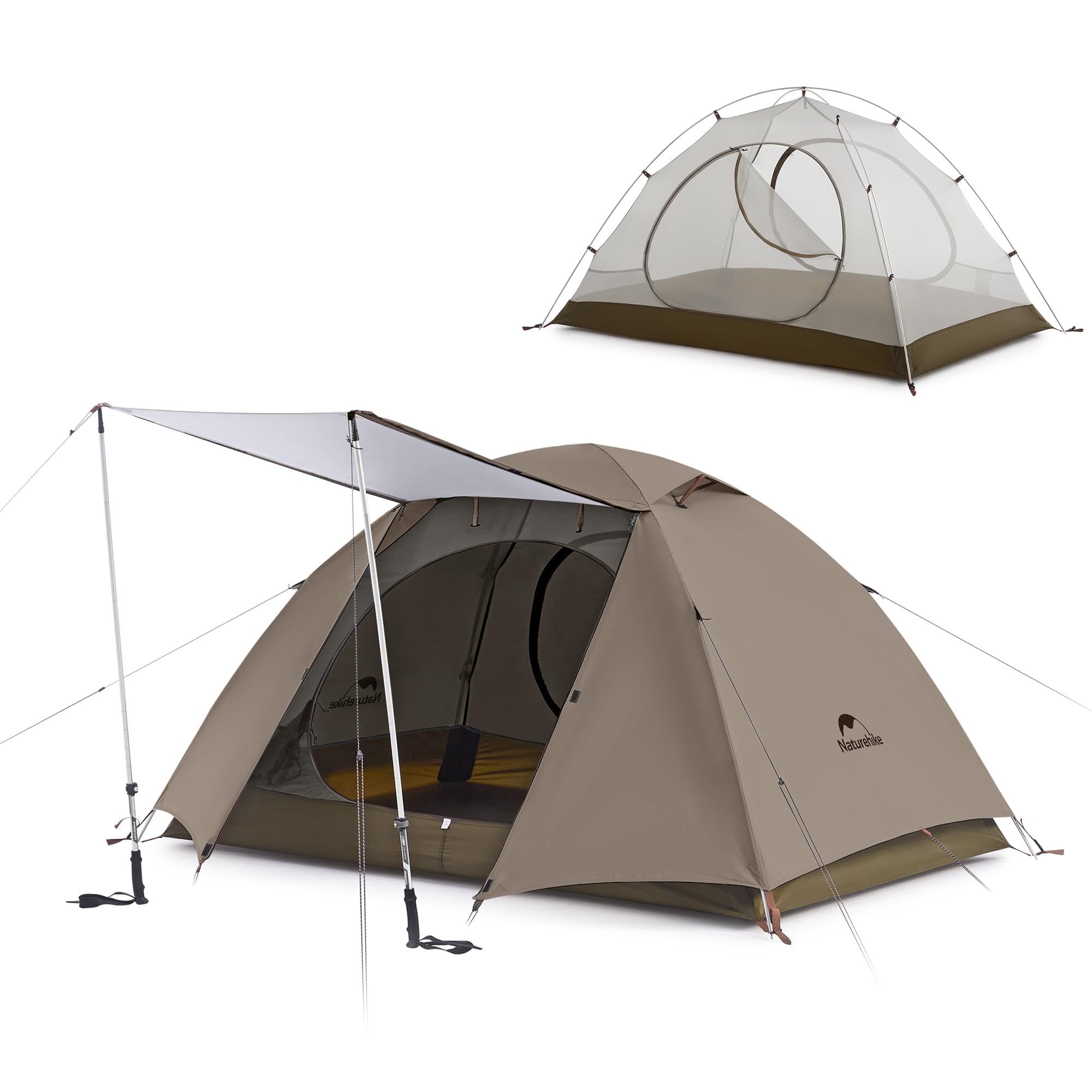
3. Naturehike Cloud River 2/3 Person Tent
A 3-person dome that sleeps two in true comfort and gives you a 360-degree view through its all-mesh inner.
The defining spec here is the all-mesh inner tent, which wraps the whole interior in ventilation. Buyers stayed dry and well-ventilated through a Florida thunderstorm, thanks to the double-layer fly-to-ground design. This is a tent you can actually sleep in on a muggy night without waking up in a sauna — the top vents and mesh panels handle airflow that makes the Clostnature feel stuffy by comparison.
It spans 86.6 inches long by 70.9 inches wide for a generous 42.6 square feet, with an upright 49.2-inch peak height that gives real headroom when you’re sitting up. The 7001 aluminum alloy X-cross poles are tougher and lighter than fiberglass, and setup takes about 5 minutes. The whole package weighs 6.8 lbs with a packed size of 20.5 inches by 6.3 inches.
Owners praise the size and the easy setup most, plus the durability that held up through hard rain and rough terrain. The fly and inner can even be used separately, so you can sleep under the stars without bugs or pitch the fly alone as a sun shelter.
Who it’s made for: pairs or small groups who want genuine space, headroom, and airflow on a budget without going minimalist.
Who it isn’t: solo ultra-light hikers will find 6.8 lbs excessive when lighter options exist.
4. ALPS Mountaineering Lynx 1

A rugged freestanding solo tent that stood firm in 30+ mph winds without demanding a premium price tag.
This is the tent that gives you a freestanding aluminum frame — meaning you can pick it up and move it once pitched — at a price that undercuts the big names. One owner pointed out they paid roughly 20-25% of what a comparable Big Agnes or Nemo costs, and got a shelter that stretches their money into real durability. The two-pole construction sets up fast, and the half-mesh walls keep airflow moving on warm nights.
The base measures 90 inches long by 32 inches wide for 20 square feet, with a 3-foot center height. Total weight is 4 lbs 1 oz, dropping to 3 lbs 5 oz at minimum weight — light enough for thru-hikes and weekend treks. The 75D 185T rain fly carries a 1500mm coating, and the 75D 185T poly taffeta floor uses a beefier 2000mm rating to keep ground moisture out.
Buyers single out the easy setup above all — it’s genuinely one of the fastest pitches in this lineup — and praise the build quality that survives real conditions. The fair warning is the included stakes: several owners recommend replacing them with sturdier aftermarket ones, and the fly can soak through with condensation on damp nights.
Weight-smart pick: the freestanding frame and proven durability make this the budget tent that punches above its price tier.
Better for: solo hikers who want a dependable shelter without fussing over ultralight grams.
5. Featherstone 1-Person Tent

A sil-nylon solo shelter at 3 lbs 3 oz trail weight with a footprint included — ready for a fast-fly pitch the moment it’s out of the sack.
Weight is the story here, and it’s a good one: 3 lbs 3 oz trail weight, plus a footprint that’s included right in the box. That footprint lets you do a fast-fly setup, cutting both weight and setup time for hikers covering serious miles. Buyers stayed bone dry through 5 nights including a 2-hour torrential rain, with sil-nylon that holds up on abrasive granite.
The interior is a genuinely spacious 81 inches long by 3.2 feet wide for 21.6 square feet, with an overhead mesh gear loft to keep your essentials off the floor. The bathtub floor design keeps water out, and every seam is taped for an extra layer of rain protection. Packed size shrinks to roughly a 2-liter bottle, which is remarkable for a tent with this much room.
Owners praise the weight and construction most, with easy setup and roomy size close behind. The real catch is assembly guidance: a few buyers hit a color mismatch between the grommets and the videos’ pole tips and needed outside help to figure it out the first time. Once you’ve done it once, it’s quick.
What makes it a value stand-out
- Included footprint saves you a separate purchase and enables fast-fly setup
- Sil-nylon fabric shrugs off abrasive granite and rough terrain
- Overhead mesh gear loft keeps essentials organized and off the floor
Know before you go
- First-time setup can be confusing with minimal guidance included
- Semi-freestanding design means the foot needs staking to hold shape
Best for the solo hiker who wants: a genuinely lightweight, watertight shelter with the footprint included, all at a friendly price.
Think twice if: you want a fully freestanding tent or a simpler first-time assembly.
6. Naturehike Cloud Up 3 Person Tent
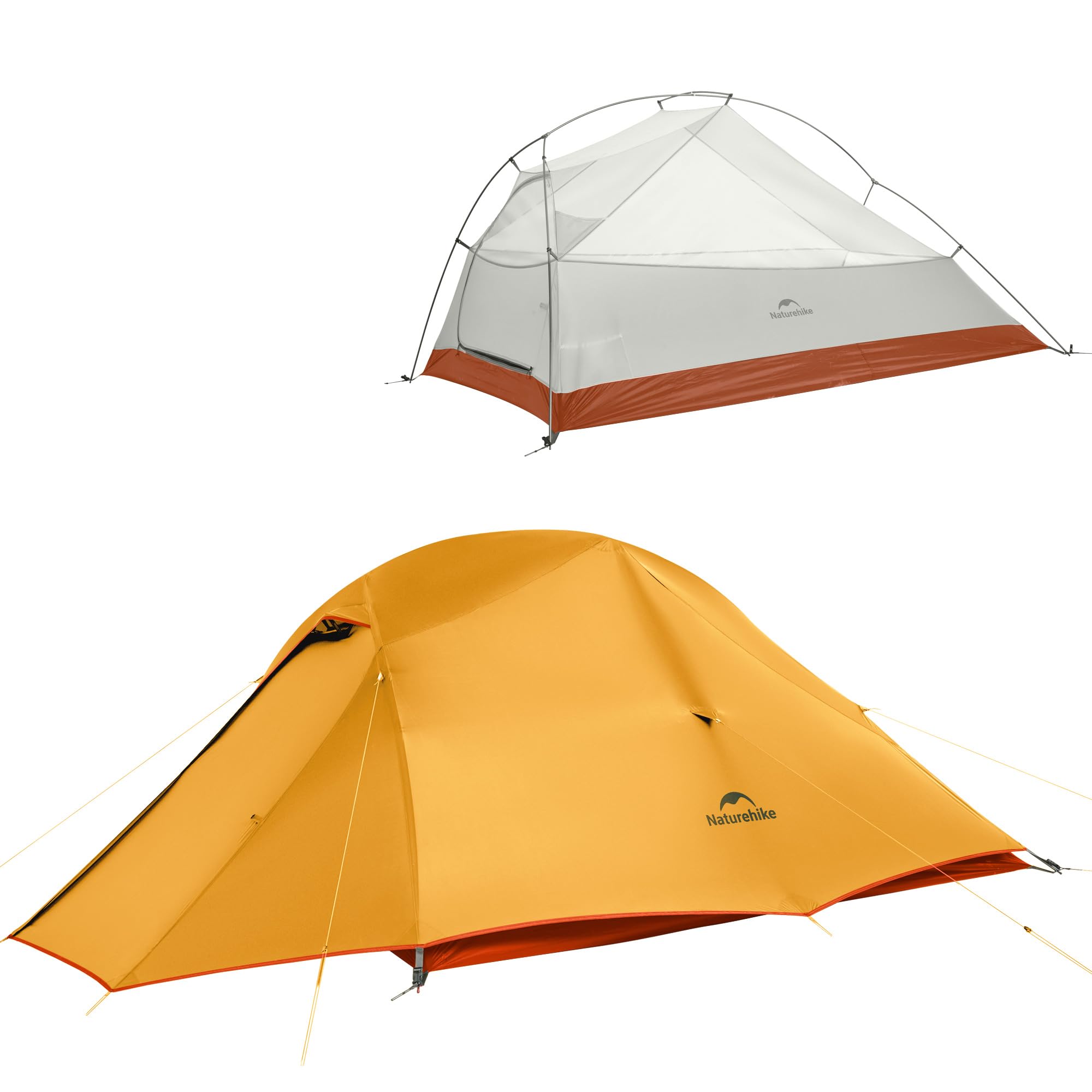
A 42.6-square-foot dome that fits three sleeping pads or two adults with all their gear and still packs under 6.3 lbs.
This is the tent for the group who refuses to squeeze. The floor spans 116.1 inches long by 82.7 inches wide — enough for three sleeping pads according to owners, or two large adults in genuine comfort. The 45.3-inch peak height adds headroom the Cloud River below can’t match, and the bigger, higher front door makes getting in and out with gear much easier.
The weather protection is the quiet star here: a 210T ripstop polyester fly and floor, both rated PU 3000mm, with sealed seams and wind-resistant aluminum alloy poles. Customers note it survived two days of constant rain completely dry and held up in serious storms. The footprint is included — a 210T ripstop polyester piece rated even higher at PU 5000mm — so you don’t need a separate purchase to protect the floor.
The upgraded winged design pushes the inner and outer tent further apart, which boosts airflow and cuts condensation. B3 mesh inner walls keep it breathable, and the freestanding dual-Y aluminum pole set pitches easily even in the dark. What wins people over is the quality and weight for a 3-person capacity — it’s light for its size, though at 6.3 lbs it’s still not an ultralight option.
For groups who want room: the 42.6 sq ft floor and included footprint make this the most complete group shelter on a budget.
Who might pass: solo hikers counting ounces, since 6.3 lbs is heavy for one person, and the included stakes can rough up your hands.
7. Kelty Grand Mesa 2P

A trusted-name 3-season tent with pressfit aluminum poles and a 30-square-foot floor that punches well above its price.
Kelty’s reputation shows in this tent, and owners back it up — one took it through 12 nights across 4 trips and called it durable and dependable. The Quick Corners system (a pole-and-clip setup that locks poles in place) keeps poles steady during setup, and the color-coded clips and fly attachments make pitching almost simple to use, even alone. Reviewers point out it survived hours of sideways rain completely dry with no condensation inside.
The floor measures 85 inches by 57 inches for 30 square feet, with a 44-inch peak height. Packed weight is 4 lbs 7 oz, and the packed size shrinks to 16 inches by 7 inches by 7 inches. The 68D polyester fly and floor are fully seam-taped, and the lightweight pressfit poles fold compact for easy storage. It’s a tight fit for two adults, so many owners treat it as a roomy one-person tent with extra gear space.
Setup and quality are the two things owners mention most, with durability a close third. The honest trade-off is packed bulk — it’s compact but not ultralight — and the ground cover sells separately, which catches some buyers off guard. Zippers run stiff at first but loosen with use.
Choose this for: a proven brand, easy color-coded setup, and dependable storm protection without a premium price.
skip it if: you want a true ultralight solo shelter or need the footprint included in the box.
8. Kelty Discovery Trail Tent
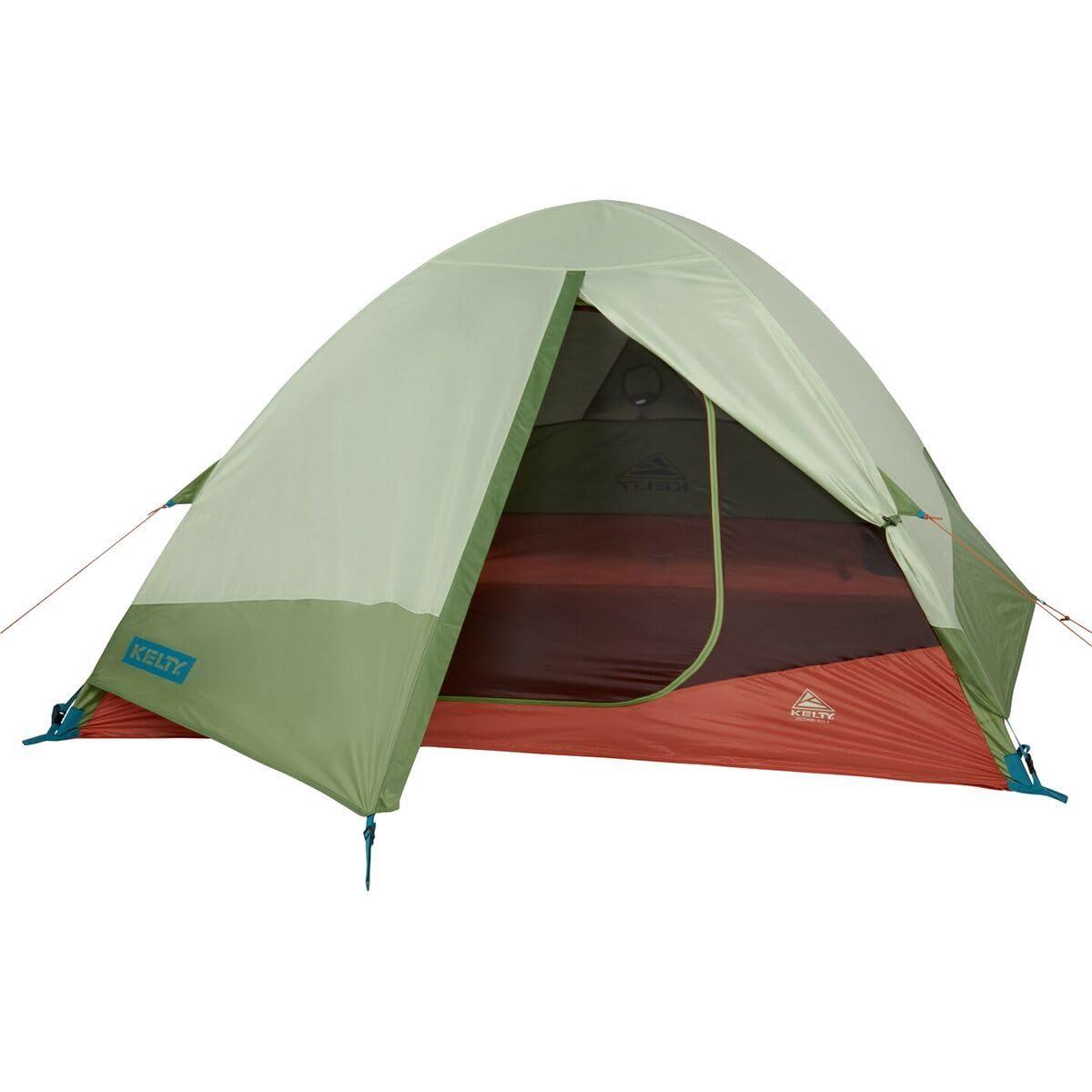
A no-frills freestanding dome with pre-attached guylines that welcomes first-timers into backpacking without the learning curve.
This tent exists to make your first backcountry night easy. The pre-attached guylines mean no shoe-lacing improvisation, the Quick Corners hold the poles in place during setup, and the shark-mouth stuff sack actually fits everything back inside with room to spare. It’s the kind of thoughtful design that lets beginners focus on enjoying the trip instead of fighting their gear. Owners describe it as a great first solo tent that holds heat down to 30-35°F.
You get 33 square feet of floor space with a 42-inch peak height in the 2P version, at a minimum weight of 4 lbs 5 oz. The 3P version bumps up to 46 square feet and 49 inches of headroom at 5 lbs 7 oz minimum weight, which is why the size earns the most praise — it comfortably fits one person plus gear or a cozy two. The taped seams and waterproof fly handle rain reliably, and the fly vent cuts down condensation.
Owners mention the size and easy setup most, with the lightweight, functional design coming up repeatedly. Durability and ventilation get mixed feedback: the tent held 50 mph gusts for one owner while other tents blew away, but another found the mesh to be the weak link and the airflow limited in direct sun. The stock stakes are flimsy, so plan to upgrade them.
For your first backpacking tent: the forgiving setup and Kelty’s lifetime warranty make this a low-stress introduction to the hobby.
Better for: beginners and occasional campers; more experienced hikers may want lighter or more ventilated options.
9. LANSHAN Ultralight 1-2 Person Tent
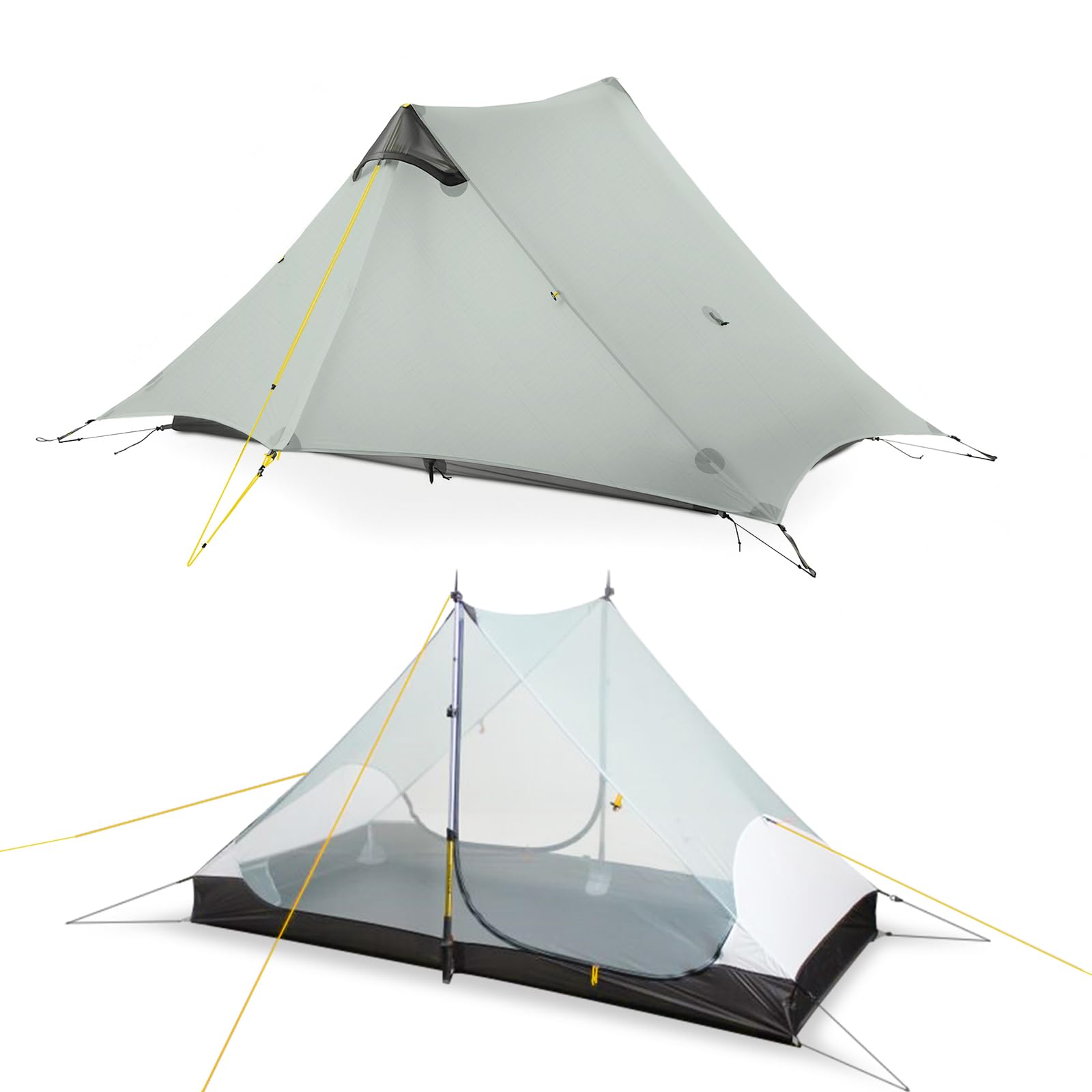
A 2.1-pound trekking-pole shelter that sets up with your hiking poles and packs down to fit a side pocket on your pack.
This is the featherweight of the lineup, and the weight is the whole point: the 1-person version tips the scales at just 2.1 lbs and packs to 12.6 inches by 4.7 inches by 5.5 inches. To get there, it uses your trekking poles instead of tent poles — you’ll need one for the 1-person or two for the 2-person, and they aren’t included. The payoff is a shelter that disappears into your load and still keeps you dry in real weather.
Waterproofing here beats most of the competition on paper: a 15D nylon rain fly rated at 5000mm HH and a bathtub floor rated at 6000mm HH, both built to handle strong winds and storms. The full high-density mesh inner boost airflow and cuts condensation, with one ventilation window on the 1-person and two on the 2-person. The 2-person version offers 86.6 inches by 43.3 inches of floor space for 26.1 square feet.
Buyers who took it to Philmont — a high-adventure trek — found it comfortable at 40°F and waterproof through 10 hours of rain. The weight and quality are what owners praise most, with value for money close behind. Setup experience is genuinely mixed: it takes practice, and some owners recommend seam-sealing the tie-out points before trusting it in a downpour. Taller hikers over 6 feet may find the length snug.
Where it wins
- 2.1 lbs makes it the lightest shelter in this entire guide
- 5000mm fly and 6000mm floor ratings beat many heavier tents
- Versatile setup as a tarp-tent, mesh tent, or full double-wall
The catches
- Requires trekking poles you must already own
- Setup is finicky until you get the hang of it
- Seam sealing at tie-outs recommended by owners
Made for the ultralight purist: if you already hike with poles and count every ounce, nothing here saves weight like the LANSHAN.
Not for the impatient: the setup learning curve and seam-sealing homework will test casual campers.
10. OneTigris COSMITTO 2 Person Tent

A freestanding two-person dome that one owner pitched in 45 seconds flat and never let a drop through in two weeks of rain and wind.
Setup speed is the party piece here, and it’s not marketing fluff. The poles connect and swivel together, pop over the flat tent, and pin down with corner stakes and clips — one owner timed it at 45 seconds from the start, and the frame came out tight, firm, and wind-stable. That’s a meaningful difference when you’re setting up in fading light or gusty weather.
Construction delivers real protection: a 20D plaid ripstop polyester body with a 75D nylon tent bottom and a 1500mm waterproof coating. Buyers put it through a two-week rain-and-wind test with zero leaks, and another took it through two rainy, windy nights bone dry. The floor spans 7.2 feet by 4.3 feet for 30.96 square feet, and the 360-degree no-see-um mesh inner keeps bugs out while allowing airflow.
Four guy lines with Line Loc 3 tensioners, vents with rain-blocking flaps, and internal vestibules for gear or cooking make this genuinely feature-rich for the price. Fit is comfortable for two adults who don’t toss and turn, and the included stakes can take a hammering without bending. It packs down to a 23.6-inch by 6.3-inch stuff sack — a bit bulky for ultralight hikers but fine for standard backpacking.
The standout: a quick-pitching, storm-tested two-person dome packed with features like Line Loc tensioners and rain-blocking vents.
Who should skip: weight-conscious solo hikers who’d rather split the difference with a lighter shelter.
11. Marmot Crane Creek 2P
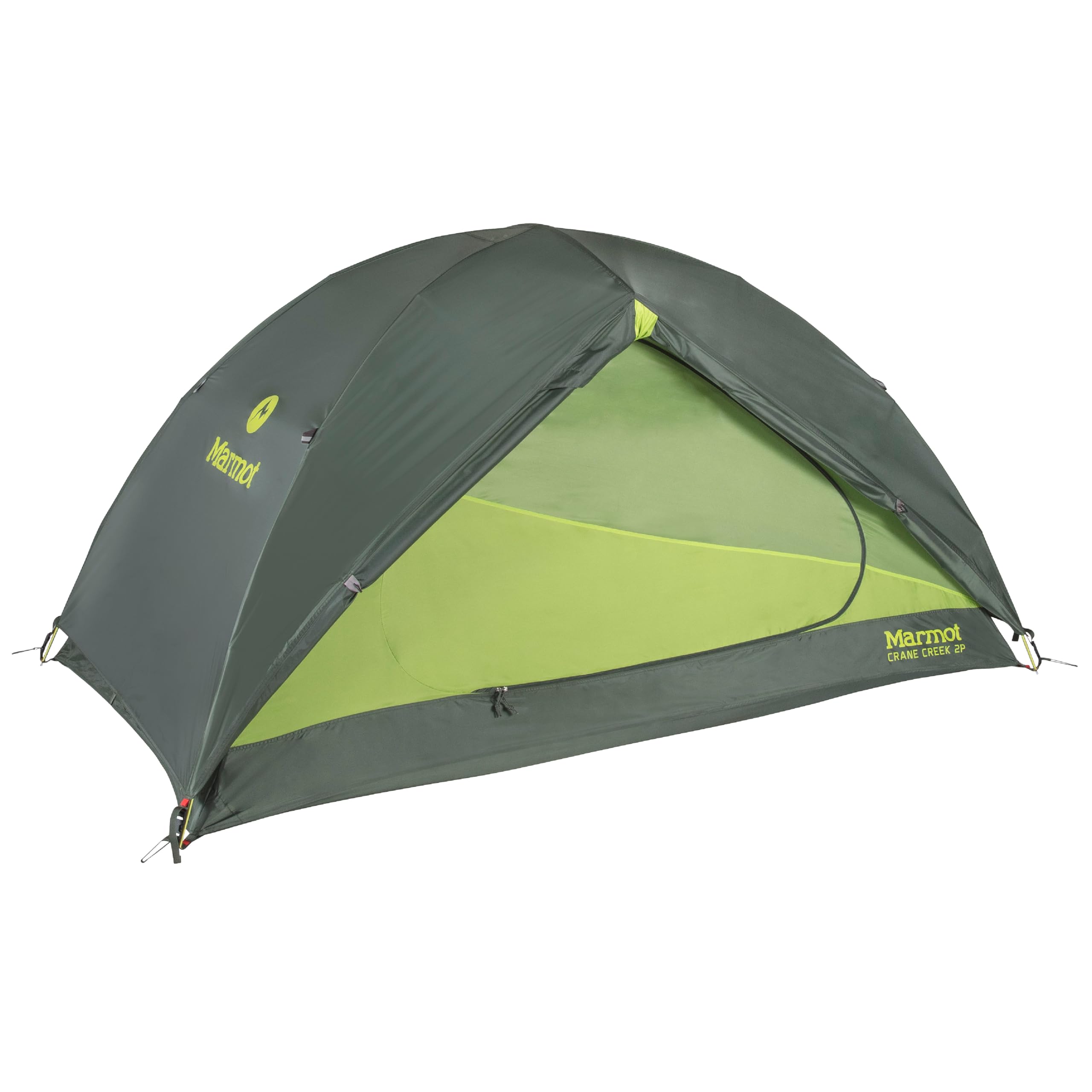
A premium 32-square-foot dome with 7000-series poles that rode out 60 mph wind, snow, and hail without a single leak.
Marmot’s name carries weight for a reason, and the Crane Creek shows it. The 7000 series aluminum poles provide real stability without adding bulk, and owners put them through the wringer — one 150-mile, three-week trip included 60 mph wind, snow, hail, and rain, with no leaks and no condensation. That’s the durability that justifies reaching for a premium pick when your trip depends on staying dry.
The floor measures 88 inches long by 51.3 inches wide for 32 square feet, which fits one person plus gear comfortably or two in a cozy arrangement. Two large D-shaped doors with dual vestibules make entry simple and give you room to stash packs and equipment away from your sleeping space. The seam-taped polyester fly and floor keep rain and moisture out while allowing airflow, and the whole build is PFAS-free.
Quality and easy setup are what owners praise most, with rain protection coming up repeatedly — it’s a dependable 3-season shelter. The fair warning is the durability-versus-weight trade-off: it’s not ultralight, and a few owners noted the stakes bend easily on rocky ground. The footprint also sells separately, so budget for that if you want floor protection. Despite the premium price, many owners call it good value for the build quality.
Why the premium is worth it
- 7000-series aluminum poles deliver serious wind and storm stability
- Two doors and dual vestibules add real convenience on multi-day trips
- PFAS-free construction and Marmot’s long-proven build quality
Where it falls short
- Not ultralight compared to solo-focused shelters
- Stakes bend on rocky terrain and the footprint sells separately
- A few owners reported zipper snags over time
Spring for this if: you want a proven, storm-worthy two-person tent that will survive years of backcountry abuse.
Reconsider if: your priority is saving weight or staying within a stricter budget — lighter and cheaper options exist above.
Understanding the Specs
Trail Weight vs. Total Weight
Trail weight is the minimum weight to pitch the tent — the body, fly, and poles only, without the stuff sack, stakes, and repair kit. This is the number that hits your back on the trail, so when a spec lists both, trust the trail figure for real packing decisions. Total weight includes everything in the box, which matters for car camping but not for what you carry.
Waterproof Ratings and Sealed Seams
Ratings like PU 3000mm or 5000mm measure how much water column pressure the fabric resists before leaking — higher numbers mean better storm protection. But the rating is only half the story; factory-sealed seams are what stop rain from sneaking through the stitching, so look for both a high coating and sealed seams. A bathtub floor with a high rating keeps ground moisture out.
FAQ
What’s the difference between a freestanding and a trekking-pole tent?
How much weight should I expect to carry for a budget backpacking tent?
Is a 4-season tent better than a 3-season tent for backpacking?
Do I need a footprint for my backpacking tent?
What does a waterproof rating like PU 3000mm really mean?
How long does it take to set up these budget tents?
What’s the difference between the Naturehike Cloud River and Cloud Up?
Are tent stakes included with these budget tents?
Final Thoughts: The Verdict
For most budget backpackers, the budget backpacking tent winner is the Clostnature 4 Season because it gives you genuine four-season protection, a roomy 32.3-square-foot floor, and a 3-minute setup for the price of a nice dinner out. If you want the lightest possible load, grab the LANSHAN at 2.1 lbs or the KAZOO at 3.3 lbs for true ounce-shaving. And for a group or a shorter carry-in, the Naturehike Cloud Up at 42.6 square feet with an included footprint is the one to reach for — the crowd favorite in this lineup, with the strongest owner satisfaction of the entire group.
How We Picked
We do not accept paid placement. Every pick is matched to a real buyer and a real use-case; we do not hands-on test units.
Sources & Methodology
Specifications: manufacturer listings and product documentation. Review insights: verified customer reviews, as of August 2026. Pricing: not shown on this page (it changes often); check the current price via the retailer link.
As an Amazon Associate, FitlyFast earns from qualifying purchases. This does not affect which products we feature.