
Our readers keep the lights on and the weekend projects moving. As an Amazon Associate, I earn from qualifying purchases.
Specs are compiled from manufacturer listings and verified buyer reviews and can change over time — please confirm the key details on the product page before buying.
Wobbling is the point of a balance board, but the right one for an older adult wobbles gently — never enough to make you grab for the wall in fear. Match the board’s difficulty to your current comfort to build confidence gradually without overwhelming first attempts. This guide focuses on five boards that earned their place through rehabilitation use and senior-friendly design, and it explains which one fits your starting point.
I’m Rikta — the founder and writer behind FitlyFast. This guide is built by comparing the manufacturers’ published specifications and the patterns across verified customer reviews, so you get each pick’s real strengths and trade-offs instead of marketing spin.
You’ll find the best balance board for seniors that pairs a forgiving surface with a clear path to steadier standing and safer daily steps.
Our Picks at a Glance

How To Choose The Best Balance Board For Seniors
Balance training works by giving your body a slightly unstable surface so your ankles, knees, and core learn to make tiny corrections. For an older adult, the golden rule is to start with the softest, lowest, most forgiving surface and only move to something more challenging once standing feels automatic. The five picks below span from a squishy foam pad to a spinning wooden deck, so your job is picking the difficulty level that matches your current balance.
Start With Support, Not Challenge
A thick foam pad under your feet gives you a mild, even wobble in every direction, which makes it the natural first tool for anyone nervous about falling. Boards with a rounded wooden base tilt further and faster, demanding quicker reactions, so they suit people who already stand steady and want a harder workout. If you are rehabbing an injury or just getting started, choose the surface that feels boringly easy at first — you can always progress later.
Check the Weight Limit and the Grip
Every board lists a maximum weight recommendation, and staying well under it means the board will feel planted instead of flexing or wobbling unpredictably. The surface texture matters just as much, since you will often use the board in socks or barefoot. Look for a textured or nonslip top so your feet stay put, and a nonslip base so the board itself does not slide across the floor mid-exercise.
Quick Comparison
| Model | Best For | Weight Limit | Surface Type | Board Weight | Amazon |
|---|---|---|---|---|---|
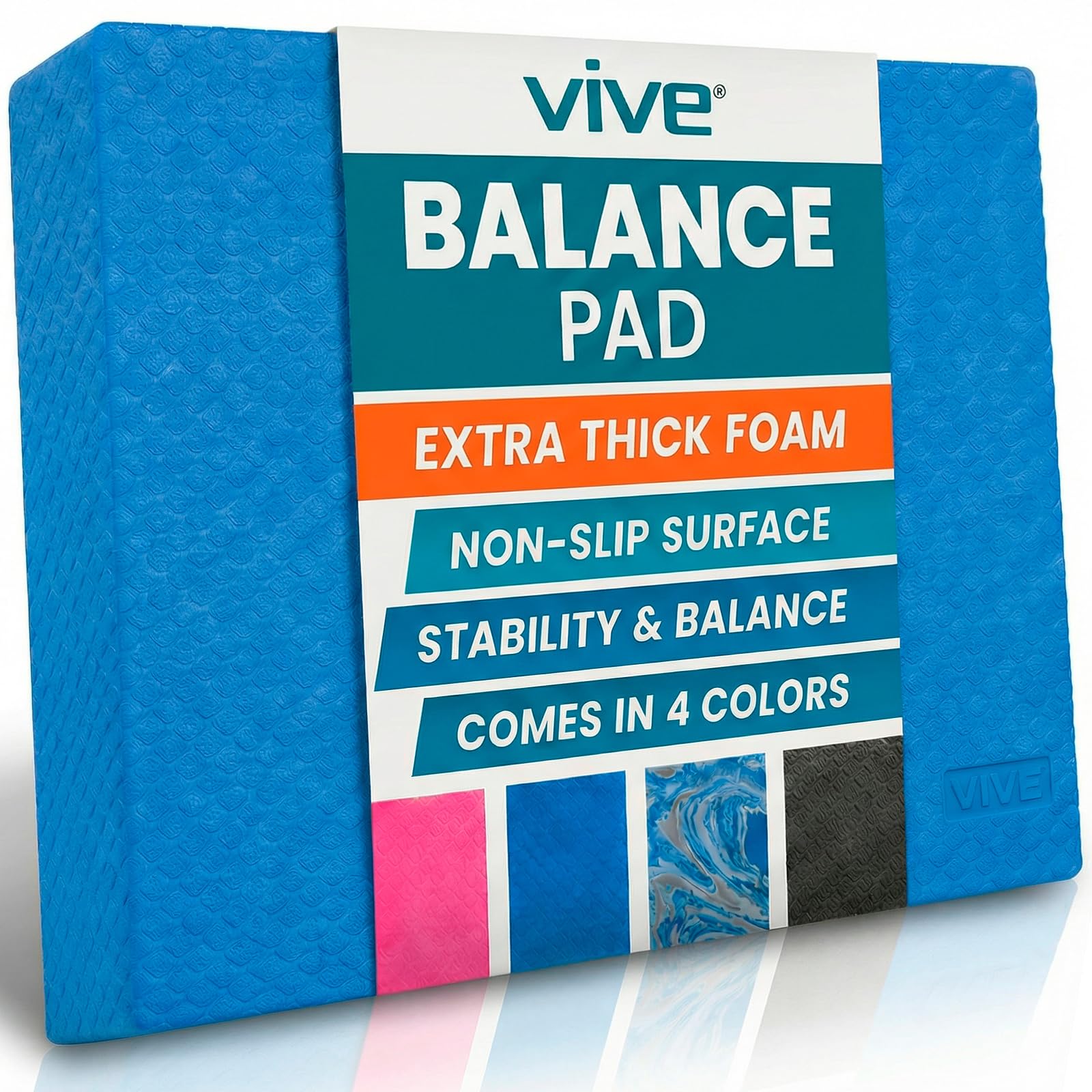
| Vive Balance Pad★ Best Overall | Gentle first steps | 300 pounds | Foam, soft | 10.56 ounces | Amazon |
| Woodure 2-in-1 Board2-in-1 Pick | Standing desk + rehab | 350 pounds | Wood, firm | 4 pounds | Amazon |
| Yes4All Wobble Board | Standing all day | 180 kg | Foam, medium | 6 pounds | Amazon |
| Healthy You Balance Beam | Walking balance practice | — | Foam, long | — | Amazon |
| Whirly Board | Advanced 360° training | 400 pounds | Maple wood, cork | 6 pounds | Amazon |
In‑Depth Reviews
1. Vive Balance Pad
Our pick — over 4.5★ from 6,500+ verified ratings; the strongest balance of quality and price.
The forgiving foam start that PTs point older patients toward first.
Its soft, high-density foam surface provides a gentle, even wobble that suits beginners and those rebuilding confidence. It is a soft, high-density foam pad — not a tilting wooden deck — so the wobble is gentle and even, which makes it the safest possible surface for someone nervous about falling. It supports up to 300 pounds, and at just 10.56 ounces it is light enough to carry from room to room or pack for a trip.
The people who love this pad most are the ones doing physical therapy at home. A therapist recommended it to one owner, and another still uses it years after an ankle sprain, calling it soft and safe to stand on. The thick 2.4-inch foam is closed-cell and latex-free, so it resists tears, repels sweat, and wipes clean with a damp cloth — meaning it will survive daily barefoot or socked use in a bathroom or living room.
You get real balance gains, according to owners, but be honest about its limits: some find the 15.8 by 13.4-inch platform a touch small for their stance, and a few report the foam is firmer than a clinical physical therapy pad. That firmness is a plus for beginners, because you want support under your feet, not a deep sink.
It excels for rehab of weak ankles, knees, and hips, plus everyday balance upkeep for seniors. It also doubles as a seat cushion or footrest, making it among the most flexible picks here. Choose this if you want a no-fear, doctor-approved-style starting point you can take anywhere.
Why owners stand by it
- Textured nonslip top and base keep feet and pad in place
- Lightweight enough to travel or move room to room
- Water-resistant closed-cell foam cleans up in seconds
Who should look elsewhere
- Platform size gets mixed feedback from wider stances
- Firmer feel than a clinical PT pad may surprise some
Start here if: you want the gentlest, most forgiving balance surface for early rehab or daily standing practice.
Reach for it when: you want a pad that also works as a seat cushion and slips into a travel bag.
2. Woodure 2-in-1 Balance & Slant Board
A wooden board that flips into a calf stretcher when you need a break from balancing.
This one gives you two tools in a single 4-pound package, which is why it is the smart-value pick for anyone who wants both balance work and stretching. It is a sturdy wooden board with a rounded bottom for rocking, and it also converts into a slant board with four adjustable incline positions for calf, ankle, and hamstring stretching. This two-in-one design covers both wobble practice and post-walk stretching in a single purchase.
The build quality is the headline here. It is made of real wood with a rough sandpaper frit where your feet go, so it grips your socks and stays put. A heavier user reports weighing over 200 pounds and feeling stable on the board, which makes sense since it supports up to 350 pounds. Owners also highlight that it folds down compact for storage and that the narrow rounded rails are a design detail other boards lack.
Buyers rave about the immediate stretch they feel in the back of their legs when they step on it, and one owner credits it with helping shin splints, calf issues, and foot fascia stretching. The single honest complaint is that the rounded bottom is not as deep as some hoped, meaning the wobble is on the milder side. For a senior, that is a feature — you get a manageable rock instead of a dramatic tilt.
Because the board is wood and firmer than foam, it suits someone who already stands reasonably well and wants to build strength, not a beginner who needs a plush landing. Get this one if you want a two-for-one that stretches your legs and trains your balance without taking up closet space.
Two boards in one: a rocking balance board and a four-position slant stretcher, so you cover more of your routine with a single purchase.
Choose it when: you want calf stretching and balance work in one compact, sturdy wooden tool.
Think twice if: you need a soft forgiving surface under your feet rather than a firm wooden deck.
3. Yes4All Wobble Board
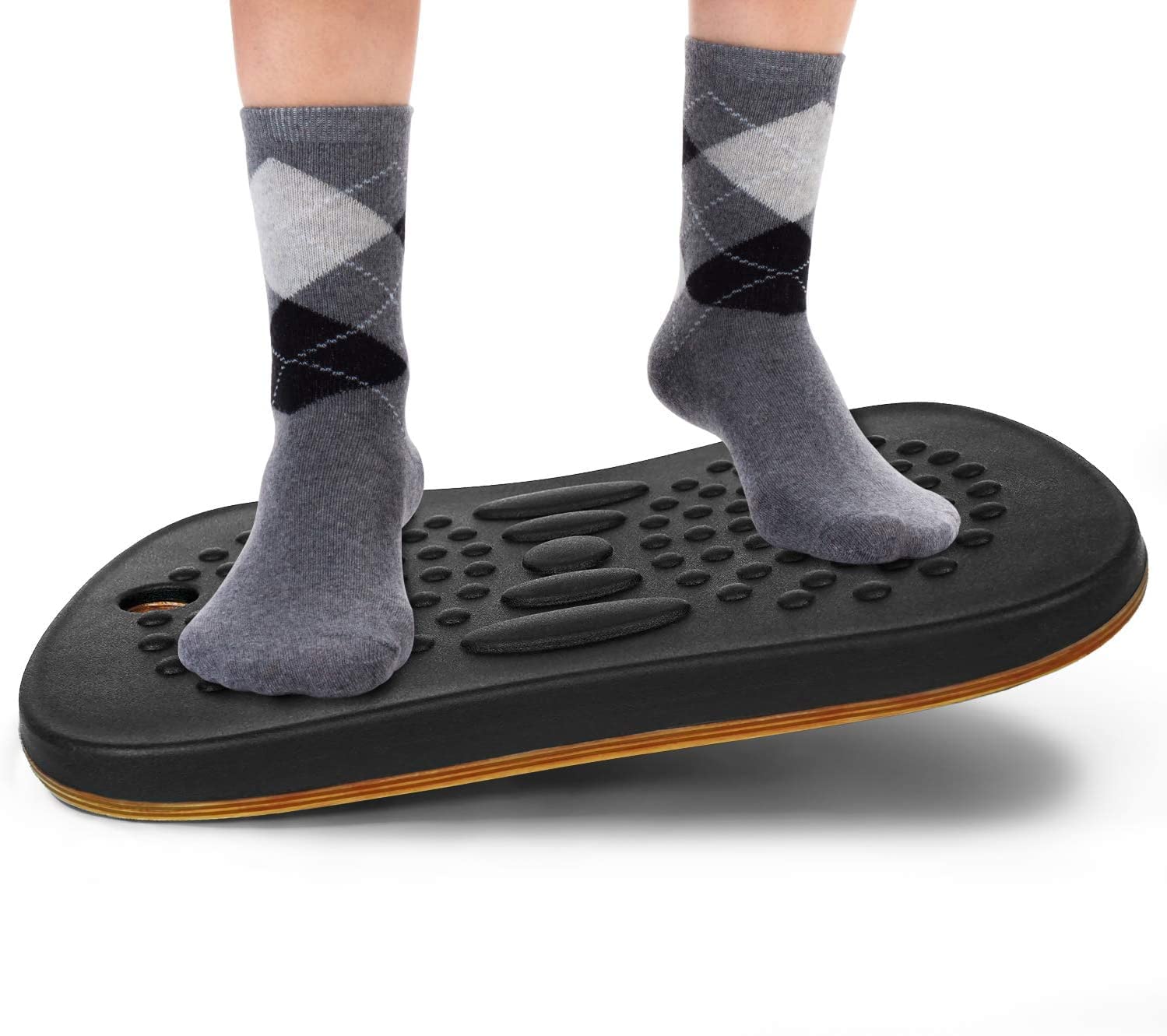
The cushioned anti-fatigue mat that keeps you gently moving through a long standing day.
If you spend hours on your feet at a standing desk, this board turns that time into a subtle workout. It combines a soft EVA foam top with a rounded wooden base, creating a gentle wobble that eases fatigue and keeps your ankles and core quietly engaged. Owners call the pebbled surface comfortable for hours on end, and the wobble is gentle and safe enough to turn and step off quickly.
What wins people over is how it relieves the ache of standing all day. Users report less leg fatigue, better blood flow during meetings, and a standing desk setup that actually feels good in socks. At 6 pounds and sized at 20 by 13.9 by 2.2 inches, it is a touch more substantial than the Vive pad, which gives it a sturdier planted feel while still being easy to store.
Traction is a strong suit — the textured surface handles sweaty workouts without slipping, and it holds its own on carpet. The one recurring note in reviews is size: a few owners wish the platform were wider since their feet hang off the edges slightly. For a senior, that means checking your stance against the 20-inch length before committing.
This board sits between the soft pad and the firm wooden boards in difficulty, making it a good second step after you master the Vive. It is built to support up to 180 kg, so it handles heavier frames comfortably. Get this one if your balance goal is tied to standing desk comfort and you want a wobble that keeps you moving without distraction.
For a harder challenge, steer toward the Whirly Board below — but for gentle, all-day movement, this is the balance.
Best for: standing desk users who want fatigue relief and a gentle wobble they can sustain for hours.
Look elsewhere if: you need a wider platform for a broad stance or a more intense balance challenge.
4. Healthy You Foam Balance Beam
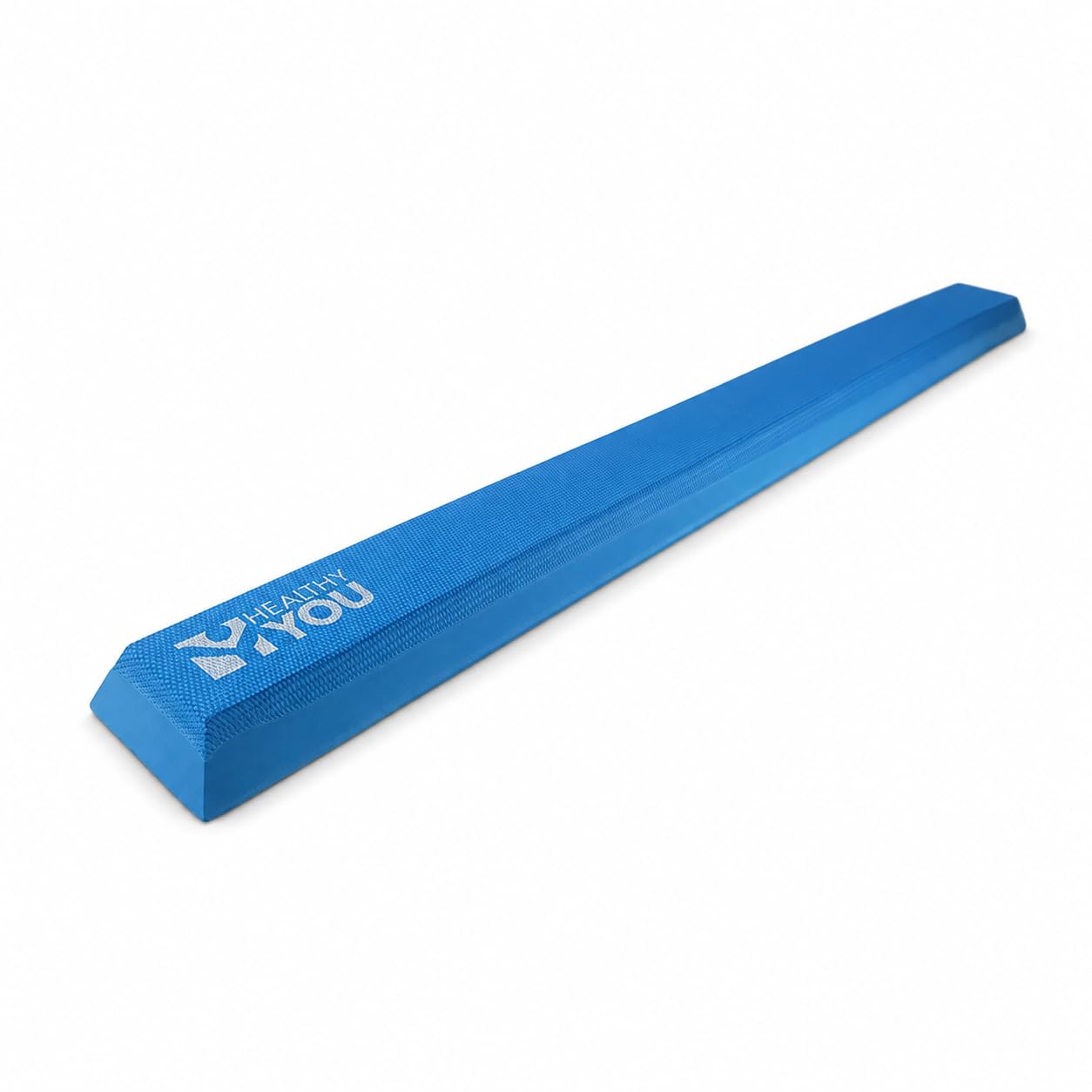
A long low foam beam that trains walking balance, not just standing still.
Every other board on this list trains you to balance in place, but this one trains the balance you actually use when you walk. At 64 inches long, this foam beam lets you practice heel-to-toe gait and dynamic balance — the exact skill that keeps you steady on sidewalks and stairs. Short wooden beams and foam pads simply cannot do this, which is why this is the pick for real-world fall prevention.
The design is intentionally confidence-building. It sits low to the ground in firm but forgiving foam, so you can challenge your balance without the fear of a big fall. Owners describe it as the same style of beam used in physical therapy clinics, and they appreciate that it is light enough to slide under a bed or stand in a closet between sessions.
The recurring praise centers on how much it improves balance and foot strength, with one owner noting it is more challenging than other balance beams they have tried. The honest trade-off is width: at 6 inches wide, several buyers report it is narrower than professional clinic models, so you will want a wall or a soft surface nearby on your first attempts. One owner’s setup sums up the safe approach — a wall in front and a soft bed behind in case balance is lost.
This beam targets plantar fasciitis relief, ankle and foot strengthening, and core activation, ideal for post-surgery recovery or senior balance work. Get this one if your goal is steady walking rather than static standing, and you want a tool that forces real gait practice.
Built for motion: the 64-inch length is the standout feature here, enabling gait training no foam pad can match.
Reach for it if: you want to practice walking balance and heel-to-toe steps, not just standing wobble.
Be aware: the 6-inch width is slimmer than clinic beams, so plan a safe spot to practice.
5. Whirly Board
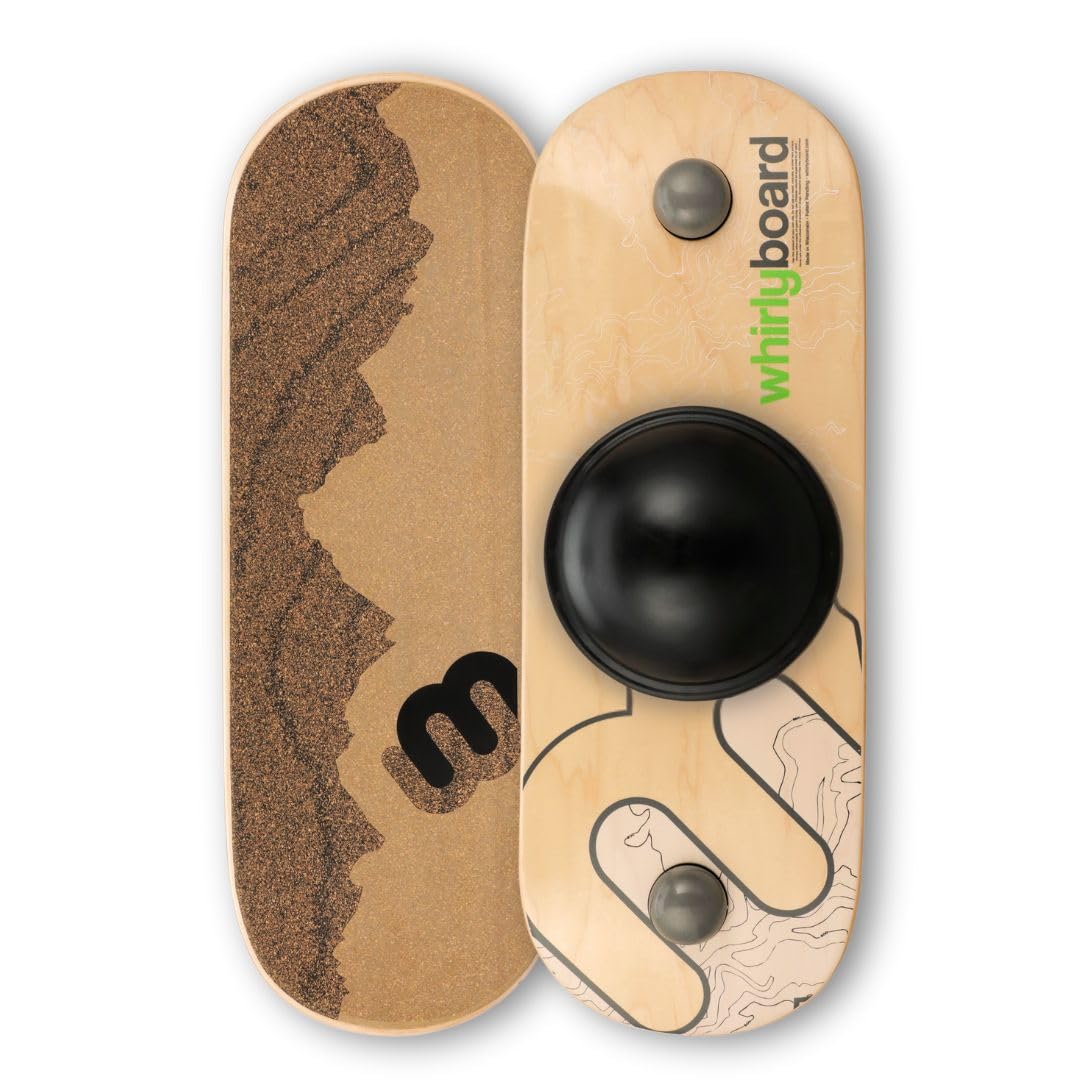
The handcrafted maple spinner for seniors who have already rebuilt their balance and want more.
This is the premium, advanced option — a 28-inch handcrafted Canadian maple deck with a 10-inch-wide platform that spins, rocks, and tilts in a full 360 degrees thanks to three semi-spherical balance points underneath. It is built like a professional skateboard with 8-ply maple and topped with an eco-friendly cork rubber grip, and it supports up to 400 pounds. If you have graduated past foam pads and want a genuine challenge, this is the board that will keep your core working.
The crowd favorite reviews praise its solid construction and how quickly it builds leg and core strength, with one owner reporting they now stand on it for 80 percent of their workday. The 360-degree motion is what makes it different — it engages more muscles than a simple rocker board and feels more dynamic underfoot. The cork grip provides secure traction barefoot, in socks, or with shoes.
Here is the honest catch: this is an advanced trainer, and reviews are clear about the steep learning curve. Owners note that balance is genuinely hard without support, and the brand warns beginners to use the stabilizing ring or hold a desk for support, and never to use it on slippery floors like wood or tile without a mat. For a senior, this is the board to grow into, not the one to start on.
It doubles as a sports trainer for surf, snowboard, skate, and hockey athletes, which tells you the difficulty level you are signing up for. The lifetime replacement guarantee and American craftsmanship justify the premium positioning. Get this one if your balance is already solid and you want the most engaging, highest-quality board on the market to keep pushing your limits.
The payoff for advanced users
- Full 360-degree spinning motion engages far more muscles than rocking boards
- Premium 8-ply Canadian maple and cork grip built to last for years
- Lifetime replacement guarantee from an American maker
The honest difficulty check
- Steep learning curve — owners confirm you need support to start
- Not for slippery floors without a mat underneath
Graduate to this when: your balance is already solid and you want the most dynamic, engaging training available.
Wait on it if: you are new to balance work — start with the foam pad and progress here later.
Understanding the Specs
Weight Limit
Every balance board lists a maximum weight recommendation, and it is the single biggest safety number to check. Staying well under the limit means the board feels planted instead of flexing under you mid-exercise. The picks here range from a 300-pound foam pad up to a 400-pound wooden board, so heavier frames have solid options.
Surface Type and Grip
The surface determines how hard the exercise feels and how safe your feet stay. Soft foam pads give a gentle, forgiving wobble that suits beginners, while firm wooden decks tilt further and demand quicker reactions. Look for a textured or nonslip top so your feet hold in socks, plus a nonslip base so the board does not slide on your floor.
FAQ
Is a balance board safe for an elderly person to use at home?
What is the difference between a balance pad and a wobble board?
How long should a senior use a balance board each day?
Will a balance board help prevent falls?
How much weight can these balance boards hold?
Can I use a balance board if I am recovering from an ankle or knee injury?
Should I buy a balance board or a balance beam?
What should I wear when using a balance board?
Final Thoughts: The Verdict
For most seniors, the best balance board for seniors is the Vive Balance Pad because its soft, forgiving foam is the safest and most approachable starting point for rebuilding confidence. If you want a two-in-one that also stretches your calves, grab the Woodure Board. And for seniors who have already rebuilt their balance and want to keep progressing, the Whirly Board offers the most engaging challenge on the market. Begin with gentle practice near a wall, progressing steadily as your balance improves.
How We Picked
We do not accept paid placement. Every pick is matched to a real buyer and a real use-case; we do not hands-on test units.
Sources & Methodology
Specifications: manufacturer listings and product documentation. Review insights: verified customer reviews, as of August 2026. Pricing: not shown on this page (it changes often); check the current price via the retailer link.
As an Amazon Associate, FitlyFast earns from qualifying purchases. This does not affect which products we feature.