
Our readers keep the lights on and the weekend projects moving. As an Amazon Associate, I earn from qualifying purchases.
Specs are compiled from manufacturer listings and verified buyer reviews and can change over time — please confirm the key details on the product page before buying.
The fastest way to lose a firefight isn’t your aim — it’s your router choking on your own network traffic. A budget gaming router changes that by putting your console or PC at the front of the line, so your shots register before your opponents’ do. This guide sorts the real performers from the spec-sheet hype, focusing on the numbers that actually decide your ping and packet loss.
I’m Rikta — the founder and writer behind FitlyFast. This guide is built by comparing the manufacturers’ published specifications and the patterns across verified customer reviews, so you get each pick’s real strengths and trade-offs instead of marketing spin.
Here is the clear-eyed take on the best budget router for gaming, covering speed, coverage, and the features that cut lag without draining your wallet.
Our Picks at a Glance

How To Choose The Best Budget Router For Gaming
Picking a gaming router on a budget means focusing on the specs that directly impact your gameplay: raw speed, the Wi-Fi standard, and the traffic-management features that keep your ping steady. Ignore the flashy marketing terms and look for these three things.
Wi-Fi Standard: Look for Wi-Fi 6 or 6E
Wi-Fi 6 (and the newer 6E) is the biggest upgrade for gamers in years. It handles many devices at once without slowing down, which matters when your phone, TV, and smart home gadgets are all fighting for bandwidth. Wi-Fi 6E adds a 6 GHz band — a dedicated lane for your newest devices that offers near-zero latency, as the Archer AXE75 shows. If your gaming device supports it, 6E is worth the small premium.
Quality of Service (QoS) and Prioritization
QoS is the feature that puts your gaming traffic first. When someone else in the house starts streaming 4K video, a router with good QoS keeps your ping low instead of letting the stream hog everything. Look for routers with dedicated gaming modes or AI-powered prioritization, like the MSI’s AI QoS, which automatically identifies and prioritizes gaming data packets.
Coverage and Ports
Coverage is measured in square feet, and it needs to match your home’s layout. A router rated for 1,500 sq. ft. might struggle in a two-story house — check buyer reports for real-world range. Wired connections still beat wireless for gaming, so having 4 Gigabit Ethernet ports lets you hard-wire your console, PC, and streaming box for the most stable connection possible.
Quick Comparison
| Model | Best For | Wi-Fi Standard | Max Speed | Coverage | Amazon |
|---|---|---|---|---|---|
| TP-Link Archer AX55★ Best Overall | Best Overall Value | Wi-Fi 6 (Dual-Band) | 2976 Mbps | Strong, reliable | Amazon |
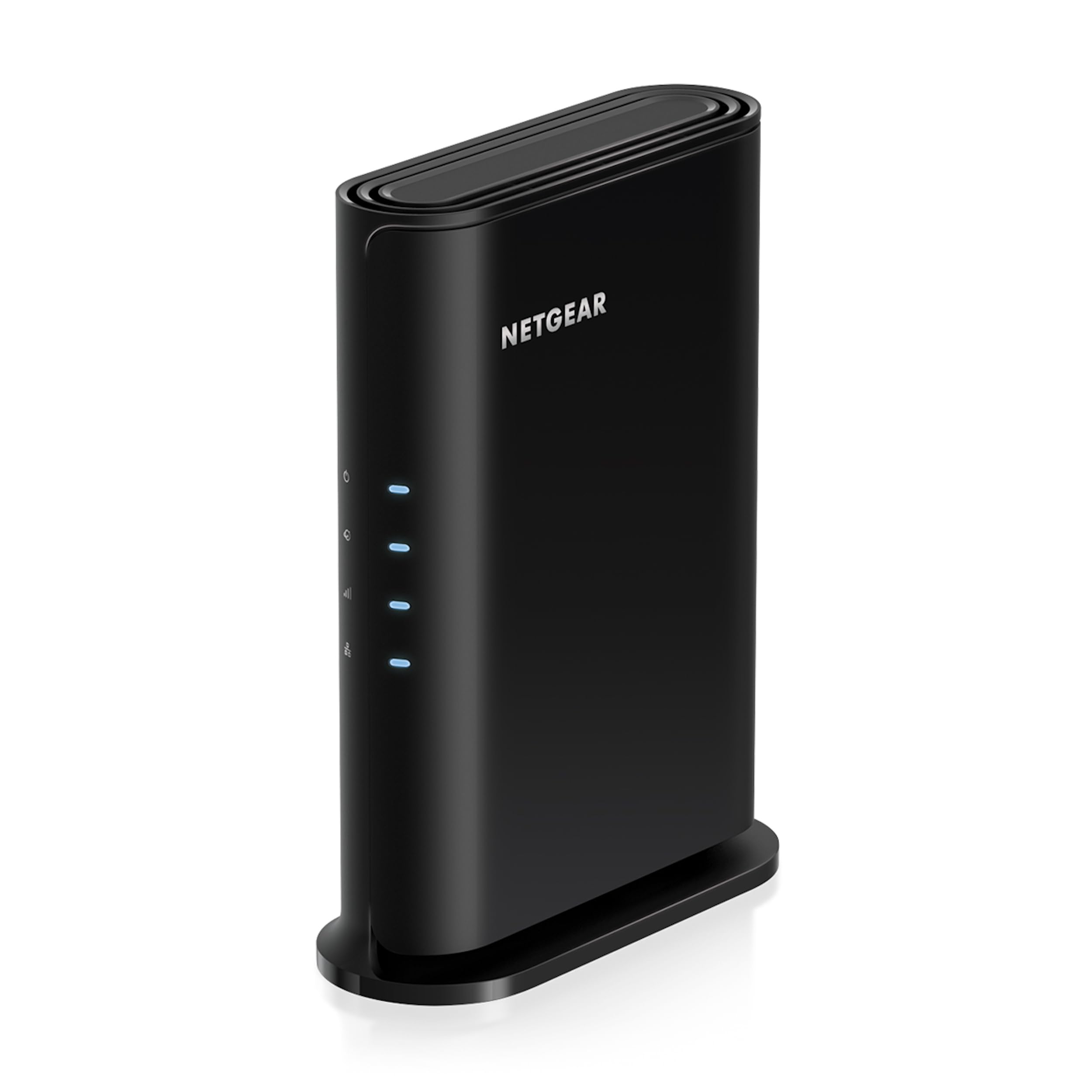
| NETGEAR R6700AXBest Value | Simple Setup & Coverage | Wi-Fi 6 (Dual-Band) | 1.8 Gbps | 1,500 sq ft | Amazon |
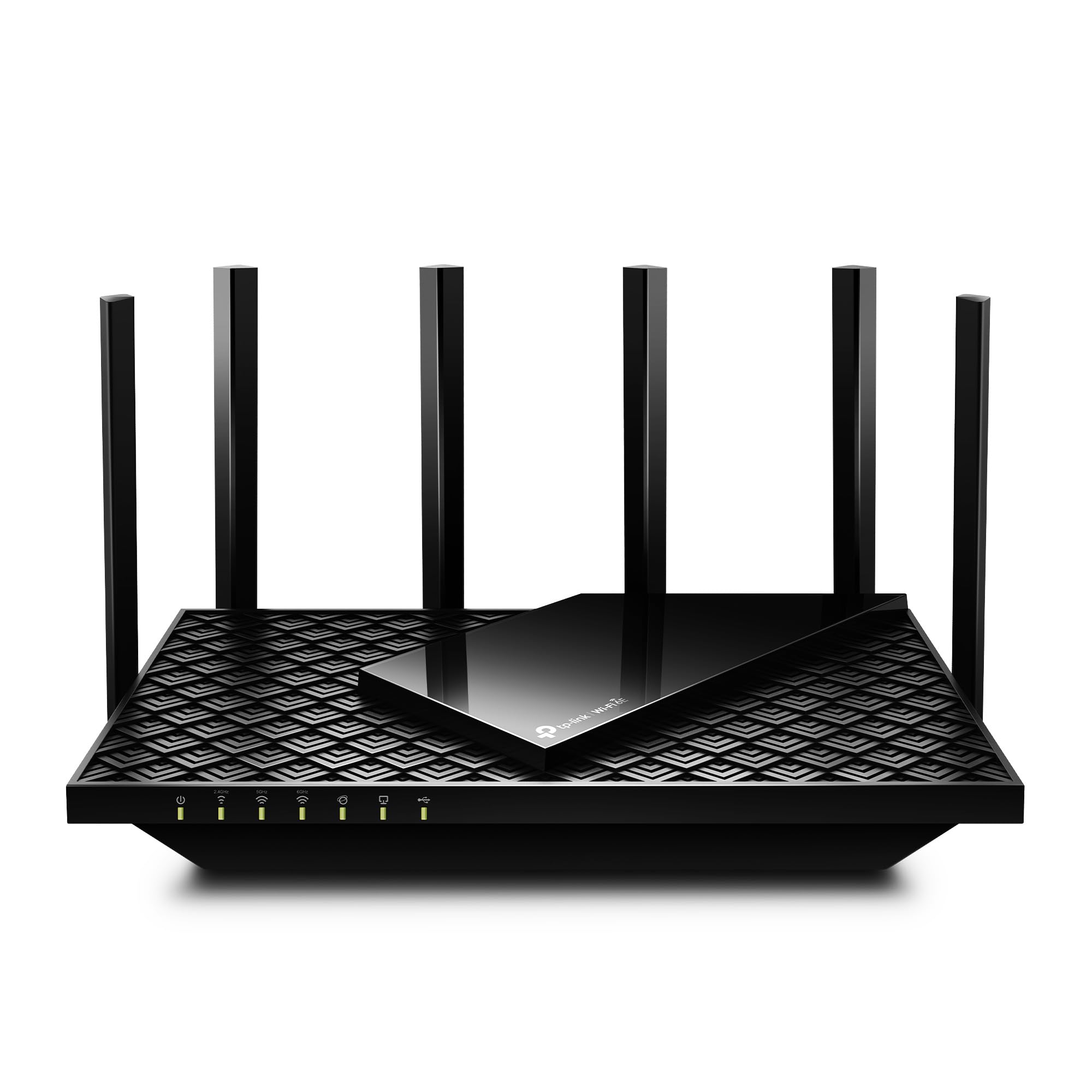
| TP-Link Archer AXE75 | Future-Proof Wi-Fi 6E | Wi-Fi 6E (Tri-Band) | 5400 Mbps | Whole-Home | Amazon |
| NETGEAR Nighthawk RAX36 | Large Home Coverage | Wi-Fi 6 (Dual-Band) | 3 Gbps | 2,000 sq ft | Amazon |
| MSI Radix AXE6600 | Gaming-First Features | Wi-Fi 6E (Tri-Band) | 6.6 Gbps | Wide coverage | Amazon |
| ASUS RT-BE58U | Wi-Fi 7 Future-Proofing | Wi-Fi 7 (Dual-Band) | 3600 Mbps | 2,000 sq ft | Amazon |
| Cudy BE6500 | Raw Speed on a Budget | Wi-Fi 7 (Dual-Band) | 6500 Mbps | 1,500 sq ft | Amazon |
In-Depth Reviews
1. TP-Link Archer AX55
The people’s champion that pairs genuine Wi-Fi 6 speed with a price that makes the upgrade a no-brainer.
The Archer AX55 is the most-loved budget router for a simple reason: it just works. With a combined data rate of 2976 Mbps (2402 Mbps on 5 GHz and 574 Mbps on 2.4 GHz), it delivers the kind of smooth gaming and streaming that used to cost twice as much. Buyers report wired speeds of 475+ Mbps, and 5 GHz speeds of 475 Mbps near the router that only drop to 355 Mbps in the next room — a 73% retention that shows real-world strength.
Reliability is the thing everyone raves about, with over 1,000 owners singling it out, and easy setup is the second-most-praised feature with 771 mentions. The built-in TP-Link HomeShield adds free security scanning and parental controls, while the OFDMA technology (which lets multiple devices share one band simultaneously) cuts the latency and jitter that ruin online matches. It even supports VPN client and server, handy for secure connections.
The honest trade-off surfaced in reviews: the “Smart Connect” feature that auto-switches devices between bands was unreliable for some, causing devices to bounce, so many just disable it. Older devices may also force the 2.4 GHz band to use WPA2 security instead of the newer WPA3. For the price, this remains the smartest entry into lag-free gaming.
Why It Wins
- Excellent real-world speed retention between rooms
- Reliability praised by the most owners
- Easy setup and strong app support
Things to Know
- “Smart Connect” band-switching can be finicky
- Some older devices may need WPA2 instead of WPA3
Reach for this if: you want dependable Wi-Fi 6 gaming speed without overthinking it — this is the crowd favorite.
Look elsewhere if: you need the latest 6 GHz band for a Wi-Fi 6E device, or you want the newest Wi-Fi 7 standard.
2. NETGEAR R6700AX
The hard worker that trades a painful setup for rock-solid performance once it’s running.
The R6700AX is the budget pick that proves NETGEAR’s reliability reputation. Supporting up to 1.8 Gbps via Wi-Fi 6 across 2.4 GHz and 5 GHz bands, it’s built to handle up to 20 devices — phones, consoles, and security cameras — all at once. One owner on a 1 Gbps plan measured 934.74 Mbps down after setup, showing the router can keep pace with fast internet connections. It covers up to 1,500 sq. ft., which suited a buyer with a 1,300 sq. ft. setup perfectly.
Setup is the recurring complaint, with one detailed report calling it “horribly difficult” — a 30-step app process that took an hour. However, the same owner stressed that once done, it works well, delivering smooth streaming and camera feeds. The free Nighthawk app eventually makes troubleshooting intuitive, and the four Gigabit Ethernet LAN ports let you hard-wire your console for the most stable connection.
You can stop paying monthly rental fees to your internet provider and still get reliable everyday performance. One buyer wished they’d replaced their rented ISP router years ago, noting this works “just as well or better.” This pick suits gamers who don’t mind a one-time setup hurdle to save money long-term.
Solid Performer: Blazing real-world speeds and dependable coverage make this a serious contender for the money.
The Catch: Budget for an hour of setup frustration, and a rare unit has failed early for owners.
3. TP-Link Archer AXE75
The gateway to Wi-Fi 6E’s 6 GHz lane, where near-zero latency meets the best price in its class.
The AXE75 is frequently called the least expensive way into Wi-Fi 6E, and it earned a 2025 PCMag Editors’ Choice for good reason. Its headline feature is the 6 GHz band, which runs at 2402 Mbps and offers the near-zero latency that makes competitive gaming and video chatting more responsive. This is a true tri-band router, with a combined speed of up to 5400 Mbps (6 GHz: 2402 Mbps; 5 GHz: 2402 Mbps; 2.4 GHz: 574 Mbps).
Real owners mention strong performance: one with an Xbox Series X saw flawless gameplay after switching, and another managing a 2,300 sq. ft. two-story home enjoyed excellent coverage. The 1.0 GHz dual-core CPU (the processor that handles network traffic) with 512 MB of high-speed memory keeps it reliable under load. OneMesh support lets you add a TP-Link extender later for smooth whole-home coverage, giving you an easy expansion path.
There’s a nuance: the 6 GHz band’s range is limited, with one report noting it only works within a few feet — though the 5 GHz and 2.4 GHz bands still deliver good range and speed. This is the right pick if you have Wi-Fi 6E devices (like a recent flagship phone or laptop) and want to future-proof your home network. It beats the Archer AX55 by adding that dedicated 6 GHz lane.
What Shines
- Entry price into Wi-Fi 6E’s low-latency band
- Strong coverage for medium-large homes
- Easy setup praised by non-techies
Keep in Mind
- 6 GHz range is short — only effective within a few feet
- 5 GHz band provides better range for most devices
Best suited for: gamers with Wi-Fi 6E-ready phones or laptops who want the lowest possible wireless latency.
Not for: those whose gaming devices are older and don’t support the 6 GHz band — the AX55 offers similar value for them.
4. NETGEAR Nighthawk RAX36

The big-home bruiser that blankets up to 2,000 sq. ft. with dependable Wi-Fi 6 speed.
If your gaming setup lives far from your modem, the RAX36’s coverage is its superpower. Rated for up to 2,000 sq. ft. and 25 devices, it’s built for larger households where the router must reach across multiple rooms. One owner reported smooth coverage throughout a 3,400 sq. ft. house — a strong real-world result. It delivers AX3000 speeds up to 3 Gbps via Wi-Fi 6 (the current wireless standard for handling many devices), and built-in VPN support adds privacy.
Reliability earns the most praise, with 67 owners highlighting it, followed closely by setup at 58 mentions. Customers note impressive download speeds, with one noting consistent speed stability across all devices, and another calling it a “great value” after switching to a fiber optic system. The four 1G Ethernet ports let you hard-wire game consoles and streaming players for maximum stability.
The flip side is that setup isn’t always instant — one owner needed a firmware update and factory reset after a 30-day failure, though Netgear support resolved it. A smartphone app is required for setup. This is the pick for gamers in bigger homes who want one router to cover everything without needing a mesh system.
Coverage King: Best-in-list range for large homes, backed by strong reliability feedback.
Setup Note: Have patience for app-based configuration, and occasional firmware fixes may be needed.
5. MSI Radix AXE6600

The RGB-lit specialist that puts your game data first and even reaches the basement.
The MSI Radix is built for gamers who want their hardware to look the part. Its 1.8 GHz quad-core processor powers tri-band Wi-Fi 6E speeds up to 6.6 Gbps, and the AI QoS automatically prioritizes gaming data packets over everything else on your network. One owner with a Meta Quest 3 praised the 6 GHz channel, calling it the cheapest way to get proper 6 GHz performance — flawless for wireless VR gaming.
Coverage impressed buyers in tricky layouts: one owner in a 2,400 sq. ft. 1920s house saw speeds jump from 40-50 Mbps to 150+ Mbps in far rooms, “making extenders obsolete.” The RGB lighting syncs with MSI’s Mystic Light ecosystem, and a shield button lets you disable the LEDs entirely. It’s wall-mountable, though the ports sit on top when mounted.
Setup is the known weakness — instructions are poor, and it took owners about an hour, with one calling it “not for novices.” The LED color codes (red for gaming, green for general) aren’t explained and have doubtful real effect. For gamers who want clear 6 GHz performance (the new high-speed band for VR or competitive play) and don’t mind a finicky setup, this is a strong, aggressively-styled choice.
Gamer Appeal
- AI QoS prioritizes game traffic automatically
- Excellent range in older, difficult homes
- True 6 GHz performance for VR and 6E devices
Setup Hurdles
- Poor instructions make setup a struggle
- LED features are cosmetic with no clear function
Choose this for: the gamer who wants aggressive looks, a 6E band for VR, and automatic game prioritization.
skip it if: you want a plug-and-play setup — this one demands patience and some networking knowledge.
6. ASUS RT-BE58U

A surprisingly affordable ticket to Wi-Fi 7, with a no-account-needed setup that respects your time.
The RT-BE58U is the entry point to Wi-Fi 7 (802.11be), the newest standard that boosts speeds up to 3600 Mbps. Its Multi-Link Operation (MLO) technology connects your device to multiple bands at once, which keeps your connection stable even during heavy data transfers — great for 8K streaming and HDR gaming. This is a dual-band router, and it covers up to 2,000 sq. ft., with one owner noting vastly improved coverage across both bands.
The standout feature for many buyers is the no-account-needed admin — one owner praised the lack of “corporate nonsense” compared to other brands, and measured 890 Mbps down on a 1 Gbps plan. Setup took under 2 minutes for that owner, and the router runs cool with no drops. AiMesh support means you can pair it with another ASUS router to expand coverage later, which one owner did for vastly improved whole-home speed. Commercial-grade AiProtection Pro, powered by Trend Micro, adds built-in security.
The weak spot is parental controls: one owner found them broken, unable to block specific URLs without also blocking legitimate devices, and noted a monthly fee for advanced config. For gamers who want the latest Wi-Fi 7 standard at a budget-friendly price and care about a clean, no-fuss setup, this is a compelling future-proof choice.
Future-Proof
- Budget entry to Wi-Fi 7 speeds
- No account required for setup — rare in this class
- AiMesh support for easy expansion
Watch Out For
- Parental controls are limited and buggy
- Advanced security features need a subscription
Ideal for: the forward-looking gamer who wants Wi-Fi 7 now and hates being forced to create accounts.
Think twice if: you need sturdy parental controls for a family household — this one falls short there.
7. Cudy BE6500

The underdog that delivers Wi-Fi 7’s massive speed and then quietly gets out of your way.
The Cudy BE6500 is the wildcard of this list — a Wi-Fi 7 router that matches the ASUS on price while offering even higher raw speeds. It’s rated for up to 6.5 Gbps, powered by a Broadcom 2 GHz quad-core CPU, and the maker claims Wi-Fi 7 is 1.2 times faster than Wi-Fi 6. One owner, a technician, confirmed strong signals and near 1 Gbps over Wi-Fi from multiple rooms away.
The build quality earns the top praise with 10 mentions, and ease of setup is close behind with 8. One owner replaced a failing signal booster entirely, finding the signal “much better on work computers, streaming devices and phones” throughout their second floor. The Cudy app and Cudy Mesh support let you control and expand the network from your phone. Full gigabit ports provide fast wired connections for consoles.
The honest caveat is that connectivity reviews are mixed — while many report it works well with all apps, a few have had connection issues. One disappointed owner found it no faster than their 10-year-old router, though that could indicate a unit that was returned previously. This is a great pick for gamers who want maximum Wi-Fi 7 speed at a budget price and are comfortable with a less-established brand name.
Raw Power
- Highest max speed on this list at 6.5 Gbps
- Technician-approved signal strength
- Simple setup with solid build quality
Risk Factor
- Mixed connectivity feedback — some units have issues
- Less-established brand with fewer reviews
Reach for this if: you want Wi-Fi 7’s top speeds without paying premium-brand prices.
Be cautious if: you prefer a proven track record — this one has the fewest owner reviews and the most mixed feedback.
Understanding the Specs
Wi-Fi Generations Explained
Wi-Fi 6 is the current balance for gaming — it handles many devices at once without slowing down. Wi-Fi 6E adds a 6 GHz band, a new lane for your newest devices that offers near-zero latency, but only works within a short range. Wi-Fi 7 is the newest standard, offering the fastest speeds and multi-band connections, but it’s only useful if your devices support it.
Mbps vs. Gbps and Latency
Speed (measured in Mbps or Gbps) determines how fast data transfers — important for downloads, not your ping. Latency (measured in ms) is what matters for competitive gaming; it’s the delay between your action and the server’s response. A router with QoS prioritizes your gaming traffic, keeping latency low even when others stream or download.
FAQ
Will a budget gaming router actually reduce my ping?
Is Wi-Fi 6 worth it over older Wi-Fi 5 for gaming?
What does the 6 GHz band in Wi-Fi 6E do for gaming?
Should I use Ethernet or Wi-Fi for my gaming console?
How much coverage do I need for a gaming router?
What is QoS and why is it important for gaming?
Do I need a Wi-Fi 7 router for gaming right now?
Can a budget router handle multiple gamers in one house?
Final Thoughts: The Verdict
For most gamers, the best budget router is the TP-Link Archer AX55 because it delivers reliable Wi-Fi 6 speed at a price that makes upgrading painless. If you want the future-proof 6 GHz band for Wi-Fi 6E devices, grab the TP-Link Archer AXE75. And for the newest Wi-Fi 7 standard at a budget price, the ASUS RT-BE58U is the one to reach for.
How We Picked
We do not accept paid placement. Every pick is matched to a real buyer and a real use-case; we do not hands-on test units.
Sources & Methodology
Specifications: manufacturer listings and product documentation. Review insights: verified customer reviews, as of August 2026. Pricing: not shown on this page (it changes often); check the current price via the retailer link.
As an Amazon Associate, FitlyFast earns from qualifying purchases. This does not affect which products we feature.