
Our readers keep the lights on and the weekend projects moving. As an Amazon Associate, I earn from qualifying purchases.
Specs are compiled from manufacturer listings and verified buyer reviews and can change over time — please confirm the key details on the product page before buying.
You want wading boots that won’t fall apart after a season of river rocks and gravel bars, without spending a fortune. The good news: you can get a dependable pair on a budget, but you need to know which features actually matter and which are just marketing weight. Here are the real trade-offs—felt versus rubber, sizing quirks, and durability—so you can pick the pair that keeps you upright and dry.
I’m Rikta — the founder and writer behind FitlyFast. This guide is built by comparing the manufacturers’ published specifications and the patterns across verified customer reviews, so you get each pick’s real strengths and trade-offs instead of marketing spin.
Everything here is aimed at one goal: finding budget wading boots that give you solid footing on slick rocks without falling apart after a handful of trips.
Our Picks at a Glance


How To Choose The Best Budget Wading Boots
The biggest mistake first-time buyers make is treating wading boots like regular hiking boots. They are built for a different job: standing on slippery riverbeds while carrying extra weight from waterlogged waders, not just walking a trail. That changes what you should care about.
Felt vs Rubber Soles
Felt soles are the classic choice for fly fishing because the material grips slick, moss-covered rocks like a sponge. The catch is that some states have banned felt, worried it spreads invasive species between waterways, so check your local fishing regulations before choosing a felt model. Rubber soles with studs or aggressive treads are legal everywhere and handle mud and gravel better, but they can slide on mossy rocks where felt shines.
Getting The Sizing Right
Nearly every wading boot runs large on purpose, because you will wear them over neoprene booties or thick wool socks. Many models are sized a half-size big right from the start. The common thread across owner experiences is that you should size up at least one full size from your street shoe when you plan to wear them with waders—several buyers report needing to go up two sizes.
Durability Realities At This Price
At the budget end, the sole attachment is the most common failure point. Buyers across multiple models report soles peeling or delaminating after a season of use, which is the trade-off you accept for a lower price. Look for reinforced toe and heel areas and drainage ports, which help the boot shed water and last longer.
Quick Comparison
| Model | Best For | Sole Type | Weight | Closure | Amazon |
|---|---|---|---|---|---|
| Duck and Fish Sticky Rubber★ Best Overall | Casual river trips | Rubber | — | Lace-up | Amazon |
| Korkers GreenbackTop Performer | Versatile anglers | Interchangeable | 2 lbs 8 oz | Quick Cinch laces | Amazon |
| Foxelli Wading BootsBest Value | Rough terrain | Rubber | — | Lace-up | Amazon |
| essential Stonefly | Gravel & boat decks | Felt + Cleats | — | Lace-up | Amazon |
| Pro Fishing Felt Boots | Cold-water comfort | Felt | — | Lace-up | Amazon |
| CADDIS Modern | Mossy creeks | Felt | 5 lbs | Speed laces | Amazon |
| Caddis EcoSmart Grip | Legal-in-all-states grip | Rubber | — | Speed laces | Amazon |
| FROGG TOGGS Saltshaker | Coastal flats | Cleated rubber | — | Lace-up | Amazon |
In‑Depth Reviews
1. Duck and Fish Sticky Rubber Sole Wading Shoe
A sticky rubber sole with a reinforced PVC toe that gives confident footing on slippery boulders at a no-frills price.
The sticky rubber outsole has self-cleaning properties, meaning mud and debris shed as you walk instead of building up and killing your traction. Quality is the most-praised aspect here—owners find the build good for the money, comfortable, and lightweight. The neoprene triple-padded collar gives extra ankle support, and the pull top makes the boots easy to get on and off, which matters after a long day on the water.
Shoppers say these working exceptionally well on slippery boulders and providing good grip on river rocks, with one hiker navigating a stony riverbed at Zion’s National Park for six hours without blisters. The value is strong for casual anglers—one owner sums it up as perfect if you fish three to four times a year in summer and early fall. The EVA midsole adds comfort for all-day wear.
The glaring weakness is sole durability—it’s the most-discussed negative, with multiple owners reporting the sole coming undone after minimal use. The adhesive is the weak point, and it’s a gamble whether you get a good pair or one that delaminates. Fit is also a moving target: most owners recommend sizing up, sometimes a full size, especially with thick wool socks or stocking-foot waders.
The dependable side
- Sticky rubber sole grips slippery boulders and river rocks well
- Neoprene padded collar and pull top make for easy on-off comfort
- Strong value for occasional anglers who fish a few times a year
The gamble
- Sole durability is the biggest complaint—some peel after minimal use
- Plan to size up at least a half size, maybe more for thick socks
Best for occasional trips: This is a solid budget choice if you fish a handful of times a season and want comfort and grip without the premium tag.
Look elsewhere if: You wade weekly and need a sole that will survive heavy use.
2. Korkers Greenback Wading Boots
Two soles in the box mean you switch from felt to rubber without buying a second pair of boots.
The standout feature here is the OmniTrax Interchangeable Sole System—you get both felt and Kling-On rubber soles included, so you can swap traction for whatever riverbed you are facing. Water flows through internal channels and out midsole ports, which pulls excess water and weight away from your feet as you wade. Hydrophobic materials speed up drying, which also cuts the chance of spreading invasive species between waterways.
Owners describe these as the comfiest wading boot they have tried, with a fit that leaves plenty of room for wader socks without feeling like moon boots. The Quick Cinch laces give a secure custom fit fast, and the ankle support has saved people from sprains on rocky approaches. The recurring advice is to size up—often twice from your normal shoe size—to fit stocking-foot waders properly.
The genuine durability reports are mixed, with some owners seeing them fall apart within a year while others get years of hard use. The sole swap is easy once you get the hang of it, though reattaching the snaps can feel finicky at first. This is the crowd favorite for a reason—the 4.6-star rating comes from over 600 owners who mostly rave about the fit and the swappable soles.
What wins people over
- Interchangeable felt and rubber soles included—the most flexible traction setup here
- Hydrophobic materials and internal drainage channels keep boots light in the water
- Quick Cinch laces give a fast, secure fit even with thick wader booties
Where it falls short
- Durability is a mixed bag, with some owners reporting breakdown within a year
- You will likely need to size up two full sizes for neoprene booties
The versatile pick: This suits anglers who fish varied riverbeds and want one boot that adapts—ideal if you hate owning multiple pairs.
The realistic catch: Long-term durability is not guaranteed, so treat the soles with care and rinse them regularly.
3. Foxelli Wading Boots
A rubber-soled boot that handles rough Western terrain like a hiking boot while keeping your feet planted on slick rocks.
This unisex-adult boot earns its reputation on quality and comfort—it is the highest-rated pick on this list, with owners calling it solid as boots costing twice as much. The rubber sole grips sharp rocks, gravel, and mud with hiking-boot confidence, and the protective soles stand up to oyster beds and sand. There are no metal buckles or parts on the boot, which makes it saltwater-safe for coastal fishing trips.
The sizing runs large, which is actually helpful for wader users—plenty of room for neoprene booties is the most common owner note. Buyers have worn these brand new for three straight days of trout fishing without hotspots or blisters, and the ankle support holds up on rough, rocky terrain. The drainage works well, and the removable insole is a nice touch for drying.
The honest trade-off is that rubber slips on moss where felt would grip, so you will want traction cleats for slick algae-covered rocks. Water resistance is lackluster once water gets above the sole line. Still, owners mention minimal wear even after two years of steady use, and the 4.5-star rating across hundreds of reviews makes it the safest value bet here.
Why it earns its rating
- Hiking-boot-like sole grips sharp rocks, gravel, and mud with confidence
- No metal parts, so it is safe for saltwater flats fishing
- Customers note no blisters even wearing them brand-new for days
Know before you buy
- Rubber slips on mossy rocks—pack cleats for algae-covered riverbeds
- Runs large, so check the sizing carefully before ordering
Best for rugged wading: Choose this if you hike long distances to your fishing spot and need a boot that doubles as a trail shoe.
Think twice if: You fish mostly moss-covered creeks where felt’s grip is tough to top—rubber can slip on slick, green rocks.
4. essential Outdoors Stonefly Cleated Felt Sole

The felt-and-cleat combo that grips wet boat decks and gravelly stream beds without sacrificing comfort.
This boot pairs classic felt with metal cleats, giving you two layers of traction that owners say work perfectly on slick rocks and don’t slip on wet boat decks. The fit runs true to size, which is refreshing—reviewers point out the same size as their normal shoes works well, especially over neoprene socks. The design drains and dries well, keeping the boot light through a long day.
Owners are impressed with how it holds up on long mountain-terrain hikes, with one spending three days fishing in the backcountry and reporting the boots held up great. The cleats are a point of debate, though—some find them excellent while others say the short sheet-metal screws are nearly useless on wet leaves and mud. The comfort and lightweight feel get consistent praise, and the value holds up against name-brand boots.
The sizing story has a catch: the toebox runs very wide, so anglers with narrow or average feet may find the boot roomy with less ankle support. Buyers with wide, thick feet will love it, but everyone else should expect a spacious fit. One owner notes the cleat installation is easy with a low-torque electric driver if you want to swap or tighten them.
The traction pick: Felt plus cleats gives you grip on both slick rocks and metal boat decks—a rare combo in this price range.
The fit note: The wide toebox is great for wide feet but leaves narrow-footed anglers with a sloppy feel and less ankle support.
5. Pro Fishing Felt Bottom Wading Boots
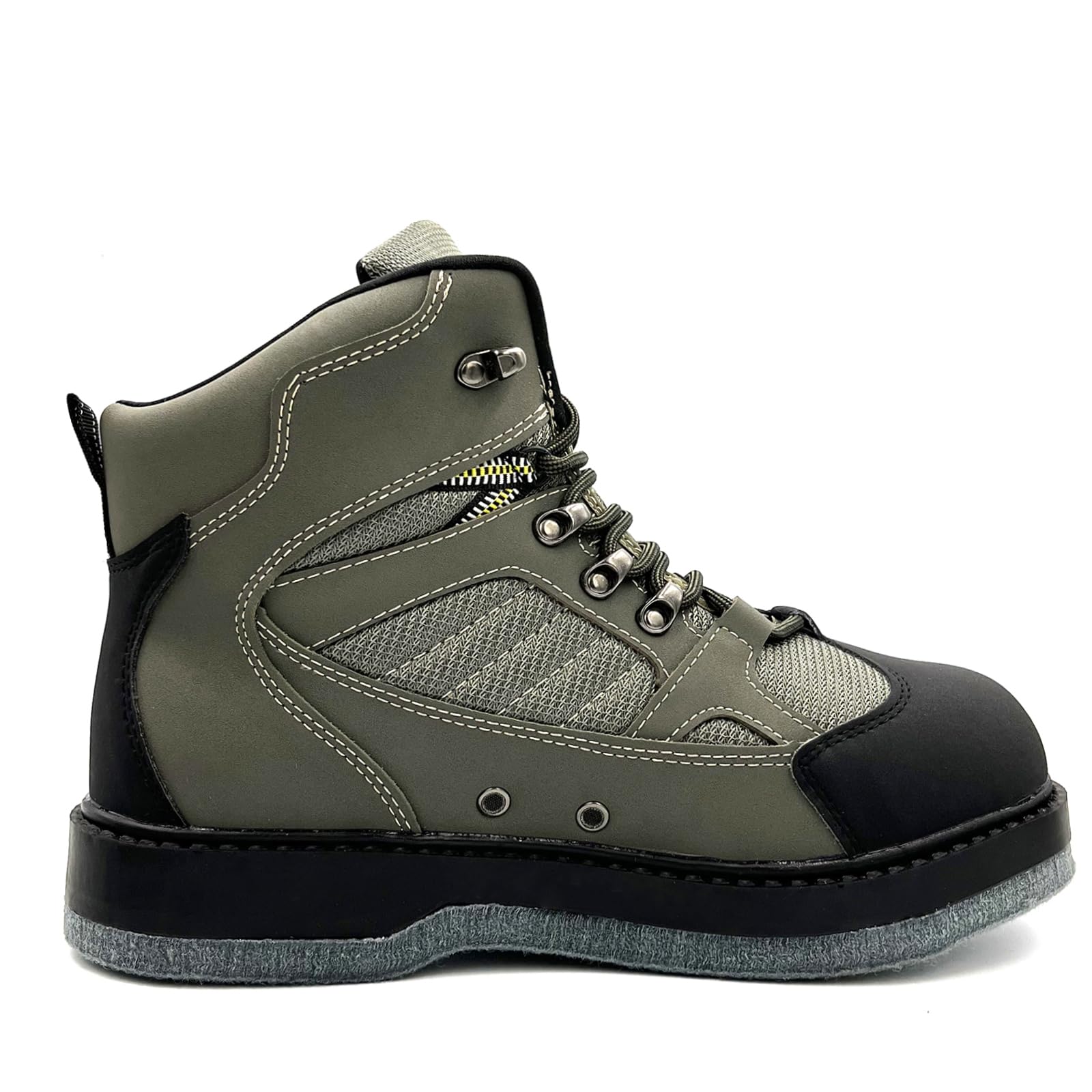
A neoprene-lined felt boot that keeps your feet warm in cold water and breaks in faster than mesh-lined rivals.
The neoprene lining here is the defining feature—it provides superior comfort and extra insulation to keep your feet warm in cold water, while also being easier to break in than the old mesh lining. The felt construction is high-density and thick, and the eyelets use a rust-free material so they keep their appearance after extended use. A D-ring is included, compatible with wading pants for a more secure fit.
Owners are impressed with the grip, with one switching from rubber boots after repeatedly slipping and falling on river rocks—the felt soles put an end to that. The boots are described as comfortable from 5 a.m. to 8 p.m. sessions, and buyers who compared them to name-brand models they owned last year found these better. The tongue uses less sponge material, helping the boots dry faster and avoid that soggy feeling.
Sizing is the trickiest part here—some owners say it runs true, others say it runs big, and one advises ordering two sizes smaller if you wear them with just socks and no waders. The durability has a real caveat: one owner reported the felt separating from the boot after about seven river trips, though others report the boots held up well.
The warm-foot pick: The neoprene lining adds insulation and comfort that cold-water anglers will notice immediately.
The sizing puzzle: Feedback splits between true fit and running big, so order carefully and consider a size down for sock-only wear.
6. CADDIS Men’s Modern Felt Sole Wading Shoe

The classic felt-soled shoe that stops mossy-rock slips, with speed laces for quick riverbank changes.
This felt-sole shoe is built for one thing: keeping you upright on slick surfaces like mossy rocks, downed logs, and gravel bottoms. The speed laces let you cinch down fast when you’re switching between wading and hiking, and the cushioned foam insole with a reinforced toe and heel adds comfort. The polyester outer is durable, and the shoe pairs well with Caddis waders for a cohesive setup.
Owners consistently praise the quality and fit, with one saying Caddis is a brand you can count on and another noting no more slipping on slick rocks. The fit is roomy for stocking-foot waders, and buyers report the felt grips well on rocks. The shoe weighs 5 pounds, which is on the heavier side, but buyers find the comfort worth it.
There are real caveats. Felt soles are illegal in Maryland, Vermont, and a few other states, so check your local regulations before buying—one owner had to send them back for that exact reason. Durability is mixed, with some owners saying the shoes fell apart quicker than any other boot they’ve had, felt sole included. The fit runs large, so sizing down can work if you’re wearing just wader socks.
The classic felt pick: Felt soles give you class-leading grip on mossy rocks, and speed laces (pull-tight cords instead of traditional laces) let you cinch them fast—a proven formula for creek fishing.
The caution: Check your state’s felt regulations first, and expect durability to vary.
7. Caddis Men’s Taupe EcoSmart Grip Sole Wading Shoe

A rubber grip sole that’s legal in all states, so you get traction without worrying about felt bans.
The EcoSmart Grip sole is the headline feature here—it works in all wading conditions to keep you from slipping on mossy rocks, downed logs, or muddy bottoms, and it’s legal in all states. That last point matters if you fish in multiple states or want to avoid the hassle of checking felt regulations. The speed laces and cushioned insole add convenience, and the reinforced toe and heel areas boost durability.
Owners find these boots comfortable and roomy, with special praise for the toe box. The fit is true to size for neoprene socks, which makes the sizing less of a guessing game. The rubber sole grips well on stream bottoms, and the boots pair well with Caddis waders. Buyers describe them as lightweight and solid in deep mud with easy on-off access.
The downsides are real but manageable. The metal parts rust easily, which is worth knowing if you fish saltwater or brackish water. Some owners mention the boot is not great for long hikes—it’s better for limited use with close parking. Drying is slow, and there are isolated reports of the sole separating on the trailing edge.
The low-maintenance pick: Rubber soles are legal in all states (felt is banned in some places), and the roomy fit works over neoprene socks (thick insulating booties) so your feet stay warm in cold water.
The limitation: Metal parts rust quickly and this is not built for long hiking approaches to your spot.
8. FROGG TOGGS Men’s Saltshaker Flats Wading Boots

A cleated sole built for coastal flats, with a quick-drying mesh and side drain ports that shed water fast.
This boot is purpose-built for coast fishing, with a cleated outsole that grips both wet and dry surfaces—exactly what you need when moving from the water to a boat deck or rocky shoreline. The quick-drying mesh and side drain ports let water escape fast, so the boots don’t stay waterlogged when you step onto land. It’s extremely lightweight for a boot with this much sole.
Owners who hunt ducks and fish the flats find the boots comfortable and durable, with one using them for five seasons and expecting more. The fit is wide, which suits anglers who need room for neoprene waders. Customers note the boots perform well in sticky mud, and the traditional laces are preferred over zippers on other boots. Quality and construction get steady praise.
The clear weakness is durability—the most-discussed negative is soles splitting apart, with one owner seeing the boots falling apart after just six wears. Water resistance is also mixed, with the boots holding a lot of water after leaving the river. The fit runs big, so one size-12 owner found the boots incredibly roomy and had to add inserts.
Coastal strengths
- Cleated outsole grips wet and dry surfaces, ideal for flats and boat decks
- Quick-dry mesh and side drain ports shed water when you hit land
- Wide fit works well over neoprene waders
Coastal weaknesses
- Durability is the big complaint—soles splitting is a recurring theme
- Runs big, and water can pool inside after leaving the river
Best for saltwater flats: This is your boot if you fish the coast and need all-surface grip that transitions from water to land smoothly.
Not for heavy use: If you wade every weekend, the sole durability will likely disappoint.
Understanding the Specs
Felt vs Rubber Soles
Felt soles grip slick, moss-covered rocks like a sponge, which is why they are the traditional choice for fly fishing. Rubber soles with studs or aggressive treads are legal in all states and handle mud and gravel better, but they can slide on moss where felt excels. Some states ban felt over concerns about spreading invasive species, so check regulations before committing.
Interchangeable Sole Systems
Boots with swappable soles let you change traction based on the riverbed—felt for slick rocks, rubber for hiking to your spot. This means buying one boot instead of two, which can save money over time even if the upfront cost is higher. The trade-off is that the sole attachment mechanism can be finicky and is another potential failure point.
FAQ
Should I size up when buying wading boots?
Are felt soles legal in my state?
Why do budget wading boots fall apart so quickly?
How do I dry my wading boots after a trip?
Will these boots work with my waders?
What is the difference between felt and cleated soles?
Do I need speed laces on wading boots?
How long should a pair of budget wading boots last?
Are rubber-soled boots good for wading?
Final Thoughts: The Verdict
Across the board, the budget wading boots winner is the Korkers Greenback because the swappable felt and rubber soles give you the flexibility of two boots in one, backed by a 4.6-star rating across 600+ owners. If you want the safest value with hiking-boot grip and saltwater-safe construction, grab the Foxelli Wading Boots. And for coastal flats anglers needing all-surface grip, the FROGG TOGGS Saltshaker is the one to reach for.
How We Picked
We do not accept paid placement. Every pick is matched to a real buyer and a real use-case; we do not hands-on test units.
Sources & Methodology
Specifications: manufacturer listings and product documentation. Review insights: verified customer reviews, as of August 2026. Pricing: not shown on this page (it changes often); check the current price via the retailer link.
As an Amazon Associate, FitlyFast earns from qualifying purchases. This does not affect which products we feature.