
Our readers keep the lights on and the weekend projects moving. As an Amazon Associate, I earn from qualifying purchases.
Specs are compiled from manufacturer listings and verified buyer reviews and can change over time — please confirm the key details on the product page before buying.
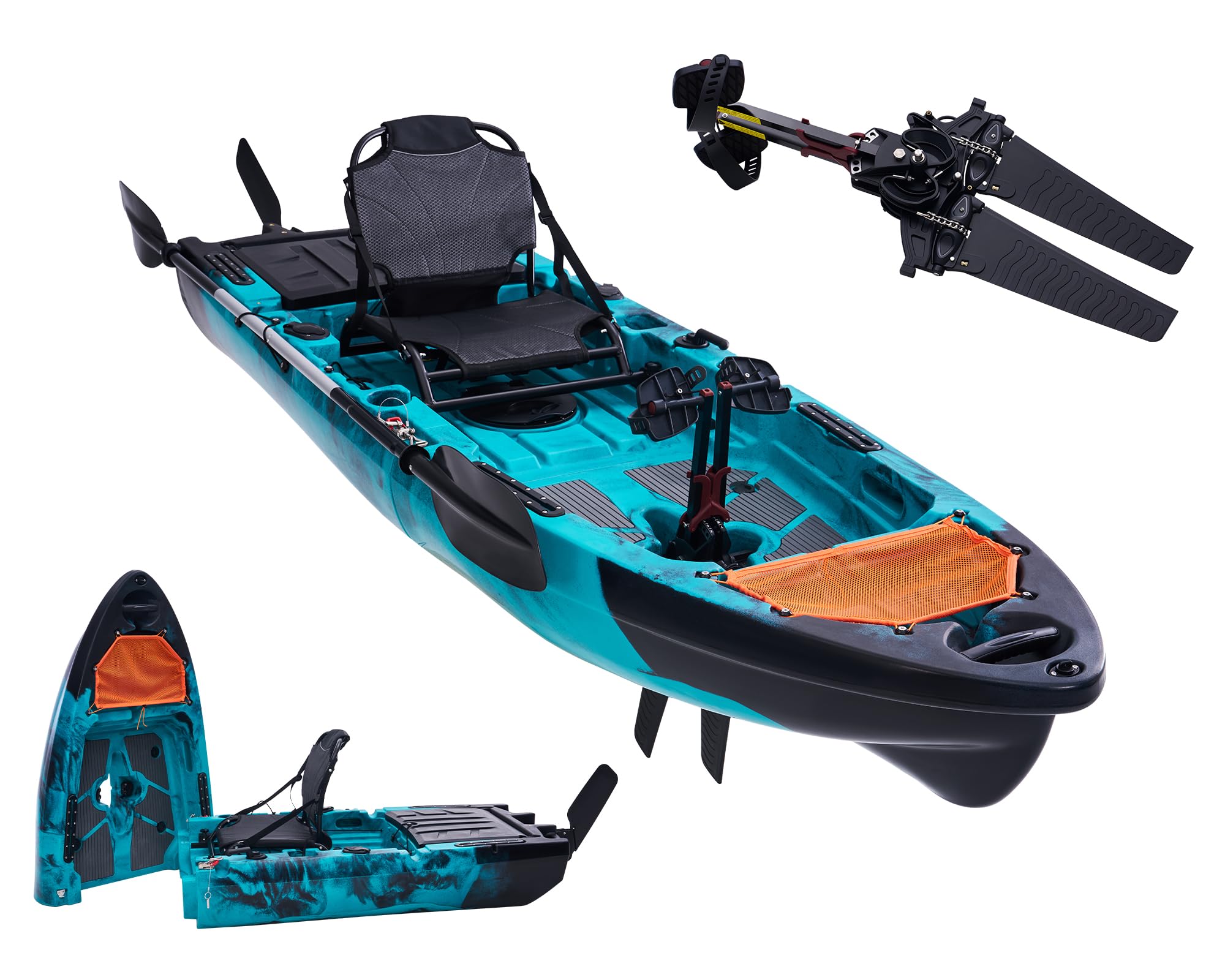
The biggest hurdle to owning a pedal kayak isn’t the price tag—it’s getting the thing to the water. A 100-pound boat demands a roof rack, a trailer, and a workout before you’ve even paddled a stroke. A modular two-piece hull solves this by splitting into sections that fit in a trunk or closet, eliminating the need for a truck or roof rack.
I’m Rikta — the founder and writer behind FitlyFast. This guide is built by comparing the manufacturers’ published specifications and the patterns across verified customer reviews, so you get each pick’s real strengths and trade-offs instead of marketing spin.
Your budget pedal kayak search ends here with modular, trunk-friendly picks that deliver hands-free fishing without the premium-brand price tag.
Our Picks at a Glance

How To Choose The Best Budget Pedal Kayak
Before you buy a budget pedal kayak, answer three questions: where will you store it, what water will you fish, and how much gear do you carry? Answering these three questions narrows the field to the models that match your storage, water, and gear needs.
Transport and Storage Realities
A pedal kayak’s weight matters most when it leaves the water. Modular models split into two pieces so you can lift them alone, which is why they dominate this list—they fit in hatchbacks and closets rather than demanding a garage and roof rack.
Pedal Drive Types: Fins vs. Propellers
Fin drives glide quietly over weeds and shallow flats, making them ideal for stealthy anglers. Propeller drives offer instant forward and reverse control, but they catch aquatic grass more easily, so choose based on the water you fish most.
Stability and Weight Capacity
Wider hulls enable stand-up casting, while weight capacity dictates how much rider plus gear the boat can safely carry. A 12-foot hull with a 550-pound capacity suits gear-heavy expeditions, while a 9.5-foot solo model prioritizes portability—match the spec to your fishing style.
Quick Comparison
| Model | Best For | Weight | Drive Type | Max Capacity | Amazon |
|---|---|---|---|---|---|
| Albott Modular Fishing Kayak★ Best Overall | Trunk transport & stand-up fishing | 102.4 lbs | Fin Drive | 420 lbs | Amazon |
| Pelican Catch Kicker 110 HDIILightest Haul | Lightweight car-topping | 59 lbs | HyDryve II Fin | — | Amazon |
| Pelican Catch HDII Premium AnglerBest Value | First-time pedal kayakers | 67 lbs | HyDryve II Fin | — | Amazon |
| Reel Yaks Raptor Modular | Inshore saltwater & tight storage | 86 lbs | Propeller Drive | 380 lbs | Amazon |
| Reel Yaks Radar Modular | Novice stability & easy assembly | 67 lbs | Fin Drive | 430 lbs | Amazon |
| BKC Brooklyn 12.0 Pro | Lakes, bays & touring | 70 lbs | Propeller Drive | — | Amazon |
In‑Depth Reviews
1. Albott Modular Fishing Kayak
The 4-step modular build that slides into a RAV4 and still stands up to cast from.
This Albott breaks the kayak transport rule entirely. It splits into pieces with internal handles so it fits inside a Toyota RAV4, and owners say the quick 4-step assembly means no roof rack and no trailer—just open the trunk, click it together, and launch. Buyers report it floats well, breaks down easily for van travel, and handles camping trips without needing a rack.
The 11 lbs fin drive glides quietly, resists weeds, and includes spare fins for hands-free shallow-water fishing. The HDPE hull with 304 stainless steel connections and a cable-raised stern rudder feels solid, and owners mention it’s stable enough to stand and fish. At 102.4 pounds assembled, it’s not light, but its modular nature makes it manageable in pieces.
Expect a short learning curve: one reviewer noted the steering handle slid out with crossed cables until they tightened it, so run a pre-use checklist. Another reviewer said, “Been out on the water 3 times so far no issues.” The pedal system shifts slightly while you pedal, but if you don’t own a truck and want a stable, stand-up-capable fishing platform, this is the strongest all-rounder on this list.
Why It Wins
- Modular 4-step assembly fits in a RAV4 trunk—no roof rack needed
- 11 lbs weed-resistant fin drive with spare fins for stealthy fishing
- Stand-up capable with a 420 lbs capacity for casting confidence
What To Watch
- Pre-use bolt and cable check is essential to avoid steering issues
- Heavy at 102.4 lbs when fully assembled
The pick for: truckless anglers who want a stable, stand-up-capable pedal kayak that stores in a trunk.
Think twice if: you want zero pre-launch setup—this boat rewards a 10-minute assembly ritual.
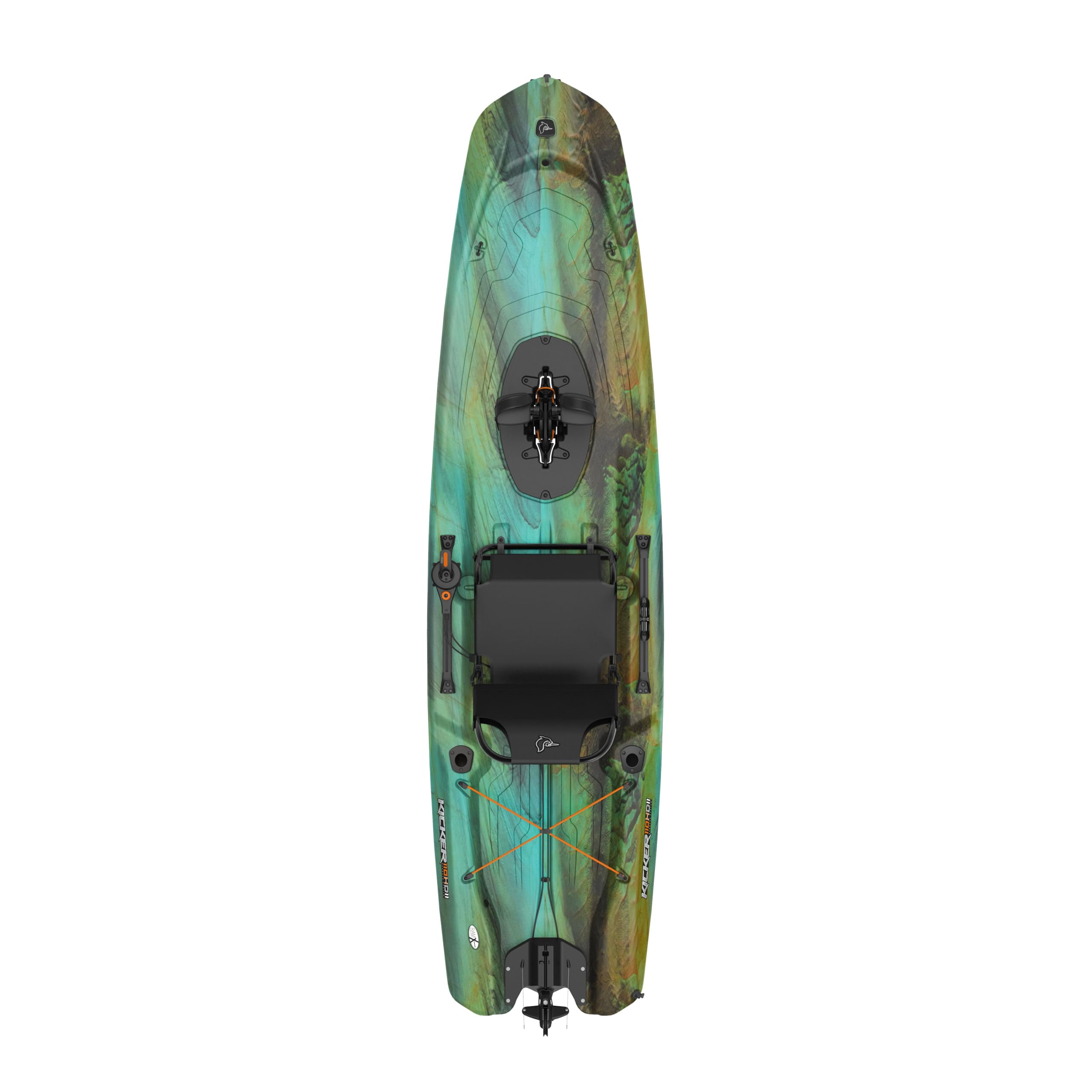
2. Pelican Catch Kicker 110 HDII
A 59-pound single-hull that car-tops easily but asks for patience on the water.
At just 59 pounds, this Pelican is the lightest boat on this list by a wide margin—it’s over 40 pounds lighter than the Albott’s 102.4 pounds, which makes solo car-topping genuinely realistic. The built-in track grooves on the handles let you mount accessories without drilling, and the HyDryve II fin system glides through shallow water and around aquatic plants with adjustable pedals for your leg length.
Real-world reviews split sharply on this one. Some owners, including one 61-year-old first-timer who weighs 260 pounds, found it stable and easy to manage after adding a dolly and keel guard tape. Steering gets positive feedback from multiple buyers, and it tracks well in current. But the steering mechanism isn’t universally reliable—one buyer’s failed during a long road-trip fishing outing, and replacement parts proved hard to find.
The trade-offs are honest ones: there’s no paddle included, so you’ll need to carry your own, and you should remove the pedal drive before beaching to protect it. The bow dives in waves, the rudder scratches easily, and storage is limited to a crate.
Best for: solo paddlers who prioritize a light, easy car-top load for lake sightseeing and calm water.
Not ideal for: anglers who need lots of built-in storage and rock-solid steering on remote, multi-day trips.
3. Pelican Catch HDII Premium Angler
A comfortable, well-equipped entry point into pedal power without the premium-brand price.
Owners consistently praise the build quality and the Ergocast G2 seat for comfort, even when beached. It comes rigged with 4 accessory rails, 3 flush-mount rod holders, and a hand-controlled rudder you can deploy as a skeg for better tracking, so there’s little to buy after unboxing.
At 67 pounds it’s still light enough to roof-top with two people and just about doable solo, which owners note. Dry storage is a plus, and the HyDryve II system gets you into shallows and through weeds that would stall a paddle. Buyers describe it as a “fantastic entry level pedal kayak” that tracks straight with the rudder deployed, perfect for a first-time pedal buyer.
The honest caveat is the pedal drive’s durability—one owner snapped the fin bolt on the third use and found the plastic joint worn, with no manufacturer response. Another received a hull with a dent. These sit against a strong quality consensus, so treat the drive gently and inspect upon arrival. This is a great gateway pedal kayak, not a hard-use offshore machine.
A comfortable start: the seat and rigging make it the easiest transition from paddle to pedal for a first-time buyer.
4. Reel Yaks Raptor Modular
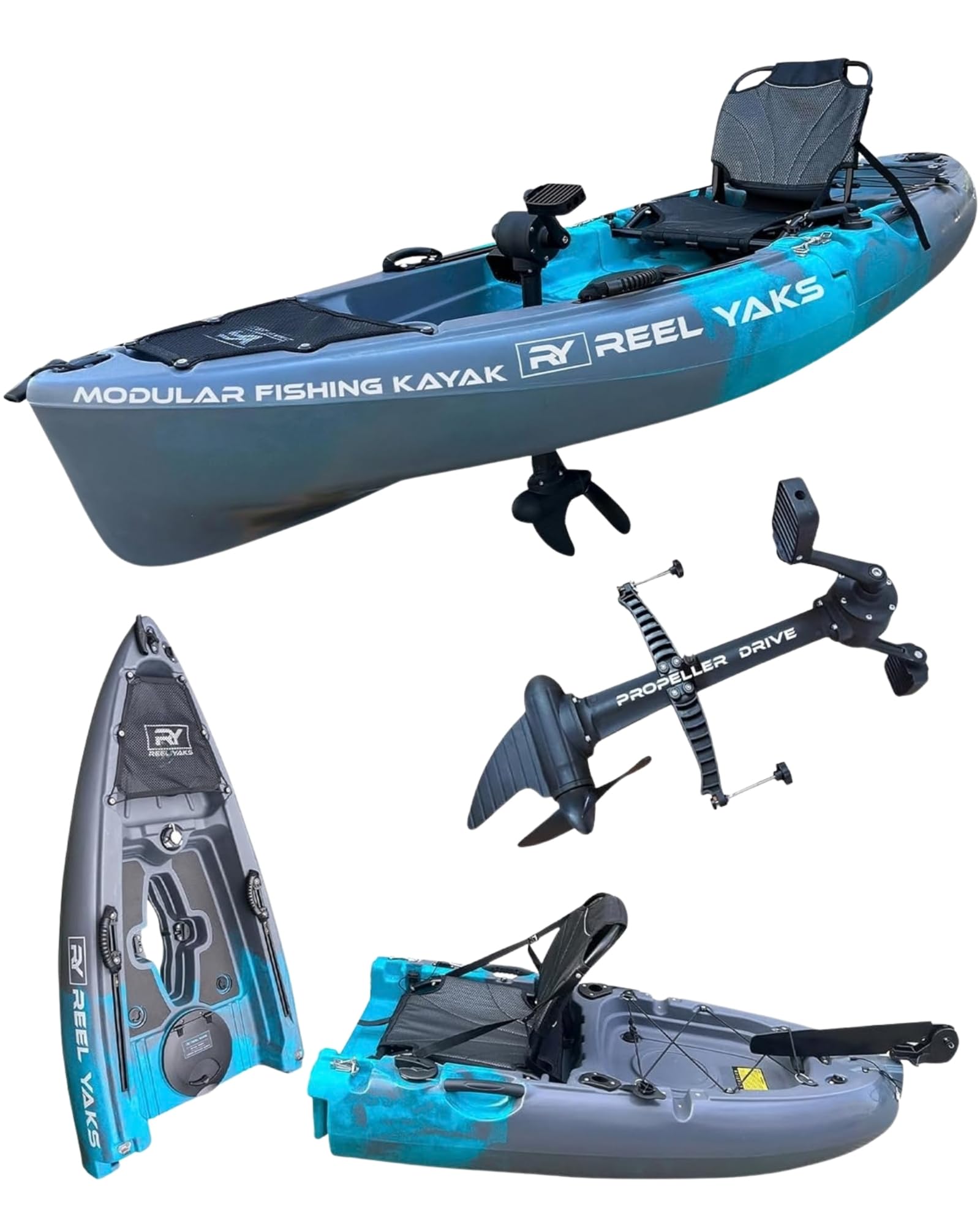
A 9.5-foot two-piece that loves inshore saltwater and fits inside a Honda Accord.
This Raptor is built for the angler who measures success in species caught, not miles pedaled. The responsive propeller drive delivers instant forward and reverse, and the modular two-piece design separates quickly so it snugly fits in a Honda Accord trunk—a claim verified by multiple owners. The included 360 rod holder, stadium seat, paddle, and propeller drive mean it’s ready to fish straight from the start.
Inshore saltwater anglers and older paddlers both praise how easy it is to lift and assemble, with one 65+ owner calling it simple to move solo. A taller, heavier angler at 6’3″ and 250 pounds found stability fine, resisting capsizing on lunges and large wakes with exceptional low-speed turning via the rudder. Quality and fishing suitability are the most-discussed strengths.
The catches are real: the pedal drive sits a bit far from the seat, causing some slouching for certain paddlers, and it’s not stable enough to stand and cast. The propeller also grabs weeds, and the rudder can squeak. The company’s post-sale support drew one frustrated review, though a broken steering part was replaced by the company for another owner. This is a capable compact fishing tool for seated anglers, not a stand-up platform.
Sealed For Fishing
- Instant forward and reverse from the propeller drive
- Two-piece design fits in a Honda Accord trunk or closet
- 8 aspects of quality and fishing fit praised by owners
Know Before You Buy
- Propeller catches weeds in grassy water
- Cramped for taller paddlers over 6 feet
- Not stable enough for stand-up fishing
5. Reel Yaks Radar Modular
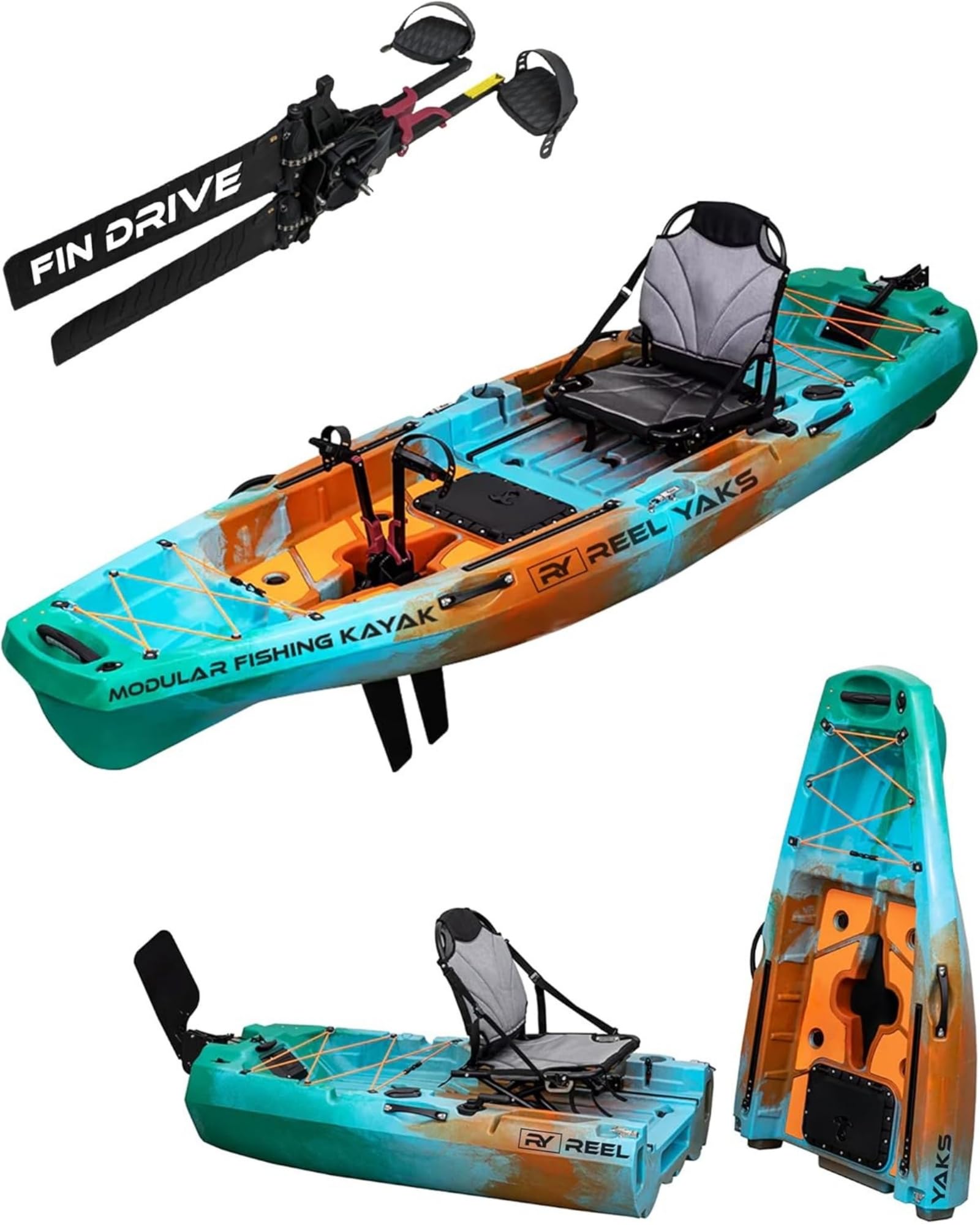
The wide W-hull that makes first-time pedal kayakers feel instantly at home.
This Radar wins on approachability. The wide W-hull design with a 430-pound capacity inspires confidence for novices, and assembly is the most-praised feature—owners say the directions are easy to follow and it fits inside a Hyundai Kona and Ford Edge hatchback. One 58-year-old owner loads it solo into her SUV, calling the stability great for a beginner.
The fin drive runs quieter than a propeller for stealth on lakes and rivers, and customers note it’s faster and easy to install or remove. The two-piece design slides into apartments, garages, and trunks, with large sealed storage under the seat. Vibrant sunrise coloring and a solid build round out the appeal, with owners calling it a great upgrade from a paddle kayak.
The rudder is the divided topic here—some find it responsive while others wrestle with it getting stuck upright, often due to factory assembly alignment. Buyers advise tightening screws before the first launch and checking the rudder cable system. For a first pedal kayak that’s stable, colorful, and trunk-friendly, this is a strong, forgiving choice.
Confidence first: the stable W-hull and easy assembly make this the friendliest entry point for novices and smaller paddlers.
6. Reel Yaks Recon Modular
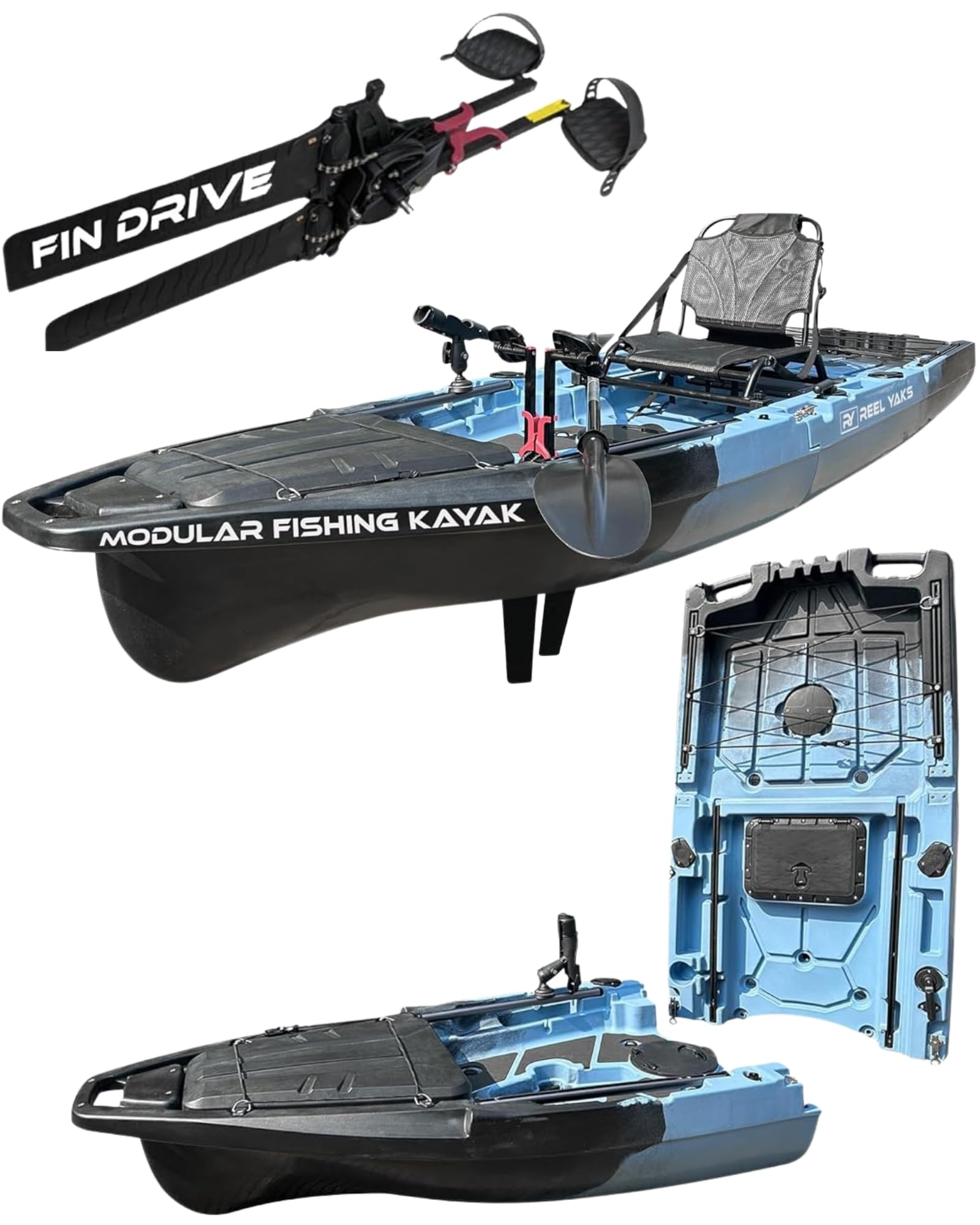
The 12.5-foot stable hull that hauls 550 pounds of gear and angler with ease.
This is the max-capacity beast of the list. The 12.5-foot sit-on-top design with a 550-pound capacity tracks straight and stays stable, with owners comparing its quality and comfort to far pricier Hobie and Old Town models. The pedal propeller drive hits 3-4 mph, or 5 mph with paddle assist, and one owner pedaled 75.9 miles and trolled 27.3 miles in a 6-hour session—”like walking on water.”
Stability is the most-praised aspect, and it stands up well in low waves. The layout is fully rigged with 3 flush-mounted rod holders, dual watertight hatches with dry bag inserts, bow and stern bungees, and a spacious rear cargo area for coolers or tackle. The adjustable aluminum-frame seat supports all-day trips, and the hand-controlled rudder with instant reverse makes maneuvering feel sharp and precise.
The trouble is the pedal drive itself: multiple owners reported it arriving missing or defective, leading to long battles for replacements through customer service. One buyer’s defective drive went unresolved for two months. When the drive works, it’s a superb value; just budget for potential customer-service friction and a flimsy included paddle.
Expedition Ready
- 550 lbs capacity and 12.5 ft hull for gear-heavy trips
- Comfortable adjustable seat, instant reverse, stable in waves
- Dual watertight hatches with dry bag inserts
The Watch-Out
- Pedal drive arrived missing or defective for several owners
- Included paddle is flimsy and the drive cover complicates raising
7. BKC Brooklyn 12.0 Pro
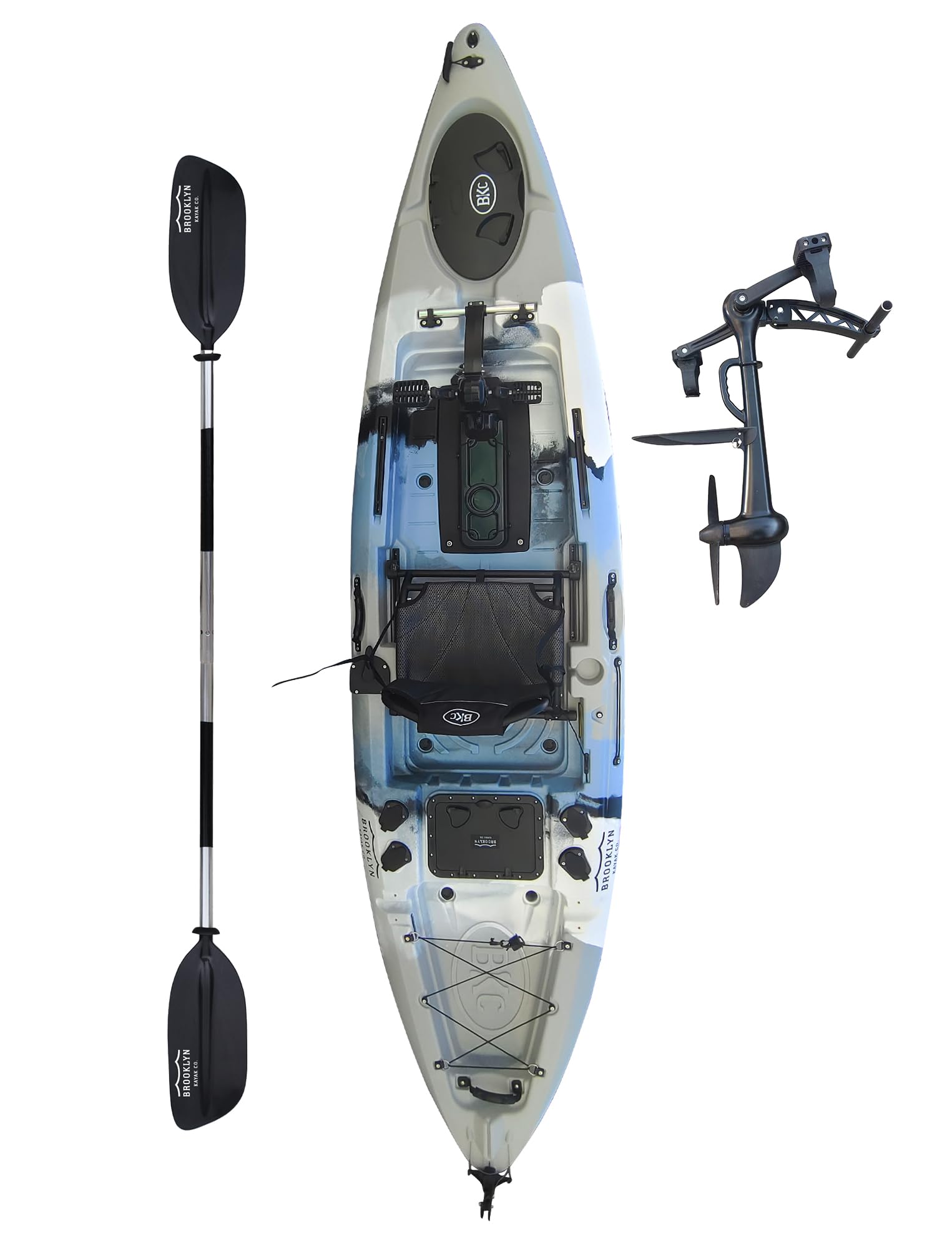
A 12-foot rotomolded cruiser that one owner bought twice, it was that good.
This is the rare kayak that inspires a second purchase. One California owner loved the trial float so much they bought another for their wife, and Brooklyn Kayak sent the registration Certificate of Origin the next day after a request—a small but crucial service touch for lake permits. At 70 pounds with a UV-protected rotomolded HDPE hull, it’s built to last on lakes, bays, and rivers.
The nearly 3-foot-wide sit-on-top hull tracks straight and cuts through chop, with a hand-operated rudder for responsive control in wind or current. Two sealed watertight hatches with dry bag inserts, a large rear cargo area with bungee tie-downs, and an aluminum-frame seat round out a layout owners call stable and comfortable. The rear hatch is perfectly sized to fit a trolling-motor battery, and the pre-assembled rudder saves setup time.
Assembly is minimal, which buyers appreciate, though BKC’s parts replacement can be slow when something breaks. The removable propeller drive lets you paddle traditionally or add a trolling motor later, and the adjustable foot straps accommodate different leg lengths. For a stable, comfortable 12-footer that arrives nearly ready to fish, this is the crowd favorite.
Buy-once quality: the stable hull, pre-assembled rudder, and minimal assembly made this a repeat purchase for more than one owner.
Understanding the Specs
Weight and Its Real Cost
A kayak’s weight determines how you’ll get it to water. A 59-pound hull like the Pelican Kicker can be car-topped by most adults, while a 102.4-pound modular boat splits into pieces you lift separately. The question isn’t just total weight—it’s whether you can manage each section alone.
Capacity vs. Stability
Weight capacity tells you the total rider plus gear load, but it also hints at stability. A 550-pound capacity on a 12.5-foot hull means more foam and beam, which translates to standing room and wave confidence. Match the number to your body weight plus tackle, not just your weight alone.
FAQ
Will a modular pedal kayak fit inside my SUV?
What is the difference between a fin drive and a propeller drive?
Do I still need a paddle with a pedal kayak?
Why is the weight capacity important for a pedal kayak?
Can I stand up to fish on these budget pedal kayaks?
What should I check before my first launch?
How do I clear weeds from a propeller drive?
Is a 12-foot pedal kayak harder to handle than a 10-foot model?
What warranty do these budget pedal kayaks come with?
Can I add a trolling motor to a pedal kayak later?
Final Thoughts: The Verdict
For most buyers, the budget pedal kayak winner is the Albott Modular Fishing Kayak because it combines trunk-friendly transport, stand-up stability, and a weed-resistant fin drive that owners genuinely enjoy. If you want the lightest possible car-top load, grab the Pelican Catch Kicker 110 HDII at 59 pounds. And for gear-heavy expeditions with an industry-leading 550-pound capacity, the BKC Brooklyn 12.5 Pro is the one to reach for.
How We Picked
We do not accept paid placement. Every pick is matched to a real buyer and a real use-case; we do not hands-on test units.
Sources & Methodology
Specifications: manufacturer listings and product documentation. Review insights: verified customer reviews, as of August 2026. Pricing: not shown on this page (it changes often); check the current price via the retailer link.
As an Amazon Associate, FitlyFast earns from qualifying purchases. This does not affect which products we feature.