
Our readers keep the lights on and the weekend projects moving. As an Amazon Associate, I earn from qualifying purchases.
Specs are compiled from manufacturer listings and verified buyer reviews and can change over time — please confirm the key details on the product page before buying.
If your knees ache at the thought of a treadmill or a standard upright bike, the smart move is a recumbent machine that puts your back against a supportive seat and your legs out in front. The best options for bad knees remove the jarring impact of pounding a pavement or gym floor while still giving you a genuine cardio workout, and this guide walks you through the nine machines worth your attention.
I’m Rikta — the founder and writer behind FitlyFast. This guide is built by comparing the manufacturers’ published specifications and the patterns across verified customer reviews, so you get each pick’s real strengths and trade-offs instead of marketing spin.
Finding a comfortable, low-impact machine you will actually use is the goal, and this roundup of the best bike for bad knees is built around the rides real owners say are easiest on their joints.
Our Picks at a Glance

How To Choose The Best Bike For Bad Knees
To protect your knees, you need to control three things: your sitting position, the pedal motion, and the frame’s weight capacity. A recumbent bike lets you recline into a chair-like seat with your legs reaching forward, which changes the angle of your knee bend and takes pressure off the joint compared to an upright cycling posture.
Seat design and adjustability
The seat is everything when you have joint pain. Look for a wide, cushioned seat with a padded or mesh backrest that supports your spine, and check that the seat slides forward and back so your legs can extend to a comfortable, nearly straight position. If the adjustment range will not fit your height, no amount of padding will save the ride.
Resistance type and noise level
Magnetic resistance uses magnets to create friction-free tension, so the pedaling stays smooth and quiet enough for an apartment or an early-morning session. More resistance levels simply give you finer control as you build strength, letting you start with a gentle recovery pace and work up gradually.
Weight capacity and frame stability
Check the maximum weight recommendation before you commit, because a frame that flexes under you feels unstable and can aggravate a sore knee. A heavier, commercial-grade steel frame usually rides more solidly, but it also makes the machine harder to move between rooms, so weigh that trade-off against your space.
Quick Comparison
| Model | Best For | Weight Capacity | Resistance Levels | Machine Weight | Amazon |
|---|---|---|---|---|---|
| Elite RB X★ Best Overall | Tall riders & long-term durability | 350 lbs | 16 levels | 115 lbs | Amazon |
| XVGVSV W241Best Value | Heavy riders wanting arm exercise | 400 lbs | 16 levels | 66 lbs | Amazon |
| pooboo W216Comfort King | Whole-family comfort sessions | 400 lbs | 8 levels | 80 lbs | Amazon |
| ECHANFIT CBK2409 | A full-body cross-trainer feel | 380 lbs | 8 levels | 62.2 lbs | Amazon |
| Sunny SF-RB424006 | App-guided workouts on a budget | 300 lbs | 16 levels | 29 kg | Amazon |
| MERACH S19 | Compact spaces with app tracking | 330 lbs | 8 levels | 84.9 lbs | Amazon |
| LFEYYD W215 | Riders needing a very high capacity | 450 lbs | 16 levels | 87 lbs | Amazon |
| Sunny Cross Trainer | Pre-programmed full-body sessions | 300 lbs | 16 levels | 113.1 lbs | Amazon |
| Teeter FreeStep LT7 | Zero-impact physical therapy stride | 350 lbs | 20 levels | 150 lbs | Amazon |
In‑Depth Reviews
1. 3G Cardio Elite RB X Recumbent Bike
Our pick — over 4.5★ from 400+ verified ratings; the strongest balance of quality and price.
The tall-rider favorite that buyers call “built like a tank,” with legroom to spare for a 6’6″ frame.
For anyone who has ever felt cramped on a recumbent bike, the Elite RB X is the machine owners say finally fits. Buyers report it “Fits 6’6″/230 lbs with extra legroom,” which makes it the standout choice for tall riders who usually get shortchanged by seat rails. The oversized cushion tilts across 5 positions and slides through 25 positions, so you can dial in a leg extension that keeps your knees moving in a pain-free range.
Quiet operation is another thing the crowd raves about here, with the smooth magnetic ride earning praise alongside the solid, commercial-grade build. The 115-pound frame feels anchored under you, and it rolls through a standard doorway on built-in wheels when you need to tuck it away. Assembly is reportedly straightforward with clear instructions, and the included wireless heart rate strap plus 16 resistance levels give you real feedback as you rebuild strength.
The honest trade-off is the price tag, which sits firmly in premium territory, and the frame’s 350-pound capacity is lower than some budget rivals offer. What wins people over is the quality — this is the pick for someone who wants one machine that will still be riding smooth years from now.
For tall riders: Tall riders up to 6’6″ and anyone who wants a whisper-quiet, commercial-grade machine that will outlast the trend.
If space tight: You need a higher weight capacity than 350 lbs or you want to stay in a budget-friendly price range.
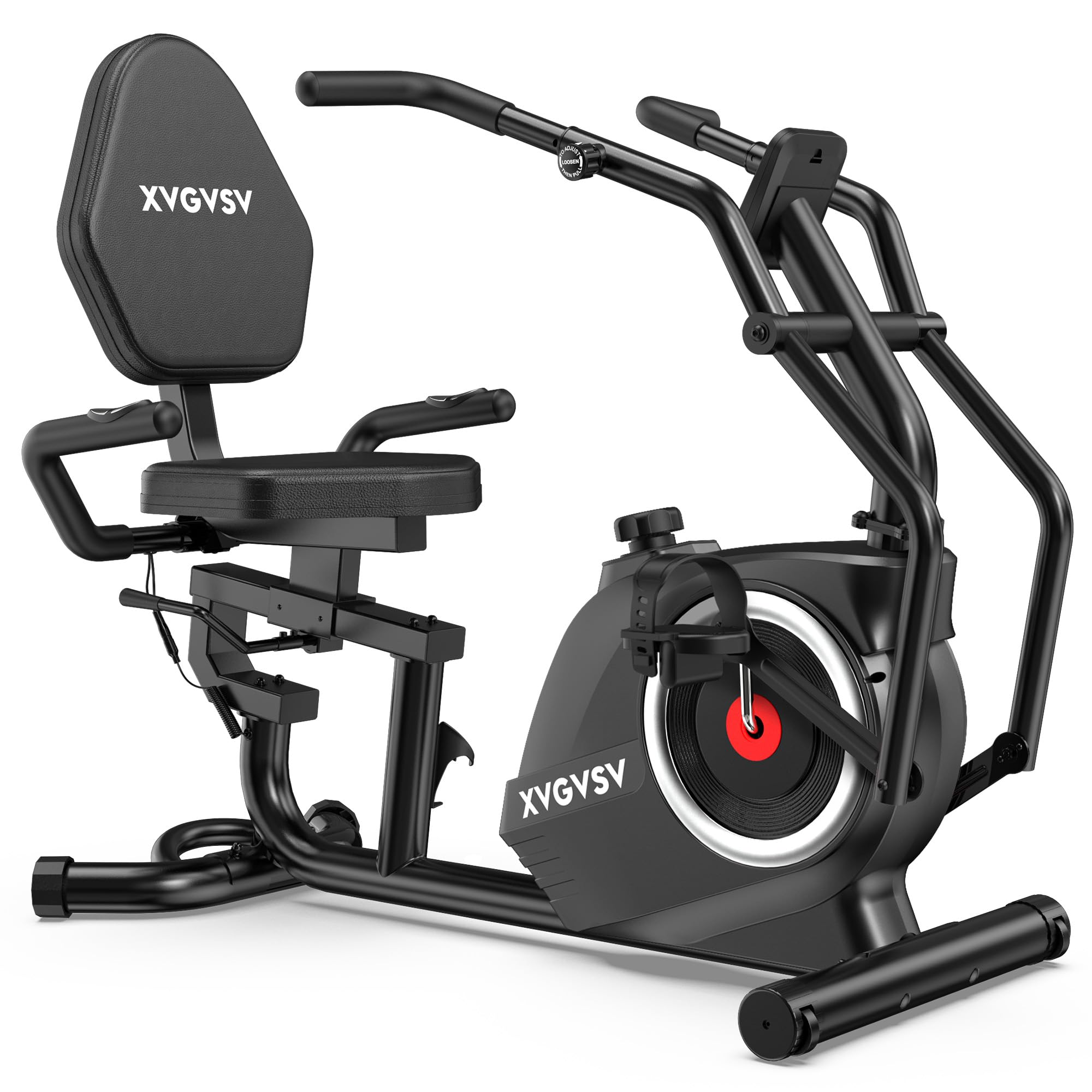
2. XVGVSV Recumbent Bike with Arm Exercise
A 400-pound-capacity recumbent that blends cycling with elliptical motion for a genuinely full-body ride.
If you want a two-in-one machine that works your arms while your knees get a gentle ride, this XVGVSV model delivers a lot for its tier. It pairs the classic recumbent cycling position with elliptical training, so you can switch between motions to shift which muscles do the work. The frame supports a substantial 400 pounds — at 400 pounds versus the Elite RB X’s 350-pound limit — which makes it a more inclusive choice for heavier riders.
Buyers genuinely love this one: “Just love this bike. only have had it for a couple of weeks and already have 200 miles on it.” Assembly earns the most praise, with numbered parts and tools included, and the 16-level magnetic resistance stays whisper-quiet for apartment living. The 66-pound frame is light enough to roll between rooms while still feeling stable under a large rider.
What to know before you buy: the pedals use reverse threading, so you must thread them fully before tightening the nut to avoid stripping the shaft. A few owners also flagged a missing washer or two in the box, though the value story holds up strongly for the price.
For full-body: You want a high 400-lb capacity plus arm exercise without spending premium money.
If tech seeker: You are very tall — the seat adjustment may not stretch far enough for longer legs.
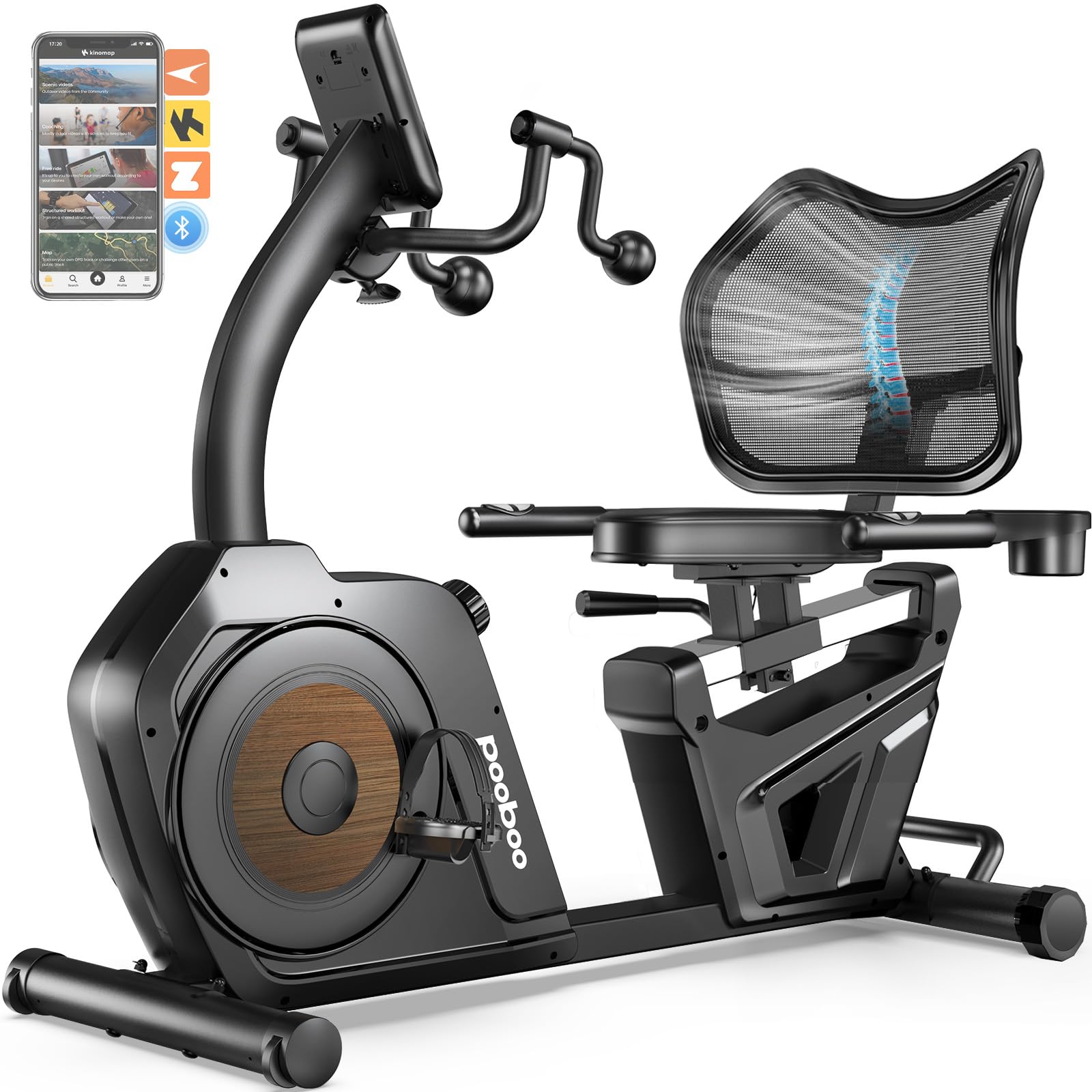
3. pooboo W216 Recumbent Bike
The breathable-mesh backrest bike that owners say is ideal for hour-long sessions without the ache.
Back pain often rides along with knee pain, and the pooboo W216 tackles both with a spine-shaped, breathable mesh backrest that keeps your back cool and supported while you pedal. The seat rail adjusts from 0 to 18.5 inches, fitting riders up to 6’3″, and the pedal straps offer 8 hole positions to suit different shoe sizes. It is a comfort-first machine that owners say works especially well for back and joint issues.
Quiet operation is a recurring theme in the feedback, with the belt drive and 15-pound flywheel keeping the ride smooth enough to watch TV or take calls mid-session. The 400-pound capacity and heavy-duty one-piece frame give it a solid, stable feel, and the 80% pre-assembled setup plus transport wheels make it easy to place and move. It also syncs with the KINOMAP and Zt fitness apps so you can track your progress on your phone.
The 8-level resistance knob is simpler than the 16-level systems on pricier bikes, which is fine for gentle rehab but limits the intensity ceiling. A couple of owners had a monitor arrive damaged, though the responsive support team replaced it quickly — the customer service is a genuine plus here.
Quiet belt drive
- Breathable mesh backrest built to follow the spine
- 400-lb capacity in a stable one-piece frame
- Fits riders up to 6’3″ with an 18.5-inch seat slide
Seat comfort
- Only 8 resistance levels, not 16
- Hand cranks add no real resistance on their own
For quiet rooms: Seniors and anyone with back plus knee pain who wants a cushioned, breathable seat for long, gentle sessions.
If long rides: You plan to push hard — the 8-level range tops out early.
4. ECHANFIT Recumbent Cross Trainer
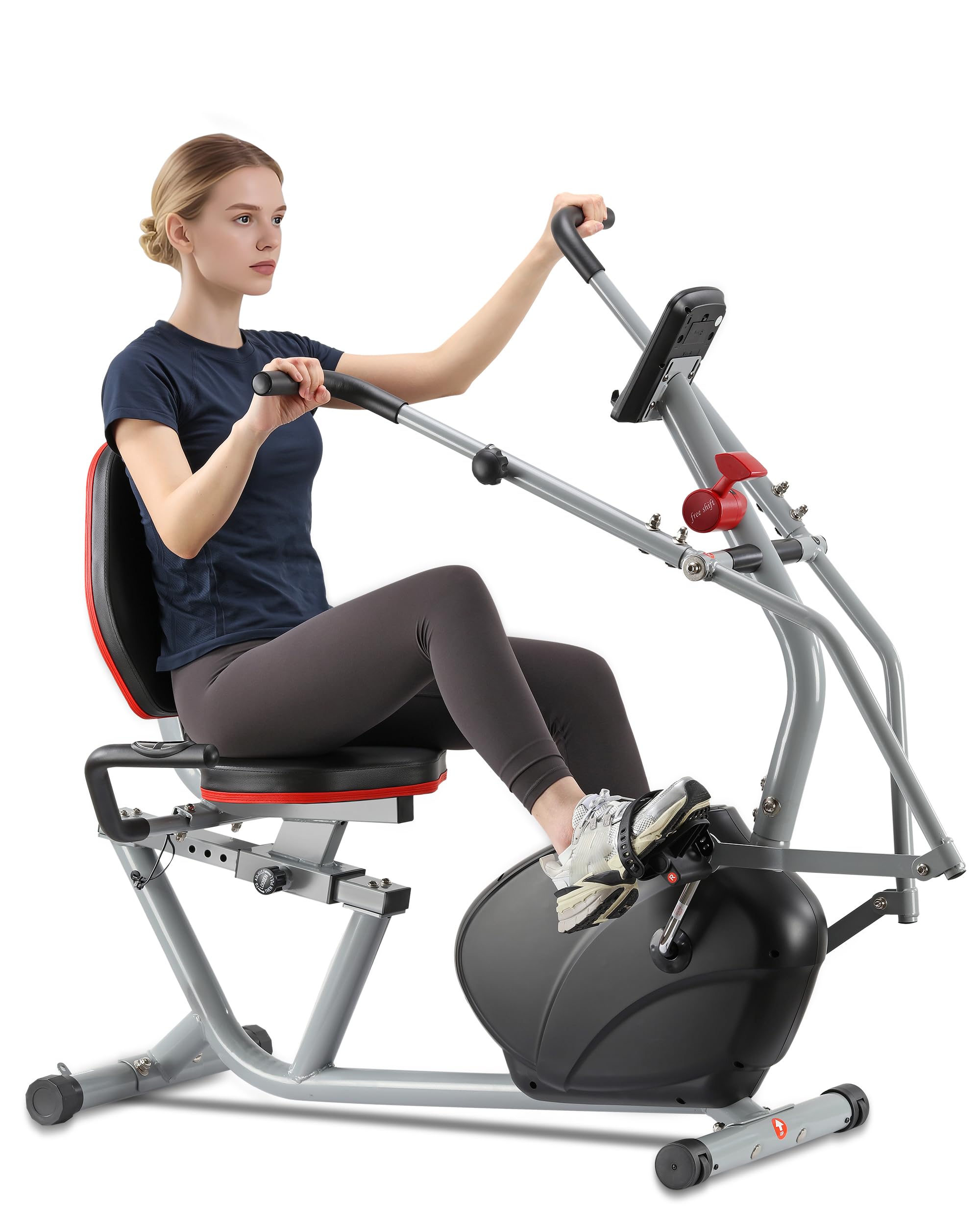
A dual-action handle ride that one sports-medicine voice praised its knee-friendly ergonomics.
For riders who want to move their upper body while their knees recover, the ECHANFIT pairs smooth pedaling with upgraded dual-action handles for a full cross-trainer-style workout. The sliding seat fits users from 4’9″ to 6’3″, and the heavy-duty steel frame supports 380 pounds. A backlit LCD tracks time, speed, distance, calories, odometer, and pulse, so you can watch your progress even in a dim room.
Buyers consistently describe the build as solid with no flex under load, and the 8-level magnetic resistance stays whisper-quiet. One owner with a fused ankle found it perfect for limited mobility, calling it the best price for the weight capacity. The seat is extra-wide and padded, which helps during longer sessions.
The catch is fit for shorter riders — one 5’2″ owner found the seat sat too low and the arms ran long, needing drilled holes to adjust. The timer also reportedly runs around 20% slow, so treat it as an approximation rather than a stopwatch.
For variety: Riders 4’9″ to 6’3″ who want arm exercise and a stable, joint-friendly frame.
If simple only: Anyone under about 5’2″ — the adjustment range may not go low enough to fit comfortably.
5. Sunny Health & Fitness Smart Recumbent Bike
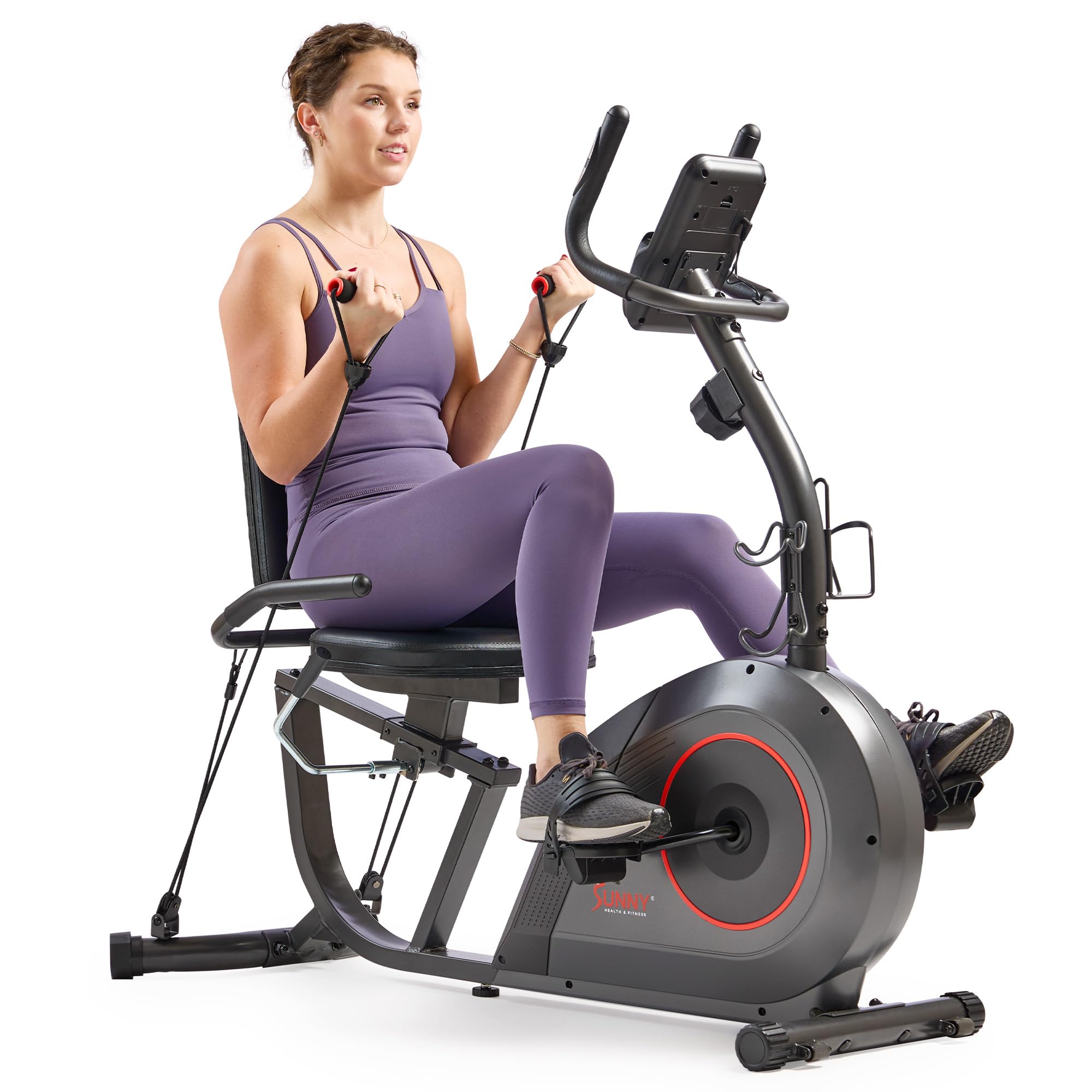
The budget-friendly app bike with a flip-aside handle that makes getting on and off genuinely painless.
Getting on and off a bike can be the hardest part when your knees are stiff, and Sunny solves it with a flip-able side handle that clears the way for an easy seat entry. The wide, cushioned seat and padded backrest ride on a magnetic belt drive with 16 levels of resistance, and the long inseam fits a range of heights. It is a joint-friendly design that owners say is noticeably easier on knees and backs than upright alternatives.
The free SunnyFit app is the headline feature here — no membership fees, 1,000-plus trainer-led workouts, and 10,000-plus virtual scenic tours to keep you motivated. Two included 20-pound resistance bands with foam grips add an upper-body option when you want to work your arms. The crowd consistently calls assembly easy and the operation quiet, and the value-for-money praise is the loudest theme in the feedback.
The trade-offs are real but fair: the 300-pound capacity is the lowest on this list, and the resistance max runs lower than some expect, which suits beginners more than power riders. At 29 kg the machine is compact enough for a tiny room, and the seat may feel firm to some — a cushion solves that quickly.
For data fans: You want app-guided, low-impact workouts and an easy on-off design at a value-friendly price.
If durability: You weigh over 300 lbs or you need heavy resistance to feel challenged.
6. MERACH S19 Recumbent Bike
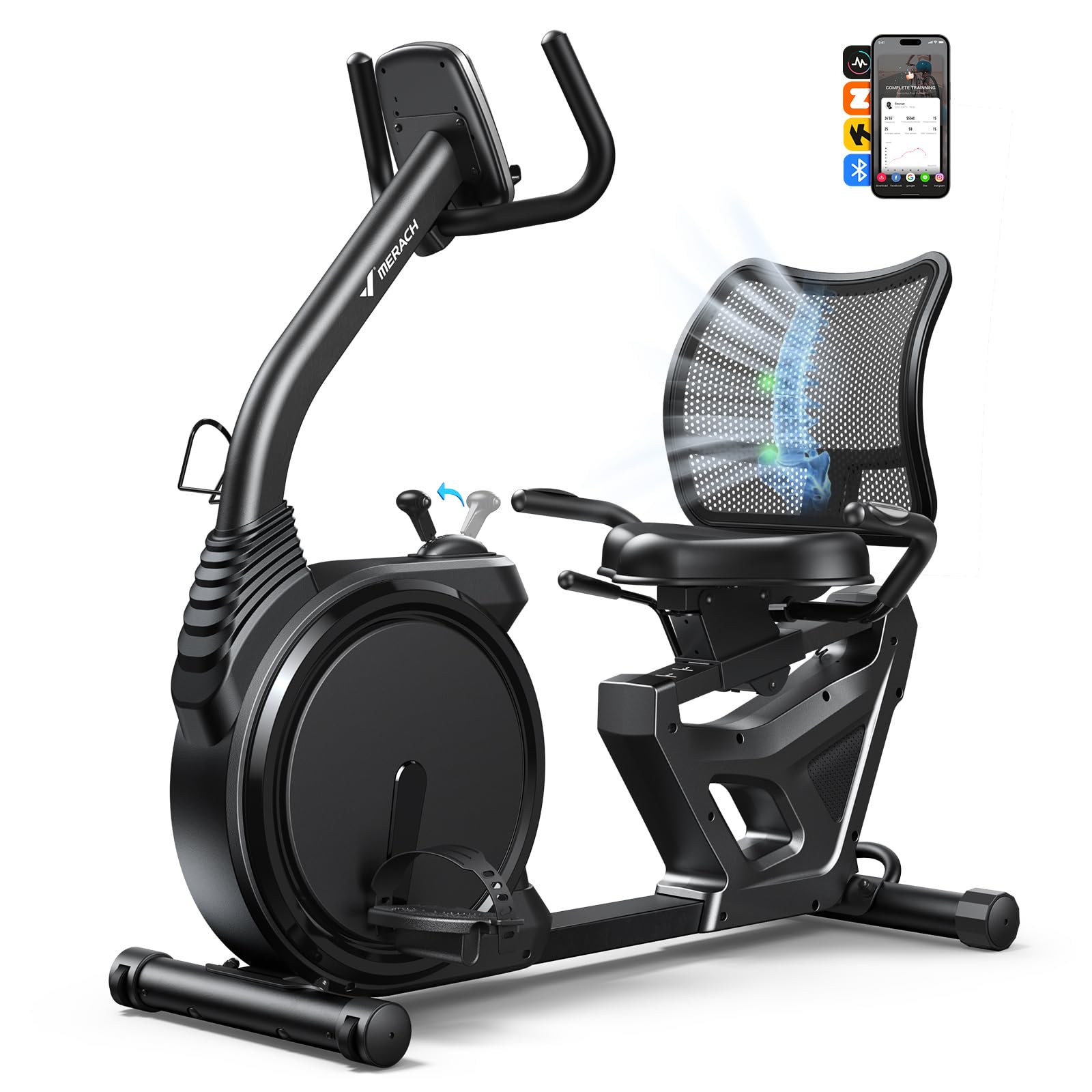
A near-silent, compact recumbent that one knee-rehab rider credits it with genuinely easing their pain.
Accessibility is where the MERACH S19 stands out. Owners with foot, knee, or hip limitations report the pivoting handles and low center bar make entry and exit genuinely easy; one rider built from 5 minutes at level 2 to 10 minutes twice daily and reported less knee pain. The 8-position seat and breathable mesh backrest keep longer sessions comfortable, all within a compact 48-inch footprint that fits a small office.
The dual-belt drive and 6.6-pound flywheel deliver the near-silent operation owners praise, and the frosted handlebars give a secure, non-slip grip even when your palms get sweaty. Bluetooth syncs with the MERACH app for real-time stats, and an included assembly video has most people set up within 30 minutes. The 330-pound capacity and 84.9-pound frame strike a solid mid-range balance of stability and movability.
The seat may need extra padding for some riders, and the recommended height range caps at 5’10”, so taller users could find the inseam too short. The calorie counter ignores resistance, making it a rough guide at best, but the overall quality and support get strong marks.
For small homes: Mobility-challenged riders and anyone in a small space who wants app tracking and easy entry.
If heart-rate: You are taller than about 5’10” or you want a larger pedal platform.
7. LFEYYD W215 Recumbent Bike
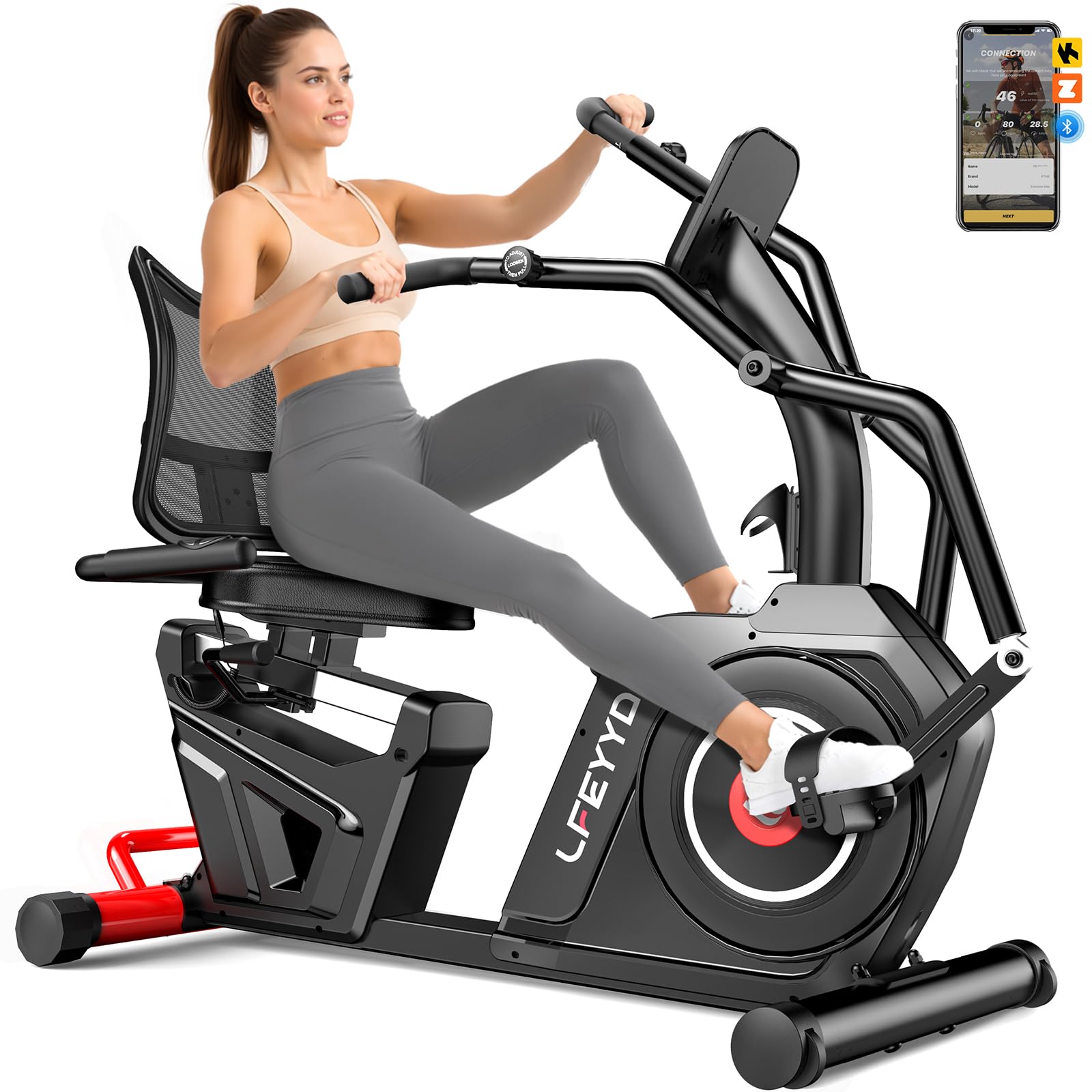
The highest-capacity pick on this list, holding 450 pounds while keeping the ride smooth and silent.
If weight capacity is your first filter, the LFEYYD W215 takes the crown here with a 450-pound limit that clears every other machine in this roundup. It blends cycling with elliptical movement so you can train your upper and lower body together, and the 16-level magnetic resistance scales from light recovery rides to serious cardio. The sliding seat uses a press-lever adjustment, so swapping between family members of different heights takes seconds.
Owners consistently call the assembly easy and the ride stable, with one senior couple in their late 60s logged 40-minute sessions twice daily and reported stronger legs and core. The well-padded seat and backrest hold up for 45+ minute rides without pain, and the LCD tracks time, distance, speed, calories, and heart rate through the grip sensors. It is a physical-therapy-friendly machine that buyers recommend for daily recovery work.
At 87 pounds it is a substantial machine to relocate, though the built-in transport wheels help. The Bluetooth app connectivity keeps sessions measurable, and the 80% pre-assembly means most people are riding within about 30 minutes of opening the box.
For multiple users: Heavier riders up to 450 lbs and families who need quick seat changes between users.
If heavy use: Anyone with very limited floor space — the footprint runs large at 52.5 inches deep.
8. Sunny Health & Fitness Elite Cross Trainer

A 16-level electromagnetic recumbent that owners say helped one rider’s hip bursitis while staying gentle on knees.
For riders who want structure without thinking, the Sunny Elite Cross Trainer loads in 12 pre-programmed elliptical workouts plus room for 4 custom user programs, so you never have to design a session from scratch. The 16 levels of electromagnetic resistance dial from a low-impact recovery pace to a demanding full-body burn, and the moveable handles plus elliptical-sized foot pedals let you work upper and lower body together or isolate one. The digital monitor tracks time, speed, RPM, distance, watts, calories, and heart rate.
The crowd feedback is emphatic about the smooth, quiet performance and the comfort, with one rider said the knee-friendly pedaling eased their hip bursitis. The easy seat adjuster lets you change position without getting off the machine, and the step-through design keeps the path between handlebars and seat clear. One couple rode 2 hours daily for 2.5 months and reported better strength and weight loss.
This is a heavier build at 113.1 pounds, and it needs to be plugged in for the programs and tension to work, which limits placement near an outlet. The seat is flat enough that some riders slide forward, and the assembly genuinely takes a couple of hours with two people, so budget the time.
For low impact: Riders who want pre-programmed, full-body sessions and don’t mind a plug-in machine.
If metrics matter: You have no outlet near your workout spot or you want a quick solo assembly.
9. Teeter FreeStep LT7 Recumbent Cross Trainer

A patented physical-therapy stride that feels less like cycling and more like a natural seated walk.
If rotating pedals still bother your knees, the Teeter FreeStep takes a different approach: a patented natural stepping motion licensed from commercial physical-therapy steppers, which aligns your joints for better muscle engagement with less stress on hips, knees, and ankles. Owners describe it as feeling like walking while sitting, and it has become a go-to machine for post-knee-replacement recovery. The 20-level magnetic resistance controls from 0 to 105 pounds of resistance through console quick-keys.
The build quality earns commercial-grade praise, with reviewers comparing it to cardiac-rehab equipment found in hospitals. The 9-inch color LCD shows 7 tracking metrics and 21 pre-programmed goal-based workouts, and a media rack with USB charging lets you follow along with classes on your tablet. The Electronic Step Lock makes entry and exit genuinely easy, and the Extra-Large ComfortMax Seat offers more positioning options than a standard recumbent.
The biggest reality check is the footprint and weight — at 150 pounds, this is the heaviest machine here, and it takes up serious floor space. The seat also lacks a swivel, which some owners find awkward for access, and the frame runs long enough that shorter riders may feel the length is tight. It is a major investment, but the zero-impact stride is unlike anything else on this list.
For comfort: You are recovering from knee surgery or want the gentlest possible stepping motion for arthritis.
If budget: You have a small room or need a machine you can easily move — this one stays put.
Understanding the Specs
Weight capacity
The maximum weight recommendation tells you how much rider weight the frame is engineered to carry safely. A higher limit usually means a heavier, more stable frame that resists flexing under you, which matters when a wobbly ride can aggravate a sore knee. The machines here range from 300 pounds up to 450 pounds, so match the number to your body weight plus a comfortable margin.
Resistance levels
Magnetic resistance creates tension with magnets instead of friction pads, which keeps the ride smooth and quiet year after year. More levels — like 16 or 20 — give you finer steps between easy recovery and hard cardio, while 8 levels cover the basics for gentle rehab. Choose more levels if you plan to progress to intense sessions, or fewer if you’ll stay in a comfortable zone.
FAQ
Is a recumbent bike actually better for bad knees than an upright bike?
What weight capacity do I need for a knee-friendly recumbent bike?
How many resistance levels should I look for with knee pain?
Will a recumbent bike help me recover after knee surgery?
How much floor space does a recumbent bike need?
Why are some recumbent bikes so much quieter than others?
Can I get a full-body workout from a recumbent bike?
What is the difference between a recumbent bike and a recumbent cross trainer?
How long does assembly usually take?
Final Thoughts: The Verdict
For most buyers, the bike for bad knees winner is the 3G Cardio Elite RB X because its commercial-grade build, whisper-quiet magnetic ride, and 25-position seat adjustment make it the long-term choice for tall riders and anyone who wants one machine for the next decade. If you want a full-body workout with a higher 450-pound capacity, grab the LFEYYD W215. And for the gentlest possible zero-impact stride after surgery, the Teeter FreeStep is the one to reach for — just clear the floor space first.
How We Picked
We do not accept paid placement. Every pick is matched to a real buyer and a real use-case; we do not hands-on test units.
Sources & Methodology
Specifications: manufacturer listings and product documentation. Review insights: verified customer reviews, as of August 2026. Pricing: not shown on this page (it changes often); check the current price via the retailer link.
As an Amazon Associate, FitlyFast earns from qualifying purchases. This does not affect which products we feature.