
Our readers keep the lights on and the weekend projects moving. As an Amazon Associate, I earn from qualifying purchases.
Specs are compiled from manufacturer listings and verified buyer reviews and can change over time — please confirm the key details on the product page before buying.
Peeling paint on slick surfaces like laminate, tile, or glossy trim is the most common cabinet painting failure. A bonding primer grips these hard-to-coat surfaces so your topcoat sticks and stays. This guide compares top cabinet primers on adhesion, coverage, and dry time to match your kitchen or bathroom project.
I’m Rikta — the founder and writer behind FitlyFast. This guide is built by comparing the manufacturers’ published specifications and the patterns across verified customer reviews, so you get each pick’s real strengths and trade-offs instead of marketing spin.
Discover the top-rated formulas that seal stains, block odors, and bond to tough surfaces so your paint job lasts for years with the right cabinet primer for your next DIY upgrade.
Our Picks at a Glance


How To Choose The Best Cabinet Primer
Cabinet primers differ in adhesion, stain blocking, and dry time. Match the primer to your cabinet’s surface material, stain severity, and your tolerance for odor and dry time.
Bonding Power for Slick Surfaces
If your cabinets are laminate, glossy paint, or tile, a standard primer will peel. Bonding primers use special resins to grip slick surfaces without heavy sanding, anchoring your topcoat.
Stain and Odor Blocking
Water stains, smoke damage, and wood knots can bleed through regular paint. Shellac or oil-based primers seal stains permanently but emit stronger odors and need more ventilation.
Coverage and Drying Time
Quarts cover roughly 75 to 100 square feet, while gallons stretch to 300-400 square feet. Fast-drying primers recoat in under an hour, while premium adhesion primers may require 24 hours before topcoating.
Quick Comparison
| Model | Best For | Type | Coverage | Dry Time | Amazon |
|---|---|---|---|---|---|
| INSL-X Stix★ Best Overall | Glossy & tough surfaces | Acrylic Waterborne | 75-100 sq ft/qt | Quick | Amazon |
| Zinsser BIN SprayStain Sealer | Stain & odor blocking | Shellac Spray | 13 fl oz | 0.75 hrs | Amazon |
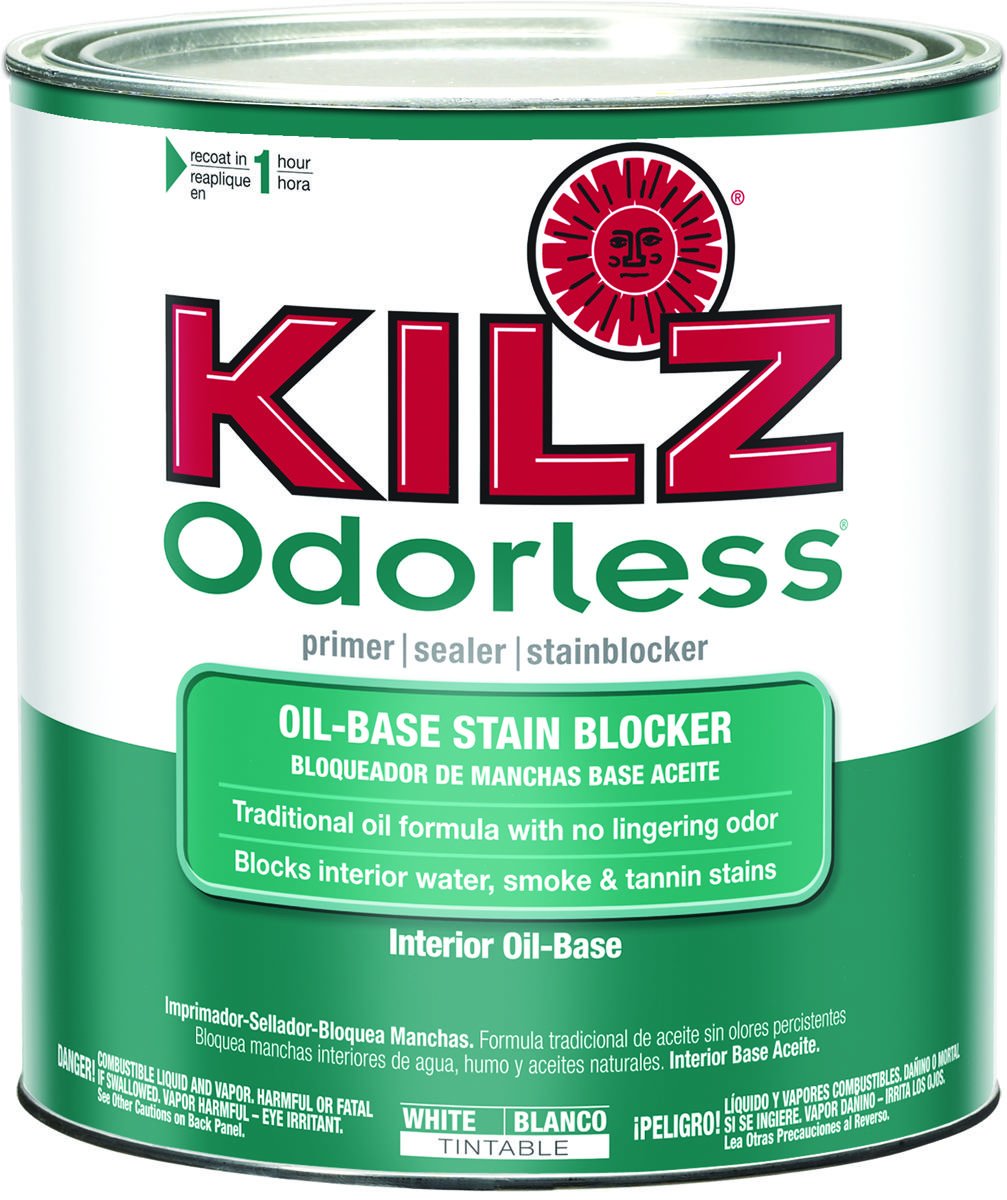
| Odorless Oil PrimerStain Blocker | Severe stain blocking | Oil Based | 400 sq ft/qt | 1 hr | Amazon |
| INSL-X Cabinet Coat | Factory-like finish | Urethane Acrylic | 87-112 sq ft/qt | Quick | Amazon |
| Glidden Stain Block | Budget gallons | Acrylic | Up to 400 sq ft | 0.5 hrs | Amazon |
| Rust-Oleum Bonding | Metal cabinets | Universal Bonding | 35 sq ft | 24 hrs | Amazon |
| Retique It Wood’n | Stainable wood look | Water Based | 100 sq ft/32 oz | Fast | Amazon |
| XIM UMA Bonder | Tile & terrazzo | Acrylic | 350 sq ft/gal | Quick | Amazon |
| KILZ Adhesion | Sanding-free prep | Latex Primer/Sealer | 300-400 sq ft | 24 hrs (hot solvents) | Amazon |
In‑Depth Reviews
1. INSL-X Stix Acrylic Waterborne Bonding Primer
Our pick — over 4.5★ from 2,500+ verified ratings; the strongest balance of quality and price.
The grip-everything champion that finally lets paint stick to tile, PVC, and glossy laminate.
This is the primer professionals reach for when a surface fights back. Its acrylic-urethane formula bonds to glossy tile, PVC, vinyl, plastic, glass, fiberglass, and galvanized metals — the exact surfaces that make ordinary primers peel. The owner feedback is emphatic: the thing everyone raves about is how it outperforms oil-based alternatives while staying low-VOC and cleaning up with just soap and water.
Coverage lands at 75 to 100 square feet per quart, and it fully cures in temperatures as low as 35 °F, so you can work in a chilly garage. Weighing in at 2.8 pounds, it is a touch lighter than the 3-pound oil-based can below, but the real difference is versatility. As buyers report, it works on laminate furniture, aluminum ceilings, and tiles, though “Needs 2+ coats; pricey for large areas” is the honest catch for big kitchens.
The crowd favorite — 4.6 stars across 2,800+ owners — confirms what the reviews repeat: smooth application, quick dry, and low odor. A professional painter’s top choice, it takes tint to pastels, and you can even glaze directly over it without a topcoat.
sticks to slick
- Bonds to nearly any slick surface without sanding
- Low VOC with easy soap-and-water cleanup
- Fully cures down to 35 °F
needs topcoat
- Expect to need 2+ coats for full coverage
- Per-quart cost adds up on large cabinet runs
adhesion king: you face laminate, tile, or glossy cabinets and want one primer that handles them all.
two-step job: you are painting a huge kitchen — the quart size means buying multiple cans.
2. Zinsser BIN Shellac Base Primer-Sealer Spray
The shellac spray that permanently locks in water stains, odors, and wood knots.
The standout is shellac when a stain refuses to stay buried. This original shellac-base primer-sealer permanently blocks stains, odors, and wood knots, making it the go-to for smoke-damaged cabinets and watermarked wood. It works for interior and spot exterior use, and it dries in just 0.75 hours — the fastest dry time on this list, a 33% quicker dry than the oil-based quart below.
The spray format makes cleanup easy: no brushes to rinse, just point and coat. Owners put it plainly: “Smells awful but hides water stains really well” — so open a window and mask up. That strong shellac odor is the price of its sealing power, and it is well worth it on tough jobs.
One buyer paired it with an enzyme cleaner to knock out cat urine odor entirely. For corroded nail heads and screw heads, restoration pros recommend it as a short-term fix that holds. It covers well and blocks bleed-through, which is exactly what you want before a final coat.
blocks tough stains: anyone sealing water stains, smoke damage, or wood knots on a small cabinet repair.
shellac fumes: the shellac smell is intense and demands real ventilation.
3. Odorless Primer/Sealer, Oil Based
The bright-white oil base that seals severe stains with barely a whiff of solvent.
Covering a knotty pine ceiling or tannin-heavy wood is a test most primers fail — the sap bleeds right through. This oil-based sealer blocks severe interior stains and odors, dries in one hour, and readies for recoat in that same hour. The name says it: low-odor oil base, which is the whole reason owners choose it over traditional oil primers.
One owner covered a knotty pine tongue-and-groove ceiling, terrified the sap would bleed through — instead they got more light in the living room and great coverage with little odor.
It is bright white and non-yellowing, so your topcoat reads true. The one risk is quality control at delivery — a buyer reported a previously opened, leaking can with no return option, so inspect the seal before you open it.
odor free: severe wood stains, knots, and odor problems where water-based primers retreat.
impatient painters: you cannot tolerate any oil-based cleanup — high-odor alternatives like BIN spray may suit you better.
4. INSL-X Cabinet Coat Urethane Acrylic Enamel

A single can that primes and finishes with a factory-smooth, scuff-resistant satin.
Most primers just prep; this one delivers the actual finish. The INSL-X Cabinet Coat is a urethane acrylic enamel that creates a “factory-like” look on kitchen and bathroom cabinets, shelving, furniture, trim, and crown molding. It resists chipping, scuffing, food stains, grease, and water — the daily abuse cabinets take.
Its super adhesion to hard-to-coat surfaces means you can skip a separate primer step. Coverage runs 87 to 112 square feet per quart, and it self-levels for an ultra-smooth result. On formica cabinet tops it performs well, per owner reports, and the white dries to a high shine.
The recurring gripe is durability — some cabinets chips easily, so treat the surface gently after curing. One owner advises buying one can at a time since it is non-returnable. Wear a high-quality respirator during application, as the finish demands proper breathing protection.
smooth enamel finish: a durable satin finish that covers dark paint in two coats and forgives brush marks.
brush marks: chip resistance varies, and the white can carry a greenish tint under some lighting.
5. Glidden Interior/Exterior Stain Block Primer
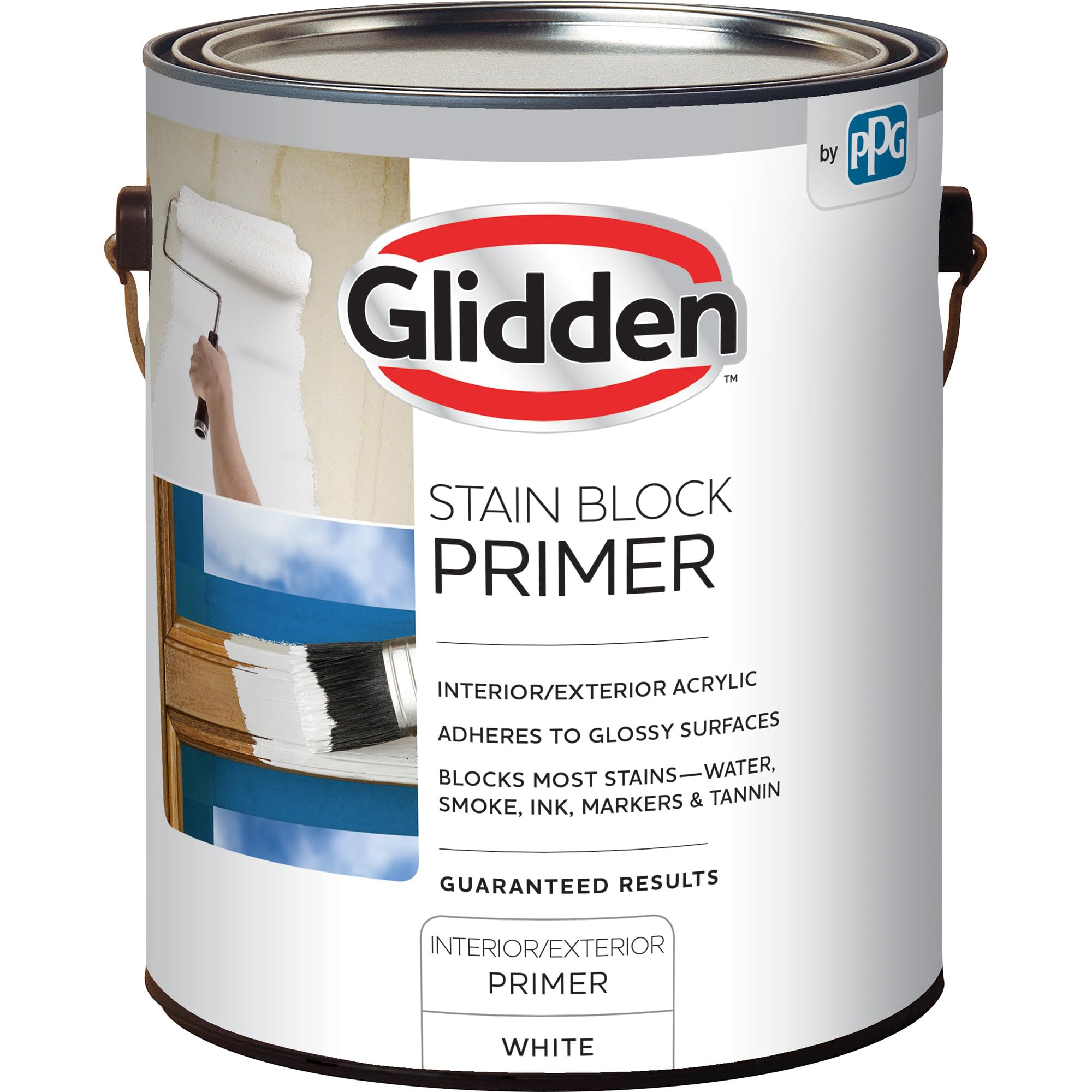
The thick, one-coat gallon that covers dark paint and blocks stains on a budget.
If you are painting an entire kitchen, the per-gallon math changes everything. This acrylic primer covers up to 400 square feet, blocks water, smoke, ink, marker, and tannin stains, and topcoats in just half an hour. It adheres to glossy surfaces, so laminate cabinets are fair game.
Owners consistently praise its thickness — “nice and thick, covers dark paint with one coat” is the recurring chorus. It cleans up with soap and water, and the resealable can keeps leftovers fresh. As a roller-applied primer, it goes on smoothly and cleanly.
The 0.5-hour dry time is the quickest on this list, faster than the Zinsser BIN’s 0.75 hours. The main frustration is shipping: cans can arrive crushed or ruptured in transit, so check the delivery before you plan your weekend.
stain shield: large cabinet projects needing maximum square footage per dollar.
thin coats: severe stains — this blocks most but not the worst bleed-through.
6. RUST-OLEUM Universal Bonding Primer

A little goes a long way on metal lockers, siding, and outdoor structures.
Metal cabinets and lockers are the toughest surfaces to repaint — paint beads up and peels. This Rust-Oleum bonding primer solves that with high adhesion, and owners mention a small amount works surprisingly far. For updating metal lockers, it took just a little product to make paint adhere perfectly.
It has no odor and applies cleanly, per the reviews. The trade-off is coverage: only 35 square feet per quart, the smallest on this list. That quart weighs 3.7 pounds and measures 4.25 inches square — a compact can that does not go as far as you might hope.
The 24-hour dry time is the longest here, so plan for a full day before topcoating. The quality and adhesion earn consistent praise, but the value draws mixed notes: “a little pricey for the can” sums up the sentiment. For rust prevention on metal, though, the brand’s reputation holds.
bonds plastics: outdoor metal structures and lockers where rust protection matters most.
pricey: small coverage plus a 24-hour wait makes it a specialty tool, not a whole-kitchen primer.
7. Retique It Wood’n Primer Stainable Wood Fiber Paint
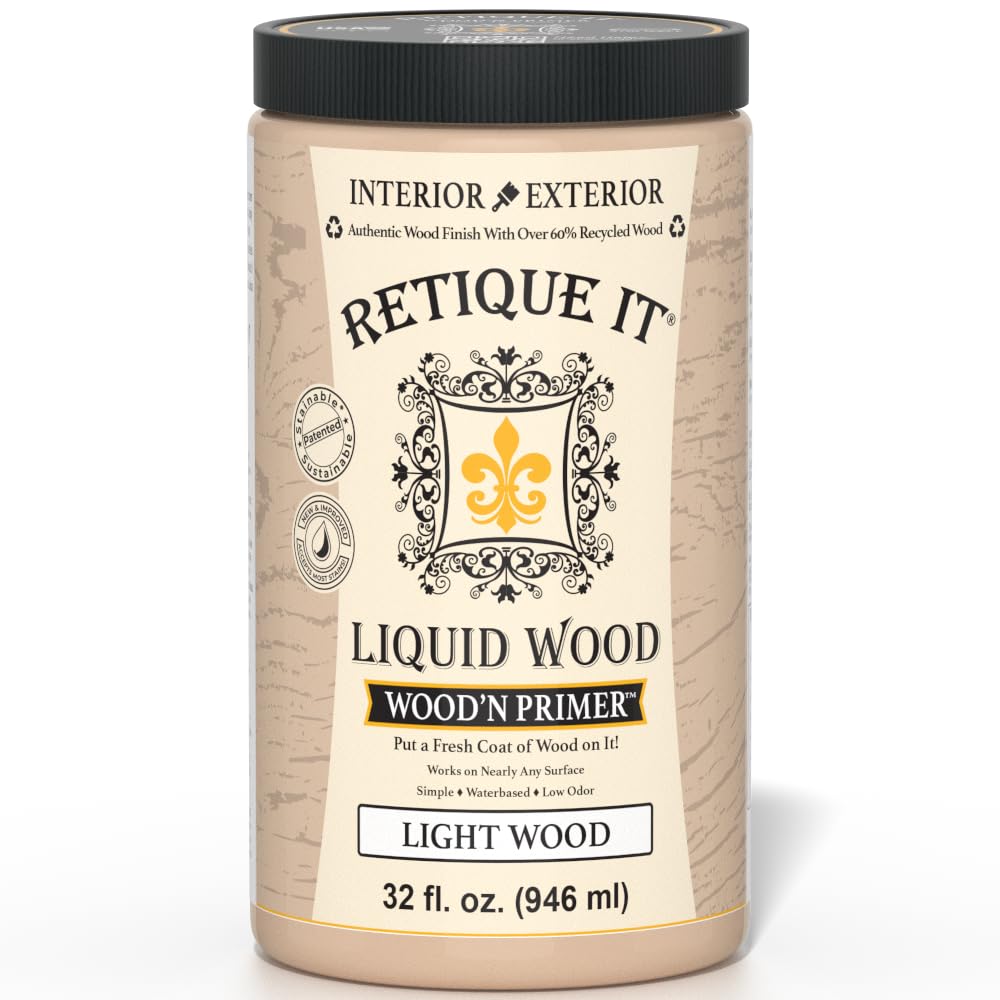
The patented primer that makes painted cabinets feel and stain like real wood.
This is not a normal primer — it is engineered to mimic the absorbency of raw wood. The patented formula is designed to enhance stain penetration so your painted-over cabinets can take a wood tone with realistic depth. Once stained and sealed, the finish looks and feels like genuine wood, because it is real wood fiber.
Owners call it “simply magic” and report a real wood grain appearance that stains like the real thing. The water-based, ultra-low-VOC formula is virtually odorless, perfect for indoor projects with soap-and-water cleanup. It covers 100 square feet per 32-ounce container.
Coverage on old metal sink legs took three coats but required no sanding — just clean, lightly scuff, and apply. The Light Wood variant pairs with any stain, like antique walnut, for a brand-new table look. The catch is cost: buyers find it “worth every penny” but openly note it is “very costly.”
wood look: transforming dated laminate or painted cabinets into a convincing stained-wood look.
smooth finish: you just want a flat white base — this is a specialty finish, not a general-purpose sealer.
8. XIM Products UMA Acrylic Bonder and Primer/Sealer

The pro-grade bonder that survives furniture dragged across painted tile floors.
This is the primer for surfaces that take abuse. The XIM UMA Acrylic Bonder delivers excellent adhesion on glass, tile, Formica, metals, plastics, and wood, and owners prove it daily — one noted they can drag furniture across the painted surface without damage. It holds strong on concrete and lino alike.
At 350 square feet per gallon, it stretches further than most. The finish is a light blue tint with a dull look, which reads as a fresh base for your topcoat. It cleans up with water and carries low odor, a relief for indoor work.
It primed six-panel wood-grain doors over oil paint before latex — deglosser first, then this — and the doors still look great after six months. The sole complaint is shipping reliability, with multiple damaged attempts reported. Buy from a source that packs carefully.
strong adhesion: rock-solid bond on tile and high-traffic surfaces that shrug off daily wear.
dries fast: delivery can be rough, so order early and inspect the can on arrival.
9. KILZ Adhesion Interior/Exterior Primer

The sanding-eliminator that bonds to glossy cabinets and stays for years.
This is the primer for anyone who hates sanding. The KILZ Adhesion’s advanced styrenated acrylic polymer formula bonds to dense, glossy surfaces while reducing or potentially eliminating the need to sand. Oak kitchen cabinets went to white with minimal nicks and zero peeling, per owner reports.
It handles a laundry list of tough surfaces — Kynar, PVC, Formica, vinyl, glass, tile, glazed brick, chalky paints, glossy finishes, fiberglass, and metals. A 12.2-pound gallon covers 300-400 square feet. The advanced formula means if you use it under epoxies or xylene-based products, allow 24 hours before topcoating.
Owners rave it bonds “better than glue” and one coat plus trim paint held for three years on varnished doors. The one catch: shake the can well, or adhesion weakens, and the lid can pop open — handle it carefully. KILZ has been trusted by pros for nearly 50 years, and this gallon carries that reputation.
all purpose: glossy cabinets and doors where you want to skip sanding entirely.
glossy surfaces: tight budgets — the premium per-gallon price draws some “overpriced” notes.
Understanding the Specs
Adhesion and Surface Types
Adhesion is a primer’s ability to grip a surface without peeling. Bonding primers use special resins to stick to slick materials like tile, glossy paint, and laminate, where standard primers would fail. Check the label for the exact surfaces it bonds to — some only handle wood, while others tackle metal and glass.
Dry Time and Recoat
Dry time is how long you wait between coats. Fast-drying primers, like the Glidden at 0.5 hours, let you finish a project in an afternoon. Premium bonding primers, like the Rust-Oleum and KILZ, can require a full 24 hours, especially under hot solvents like epoxy — plan your schedule around the longest wait.
Coverage Per Container
Coverage tells you how many square feet one can handles. Quarts typically cover 75 to 112 square feet, while gallons stretch to 300-400 square feet. A full kitchen of cabinets usually needs a gallon; a single vanity or cabinet refresh can get by with a quart. Measure your surface area before buying to avoid multiple trips.
VOC Levels and Odor
VOC stands for volatile organic compounds — chemicals that evaporate into the air and cause that strong paint smell. Low-VOC primers, like the INSL-X Stix or Retique It, are nearly odorless and safe for indoor use with simple ventilation. Oil-based and shellac primers block stains better but carry a stronger odor that demands open windows and a respirator.
FAQ
Do I need a bonding primer for my laminate cabinets?
What is the difference between a stain-blocking primer and a bonding primer?
How long should I wait before painting over a cabinet primer?
Can I use a spray primer on my cabinets?
Will a cabinet primer cover dark paint in one coat?
Is low-VOC primer safe to use indoors on cabinets?
Can I stain over a cabinet primer instead of painting?
How much primer do I need for my kitchen cabinets?
Final Thoughts: The Verdict
For most people, the cabinet primer winner is the INSL-X Stix because its acrylic-urethane formula bonds to nearly every tough surface with low odor and soap-and-water cleanup. If you want to skip sanding on glossy doors, grab the KILZ Adhesion — the crowd favorite at 4.6 stars across 2,100+ owners. And for sealing water stains or wood knots, the Zinsser BIN spray is the one to reach for despite its strong smell.
How We Picked
We do not accept paid placement. Every pick is matched to a real buyer and a real use-case; we do not hands-on test units.
Sources & Methodology
Specifications: manufacturer listings and product documentation. Review insights: verified customer reviews, as of August 2026. Pricing: not shown on this page (it changes often); check the current price via the retailer link.
As an Amazon Associate, FitlyFast earns from qualifying purchases. This does not affect which products we feature.