
Our readers keep the lights on and the weekend projects moving. As an Amazon Associate, I earn from qualifying purchases.
Specs are compiled from manufacturer listings and verified buyer reviews and can change over time — please confirm the key details on the product page before buying.
When the grid drops, a 3000-watt solar generator keeps your fridge cold, your Wi-Fi on, and your coffee brewing — no gasoline, no engine noise. The real question is which one can start your air conditioner or heat press without tripping, and how fast it can refill from the sun. Here are the highest-rated portable power stations in this class, with the wattage, battery capacity, and charge times explained in plain terms so you pick the one that fits your outage reality.
I’m Rikta — the founder and writer behind FitlyFast. This guide is built by comparing the manufacturers’ published specifications and the patterns across verified customer reviews, so you get each pick’s real strengths and trade-offs instead of marketing spin.
Here is how the top contenders in the 3000 watt solar generator class stack up for whole-home backup and off-grid living.
Our Picks at a Glance

How To Choose The Best 3000 Watt Solar Generator
Choosing a 3000-watt solar generator depends on three numbers: continuous output, battery capacity, and recharge speed. The output wattage (how much power it can deliver steadily) tells you what appliances you can run at once, while the capacity (in watt-hours, a measure of stored energy) decides how long they run before you need a refill. Getting these aligned with your actual needs is the difference between a lifeline and a paperweight.
Match the wattage to your heaviest appliance
A 3000W continuous output (the steady power it can deliver) is the balance for most homes — it handles a refrigerator, a microwave, and a sump pump in rotation. But some devices, like air conditioners, need a surge of power to start their motor before settling into a steady draw. Check the peak or surge wattage rating, since that burst decides whether your AC actually kicks on or trips the unit. If you plan to run a heat press or a large power tool continuously, look for a unit rated at 3600W or higher so you have headroom.
Capacity is your runtime, not your power
Watt-hours (Wh) is the fuel tank: a 2042Wh unit runs a 100W fridge for about 20 hours, while a 3840Wh unit stretches that same fridge past 38 hours. For a multi-day outage, look at the 3072Wh to 3840Wh range, and check if the system can expand with extra batteries. Consider that most units in this class weigh 59 to 104 pounds, so the trade-off for more capacity is a heavier box to move around.
Fast charging is your second lifeline
When the sun is out or the grid flickers back, you want the tank refilled fast. Wall charging times range from a brisk 1.29 hours to a lazy 3 hours, and solar input speed depends on how many panels you connect. Units that support hybrid charging — pulling from both AC and solar at once — refill dramatically faster, which matters if you depend on this during a long outage.
Quick Comparison
| Model | Best For | Output | Capacity | Weight | Amazon |
|---|---|---|---|---|---|
| EF ECOFLOW DELTA Pro★ Best Overall | Whole-home heavy loads | 3600W | 3600Wh | 99 lbs | Amazon |
| PECRON F3000LFPBest Value | Value with fast AC charge | 3600W | 3072Wh | 63.3 lbs | Amazon |
| Jackery Explorer 2000 PlusMost Expandable | Quiet, expandable 3000W | 3000W | 2042Wh | 62 lbs | Amazon |
| DABBSSON 3000L | Fast 1.38h wall recharge | 3000W | 3072Wh | 59.5 lbs | Amazon |
| GROWATT HELIOS 3600 | Cold-start whole-home | 3600W | 3600Wh | 51 lbs | Amazon |
| EcoFlow DELTA 3 Max Plus | Compact 3000W for RV | 3000W | 2048Wh | 49 lbs | Amazon |
| ABOK Ark3600 | Big capacity, hurricane-ready | 3600W | 3840Wh | 92 lbs | Amazon |
| AFERIY 3840Wh | Long runtime, expandable | 3600W | 3840Wh | 104.7 lbs | Amazon |
| Anker SOLIX F3000 | Bundle with solar panel | 3600W | 3072Wh | 91.5 lbs | Amazon |
| EcoFlow DELTA 3 Ultra | Quiet 25dB premium power | 3600W | 3072Wh | 74.3 lbs | Amazon |
| Jackery HomePower 3000 | Whole-home with solar bundle | 3600W | 3072Wh | 60 lbs | Amazon |
In-Depth Reviews
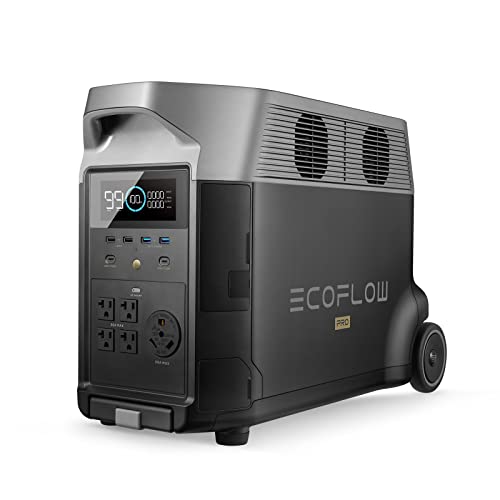
1. EF ECOFLOW DELTA Pro
Our pick — over 4.5★ from 600+ verified ratings; the strongest balance of quality and price.
The 3600Wh workhorse that runs a heat press all day without a voltage drop.
For anyone who needs to power serious, continuous loads — not just a fridge and some lights — the DELTA Pro is the clear leader. Its 3600Wh LFP battery capacity delivers 3600W of AC output, and X-Boost technology can push that surge up to 4500W for stubborn appliances. The proof is in the vendor-market buyers who report it runs a 3600W heat press flawlessly with stable power and no voltage drops.
It tops the class on refill speed, charging from a wall outlet in 2.7 hours or from the sun in 2.8 hours with four 400W panels, thanks to solar conversion efficiency rated up to 23%. A single unit holds 76% more capacity than the Jackery Explorer 2000 Plus (3600Wh vs 2042Wh), yet it also recharges faster in 2.7 hours versus many rivals. The 99-pound weight is a real price to pay, and at 25 inches long it needs floor space, but the 15 output ports and expandability to 25kWh make it a legitimate whole-home backbone.
Quality is the trait owners praise most — materially more call it out than anything else — and the battery-life claims follow close behind, with buyers noting it lasting days in a real outage. Some users flag reliability concerns after a year of heavy use, which is a fair caveat for any large electronics purchase. The five charging paths, including EV station and smart generator, mean you are never locked into one way to fill it.
Owners love
- Stable 3600W output for heavy, continuous tools
- Fast 2.7-hour full wall recharge
- Expandable from 3.6kWh up to 25kWh
- 5 AC outlets plus 10 other output methods
The trade-offs
- 99 lbs makes it a two-person lift
- 25-inch length demands real floor space
- A vocal minority reports failures after a year
Reach for this if: you run heavy tools or appliances for hours and want class-leading capacity and recharge speed.
Look elsewhere if: you need something you can carry alone — at 99 lbs, this one stays put.
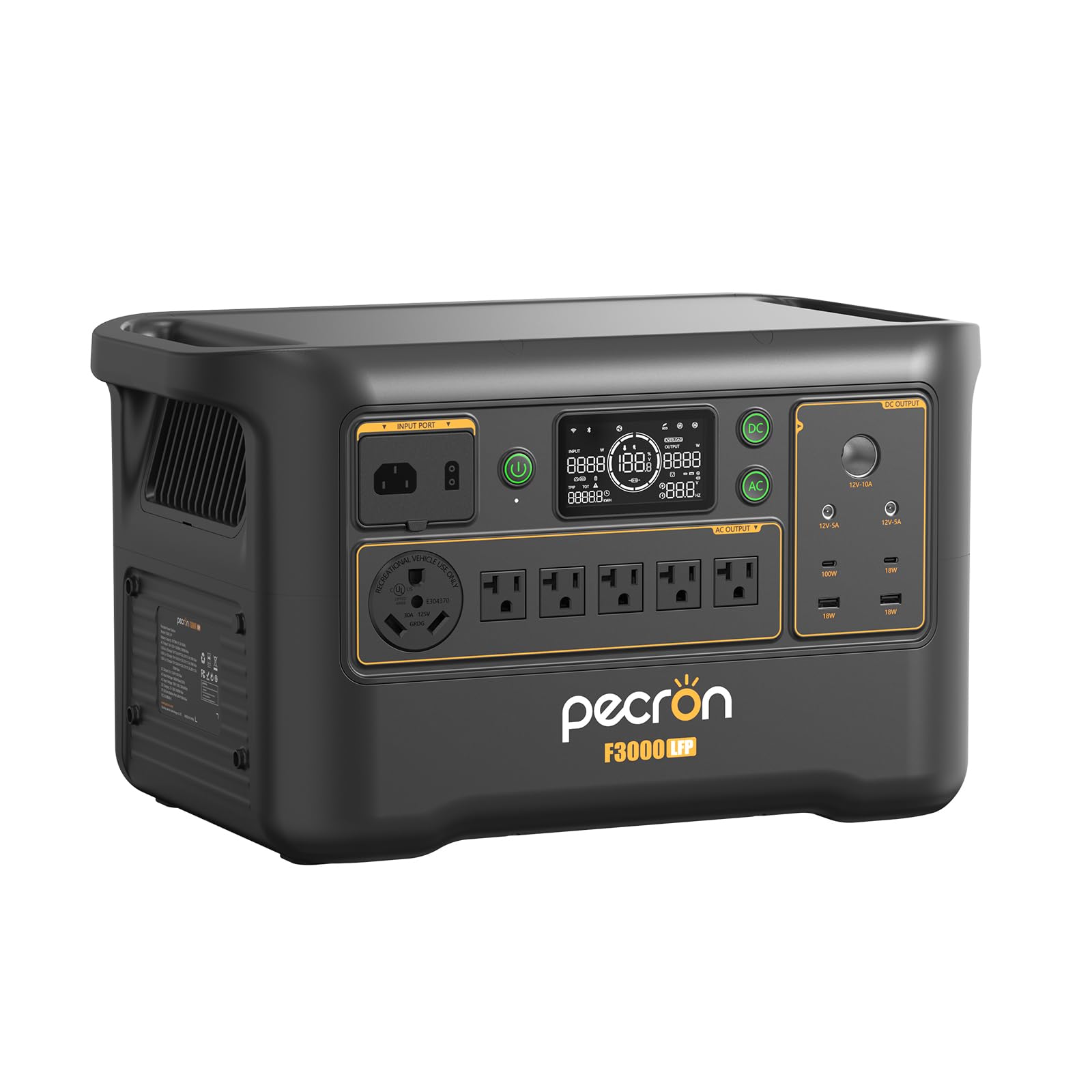
2. PECRON F3000LFP
The 3072Wh value king that refills in just 2 hours flat.
If you want near-flagship power without the flagship price, the F3000LFP is the smart money move. The standout is its 1800W wall charging, which refills the whole tank from empty to 100% in just 2 hours, claiming to be 30% faster than the competition.
At 63.3 pounds and 19.3 inches long, it is a full 56% lighter than the DELTA Pro, making it genuinely more movable around the house or into the RV. Buyers report it handled 40+ outages averaging 4 hours each with zero issues, and the build quality earns consistent praise. The 10ms UPS switch keeps a PC and monitor stable during dropouts — critical for anyone working from home through storms.
Reliability is the most-praised aspect, with power quality a close second, and the value-for-money sentiment is strong across the board. The honest gripes: the cooling fan is audible while charging, the app requires a login, and the unit sips about 30W/hour while left on. It is heavier than a 2kWh unit by about 10 pounds, but that weight buys you a much bigger tank.
What wins people over
- 2-hour full recharge via 1800W AC input
- 63.3 lbs — manageable for one person
- 13 ports power up to 13 devices at once
- 10ms UPS keeps PCs and monitors safe
What to expect
- Fan is noticeable while charging fast
- Draws ~30W/hour when powered on
- Extra expansion battery needs a separate cascade cable
Best for: budget-minded buyers who want 3600W output and a fast recharge without paying premium-brand markup.
Think twice if: silence matters at all hours — the fan is present during active charging.
3. Jackery Explorer 2000 Plus
A whisper-quiet 3000W unit that grows from 2kWh to 24kWh as your needs do.
The Explorer 2000 Plus proves you don’t need the biggest starting capacity if you can grow it over time. It starts with a 2042Wh LiFePO4 battery and 3000W of output (6000W surge), but you can bolt on up to 5 expansion batteries to reach 12kWh, or pair two units in parallel for a 24kWh setup at 6000W. That modular path makes it a favorite for RV owners who plan to scale up later.
Its 30dB operating noise is genuinely unobtrusive — quiet enough for a bedroom or a campsite at night. Charging hits full in about 2 hours from a wall outlet, and The 10-year, 4000-cycle battery outlasts a typical gas generator.. Owners mention it runs a Tesla as a buffer (adding roughly 10 miles per 3kWh) and powers a DeWalt rotary hammer for hours, replacing a 5000W gas unit entirely.
Charging capability is the top praised aspect, with power output second, and the telescoping handle with wheels helps offset the 62-pound weight. The recurring caveat is that the flimsy-feeling handle and the heavier-than-expected body make it a chore to haul up stairs. At 2042Wh, the base capacity is smaller than the PECRON’s 3072Wh, so plan for expansion if you need multi-day runtime.
Owners applaud
- Expands from 2kWh to a 24kWh paired setup
- 30dB noise — among the quietest in class
- 10-year LiFePO4 battery with 4000 cycles
- Wheels and handle for easier transport
The honest limits
- Base 2042Wh is small for long outages
- 62 lbs and a flimsy-feeling handle
- Expansion batteries and cables cost extra
Choose this if: you want a quiet, expandable system you can build up from a 2kWh starter.
Pass if: you need serious multi-day capacity from the start — start with a 3072Wh+ unit instead.
4. DABBSSON 3000L
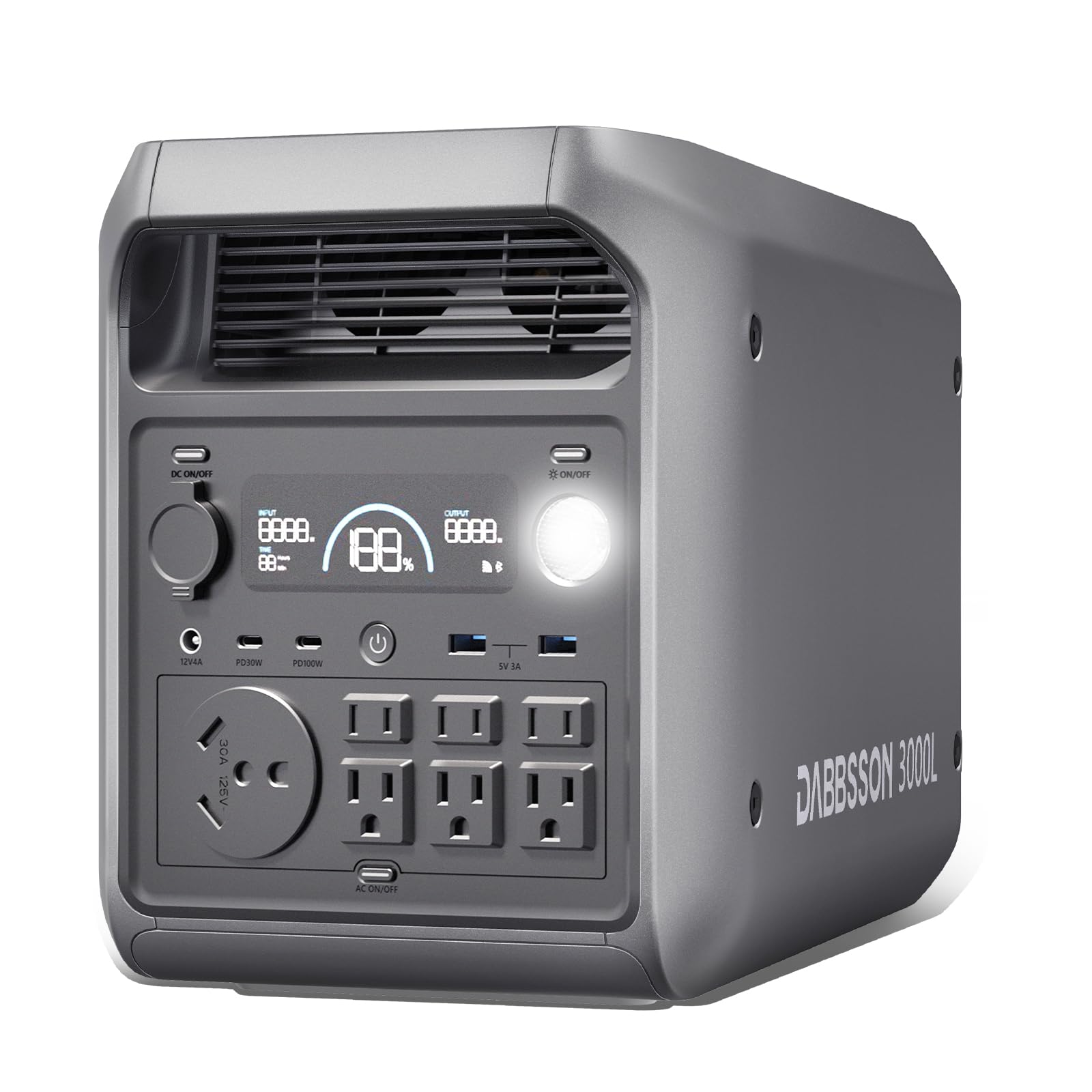
The 3072Wh unit that refills from empty in a record 1.38 hours.
Nobody wants to wait out an outage watching a battery crawl back to full, and the DABBSSON 3000L is the fastest in this lineup at that job. Its 3072Wh semi-solid LiFePO4 battery accepts AC input that completes a full charge in just 1.38 hours — the quickest wall recharge of any pick here. That speed is paired with a 3000W rated output and a 3600W power boost for surge-heavy appliances like refrigerators and power tools.
The semi-solid LiFePO4 chemistry is the safety story, with a UL94-V0 flame-retardant housing and 4000+ deep cycles rated to 80% capacity. Six AC outlets plus a full port set let you power multiple devices at once, and the sub-10ms EPS switch protects computers, NAS units, and routers from data loss during blips. At 59.5 pounds it is among the lightest 3kWh units here.
Functionality is what owners praise most, with value for money and quality following, and customers note it handles a 1500W RV microwave and coffee makers without complaint. One review flagged a hot/neutral reverse on an AC receptacle, which the company resolved with a quick replacement — worth a check on arrival. Another found an RV air conditioner tripped an error code unless voltage was lowered, so the 3600W boost has limits with big motor loads.
Standout strengths
- 1.38-hour full recharge from a wall outlet
- 59.5 lbs — lightest for its capacity
- 5-year warranty (3 standard + 2 extended)
- Fast EPS switch protects sensitive electronics
Watch for
- One AC receptacle had reversed polarity on arrival
- Large RV AC units may trip the 3600W boost
- Newer brand with fewer long-term reviews
Grab it for: the fastest wall recharge in class and a lighter frame that’s easier to move.
Be cautious if: you plan to run a large RV air conditioner — verify compatibility first.
5. GROWATT HELIOS 3600
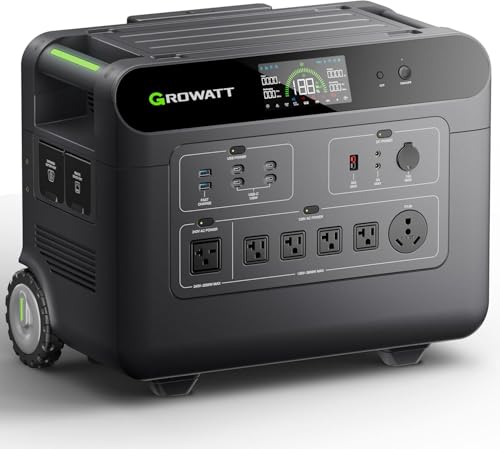
The 3600W unit that keeps working even in snow down to -22°F.
For storm-prone regions where cold is part of the emergency, the HELIOS 3600 is engineered to keep going when others shut down. Its 3600W output and 3600Wh LFP battery provide up to 15 hours for daily devices and 1-3 days of fridge power, with cold-start technology that keeps it operating in storms and snow down to -22°F. Pair two units in parallel for 240V/7200W whole-home coverage via a transfer switch.
Despite carrying the same 3600Wh capacity as the DELTA Pro, it weighs just 51 pounds — the lightest unit here at that capacity and dramatically easier to move. It also expands up to 36kWh for about 7 days of home power, and its 2000W solar input fully charges the battery in 2.8 hours. A 15ms EPS switch keeps servers and medical devices running through dropouts.
Buyers call it a powerful little unit that stays charged for quite a while, with one noting it ran a fridge, router, Starlink, and TV for 24-30 hours on a charge. The recurring complaints center on a Bluetooth app that sometimes fails to connect and a handle/wheel layout that makes turning a bit awkward. Its 51-pound body and 20.4-inch length make it a strong candidate for cabins and tailgating where portability matters.
Its edge
- Operates down to -22°F with cold-start tech
- 51 lbs — lightest 3600Wh unit here
- Expands to 36kWh for a full week of power
- 2.8-hour solar recharge at 2000W input
Its quirks
- Bluetooth app connectivity is unreliable for some
- Handle and wheels make turning difficult
- Slight hum audible above 1200W loads
Buy this if: you face freezing winters and want the lightest 3600Wh unit that still runs in the cold.
skip it if: app-based control is a dealbreaker for you — it’s the weakest link here.
6. EcoFlow DELTA 3 Max Plus
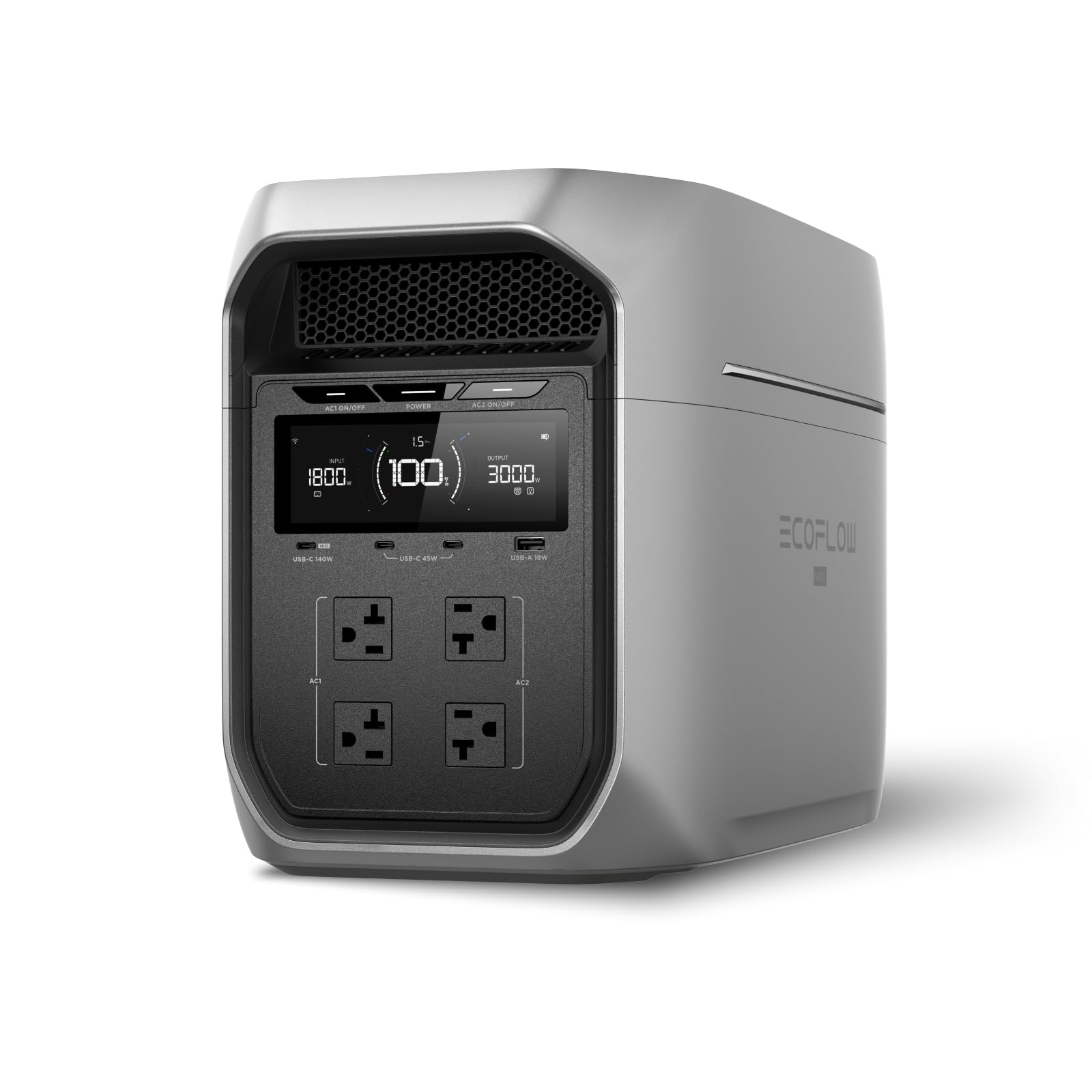
The 2048Wh unit that’s light enough for an RV and smart enough for your phone.
If portability and smart control matter more than raw capacity, the DELTA 3 Max Plus hits a balance. It delivers 3000W of output (boosting to 3800W via X-Boost, a feature that lets it power some heavier appliances) from a 2048Wh LiFePO4 battery (a lithium-iron-phosphate chemistry known for long life), and at 49 pounds it is the lightest unit in this roundup — genuinely manageable for one person to load into a truck or camper. It recharges from 0-80% in just 64 minutes, making it one of the fastest partial refills here.
The sub-10ms transfer time protects PCs and medical gear during outages, and reviewers point out it powers nearly 95% of a home’s needs. Real-world buyers run it as a daily high-wattage UPS for a fridge, recharge it from a generator, and even pair it with a Rivian truck as a buffer at a 1500W limit. The smart app handles scheduling and output priorities, so you can shift charging to off-peak hours.
Reliability is the most-praised aspect, followed by power, and buyers agree it’s a premium product worth the money. The trade-off is a starting capacity of 2048Wh — smaller than the PECRON’s 3072Wh — though you can expand to 10kWh with extra batteries. Owners note the 3800W X-Boost mode doesn’t handle every appliance at full tilt, so check your heaviest draw before buying.
Why it stands out
- 49 lbs — easiest to move in this class
- 0-80% recharge in 64 minutes
- 3800W X-Boost for 99% of appliances
- Expands from 2kWh up to 10kWh
What it lacks
- 2048Wh base is small for multi-day outages
- X-Boost can’t run every appliance at max
- High starting price for its capacity
Pick this for: RV and camper life where weight and smart features outweigh raw capacity.
Move on if: you need a full 3kWh tank from the start — this starts at 2048Wh.
7. ABOK Ark3600
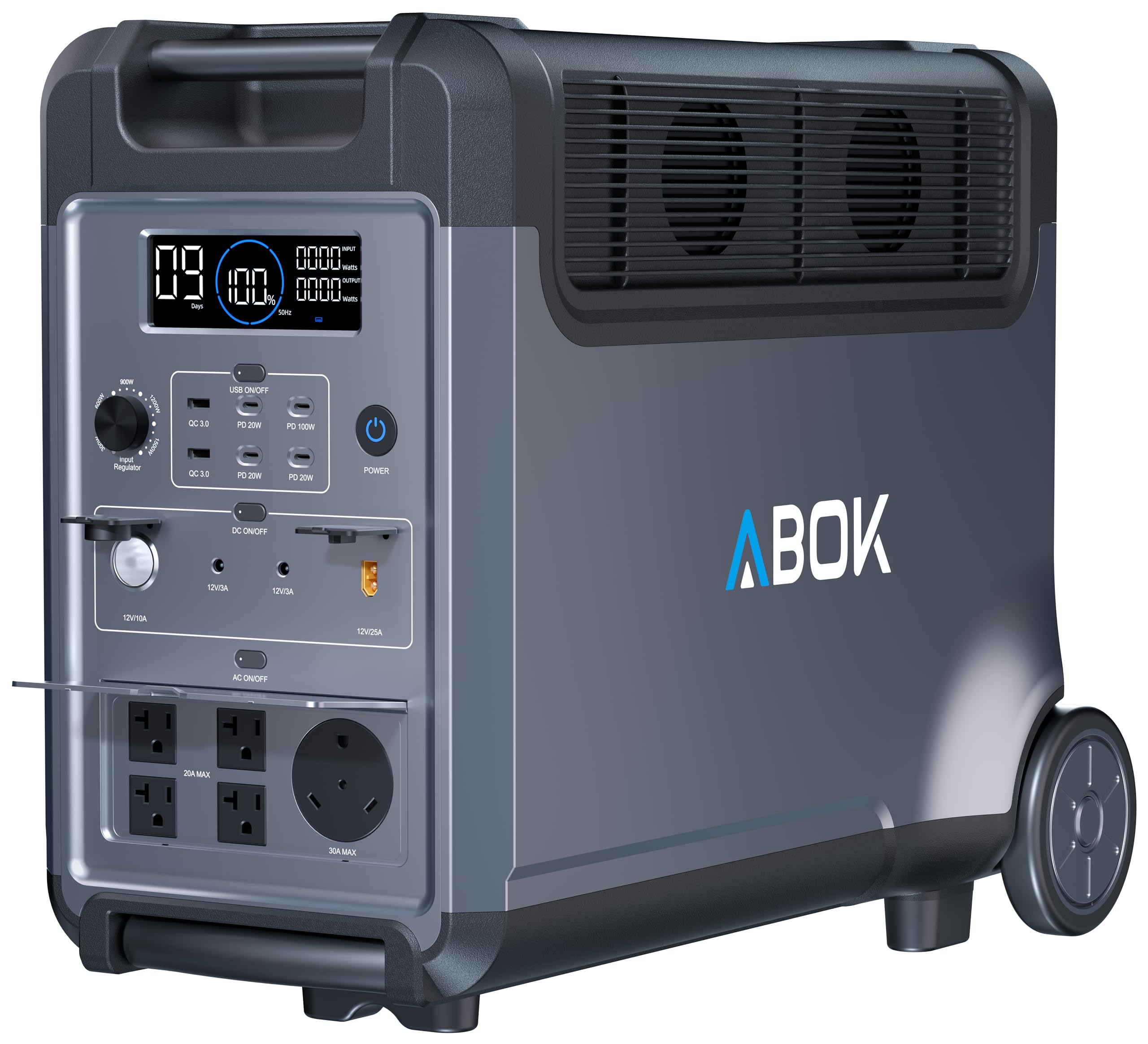
The 3840Wh powerhouse that runs tools all day and still has 22% left.
When hurricanes knock out the grid for days, capacity is king — and the Ark3600 brings the biggest tank in this roundup at 3840Wh. It outputs a rated 3600W with a 4500W peak, expandable to 11520Wh for long-duration outages. The 15 output ports, including a 30A AC outlet, cover everything from a fridge to a wetvac and heat gun running simultaneously.
Shoppers say running a wetvac, heat gun, and SDS-Max drill through a full workday and landing at just 22% battery left — proof of the massive reserve. With 800W of solar, buyers kept a fridge running continuously plus intermittent fan and TV through a post-hurricane outage. The telescoping handle and durable wheels help at 92 pounds, which is heavier than the PECRON’s 63.3 lbs but justified by the extra capacity.
The 4000-cycle LiFePO4 battery is rated for a 10-year lifespan., and buyers consistently mention the value — roughly half the price of a comparable gas generator setup. The honest caveats: it’s 120V only (no 240V outlet), the app documentation is thin, and a solar overvoltage fried one unit’s input before a smooth warranty repair. For hurricane alley, the capacity-per-dollar ratio is tough to beat.
The big wins
- 3840Wh base — largest capacity in this list
- Runs heavy tools all day and keeps 22% reserve
- 15 ports including a 30A AC outlet
- Wheels and telescoping handle included
The catches
- 120V only — no 240V output for dryers
- 92 lbs is a serious lift despite wheels
- App documentation is lacking
Reach for it if: you live in hurricane country and want maximum capacity per dollar for multi-day outages.
Consider others if: you need 240V output or a unit you can realistically carry up stairs.
8. AFERIY 3840Wh

A 3840Wh beast that runs a whole RV — minus the AC — on a single charge.
For off-grid enthusiasts who measure value in watt-hours per dollar, the AFERIY 3840Wh is a compelling option. It pairs a 3840Wh LiFePO4 battery with 3600W continuous output (7200W peak) and expands to 11520Wh with add-on packs, making it a serious contender for home backup and mobile workstations. The UPS switches in under 10ms to protect computers and security cameras during outages.
Buyers report it powers an entire RV except the air conditioner, and recharges fast with four 445W solar panels. The 15 ports include AC outlets, USB-C PD 3.0, DC5521, XT60, and a 12V car socket for broad device coverage. Battery life is the top-praised aspect, with value for money a strong second, and owners mention it runs a refrigerator plus essentials for about 17 hours on a charge.
The honest trade-offs start with the weight — at 104.7 pounds it’s the heaviest unit here, though the rugged wheels help. The app is basic and some found it didn’t work at all, and the included cable lengths are short. A few owners say the charging speed is mixed, with some reporting it drains slowly while plugged in. It’s a powerhouse, but plan to leave it on the ground floor.
Owners praise
- 3840Wh capacity with 7200W peak surge
- Runs an entire RV except the AC
- Strong value per watt-hour
- 15 ports for broad device coverage
Owners flag
- 104.7 lbs — the heaviest unit in this list
- App functionality is hit-or-miss
- Charging speed is inconsistent for some
Best for: stationary home backup where maximum capacity per dollar matters more than portability.
Not for: anyone who needs to move a unit regularly — this is a 104.7-pound commitment.
9. Anker SOLIX F3000
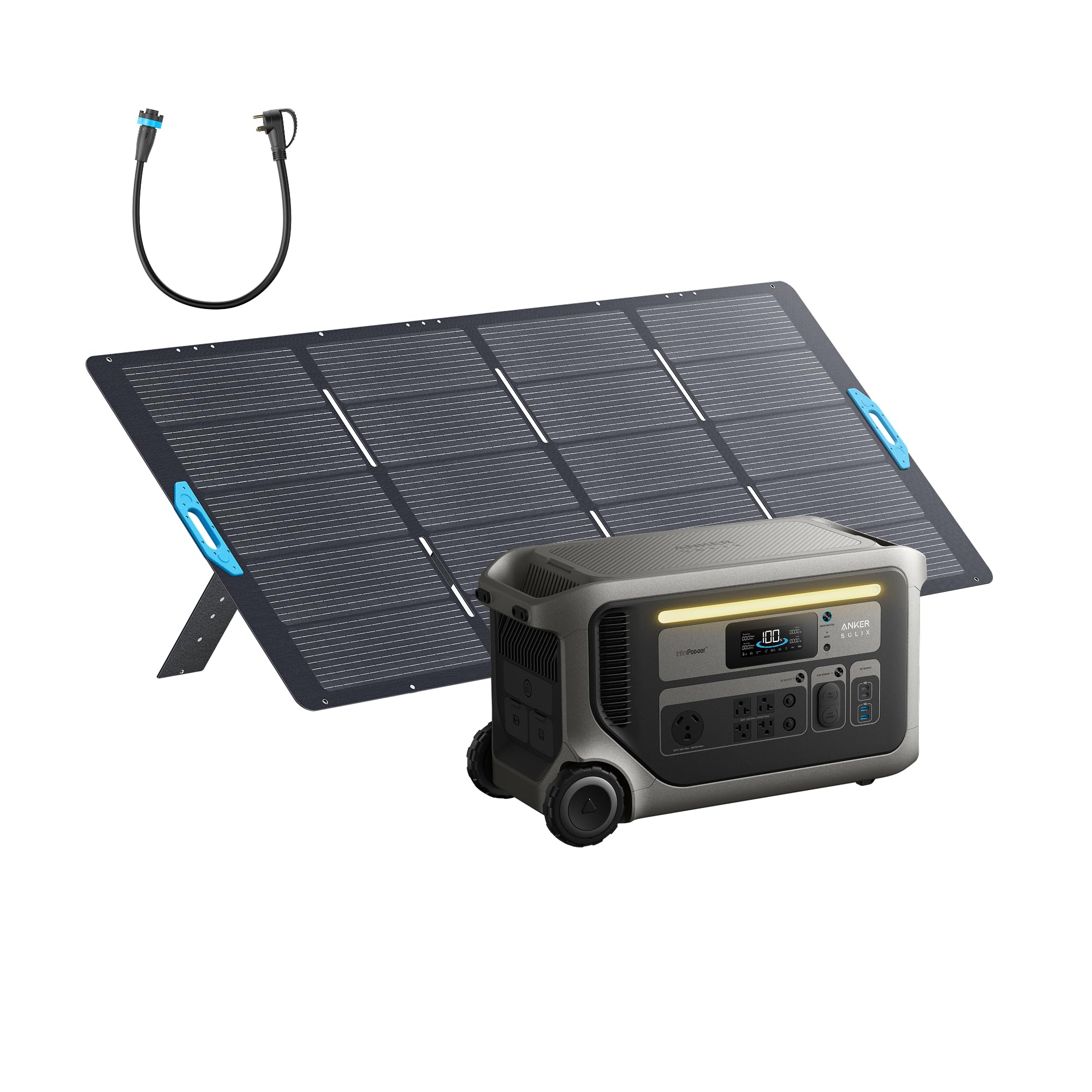
A 3072Wh unit with a bundled 400W panel that runs a 13,000 BTU RV AC.
If you want solar from the start, the Anker SOLIX F3000 bundle throws in a 400W panel so you’re generating power the day it arrives. The 3072Wh LiFePO4 battery pushes 3600W of output (expandable to 24kWh), and its 2400W solar input is the highest in this class, letting you refill fast from the sun. Anker rates it for 125 hours of AC idle standby or 42 hours powering a 190W fridge on one charge.
Buyers rave about its 30A TT-30 RV plug, which runs a 13,000 BTU Coleman roof AC for 6-8 hours on lower settings — a genuine feat for a portable unit. The 6000W combined recharge (fuel generator plus solar) means you can refill in about 90 minutes at a 30A input, a lifesaver during extended outages. The 91.5-pound body rolls on 6-inch wheels, which owners say glide well over most surfaces.
The recurring gripe is the bundled 400W solar panel itself — customers note it flexes and cracks while being moved, raising concerns about internal cell damage. The unit is also bulky and heavy to haul upstairs, and the Wi-Fi connection occasionally drops. At 3072Wh it matches the PECRON’s capacity but carries a premium price for the panel and the Anker name.
The highlights
- Runs a 13,000 BTU RV AC for hours
- 2400W solar input — fastest in class
- TT-30 RV plug for plug-and-play camping
- 6,000W combined recharge speed
The drawbacks
- Bundled 400W panel cracks when flexed
- 91.5 lbs — hard to carry upstairs
- Wi-Fi connectivity drops for some
Choose this if: you want a complete solar setup and need to run a rooftop RV AC on the road.
pass on it if: you’ll be moving panels often — the bundled 400W panel is fragile in transit.
10. EcoFlow DELTA 3 Ultra
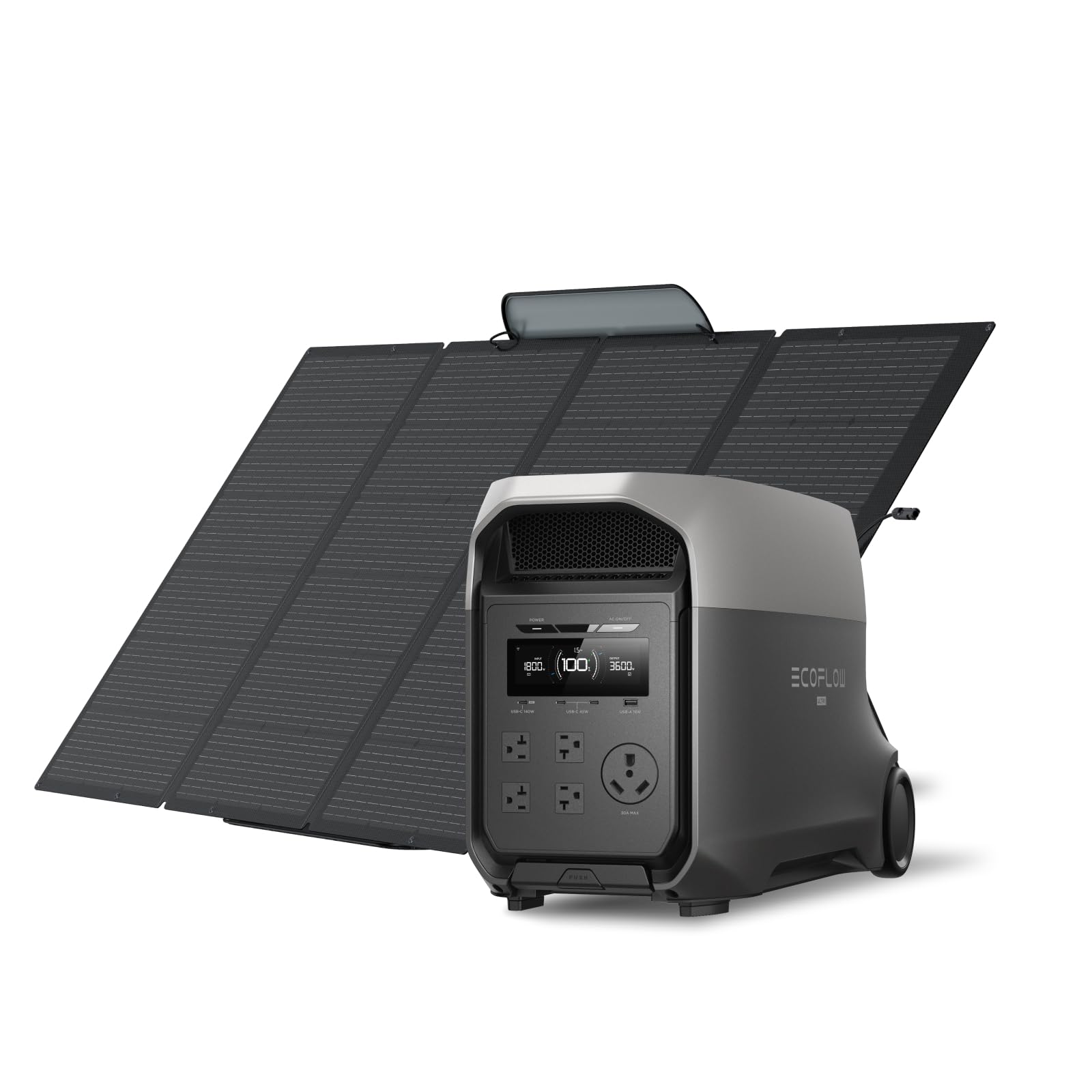
The 25dB-whisper-quiet 3600W unit with a 7200W surge for the premium buyer.
For buyers who want flagship performance with minimal noise, the DELTA 3 Ultra delivers a 3600W continuous output with a 7200W surge — one of the highest surge ratings in this roundup. Its X-Quiet 3.0 technology keeps it at just 25dB under load, genuinely quiet enough for overnight use in a small apartment or RV. The 3072Wh LiFePO4 battery is rated for 10 years of daily use.
A sub-10ms UPS switch keeps PCs, Wi-Fi routers, and medical equipment running through outages without manual setup. Owners confirm it runs a camper, fridge, and a computer through an outage flawlessly, and the included 400W solar panel charges fast even on cloudy days. Charging is flexible across four paths — wall, solar, car, or the EcoFlow Smart Generator.
Performance and build quality are the most-praised aspects, and owners describe it as very powerful with quick solar charging. The weight is the recurring theme — at 74.3 pounds plus a hefty 400W panel, buyers recommend ground-floor placement, and one flagged that 1800W grid charging can warm up older 14-gauge wiring. A single 1-star review reported battery drain and a poor solar charge, but that’s an outlier against a strong consensus.
Its best traits
- 25dB noise — whisper quiet under load
- 7200W surge handles heavy motor starts
- Four charging paths for flexibility
- 10-year LiFePO4 battery life
Its costs
- 74.3 lbs plus a heavy 400W panel
- Premium price for the EcoFlow name
- Check home wiring before max grid charging
Buy this if: silence and surge headroom are your top priorities and you’re willing to pay for them.
Look elsewhere if: you’re on a tight budget or need a unit you can move regularly — this is a stay-put machine.
11. Jackery HomePower 3000
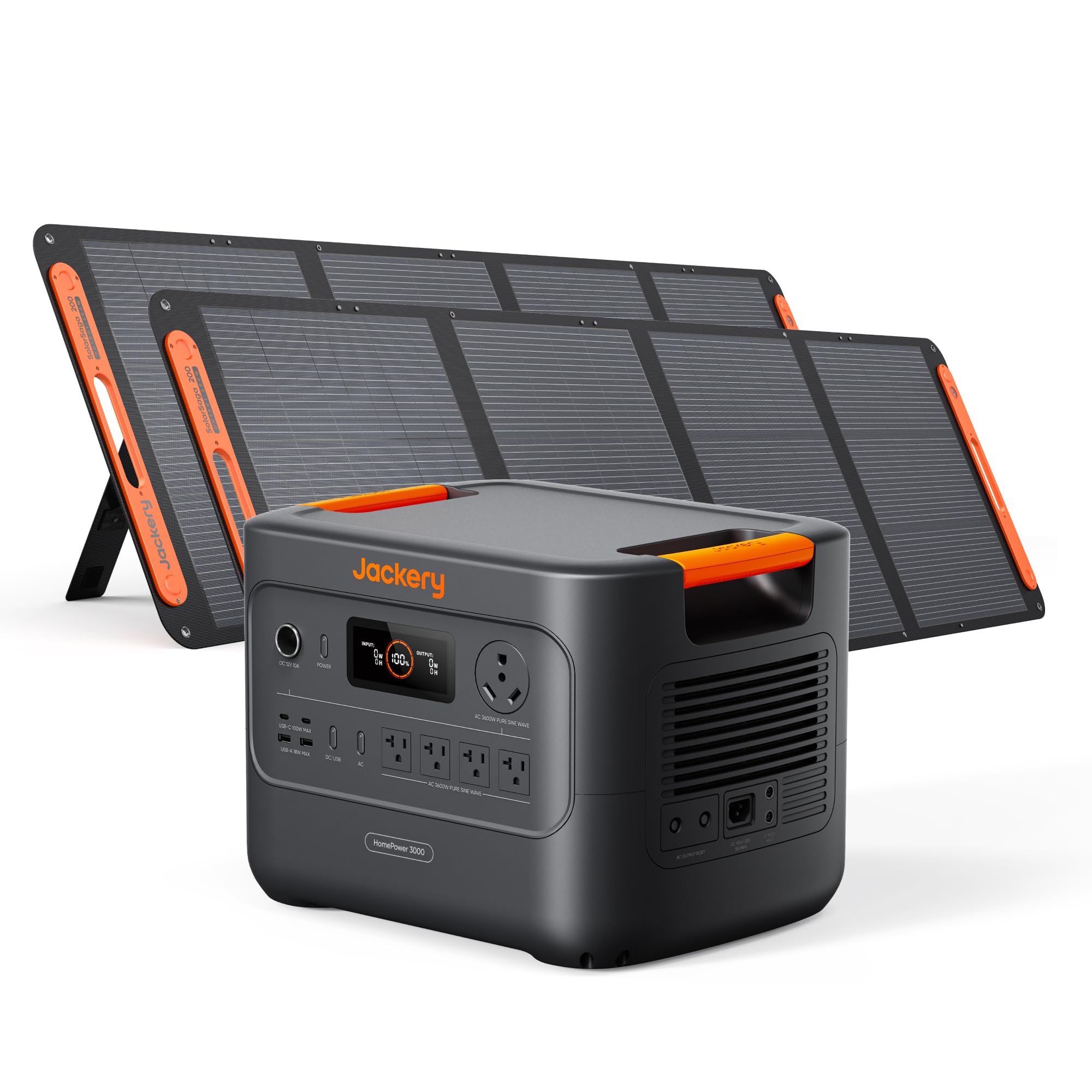
The 3072Wh home backup that runs a fridge 1-2 days and charges in 1.7 hours.
The HomePower 3000 is Jackery’s answer to whole-home backup, bundling two 200W solar panels with a 3072Wh LiFePO4 station. Its 3600W output (7200W surge) powers a household for up to 15 hours, keeping a fridge running for 1-2 days. The charging story is strong: a full recharge in 1.7 hours via hybrid AC and DC, or 2.2 hours via AC alone.
The UL-certified UPS switches in under 20ms, protecting security cameras, medical refrigerators, and Zoom calls through sudden outages. Dual 100W USB-C PD ports fast-charge phones, tablets, and drones, while the built-in TT-30 RV port makes it plug-and-play for campers. Its CTB chassis is 47% smaller and 43% lighter than comparable 3kWh units., and the honeycomb shell adds strength.
Charging speed is the top-praised aspect, with battery life second, and owners verify a fridge runs for 2 days on a charge. The key complaint is weight — despite the marketing, buyers consistently find it heavier than expected, mentioning a wheel kit as a necessary add-on. It also lacks battery expansion, and one owner found it needed warmer temperatures (~15°C) to charge than the 0°C spec suggested, which matters for cold-weather cabins.
What impresses
- Bundled 2x200W solar panels included
- 1.7-hour hybrid full recharge
- TT-30 RV port for plug-and-play camping
- Runs a fridge 1-2 days on a charge
What disappoints
- Heavier than expected — wheel kit advised
- No expansion battery option
- Charging may need ~15°C in cold weather
Best for: homeowners who want a complete solar backup bundle with fast hybrid charging and RV compatibility.
Not for: those who need expandable capacity or plan to charge in freezing conditions.
Understanding the Specs
Output Power (Watts)
The continuous wattage rating tells you how many appliances you can run at once. A 3000W unit handles a fridge, lights, and a microwave in rotation, while a 3600W unit adds headroom for a heat press or power tools. The surge rating (often 1.5-2x the continuous) matters for starting motors — like an air conditioner’s compressor — which draw a big burst before settling. If the surge isn’t enough, the unit trips, so check both numbers.
Battery Capacity (Watt-Hours)
This is your fuel tank: how long the power lasts before a recharge. A 2042Wh unit runs a 100W fridge for roughly 20 hours, while a 3840Wh unit nearly doubles that. For multi-day outages, look for 3072Wh or higher, and check if the system expands with add-on batteries. Remember that bigger capacity usually means a heavier unit — expect 49 to 104 pounds in this class.
FAQ
Can a 3000 watt solar generator power a whole house?
How long will a 3000 watt solar generator run a refrigerator?
What is the difference between peak watts and continuous watts?
How long does it take to charge a 3000 watt solar generator?
Is LiFePO4 battery worth it over standard lithium?
Can I run an air conditioner with a 3000 watt solar generator?
What can I run with a 3000 watt solar generator?
Can I use a 3000 watt solar generator inside my house?
How heavy are these 3000 watt solar generators?
Can a 3000 watt solar generator power a house during a blackout?
Final Thoughts: The Verdict
For most buyers, the 3000 watt solar generator winner is the EF ECOFLOW DELTA Pro because it pairs the most proven 3600W output with a 3600Wh tank and the fastest recharge in its tier — the stuff of whole-home confidence during a multi-day outage. If you want the best value per watt-hour, grab the PECRON F3000LFP for its 2-hour wall recharge and 3600W output at a budget-friendly price. And for a complete solar setup straight from the start, the Jackery HomePower 3000 with its bundled 2x200W panels is the one to reach for — just budget for the wheel kit.
How We Picked
We do not accept paid placement. Every pick is matched to a real buyer and a real use-case; we do not hands-on test units.
Sources & Methodology
Specifications: manufacturer listings and product documentation. Review insights: verified customer reviews, as of August 2026. Pricing: not shown on this page (it changes often); check the current price via the retailer link.
As an Amazon Associate, FitlyFast earns from qualifying purchases. This does not affect which products we feature.