
Our readers keep the lights on and the weekend projects moving. As an Amazon Associate, I earn from qualifying purchases.
Specs are compiled from manufacturer listings and verified buyer reviews and can change over time — please confirm the key details on the product page before buying.
The right chair for back pain isn’t about the biggest cushion or the most levers—it’s about finding one that supports your spine’s natural curve for the entire workday. A chair with strong, adjustable lumbar support that matches your height and sitting style will do more for your back than any pricey brand name. This guide breaks down the top options and, more importantly, what actually matters on a spec sheet.
I’m Rikta — the founder and writer behind FitlyFast. This guide is built by comparing the manufacturers’ published specifications and the patterns across verified customer reviews, so you get each pick’s real strengths and trade-offs instead of marketing spin.
We’ve dug through the options to find the best office chair for back pain, focusing on adjustable lumbar support, seat dimensions, and honest owner feedback to help you find your match.
Our Picks at a Glance

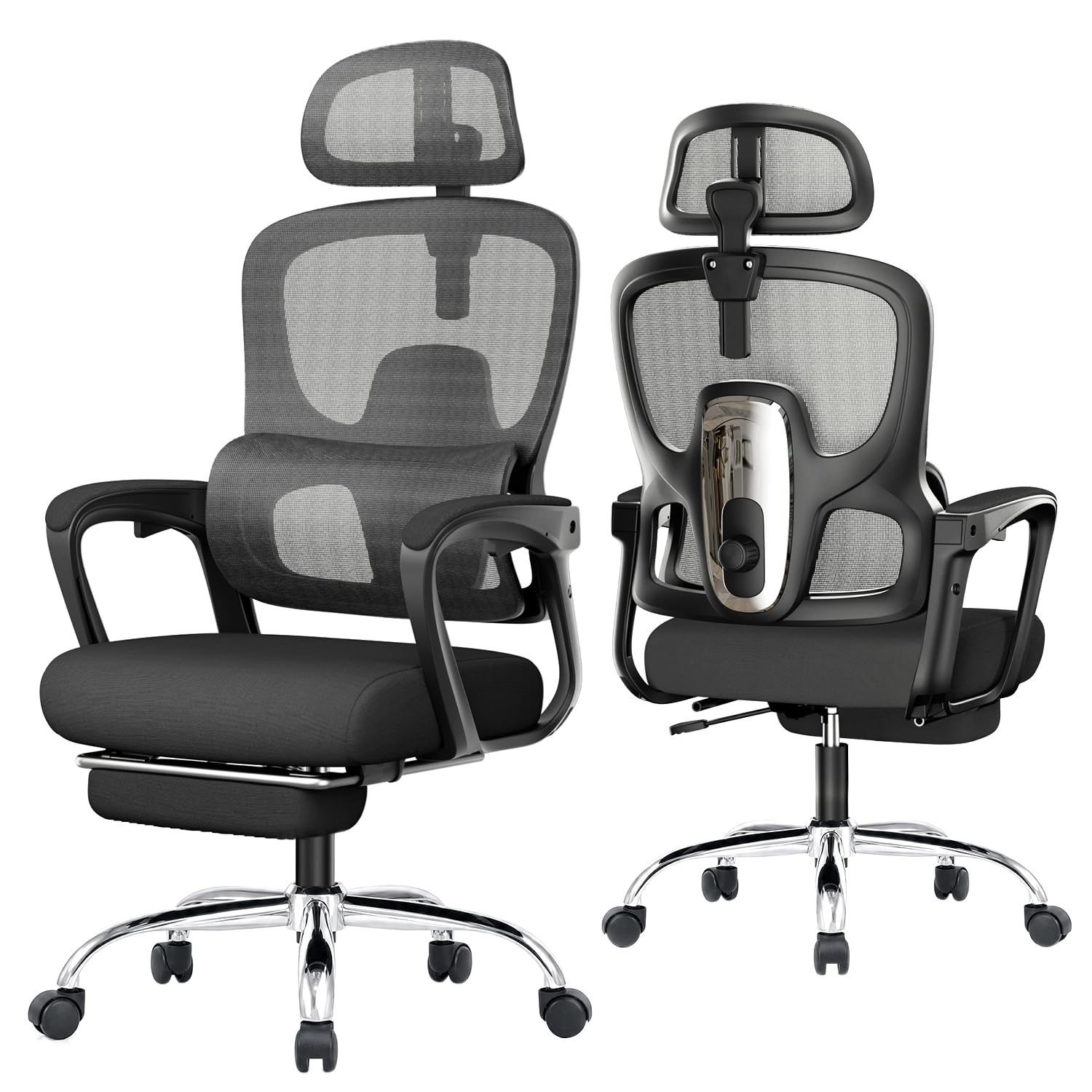

How To Choose The Best Office Chair For Back Pain
Your lower back hurts from sitting because it lacks support. You need a chair with an adjustable lumbar system (a built-in support that you can move up or down) to fit snugly into your spine’s natural curve. If that support is fixed or sits too low, your back muscles strain all day to keep you upright.
Prioritize Adjustable Lumbar Support
Your spine has a natural inward curve at the lower back, and that’s where most strain happens. A chair with lumbar support that adjusts in and out lets you match that curve exactly. This makes a bigger difference than almost any other feature. Look for the word “adjustable” next to lumbar support, not just a built-in bump.
Match the Seat to Your Body
Seat depth matters because your knees should bend at the edge without the cushion pressing into the back of your legs. Seat width gives you room to shift comfortably throughout a long day. A seat that is too short leaves your thighs unsupported, which adds pressure to your lower back. Taller users should hunt for a deeper seat, while shorter users often prefer one that is shallower so they can sit all the way back.
Consider Recline and Rocking Motion
Changing your sitting angle throughout the day is key to reducing static posture pressure. A chair that reclines lets you lean back and open up the angle between your torso and legs, which eases compression on spinal discs. Some chairs also have a rocking or tilt function that moves with you, keeping the spine in motion instead of locked in one spot.
Quick Comparison
| Model | Best For | Seat Width | Weight Capacity | Back Material | Amazon |
|---|---|---|---|---|---|
| YFO Ergonomic Chair★ Best Overall | All-day plush comfort | 22 inches | — | Leather | Amazon |
| Humergo Ergonomic ChairPremium Pick | Napping & cooling mesh | — | 365 lbs | Mesh | Amazon |
| TRALT Ergonomic ChairBest Value | Space-saving flexibility | 20 inches | 330 lbs | PU Leather & Mesh | Amazon |
| GTPLAYER Big & Tall Chair | Plush full-body wrapping | — | — | Velvet | Amazon |
| DUMOS Executive Chair | Big & tall value pick | — | — | PU Leather | Amazon |
| CASASIO Ergonomic Chair | Custom-fit lumbar & headrest | 20 inches | — | Mesh | Amazon |
| BrightSeat Ergonomic Chair | Quiet, focused workspaces | — | 330 lbs | Elastic Nylon | Amazon |
| FLEXISPOT ErgoX Chair | Full adjustability for work & rest | — | — | Mesh | Amazon |
| Branch Ergonomic Chair | Sleek, minimalist style | — | — | Mesh | Amazon |
| Ergohuman ME7ERG Chair | Long-term durability & warranty | — | — | Mesh | Amazon |
| Steelcase Amia Chair | Premium, subtle back support | — | — | Fabric | Amazon |
In‑Depth Reviews
1. YFO Ergonomic Home Office Chair
Our pick — over 4.5★ from 650+ verified ratings; the strongest balance of quality and price.
All-day spring-loaded comfort that has owners ditching their back pain for good.
The YFO is our top pick because it solves the two biggest complaints in this category: lower back support and long-session softness. The backrest uses extra sponge padding that owners consistently say keeps fatigue away even after a full workday. Underneath the seat sits a spring bag suspended over sturdy wooden boards, so you get a bouncy, resilient feel that never goes flat.
At 22 inches wide, this is among the roomiest seats in our lineup, beating the TRALT’s 20-inch width for side-to-side space. Buyers report the rollerblade-style wheels are “exceptionally nice,” gliding quietly over wood, carpet, and marble without leaving marks. The 5-step assembly with labeled parts gets you sitting in about 30 minutes, a detail owners repeatedly praise.
The headline spec here is a 20-inch seat depth that gives your thighs full support. You can also build it without the armrests to create a cross-legged chair, a flexible 2-in-1 design. The most-discussed trade-off is the 8.3-inch armrest height, which some shorter users find slightly limiting, so it’s worth matching your desk setup to that number.
What wins people over
- Owners rate comfort highest of all, with the spring cushion and soft leather earning the most praise for long sits.
- Quality is the second most-mentioned trait, with the faux leather and overall build read as “top-grade” and durable.
Who should think twice
- Height adjustment is limited and draws mixed feedback, so very tall users may feel the range is short.
- While the plush foam holds up, a few owners pined for a firmer lumbar bump to really push into the lower back.
Reach for this if: you want a plush, springy seat that reviewers describe as ideal for extended sitting and gaming.
Look elsewhere if: you’re over 6 feet and need a taller gas cylinder range than the YFO’s height adjustment offers.
2. Humergo Ergonomic Chair with Footrest
The napping workstation that dials in your spine down to the centimeter.
Humergo takes a precision approach to back relief, with a lumbar crossbar that moves forward and back by 2cm. That tiny adjustment lets you seat the support exactly in your spine’s curve, a feature many lower-priced chairs lack. The headrest rotates 45 degrees and adjusts in height, so neck fatigue stays away even on “high-intensity shifts.”
This chair flips from an upright “Focus Mode” to a reclined “Relax Mode,” locking anywhere between 90° and 145°. Pull out the padded footrest and it becomes a flat-enough spot for an office nap. The 365 lbs weight capacity leads the entire lineup—beating the TRALT’s 330 lbs—and pairs with a 20-inch backrest width for big and tall users. If you need serious support under serious weight, this is the one.
Two load-bearing material specs make this worth the premium. The seat is high-density polyurethane foam that won’t flatten, while the back uses “racing mesh” to keep your back cool and dry. Owners mention sitting for hours without soreness, and the build quality is the most-praised trait. The dual-wheel nylon casters glide silently over hardwood, tile, and carpet.
The case for it
- A 365 lbs weight capacity and heavy-duty nylon base make it a true big-and-tall machine with no wobble.
- The synchronous linkage armrests tilt with you, so elbows and wrists stay supported even reclined.
- Owners praise the quality and versatility of the build, noting they can sit for hours without any soreness.
The honest caveat
- Size draws mixed feedback, so very tall or wide users should double-check the seat depth before committing.
- It’s not the cheapest way to get a footrest, making it a splurge for purely upright office work.
Grab it if: you work long shifts and want a chair that doubles as a napping recliner without sacrificing airflow.
Think twice if: you rarely recline and just need a basic upright desk chair.
3. TRALT Ergonomic Office Chair
A 3.5-inch cushion that feels like a sofa cushion, minus the sag.
TRALT’s biggest selling point for back pain is extra-deep lower back cradling that owners describe as “amazing.” One owner was so comfortable they fell asleep in it. The secret is a high-density sponge seat cushion at 3.5 inches–balancing softness and support so you don’t sink through to the frame, even after 8-hour days.
This chair has a 20-inch seat width by 17.3-inch depth, making it more compact than the YFO’s 22-inch-wide seat. That makes it a great fit for small spaces, especially with the flip-up armrests that slide the chair fully under a desk. The adjustable lumbar and headrest, plus a 330 lbs capacity, make it a versatile pick for the 5’5″ to 6’2″ crowd.
Assembly is a standout strength, mentioned by 113 owners, thanks to clear instructions, labeled hardware, and even spare parts. The 360° swivel (full rotation) and smooth, quiet castors (wheels) let you glide between multiple monitors without effort. One caveat: while the mesh back breathes well, a buyer with chronic neck pain reports the headrest sits too far back, so it won’t suit every neck curve.
Why buyers choose it
- Ease of assembly leads the positive feedback, with most owners done in 20-40 minutes.
- The lumbar curve cradles the lower back, with adjustable support earning 94 positive mentions.
- The breathable mesh back accelerates airflow to keep you from getting stuffy and sweaty.
Who it isn’t for
- A few owners note the headrest sits too far back for chronic neck pain, requiring a neck pillow.
- At 330 lbs capacity, it tops out well below the Humergo’s 365 lbs ceiling.
Ideal if: you’re on a budget and want a highly adjustable, comfortable chair that takes under half an hour to build.
skip it if: you weigh more than 330 lbs or need a headrest that reaches far enough forward to truly rest your neck.
4. GTPLAYER Big and Tall Chair
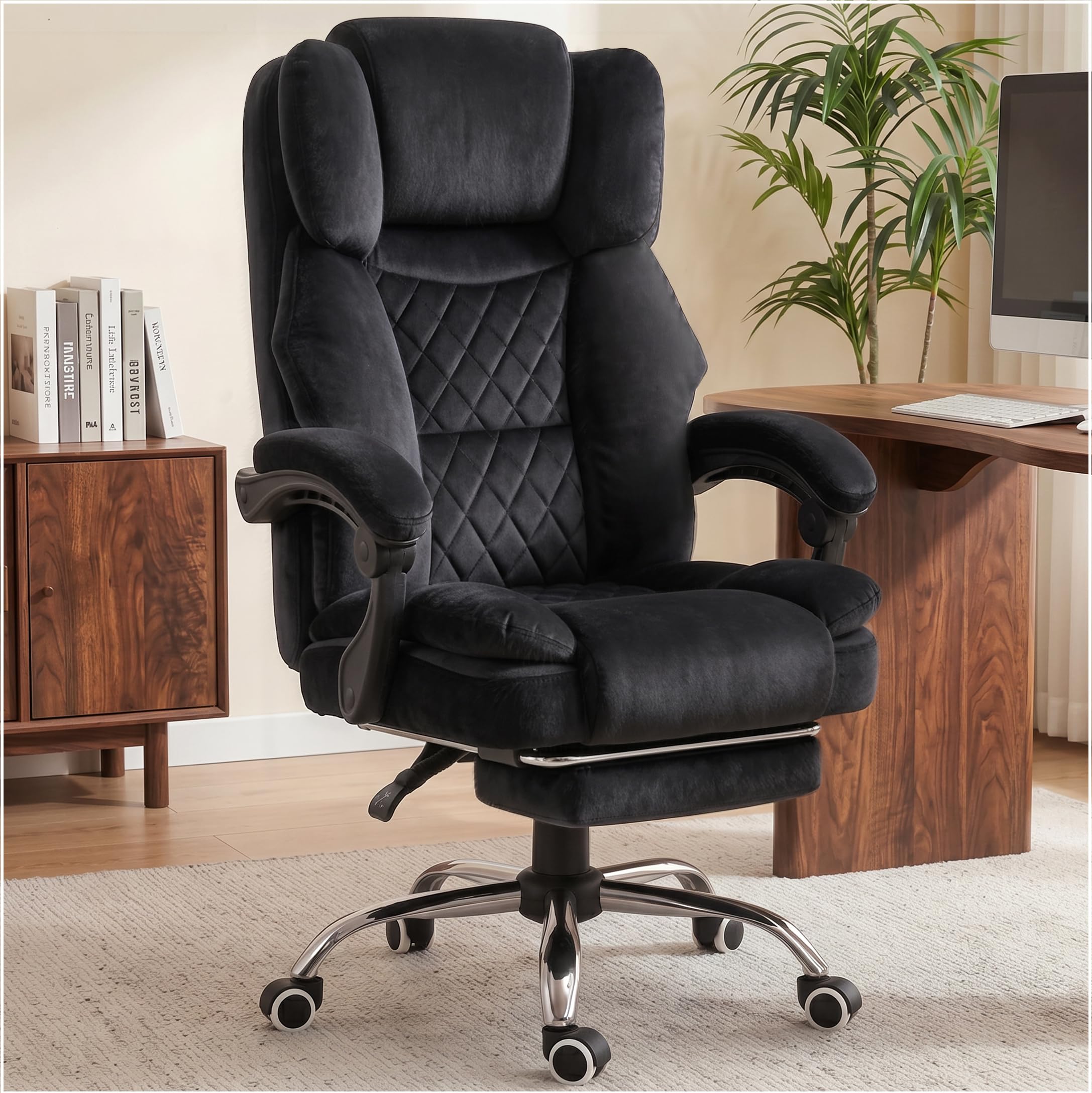
The sofa-grade seat that wraps you in velvet from shoulder to tailbone.
GTPLAYER borrows pocket-spring technology from sofas for its seat cushion. Each spring moves independently to respond to your shifting weight, then a dual-layer high-density cushion sits on top. The result is a bouncy, cloud-like feel that owners repeatedly call “cozy” and “soft,” without the sagging you get from cheap foam.
The backrest is a 23.23-inch wing-back design, meaning it curves around you to cradle the upper, middle, and lower back at once. That full-body wrap is engineered to reduce pressure even after 10+ hours at a desk. The velvet fabric is lab-tested for wear and colorfastness, a thoughtful answer to the pilling that plagues cheaper velvets.
The recline goes from upright to 145° with stepless adjustment, so you can stop anywhere in between. For a 6-foot owner, the included lumbar pillow makes up the difference when the top of the chair runs out of headroom. Weigh this against plainer options: assemblies take roughly 20 minutes, and the one-year warranty covers any defects.
What stands out
- The velvet fabric is breathable and silky-smooth against skin, so backs stay cooler during long sessions.
- Dual-layer high-density cushioning plus independent pocket springs are engineered to never bottom out.
- Owners praise the comfort instantly, with the backrest width at 23.23 inches offering broad coverage.
What to watch
- Back support earns mixed feedback, with at least one owner wishing the lower back area was firmer.
- The 20-minute assembly time only gets you from the start; expect another 70 minutes for the full build.
Pick this if: you want the softest, most enveloping seat in our lineup and don’t mind a longer build.
Look past it if: you need pronounced, firm lumbar pressure right at your belt line rather than soft cradling.
5. DUMOS Ergonomic Executive Chair
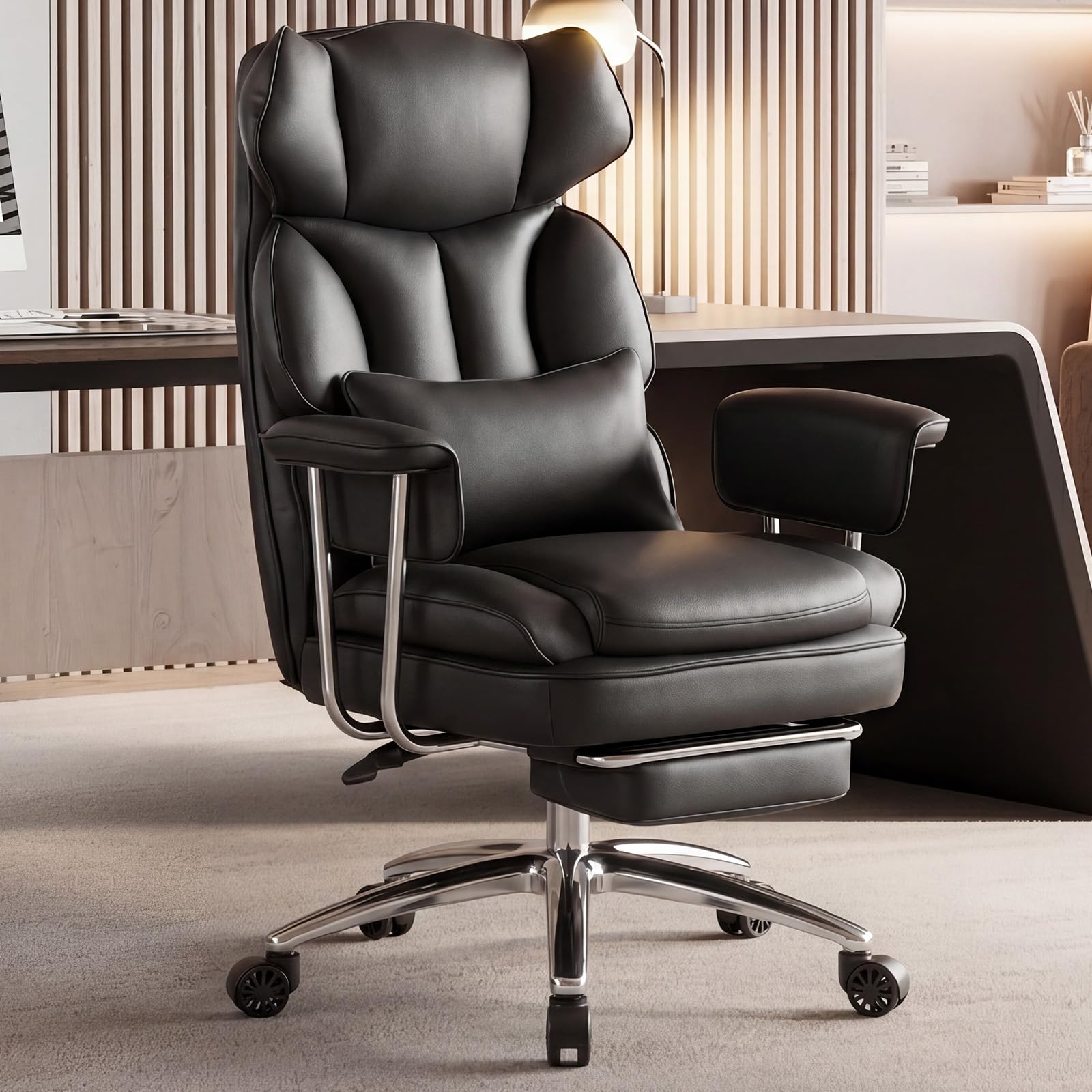
A massive, executive-style seat that owners say fits three dogs.
DUMOS takes a five-point approach to support, layering sponge in three dimensions to match the head, shoulders, back, buttocks, and legs. That “millimeter-level” segmentation is the backbone of its back-pain claim. After a month of daily use, customers note excellent lumbar support from the adjustable pillow plus thick, durable faux leather that holds up.
The reclining back goes to a 135° tilt angle, and a retractable leather footrest slides out for nap mode. Height adjusts by 3.2 inches and the whole chair swivels 360°, making it easy to switch between typing and resting. It’s a heavy, imposing chair—owners warn it won’t fit through doorways fully assembled, so plan to build it in its final room.
Assembly runs about 25 minutes with labeled bolts, a spare set, and a T-handle Allen wrench included. The SGS-certified Class 3 gas cylinder and metal base tested with BIFIMA certification back up its stability. The clear trade-off: durability is mixed, with a minority of owners reporting the leather peeling after a few months, so treat the surface gently.
What earns its keep
- The segmented five-point support system tailors cushioning to each zone of your back and legs.
- Owners single out quality and comfort as the top two traits, calling it sturdy yet surprisingly easy to assemble.
- The 3.2-inch seat height adjustment range offers real flexibility for finding your leg angle.
A fair warning
- Durability is mixed, with a few owners reporting peeling after just a few months of use.
- This is a large unit, and it won’t fit through narrow doorways once assembled.
Best for: bigger frames and anyone who wants a commanding, executive-style chair with a fold-out footrest.
Not for: those who need maximum durability or who bounce around rooms, since the leather needs care.
6. CASASIO Ergonomic Chair
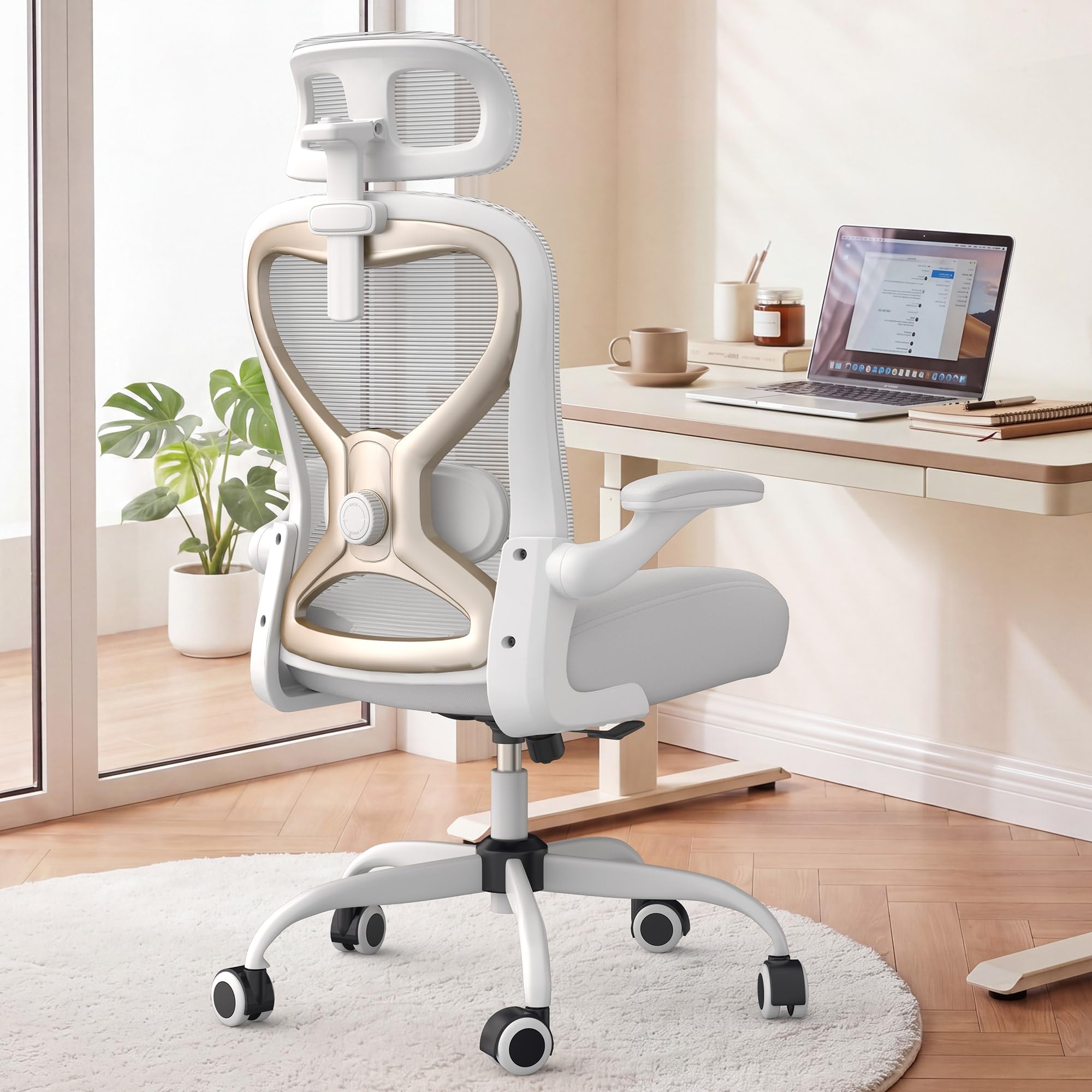
A chair that adapts to your spine in two directions and rocks you through the day.
CASASIO pairs a 3.5-inch virgin foam seat with dual-direction lumbar support, meaning you can dial the lower back cushion in and out to match your curve precisely. That level of customization is rare at this price point. Owners consistently report the lumbar support “is perfect” and reduces strain during long sessions.
The 3D headrest moves in height, depth, and angle, so your neck gets the same tailored treatment as your lower back. The flip-up armrests tuck the chair neatly under your desk, while the tilt-and-rock function adds a gentle motion that moves with your body. It’s a strong choice for small home offices or shared workspaces where space is tight.
The 20-inch seat width and 20-inch depth are both generous, spreading your weight evenly across the foam. Quality is the most-praised aspect in owner feedback, and the value earns consistent applause for the price. Owners do note the assembly takes patience and the box is heavy, so you’ll want a clear space and maybe a helper nearby.
The strengths
- Dual-direction lumbar adjustment lets you fine-tune the support forward and backward for a precise fit.
- The virgin foam seat holds its shape even after 8+ hours of sitting, preventing soreness.
- Owners rank quality and lumbar support as the top two traits, with an “exceptional value” consensus.
The wrinkles
- The chair needs clearance around it for the tilt-and-rock motion to work fully.
- The box is heavy, which can be a hurdle for older buyers who want to return it.
Choose it if: you want a highly adjustable chair that lets you fine-tune both lumbar and neck support.
Reconsider if: you have limited floor space, since the rocking motion needs room to breathe.
7. BrightSeat Ergonomic Chair
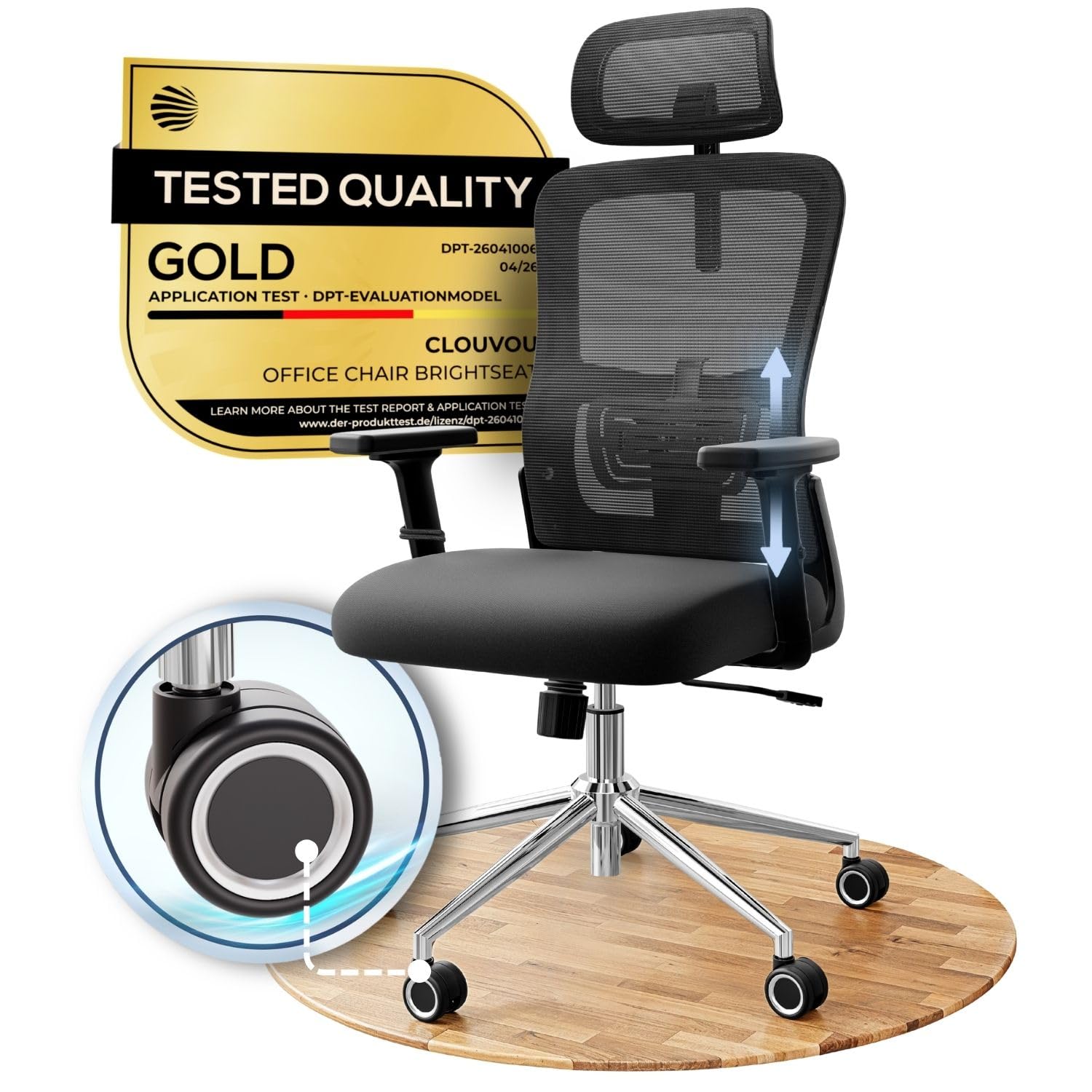
A 135-degree recline with wheels so quiet your coworkers won’t hear you lean back.
BrightSeat markets itself as “Comfy [#1 in Tests]” and builds its case around a 3-position backrest tilt. That means you get three fixed angles for your back, plus a 2D headrest that adjusts in two directions. This chair supports people up to 6.3 feet tall and 330 lbs, giving tall users real headroom.
The back uses 2D support in both the backrest and armrests, so you can tweak both to your posture. The adjustable lumbar support is built right in for extended use. For a quiet workspace, the ultra-quiet wheels are the standout feature, letting you move silently even on hard floors.
Skeptics should note that seat comfort is the one area with genuine mixed feedback—while the ergonomics get steady praise, a couple of owners found the seat cushion firmer than they’d like. The elastic nylon frame keeps the chair cool through long sessions. It’s a solid mid-range choice that shines for tall, quiet offices.
What works
- Ultra-quiet wheels make it a favorite for focused, distraction-free workspaces.
- A 135° recline with 3-position backrest tilt gives you real angle options.
- Support up to 6.3 feet tall and 330 lbs covers most tall frames.
The trade-off
- Seat cushion firmness is the most-contested point, with a few owners wishing it were softer.
- The elastic nylon fabric, while breathable, feels different from plush leather or velvet.
Buy it for: a tall frame and a quiet home office where smooth, silent rolling matters.
Pass if: you need a cloud-soft seat cushion and prefer a more plush, padded feel.
8. FLEXISPOT ErgoX Premium Chair
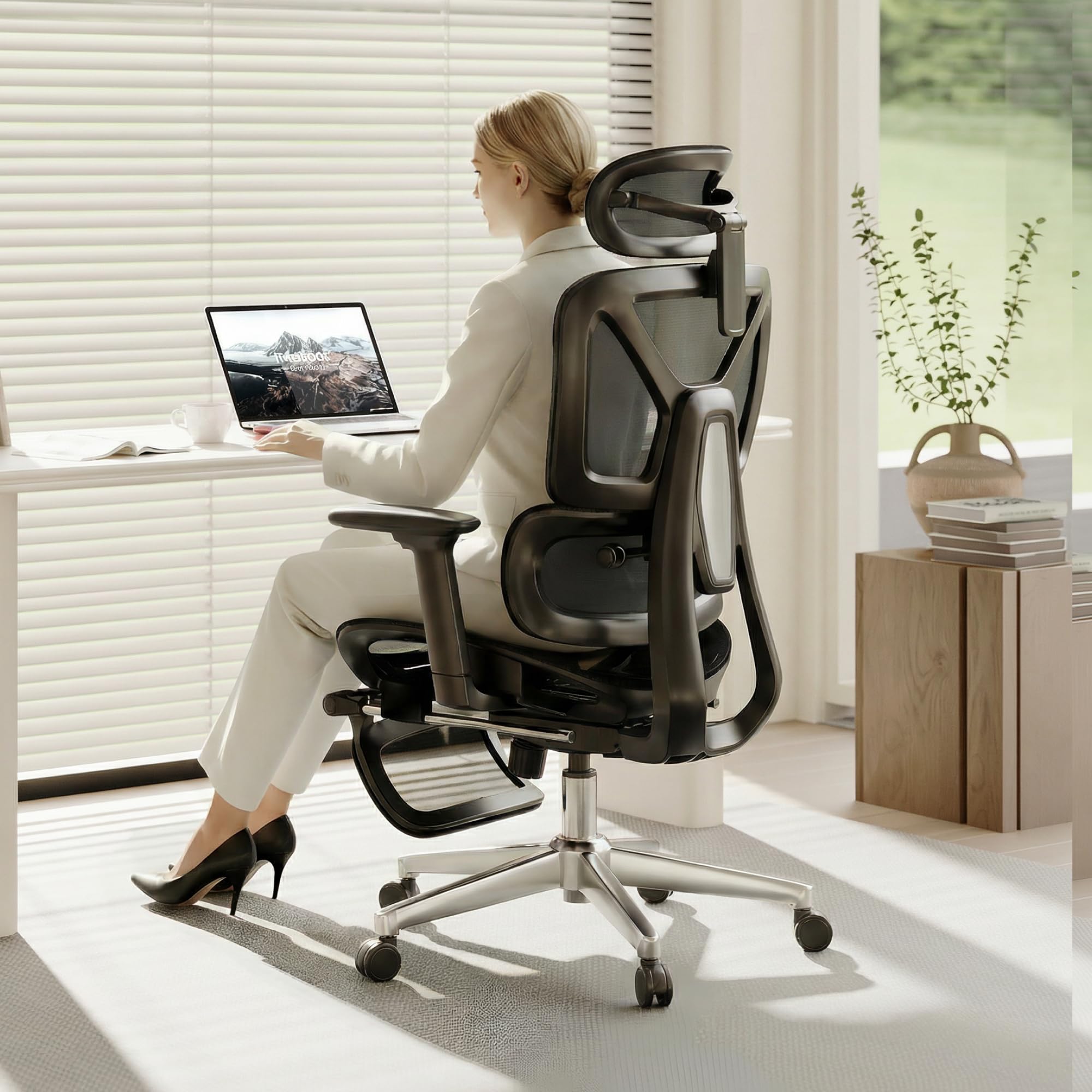
The only chair here with truly dynamic lumbar support that moves as you do.
FLEXISPOT’s ErgoX is the standout for people who shift around constantly. Its dynamic lumbar support moves with your body, plus a 5-level adjustable back and a 3D headrest for precise neck support. That adaptability explains why owners say it relieves back, hip, and leg aches during full work-from-home days.
The seat depth itself is adjustable between 17″ and 20″, a feature that directly addresses back pain from a seat that’s too short or too long. Combined with a height range of 20.1″ to 22.4″, it fits users from 5’1″ to 6’2″. The 3D armrests move in height, forward/back, and swivel, so wrists stay aligned while typing.
Choose between a breathable mesh seat for airflow or a cushioned foam seat for softness. The built-in retractable footrest and tilt function handle break-time relaxation. Comfort is the most-praised aspect by a wide margin, but assembly gets mixed feedback—some find it easy, others complicated—so budget a little extra time for setup.
What makes it special
- The adjustable seat depth is a rare feature that fits a 5’1″ user and a 6’2″ user in the same chair.
- Owners consistently rank comfort highest, with dynamic lumbar support reducing fatigue.
- A 3D headrest and fully adjustable 3D armrests round out full-body support.
Where it stumbles
- Assembly draws mixed reviews, with some owners finding the process complicated.
- Some owners found the height adjustment limited, noting it fit their 5’8″ frame perfectly but may not suit everyone.
Reach for it if: you’re between 5’1″ and 6’2″ and want a chair that adjusts to your exact proportions.
Look elsewhere if: you dread complex assembly and want a truly tool-light setup.
9. Branch Ergonomic Chair

A minimalist mesh chair from a design-first brand that owners call worth the splurge.
Branch, a recognized workspace brand now on Amazon, makes its Ergonomic Chair with a sleek, minimalist design and anodized aluminum (a corrosion-resistant finish) details. You get eight adjustment points—covering seat height, seat depth, and armrests—so you can fine-tune the fit more than most chairs here. Buyers describe it as a “great upgrade” from cheaper models.
The breathable mesh backrest is the star for staying cool during long work hours. With adjustable seat height and depth, it fits a wide range of body types—owners from 5’0″ up to 6’4″ report good fits. The aluminum frame keeps it sturdy while smooth-rolling wheels glide across carpet and hard floors.
Value for money shines here, with owners comparing it favorably to chairs costing much more while calling it better than standard office stock. The honest trade-offs are the lumbar support, which draws mixed feedback for being mild, and armrests that can slide forward when you lean. Stability is also mixed, so it’s not the most locked-down chair for heavy leaners.
What impresses
- Owners consistently praise the build quality, calling it solidly constructed with premium components.
- Eight points of adjustment cover height, depth, lean, armrests, and lumbar.
- The minimalist anodized aluminum frame adds a modern, high-end look to any desk.
What holds it back
- Lumbar support is the most mixed feature, with some owners finding it too mild.
- Armrests can slide forward unintentionally, and there is no seat tilt function.
Best for: owners who want a stylish, well-built chair with a wide range of adjustments and don’t need aggressive lumbar pressure.
Consider other options if: you need forceful lower-back support or a headrest, which this model lacks.
10. Ergohuman Eurotech ME7ERG GEN2

A 15-year workhorse that owners say relieves L4-L5 disc pain for a decade.
Ergohuman’s ME7ERG is an investment built to last, with a dynamic lumbar support that adjusts and flexes as you move. Reviewers point out it’s still holding up after 10–15 years of daily 10–14 hour use. The US-manufactured mesh backing is the sturdiest in our lineup, holding its shape without sagging.
It offers eight ergonomic adjustments covering tilt tension, tilt lock, back angle, back height, synchro tilt, seat height, seat depth, and arm height. That synchro tilt is key: as you recline, the seat tilts up slightly to keep you from sliding forward. Owners say it relieves L4-L5 disc pain even during 8+ hour days.
The 20.67-inch backrest width provides broad support. A Limited Lifetime Warranty backs the build, and owners confirm the support team replaces parts free, with one tilt lock replaced quickly. The clear trade-off is the price. Taller users at 6’5″ note the arms can sit too wide and the seat runs short, so it’s not a universal fit.
The long-game case
- Shoppers say 10–15 years of daily use with zero issues, making the price a long-term value.
- The Limited Lifetime Warranty and responsive support team protect your investment.
- Synchro tilt keeps you supported from upright to reclined positions.
The honest gripes
- Lumbar support is weak enough that some owners add a pillow for extra pressure.
- No seat tilt option, and tall users may find the arms too wide and the seat too short.
Invest here if: you want a chair that will outlast your next three laptops and genuinely support your discs for a decade.
Hold off if: you’re over 6’4″ or want strong, aggressive lumbar pressure from the start.
11. Steelcase Amia Office Chair

A hidden lumbar system that adapts to every lean, engineered by seating experts.
Steelcase hides its LiveLumbar system inside the backrest, so the support flexes with your movement instead of sitting as a fixed bump. That dynamic motion is why owners say it maintains proper posture without causing back pain, even across 8-10 hour days. It’s the kind of subtle engineering that comes from 70+ years of seating research.
The Amia offers 4D arm support—height, width, pivot, and depth—as well as a full recline range that locks upright. The fabric is 100% polyester in a Buzz2 Black weave, and the aluminum frame keeps it light yet rigid. It also comes as a Carbon Neutral certified product for eco-conscious buyers.
Comfort is the most-praised aspect, with owners calling it “extremely comfortable” and noting it helps avoid aches during full days. For a 6-foot, 240-pound owner, the seat and back are very comfortable with no pain after 8 hours. The trade-offs are real: ergonomics and value both draw mixed reviews, and the price often feels steep unless it’s on sale. It also has no headrest option, so taller users may want to look at Gesture or Leap V2.
What owners love
- Comfort leads the feedback, with owners noting proper posture without back pain.
- The LiveLumbar system adjusts dynamically to your movement for ongoing lower-back support.
- A 4D armrest system lets you fine-tune height, width, pivot, and depth.
What gives pause
- Value for money is mixed—it’s a premium price that feels justified on sale, not at full retail.
- Ergonomics get mixed reviews, and there’s no headrest for tall users who need neck support.
Splurge on this if: you want a premium, adjustable chair from a brand with a 7-decade seating pedigree.
Save your money if: you’re on a budget or need a headrest, since this model doesn’t offer one.
Understanding the Specs
Lumbar Support
This is the support that hits the inward curve of your lower spine. Look for an adjustable version that moves in and out, since fixed bumps rarely line up with your exact curve. The more directions it adjusts, the better your chances of a truly custom fit.
Weight Capacity & Gas Lift
The weight capacity tells you the maximum load the base and gas cylinder are designed to handle safely. A higher capacity like 365 lbs means more stability under heavy frames. The gas lift class (like Class 3 or 4) indicates how smooth and durable the height adjustment is, with higher numbers generally meaning stronger builds.
FAQ
What is the best type of lumbar support for lower back pain?
How important is seat depth for back pain?
Should I get a mesh or upholstered chair?
How many hours a day can I sit in an ergonomic chair?
Is a footrest worth getting for back pain?
What is the difference between a 2D and 3D headrest?
How long does a good office chair last?
Are more expensive chairs always better for back pain?
Will a chair fix my back pain completely?
Final Thoughts: The Verdict
For most people, the office chair for back pain winner is the YFO Ergonomic Chair because it pairs a spring-loaded, plush seat with the widest 22-inch seat in our lineup, and owners overwhelmingly praise its comfort and quality. If you want a chair that doubles as a napping recliner with a 365 lbs capacity, grab the Humergo. And for a budget-friendly chair with deep lumbar cradling and a 3.5-inch cushion that won’t sag, the TRALT is the one to reach for.
How We Picked
We do not accept paid placement. Every pick is matched to a real buyer and a real use-case; we do not hands-on test units.
Sources & Methodology
Specifications: manufacturer listings and product documentation. Review insights: verified customer reviews, as of August 2026. Pricing: not shown on this page (it changes often); check the current price via the retailer link.
As an Amazon Associate, FitlyFast earns from qualifying purchases. This does not affect which products we feature.