
Our readers keep the lights on and the weekend projects moving. As an Amazon Associate, I earn from qualifying purchases.
Specs are compiled from manufacturer listings and verified buyer reviews and can change over time — please confirm the key details on the product page before buying.
Choosing a router with a 10G port is about future-proofing your wired network, not just Wi-Fi speed. The real test is whether the router can handle multi-gig WAN connections (like 2.5G or 5G fiber) without a bottleneck. This guide breaks down the best 10Gb routers, from all-in-one security gateways to gaming flagships, focusing on port configurations, wired throughput, and honest trade-offs.
I’m Rikta — the founder and writer behind FitlyFast. This guide is built by comparing the manufacturers’ published specifications and the patterns across verified customer reviews, so you get each pick’s real strengths and trade-offs instead of marketing spin.
If you’re upgrading to a multi-gig internet plan or building a fast home lab, you need a 10Gb router that won’t squander your bandwidth. this 10gb router guide covers the best picks for wired speed and value.
Our Picks at a Glance


How To Choose The Best 10Gb Router
You likely want a 10Gb router to make the most of a fast fiber plan (like 2G or 5G) you already pay for. First, check what port your internet service provider (ISP) gives you—this decides if you need SFP+ (a fiber optic connection) or RJ45 (a standard copper Ethernet port) support.
Check the WAN and LAN Port Types
A 10G port on the WAN side (connecting to your modem) is essential for multi-gig internet. On the LAN side (connecting to your PC or NAS), a 10G port gives you faster internal transfers. SFP+ ports are common on business gear and take fiber or DAC cables, while RJ45 copper 10G ports are more flexible for home wiring.
Verify the Routing Throughput, Not Just the Ports
Having a 10G port is one thing; pushing 10Gbps of traffic through the firewall is another. Look for a router with a quad-core processor and hardware-accelerated networking to handle high speeds without becoming a bottleneck.
Quick Comparison
| Model | Best For | Wired Ports | Wi-Fi Standard | Max Data Rate | Amazon |
|---|---|---|---|---|---|
| Ubiquiti Dream Machine SE★ Best Overall | All-in-one networking | 10G SFP+, 8x GbE, PoE | Wi-Fi 6E (via APs) | 10 Gbps | Amazon |
| TP-Link Archer BE600Best Value | Wi-Fi 7 value | 1x 10G, 4x 2.5G | Wi-Fi 7 Tri-Band | 9.7 Gbps | Amazon |
| Alta Labs Route10Pro Routing | Wired 10G routing | 2x 10G SFP+, 4x 2.5G | No Wi-Fi (requires AP) | 10 Gbps | Amazon |
| TP-Link Archer BE800 | Dual 10G ports | 2x 10G, 4x 2.5G | Wi-Fi 7 Tri-Band | 19 Gbps | Amazon |
| ASUS RT-BE88U | Wired port count | 2x 10G, 4x 2.5G, 4x 1G | Wi-Fi 7 Dual-Band | 7.2 Gbps | Amazon |
| Omada ER8411 | Enterprise edge routing | 2x 10G SFP+, 1x GbE SFP, 8x GbE | No Wi-Fi (wired gateway) | 10 Gbps wired | Amazon |
| Amazon eero Max 7 | Simplified mesh | 2x 10G Ethernet | Wi-Fi 7 Tri-Band | 9.4 Gbps wired | Amazon |
| NETGEAR Nighthawk RS700S | High-speed standalone | 1x 10G, 4x 1G | Wi-Fi 7 Tri-Band | 19 Gbps | Amazon |
| ASUS ROG Rapture GT-BE98 Pro | Gaming on 10G | 2x 10G, 4x 2.5G | Wi-Fi 7 Quad-Band | 30 Gbps | Amazon |
In‑Depth Reviews
1. Ubiquiti UniFi Dream Machine Special Edition
Our pick — over 4.5★ from 250+ verified ratings; the strongest balance of quality and price.
The rack-mount console that replaces a stack of boxes with one quiet 10G brain.
If you want one box to route 10G traffic, run a UniFi controller, and power access points over Ethernet, the Dream Machine Special Edition fits. It has a 10G SFP+ port (for a fiber WAN or a fast NAS) and eight built-in Gigabit ports with Power over Ethernet (PoE), so you can skip a separate switch for cameras and access points. Owners call it the best all-in-one for PoE, switching, and UniFi OS—one buyer runs four Wi-Fi 6E access points on it with no issues so far.
Performance is the most-praised trait in the review base — 26 owners single it out — and it earns that by delivering multi-gig WAN support and impressive stability without licensing fees. Unlike a Cisco or Fortinet setup that demands yearly subscriptions, this runs the full UniFi OS suite free, which is why fans say it beats enterprise gear on total cost of ownership. The interface gets high marks too, with 10 owners calling setup and the UI genuinely easy.
There are minor quirks: the port LEDs are bright enough to annoy in a dark rack, and the internet filtering can hit performance if you enable aggressive blocks. Buyers also note the VLAN tagging behaves slightly differently than expected. None of these stop it from being the best-rounded 10G router here.
What wins people over
- One box for routing, switching, and PoE power
- No subscription for the full security suite
- Multi-gig WAN support is genuinely fast
Things to know
- Bright LEDs on the front panel
- VLAN tagging can be finicky
- Internet filtering may slow traffic if over-tuned
Reach for this if: you want an all-in-one UniFi gateway that powers your network and your access points from a single 10G box.
Look elsewhere if: you need more than one multi-gig LAN port — this has a single 10G SFP+ plus Gigabit ports.
2. TP-Link Archer BE600 (BE9700)
The budget-friendly door into Wi-Fi 7 with a real 10G port for multi-gig plans.
If you want Wi-Fi 7 today without spending flagship money, this is the smartest entry point. The Archer BE600 packs a 10 Gbps WAN/LAN port plus four 2.5 Gbps ports, so it connects a multi-gig modem on the WAN side and still leaves fast wired lanes for a gaming PC and NAS. The tri-band radio pushes up to 5,765 Mbps on the 6 GHz band, which is the spectrum that makes Wi-Fi 7 laptops and newer phones fly.
Quality is the top praise in the review base — 75 owners highlight it — and 59 more call setup painless through the Tether app. For a mid-range price it covers up to 2,600 sq. ft. and handles 120 devices, which is plenty for a busy household. The security story is solid too: TP-Link signed the U.S. government’s Secure-by-Design pledge, and HomeShield adds parental controls and IoT protection free.
The trade-off: 2.4 GHz performance is the weakest link—one owner bluntly notes “it does not do well to connect 2.4 g,” so older smart-home gadgets on that band can feel sluggish. It also runs slightly warm, so give it breathing room. If most of your devices are modern 5 GHz or 6 GHz gear, this is the value balance of the list.
Best price-to-speed: You get a genuine 10G port and full tri-band Wi-Fi 7 at a price that undercuts the premium flagships by a wide margin.
Grab it if: you’re moving to a multi-gig fiber plan and want Wi-Fi 7 without paying flagship prices.
Pass if: your home is full of old 2.4 GHz IoT gadgets that need rock-solid range.
3. Alta Labs Route10
A wired-only 10G powerhouse that leaves Wi-Fi to the access points you already own.
This is a router for people who already know their Wi-Fi comes from separate access points — it does not broadcast wireless at all. What it does instead is route 10G traffic flawlessly through two 10 Gbps SFP+ ports and four 2.5 Gbps ports, powered by a quad-core Qualcomm processor with hardware-accelerated networking. Buyers report the ports negotiate 1, 2.5, and 10 Gb speeds cleanly, which makes it a drop-in for prosumer and small-business setups.
Performance dominates the praise — 28 owners flag it as the standout trait — and 11 more call out the value, noting it undercuts Netgear and Linksys for the same feature set. It supports VLANs, firewall rules, port forwarding, and WireGuard VPN, plus multi-WAN failover and load balancing. The 40W PoE+ output on select ports lets it power an access point directly, no injector needed.
The catch is management: the initial setup is cloud-based, which some owners find confusing, and there is no onboard local console without extra hardware. The web interface also gets mixed reviews for intuitiveness.
Wired-first design: No radios, no bloat — just fast packet processing and enterprise-grade routing for a prosumer price.
Choose this if: you already run access points and want pure 10G wired routing with VPN and multi-WAN.
skip it if: you expect any built-in Wi-Fi or a fully local management console from the start.
4. TP-Link Archer BE800 (BE19000)

The Wi-Fi 7 flagship that puts two 10G ports and a talking-point LED screen on your shelf.
Unlike the BE600’s single 10G port, the BE800 gives you two—one RJ45 copper and one SFP+ fiber combo—so you can run a multi-gig WAN and a 10G LAN device at the same time. It adds four 2.5G ports and a USB 3.0 slot, making it a genuinely future-proof wired layout. The tri-band radio hits a staggering 11,520 Mbps on the 6 GHz band, which is why TP-Link labels it with the BE19000 speed class.
Reviewers frequently call it blazing fast and easy to set up, and multiple owners praise the four 2.5G LAN ports as the reason they bought it. The LED screen on the front is the polarizing bit — one owner calls it “a clown town accessory” that resets on reboot. Mesh fans report that pairing two BE800s delivers excellent stability and speed, beating older Deco mesh units by a wide margin.
The honest caveat is Wi-Fi 7 reliability: several owners mention inconsistent wireless performance and connection drops with certain smart TVs, and the range, while good, may need a mesh node in metal-roof homes. It’s a premium unit with premium expectations — best for buyers who will use both 10G ports rather than just one.
Why it earns its spot
- Two 10G ports (RJ45 + SFP+) for WAN and LAN
- Four 2.5G LAN ports for future gear
- Excellent Wi-Fi 7 speeds in real-world mesh use
Keep in mind
- LED screen divides opinion
- Wi-Fi 7 stability can be inconsistent
- Range may need mesh nodes in large homes
Best if: you need two dedicated 10G ports and want the latest Wi-Fi 7 speed class on a desktop unit.
Think twice if: a single 10G port is enough — the BE600 delivers most of the speed for less.
5. ASUS RT-BE88U

The wired-port champion that gives your PC, NAS, and consoles each their own fast lane.
If you count ports as a feature, this ASUS wins outright: two 10G ports (one SFP+, one RJ45) plus four 2.5G and four 1G LAN ports, for ten wired connections total. That means a 10G NAS, a gaming PC, a work laptop, and a mesh extender all get dedicated bandwidth without a separate switch. A quad-core 2.6 GHz 64-bit CPU drives it, and reviewers report real wired throughput of 8.6 Gbps on the 10G port.
Setup is the most-cited positive in the data — 39 owners flag it — and 30 more praise the speed. One long-time ASUS owner notes it handles 30+ devices across a 3,100 sq ft home with full coverage and no extender needed. The firmware is deep, with VPN, VLAN, and Guest Network Pro for up to five SSIDs, plus AiProtection Pro security from Trend Micro at no subscription cost.
The biggest honest caveat: this model has no 6 GHz band, even though it carries the Wi-Fi 7 label. That trades away some of Wi-Fi 7’s headline speed for enormous wired flexibility. Reliability gets mixed feedback in the review base, so treat it as a router for wired-heavy homes rather than pure wireless speed chasers.
Wire-first pick: Ten wired ports and real 8.6 Gbps throughput make this the hub of a serious home network.
Pick this if: you have a 10G NAS and several wired devices that all need their own high-speed port.
Skip if: you want the full Wi-Fi 7 6 GHz band — this unit is dual-band only.
6. TP-Link Omada ER8411

A business-grade gateway built to handle a thousand clients and keep a whole office online.
This is not a home appliance — it is a rack-mount security gateway for an office or advanced home lab. The ER8411 offers two 10G SFP+ ports, one Gigabit SFP port, and eight Gigabit RJ45 ports, with flexible WAN/LAN assignment allowing up to 10 WAN lines with load balancing. It handles a maximum of 2,300,000 concurrent sessions and over 1,000 clients, which is enterprise-class capacity.
Owners, including IT firms, praise the solid build and how the Omada SDN platform auto-configures switches, access points, and the router together—one office owner says it was “up and running in min” after committing to the ecosystem. The feature set is deep: SPI firewall, DoS defense, IP/MAC/URL filtering, and full VPN support across SSL, IPSec, OpenVPN, PPTP, and L2TP. Dual-WAN failover tested by an owner kept the network stable during a line drop.
The reliability of the SFP+ WAN port gets mixed feedback, so some customers note it can be finicky with certain fiber modules. Setup also benefits from prior networking knowledge. For a pure multi-gig wired gateway that scales to a real office, this is the pick — just know it broadcasts no Wi-Fi at all.
Built for scale
- Up to 10 WAN ports with load balancing
- Handles 1,000+ clients and 2.3M sessions
- 5-year warranty and rack-mount kit included
Reality check
- SFP+ WAN port reliability gets mixed reports
- No Wi-Fi — needs separate access points
- Best inside the TP-Link Omada ecosystem
Choose it for: an office or prosumer network that needs a wired 10G gateway with carrier-grade capacity.
pass on it if: you need a single plug-and-play router with Wi-Fi — this is a pure edge gateway.
7. Amazon eero Max 7
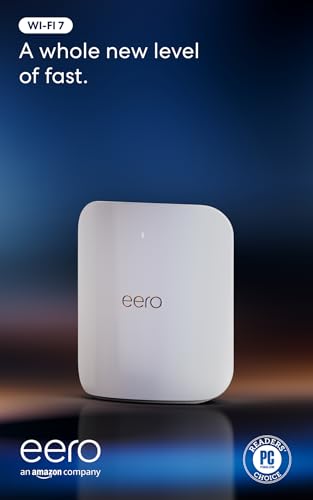
The set-and-forget mesh that brings 10G wired speed to a whole home without any tinkering.
If you want 10G capability but zero interest in VLANs, firewalls, or SFP+ adapters, the eero Max 7 is the answer. It carries two 10 Gigabit Ethernet ports for wired speeds up to 9.4 Gbps, and it builds an automatic mesh that covers up to 2,500 sq ft per unit and connects 250+ devices. TrueMesh intelligence picks the best data path for every device automatically, so there is nothing to configure.
Reliability is the most-praised trait in its review base — 169 owners flag it, more than any other aspect — and 148 more call setup easy through the eero app. Real-world reports show dramatic jumps: one owner went from 40 Mbps in a studio to 1 Gbps after upgrading, and another maxed out a 5-gig fiber line on Speedtest. The app itself gets strong marks for being easy and giving amazing control.
Wi-Fi connectivity gets mixed feedback, with some owners reporting intermittent drops during video calls — a genuine weakness for heavy cam users. It also comes packed as a smart home hub for Thread, Matter, and Zigbee devices, plus a three-year warranty. For a polished, app-driven mesh with real 10G wired ports, this is as simple as it gets.
Simplest 10G route: Two 10G ports and TrueMesh make this the most approachable way to run multi-gig internet at home.
Best for: families who want fast, whole-home Wi-Fi and 10G wired speed without any configuration fuss.
Not ideal for: power users who need granular control or who rely on video calls every day.
8. NETGEAR Nighthawk RS700S

The fastest Nighthawk ever made, with a 10G port that future-proofs your fiber plan.
NETGEAR calls this the most powerful Nighthawk router it has built, and the numbers back it up: Wi-Fi 7 speeds up to 19 Gbps across a tri-band radio, covering up to 3,500 sq ft. The single 10 Gig internet port connects straight to a multi-gig modem, and four 1 Gig LAN ports handle your wired devices. The compact body packs a 360-degree antenna design that punches well above its footprint.
Speed is the overwhelming headline in the review base — 166 owners praise it, the highest count of any aspect — and 159 more highlight reliability. Across real homes, it delivers full 1 Gig speeds over 6 GHz and stable connections through brick walls from a third floor. One owner upgraded from 450 Mbps to 1 Gig and reports flawless coverage in a 3,600 sq ft home with no dead spots, including the garage.
The main complaint is that Apple devices may need Smart Connect disabled to avoid drops, and the 6 GHz band has a known intermittent dropout bug in certain firmware versions. This is a router-only unit — you still need a separate modem. If you want a powerful standalone Wi-Fi 7 router that won’t be obsolete when your fiber plan grows, this is a top-tier pick.
Why it leads on speed
- 19 Gbps Wi-Fi 7 tri-band performance
- Covers up to 3,500 sq ft with 360-degree range
- 10G internet port ready for multi-gig fiber
Honest trade-offs
- 6 GHz band had a firmware dropout bug
- Apple devices may need Smart Connect off
- Router only — modem sold separately
Get this if: you want a standalone Wi-Fi 7 router with huge range and a 10G port that handles today’s fastest plans.
Look elsewhere if: you need multiple 10G or 2.5G LAN ports — this unit has four 1G ports only.
9. ASUS ROG Rapture GT-BE98 Pro

The quad-band gaming monster that shaves milliseconds off your ping on a 10G backbone.
This is the top-shelf option for gamers who want their network to keep up with a 10G NAS and a competitive PC rig at the same time. The GT-BE98 Pro runs a quad-band Wi-Fi 7 radio with speeds up to 30 Gbps, and it backs that with dual 10G ports plus four 2.5G ports for wired devices. Triple-Level Game Acceleration prioritizes your PC gaming traffic from the port all the way to the game server, and reviewers point out ping dropping from 14ms to 12ms.
Build quality is the most-praised aspect — 94 owners flag it — with 92 more celebrating the speed. Reviewers report Wi-Fi 7 throughput of 2,000 Mbps at 3 feet and 1,700 Mbps at 15 feet, with a stable connection on the two 6 GHz bands. The feature set is enormous: VPN server, DDNS, security, QoS, and full setup through the ASUS app or web GUI, with Merlin firmware support for customization.
The honest catch is reliability: connectivity gets mixed feedback — the highest single count in its data — with some owners experiencing severe 2.4 GHz drops with IoT devices. Early hardware revisions were buggy before firmware matured. It is also huge, so plan your shelf space. For a wired-rich gaming setup that wants the fastest possible wireless on a 10G plan, this is the ultimate.
Pure gaming power: Dual 10G ports and a 30 Gbps quad-band radio make this the fastest router on the list for high-end rigs.
Buy it for: serious gamers with multi-gig fiber, a 10G NAS, and a desire for the lowest possible ping.
it’s not for you if: your home relies heavily on 2.4 GHz smart-home gadgets — that band is this unit’s weak spot.
Understanding the Specs
SFP+ vs. RJ45 10G Ports
An SFP+ port takes a small fiber or DAC module, which is common on business fiber connections and NAS devices. An RJ45 10G port uses standard copper Ethernet cables, which is easier for home wiring. Many routers offer one of each so you can match your ISP’s modem type.
Wired Throughput vs. Wireless Speed
A router advertising 19 Gbps wireless speed rarely reaches that on a single device. Wired throughput — the actual data rate on the 10G port — is the better measure for NAS transfers and multi-gig internet. Look for quad-core CPUs with hardware acceleration to sustain high wired speeds.
FAQ
Do I need a 10Gb router for my fiber internet plan?
What is the difference between a 10G WAN port and a 10G LAN port?
Will a 10Gb router make my Wi-Fi faster?
Can I use an SFP+ port with a regular Ethernet cable?
Do all 10Gb routers include Wi-Fi?
How many devices can a 10Gb router support?
Is Wi-Fi 7 required to get 10G speeds?
How long will a 10Gb router stay relevant?
Final Thoughts: The Verdict
For most people, the 10gb router winner is the Ubiquiti Dream Machine Special Edition because it packs 10G routing, a built-in PoE switch, and the full UniFi software suite into one box with no subscription fees. If you want Wi-Fi 7 and a genuine 10G port at a friendlier cost, grab the TP-Link Archer BE600. And for a wired-heavy office or home lab, the Alta Labs Route10 is the one to reach for.
How We Picked
We do not accept paid placement. Every pick is matched to a real buyer and a real use-case; we do not hands-on test units.
Sources & Methodology
Specifications: manufacturer listings and product documentation. Review insights: verified customer reviews, as of July 2026. Pricing: not shown on this page (it changes often); check the current price via the retailer link.
As an Amazon Associate, FitlyFast earns from qualifying purchases. This does not affect which products we feature.