
Our readers keep the lights on and the weekend projects moving. As an Amazon Associate, I earn from qualifying purchases.
Specs are compiled from manufacturer listings and verified buyer reviews and can change over time — please confirm the key details on the product page before buying.
Your safety on the slopes hinges on one number: the DIN setting, which controls how much force it takes for the binding to release your boot in a crash. Set it too low and you’ll pop out mid-turn; too high and a fall could twist your knee. A budget binding can deliver that safety range without the premium price, and this guide separates the dependable from the dangerous.
I’m Rikta — the founder and writer behind FitlyFast. This guide is built by comparing the manufacturers’ published specifications and the patterns across verified customer reviews, so you get each pick’s real strengths and trade-offs instead of marketing spin.
For skiers who want reliable releases, solid step-ins, and winter-long durability while staying affordable, these are the best Budget Ski Bindings worth your attention.
Our Picks at a Glance
How To Choose The Best Budget Ski Bindings
Ski bindings are the safety link between you and your skis. On a budget, you are not giving up safety — you are giving up some extra features like lighter materials or flashier designs. The core job of any binding, holding your boot firmly on the flat and releasing it cleanly in a fall, is non-negotiable at every price.
Match the DIN range to your weight and skill
Every binding has a DIN range, a number printed on the heel that technicians set with a screwdriver. A lighter or beginner skier needs a lower DIN setting, meaning the binding releases more easily. A heavier or aggressive skier needs a higher setting so the ski stays put under force. If you outgrow a binding’s max DIN, the binding cannot hold you safely — that is the fastest way to know you need a sturdier model.
Check whether your boots are GripWalk compatible
Modern boots come in different sole standards. Alpine (ISO 5355) soles are flat, while GripWalk (ISO 23223) soles have a slight rocker for easier walking. If your binding is not marked GripWalk-ready, the two will not mate correctly, causing sloppy step-ins and unpredictable release. Always verify this match before you buy, because a binding that fits your boots is the only binding worth owning.
Measure your ski waist width for the brake size
The brake is the wire arm that digs into the snow when you eject, stopping the ski from sliding away. It must be slightly wider than your ski’s waist (the narrowest part underfoot). A binding labeled 100mm fits skis with a waist around that width, while a 90mm brake suits narrower skis. Buying the wrong brake width means the brake either drags on the snow or fails to deploy properly.
Quick Comparison
| Model | Best For | DIN Range | Brake Size | Skill Level | Amazon |
|---|---|---|---|---|---|
| Marker Squire 11★ Best Overall | Rec skiers on a budget | 3.0 – 11.0 | 100mm | Beginner to Intermediate | Amazon |
| Marker Griffon 13 | Freeride and park riders | 4.0 – 13.0 | 90mm | Advanced to Expert | Amazon |
| Burton Step On Re:Flex | Snowboarders who hate strapping in | — | — | Beginner to Intermediate | Amazon |
In-Depth Reviews
1. Marker Squire 11 All-Mountain Ski Bindings
The crowd favorite — 4.7 stars across 30+ owners — turns a mid-season emergency into a straightforward upgrade.
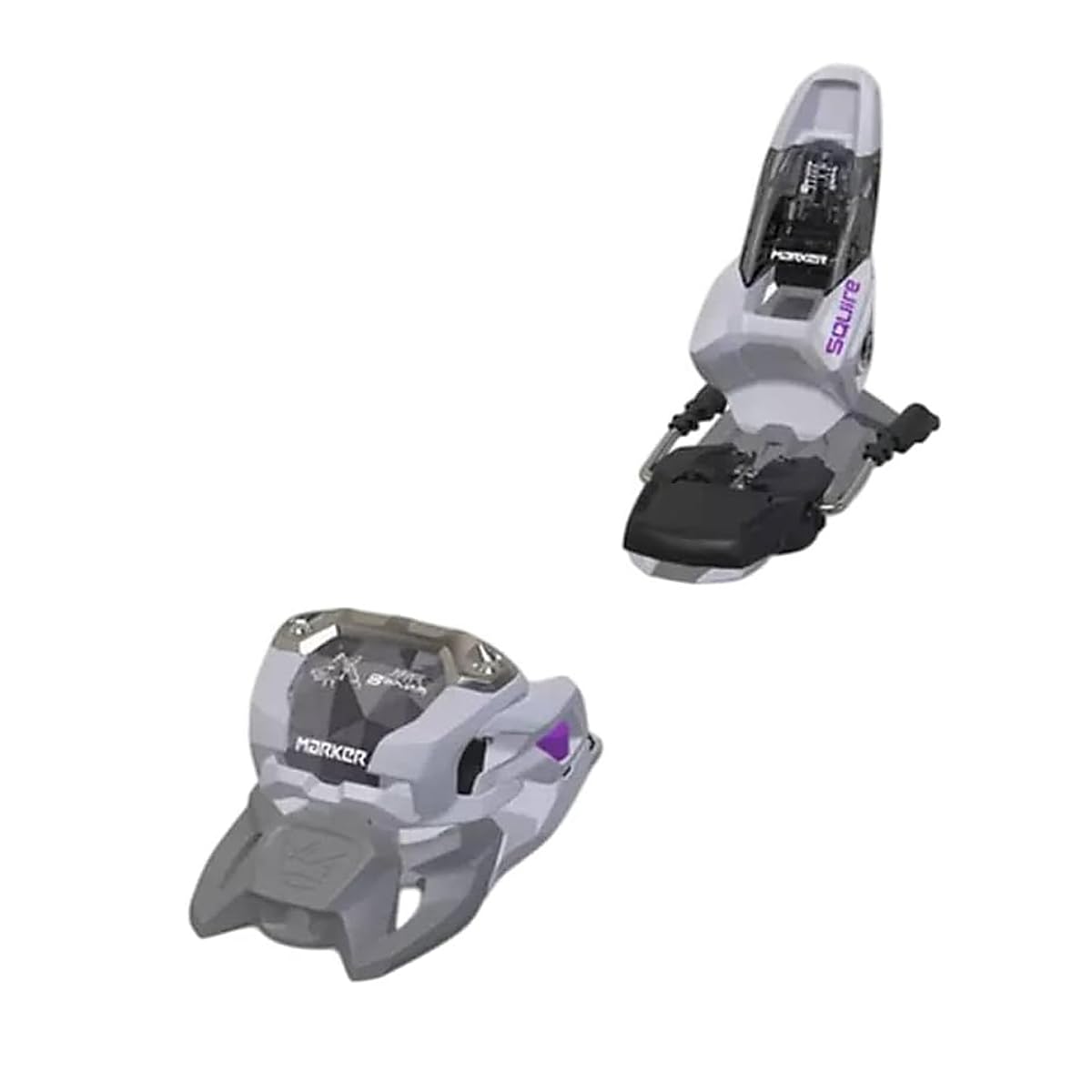
The Marker Squire 11 is the budget pick that handles the most skiers. Its DIN range of 3.0 to 11.0 covers lighter beginners up to heavier intermediate skiers, which makes it the safest choice if you are still building your legs and confidence. A 100mm brake means it fits a wide range of modern all-mountain skis, so you are less likely to be hunting for a specialty size.
Step-in is a genuine pleasure here thanks to the Hollow Linkage 2 heel, which reduces the force needed to click in compared to earlier generations. The toe is GripWalk-ready, meaning it fits both flat Alpine (ISO 5355) soles and the rockered GripWalk (ISO 23223) soles found on most modern boots. The stainless steel AFD plate (the small anti-friction plate under the boot) keeps release values consistent so the binding behaves predictably in a fall.
The composite and stainless steel build holds up across all terrain types, per owner reports. Reviewers consistently praise the Squire 11’s reliability, with one buyer noting it felt better than the binding it replaced. The honest trade-off: this is squarely a beginner-to-intermediate binding (the manufacturer labels it exactly that), so heavier or aggressive skiers will max out its DIN ceiling quickly.
What wins owners over
- Easier step-in force with the new Hollow Linkage heel
- GripWalk and Alpine sole compatibility in one binding
- Stainless steel AFD holds consistent release values
The ceiling you will hit
- DIN stops at 11.0, so advanced riders outgrow it
- 100mm brake may be too wide for narrow carving skis
Smart first purchase: ideal for a beginner to intermediate skier on normal all-mountain skis who wants a reliable, forgiving release range.
Think twice if: you are a heavier, aggressive skier who needs a DIN above 11.0 — you will want the higher-rated model below.
2. Marker Griffon 13 Ski Bindings 2024
The park-and-pipe workhorse that gives advanced skiers a DIN range up to 13.0 worth trusting.
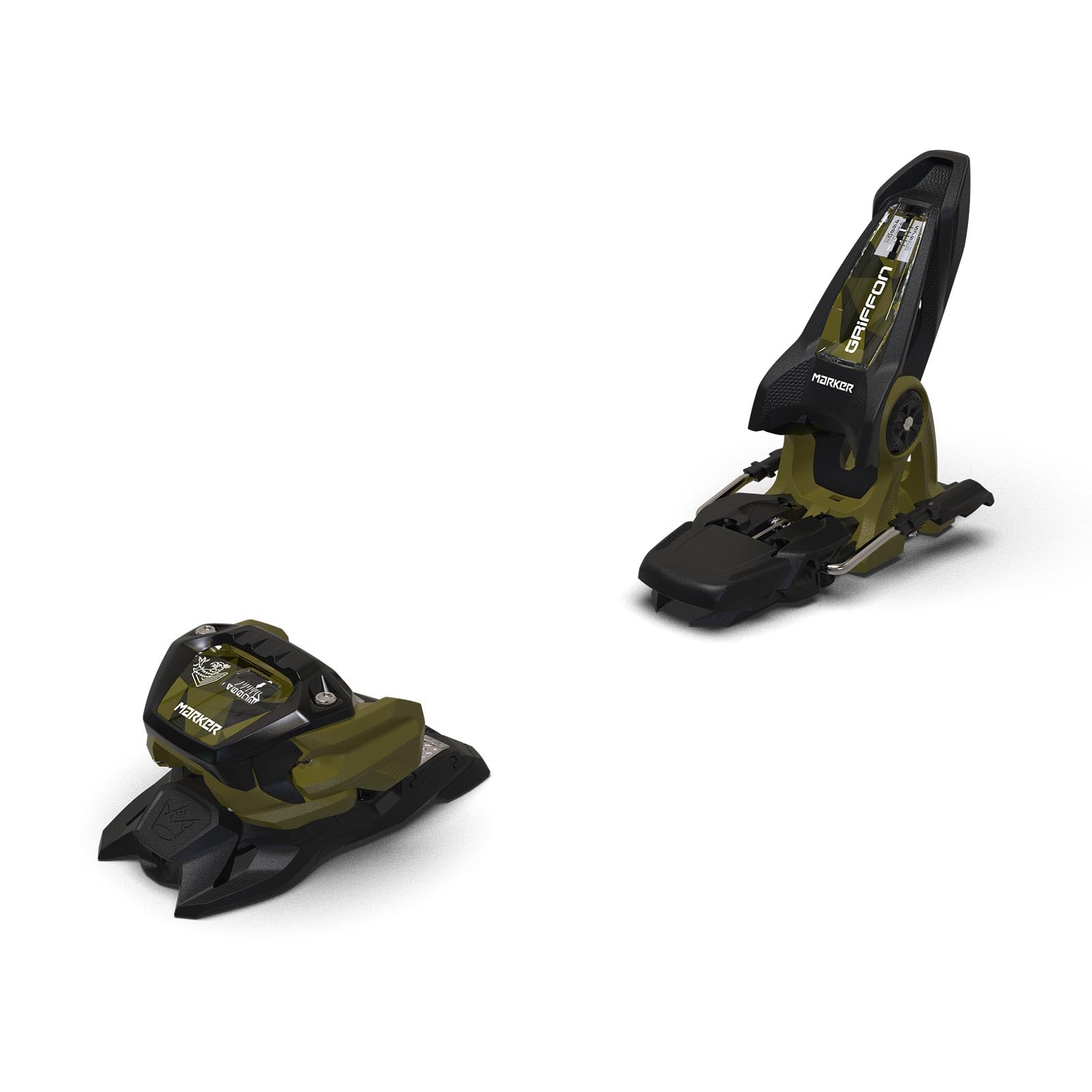
Where the Squire has a DIN range of 3.0 to 11.0, the Griffon 13 stretches from 4.0 to 13.0 — a noticeably higher ceiling that suits heavier and more aggressive freeride, freestyle, and park skiers. It is built for advanced to expert riders (per the manufacturer) and comes in a 90mm brake size for narrower skis. The lower end of the range sits higher too, so very light beginners should stay with the Squire.
The Triple Pivot Elite Toe is the headline feature here. It delivers massive power transmission for edge grip, and the large support surface absorbs energy to reduce early release in hard turns. The Anti Ice Rail lets you scrape snow and ice off your boot soles before stepping in, which sounds small until you are fighting a clogged toe at 8 a.m. in the lift line.
At the heel, the Inter Pivot 3 Freeride design adds vertical elasticity and smoother step-in comfort while cutting unwanted releases. It is also a chameleon for boots: Multinorm (SOLE.ID) technology adapts to Alpine, GripWalk, and Touring soles, so it is a future-proof choice if you upgrade boots later. Owners call the Griffon 13 “the best out there” and mount it on every pair of skis they own. Buyers report that a ski shop can install the Griffon 13 easily, and one reported a broken leg was due to user error, not binding failure.
The advanced skier’s case
- DIN up to 13.0 handles aggressive, heavier riders
- Multinorm tech fits Alpine, GripWalk, and Touring soles
- Centralized swing weight makes spins and tricks easier
What to balance
- 90mm brake suits narrow skis only
- Overkill for light beginners who need a low DIN
Built for the aggressive rider: grab this if you are advanced to expert and need a DIN up to 13.0 for freeride or park work.
Not for new skiers: if you are just starting and weigh less, the Squire’s lower DIN floor is the safer match.
3. Burton Women’s Step On Re:Flex Snowboard Bindings

The step-in revolution that turns strapping in into a five-second click.
This is a snowboard binding, not a ski binding, and it solves a different problem entirely. The Burton Step On system uses a two-point connection at the toe plus a heel lock, so you click in standing up instead of sitting in the snow wrestling with straps. For women who ride, that saved time and energy adds up fast — owners describe strapping in as wasted energy they would rather spend on actual runs.
You’ll step in and out faster with the Toe Hook 2.0, which improves on the first generation’s design. The Re:Flex FullBED Cushioning System (a padded base that spreads pressure underfoot) reduces fatigue and keeps the mounting screws within easy reach. The Re:Flex mounting system (a lightweight frame that lets the board bend naturally) cuts weight while improving flex. Riders report a full season with zero issues, and one buyer calls the Step Ons a “standout” they’d never trade back from.
The honest catch: Step On bindings require Step On compatible boots, so they are a system purchase, not just a binding swap. Owners also note snow can pack into the mechanism, making the click-in harder until you clear it, and you need to hear the click to be sure you are locked in. The hi-back is built from nylon composite blended with 18% short-glass for strength with soft flexibility, and Burton backs the baseplate with a lifetime warranty.
Why riders switch
- No straps — click in standing and save energy
- Re:Flex FullBED cuts fatigue underfoot
- Lifetime warranty on the baseplate
The system commitment
- Requires Burton Step On compatible boots
- Snow can pack in and block the click
Right for speed lovers: choose this if you snowboard and want to skip strapping in completely without losing performance.
Only with the right boots: skip it unless you own or plan to buy Step On compatible boots, since standard boots will not work.
Understanding the Specs
DIN Range
The DIN number is the release setting on a ski binding, adjusted to your weight, boot sole length, and skiing style. A binding’s DIN range shows the lowest and highest settings it can handle. If your required setting falls outside the range — too high for a light beginner, too low for a heavy expert — the binding is the wrong one for you. The Squire’s 3.0 to 11.0 and the Griffon’s 4.0 to 13.0 cover different skiers for exactly this reason.
Brake Width
The brake is the wire mechanism that flips down when the binding releases, stopping your ski from sliding away downhill. It must be sized to your ski’s waist width so it deploys cleanly. A 100mm brake suits wider all-mountain skis, while a 90mm brake fits narrower carving or freeride skis. Picking the wrong width leaves your ski running free after a fall — a genuine safety issue.
FAQ
Can I mount ski bindings at home or do I need a shop?
What does GripWalk compatibility actually mean for my boots?
What is the difference between a DIN of 11 and a DIN of 13?
How do I know which DIN setting I need?
Will a 100mm brake fit my skis?
Are Burton Step On bindings compatible with any snowboard boot?
What is the Anti Ice Rail on a ski binding?
How long do ski bindings last before I need new ones?
Final Thoughts: The Verdict
For most buyers, the budget ski bindings pick that wins is the Marker Squire 11, because its 3.0 to 11.0 DIN range fits the widest variety of skiers, and its lighter step-in force makes daily use a breeze. If you’re an aggressive freeride or park skier, the Marker Griffon 13 offers a higher DIN ceiling up to 13.0 for harder landings. And if you ride a snowboard and hate bending over to strap in, the Burton Step On Re:Flex is your pick — with a 4.8-star rating, it’s the most-loved option here.
How We Picked
We do not accept paid placement. Every pick is matched to a real buyer and a real use-case; we do not hands-on test units.
Sources & Methodology
Specifications: manufacturer listings and product documentation. Review insights: verified customer reviews, as of August 2026. Pricing: not shown on this page (it changes often); check the current price via the retailer link.
As an Amazon Associate, FitlyFast earns from qualifying purchases. This does not affect which products we feature.