
Our readers keep the lights on and the weekend projects moving. As an Amazon Associate, I earn from qualifying purchases.
Specs are compiled from manufacturer listings and verified buyer reviews and can change over time — please confirm the key details on the product page before buying.
Finding a shrub that actually thrives in shade often feels like a lost cause — most nurseries push sun-loving plants that turn leggy and pale the moment they lose direct light. This guide cuts through that frustration with nine proven performers that bring color, structure, and privacy to the dim corners of your yard.
I’m Rikta — the founder and writer behind FitlyFast. This guide is built by comparing the manufacturers’ published specifications and the patterns across verified customer reviews, so you get each pick’s real strengths and trade-offs instead of marketing spin.
From evergreen privacy screens to reblooming lilacs, these are the best bushes for shade that actually deliver color, structure, and year-round interest in low-light spots.
Our Picks at a Glance


How To Choose The Best Bushes For Shade
Shade shrubs fail for two main reasons: the buyer ignores the hardiness zone, or the buyer picks a sun-lover and wonders why it sulks. Start by checking your zone, then match the plant to how much direct light that spot truly receives.
Check your USDA hardiness zone first
Every shrub in this list carries a zone range — a climate map number that tells you how cold your winters can get. A plant rated for zones 6-10 will likely struggle through a zone 5 winter, so match the number to your region before you fall for the foliage.
Decide between evergreen and deciduous
If you want winter privacy and color when everything else is bare, choose an evergreen shrub—it keeps its leaves all year. If you prefer bigger, showier blooms in spring, a deciduous shrub drops its leaves in fall but rewards you with seasonal fireworks. Your choice depends on year-round structure versus spring spectacle.
Quick Comparison
| Model | Best For | Mature Height | Zones | Item Weight | Amazon |
|---|---|---|---|---|---|
| Obsession Nandina★ Best Overall | Year-round color | 48 inches | 6-10 | 8.8 lb | Amazon |
| Tea OliveFragrant Pick | Fragrant privacy | 20 feet | 8-11 | 5 lb | Amazon |
| Eastern SnowballBest Value | Showy spring blooms | 12 feet | 6-9 | 1.5 lb | Amazon |
| Thuja Green Giant #1 | Fast privacy screen | 50 feet | 5-9 | — | Amazon |
| Encore Azalea Embers | Triple-season color | 36 inches | 6-10 | — | Amazon |
| Blue Princess Holly | Evergreen structure | 12 feet | 5-8 | 5 lb | Amazon |
| Thuja Green Giant 10-pack | Budget hedge | 40 feet | 5-9 | — | Amazon |
| Blue Chiffon Hibiscus | Large summer blooms | 96 inches | 5-9 | 8.8 lb | Amazon |
| Bloomerang Lilac | Fragrant reblooming | 7 feet | 3-8 | 12 lb | Amazon |
In‑Depth Reviews
1. Southern Living Obsession Nandina Shrub
Our pick — over 4.5★ from 900+ verified ratings; the strongest balance of quality and price.
The shade shrub that refuses to look dull, throwing vivid red foliage from spring through winter.
If your shady corner has been a sea of green, this Nandina is the fix. It delivers year-round leaf color that shifts from green in spring to red-green by summer and fall, so the spot never goes flat. It blooms with no blossoms at all — the show is entirely in the foliage, which means no deadheading and no petal cleanup for you.
Owners call it the closest thing to a nursery-fresh plant you can get by mail. On arrival, the roots stay moist and the canes look vigorous, which is the single biggest worry when buying any live shrub online. It is a slow grower, so be patient — but the low-maintenance payoff is real: water twice a week until established, then once a week after that.
At 8.8 pounds for a 2-gallon pot, this is a hefty, well-rooted plant that arrives feeling substantial rather than spindly. It is happiest in sun to part shade, which makes it wonderfully forgiving for that spot that gets a few hours of morning light and nothing else.
What wins people over
- Year-round red foliage keeps shade areas colorful in every season
- Healthy, nursery-quality plants arrive moist and ready to plant
- True low maintenance with simple watering routine once established
Worth knowing
- Slow-growing habit means it takes time to fill a space
- Loses all leaves in winter despite the colorful claim
- Size at delivery varies more than some buyers expect
Reach for this if: you want easy, colorful foliage in a part-shade bed with minimal upkeep.
Think twice if: you need instant height — this one grows slowly and drops its leaves in winter.
2. Perfect Plants Tea Olive Live Plant
A glossy evergreen whose southern sweet-tea scent perfumes the whole yard when it blooms.
This is the shrub for anyone who wants their shade garden to smell as good as it looks. The Tea Olive carries pale yellow flowers in spring and summer that release a fragrance owners describe as similar to Southern sweet tea — an aroma that drifts across the landscape rather than staying stuck to the bush. It is an evergreen with light-green foliage on thin, shrub-like branches that hold a compact, bushy frame without ever needing pruning.
Buyers consistently report the plant arriving larger than expected, healthy, and well-packaged — exactly what you want when paying for a live plant sight unseen. One buyer’s plant was even turned upside down in the box yet still arrived healthy, proof of the protective packing. It grows well in full sun and partial shade, so a spot with afternoon shade suits it fine.
The mature size is where this pick separates from compact shrubs: it reaches 20 feet tall with a 15-20 foot spread. That is a privacy screen in the making, not a foundation plant, so give it room to stretch. It towers over the Eastern Snowball Bush below, which tops out at 12 feet — a 67% height advantage for anyone measuring sightlines.
Best for: warm-climate gardeners (zones 8-11) who want a fragrant, no-prune evergreen privacy hedge.
Not for: cold regions — this beauty won’t survive a hard winter frost.
3. Eastern Snowball Bush (Viburnum) – Quart Pot
A fast-growing deciduous shrub that erupts in huge white snowball flowers every spring.
Few shade shrubs put on a spring show like the Eastern Snowball. It produces abundant clusters of large, pure white, snowball-shaped flowers that catch the eye from across the yard, and the bright green foliage takes on reddish overtones in fall for a second act. Buyers report it grows very fast and blooms beautifully the year after planting — one buyer gave it as a thank-you gift and watched it flourish the following summer.
This is a substantial plant at maturity, reaching 12 feet tall with a 10-15 foot spread, so it works as a foundation plant, hedge, or screen. It even attracts butterflies when the showy blooms open. In the quart pot, the plant arrives small and light — just 1.5 pounds — so it is a fraction of the 8.8-pound Nandina above, and it may ship dormant from November through April. That small start rewards patience, not instant gratification.
The foliage is shaped more like an oak leaf than typical viburnums, which gives it a distinctive texture that stands out against rounder-leaved neighbors. It needs regular watering and prefers full sun to partial shade, so a bright shade spot with dappled light keeps it happy.
Who it suits: gardeners who want a big, fast-growing bloomer with classic white flowers on a budget.
Who should pass: anyone needing evergreen structure — this one goes fully bare in winter.
4. Perfect Plants Thuja Green Giant Arborvitae
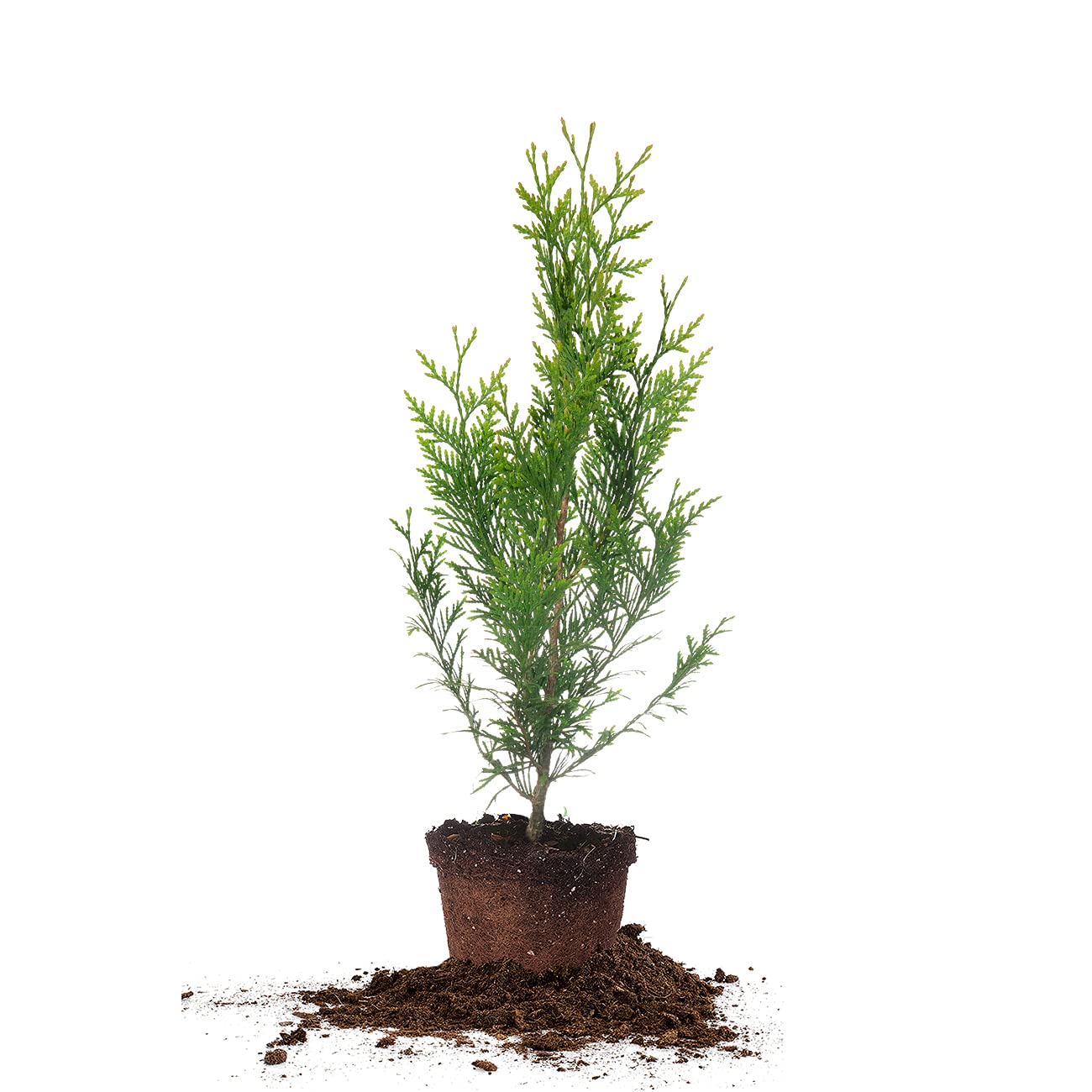
A fast-growing evergreen that turns into a towering privacy screen with almost no effort.
If your shade problem is really a privacy problem, the Thuja Green Giant is the answer. It is widely considered the premier fast-growing privacy tree for much of the United States, adding dense, dark green foliage that smells like Christmas trees when you break a leaf. It grows in a wide, pyramidal shape that can reach 50 feet tall at maturity, yet it prunes down easily if you want a shorter hedge.
Buyers are consistently impressed with the health and quality of the 1-gallon trees, which arrive roughly 16-18 inches tall and in great condition. Even delivered in summer heat, the trees hold up well, and owners mention strong growth within the first season — one noted the trees nearly doubled in height after five months in pots. It thrives in zones 5-9, which covers most of the country, and once established it needs little to no maintenance.
This is the shrub to plant if you want a fast screen that keeps its leaves all winter. Unlike the deciduous Snowball Bush above, this one stays green year-round, giving you privacy in every season. Just give it regular watering while it settles in, then let it run.
The strong points
- Grows 3-5 feet per year once established for fast privacy
- Evergreen foliage keeps screening through winter
- Thrives across the broad zones 5-9 range
The trade-offs
- Space them 6-7 feet apart for a screen, so you need room
- Can reach 50 feet tall if never pruned
Grab this if: you want a fast, evergreen, low-maintenance privacy screen for a large yard.
skip it if: your space is tiny — this tree wants to get huge.
5. Encore Azalea Embers Azalea

A compact evergreen azalea that blooms spring, summer, and fall in fiery red.
Most azaleas give you one glorious spring show and then go quiet. The Encore Azalea Embers breaks that pattern, blooming in spring, summer, and fall — three seasons of red flowers from a shrub that stays a neat 36 inches tall and 42 inches wide at maturity. That compact size makes it a natural fit for containers, small landscapes, or accents tucked into a shade border.
It thrives in USDA zones 6-10 and prefers part sun, which aligns perfectly with that dappled-shade spot under a tree canopy. Owners describe the plant arriving thick, green, and blooming — one buyer’s Christmas gift was photographed blooming beautifully the next day. The evergreen foliage keeps year-round interest even between bloom cycles.
The honest caveat is winter hardiness: a few customers note plants struggling or dying over a mild winter, which suggests this azalea rewards good soil and a sheltered spot. It is moderate-watering and low-maintenance, but it does best when you give it a little protection from harshest cold. For a smaller, repeat-blooming option, this beats the larger Snowball in pure flower power per square foot.
Perfect for: small-space gardeners who want repeated color from a compact evergreen.
Be ready for: possible winter losses in the coldest end of its range.
6. Ilex X meserveae ‘Blue Princess’ (Blue Holly)

A lustrous evergreen holly that sets bright red berries just as the rest of the garden goes bare.
Winter is when the Blue Princess Holly earns its keep. It produces red berries in late fall and early winter, and the dark green evergreen foliage provides a striking contrast against the berries — a pop of color precisely when the shade garden needs it most. Owners describe the plant as gorgeous, healthy, and arriving with berries already on it, which is a rare treat for a mail-order shrub.
It grows well in full sun or partial shade and reaches 12 feet tall with a 9-foot spread at maturity. The plant ships fully rooted in a #2 size container and can go straight into the ground on arrival. It is hardy to zone 5, and owners specifically note it takes winter damage far better than other hollies they’ve grown.
Before you buy, know this: to get red berries, you need a male pollinator nearby. The Blue Princess is female, so plant a Blue Prince holly close by—a small planning step for a big winter payoff. The plant arrives in a 5-pound container, so you get a sturdy, well-rooted start.
Why owners love it
- Red berries and evergreen leaves carry the shade garden through winter
- Hardy to zone 5 with strong winter survival
- Arrives fully rooted and often already bearing berries
One thing to plan
- Needs a male Blue Prince pollinator nearby for berries
- Reaches 12 feet tall, so give it vertical room
Choose this for: winter color and evergreen structure in a shade bed.
Remember: it needs a pollinating partner to produce those signature berries.
7. 10 Thuja Green Giant Arborvitae Trees

Ten fast-growing evergreens in one box — the budget way to start a full privacy hedge.
If you need to fill a long property line, buying trees one at a time gets expensive fast. This 10-pack of Thuja Green Giant arborvitaes solves that by sending ten 7-10 inch potted saplings ready to plant, giving you an instant hedge starter kit for a fraction of what mature trees cost. Owners call it the best value for this species, with all ten arriving healthy, hydrated, and alive even in 93°F heat.
Each tree grows fast — 3 feet per year once established — and matures to 40 feet tall and 15 feet wide. Space them 6-7 feet apart for a quick screen. They are very hardy in zones 5-9 and keep their evergreen color all winter, making them a reliable privacy choice for cold climates. One owner planted ten saplings and watched them grow from 8 inches to 3.5 feet in 16 months.
These are young saplings, so they demand more care in the first year than a larger container plant. Owners emphasize regular deep watering — a 5-gallon bucket drip two to three times a week — plus fertilizing to get them established. Put in that early effort and they reward you with rapid growth. It is a longer game than buying one big tree, but the cost per plant makes it worth it for a full hedge.
Best for: budget-minded gardeners starting a long privacy hedge from scratch.
Expect to: water and fertilize diligently the first year for best survival.
8. Proven Winners Blue Chiffon Rose of Sharon

A towering hibiscus shrub smothered in soft ice-blue, chiffon-like blooms from spring through fall.
For sheer flower power in a shade-tolerant shrub, the Blue Chiffon Rose of Sharon is hard to match. It produces masses of delicate, ice-blue blooms with a ruffled, chiffon texture from spring through fall, turning a shady corner into a focal point. Owners describe the plant as gorgeous and healthy, often arriving with dozens of buds ready to open — one buyer saw their first bloom within days of a Mother’s Day delivery.
This is a big plant at maturity, reaching 96-144 inches tall (8-12 feet) with a 48-72 inch spread, so treat it as a small tree or tall screening shrub rather than a ground-hugger. It thrives in full sun to part shade across zones 5-9, and the 8.8-pound 2-gallon container gives you a substantial, well-rooted start. The botanical name is Blue Chiffon Hibiscus syriacus.
The honest trade-off: it is deciduous, so it drops its leaves in winter and regrows in early spring. And bloom performance can vary — most owners rave about the flower show, while a rare few report slow blooming. Give it regular water and full-ish sun and it typically delivers. This is the pick for someone who wants a big, bold, repeat-flowering shrub rather than subtle evergreen texture.
What stands out
- Huge ice-blue blooms from spring through fall
- Reaches 8-12 feet for serious screening presence
- Arrives healthy with buds ready to open
The catch
- Deciduous — bare branches through winter
- Bloom volume varies from plant to plant
Plant this for: a towering, long-blooming flower show in a part-shade spot.
Accept that: winter brings bare branches until spring regrowth.
9. Proven Winners Bloomerang Dark Purple Lilac

A reblooming dwarf lilac that packs classic fragrance into a compact, rounded shrub.
Traditional lilacs bloom once in spring and then sit quietly for a year. The Bloomerang Dark Purple breaks that rule, flowering in spring and then continuing to bloom summer through fall — a second act that keeps the fragrance going from mid-summer to frost. Owners consistently describe the plant arriving larger than expected, full, bushy, and often already in bloom, with a wonderful scent that carries across the garden.
This dwarf lilac matures to a neat 4-7 feet tall with a 4-6 foot spread, making it manageable in a way that full-size lilacs rarely are. It thrives in partial shade to full sunlight across the cold-hardy zones 3-8, which makes it the best choice here for northern gardeners. The shrub comes in a #3 size, 3-gallon container weighing 12 pounds — the heaviest, most substantial plant in this list — so you are getting real size on arrival.
It is deciduous and goes dormant (no leaves) from late fall through winter, which is completely normal; it leafs out again in spring. The plant self-cleans by dropping spent petals, keeping the garden tidy without deadheading. If you want that classic lilac fragrance but have a smaller space, this compact rebloomer delivers it in a tidy package.
Choose it for: cold climates (zones 3-8) and the longest lilac bloom season possible.
Note: it drops leaves in winter but returns with spring growth.
Understanding the Specs
USDA Hardiness Zones
This number tells you the coldest winter a plant can survive. A shrub rated for zones 6-10 will likely die in a zone 5 winter, so match the zone range to your region before buying. It is the single most important spec for shade bushes because a plant that can’t survive your winter will never show its foliage.
Mature Height vs. Shipping Size
Mature height is what the shrub will reach after years of growth — the number you use for spacing and planning. Shipping size is what arrives in the pot, which is always much smaller. A 1.5-pound quart pot and an 8.8-pound 2-gallon pot both grow into full-size shrubs, but the bigger pot gives you a faster, more established start.
FAQ
Will these bushes really grow in full shade with no direct sun?
How do I know which USDA zone I’m in?
What’s the difference between evergreen and deciduous shade bushes?
How far apart should I space these shrubs when planting?
How much watering do these bushes need after planting?
Do these shrubs need pruning to stay healthy?
Why do some of these plants arrive dormant or bare?
Which of these bushes attract butterflies or hummingbirds?
What does a #2 or #3 size container mean for the plant?
Can I plant these shrubs in containers instead of the ground?
Final Thoughts: The Verdict
If you want one dependable pick, the best bushes for shade winner is the Southern Living Obsession Nandina because it delivers year-round red foliage with genuine low maintenance in that tricky part-shade zone. If you want intoxicating fragrance and a tall privacy screen, grab the Tea Olive. And for cold-climate gardeners who want lilac scent from a compact, reblooming shrub, the Bloomerang Dark Purple Lilac is the one to reach for.
How We Picked
We do not accept paid placement. Every pick is matched to a real buyer and a real use-case; we do not hands-on test units.
Sources & Methodology
Specifications: manufacturer listings and product documentation. Review insights: verified customer reviews, as of August 2026. Pricing: not shown on this page (it changes often); check the current price via the retailer link.
As an Amazon Associate, FitlyFast earns from qualifying purchases. This does not affect which products we feature.