
Our readers keep the lights on and the weekend projects moving. As an Amazon Associate, I earn from qualifying purchases.
Specs are compiled from manufacturer listings and verified buyer reviews and can change over time — please confirm the key details on the product page before buying.
When you’re on a budget, the worry is real: you might buy headphones that make your music sound better than it is, so your mixes sound great at home but terrible on other speakers. The fix is a pair with a flat, honest sound — and you don’t need to spend a lot to get it. Here are seven wired headphones that earn their place in a home studio, ranked by how accurately they let you hear your work.
I’m Rikta — the founder and writer behind FitlyFast. This guide is built by comparing the manufacturers’ published specifications and the patterns across verified customer reviews, so you get each pick’s real strengths and trade-offs instead of marketing spin.
You need studio headphones that don’t color your sound, and this breakdown of the best budget studio headphones separates true monitoring tools from consumer hype.
Our Picks at a Glance

How To Choose The Best Budget Studio Headphones
Your choice should focus on sound honesty, not first-impression excitement. You need headphones that reveal the flaws in your mix so you can fix them — the opposite of consumer headphones that boost bass to make everything feel thrilling.
Your Working Environment Decides the Design
If you record vocals or mic’d instruments in the same room as your speakers, you need a closed-back pair that physically blocks outside noise so it doesn’t bleed into your take. If you only mix and edit in a quiet space, a semi-open design gives you a wider, more natural soundstage, but it leaks sound both ways.
What Your Gear Can Actually Drive
Headphones with higher impedance (measured in ohms) often sound more accurate, but they need more power to reach a good volume. Plugging a high-impedance pair straight into a laptop or phone can leave you with quiet, lifeless audio, so check what you’re plugging into before you commit.
Prioritize the Parts You Can Replace
In a studio, cables get stepped on and ear pads wear out. A detachable cable and replaceable pads turn a five-year headache into a small, cheap fix, while a fixed cable means the whole pair is done the moment the wire fails.
Quick Comparison
| Model | Best For | Driver Size | Design | Cable | Amazon |
|---|---|---|---|---|---|
| OneOdio Pro-50★ Best Overall | All-purpose value | 50mm | Closed-back | Detachable dual 3.5mm / 6.35mm | Amazon |
| Sony MDR-7506Industry Standard | The industry standard | 40mm | Closed-back | Fixed 9.8ft coiled | Amazon |
| AKG K240 Studio | Mixing with a wide soundstage | 30mm | Semi-open | Detachable mini-XLR | Amazon |
| MAONO MH700 | Tracking and podcasting | 50mm | Closed-back | Detachable straight & coiled | Amazon |
| Audio-Technica ATH-M30x | Studio entry-level monitoring | 40mm | Closed-back | Fixed single-side | Amazon |
| Sennheiser HD 280 Pro | Maximum noise isolation | — | Closed-back | Coiled, replaceable | Amazon |
| Audio-Technica ATH-M40x | Accurate reference monitoring | 40mm | Closed-back | Detachable straight & coiled | Amazon |
In-Depth Reviews
1. OneOdio Pro-50 Studio Monitoring Headphones
The budget workhorse whose 50mm drivers punch far above its price tag.
Owners say the 50mm drivers deliver sound quality comparable to pairs costing three times as much.: a 50mm driver unit (the part that turns electrical signals into sound) is much larger than the 30mm in the AKG K240, giving you rich, punchy bass and clear highs. The lively sound works great for gaming and casual listening, but it also suits music production because you can hear each element in a track separately.
Comfort is the other headline feature. The protein leather memory foam ear cushions are soft enough that buyers report wearing them through long gaming sessions without any fatigue, and the single-sided swiveling earcups fold flat so the whole thing tucks neatly into a bag. Two detachable cables come in the box — one with 3.5mm and 6.35mm plugs on each end and another with a mic — so you never need to hunt for an adapter no matter what you plug into.
Some drawbacks exist: the earcups feel small for larger ears, the swivel rotates too freely, and one owner reported a broken plastic speaker mount (the warranty replaced it after a follow-up). The strongest endorsement: A buyer who used the same pair for over five years is buying another one — at this price, that longevity is tough to top..
What wins people over
- Hi-Res Audio certified with big 50mm neodymium drivers for clear, detailed tone
- Adapted for everything thanks to gold-plated 3.5mm and 6.35mm plugs on the cable
- Foldable, swiveling earcups make it genuinely portable
Where it’s limited
- Earcups are snug for larger ears
- Swiveling cups spin more easily than some owners like
- Plastic mount can fail, though warranty support exists
Grab these if: you want one pair that handles studio monitoring, gaming, and daily listening while staying affordable.
Think twice if: you need a truly neutral, flat response for critical mixing — these are fun, not clinical.
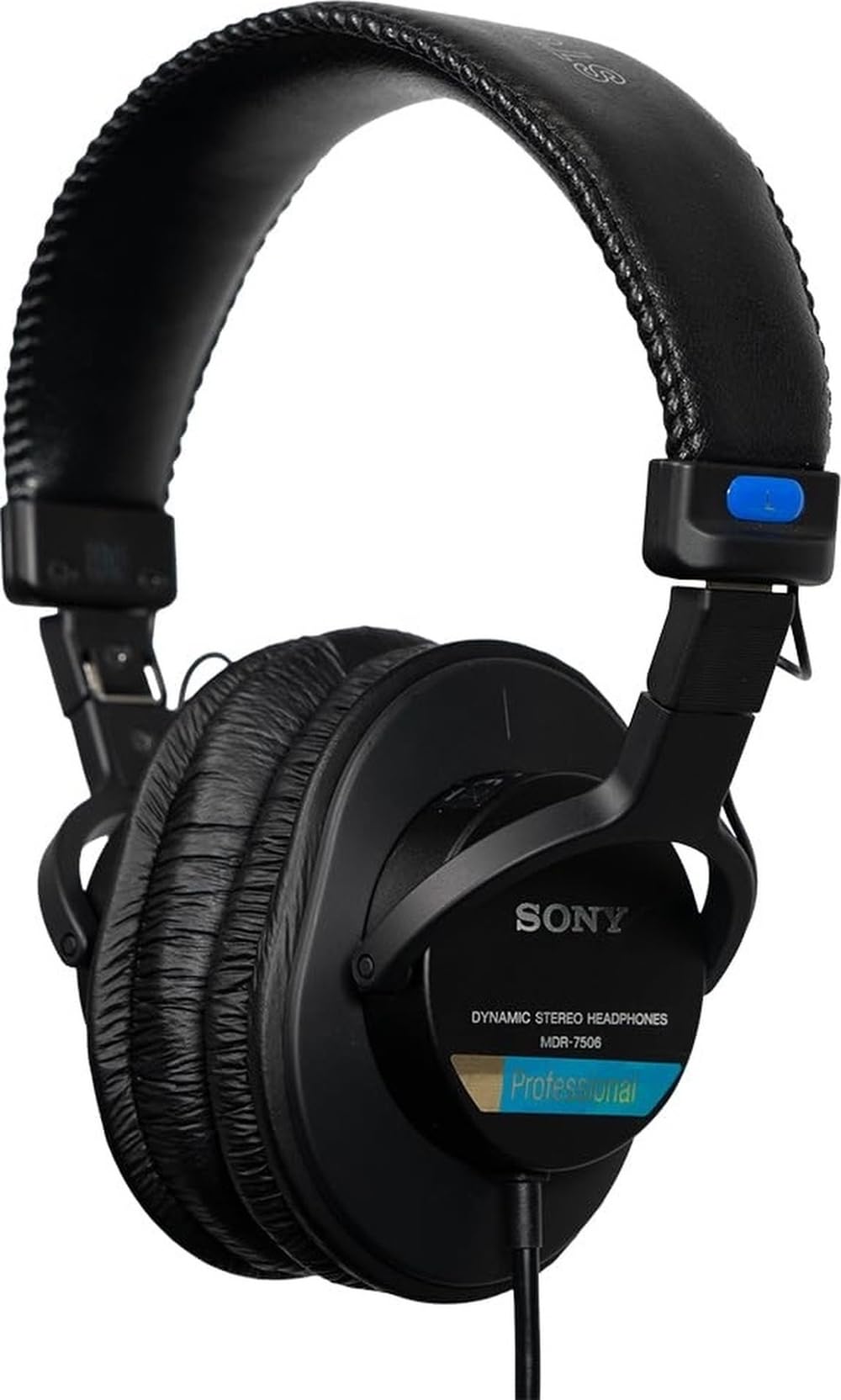
2. Sony MDR-7506 Professional Headphones
The 40mm closed-back legend that has defined studio monitoring for decades.
Spot headphones in a pro studio? They’re likely these. The 40mm drivers (the speakers inside) with neodymium magnets (strong magnets that improve efficiency) deliver a detailed sound that owners call the industry standard for over 25 years — deep clean bass, crisp highs, and clear instrument separation so you hear exactly what’s in your mix. The frequency response (the range of pitches it can reproduce) spans 10Hz to 20kHz, covering the full range of human hearing.
The coiled 9.8-foot cord is thick and durable (though not detachable, which is a real consideration), and the 1/4-inch screw-on adapter is built properly. Owners praise the comfort, noting the ear pads sit well even with glasses, and the headphones fold up into the included soft case for travel. The passive noise isolation is strong — it blocks outside noise without needing any battery-powered cancellation.
What makes these special is their neutrality: they don’t flatter your music, they reveal it. Owners note the treble is brighter and the mids are clearer than the Audio-Technica ATH-M50, making them a favorite for critical listening. The trade-off is the fixed cable — when it goes, you can’t just swap in a new one — and the ear pads do wear out over time, though replacements are easy to find. As a budget studio staple, this is as close to a sure thing as the category offers.
The professional’s pick: The 10Hz–20kHz response and durable 9.8-foot cord make this the reference standard for a reason..
The honest catch: the cable is permanently attached, so a broken wire means a repair or a new pair.
3. Audio-Technica ATH-M40x Monitor Headphones
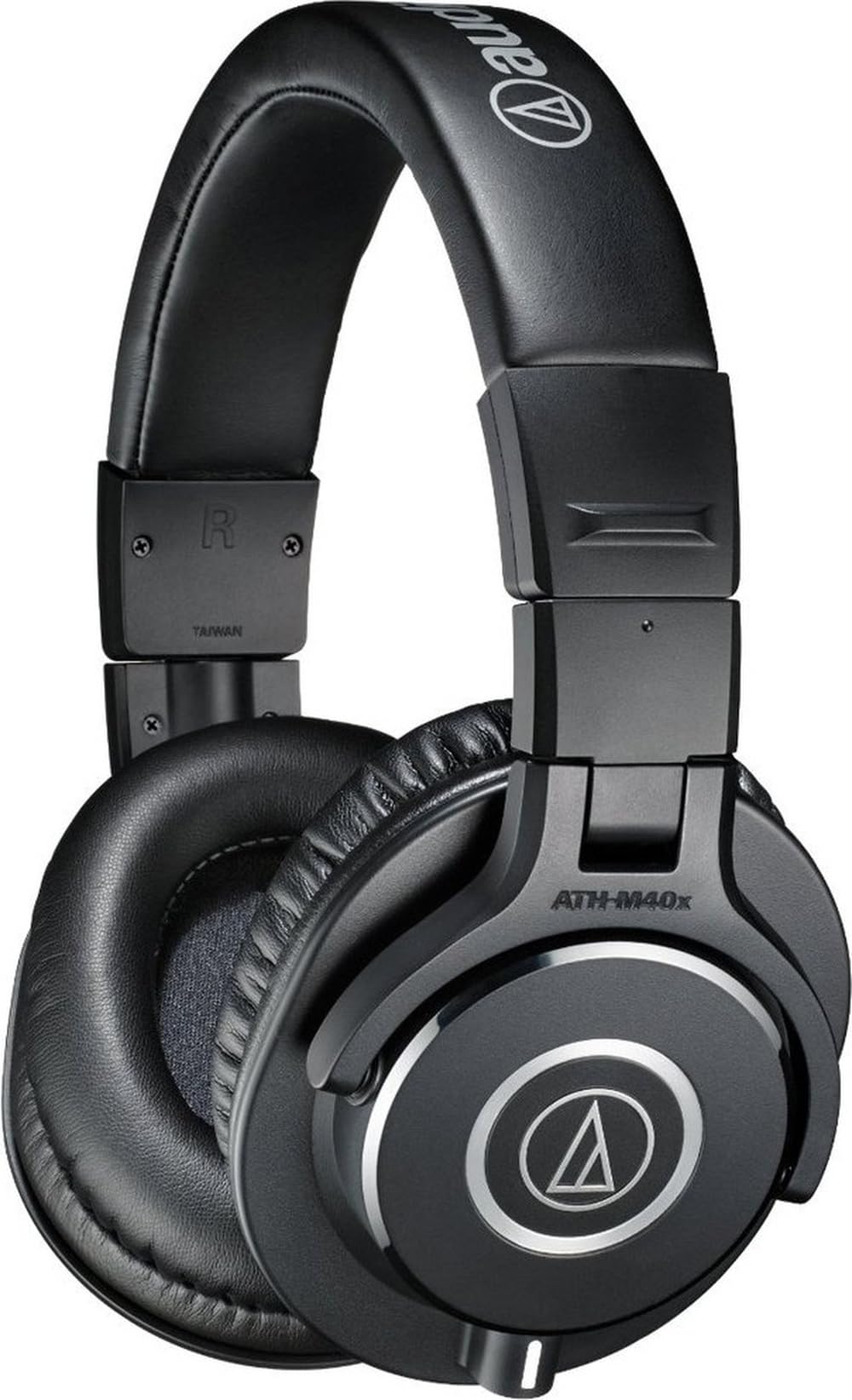
The neutral-sounding studio favorite that many argue beats its famous bigger sibling.
Here’s a surprise: many owners say the ATH-M40x sounds more neutral than the pricier ATH-M50x, which adds a bit of bass and treble color. The 40mm drivers with rare earth magnets and copper-clad aluminum wire voice coils (the wire that moves the diaphragm) deliver a flat, accurate response, making this a real tool for serious mixing — owners call its tonal accuracy top-tier at any price.
The 90-degree swiveling earcups let you flip one cup off your ear for quick single-side monitoring, a feature that feels like a luxury at this level. Both a straight and a coiled detachable cable come in the box, along with a protective case, and the twist-lock connectors keep the cables securely in place. The circumaural design contours around your ears to block out ambient noise in loud rooms.
The recurring theme in reviews is that the stock earpads run small for people with bigger ears — swapping in larger memory foam pads is a popular fix — and the clamp is tight at first. The build is solid plastic that owners say is best kept for home or studio use rather than heavy travel, and at least one owner had a hinge snap. But for accurate reference sound on a budget, this is the pair that serious hobbyists and professionals alike reach for.
Why it’s a studio favorite
- Flat, neutral response with excellent isolation for tracking and mixing
- 90° swiveling earcups for one-ear monitoring
- Two detachable cables and a case included
What to know before buying
- Stock earpads are snug on larger ears
- The plastic hinge can snap, so handle with care
- Benefits from a headphone amp for best performance
Reach for these if: you want neutral, accurate monitoring that competes with pricier options.
Look elsewhere if: you need a rugged pair for constant travel — this one prefers a quiet studio desk.
4. Sennheiser HD 280 Pro Headphones
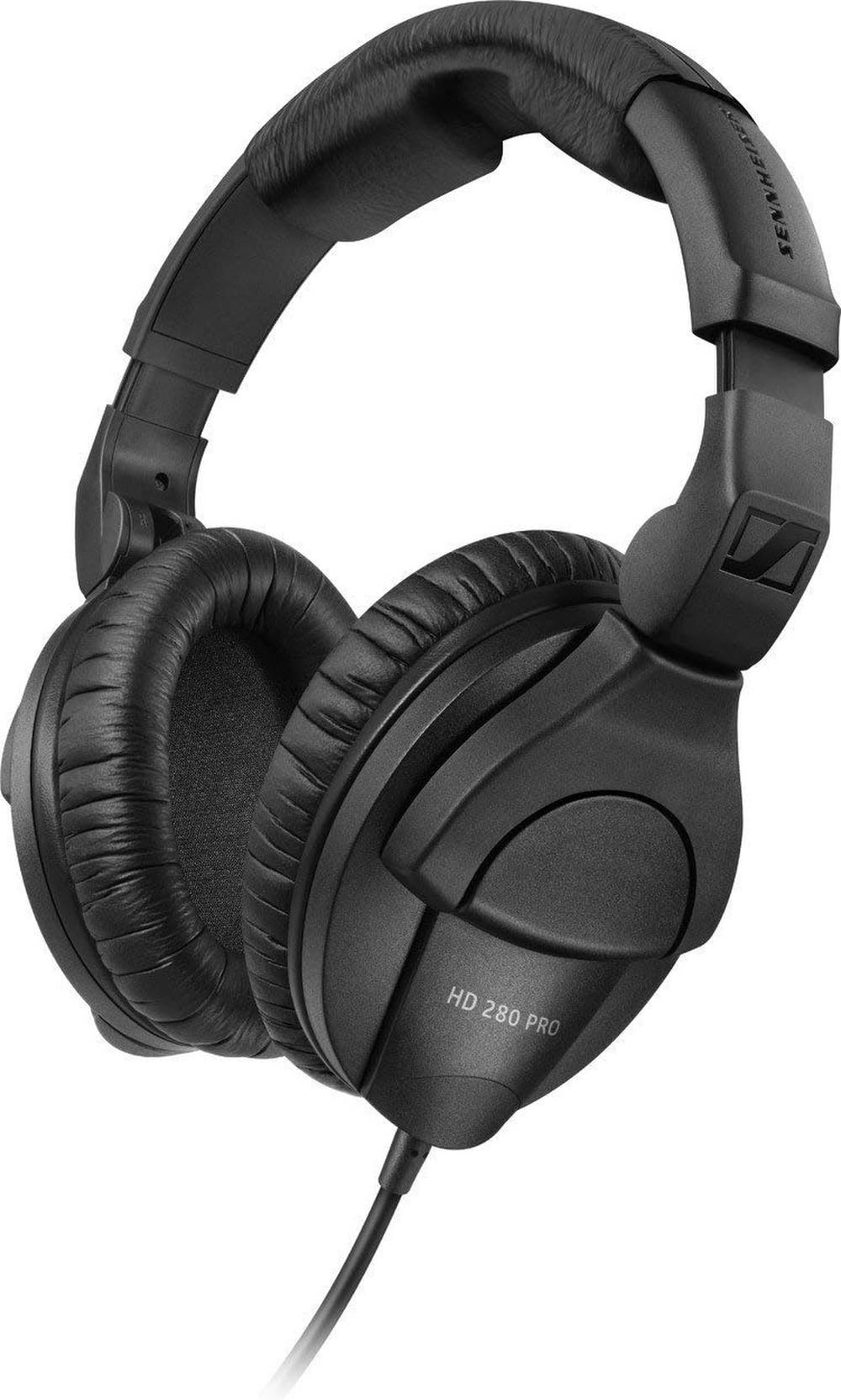
The closed-back isolator that blocks up to 32dB of the world around you.
If you record in a noisy room or live with a loud TV, the HD 280 Pro is built for you. The closed-ear design delivers up to 32dB of passive attenuation, which owners say is enough to block out airplane noise and the television across the house. That isolation, combined with a warm, natural sound reproduction, makes these a favorite for monitoring, recording, and fieldwork where outside sound is the enemy.
What sets Sennheiser apart is repairability: the earpads, headband padding, and audio cord are all easily replaceable, so a worn-out cushion doesn’t mean a dead pair. The coiled cord stretches from about 3 feet to 9.8 feet, giving you room to move without a tangle hazard. Owners mention these are twice as loud as other headphones on the same device, revealing fine detail..
Comfort and fit get mixed reviews. Some owners wear them all day comfortably, but others find the clamp force (how hard they press on your head) — measured at 4N by one owner — too tight for larger heads, and they need a break-in period of up to 12 hours. An occasional owner has seen the plastic headband crack over years of use. If you have a big head, try them first; if they fit, you get a durable, isolating workhorse that can last 6+ years.
Built to block and last: 32dB of attenuation plus fully replaceable pads and cables make this a long-term investment.
The fair warning: the tight clamp is real — large-headed buyers should expect a break-in period or discomfort.
5. AKG K240 Studio Headphones

The legendary semi-open pair that reveals mix details for a cult following of engineers.
These headphones have serious studio heritage, and they earn it with a sound that owners consistently call flat, neutral, and revealing. The 30mm XXL transducers (speakers) with patented Varimotion diaphragms (the moving part that creates sound) deliver solid bass and very clear highs, but the real magic is the semi-open design, which gives a wide, spacious soundstage (the sense of space around instruments) that makes it easier to place instruments in your mix. Owners say the response rivals far pricier studio monitors.
The self-adjusting headband is a clever feature — it fits itself to your head without needing manual adjustment, and the over-ear pads are comfortable enough that owners describe the headphones as “disappearing” during long sessions. The 9.9-foot detachable cable connects via a mini-XLR plug, so if it gets damaged you can replace just the cable instead of the whole pair. A screw-on 1/4-inch adapter comes included.
Here’s the honest trade-off: a semi-open design leaks sound in both directions, so these are not the pick if you’re recording vocals in the same room — the mic will pick up your headphones. They also don’t deliver rumbling sub-bass, and some owners note they need a headphone amp to reach satisfying volume. The build gets mixed feedback, with some finding the headband flimsy. But for mixing, mastering, and critical listening in a quiet room, the K240 is a budget favorite that’s been trusted for decades.
What the engineers love
- Wide, natural soundstage from the semi-open design
- Flat, revealing sound that aids mixing and EQ decisions
- Detachable mini-XLR cable and self-adjusting headband
Where it sits differently
- Leaks sound, so it’s wrong for live recording
- Light on deep sub-bass
- May need an amplifier for full volume
Choose this if: you mix in a quiet room and want a wide, honest soundstage on a small budget.
skip it if: you’re recording vocals and need a closed-back seal — this one will bleed into your mic.
6. Audio-Technica ATH-M30x Monitor Headphones
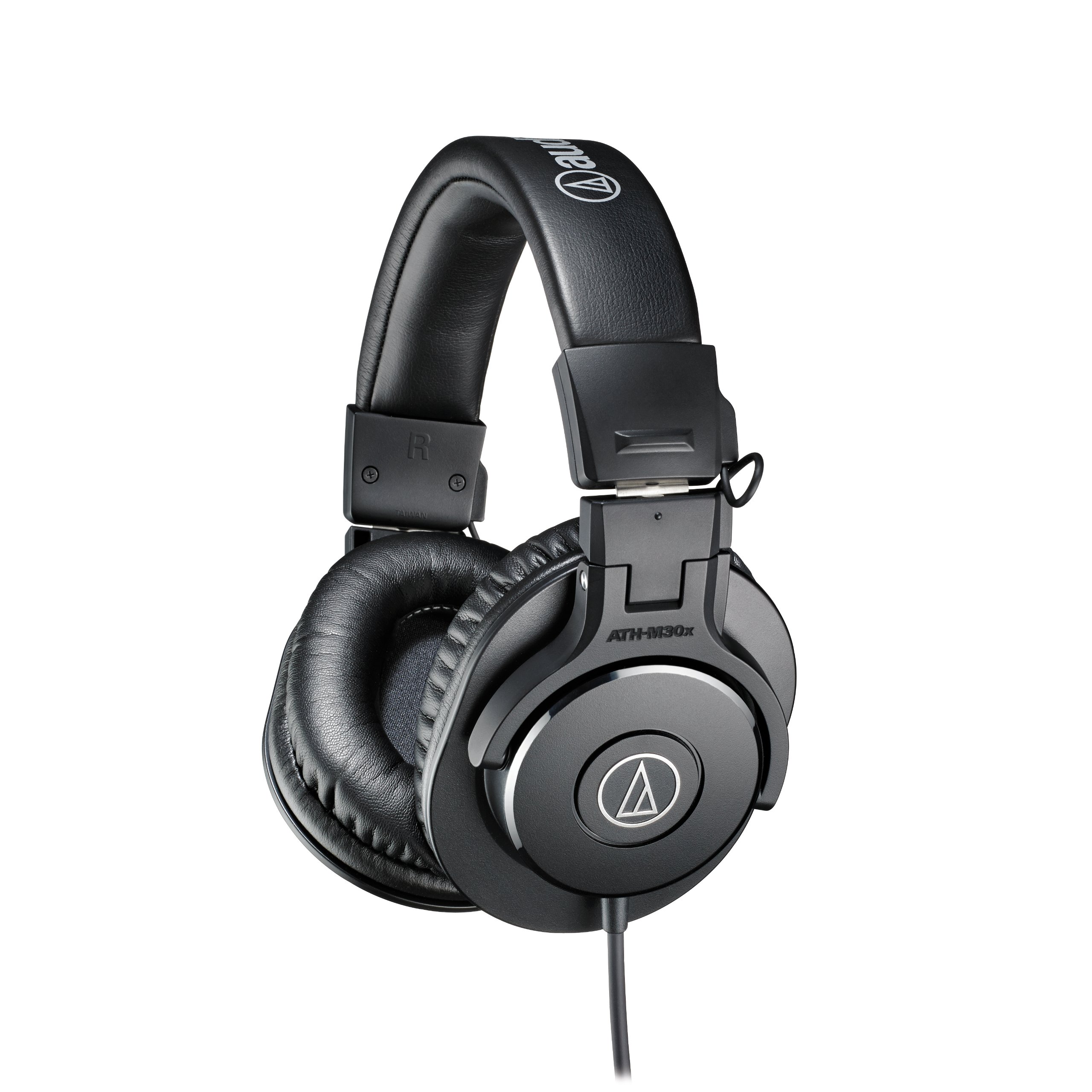
The collapsible entry point that brings clean, clear studio sound to a tighter budget.
This is the pair that gets beginners into proper monitoring without the sticker shock. The 40mm drivers with rare earth magnets and copper-clad aluminum wire voice coils deliver crisp, clear sound with excellent mid-range definition (the clarity of vocals and guitars) — owners describe it as rich, clean, and detailed, with a natural tone that doesn’t get harsh or boomy. The tuning emphasizes detail over excitement, which is exactly what you want when you’re learning to hear your mixes.
The circumaural design contours around your ears to provide strong noise isolation in loud environments, and customers note it cuts roughly half the ambient sound around you. The single-side cable exit keeps the cord out of your way, and the collapsible design folds up so the whole pair slips into the included pouch for storage.
The trade-offs are minor but worth knowing: the earcups sit close and can feel tight at first, needing a few days to break in, and a few owners find them slightly small. The cord is long, which is great for moving around but less tidy on a desk. Long-term durability is generally excellent — One owner’s pair survived over 50 drops and five years of daily use before the plastic adjuster failed.. For the price, this is a remarkably dependable entry into studio monitoring.
The budget gateway: a 40mm driver pair that delivers clean, clear sound and folds up for travel.
What to expect: a snug fit at first and a very long cord — small trade-offs for the value.
7. MAONO MH700 Studio Headphones

The newcomer whose 50mm drivers and zero-EQ tuning stun budget buyers.
Don’t let the unfamiliar name fool you — this is among the most notable budget finds in the category. The 50mm dynamic drivers (speakers that move air to create sound) deliver a balanced sound across a frequency response of 20Hz to 20kHz, and One owner’s verdict: it needs zero EQ to sound balanced, with slight mid-bass emphasis and a price that makes it a “certifiable giant killer.” The closed-back design blocks out noise for clear monitoring during recording.
Build quality gets genuine praise, with owners calling it more sturdy and comfortable than the OneOdio, and the lightweight metal headband with soft over-ear cups fits even XXL heads comfortably. The 180° reversible earcups fold flat, and the plug-in lock design keeps your cables stable on stage. Two detachable cables come in the box — a 3.9-foot straight cable for phones and a 9.8-foot coiled cable with a 6.35mm jack (a standard size for audio gear) for audio interfaces and guitar amps — plus a storage bag.
Skeptics compare it directly to the beyerdynamic DT 770 Pro, noting the MAONO gives you the right amount of bass to hear everything else, and One owner says it’s adequate to the professional Shure 840 at a fraction of the cost.. The honest caveats: the deep bass is a little weak, and cable management gets mixed feedback, with some owners reporting poor connections. But for podcasting, guitar practice, and home studio work, this is a remarkable value that punches well above its tier.
The giant-killer strengths
- 50mm drivers deliver balanced sound with minimal distortion
- Two detachable cables cover 3.5mm and 6.35mm gear
- Foldable, metal headband build that feels sturdy
Small signs to note
- Deep sub-bass is a bit shy
- Some reviewers point out flaky cable connections
- A newer brand without decades of track record
Best for: podcasters, guitar players, and home studio owners who want big sound and solid build for little money.
Not for: engineers who need heavy sub-bass for bass-heavy music — the low end is polite, not thumping.
Understanding the Specs
Driver Size: 50mm vs 40mm vs 30mm
The driver is the speaker inside the earcup, and its size in millimeters is a rough guide to how much air it can move. A larger driver like the 50mm found in the OneOdio and MAONO tends to offer bigger bass and a more energetic sound, while the 40mm drivers in the Audio-Technica and Sony pairs lean toward balance and accuracy. The 30mm in the AKG is smaller, but its semi-open design still delivers a wide soundstage. Bigger isn’t automatically better — it’s about whether the tuning suits your work.
Closed-Back vs Semi-Open Design
This determines how the headphones handle sound. Closed-back pairs like the Sony MDR-7506 and Sennheiser HD 280 Pro seal around your ears, blocking outside noise and preventing your audio from leaking into a recording mic — essential for tracking vocals. Semi-open pairs like the AKG K240 let air and sound pass through, creating a more natural, spacious sound that’s great for mixing, but they leak sound in both directions. Your room dictates your choice.
FAQ
Do I need an amplifier to drive budget studio headphones?
What is a flat frequency response and why does it matter?
Can I use studio headphones for gaming and casual listening?
What is the difference between the 3.5mm and 6.35mm jacks?
How long do budget studio headphones typically last?
Are studio headphones good for recording vocals?
Can I use these headphones with my iPhone or modern smartphone?
Which is better for me: the Sony MDR-7506 or the Audio-Technica ATH-M40x?
Final Thoughts: The Verdict
If you want one dependable pick, the budget studio headphones winner is the OneOdio Pro-50 because its 50mm drivers, dual-plug cable, and foldable design deliver the most versatile all-around value, backed by thousands of satisfied owners. If you want the industry-standard reference sound that professionals have trusted for decades, grab the Sony MDR-7506. And for a wide, natural soundstage when mixing in a quiet room, the AKG K240 Studio is the one to reach for.
How We Picked
We do not accept paid placement. Every pick is matched to a real buyer and a real use-case; we do not hands-on test units.
Sources & Methodology
Specifications: manufacturer listings and product documentation. Review insights: verified customer reviews, as of August 2026. Pricing: not shown on this page (it changes often); check the current price via the retailer link.
As an Amazon Associate, FitlyFast earns from qualifying purchases. This does not affect which products we feature.