
Our readers keep the lights on and the weekend projects moving. As an Amazon Associate, I earn from qualifying purchases.
Specs are compiled from manufacturer listings and verified buyer reviews and can change over time — please confirm the key details on the product page before buying.
You do not need to spend a fortune to sound like a mallard hen in the marsh. The real challenge is finding a budget call that produces a realistic quack, survives wet mornings, and is easy to master. This guide sorts through the entry-level and mid-priced calls that earn their spot on your lanyard, separating the ones that bring birds in from the ones that just make noise.
I’m Rikta — the founder and writer behind FitlyFast. This guide is built by comparing the manufacturers’ published specifications and the patterns across verified customer reviews, so you get each pick’s real strengths and trade-offs instead of marketing spin.
You want a budget duck call that sounds far better than its price tag suggests. Here are the best budget calls for every skill level, from simple to use single reeds to hand-tuned wooden classics.
Our Picks at a Glance


How To Choose The Best Budget Duck Call
A budget duck call can still deliver realistic sound and durability. Reed setup and material determine ease of blowing and sound realism, both outweighing price.
Single Reed vs. Double Reed
The biggest choice is reed count. A single-reed call has one Mylar reed and typically needs very little air pressure, which makes it forgiving for beginners who have not yet built the muscle memory. Double-reed calls have two reeds stacked and tend to produce a fuller, more natural hen mallard sound, but they usually require more precise air control to avoid squeaking.
Material and Durability in the Field
Material drives durability and tone. High-impact plastic and polycarbonate are tough and light, so they survive being bounced around a blind. Wood offers a warmer tone and resists freezing up in bitter cold, but it demands more care. If you hunt in extreme cold, “blows when wet” is a phrase you want in the description, because condensation can choke a call.
Matching the Call to Your Hunting Style
Match the call to your target species. A mallard drake call is for attracting “off-ducks” during challenging conditions, while a teal call is tuned for bluewing, greenwing, and cinnamon teal. If you are new, look for a call that requires little air pressure; if you are experienced, a call with an adjustable tone channel gives you more control.
Quick Comparison
| Model | Best For | Reed Type | Material | Sound Profile | Amazon |
|---|---|---|---|---|---|
| Duck Commander Specialty★ Best Overall | Mallard drakes & late season | Single Reed | High-Impact Plastic | Realistic Drake Sounds | Amazon |
| Zink Power Hen 2Best Value | Loud double-reed feed calls | Double Reed | Polycarbonate | Smooth Mallard | Amazon |
| Primos Easy Mallard 805Easiest to Blow | Absolute beginners | Single Reed | Plastic | Easy Mallard | Amazon |
| Buck Gardner BGC Teal | Teal hunters | Single Reed | Polycarbonate | Teal Specific | Amazon |
| Faulk’s Deluxe WA-33 | Working call-shy ducks | Single Reed | Walnut Wood | Bassy & Raspy | Amazon |
| Buck Gardner Finisher Combo | All-around value | Double Reed | Polycarbonate | Hen Mallard & Whistles | Amazon |
| Haydel’s DR-85 Deceiver | Adjustable tuning | Double Reed | Plastic | Loud & Solid Quack | Amazon |
| Buck Gardner Double Nasty | Raspy volume & range | Double Reed | Polycarbonate | Raspy, Full Volume | Amazon |
| Duck Commander Classic | Wood tone & timber | Double Reed | Wood | Low, Nasally, Raspy | Amazon |
In-Depth Reviews
1. Duck Commander Specialty Duck Calls
The crowd-favorite budget call that lures wary mallards without emptying your wallet.
This call earns the top spot because it is designed for the hardest job: convincing late-season ducks that have heard every trick in the book. It replicates the realistic sounds of a Mallard Drake specifically to attract “off-ducks” when birds are nervous and traditional calling spooks them.
The build quality is where it wins over cheaper options. It is constructed from high-impact plastic, so it can be tossed into a muddy blind and come out working fine. The design is not a traditional blow call — you hum a low bass note to make the quacks — and it takes some practice, but the effort pays off.
Buyers report that after watching YouTube tutorials, they pulled in mallards from a distance without scaring them off. The thing everyone raves about is the sound quality, which is the top-mentioned positive among owners.
Why Hunters Love It
- Realistic drake sounds that calm nervous late-season birds
- Tough high-impact plastic survives rough field use
- Easy enough for beginners, deep enough for pros
The Learning Curve
- Not a blow call — you must hum, so expect a practice session
- Tone leans toward drake, not a classic hen mallard
Your best bet if: you hunt late-season mallards and want a confidence call that does not spook wary birds.
Think twice if: you expect instant results with zero practice — this one rewards a quick YouTube session first.
2. Zink Calls Power Hen 2 (PH-2)
This loud double-reed delivers the feed chuckle (a rapid, contented clucking sound ducks make while eating) at a price that is tough to top.
The Power Hen 2 packs serious volume into a budget frame. The double reed design delivers the smooth mallard sound callers want, but with greater volume and a radically improved bottom-end feed chuckle, so you can hit that rapid-fire feeding call that gets ducks excited.
It brings a Z-cut, no-stick tone channel to the table, which is a design that permits a huge range of tones while virtually eliminating reed lock, so the reed sticks less even as you push air through it. The polycarbonate body is molded after Zink’s custom acrylic namesake, which means premium sound without the premium price.
The honest trade-off, owners mention, is that it is not as raspy as some would like, and condensation can choke it up after extended blowing. That makes it a better value pick for hunters who prioritize loud, clean volume over a gritty edge.
Strongest asset: The volume and the no-stick tone channel make it a fun, energetic call to blow all morning.
Fair warning: If you need a raspy, gravelly hen tone, this clean double-reed sound is not it.
3. Primos Hunting 805 Easy Mallard
The forgiving single-reed that lets a three-year-old sound like a mallard.
If you have never blown a duck call in your life, this is the one to start with. It is built around a.010-inch thin Mylar reed that makes it super easy to blow, requiring very little air pressure to produce a sound. That translates to less huffing and puffing and more time actually calling ducks.
It is a single-reed call that blows when wet, which is a crucial feature on a rainy or frosty morning when moisture would silence lesser calls. Unlike the Zink above, which prefers a stronger blow, this one rewards a gentle touch, and it is a common backup call even for experienced hunters.
An experienced duck-hunting son was “really impressed with the quality and the price,” which says a lot for a collector. The trade-off is that the sound quality is a personal thing — while many call it a true mallard, others describe it as sounding like a dying hen.
The Beginner’s Edge
- Ultra-thin.010-inch reed needs almost no air pressure
- Blows when wet, so rain does not ruin your hunt
- Compact and light with a matte finish to avoid glare
Before You Buy
- The tone is a matter of taste — some find it less duck-like
- The included strap has no proper loop, making attachment awkward
4. Buck Gardner BGC Teal Call

A teal-tuned call with a gunmetal band that brings the small ducks in.
Most budget calls are mallard calls; this one is deliberately different. It is designed specifically for bluewing, greenwing, and cinnamon teal, so you are not faking a hen mallard sound and hoping teal respond. The extra-tough polycarbonate construction and gunmetal band give it a more premium feel than its price tier suggests.
It is made in the USA and is “exactly as advertised,” per buyers, with the less expensive poly versions working well and the pricier ones being even better. The call is loud enough to carry across a marsh, and it is a proven bird-bringer.
The catch is that this is definitely not for beginners. The reviews are clear that unless you know what you are doing, you are just making noise. It requires an experienced waterfowl hunter to get the sound you want, and some note it does not always sound like a teal.
Its niche: A dedicated teal call for hunters who already have their mallard bases covered.
Who should pass: New hunters will struggle — this one assumes you already have the fundamentals down.
5. Faulk’s Game Calls Deluxe WA-33

A walnut-bodied call with a bassy rasp that handles call-shy ducks.
This one stands apart from the plastic crowd because it is made of walnut, which gives it a warm, natural tone that is tuned for a smooth mallard sound. At just 68 grams, it is light on the lanyard, but the wood construction gives it a presence that polycarbonate cannot match.
The standout feature is its unique bassy, raspy tone and excellent feed call. Hunters report it is remarkably effective on call-shy ducks, and it stands out against the competition, even being compared favorably to top acrylic calls that cost several times more.
It has a loyal following — one hunter came back to it after more than 20 years away from the sport and found it sounds the same as it always did. The only downfall is that it will squeak if blown too hard, as it is a softer-sounding call meant for finesse.
Its Signature Sound
- Bassy, raspy tone that cuts through when ducks are wary
- Walnut wood resists freezing up unlike some plastics
- Excellent feeder chuckle for working a flock
Handle With Care
- Squeaks if you blow too hard — it rewards finesse, not force
- Wood needs more care than a plastic call in rough weather
6. Buck Gardner Finisher Combo Pack

Two calls in one pack for hunters who want the full sound kit from the start.
This is the best bang-for-your-buck setup because it gives you two tools for the price of one. The Mallard Magic is an easy-to-use double reed hen mallard call, and it is paired with a versatile 6-in-1 Whistle that covers mallard drakes, pintail, wood duck, wigeon, and other whistling ducks.
The Mallard Magic is built with Quick-Tune double reed guts, which means the reeds can be adjusted for easy maintenance in the field. It is ready to hunt right from the start, making it a great pick for beginners learning to call ducks.
Customers note “the sound for the price is untouchable,” with the combo sounding like calls that cost significantly more. The trade-off from owners is that the whistle is on the quieter side and the tone is high-pitched like a young mallard, so serious hunters chasing mature hens might want a pricier primary call.
The value play: You get a hen call and a 6-in-1 whistle, covering more duck species than any single call.
Know the limit: The high-pitched tone skews young, so if you need a deep mature hen, this is a backup, not a primary.
7. Haydel’s DR-85 Deceiver

A hand-tuned classic that lets you dial in your own perfect tone.
What sets this call apart is the fully adjustable floating wedge, which allows personal tuning. That means you can customize the sound to match the ducks in your area, rather than being stuck with a factory preset. The DR-85 is hand tuned by professional callers and even blows wet.
It is nicknamed “The Deceiver” for a reason — it is loud, easy to use, and produces a nice solid quack. Made in the USA, it is used by professional callers as well as beginners, which is a wide range of approval.
The recurring caveat in the reviews is fragility. The plastic body is on the thinner side, so it may not withstand a heavy drop or being stepped on, making it a great practice tool that deserves gentle treatment in the blind.
The Adjustable Edge
- Fully adjustable floating wedge for personal tone tuning
- Hand-tuned by professional callers for reliable sound
- Blows wet, so a rainy hunt will not silence it
Handle With Care
- Thin plastic body is vulnerable to knocks and drops
- The barrel sticker has been known to peel off early
8. Buck Gardner Double Nasty Poly
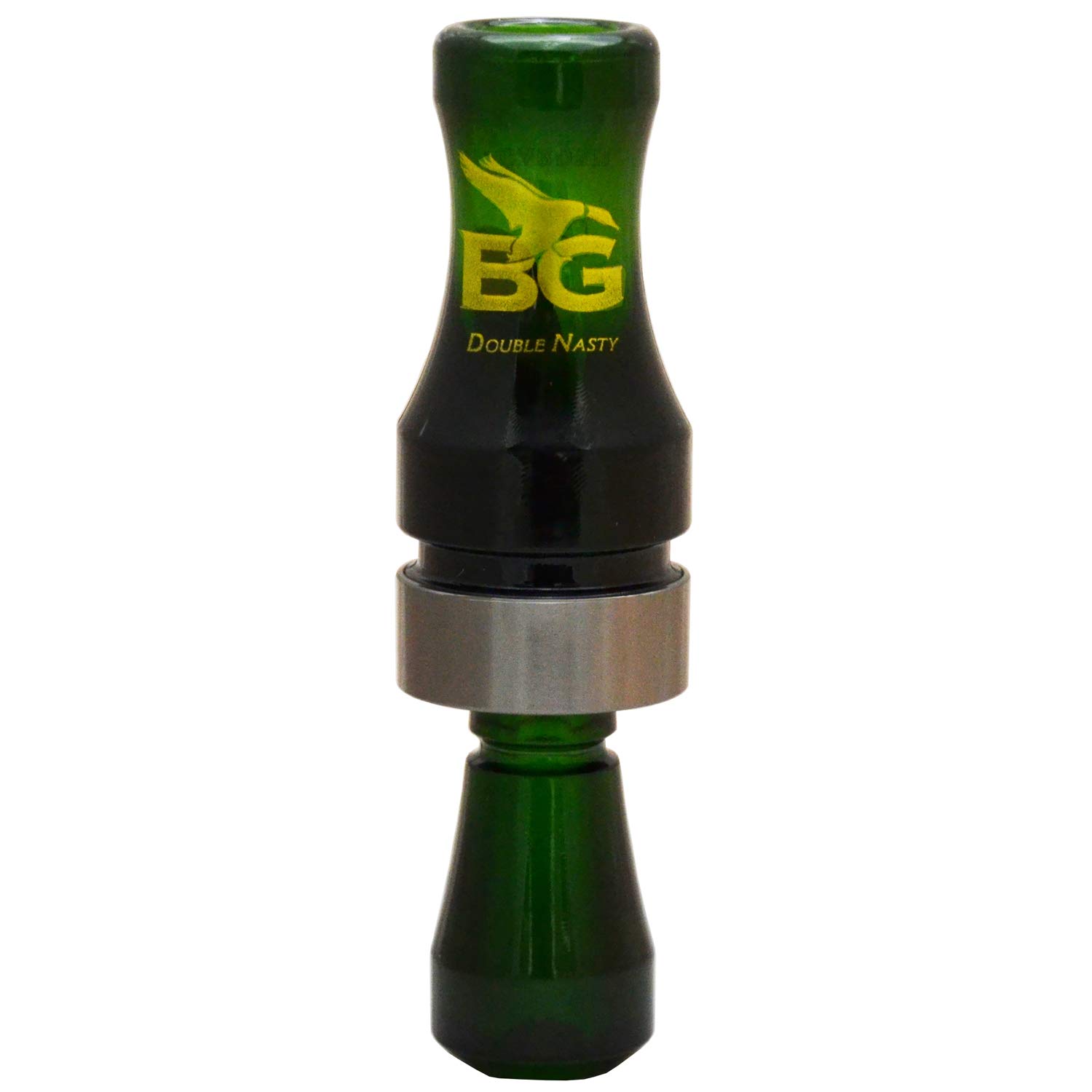
The raspy-voiced polycarbonate that gives you volume and a full range.
If you want a call that can go from a soft lonesome hen to a loud comeback, this is it. The Double Nasty is a polycarbonate call with a raspy tone and a full range of volume, and it is the top-mentioned call for sound quality among owners. The Spit-Tech toneboard design means it blows even when wet.
It is hand-tuned and tested, which is rare at this price, and the gunmetal aluminum band adds durability. At just 2.4 ounces, it is light enough to carry all day, and it is an intermediate skill level call that remains easy to handle and create rich tones with.
The downside owners flag is that in cold weather, when the reeds get wet, they can stick to each other and need a quick clean-up. One owner summed up the experience: “it is so easy to variate sounds i killed many ducks with this call.”
The standout: A raspy, full-volume polycarbonate that punches far above its price class.
The cold-weather quirk: Wet reeds can stick in the cold; a quick clean keeps it singing.
9. Duck Commander Classic Commander
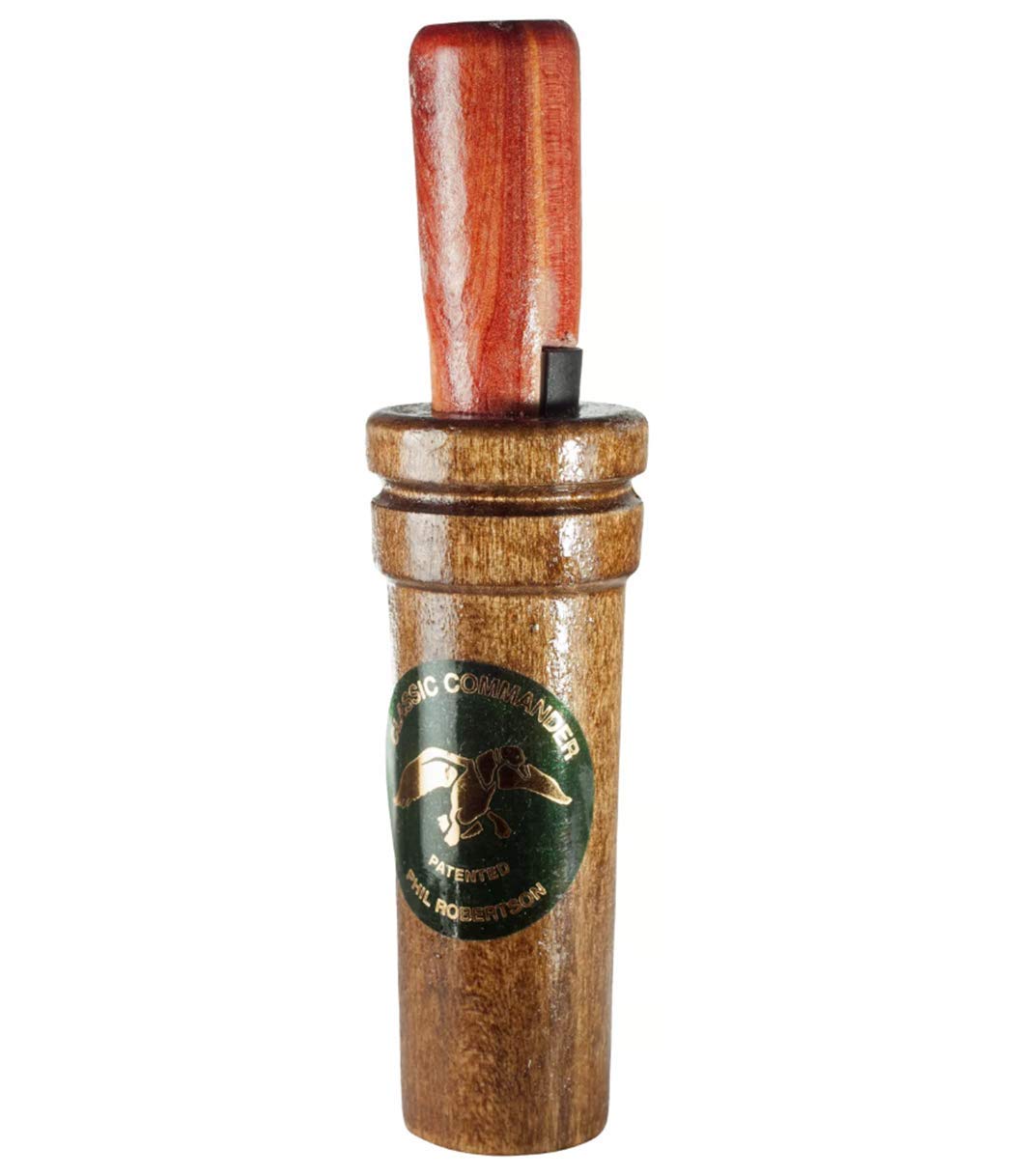
The Phil Robertson original that delivers legendary timber tones in solid wood.
This is the call that started it all — built with the original style and sound that made Duck Commander and Phil Robertson famous. It is an all-wood design with 4 pieces and riveted reeds, using Phil Robertson’s patented double-reed friction fit system.
Because of the wood variations, there are no two classic calls alike, and this uniqueness makes it perfect for timber hunting, creating low, nasally, and raspy sounds that cut through the woods. It is easy to blow and does not require much air, making a consistent raspy hen call simple to produce.
The wood does not freeze up as easily in the cold, and you can call very loud. As one hunter put it, “killed a pile of greenheads blowin this thing.” The honest note from buyers is that part of the price is the Duck Commander legacy, so you are paying for history alongside the sound.
Why It Endures
- All-wood design resists freezing up in cold weather
- Produces low, nasally timber tones that carry well
- Easy to blow with Phil Robertson’s patented friction fit
The Price of Legacy
- You pay a premium for the Duck Commander name and history
- Wood demands more care than a drop-in-the-mud plastic call
Understanding the Specs
The Reed: Single vs. Double
The reed is the heart of any duck call, and it dictates how you blow it. A single-reed call, like the Primos 805 with its.010-inch Mylar reed, requires very little air pressure, making it the natural starting point for a beginner. A double-reed call, like the Zink Power Hen 2, produces a fuller, smoother mallard sound with greater volume, but it often asks for more precise breath control to avoid squeaks.
Material: Plastic, Polycarbonate, and Wood
The body material changes both the tone and the durability. High-impact plastic and polycarbonate are tough, light, and can be dropped in the mud without worry, and they resist moisture issues thanks to designs like the Z-cut no-stick channel. Wood, as seen in the Faulk’s WA-33 and the Duck Commander Classic, delivers a warmer, bassier tone and resists freezing, but it demands more careful handling in the field.
FAQ
What does “blows when wet” actually mean on a duck call?
Is a single reed or double reed better for a beginner?
Why does my new duck call sound like a dying hen?
Can I use a mallard call to hunt teal?
How do I stop the reeds from sticking together in cold weather?
What is a confidence call and why would I use one?
How long does a budget duck call last before it wears out?
Is there a real difference between a and a duck call?
Do I need a lanyard to carry my duck call?
Final Thoughts: The Verdict
For most hunters, the budget duck call winner is the Duck Commander Specialty because it delivers top-tier drake sounds and serious durability at a price that won’t hurt. If you want the easiest possible entry point, grab the Primos Easy Mallard 805 and start calling on day one. And for hunters who want the most versatility for their money, the Buck Gardner Finisher Combo is the one to reach for.
How We Picked
We do not accept paid placement. Every pick is matched to a real buyer and a real use-case; we do not hands-on test units.
Sources & Methodology
Specifications: manufacturer listings and product documentation. Review insights: verified customer reviews, as of August 2026. Pricing: not shown on this page (it changes often); check the current price via the retailer link.
As an Amazon Associate, FitlyFast earns from qualifying purchases. This does not affect which products we feature.