
Our readers keep the lights on and the weekend projects moving. As an Amazon Associate, I earn from qualifying purchases.
Specs are compiled from manufacturer listings and verified buyer reviews and can change over time — please confirm the key details on the product page before buying.
Finding an arm bike that actually stays put, feels smooth, and fits your routine can feel like a guessing game. You want to rebuild strength, keep joints moving, or just stay active from a chair, but most options look identical in photos. This guide filters out look-alike listings to highlight models that truly perform..
I’m Rikta — the founder and writer behind FitlyFast. This guide is built by comparing the manufacturers’ published specifications and the patterns across verified customer reviews, so you get each pick’s real strengths and trade-offs instead of marketing spin.
Here are the best arm bike options to keep your upper body moving with quiet, low-impact resistance you can rely on at home.
Our Picks at a Glance
How To Choose The Best Arm Bike
An arm bike, or pedal exerciser, lets you get a cardio or rehab workout for your upper body while sitting down. The right model depends on your intended use—desk, table, or floor. — on a desk, a table, or the floor — and the amount of resistance you need.
Match the Resistance to Your Goal
Look for magnetic resistance if you want a whisper-quiet, smooth pedal stroke that’s easy on the joints. Count the levels — a wide range like 16 levels gives you room to progress from gentle rehab to a more challenging workout, while a simple step-less dial offers fine control for gradual recovery.
Check Stability and Setup
A stable base prevents sliding and ensures safe workouts.. Suction cups grip smooth tables firmly, while non-slip bases and mats keep a floor bike from sliding on hardwood or parquet. Before you commit, consider where it will live — some models need a desk that’s 4 to 6 inches higher to pedal comfortably.
Quick Comparison
| Model | Best For | Resistance | Weight | Max User Weight | Amazon |
|---|---|---|---|---|---|
| YOSUDA Under Desk Bike★ Best Overall | Versatile desk & floor use | 16 Levels (Magnetic) | 17.9 lbs | 220 lbs | Amazon |
| Arm Bike for Physical TherapyRehab Pick | Tabletop rehab with suction grip | Multiple Adjustments | 6.17 lbs | — | Amazon |
| RYGEO Arm Leg Pedal ExerciserBudget Champion | Gentle home recovery on a budget | Adjustable Tension | 13 lbs | — | Amazon |
| MDODM Sway Exerciser | Full-body seated movement | Manual | 15.4 lbs | 264 lbs | Amazon |
| Echelon FitNation Body Bike | Wheelchair users & home cardio | 8 Levels (Magnetic) | 48.6 lbs | — | Amazon |
| Caromix Folding Exercise Bike | Full upright bike with arm bands | 16 Levels (Magnetic) | 48.5 lbs | 330 lbs | Amazon |
| DeskCycle MagneTrainer-ER | Quiet, precise rehab cycling | Step-less Dial (Magnetic) | 23 lbs | — | Amazon |
| JLL Smart Recumbent Bike | Full recumbent bike with arm bars | 8 Levels (Magnetic) | 68.8 lbs | 265 lbs | Amazon |
| ROYAXING Motorized Elliptical | Motorized arm & leg rehab | 20 Speeds, 3 Presets | 30 lbs | 220 lbs | Amazon |
In‑Depth Reviews
1. YOSUDA Under Desk Bike
Our pick — 4.5★ from 3,500+ verified ratings; the strongest balance of quality and price.
The versatile pick that pedals on the floor for your legs and on the desk for your arms.
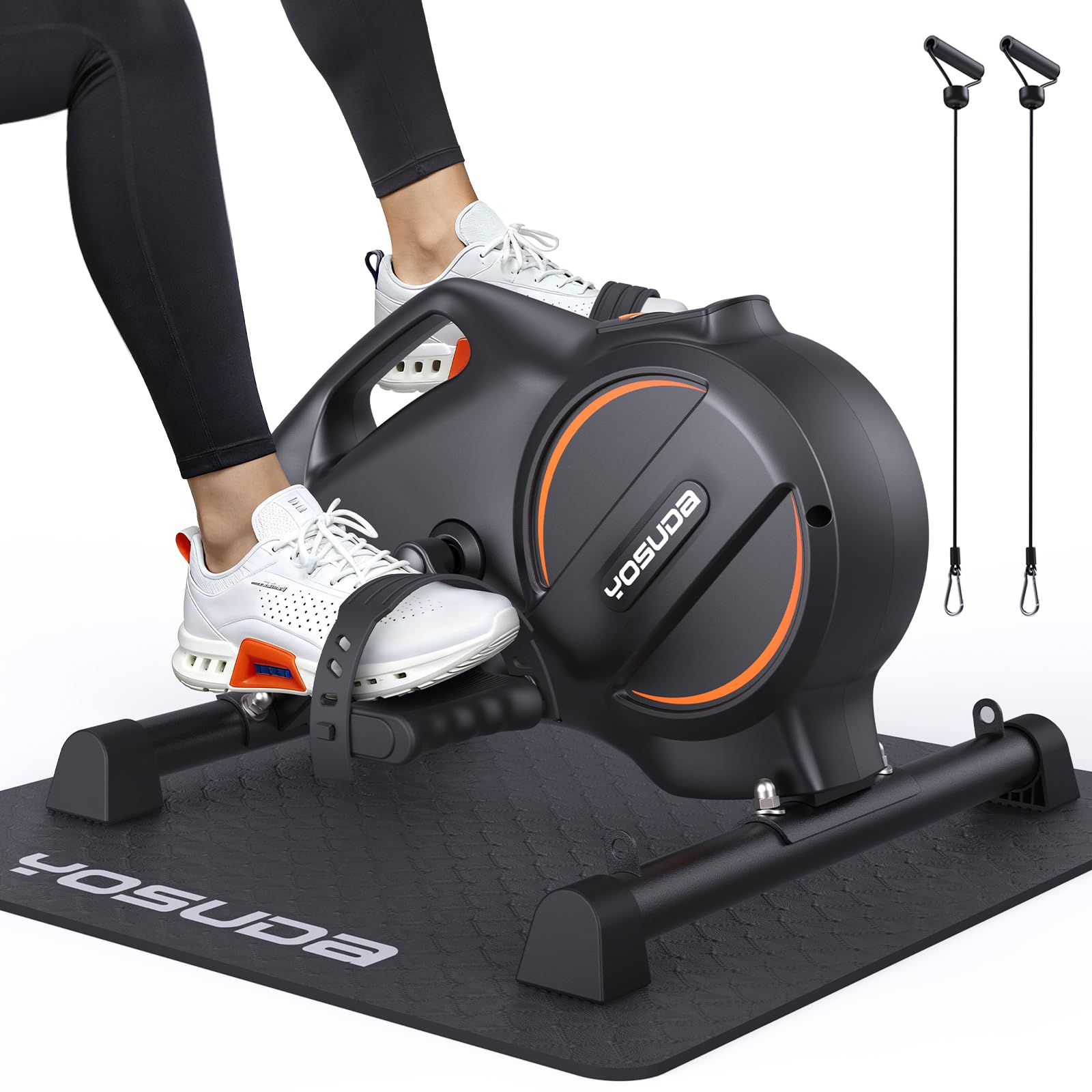
This is the 3-in-1 machine that earns the top spot. You get a pair of resistance bands for arm and core work, plus the ability to pedal on the floor for lower-body exercise or set it on a desk for upper-body training. The 16 levels of smooth magnetic resistance let you dial in everything from gentle rehab to a challenging endurance session.
It operates at roughly 20dB, so it’s quiet enough for an office or living room. A non-slip base and matching anti-slip floor mat keep it stable on hardwood and tile. Assembly takes about 10 minutes with just 4 parts, and the 17.9-pound frame has a built-in carry handle for easy storage.
Buyers report the forward pedal motion is ideal for arm use, and the 8-inch crank rotation gives a satisfying range. The honest caveat: if you’re over 6 feet, the 3-inch crank limits your range compared to bikes with 6-inch cranks, and you may need a desk that’s 4 to 6 inches higher to get comfortable. It supports riders up to 220 pounds.
What wins people over
- Ultra-quiet magnetic pedal stroke for focused work
- Compact and portable with a 17.9 lb frame
- Tracks time, distance, and calories via Bluetooth app
Worth knowing
- Short 3″ crank limits range for taller users
- Straps can catch on pedals during use
- Display is hard to read in low light
Reach for it if: you want one quiet machine that moves from floor to desk for both arm and leg workouts.
Look elsewhere if: you’re tall and need a longer crank range for full arm extension.
2. Arm Bike for Physical Therapy
A tabletop arm cycle with an industrial-grade suction base that refuses to slide.
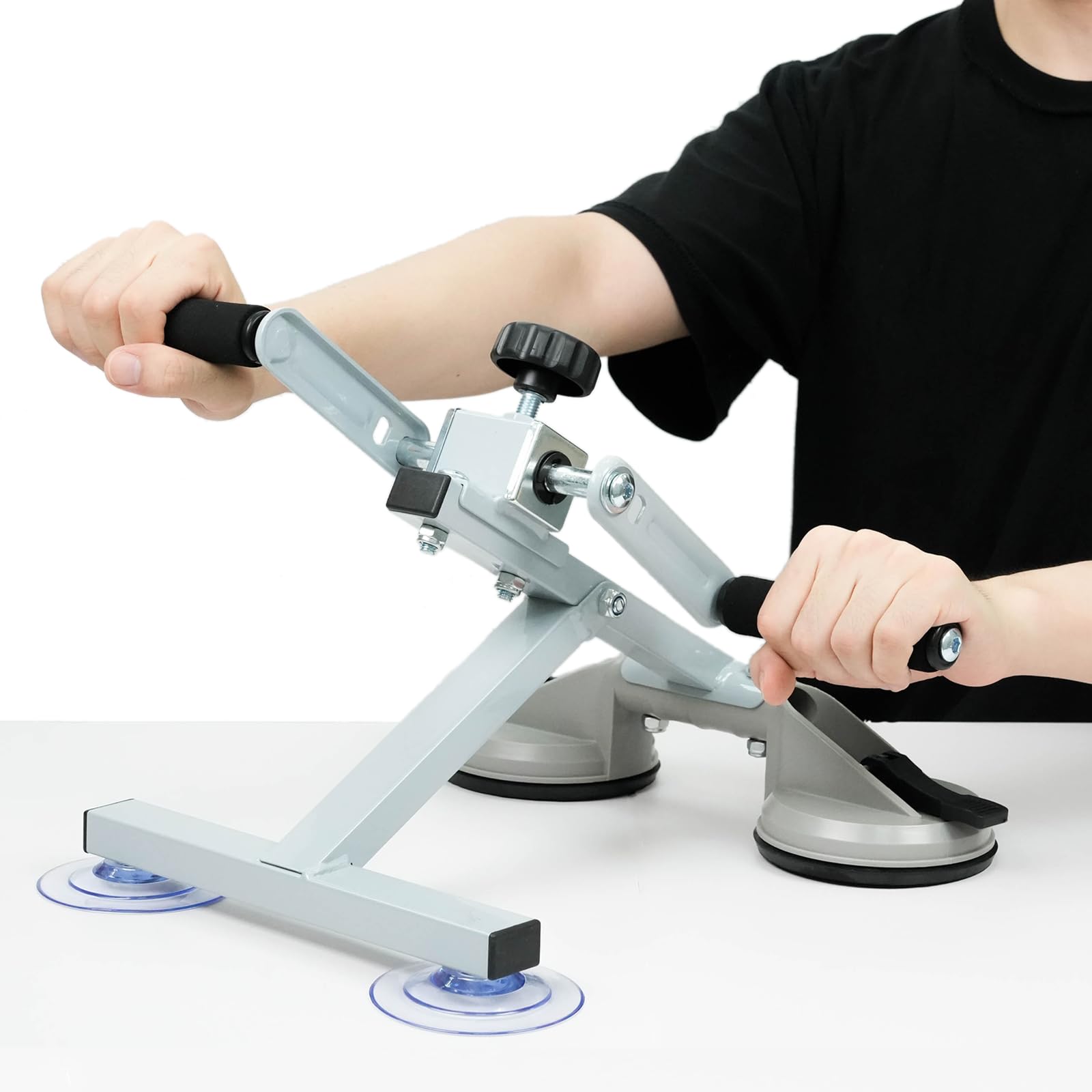
This little 6.17-pound machine is purpose-built for upper-limb rehab. The stand-out feature is the large suction cup design with strong suction force, so it grips tables, doors, and walls to stay put during a workout. That stability is what makes arm therapy safer and more effective.
Multiple resistance adjustments let you move from light activity to more intensive training as your strength returns. It’s designed specifically for elderly patients, including those recovering from stroke or living with Parkinson’s, plus anyone with limited upper limb mobility. Ten-minute setup means it’s ready to go straight from the start.
The 6.17-pound build is dramatically lighter than the YOSUDA’s 17.9 pounds, making it the more portable choice for tabletop use. One owner credits it with resolving their elbow pain., and the general feeling is it gets the job done for arm and shoulder conditioning. The trade-off: assembly can frustrate some people, with unclear photos and a short video leaving the pedal attachment confusing for a few buyers.
Why it stands out
- Strong suction cups keep it locked on flat surfaces
- Featherlight at 6.17 lbs for easy transport
- Multiple resistance levels for rehab progression
The catch
- Assembly instructions earn mixed feedback
- Suction needs a silicone sheet on wood surfaces
- Hand grip may slip and need occasional tightening
Best for: seniors and post-op patients wanting a stable, portable tabletop arm cycle.
Consider otherwise if: you dislike fiddly assembly or want a floor-based full-body machine.
3. RYGEO Arm Leg Pedal Exerciser
A gentle, affordable companion for beginners and anyone on a recovery path.
This classic upper and lower limb machine keeps things simple. The adjustable tension and height let you work your arms and legs with safe, low-impact exercise from a chair or sofa. It’s built from sturdy carbon steel with rubber pedals and slip-resistant feet for a stable ride.
Four anti-slip rubber pads, an anti-skid mat, and an extra strap add security, while the adjustable foot band flexes to fit different foot sizes — just slide your feet in and go. The 13-pound frame is compact enough to hide in a room corner when you’re done. It’s the lightest full floor model here, coming in nearly 5 pounds under the YOSUDA’s 17.9-pound frame.
The thing everyone appreciates is the ease of use, especially for knee replacement recovery and gentle daily cardio. It’s best understood as mild strength and motion exercise, not vigorous training. Some owners find the pedals move with a jerking motion and the mechanism isn’t perfectly smooth on every setting, so it’s not for someone chasing an intense workout.
What’s to love
- Easy to assemble with well-aligned screw holes
- Portable and silent for use at work or home
- Great for beginners and post-op recovery
Keep in mind
- Pedaling can feel jerky for some users
- Not built for vigorous or intense training
- Stability varies on different surfaces
Pick this if: you want a wallet-friendly machine for gentle daily movement and recovery.
skip it if: smooth pedaling and high-intensity workouts are your priority.
4. MDODM Sway Exerciser
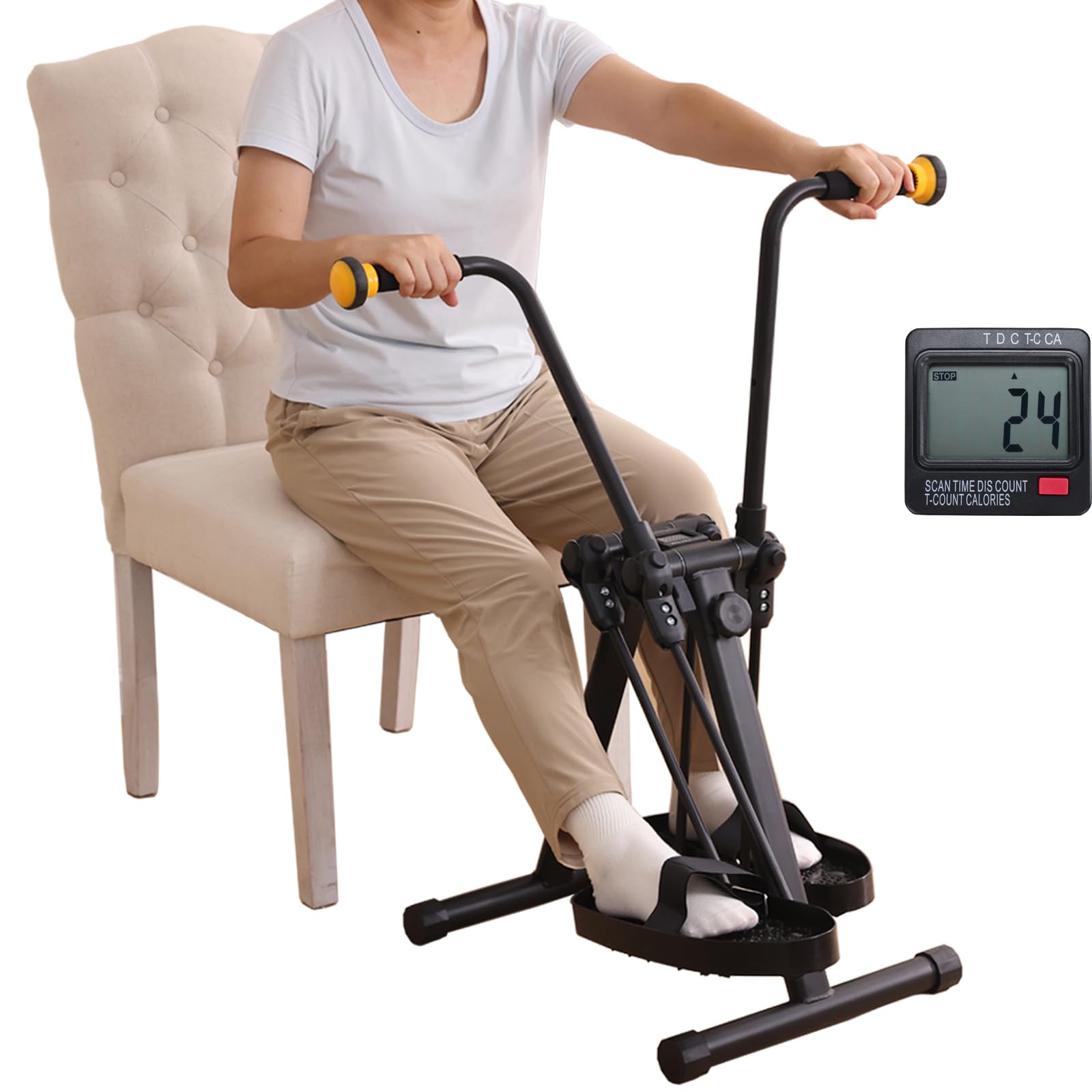
The seated machine that adds lateral wobble to your arm and leg routine.
What sets this exerciser apart is the cross-body movement. It delivers synchronous arm and leg motion plus a lateral wobble of the lower limbs, which helps build coordination alongside strength. All of it is low-impact, designed to enhance joint flexibility and stimulate blood flow..
A built-in LCD monitor tracks your exercise time, distance, swing count, and calories burned, cycling through the stats with the press of a red button. The thickened steel tubing and four corner feet give it a high load-bearing capacity, supporting users up to 264 pounds — the second-highest limit in this list, behind only the Caromix’s 330 pounds.
Users most praise its effectiveness for seated exercise., especially for seated exercise after hip replacement. Assembly is a strong point too, plus it comes with a 6-month warranty. Durability gets mixed feedback, but for an 86-year-old parent or a spouse with limited mobility, it delivers gentle, fun movement. The LCD requires 1 AAA battery, which is included.
Why it works
- Unique lateral wobble improves coordination
- Clear LCD tracks time, distance, and calories
- Easy assembly praised by owners
Consider this
- Durability receives mixed long-term feedback
- Manual resistance, not adjustable tension levels
Reach for this if: you want a full-body seated workout that moves your arms and legs in sync.
Think twice if: you need precise resistance control for advanced therapy.
5. Echelon FitNation Body Bike

Zero-impact pedaling with multi-grip handles for a serious upper-body burn.
This is a true hand bike, not a floor pedaler pressed into arm duty. Non-slip pedals move forward or backward with foot straps, and the Multi-Grip handles give you multiple positions for targeted upper-body workouts. The 8 levels of magnetic resistance cover both upper and lower body training.
For someone in a wheelchair, this is a rare find — most gyms simply don’t have a hand bike. The large display face shows distance, calories, odometer, time, and a scan function, so you can track a full session. At 48.6 pounds, it’s the heaviest dedicated arm bike here, built to stay planted while you push.
What wins people over is how effective it is for arthritis rehab on elbows and legs, and how quiet it runs — buyers liken it to machines costing significantly more. It’s compact and fits nearly anywhere. The durability is unproven over the long term, and one unit arrived with a folding-lock issue, so check the adjustment mechanism early.
The strengths
- Truly effective hand-bike workout for wheelchair users
- Quiet, smooth 8-level magnetic resistance
- Multi-grip handles for varied arm positions
The limits
- Heavy at 48.6 lbs, not ideal for frequent moving
- Long-term durability still unproven
Best for: wheelchair users and anyone wanting a dedicated, stable upper-body cycling machine.
Not ideal if: you need a lightweight unit to carry between rooms.
6. Caromix Folding Exercise Bike
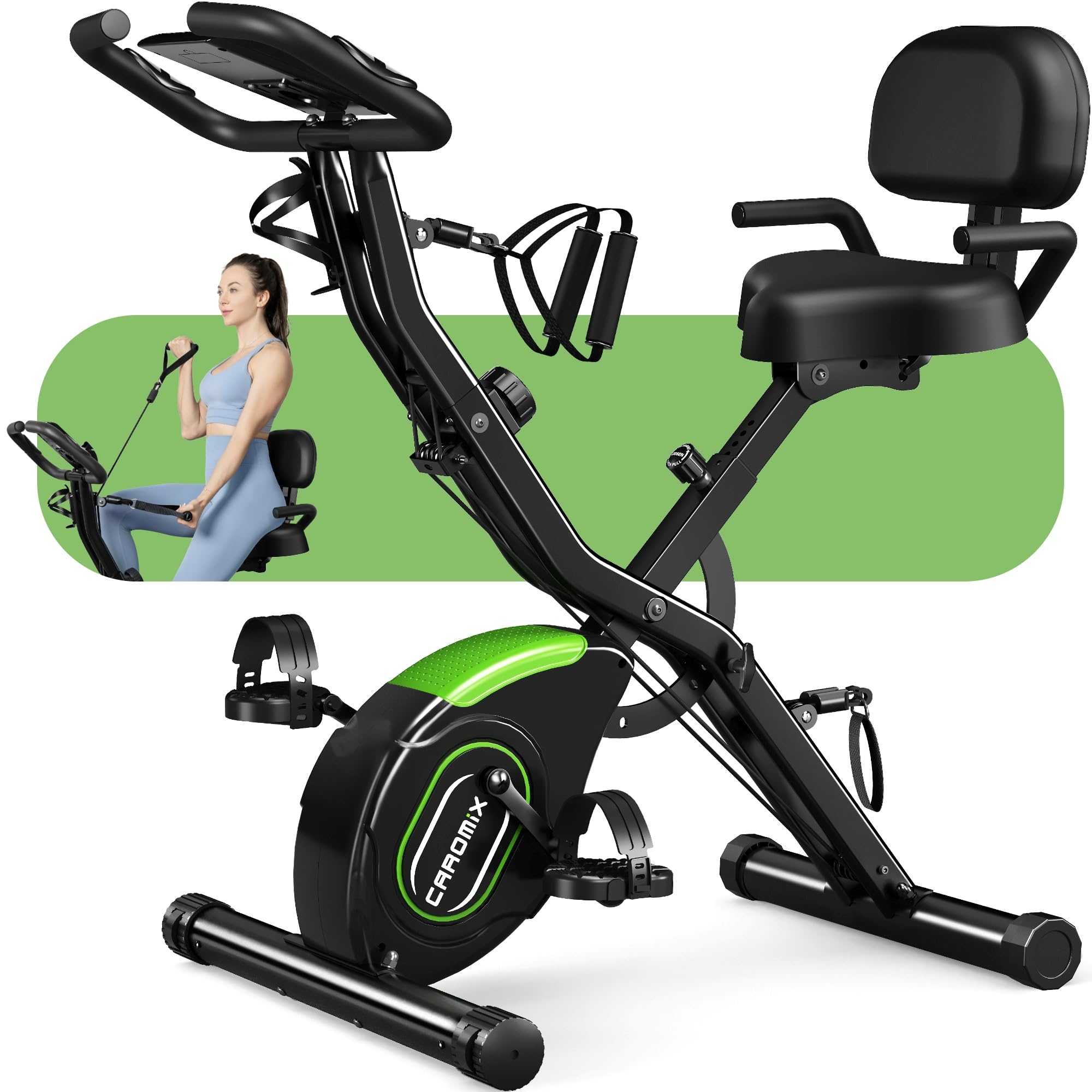
A foldable full bike with arm bands that handles riders up to 330 pounds.
This 5-in-1 machine is a different animal — it’s a complete stationary bike with a 5.5-pound aluminum flywheel, plus an arm resistance band for upper-body work. The magnetic resistance system delivers 16 levels of quiet pedaling under 20dB, and the X-shaped heavy-duty steel frame stays stable.
The real headline is the 330-pound weight capacity, the highest in this whole guide, and a seat that adjusts for riders between 5’1″ and 6’6″. It’s 70% pre-assembled from the start and folds completely flat with transport wheels for easy room-to-room movement. The LCD monitor tracks time, speed, distance, calories, and pulse.
Assembly is the most-praised feature — owners call it clear and straightforward, often done in about 30 minutes. The electrics can be flaky, with a random timer and inaccurate pulse on some units, and the seat gets mixed comfort feedback. But for a full-body option that fits a 9-year-old up to a 6’6″ adult, it’s tough to beat the adaptability.
Why it impresses
- Huge 330 lb weight capacity
- Folds flat with transport wheels for easy storage
- Quiet magnetic resistance under 20dB
Worth noting
- Digital tracker can be inaccurate on some units
- Seat comfort earns mixed feedback
Choose this if: you want a full stationary bike with arm bands and a high weight limit.
Pass if: you only need a small tabletop arm cycle, not a full frame.
7. DeskCycle MagneTrainer-ER
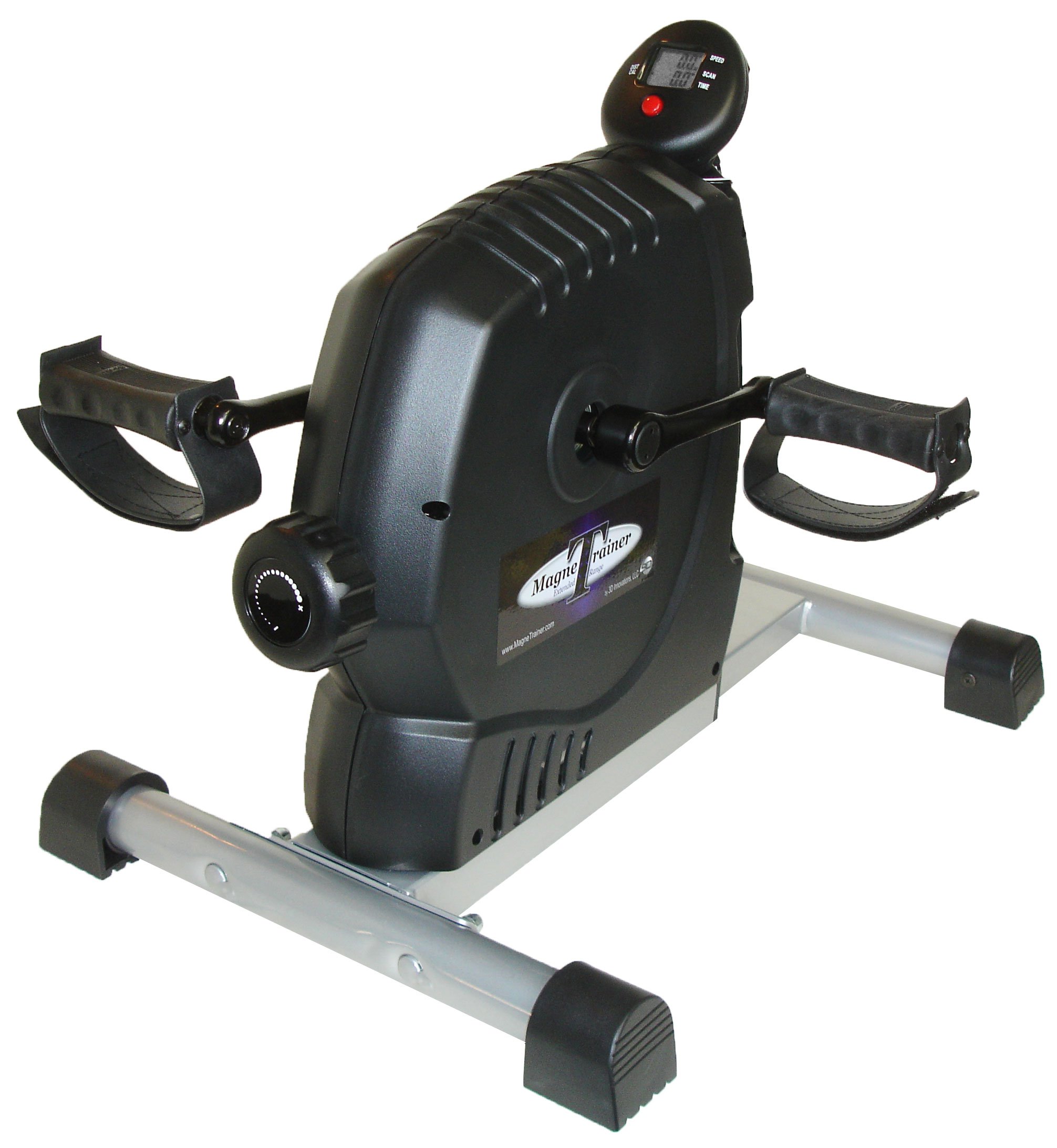
The crowd favorite for its institutional-grade build and whisper-quiet magnetic glide.
If you take arm rehab seriously, this is the premium pick. The step-less intensity dial (a smooth control with no preset clicks) lets you fine-tune resistance precisely as your strength builds — something fixed-level machines can’t match. The molded pedals give your hands a comfortable grip for arm use, or you can strap in your feet for a leg workout; the velcro straps adjust more easily and last longer than notched alternatives.
The build quality is what owners rave about most, describing it as hospital or rehab-grade equipment. It runs on 2 AA batteries and uses a simple, easy-to-read LCD to track speed, distance, time, and calories. Weighing 23 pounds, it sits firmly at 5 pounds heavier than the YOSUDA’s 17.9-pound frame.
Performance is exceptional — smooth, silent, and stable, rivaling professional hand bikes. It’s best for circulation and conditioning, not muscle building.. The trade-off: the resistance dial needs about 5.75 full turns to span its range with no indicator, and instability can creep in at high tension. On hardwood it tends to slide, so keep it on carpet or add a mat.
What you’re paying for
- Hospital-grade build quality that lasts
- Infinite fine-tune resistance dial
- Whisper-quiet operation for desk use
The honest trade-offs
- No resistance level indicator on the dial
- Slides on hardwood unless you add a mat
- Better for rehab than muscle building
Worth it for: anyone who needs precise, quiet resistance control for shoulder or joint rehab.
Consider otherwise if: you want a budget machine or plan to use it on hardwood floors only.
8. JLL Smart Recumbent Bike
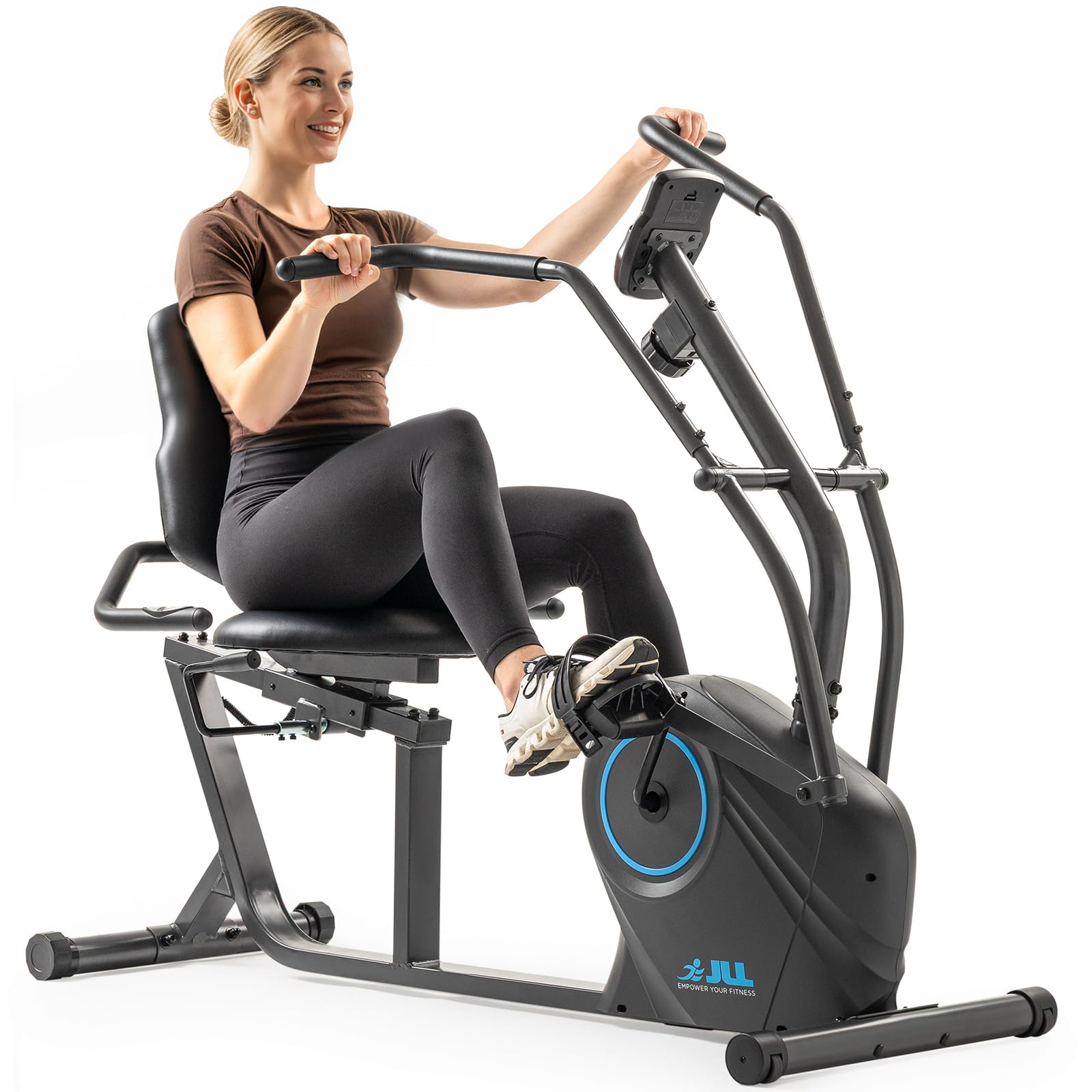
A full recumbent bike with dual-action arm bars and Bluetooth coaching built in.
If you want a complete seated bike rather than a compact pedal exerciser, this is the one. The dual-action arm exercisers work in sync with the pedals for a full-body session, or you can use the arm bars independently for targeted upper-body work. The 8-level magnetic resistance stays near-silent as you progress from warm-ups to intervals.
The LCD console displays time, speed, distance, calories, RPM, and pulse, with built-in grip sensors feeding instant heart rate feedback. Bluetooth pairs with the SunnyFit app — with no subscription — to open up guided workouts and over 1,000 trainer-led sessions. The wide cushioned seat and supportive backrest slide on a reinforced rail for a personalized fit.
The heavy-duty steel frame supports up to 265 pounds, and low step-through access makes mounting easy. Quality is the consistent praise, with buyers noting it feels anything but cheap. The honest friction is assembly — there’s no paper manual, so you’ll need to scan a QR code for instructions, which frustrates some older owners. A 68.8-pound machine, it’s built to stay put.
Why it earns its spot
- Full dual-action arm and leg workout in one
- Bluetooth SunnyFit app with 1,000+ sessions
- Wide cushioned seat on a sliding rail
Know before you buy
- Assembly instructions are digital only via QR code
- Heavy frame at 68.8 lbs, not easy to move
Choose this if: you want a full recumbent bike with upper-body bars and app-based coaching.
Look elsewhere if: you prefer a compact pedal-only unit or can’t manage a QR-code assembly guide.
9. ROYAXING Motorized Elliptical
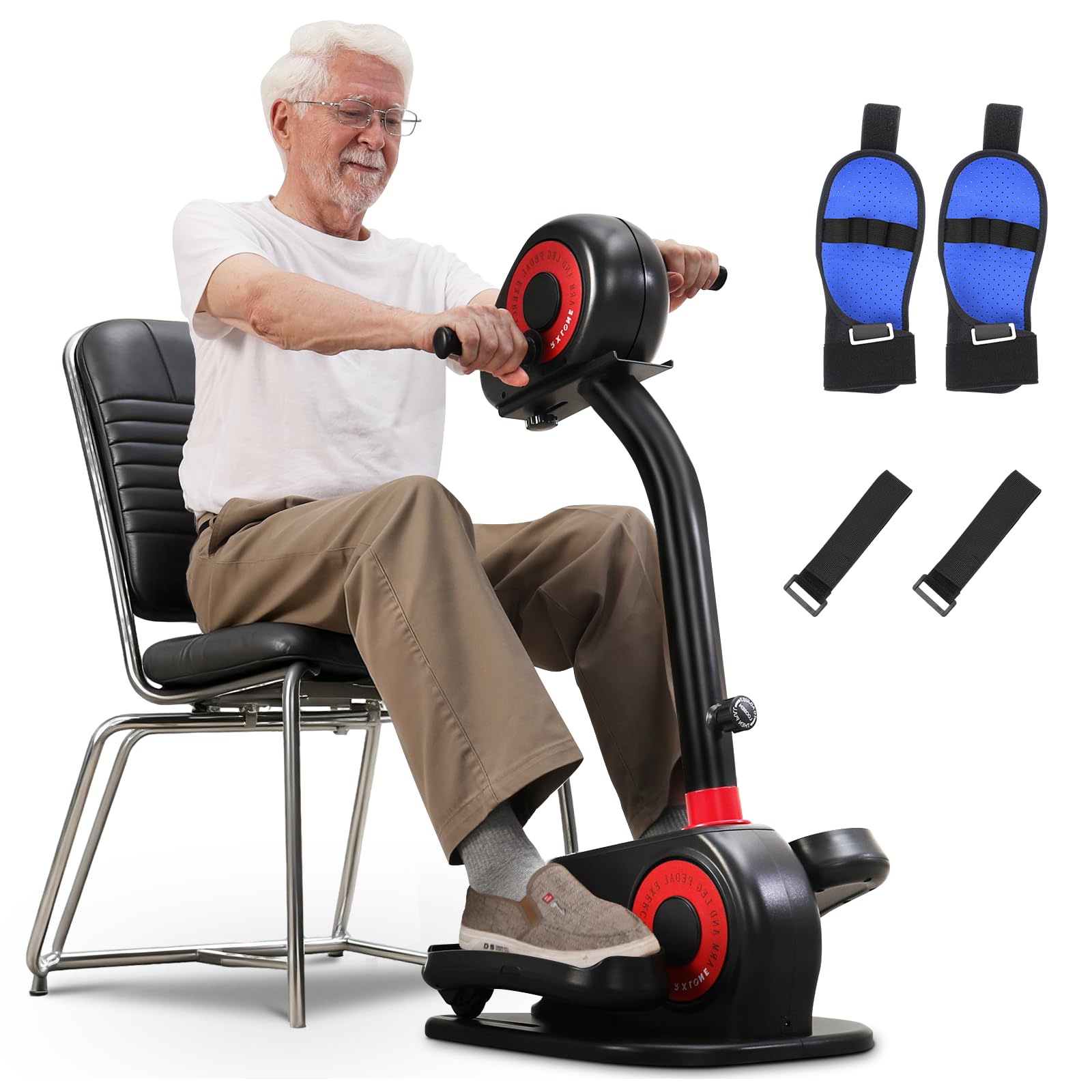
The motor does the work here, guiding your arms and legs through a smooth elliptical motion.
This is a genuinely different category — an electric elliptical with 2 independent 60W motors that power your limbs through the motion. You can train your upper and lower body together or separately, with forward and backward rotation. That makes it the only pick here where the machine drives the movement, ideal for people who struggle to initiate pedaling on their own.
The 13.8-inch maximum stride length gives a generous range, and 3 presets plus 20 speeds let you find the right tempo. It’s designed specifically for seniors and those in chairs or with limited mobility. Built-in anti-drop grip gloves and foot straps keep hands and feet secure, and the 30-pound frame is lightweight enough to move between rooms.
Owners in their late 80s and people with conditions like MS report it works well straight from the box, with simple assembly. Being motorized, it’s great for those rainy days when getting outdoors isn’t an option. The recurring gripe: there are no instructions for setting up the modes, so most users figure it out by trial and error. It supports up to 220 pounds.
What makes it special
- Motorized motion assists limited mobility users
- Independent arm and leg motors work together or apart
- Quiet, smooth operation with 20 speeds
What to expect
- No instructions for setting modes — expect trial and error
- Learning curve to master the controls
Pick this if: you or a family member needs a motor to assist arm and leg movement during rehab.
Consider otherwise if: you prefer to control your own pace without machine assistance.
Understanding the Specs
Magnetic vs. Manual Resistance
Magnetic resistance uses magnets to create friction, making the pedal stroke smooth and near-silent. Manual tension knobs are simpler and cheaper, but can feel jerky. For morning or evening use in shared spaces, magnetic is the better bet.
Weight Capacity and Build
Your weight capacity determines who can safely use the bike. Floor models range from 220 to 330 pounds, while tabletop arm bikes are smaller. A heavier frame usually means more stability, but also less portability — match the weight to where the bike will live.
FAQ
Can I use an arm bike on my desk instead of the floor?
How much resistance do I need for physical therapy?
Will my arm bike slide on hardwood or parquet floors?
How heavy an arm bike can I realistically move around?
What is the difference between an arm bike and a recumbent bike?
How do I track my workout progress on these machines?
Is a motorized arm bike better than a manual one for seniors?
Can these bikes support heavier users?
How long does assembly usually take?
Which arm bike is quietest for office or TV use?
Final Thoughts: The Verdict
For most people, the best arm bike is the YOSUDA Under Desk Bike because it pairs 16 quiet magnetic resistance levels with a clean Bluetooth app in a 17.9-pound frame that moves from desk to floor. If you want a full seated bike with arm bars and coaching, grab the JLL Smart Recumbent. And for motorized rehab assistance that drives the motion for you, the ROYAXING Elliptical is the one to reach for.
How We Picked
We do not accept paid placement. Every pick is matched to a real buyer and a real use-case; we do not hands-on test units.
Sources & Methodology
Specifications: manufacturer listings and product documentation. Review insights: verified customer reviews, as of August 2026. Pricing: not shown on this page (it changes often); check the current price via the retailer link.
As an Amazon Associate, FitlyFast earns from qualifying purchases. This does not affect which products we feature.