
Our readers keep the lights on and the weekend projects moving. As an Amazon Associate, I earn from qualifying purchases.
Specs are compiled from manufacturer listings and verified buyer reviews and can change over time — please confirm the key details on the product page before buying.
The real question is not just which shrub looks pretty in a pot, but which one will actually thrive in your yard’s sun, soil, and hardiness zone while still delivering the color or privacy you want. This guide breaks down nine proven front-yard bushes by what they do best — from fast privacy screens to season-long bloomers — so you can match the plant to your specific curb-appeal goal.
I’m Rikta — the founder and writer behind FitlyFast. This guide is built by comparing the manufacturers’ published specifications and the patterns across verified customer reviews, so you get each pick’s real strengths and trade-offs instead of marketing spin.
Here is the plain-language breakdown of the best bushes for a front yard, with the top performers rated 4.6 stars and backed by 900+ owners.
Our Picks at a Glance


How To Choose The Best Bushes For Front Yard
Front-yard shrubs do the heavy lifting of your home’s first impression, framing your entryway and hiding foundation lines. Before you fall for a photo, you need to check three things: your plant hardiness zone, the mature footprint, and the light your planting spot actually gets.
Match the shrub to your USDA zone first
Before you pick a shrub for looks, check its zone range (the coldest winter temperatures the plant can survive, shown as numbers like “zones 6-10” or “zones 5-9”). If you plant a shrub rated for warmer zones than where you live, it may not come back after a hard winter — so this single number should eliminate half your options before you even think about looks.
Size up the mature height and spread, not the pot
A shrub that arrives at 2 feet tall can end up 8 feet wide, which is great for a hedge and disastrous right under a window. Look at the expected plant height and spacing guidance, then picture that footprint against your foundation bed. A compact shrub that matures at 2-3 feet is a different animal from a privacy tree that can hit 60 feet tall at full maturity.
Decide between evergreen backbone and seasonal color
Evergreens like arborvitae keep their foliage all year, giving you privacy and structure even in January. Deciduous shrubs — roses, buddleia, lilac — put on a flower show for part of the year but drop their leaves in winter, so your foundation bed goes bare. Many front yards work best with a mix: an evergreen anchor plus flowering shrubs for seasonal punch.
Quick Comparison
| Model | Best For | USDA Zones | Mature Height | Foliage Type | Amazon |
|---|---|---|---|---|---|
| Southern Living Nandina★ Best Overall | Year-round color | 6-10 | 48 inches | Evergreen | Amazon |
| Perfect Plants Thuja Green GiantPrivacy Pick | Fast privacy screen | 5-9 | 50 feet | Evergreen | Amazon |
| Knock Out Double Pink RoseBloom Champion | Continuous pink blooms | 5-11 | 48 inches | Deciduous | Amazon |
| Pugster Amethyst Buddleia | Butterfly attraction | 5-10 | 24 inches | Deciduous | Amazon |
| Thuja Green Giant (10-pack) | Budget hedge planting | 5-9 | 40 feet | Evergreen | Amazon |
| Blue Chiffon Rose of Sharon | Large summer blooms | 5-9 | 96-144 inches | Deciduous | Amazon |
| Dwarf Alberta Spruce | Neat slow-growing evergreen | 3-8 | 6-8 feet | Evergreen | Amazon |
| Magic Carpet Spirea | Golden foliage contrast | 4-8 | 2-3 feet | Deciduous | Amazon |
| Bloomerang Dark Purple Lilac | Fragrant reblooming flowers | 3-8 | 4-7 feet | Deciduous | Amazon |
In‑Depth Reviews
1. Southern Living 2 Gal. Obsession Nandina Shrub
Our pick — over 4.5★ from 900+ verified ratings; the strongest balance of quality and price.
The crowd favorite that lights up your foundation with fire-red leaves that never take a season off.
This is the shrub buyers keep coming back for, and the reason is right in the name — “Obsession” describes the vivid red foliage that holds its color all year instead of fading to green. It stays compact at a mature 48 inches tall, which makes it a natural anchor for a foundation bed where you want color without blocking a window. It suits sun or part shade, so it adapts to more corners of your yard than a strictly full-sun plant would.
What wins people over here is how the plants show up. Buyers describe the 2-gallon shrubs arriving healthy and ready to go, with the review pages summing it up: “Delivered moist & happy just like it was in a nursery!” — arriving in that kind of condition means you are not starting your planting season with a rescue mission. The plants are easy to keep going too: water twice per week until they are established, then drop to once per week and mostly let them be.
The main thing buyers disagree on is size at arrival — some opened the box and found a surprisingly sturdy plant, while others felt theirs ran small. It’s a numbers game with live goods: same listing, different batches. If you need instant height for privacy this is not your shrub, but for dependable, low-maintenance color in zones 6-10, it’s the strongest all-rounder here.
Why owners stay loyal
- Year-round red foliage keeps the front bed interesting in every season
- Arrives healthy and well-packaged, per the overwhelming consensus
- Low maintenance once established — water just once a week
- Comes as a 2-pack, so you get matching symmetry for your bed
Reality check
- Arrival size varies — some boxes hold a bigger plant than others
- No blossoms, so all the appeal is in the leaves, not flowers
- Non-flowering means less pollinator value than a bloomer
Reach for this if: you want a self-sufficient splash of red that keeps your foundation bed alive through winter.
Look elsewhere if: you need instant screening height or you specifically want pollinator-attracting flowers.
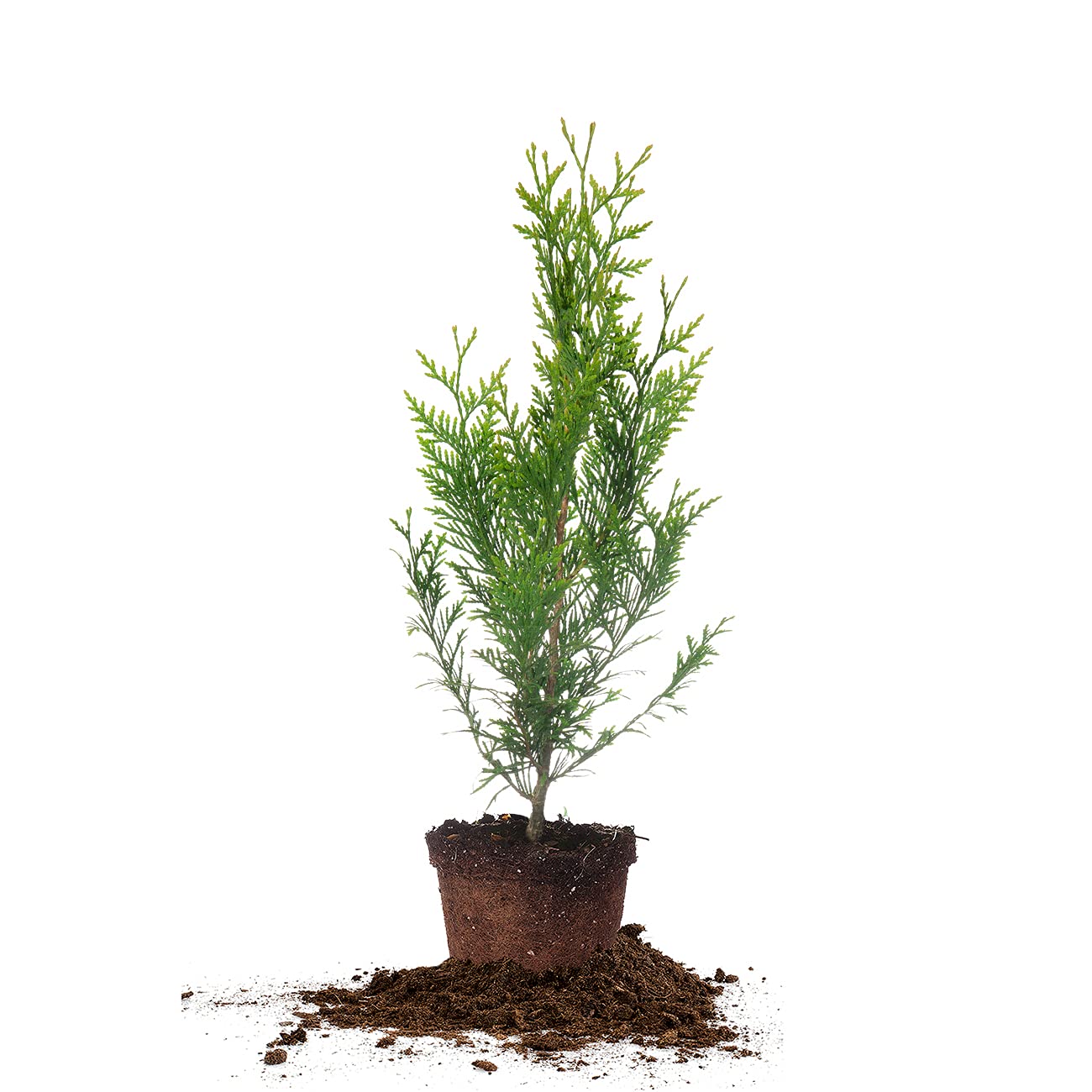
2. Perfect Plants Thuja Green Giant Arborvitae, 1 Gallon
The towering fast-grower that turns a bare property line into a living green wall in record time.
If your front-yard goal is privacy, this is the classic answer — the Thuja Green Giant is widely regarded as the premier fast-growing privacy tree for much of the United States, reaching up to 60 feet tall and 20 feet wide at full maturity. That’s the long game, but the payoff starts fast: it grows 3-5 feet per year once established, so your screen fills in much sooner than most evergreens. Its dense, dark green foliage even smells like Christmas trees when you break a leaf.
The darling of the review pages is how healthy the 1-gallon trees arrive — buyers report “Plants healthy, vibrant dark green, ~2.5 ft tall, sturdy,” and note the careful packaging keeps them undamaged even during heat waves. A few found root balls that only filled two-thirds of the pot, but none arrived root-bound, and plenty report the trees nearly doubling in height within months of planting. It thrives in zones 5-9, which covers most of the country.
The honest trade-off is that one pot is one tree. At a single 1-gallon size, you will likely need several to build a real hedge, so plan your spacing and budget accordingly. Unlike the Nandina above, this is not an ornamental accent — it is a statement screen that needs room to become a 50-foot giant.
Best planted as: a living fence along a side yard or property line where you want year-round screening and are willing to wait a couple of seasons for the magic.
Think twice if: your front bed is tiny — a tree that hits 50 feet will overwhelm a small foundation planting.
3. Knock Out 2 Gal. Double Pink Rose Shrub
A nonstop pink bloomer that delivers the classic rose look without the fussy reputation.
Planted for pure curb appeal, the Knock Out Double Pink earns its fame by flowering from spring to fall at a manageable 48 inches tall, with large double-pink blossoms that read beautifully from the street. Owners mention “So far these roses are blooming very well,” arriving with buds already on the branches and often bigger than expected straight from the start. It covers a wide hardiness range of zones 5-11, so it’s among the most adaptable bloomers on this list.
The maintenance story here is genuinely easy for a rose: water twice a week until established, then once a week, and it keeps blooming with no deadheading chore. It’s a deciduous shrub, which means you trade those blooms for bare stems in winter — a fair caveat for any flowering plant. What you get in return is a long season of color that the Nandina above can’t match, since that plant never flowers at all.
The shipping catch is timing: the plant ships dormant if you order mid-fall to mid-spring, so a winter-arriving rose looks like a bundle of sticks until spring leaf-out. If you can accept that dormant arrival, this is the easiest path to a classic rose display in your front bed. It arrives as a single shrub, so buy two if you want the symmetrical paired look.
Choose this for: continuous pink flowers from spring to fall with minimal work — the rare rose you do not need to baby.
Keep in mind: it loses its leaves in winter, so pair it with an evergreen like the Thuja if you want year-round structure.
4. 2 Gal. Pugster Amethyst Buddleia Shrub

The compact butterfly bush whose purple spikes bring hummingbirds and bees straight to your front door.
If you want your front yard to feel alive, the Pugster Amethyst Buddleia delivers with purple blooms that are an open invitation to butterflies and hummingbirds. It’s a compact variety topping out at just 24 inches tall, which makes it the smallest shrub on this list — a tidy front-of-border plant that adds color without ever crowding a walkway. It flowers spring to summer in full sun, and it’s rated for zones 5-10.
Buyers praise how many buds arrive on the plant, with several noting it was larger than expected and ready to bloom almost immediately. One owner watched bumblebees work the flowers through a brutal summer heatwave, which is a solid sign of the plant’s toughness. It’s deciduous, so the leaves drop in winter, and like the roses above it ships dormant if ordered mid-fall to mid-spring.
The honest weak spot is consistency of arrival condition — a handful of accounts describe plants arriving wilted or leggy with brown leaves, while most found theirs healthy and vibrant. That mixed start is the risk you take with live-shipped stock, and the plant typically rebounds once planted and watered. Compared to the evenly-reviewed Nandina, this one asks for a little more faith at unboxing.
Perfect for: small front beds and patio edges where you want maximum pollinator action from a compact plant.
Be ready for: the occasional rough arrival — give it water and time before judging it.
5. 10 Thuja Green Giant Arborvitae, 7-10 Inches Tall

Ten starter trees for the price of one big one — the budget route to a full privacy screen.
This is the volume play for anyone building a hedge on a budget: ten 7-10 inch saplings that grow about 3 feet per year into a screen reaching 40 feet tall and 15 feet wide at maturity. Space them 6-7 feet apart for a quick screen, per the grower’s guidance, and you are on your way to a dense evergreen wall for a fraction of what mature trees cost. It’s rated for the same hardy zones 5-9 as its single-tree cousin above.
The difference from the Perfect Plants version is where you start — these are small saplings, not 1-gallon potted trees, so the first year is about getting them established. Buyers who put in the care report excellent results, with one tracking growth from 8 inches to 3.5 feet in a sunny spot over 16 months. The recurring advice from owners is simple: deep water via a 5-gallon bucket drip a couple times a week and fertilize in summer.
The size at arrival is genuinely mixed — some found the trees larger than promised, others felt they ran small, which is the reality of young nursery stock. Unlike the Nandina at the top, these are a project: they reward patience and consistent watering, and they arrive as bare little green sticks, not showpieces. Buy them for the hedge you want in five years, not the one you need this month.
Great value if: you have a long property line to fill and are happy to nurture young trees for a season or two.
Not the move if: you want instant privacy — these need years to become a screen.
6. Proven Winners 2 Gal. Blue Chiffon Rose of Sharon

A sky-blue hibiscus with a 96-144 inch frame that commands the whole front yard.
For a true front-yard centerpiece, the Blue Chiffon Rose of Sharon brings ice-blue blooms spring through fall on a plant that matures to a bold 96-144 inches tall and 48-72 inches wide. This is a big shrub — closer to a small tree — so it works best as a solitary anchor or a tall backdrop rather than a foundation filler. It thrives in zones 5-9 in full sun to part shade, and it can live in a container or go straight into the landscape.
Buyers who got a healthy plant are emphatic — describing it as gorgeous with “tons of buds” and arriving in excellent condition in a sturdy container. The brand carries weight here, with repeat buyers saying they “can ALWAYS count on Proven Winners to deliver quality products.” That reputation for consistency is part of what justifies the premium position in this lineup.
The split in the reviews is real: for every glowing arrival story, there’s an account of a plant showing up stressed, with blooms falling off or leaves yellowing after a hot shipping journey. The plant often recovers, but shipping stress is the gamble with this one. It also ships dormant through early spring, so a winter-arriving plant looks unimpressive until it leafs out — worth knowing before you judge it on day one.
Pick this when: you want a commanding, long-blooming specimen that anchors a large bed or stands alone near an entryway.
Expect to work with: shipping stress — some units arrive needing time to bounce back.
7. Picea glauca ‘Conica’ Dwarf Alberta Spruce, #2 Container

The perfectly pyramidal evergreen that gives your entryway a formal, structured look that never outgrows its spot.
If you want a tidy evergreen that won’t swallow your house, the Dwarf Alberta Spruce is the answer — it matures to just 6-8 feet tall with a 3-4 foot spread, and its slow growth habit means it holds that neat cone shape for years with almost no pruning. It’s the coldest-hardy shrub on this list, thriving in zones 3-8, and it grows happily in full sun or partial shade. Buyers consistently describe it as “much larger and nicer than I was expecting” straight from the start.
Where the Thuja giants above are all about fast, sprawling growth, this spruce is the opposite philosophy — rugged dependability and a compact silhouette that frames doorways and porch planters beautifully. Buyers praise the excellent planting instructions, the full green growth, and the fair price for the size. Many plant pairs of them flanking an entry, and the evergreen color carries the front yard through winter when the deciduous bloomers have gone bare.
The one honest concern from the review pages is that a few trees died suddenly after arrival, though that sits against many more accounts of thriving, new-growth-filled plants. It’s the outlier risk of live plants. If you’re after symmetry and a formal look rather than a fast screen, this is the most elegant option in the lineup — but it is a slow grower, so what you plant is roughly what you’ll see for a while.
Why it fits a front yard
- Compact 6-8 foot form suits entryway and container planting
- Survives cold zones down to 3, the hardiest pick here
- Slow growth means no constant pruning to keep shape
- Evergreen color provides winter structure
Before you commit
- Growth is slow — do not expect a fast privacy screen
- An occasional tree arrives and dies unexpectedly
Great match for: formal, symmetrical plantings and anyone who wants a low-maintenance evergreen that holds its shape.
skip it if: you need quick screening; this is a slow, contained grower.
8. Spiraea jap. ‘Magic Carpet’ Spirea Shrub, #3 Container

A compact mound of golden leaves topped with pink flowers — instant contrast for a sunny bed.
This is the shrub that earns its keep twice over: its golden foliage provides year-round color contrast even before the profuse pink blooms arrive. Magic Carpet Spirea stays short and wide at 2-3 feet tall with a 4-5 foot spread, making it a natural ground-cover-style filler that softens the front edge of a bed. It thrives in zones 4-8 and grows best in full sun, which brings out the brightest gold in the leaves and the heaviest bloom set.
Buyers rave about the plant size on arrival, with several calling it “enormous” and “a huge plant” that arrived healthy, lush, and already holding pink blossoms. The #3 container is a bigger starting point than most of the 2-gallon shrubs here, so you get closer to a mature look on day one. The packaging earns repeated praise for keeping every leaf and all the soil intact through shipping.
The occasional complaint is shipping damage — a torn box or broken branches from rough handling — though the plant typically recovers with care and the quality itself draws high marks. Like other deciduous options, it goes dormant in winter, so the bare golden mound is a fair trade for the seasonal performance. If you want a low, spreading shrub that lights up a sunny border, the Magic Carpet delivers more presence than the compact Buddleia above.
Plant it if: you want a low, wide splash of gold and pink that fills the front of a sunny bed.
Expect to wait: for spring leaf-out after its normal winter dormancy.
9. Proven Winners Bloomerang Dark Purple Lilac, #3 Container

The lilac that breaks the rules — blooming in spring, then again from mid-summer to frost.
Everyone loves lilac’s spring fragrance; the problem is the classic lilac only gives you one short burst. The Bloomerang Dark Purple solves that by reblooming — a full spring show, then another round of fragrant dark purple flowers from mid-summer through fall. It matures to a neat 4-7 feet tall with a 4-6 foot spread, ships in a roomy #3, 3-gallon container, and thrives in the widest cold range on this list at zones 3-8.
Buyers describe the shrub arriving already in bloom, “larger than I expected and nice and full and bushy,” with a fragrance that lives up to the lilac name. One condo owner had it thriving in a landscape bed, and others note it held up beautifully even during a long wait before planting. The neat, rounded growth habit means it looks tidy in the garden without much fuss, and the plant even drops its own spent petals.
Because it’s a Proven Winners variety, expect the same quality-first shipping as the Blue Chiffon above — and the same premium price point, which makes it the priciest pick here. It’s deciduous, so it rests over winter, and it wants well-drained soil plus partial shade to full sun. If fragrant, season-long color matters most to you, this is the one that keeps giving long after the spring bloomers fade.
What earns the price
- Reblooms spring through fall, not just once in May
- Fragrant dark purple flowers on a neat rounded form
- Arrives large, full, and often already blooming
- Hardy down to zone 3
What to weigh
- Highest price point in this lineup
- Deciduous — bare stems through winter
- Needs winter protection in the coldest zones
Splurge on this if: you want the classic lilac scent plus months of purple blooms instead of a single spring week.
Pass if: your budget is tight or you need evergreen structure for winter.
Understanding the Specs
USDA Hardiness Zones
This is the single most important number on a shrub’s tag. It tells you the coldest winter temperatures a plant can survive, so a shrub rated “zones 5-9” will sail through winters in those regions but may die in a zone 4 deep freeze. Always check your zone before buying — it’s the difference between a plant that thrives for a decade and one that doesn’t survive its first winter. The shrubs here range from the cold-hardy lilac and spruce at zone 3 to the warm-loving Nandina at zone 10.
Mature Height and Spread
The pot size tells you what you’re holding; the mature height tells you what your yard will look like in five years. A Thuja Green Giant can reach 40-60 feet tall, while the Magic Carpet Spirea stays at 2-3 feet. Picture that mature footprint against your foundation bed and walkway before you dig. A compact shrub under a window is charming; a giant evergreen in the same spot is a maintenance problem.
Evergreen vs Deciduous
This one describes whether the plant keeps its leaves all year (evergreen) or drops them in winter (deciduous). Evergreens like the Nandina, Thuja, and Dwarf Spruce give you year-round structure and privacy, so your front yard never looks empty in January. Deciduous shrubs like the roses, buddleia, spirea, and lilac deliver flowers but go bare in winter. Many front yards blend both — an evergreen anchor plus deciduous bloomers for seasonal color.
Sunlight and Water Needs
Every shrub here has a light preference, from full sun to part shade, and a watering rhythm. The standard advice across most of these listings is to water twice per week until the plant is established, then back off to once per week. “Established” means the roots have grown into the surrounding soil, usually after the first season. Matching the plant to your actual spot’s sun exposure is as important as picking the right species — a full-sun rose will struggle in deep shade no matter how healthy it arrives.
FAQ
What is the fastest growing bush for front yard privacy?
Which front yard bush stays green all winter?
What is the best low maintenance flowering bush for a front yard?
How far apart should I plant Thuja Green Giants for a privacy screen?
How big will a Dwarf Alberta Spruce get in my front yard?
What does it mean when a rose bush ships dormant?
Which front yard bush attracts butterflies and hummingbirds?
How often should I water a newly planted front yard shrub?
Is the Bloomerang lilac different from a regular lilac?
What is the best bush for a small front yard bed?
Final Thoughts: The Verdict
For most homeowners, the bushes for front yard winner is the Southern Living Obsession Nandina because it delivers dependable year-round red color with genuinely low maintenance, backed by the strongest owner satisfaction in this lineup. If you want privacy, the Perfect Plants Thuja Green Giant grows into a towering screen at 3-5 feet per year. And for pure seasonal show, grab the Knock Out Double Pink Rose for spring-to-fall blooms that never need deadheading — or the Bloomerang Dark Purple Lilac if you want fragrance and reblooming color in one premium package.
How We Picked
We do not accept paid placement. Every pick is matched to a real buyer and a real use-case; we do not hands-on test units.
Sources & Methodology
Specifications: manufacturer listings and product documentation. Review insights: verified customer reviews, as of August 2026. Pricing: not shown on this page (it changes often); check the current price via the retailer link.
As an Amazon Associate, FitlyFast earns from qualifying purchases. This does not affect which products we feature.