
Our readers keep the lights on and the weekend projects moving. As an Amazon Associate, I earn from qualifying purchases.
Specs are compiled from manufacturer listings and verified buyer reviews and can change over time — please confirm the key details on the product page before buying.
When your workday is spent on concrete, ladders, or uneven ground, a safety toe that feels like a brick can turn a shift into a slog. Composite toe hiking boots wrap your toes in non-metallic protection that stays light and warm, so you get the guard you need without the cold-conducting weight of steel. The models below are chosen for real-world durability, with the waterproofing, cushioning, and fit details that matter most when your boots are your office.
I’m Rikta — the founder and writer behind FitlyFast. This guide is built by comparing the manufacturers’ published specifications and the patterns across verified customer reviews, so you get each pick’s real strengths and trade-offs instead of marketing spin.
The best composite toe hiking boots balance impact protection with all-day cushioning and waterproof builds, so your feet stay safe and comfortable from first step to final whistle.
Our Picks at a Glance
How To Choose The Best Composite Toe Hiking Boots
Composite toe boots are built for two worlds: the protection of a work boot and the comfort of a hiker. The trick is finding the pair that matches your specific job site, because a boot that shines on a smooth warehouse floor can feel completely different on rocky terrain or a ladder.
Waterproofing and Breathability: The balance that keeps you dry
A waterproof membrane (a thin layer inside the boot that blocks water from getting in) keeps your feet dry in rain and puddles. But if that membrane traps heat, your feet will sweat, which is its own kind of misery. Look for a lining described as moisture-wicking, which pulls sweat away from your skin, so the boot manages both outside rain and inside perspiration.
Protection and Comfort: What the ratings mean
The composite toe itself is a non-metallic cap that protects against impacts and compression. Many boots also carry an electrical hazard (EH) rating, meaning they reduce the flow of electricity through the sole if you step on a live wire. Slip-resistant ratings like ASTM F3445 or F2913 tell you the outsole (the bottom rubber) has been tested for grip on slick surfaces, which matters on oily shop floors or wet concrete.
Quick Comparison
| Model | Best For | Weight | Toe Type | Waterproofing | Amazon |
|---|---|---|---|---|---|
| Timberland PRO Titan EV★ Best Overall | All-day comfort on hard surfaces | 4.21 lbs | Composite | Waterproof membrane | Amazon |
| Merrell Moab Speed 2.0Wide-Foot Winner | Wide feet and trail grip | — | Carbon fiber | Waterproof | Amazon |
| Skechers Arch Fit TarverArch Support Hero | Flat feet and arch support | 3.1 lbs | Composite | — | Amazon |
| Reebok Zig Kinetica Edge II | Responsive cushioning on uneven ground | 3.1 lbs | Composite | Waterproof | Amazon |
| New Balance Allsite | True-to-size fit with a heel counter | 1.97 kg | Composite | Waterproof upper | Amazon |
| KEEN Skokie Hiker | Ladder stability and wide toe box | 22.9 oz / boot | Composite | Waterproof | Amazon |
| Wolverine Rigger WPF | Energy return for long walks | 1.88 lbs | Composite | Waterproof membrane | Amazon |
| BRUNT Perkins | Defined heel and adjustable width | — | Comp Toe | Waterproof | Amazon |
| KEEN Red Hook | Warehouse and manufacturing shifts | 21.2 oz / boot | Carbon fiber | Waterproof | Amazon |
| Carhartt Rugged Flex | Insulated cold-weather work | 4.5 lbs | Composite | Storm Defender | Amazon |
| Ariat Rebar Lift | Rough outdoor terrain and heat resistance | 5.5 lbs | Composite | DRYShield | Amazon |
In-Depth Reviews
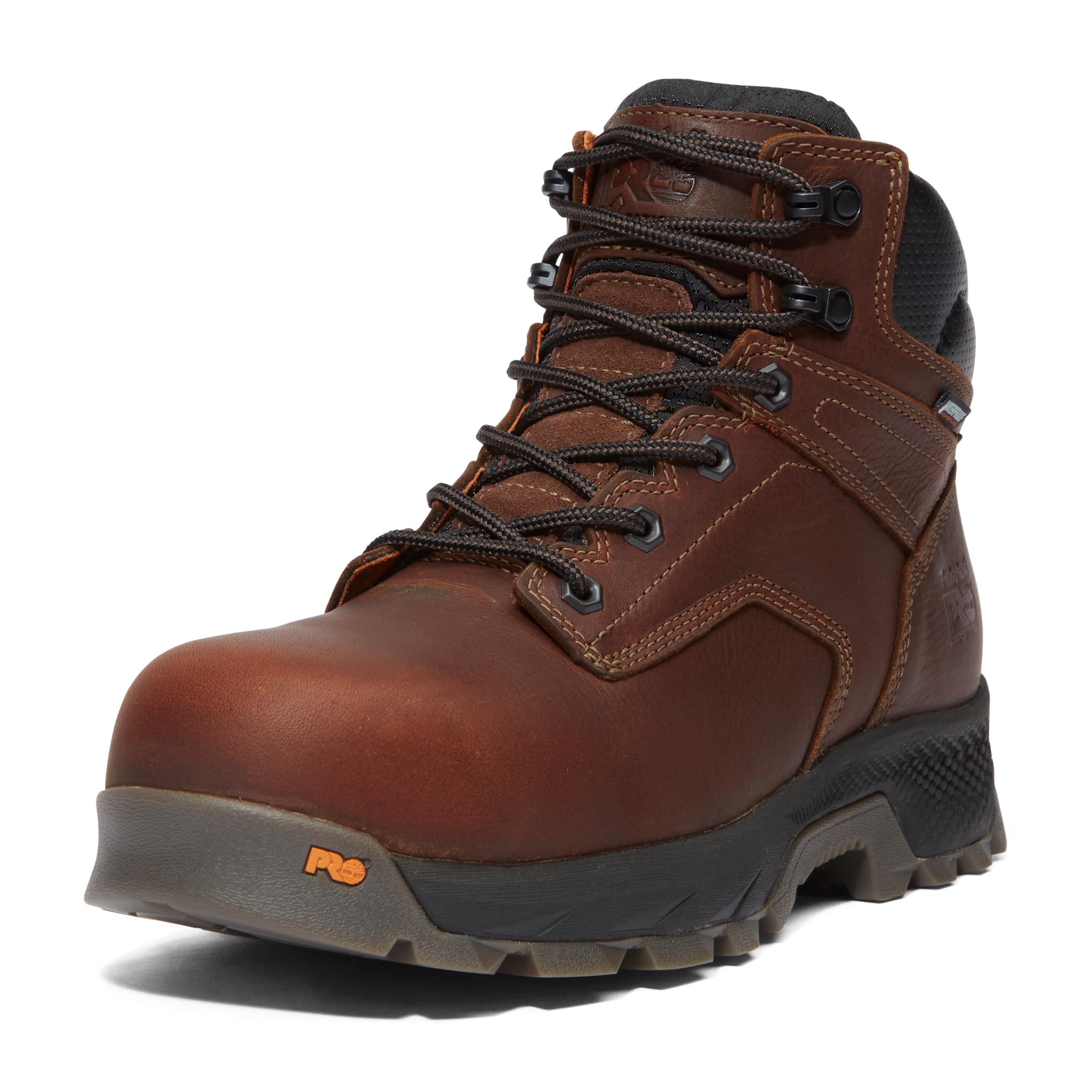
1. Timberland PRO Men’s Titan EV 6 Inch
Our pick — 4.5★ from 400+ verified ratings; the strongest balance of quality and price.
The work boot that feels like a running shoe from the very first step.
Comfort is the standout here — over 60 owners praise it above all else. The Hover Spring foam midsole (the cushioning layer between your foot and the ground) works with an Anti-Fatigue Technology footbed that returns energy with each step, so your legs feel fresher at hour ten on a concrete floor.
Buyers report a 5-month verdict that reads like a checklist of what you want: excellent all-day comfort, great traction on wet surfaces, waterproof, a roomy toe box, and true-to-size fit. The composite toe keeps things light compared to steel, and the full-grain waterproof leather upper with an internal waterproof membrane handles rain without turning your feet into pruney messes. The 4.21-pound weight is noticeable if you are used to sneakers, but it sits closer to a hiker than a traditional work boot.
The honest trade-off is warmth — owners note these run warm, which is a blessing in winter and a mild annoyance in summer. One buyer with flat feet reported zero arch support and foot pain, so if you need serious arch structure, plan on aftermarket insoles. But the consensus from electricians, garbage truck workers, and 12-hour shift guys is that these deliver protection and plush comfort from the start.
What owners rave about
- Zero break-in period — comfortable right from the start
- Strong arch support noted by many buyers
- Slip-resistant and waterproof for wet job sites
Consider this
- Runs warm in hot weather
- Some flat-footed owners need extra insoles
- Slight weight, though barely noticeable
Reach for these if: you live on concrete or wet ground and want a cushioned, waterproof composite toe that needs no break-in.
Look elsewhere if: you need serious built-in arch support or run hot and prefer a breathable summer boot.
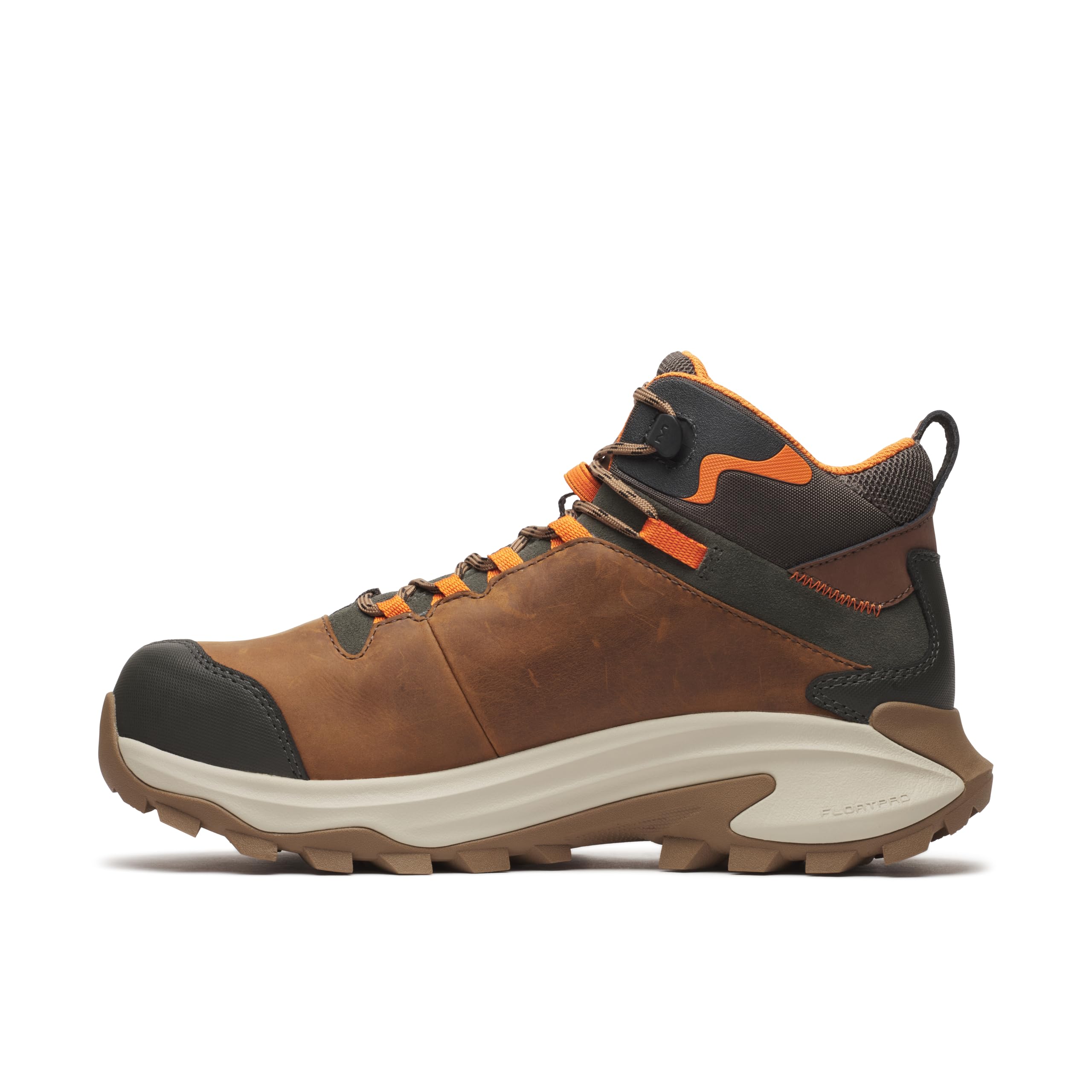
2. Merrell Moab Speed 2.0 Mid Composite Toe WPSR
A hiker’s pedigree with a carbon fiber toe for the job site.
This boot borrows the DNA of Merrell’s best-selling Moab hiking line and adds a lightweight carbon fiber toe — the same non-metallic protection as composite but built from carbon fiber. Quality is the top praise here, with over 20 owners calling it out, and the true-to-size fit is especially welcome news for wide feet, which is a recurring theme in the feedback.
Owners mention wearing these for 30-plus days with the composite toe never rubbing, and the waterproofing holds up through rain while keeping feet dry without feeling overly warm. The FloatPro foam midsole and ComfortBase footbed (the cushioned layer underfoot) add all-day cushion, and the sticky rubber outsole delivers aggressive trail grip plus slip and oil resistance. It is a genuine hiker that happens to be work-rated.
The catch is weight — opinions split right down the middle, with some calling it “super light” and others saying “very heavy.” The difference likely depends on foot size and what you are used to. A few buyers found the insoles lacking arch support, so budget for aftermarket inserts if your arches need structure. The top of the boot runs warm rather than stuffy, which is a reasonable trade for the waterproofing.
Trail-meets-trade: If you want a boot that feels like a hiking shoe on the trail but protects like a work boot on the clock, this is the crossover pick.
Watch the weight: Comfort and quality are consistent, but the weight debate means trying them on matters before you commit.
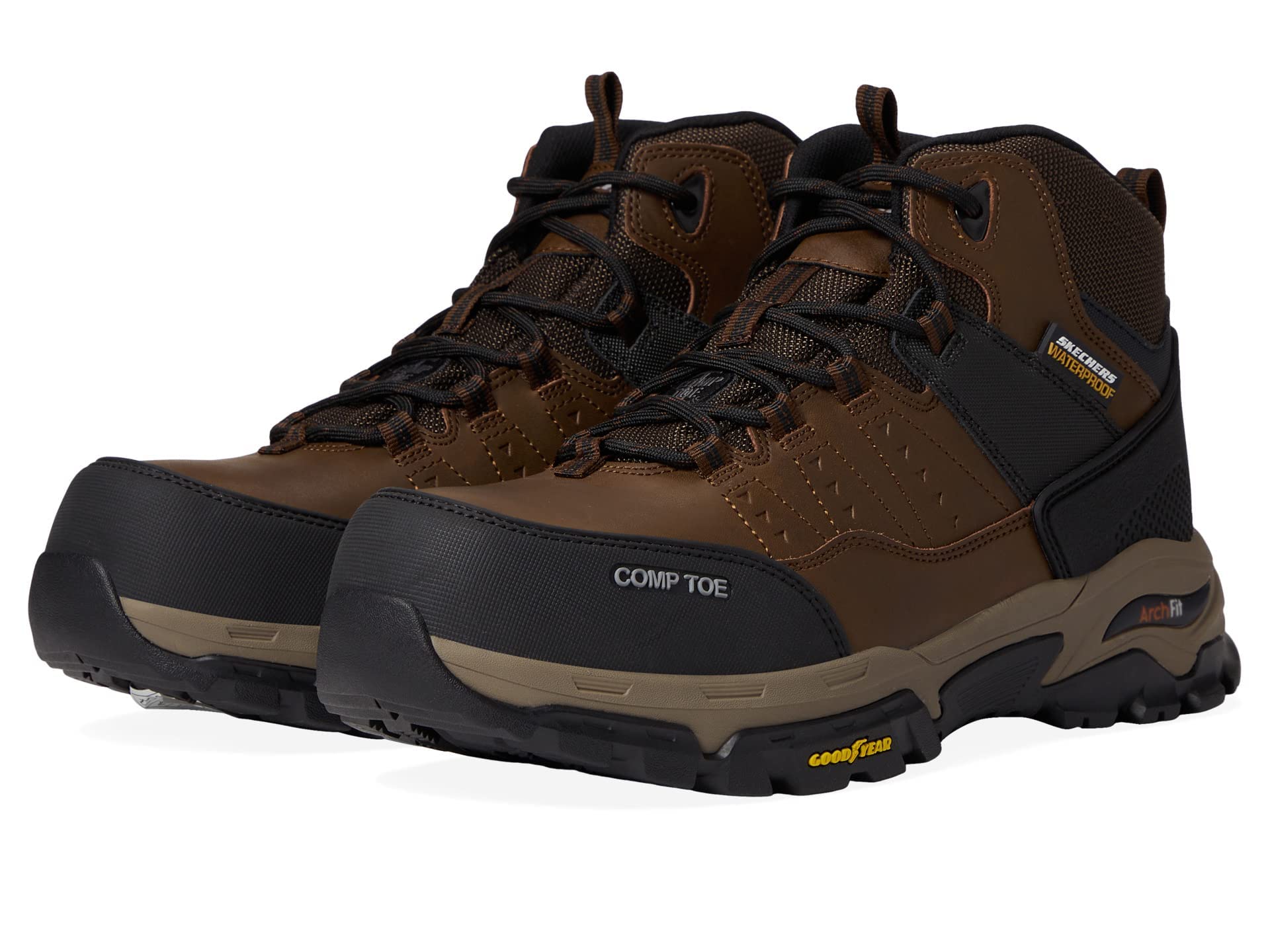
3. Skechers Arch Fit Tarver Max Cushioning
The composite toe that flat-footed workers swear by, right from the start.
Comfort is the undisputed king here, with 47 owners making it the most-praised aspect, and the specific reason is arch support. Buyers with flat feet report needing no inserts at all, which is rare in this category — the Arch Fit insole (a contoured footbed that supports your arch) does the work the moment you lace up.
Weighing 3.1 pounds, these are genuinely light for a safety toe, and the Natural Rocker Technology (a curved sole that rocks you forward) helps you keep moving through long standing and walking shifts. The composite toe leaves your toes free, and customers note the wide size does not rub. One diesel mechanic called it a “nice affordable alternative” for the job, though the same review flagged stitching coming loose around the toe after a month and a half — a durability thread that runs through the feedback.
The recurring gripe is longevity: the internal lining and stitching have been reported to pull apart in as little as two days for one unlucky buyer, and around eight months for others. The laces are also short and tend not to stay tied, which owners solve by swapping in longer ones. If you want out-of-box comfort and arch support for a budget-friendly price, these are tough to top — just know they may not be your forever boot.
The comfort case
- Arch support that works for flat feet without inserts
- Lightweight at 3.1 pounds
- Great value for the comfort level
The durability question
- Stitching can pull loose around the toe
- Short laces that need replacing
- Mixed longevity reports
Pick these if: arch support and out-of-the-box comfort matter more to you than five-year durability.
Think twice if: you need a boot that will survive heavy abuse for years without seam issues.
4. Reebok Work Zig Kinetica Edge II

The safety toe with running-shoe energy return and a seriously aggressive tread.
Quality leads the feedback here with 28 owners praising it, and the weight is the second-most-praised spec at 3.1 pounds. The Zig Kinetica pairs Floatride Energy cushioning with a Zig Energy midsole (a wave-shaped foam that returns energy as you walk), so your feet feel less fatigued on uneven outdoor surfaces — a point buyers specifically highlight.
Plantar fasciitis sufferers report logging 9,000-plus steps pain-free., and the memory-foam innersoles are so soft that many skip aftermarket inserts entirely. The lugged outsole meets ASTM F3445 slip-resistance standards. and delivers real grip on trails and in town. The Crazyhorse leather and rubber upper is waterproof with a membrane that keeps moisture away from your foot, and the DuraKick protective toe guard shields against obstacles.
The fit is the dividing line: some find them big, others find the toe box extremely narrow even on the wide version, so this is a boot you should try on first. They also run warm — one buyer found they make feet sweat, manageable with a boot dryer. For anyone with foot pain looking for a light, cushioned boot, this is a standout, but the narrow toe box is a real consideration for wide-footed workers.
Cloud-like cushioning: The Floatride and Zig Energy combo is the star here, making this a top pick for plantar fasciitis sufferers and anyone on their feet all day.
Fit first: The narrow toe box means wide-footed buyers should not order blind — try them on or order a size up.
5. New Balance Allsite Composite Toe Work Boots
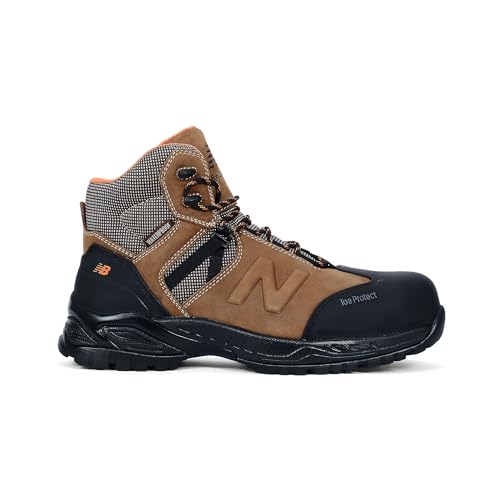
The lightweight athletic-style safety shoe that fits true to size.
Fit is the dominant theme here — 67 owners make it the most-praised aspect, and the consensus is these run true to size. The Allsite is built as a lightweight, athletic-style safety shoe with a strong heel counter (the rigid cup around your heel that adds support), making it a solid choice for workers who spend long hours on their feet.
The waterproof upper keeps you dry, and the slip-resistant outsole meets ASTM F2413-18, F2412-18a, and F2913-19 standards, which cover impact protection, electrical hazard safety, and slip resistance. The Acteva midsole (the cushioning foam layer) provides the blend of comfort, stability, and flexibility that New Balance is known for, and reviewers point out these are not as heavy as typical work boots.
The water resistance is a genuine split decision — some find them fully waterproof, others say they are not waterproof at all, so treat the claim with caution on soaked sites. Comfort gets mixed marks, and the EE width runs tight for some, compressing toes despite the “wide” label. One journeyman electrician compared the comfort and durability to boots costing three times as much, which tells you the ceiling here is high.
Why it wins
- True-to-size fit praised by most owners
- Lightweight athletic feel for long days
- Strong heel counter for extra support
Where it stumbles
- Waterproofing is inconsistent between units
- EE width can run narrow and compress toes
- Comfort is a mixed bag
Choose these if: you want a true-to-size, lightweight safety shoe with real heel support for warehouse or light construction work.
Skip them if: you need guaranteed waterproofing or have wide feet that demand a genuinely roomy toe box.
6. KEEN Utility Skokie Hiker Mid Height
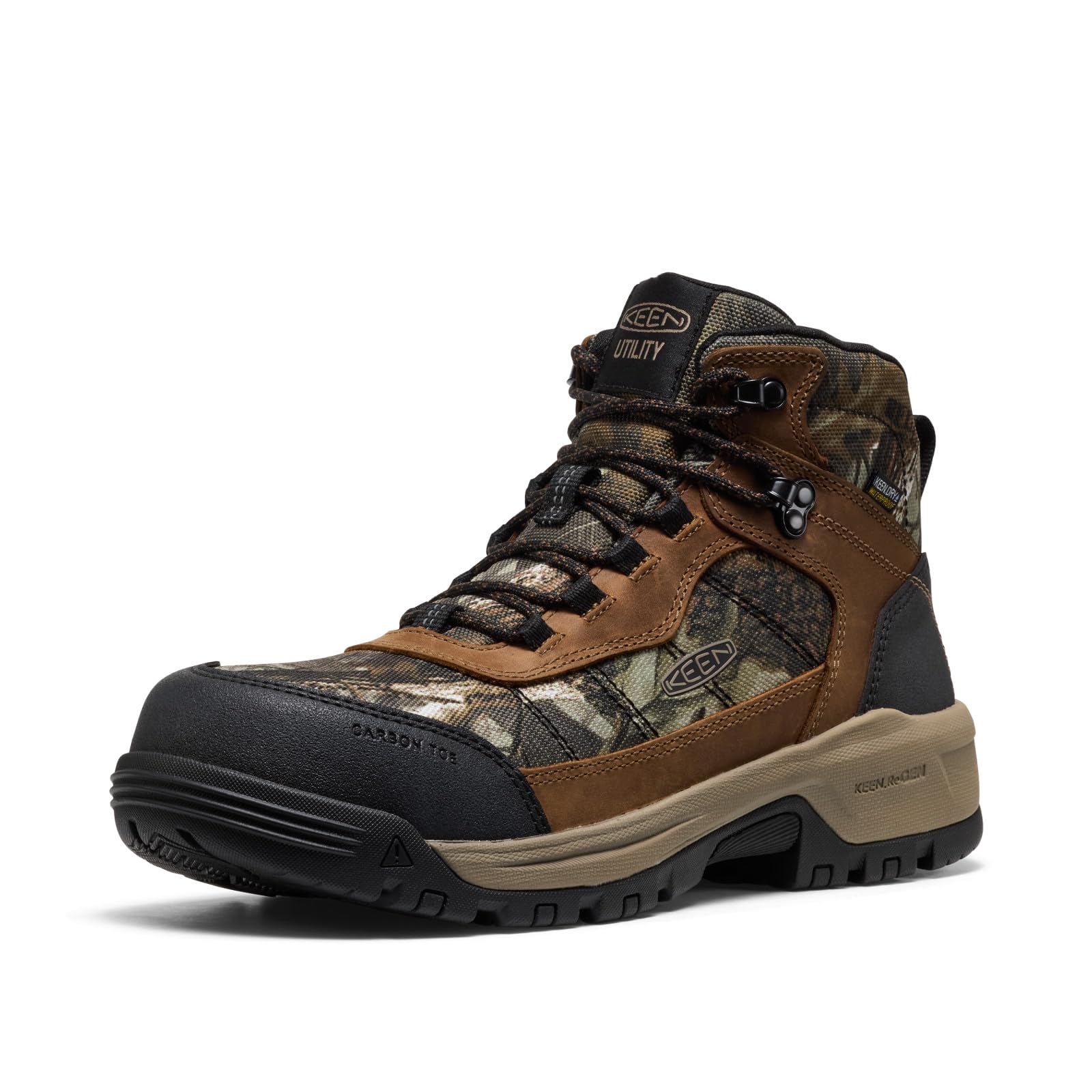
The 90-degree heel that locks you on ladders, with a sneaker’s feel.
At 22.9 ounces per boot, the Skokie Hiker is built on KEEN’s Original Fit, which gives your toes extra room to spread out. The defining feature is the 90-degree heel (a sharply angled heel that catches ladder rungs for stability), making this a favorite for roofers, utility workers, and anyone climbing for a living.
The waterproof build uses environmentally preferred leather sourced from tanneries certified by the Leather Working Group, and the energy-returning cushioning absorbs impact. Shoppers say it is light and comfortable from day one, with the toe box offering plenty of room. One owner ran them hard for six months and reported the bottoms still look new, which speaks to the durability ceiling.
The trade-offs are real: a few owners find the arch support sits farther back in the boot, which makes swapping in aftermarket insoles tricky, and the boot runs a little narrow around the ball of the foot until it stretches. One buyer found them “unwearable” with no cushion and a seam that causes blisters, so fit varies person to person. For medium-duty work in roofing, construction, utilities, and landscaping, this is a dependable pick.
Climb with confidence: The 90-degree heel is a genuine safety feature for ladder work, and the wide toe box is a comfort win.
Fit check: The narrow ball-of-foot fit means trying them on is worth it before you commit.
7. Wolverine Rigger WPF Composite-Toe Mid Wedge

A featherweight 1.88-pound work boot with energy-returning cushioning.
Comfort is the top praise, with 62 owners calling it out, and the weight is the second-most-appreciated spec at 1.88 pounds — genuinely light for a composite toe. The EPX anti-fatigue technology uses a honeycomb heel (a hexagonal structure that expands and absorbs impact) to conserve and return energy, which buyers report keeps joint pain away even on long shifts.
The waterproof full-grain leather upper pairs with a breathable membrane to keep feet dry, and the rubber lug outsole gives solid traction. Buyers who work in machine shops, shipyards, and oil fields report these survive exposure to oil, grease, saltwater, and chemicals, with one owner on their fourth pair. They run half a size large, so size down, and they run very hot — one buyer found them unwearable in summer.
The durability picture is the honest caveat: 44 owners flag it as a negative, with reports of stitching coming loose after a few months and some waterproofing failures. The sole can also split, which owners fix with glue. If you want a light, comfortable boot for daily use and can accept that it may not be a decade boot, this delivers — just know the long-term track record is mixed.
The light-and-comfort case
- Extremely light at 1.88 pounds
- Energy-returning cushioning fights fatigue
- Survives harsh oils and chemicals
The durability caveat
- Stitching can pull loose in months
- Runs half a size large
- Very warm in hot weather
Reach for these if: you want a light, cushioned boot for daily walking on smooth or oily floors and value comfort over decade-long durability.
Look elsewhere if: you need a boot that will take heavy job-site abuse for years without seam failures.
8. BRUNT Perkins 6″ Waterproof Wedge Work Boot

A defined heel and adjustable width for a truly customizable fit.
The Perkins stands out for its Adjustable Width System (a lacing and sole design that lets you fine-tune the width), plus a defined heel that adds stability. It is electrical hazard rated, slip and oil resistant, and waterproof, and buyers consistently call it great-looking — appearance is the one aspect that earns uniformly positive feedback.
The comfort story is a genuine split: some owners call them the most comfortable boots they have owned, with one tire shop worker saying they “save my life” on concrete all day, while others find them lacking. The break-in period runs long for some and non-existent for others, which suggests the fit really does depend on your foot shape. The removable insole helps with room adjustment.
Durability is the recurring concern, with 77 owners flagging it as mixed. Reports of the boot falling apart within 10 weeks to 6 months exist, alongside owners who say they outlasted pricier boots. Chemicals and heavy walking accelerate wear. If you like the look and want an adjustable fit, this is worth trying — but verify the quality on your specific pair.
Built to be seen: The looks and adjustable width are genuine strengths, and the defined heel is a real stability win.
Quality roulette: Durability varies widely between pairs, so this is a try-before-you-commit boot.
9. KEEN Utility Red Hook Mid Height
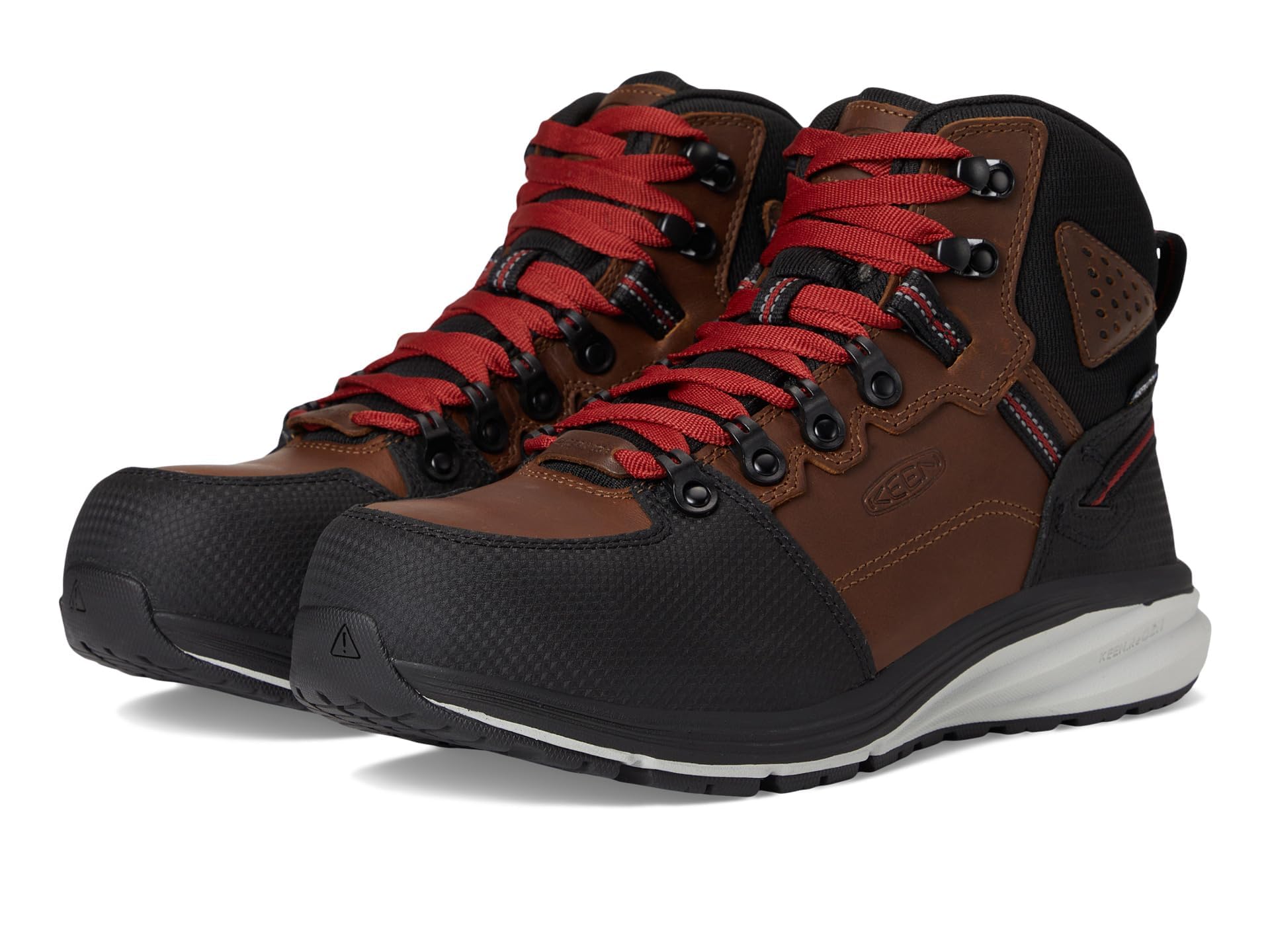
A carbon-toe warehouse boot with 50% energy return per step.
Quality is the top praise, with 58 owners calling it out, and lightweight is the second-most-appreciated spec at 21.2 ounces per boot. The KEEN.ReGEN midsole returns 50% of energy with each step., which is a measurable cushioning boost for long warehouse or manufacturing shifts.
The full-grain leather upper has TecTuff protection (a tough coating) in high-abrasion areas, and the carbon toe keeps it from setting off metal detectors. Owners mention no break-in required, excellent grip on oily and wet surfaces, and quiet walking on construction sites. One owner logged 450-plus hours of wear and still found them solid.
The recurring durability gripe is the lace eyelets — customers note the composite hooks breaking when tying laces, with two pairs affected for one buyer. The fit runs small for some, and comfort is a mixed bag, with some experiencing foot pain on long walks. The KEEN.ReGEN cushioning is the star, but the lace hardware is the weak point to watch.
The cushioning case
- 50% energy return with each step
- Lightweight at 21.2 oz per boot
- Excellent grip on slick surfaces
The weak point
- Lace eyelets break too fast
- Fit runs small for some buyers
- Comfort varies by foot shape
Pick these if: you want carbon-toe protection with real energy-returning cushion for warehouse or manufacturing work.
Think twice if: you rely on your lace hardware to survive heavy day-to-day use — the eyelets are the known weak spot.
10. Carhartt Rugged Flex 6″ Composite Toe
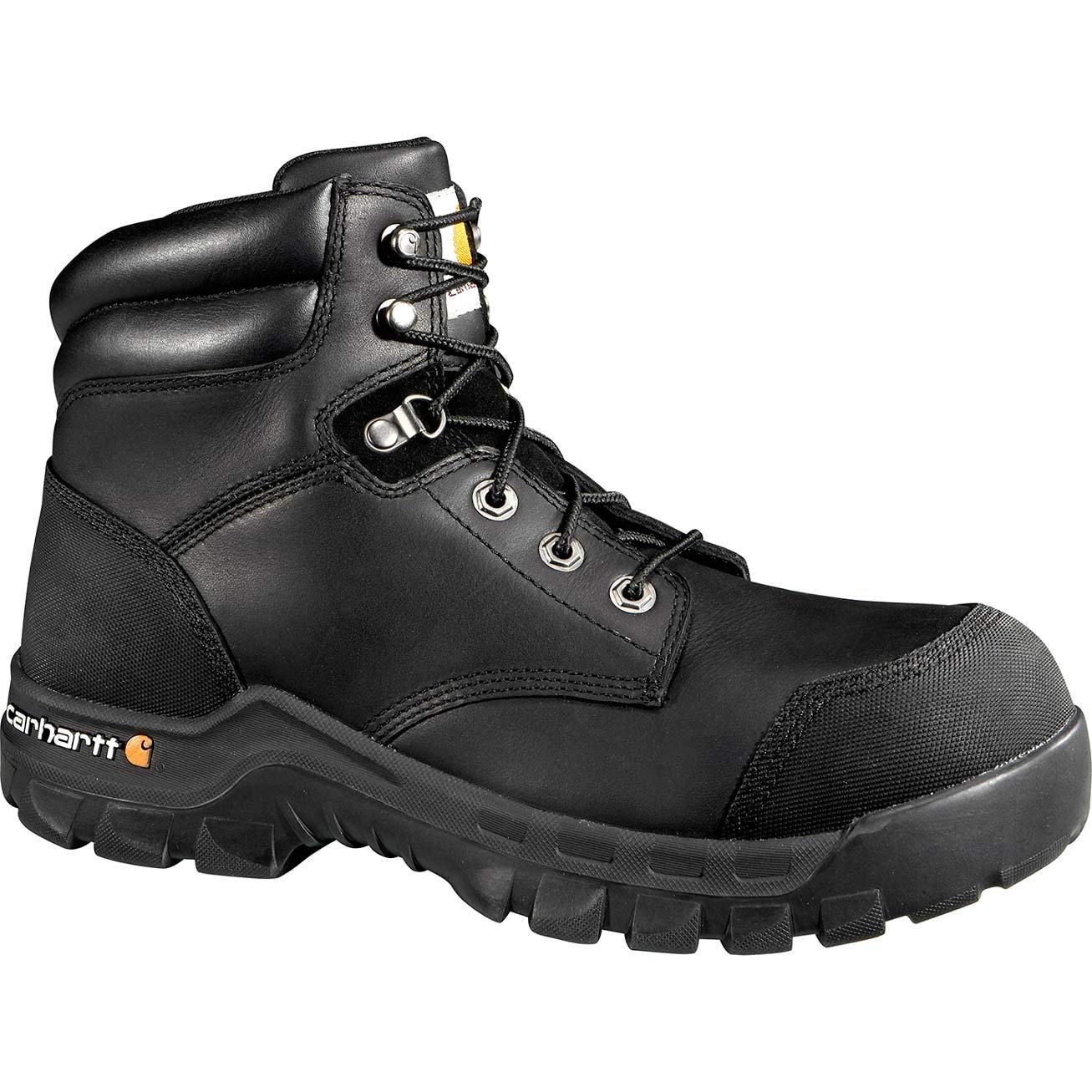
The insulated workhorse that shrugs off cold weather and heavy use.
Comfort and quality are the twin strengths here, with both earning consistently positive feedback. The 400g 3M Thinsulate insulation traps heat for cold-weather work., and the Storm Defender waterproof protection keeps rain and slush out. The FastDry sweat-wicking lining pulls moisture away, so you do not end up soggy inside.
Durability is the headline story: reviewers point out wearing these 5 days a week for 10-14 hours at a time for nearly 2 years with no seam splits, no eyelet failures, and the tread still holding up. The reinforced toe and heel use high-abrasion rubber, and the flexible Swen-Flex plate in the outsole adds support. One owner’s prior pair lasted 8 years, which tells you the ceiling.
The trade-off is weight — at 4.5 pounds, these are on the heavy side, and shoppers say they are tough on stairs and ladders. They also need a break-in period before they feel broken in. The laces can wear out quickly for some owners, which is a minor fix. If you work outdoors in cold conditions and want a boot that will last, this is the durable choice.
Built to outlast: The 2-year testimony and 8-year prior-pair story make this the durability pick for cold-weather workers.
Heavy is the price: At 4.5 pounds, these cost you in leg fatigue on stairs and ladders.
11. Ariat Rebar Lift 8″ Waterproof Composite Toe
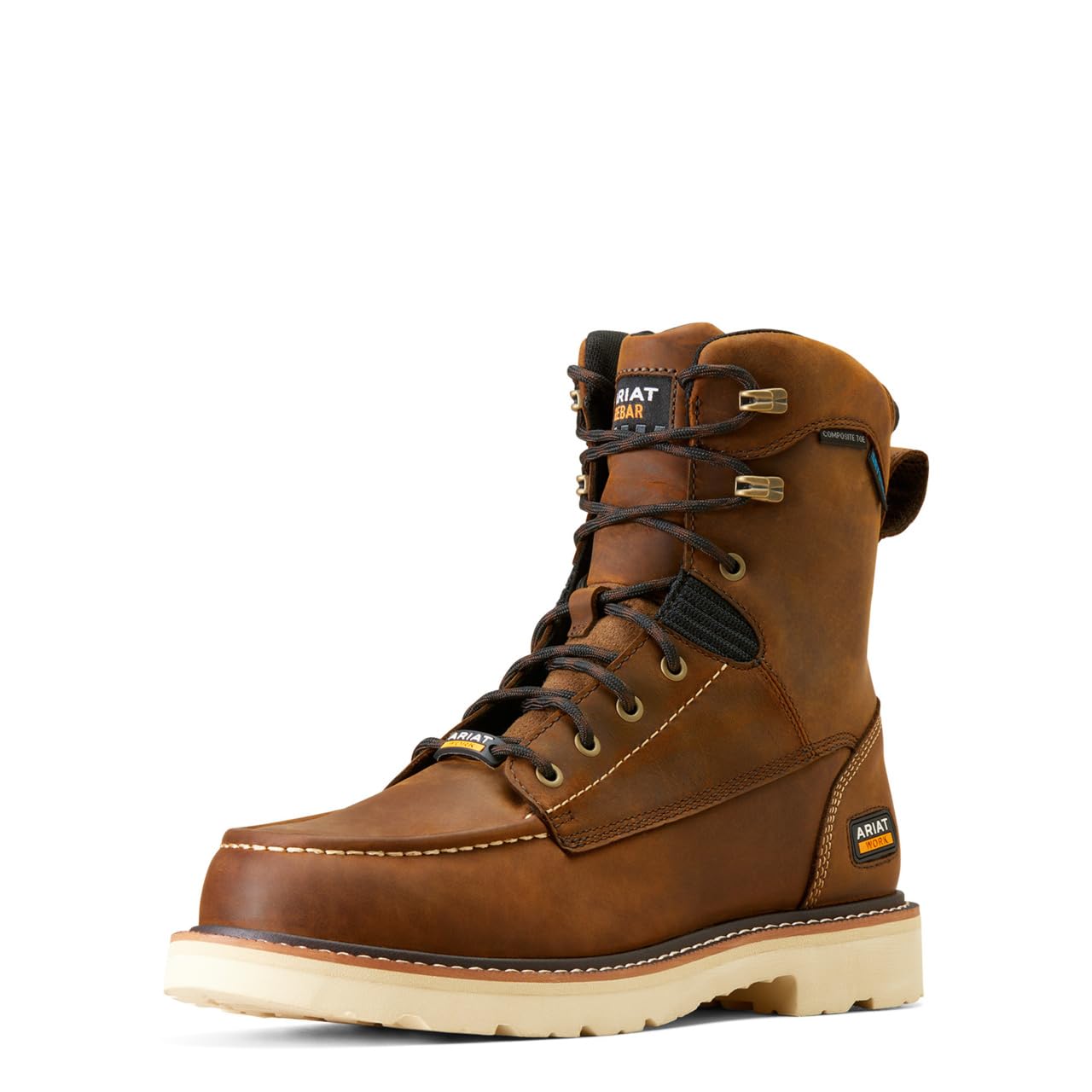
The 8-inch boot that handles rough terrain and 302°F heat.
Comfort is the top praise, with 49 owners calling it out, and the dual-density FLX Foam midsole (a two-layer foam that cushions each step) delivers a light, springy feel right from the start. DRYShield waterproofing keeps feet dry, and the SMARTLITE sole resists oil and slip while passing a 150°C/302°F hot contact test., making it a genuine pick for demanding outdoor work.
Buyers report a broken-in feel immediately, with one 20-year veteran calling them the most comfortable work boots they have owned. ATS technology provides ergonomic support on uneven terrain., which matters on construction sites and farms. The 8-inch height adds ankle protection, and the non-metallic toe meets ASTM F2413 standards.
The durability story has a split: one buyer’s soles fell off within 3 days on a second pair, while others report holding up for over 6 months of heavy use. The white bottoms do not stay white after a single day on the job — cosmetic, but worth knowing. Quality feedback is mixed, with some disappointed by the construction. For comfort and outdoor performance, this is a strong pick, but inspect your pair for defects early.
Why it shines
- Broken-in comfort from the start
- Heat-resistant sole rated for 302°F
- 8-inch height adds ankle support
The honest caveats
- Some pairs have sole separation issues
- White bottoms show wear fast
- Quality varies between pairs
Choose these if: you work on rough outdoor terrain and want a cushioned, waterproof 8-inch boot that needs zero break-in.
Be cautious if: you want guaranteed quality control — inspect your pair early given the mixed durability reports.
Understanding the Specs
Composite vs Carbon Fiber Toe
Both are non-metallic protectors that meet safety standards and keep your feet warmer than steel in cold weather. A composite toe is made from layered materials like fiberglass and plastic, while a carbon fiber toe uses woven carbon for similar protection at even lighter weight. The practical difference is weight and cost — carbon fiber is lighter but typically pricier.
Waterproofing vs Water-Resistant
A waterproof membrane (like Storm Defender or DRYShield) is a sealed layer that blocks water from entering, ideal for rain and puddles. Water-resistant means the boot sheds light moisture but will soak through under sustained exposure. For job sites with standing water, you want a true waterproof build, not just resistance.
FAQ
What is the difference between a composite toe and a steel toe?
Will composite toe hiking boots keep my feet warmer than steel toe boots in winter?
Do composite toe boots require a break-in period?
How do I know if a composite toe boot will fit my wide feet?
Are composite toe boots lighter than steel toe boots?
What does an electrical hazard rating mean on a composite toe boot?
How long do composite toe hiking boots typically last?
Is a composite toe boot suitable for hiking, or only for work?
What does the slip-resistant ASTM rating mean?
Can I replace the insoles in composite toe boots?
Final Thoughts: The Verdict
For most buyers, the best composite toe hiking boots winner is the Timberland PRO Titan EV because it pairs the highest comfort ratings with waterproof protection and zero break-in — the crowd favorite with 400+ ratings behind it. If you want the trail crossover with a carbon fiber toe, grab the Merrell Moab Speed 2.0. And for cold-weather durability that survives years of daily wear, the Carhartt Rugged Flex is the one to reach for.
How We Picked
We do not accept paid placement. Every pick is matched to a real buyer and a real use-case; we do not hands-on test units.
Sources & Methodology
Specifications: manufacturer listings and product documentation. Review insights: verified customer reviews, as of August 2026. Pricing: not shown on this page (it changes often); check the current price via the retailer link.
As an Amazon Associate, FitlyFast earns from qualifying purchases. This does not affect which products we feature.