
Our readers keep the lights on and the weekend projects moving. As an Amazon Associate, I earn from qualifying purchases.
Specs are compiled from manufacturer listings and verified buyer reviews and can change over time — please confirm the key details on the product page before buying.
Factory car speakers are the weak link in almost every stock stereo — they waffle on bass and smear the vocals you actually want to hear. Upgrading the door speakers is the single most effective way to get deep, punchy bass and clean, detailed sound without adding a subwoofer box. This guide breaks down the best car door speakers for bass and sound quality, explaining exactly what you get with each pick so you can choose with confidence.
I’m Rikta — the founder and writer behind FitlyFast. This guide is built by comparing the manufacturers’ published specifications and the patterns across verified customer reviews, so you get each pick’s real strengths and trade-offs instead of marketing spin.
Find the perfect set of car door speakers for bass and sound quality and turn your daily commute into a concert.
Our Picks at a Glance
How To Choose The Best Car Door Speakers For Bass And Sound Quality
Before you buy, remember that this list uses flexible, human-like matching — not every pick is the exact number searched; the nearest same-type size or watt serves the same purpose. Your priority should be finding a speaker that fits your car’s door depth and matches your stereo’s power.
Know Your Power: RMS vs Peak
RMS (Root Mean Square) is the continuous power a speaker can handle cleanly, while peak is just a brief burst. For reliable bass you want a speaker with an RMS rating of at least 50W per pair, and ideally one that matches your amp or head unit output. A speaker with higher RMS than your stereo provides is safe; the reverse means distortion and potential damage.
Match the Fit to Your Door
The most common size is 6.5 inches, but mounting depth is the spec that determines if it fits without window interference. A shallow 2-inch depth like the JBL GTO629 fits most doors, while a deeper 2.32-inch model like the Alphasonik requires more clearance behind the panel. Always check your door’s depth before ordering.
Coaxial vs Component — Choose Your Stage
Coaxial speakers have the tweeter built into the woofer, making them a simple drop-in. Component systems split the woofer and tweeter for better staging, but need separate mounting spots. For a straightforward bass upgrade, coaxial wins; for audiophile detail, go component.
Quick Comparison
| Model | Best For | Type | RMS Power | Sensitivity | Amazon |
|---|---|---|---|---|---|
| JBL GTO629★ Best Overall | Deep bass on factory power | Coaxial | — | — | Amazon |
| Alphasonik AS265PBest Value | Budget 4-speaker upgrade | Coaxial | — | 92dB | Amazon |
| SCBPAUD 800WBass-Focused Budget | Aggressive bass on a budget | Coaxial | — | — | Amazon |
| CT Sounds Meso | Punchy mid-bass with amp | Coaxial | 150W per set | — | Amazon |
| Alpine S2-S65C | Detailed sound with separates | Component | 80W | — | Amazon |
| ORION XTR65.SC | crisp audiophile stage | Component | 85W | 87dB | Amazon |
| Alpine S2-S65 | Simple factory door upgrade | Coaxial | 80W | — | Amazon |
| Pioneer TS-A653CH | Crisp highs with easy install | Component | 85W | 91dB | Amazon |
| KICKER 46CSS654 | Deep lows with flexible tweeters | Component | — | — | Amazon |
In‑Depth Reviews
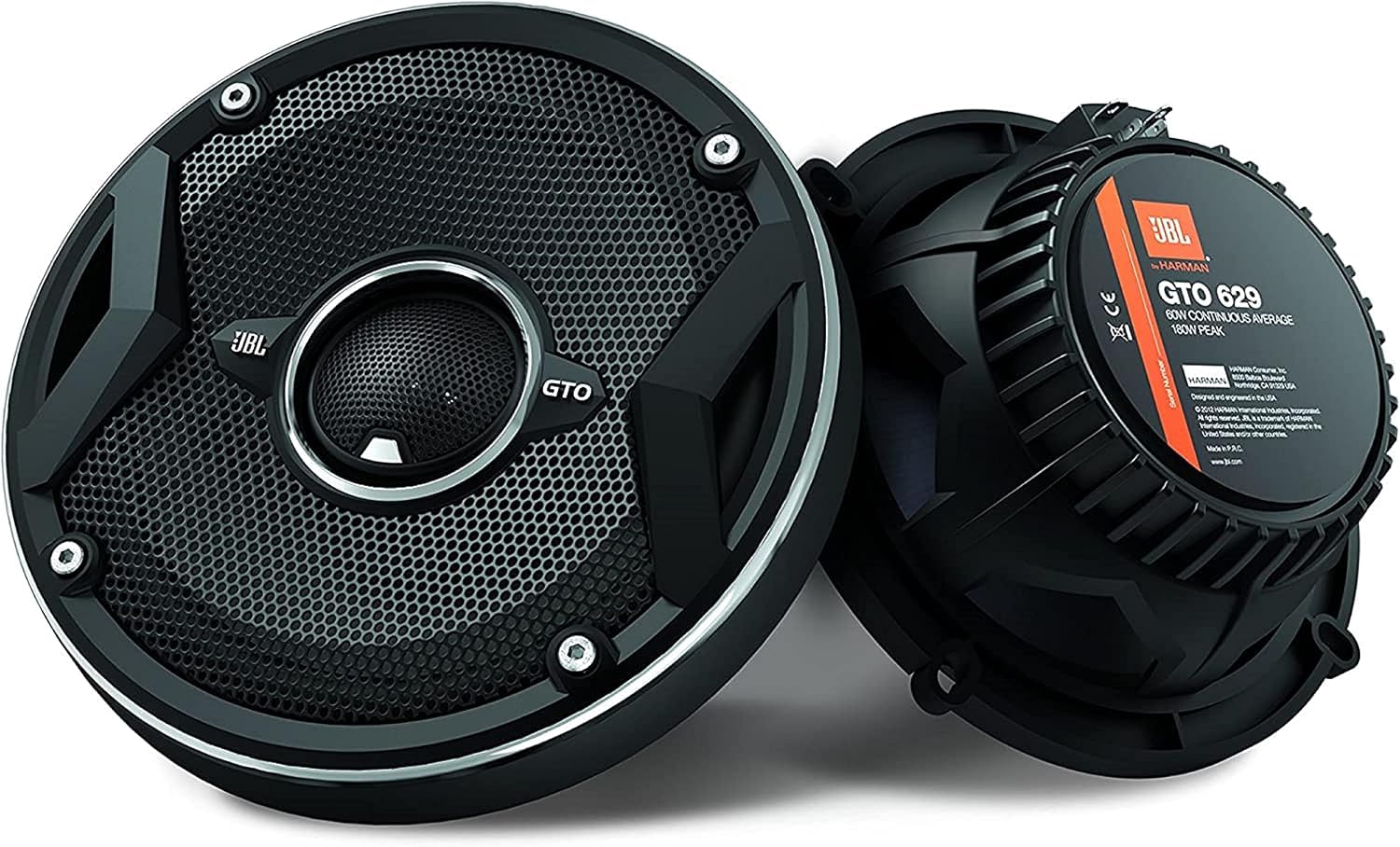
1. JBL GTO629 Premium 6.5-Inch Co-Axial Speaker – Set of 2
Our pick — 4.5★ from 650+ verified ratings; the strongest balance of quality and price.
The crowd favorite that turns limp factory sound into deep, room-filling bass you can feel.
This JBL set is the benchmark for a reason: the carbon-injected Plus One cones are physically larger than other 6.5-inch cones, which means they push more air and produce noticeably deeper bass. The low-impedance 3-ohm design also pulls the maximum wattage from your factory stereo’s undersized wiring, so you get punchy sound even without an amplifier.
The patented UniPivot tweeter lets you aim the highs directly at your ears, even when the speaker sits low in the door — a feature that makes the soundstage far more lifelike than a fixed tweeter. A dual-level tweeter volume adjustment also lets you tune the brightness to your taste, and the dedicated 12dB/octave crossover keeps lows and highs from muddying each other.
You get rich, detailed sound that buyers describe as “incredible sound, strong mid-bass, crisp highs,” but only if they fit your doors. In a Honda Element, buyers report these needed slight cover mods, so measure your door depth first. Buyers most often praise the sound quality, with a smaller group highlighting the value for money.
What Wins People Over
- Larger cone moves more air for real door bass
- Aimable tweeter for a lifelike soundstage
- 3-ohm design boost weak factory power
What to Measure First
- Some vehicles need minor trim modifications
- Durability reports are mixed over long-term use
Reach for these if: you want maximum bass from your existing stereo without adding an amp.
Look elsewhere if: your door panel has no room for even small trim adjustments.
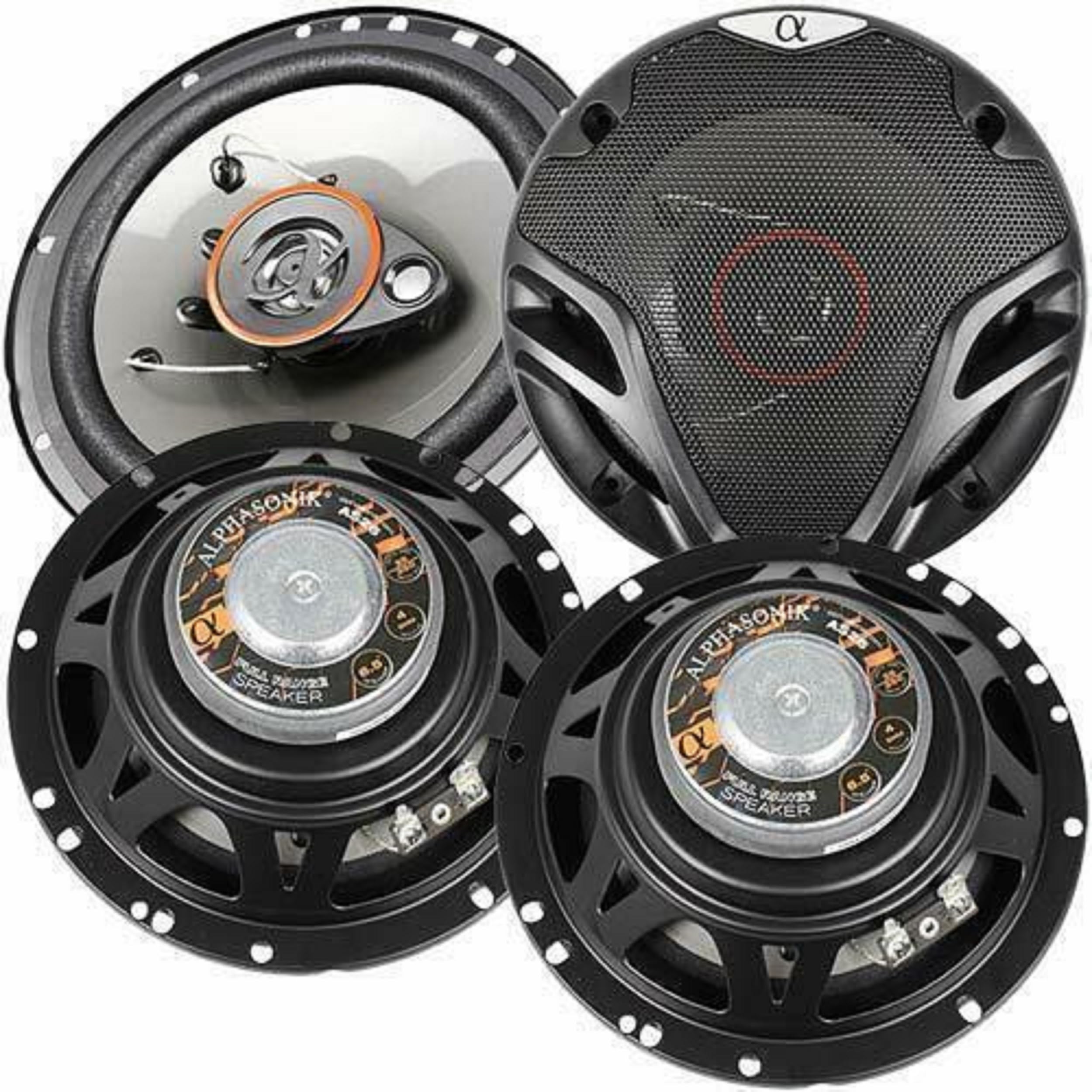
2. Alphasonik AS265P Loudspeakers 2 Pairs of 6.5″ 350W Max 3-Way Speakers
Two pairs of solid 6.5-inch coaxials that upgrade all four doors while staying affordable.
This Alphasonik bundle is a full-spectrum bargain: you get four 6.5-inch 3-way speakers (two pairs) that handle up to 700 watts per pair, with a frequency response spanning 28 to 22,000 Hz. The 92dB sensitivity means they play loud and clear even off modest head-unit power, so you hear the full range of your music.
You get a clean, straightforward install because the mounting depth is just 2.32 inches — that is 0.32 inches more clearance than the JBL GTO629 above, so check your door depth. The included mounting hardware and grilles make it a tidy job. Owners describe the sound as a clear upgrade from factory, with some calling it closer to much pricier gear.
Build and sound quality lead the praise, but the honest catch is power handling. As owners mention, “don’t try to put anything other than head unit power to them or they will blow out.” These suit a gentle factory-power upgrade, not a high-wattage amp.
The Upside
- Four speakers for the price of one premium set
- High 92dB sensitivity suits factory stereos
- Shallow depth with hardware and grilles included
Know This First
- Not built for external amplifier power
Grab these if: you want to refresh all four doors on a tight budget.
Pass if: you plan to drive them with a powerful external amp.
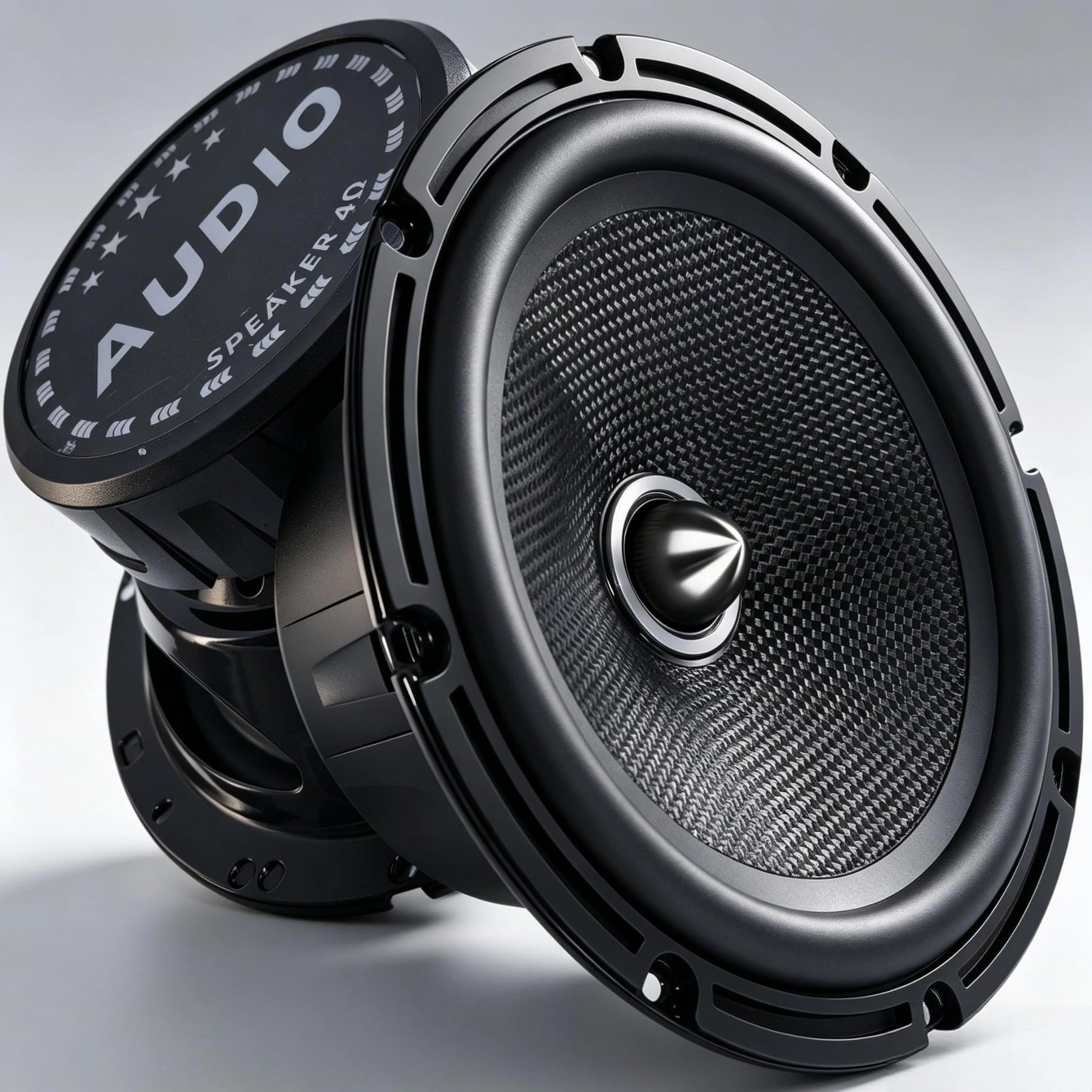
3. SCBPAUD 6.5 Inch Car Speakers 800W Max Carbon Fiber Cone Woofer 2 Pack
A budget 2-pack with a carbon-fiber cone and bullet design built to push deep bass.
These SCBPAUD woofers lean into bass with a high-performance carbon fiber cone that resists deformation and a bullet-shaped resonance design, all rated for 800W peak power. That carbon cone, paired with an aluminum alloy one-piece frame and a high-temperature voice coil, is built to shrug off extreme heat and harsh environments — The maker claims the carbon cone resists fatigue 300% better than standard cones..
They’re a true drop-in replacement for most factory 6.5-inch speakers with included mounting hardware, and the 2-pack means you can do both front doors at once. One owner ran them hard — “Fed 30W RMS via DMM with DSP” — and praised the impressive, non-harsh vocal throw and great value for a DIY build.
The trade-off is that these are pure woofers, not full-range coaxials: customers note they need a subwoofer for proper bass and offer no listed frequency response. They are also about 2 inches thick, so check your door depth before committing.
Built for builders: a versatile, affordable woofer set that shines in custom projects and OEM upgrades, but expect it to lead with the low end and leave the highs to a separate tweeter.
4. CT Sounds Meso 6.5” 300 Watt 2-Way Premium Coaxial Car Speakers

This mid-range coaxial pair balances musicality and raw punch, so you get clear vocals and solid bass without needing a subwoofer.
CT Sounds engineered the Meso with a high-quality fiberglass cone and nitrile butadiene rubber surround for a crisp, controlled sound, and the numbers back it up: 150W RMS per pair with a 300W max. That RMS headroom is what lets these play clean and punchy at higher volumes without choking on bass demands.
Vocals and high frequencies come through with unusual detail, thanks to the attached silk-dome tweeters that use a CCAW (copper-clad aluminum wire) voice coil and a neo (neodymium) magnet. Owners running aftermarket head units describe the sound as clear, smooth, and punchy — one called it a “10-star” experience in a jet boat with a cheap marine deck and a 4-channel amp, which says plenty about the power handling.
Sound quality wins people over first, then value for money and build quality. The honest notes are the large magnet size, which can complicate fit, and a few durability complaints — measure your depth and give them clean power.
Why These Impress
- 150W RMS per pair handles real amplifier power
- Fiberglass cone delivers balanced mid-bass and highs
- Silk-dome tweeters with neodymium magnets
The Fine Print
- Oversized magnet can complicate door fitment
- Occasional durability issues reported
Choose these if: you have an aftermarket stereo or amp and want punchy, clean mid-bass.
Think twice if: your door has tight clearance around the magnet.
5. Alpine S2-S65C Next-Generation S-Series 6.5″ Component Speaker Set

A component set that separates the tweeters for the clearest, most detailed soundstage in this list.
Alpine’s S2-S65C is Hi-Res Audio Certified and reproduces frequencies up to 40kHz — far beyond human hearing — which translates to exceptional air and detail in the highs you can hear. The cone is a blend of Poly Propylene, Glass Fiber, and Mica, a combination engineered for lightweight construction, high output, and low distortion.
Bass notes land with authority because the Alpine-exclusive HAMR (High Amplitude Multi-Roll) surround technology allows maximum cone movement. With a max peak power of 240W and 80W RMS, these handle real power, but reviewers are honest: they need an amp around 80W RMS to truly shine. On deck power alone, bass is decent but weak.
Owners praise the sound quality and value, calling the highs crisp without being harsh. The in-line crossovers and threaded removable tweeter housing make install flexible, and one owner dropped them into a 2025 Civic for a “big upgrade from factory.”
For the detail-seeker: this is the set to pick if you value separation and clarity and have an amp ready to feed it. On factory power alone, it holds back.
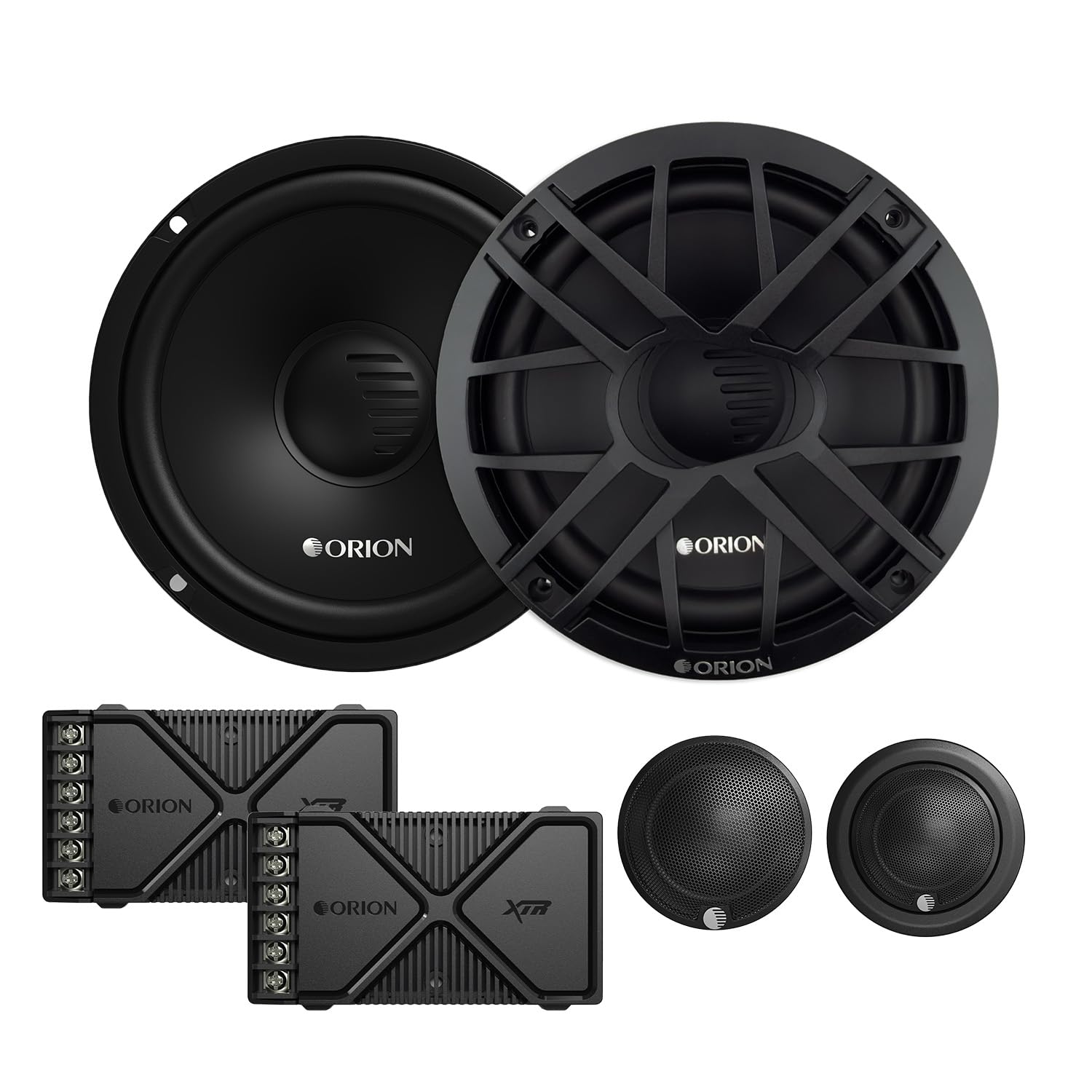
6. ORION XTR65.SC 6.5″ 2-Way Component Speaker System, 340W Pair
The dark-horse component set that reviewers swear sounds pricier than it is.
The ORION XTR65.SC is a 2-way component system delivering up to 340W max with a solid 85W RMS rating, built around a silk-dome tweeter and a dedicated woofer for rich lows. The frequency response spans 75Hz to 20kHz at a sensitivity of 87dB, and the enclosure materials — polypropylene, paper, butyl rubber, and neodymium — tell you these were engineered for serious listening.
What sets this apart is the bundle: it comes with an adapter plate and speaker wire, which makes installs easier, and reviewers consistently note the crossovers feel premium. Owners describe the sound as highly accurate and clean, with one saying they sound “much more expensive speakers than they are” and another calling them “very loud, clean, and with good bass — better than sets priced higher.”
The highest-rated pick in this list by average score, the strengths are sound quality, build quality, and value. The 87dB sensitivity is lower than some rivals, so these prefer a dedicated amp over a factory deck to reach their potential.
What Stands Out
- 85W RMS with 340W peak for amp-friendly power
- Silk-dome tweeters for smooth, fatigue-free highs
- Adapter plate and wiring included
What To Know
- Lower 87dB sensitivity needs amplifier power to sing
Reach for these if: you want audiophile-grade accuracy and have an amp to feed them.
Look elsewhere if: you are running strictly on factory head-unit wattage.
7. Alpine S2-S65 Next-Generation S-Series 6.5″ Coaxial Speaker Set

The coaxial sibling of the S65C that offers Alpine’s famous clarity with a simpler install.
The Alpine S2-S65 brings the same Hi-Res Audio Certified engineering to a coaxial format, meaning you get frequencies up to 40kHz and that same Poly Propylene, Glass Fiber, and Mica cone blend — but with the tweeter integrated. It’s the simpler factory door upgrade path if you don’t want to mount separate tweeters.
With 240W peak and 80W RMS power handling plus the HAMR surround technology, these deliver solid mid-bass and smooth highs. Like its component sibling, these reward amplification; the flexibility of a true 6.5-inch fit makes them a drop-in for most doors.
Owners are unreservedly enthusiastic: one preferred them over Kicker speakers, and another runs them in a 2007 Honda Civic Si with great results. The consistent verdict is that these are a meaningful step above stock without the complexity of a component install.
The simple route to Alpine sound: this is the pick for a clean, one-and-done door upgrade that still delivers Hi-Res detail and solid bass.
8. PIONEER A-Series MAX TS-A653CH 6.5″ 2-Way Component Car Speakers

Pioneer’s high-output component set that pairs crisp highs with impressively easy installation.
You get a broad, rich soundstage because the Pioneer TS-A653CH is a 2-way component system rated at 370W max with a continuous 85W rating. It is engineered for uniform off-axis response — a technical way of saying it sounds good even when the drivers are aimed away from your ears. The frequency response stretches from 33 Hz to 58 kHz, so you hear deep bass and crisp highs.
The 91dB sensitivity is the standout number here: it means these produce clear, loud sound even on lower-power inputs, so you get volume without distortion on a factory deck. The included 6-1/2-inch multi-fit installation adapters expand flexibility and improve acoustic performance, and reviewers point out the factory holes align for a perfect fit.
Sound quality dominates the praise, with installation and fit a distant second. Shoppers say excellent controlled tight bass, clear vocals, and clean highs — though the recurring advice is to feed them 50-60W RMS from an amp to open up the full tight-bass character.
Where It Shines
- High 91dB sensitivity plays loud on low power
- Multi-fit adapters for flexible, easy install
- Broad 33Hz-58kHz frequency response
Keep In Mind
- Bass on deck power alone is limited; an amp open up it
Pick these if: you want loud, clear highs and easy installation with room to grow into an amp.
Think twice if: you expect thunderous bass straight from the head unit.
9. KICKER 46CSS654 CS-Series 6.5-Inch Component System

Kicker’s component system that delivers ultra-clean bass with tweeters you can mount three ways.
The KICKER 46CSS654 is built around a heavy-duty motor/magnet structure with EVC (Extended Voice Coil) technology, which Kicker says delivers even deeper lows and ultra-clean bass. The phase plugs eliminate distortion for accuracy, and the UV-treated poly-foam surround resists heat and direct sunlight so it survives harsh door environments.
Flexibility is the headline: the.75-inch tweeters come with three mounting options — flush, angled, and surface pods — so you can aim them to fit your door layout perfectly. The neodymium tweeter magnets boost high-frequency output, and the included crossovers keep the signal clean.
Owners call it a “massive upgrade from stock,” noting it pairs well with 6×9 coaxials and a powered sub, and runs fine off a head-unit amp. The recurring advice is to pair them with a subwoofer for the deepest lows, and to check the complex tweeter install before committing.
The flexible performer: this is the component system for builders who want mounting options and clean bass, provided you have a sub to handle the very lowest frequencies.
Understanding the Specs
RMS Power Handling
RMS (Root Mean Square) is the continuous wattage a speaker can handle without distortion — the spec that actually matters for bass performance. A speaker rated 80W RMS can take 80 watts of clean power all day, while peak ratings are just brief bursts. Match the RMS to your amp or head unit output; more RMS headroom means cleaner, deeper bass at high volume.
Sensitivity (dB)
Sensitivity measures how efficiently a speaker converts power into volume, rated in decibels (dB). A rating of 91-92dB means the speaker plays loud even on a factory stereo’s modest wattage, while an 87dB speaker needs more power to reach the same volume. If you’re staying on deck power, prioritize higher sensitivity; if you have an amp, lower sensitivity is fine.
FAQ
Will 6.5-inch speakers fit in my car doors?
Do I need an amplifier for door speakers to get good bass?
What is the difference between coaxial and component speakers?
Can I run these speakers off my existing factory stereo?
Why does RMS matter more than peak wattage for bass?
Will adding door speakers give me subwoofer-level bass?
How important is the tweeter in a door speaker upgrade?
What is speaker sensitivity and why does it matter?
Final Thoughts: The Verdict
For most buyers, the car door speakers for bass and sound quality winner is the JBL GTO629 because its larger cones and 3-ohm design deliver real bass and lifelike highs straight from your factory stereo. If you want detail with separates, grab the ORION XTR65.SC. And for a budget-minded all-four-doors refresh, the Alphasonik AS265P is the one to reach for.
How We Picked
We do not accept paid placement. Every pick is matched to a real buyer and a real use-case; we do not hands-on test units.
Sources & Methodology
Specifications: manufacturer listings and product documentation. Review insights: verified customer reviews, as of August 2026. Pricing: not shown on this page (it changes often); check the current price via the retailer link.
As an Amazon Associate, FitlyFast earns from qualifying purchases. This does not affect which products we feature.