
Our readers keep the lights on and the weekend projects moving. As an Amazon Associate, I earn from qualifying purchases.
Specs are compiled from manufacturer listings and verified buyer reviews and can change over time — please confirm the key details on the product page before buying.
The best portrait camera balances skin-tone rendering, eye-detection autofocus speed, and background-blur capability. These eleven cameras each deliver that sharp-eye, blurred-background look through different sensor sizes and autofocus systems. This guide matches each body to your skill level, lens ecosystem, and portrait style.
I’m Rikta — the founder and writer behind FitlyFast. This guide is built by comparing the manufacturers’ published specifications and the patterns across verified customer reviews, so you get each pick’s real strengths and trade-offs instead of marketing spin.
Whether you’re eyeing your first interchangeable-lens camera or a full-frame workhorse for paid sessions, this breakdown of the best camera for portraits balances sensor size, autofocus coverage, and lens ecosystems to match your real shooting style.
Our Picks at a Glance


How To Choose The Best Camera For Portraits
Portrait quality hinges on light handling, face detection, and lens compatibility more than raw megapixel count. Prioritize fast eye AF, a skin-friendly sensor, and a mount with strong portrait prime options.
Sensor size: full-frame vs APS-C
Full-frame sensors are physically larger, which means they gather more light and create shallower depth of field. That shallow depth is what gives you the classic portrait look — a sharp face with a blurred background. APS-C cameras are smaller and lighter, and they’re often better value, but you’ll work harder to get that soft-background separation.
Autofocus performance
For portraits, you want a camera with reliable eye-detection autofocus. The camera finds the subject’s eye and holds focus on it even as the person moves, so you can concentrate on composition instead of fiddling with focus points. More focus points generally mean wider coverage across the frame, but accuracy and speed matter just as much as the number.
Lens ecosystem
The lens shapes depth of field and sharpness more than the body does. An f/1.8 or f/1.4 prime lens produces the creamy background blur portraits demand. Look for a system with plenty of portrait-friendly prime lenses available, whether that’s Canon’s RF and EF mounts, Nikon’s Z and F mounts, or Sony’s E mount.
Quick Comparison
| Model | Best For | Resolution | Autofocus Points | Max Burst | Amazon |
|---|---|---|---|---|---|
| Nikon D7500★ Best Overall | Action & low-light versatility | 20.9MP | 51 | 8 fps | Amazon |
| Canon EOS Rebel T7 KitBudget Champion | Budget beginners | 24.1MP | 9 | 3.0 fps | Amazon |
| Canon EOS RP KitFull-Frame Entry | Entry full-frame | 26.2MP | — | — | Amazon |
| Nikon Z 6II | Hybrid pros | 24.5MP | 273 | 14 fps | Amazon |
| Sony a7 III Kit | Low-light full-frame value | 24.2MP | 693 | 10 fps | Amazon |
| Nikon D850 | High-res studio detail | 45.7MP | 153 | 9 fps | Amazon |
| Sony a7 IV | Versatile all-rounder | 33MP | 693 | — | Amazon |
| Canon EOS 5D Mark IV | Wedding & event workhorses | 30.4MP | 61 | 7.0 fps | Amazon |
| Fujifilm X100VI | Street & travel style | 40MP | 425 | — | Amazon |
| Canon EOS R5 | Maximum resolution hybrid | 45MP | — | 12 fps | Amazon |
In‑Depth Reviews
1. Nikon D7500 20.9MP DSLR with 18-140mm Lens
Our pick — over 4.5★ from 650+ verified ratings; the strongest balance of quality and price.
The action-minded portrait camera that nails moving subjects in tricky light.
For portrait shooters who also chase kids, pets, or couples mid-laugh, the D7500 is a serious workhorse. Its 51-point autofocus system with 15 cross-type sensors tracks a face even when your subject is bounding toward you, and the 8 fps burst means you can fire off a sequence and pick the sharpest frame later. That burst speed is a huge step up from entry-level DSLRs — the Canon Rebel T7, for instance, manages just 3.0 fps, so the D7500 is well over twice as fast for catching fleeting expressions.
Buyers praise its class-leading sensor and processor, which rival the pro-level Nikon D500. The 20.9MP sensor delivers clean, low-noise files in dim rooms, and the included AF-S 18-140mm lens covers everything from a tight headshot to a full-body environmental portrait without swapping glass. Owners describe it as “a great camera, zero issues since June 2025 (as of Feb 2026),” and note the sturdy body is heavy but confidence-inspiring. The tilting 3.2″ touchscreen lets you tap to focus on an eye and recompose, which speeds up your flow on location.
The trade-off, as buyers admit, is that this is a 2017 model with dated tech — but that age is exactly why it’s an affordable route to pro-level results. The recurring mention is picture quality, with over 20 owners calling it out for its sharp, low-noise output. It’s not the newest mirrorless body on the shelf, but it’s a proven classic that gets the job done.
Why owners love it
- Autofocus is fast and reliable, with 51 points covering the frame
- The 18-140mm lens is a versatile all-in-one for portrait sessions
- Weather-resistant build handles outdoor shoots
What to keep in mind
- Body is heavier than mirrorless rivals
- Buttons and settings have moved from older Nikons, so allow adjustment time
Reach for this if: you want a durable, fast-firing DSLR that balances portrait quality with action capability.
Look elsewhere if: you demand the latest mirrorless tech or a lighter travel kit.
2. Canon EOS Rebel T7 Double Zoom Kit
The starter bundle that packs two lenses and a mountain of extras into one box.
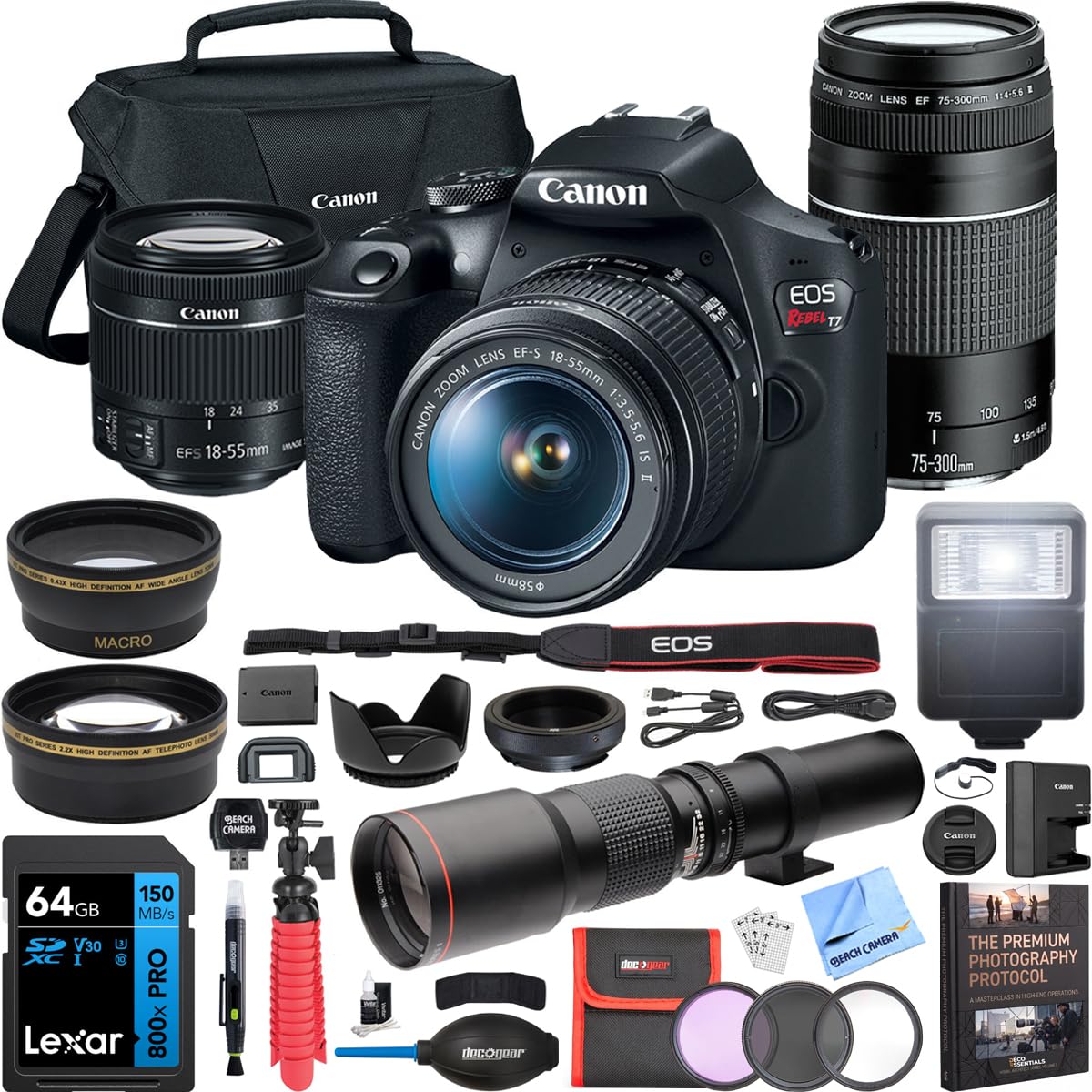
If you’re just stepping into portrait photography, the Rebel T7 is the classic entry point, and this kit gives you everything to start shooting immediately. The 24.1MP APS-C sensor captures solid, detailed images, and the bundle throws in a 500mm telephoto, a 0.43x wide-angle, a 2.2x telephoto, a close-up filter kit, a tripod grip, an external flash, and a 64GB Lexar memory card. It’s a “try everything” kit for figuring out what you enjoy.
The value for the money is the single biggest draw here — it’s the most-praised aspect, with owners noting the accessories are solid quality, even if not Canon-grade. The camera body itself is a Canon USA authorized product with a full USA warranty, and the 9-point autofocus system with AI Servo AF is adequate for posed portraits where your subject stays still. Built-in Wi-Fi and NFC make it easy to transfer a quick shot to your phone for social sharing.
The honest catch is the stock battery. Buyers report it drains fast, with one owner noting “battery drains fast (8 photos after full charge).” Also, that included slave flash doesn’t work with this camera, so you’ll rely on the built-in flash for fill light. Expect to buy a spare battery right away. For a first camera on a strict budget, it’s a friendly, forgiving way to learn the exposure triangle.
Entry-level verdict: A generous starter kit where the camera body is solid and the accessories are a bonus — plan on a spare battery and a working flash.
3. Canon EOS RP with RF 24-105mm Lens
The lightest doorway into full-frame portraits without the full-frame price tag.
You get creamy, blurred backgrounds and sharp low-light shots with a full-frame sensor (a larger image chip that captures more light). The Canon EOS RP is the budget-friendly way in — buyers call it “a fantastic way to get into Full Frame while staying affordable.” With the RF 24-105mm f/4-7.1 IS STM lens, this compact kit suits travel and vlogging, and its up to 5 stops of optical image stabilization (shake correction) lets you shoot handheld in dimmer light without blur.
The full-frame low-light performance is the standout. Owners who upgraded from crop-sensor cameras describe photos as ultra-sharp with more depth and fine detail, and the face-detect autofocus is praised as great for grabbing the eye in a scene. It’s not built for fast sports — the kit lens maxes out at f/7.1 by 105mm, so background blur needs a faster prime — but for posed portraits in available light, it’s excellent.
Weigh the autofocus limitations for moving subjects; owners mention it’s a mixed bag in that department, and the battery life draws a few complaints. You can also use the EOS Utility Webcam Beta software to turn this into a high-quality webcam. It’s the ideal pick if you want pro-style image depth for portraits and occasional video, but aren’t ready to spend top-tier money.
Best for: enthusiasts upgrading from a crop-sensor camera who want full-frame depth and low-light magic on a budget.
Think twice if: you need fast-action sports autofocus or all-day battery life without spares.
4. Nikon Z 6II Full-Frame Mirrorless

The 14 fps hybrid that grows with you from portraits to weddings.
If your portrait work sometimes turns into event, wedding, or commercial shoots, the Z 6II is built for that flexibility. The 24.5MP back-illuminated (BSI) sensor excels in low light, and the 273-point autofocus system with eye detection locks onto a subject’s eye with what owners call a lightyears-ahead jump from older DSLRs. At 14 fps, you can capture a dress twirl or a champagne toast without missing the moment.
Dual card slots (CFexpress/XQD plus UHS-II SD) are the kind of professional redundancy you want for paid work — if one card fails, you have a backup. The camera accepts thousands of lenses: the growing NIKKOR Z lineup and approximately 360 F-mount NIKKOR lenses via an FTZ adapter. That’s a massive advantage if you already own Nikon glass. Buyers also appreciate the in-body stabilization, noting it eliminates the need for a gimbal in most video projects.
Owners praise the true-to-life colors and highly customizable controls, including button mapping and focus peaking (a tool that highlights sharp edges in manual focus). One honest con: the screen doesn’t rotate fully forward for self-filming, so vloggers will need a workaround. It’s worth the money for someone who wants mirrorless performance that scales from portraits to paid assignments.
The pro case
- 273-point AF with reliable eye detection
- Dual card slots for professional confidence
- Accepts all Nikon Z and most F-mount lenses
The honest limits
- Screen doesn’t flip forward for self-filming
- You’ll want spare batteries for long shoots
5. Sony Alpha a7 III with 28-70mm Lens

The full-frame classic that turns dim reception halls into a portrait studio.
For portraits in dim rooms or at dusk, the Sony a7 III shines. Its 24.2MP back-illuminated full-frame sensor captures a 15-stop dynamic range (the span from shadows to highlights), so details stay visible in tricky light. The ISO range extends to 204,800, letting you shoot in near-darkness. With 693 phase-detection autofocus points covering 93% of the frame, it locks onto eyes with speed and accuracy, according to owners who switched from Canon DSLRs.
That autofocus coverage is extraordinary — the a7 III has 693 focus points versus just 51 on the Nikon D7500, meaning it can grab a subject almost anywhere in the frame, even at the edges. Photographers moving up from Canon’s Rebel line report game-changing quality even with the kit lens, and the battery is a standout, shooting roughly 710 photos per charge in one owner’s testing. The 28-70mm kit lens has a variable f/3.5-5.6 aperture, which is decent for general use.
The main grumbles are the complex menu system and some mixed feedback on battery life and reliability. But the thing everyone raves about is the picture quality, with 59 owners calling it out and 120 praising the overall camera build. It’s the pick if you do a lot of evening, indoor, or available-light portraits and want a reliable full-frame body with an unbeatable lens ecosystem.
Low-light verdict: The a7 III’s 693-point autofocus and high-ISO sensor make it a low-light portrait powerhouse — just budget time to learn its menu.
6. Nikon D850 FX-Format DSLR Body
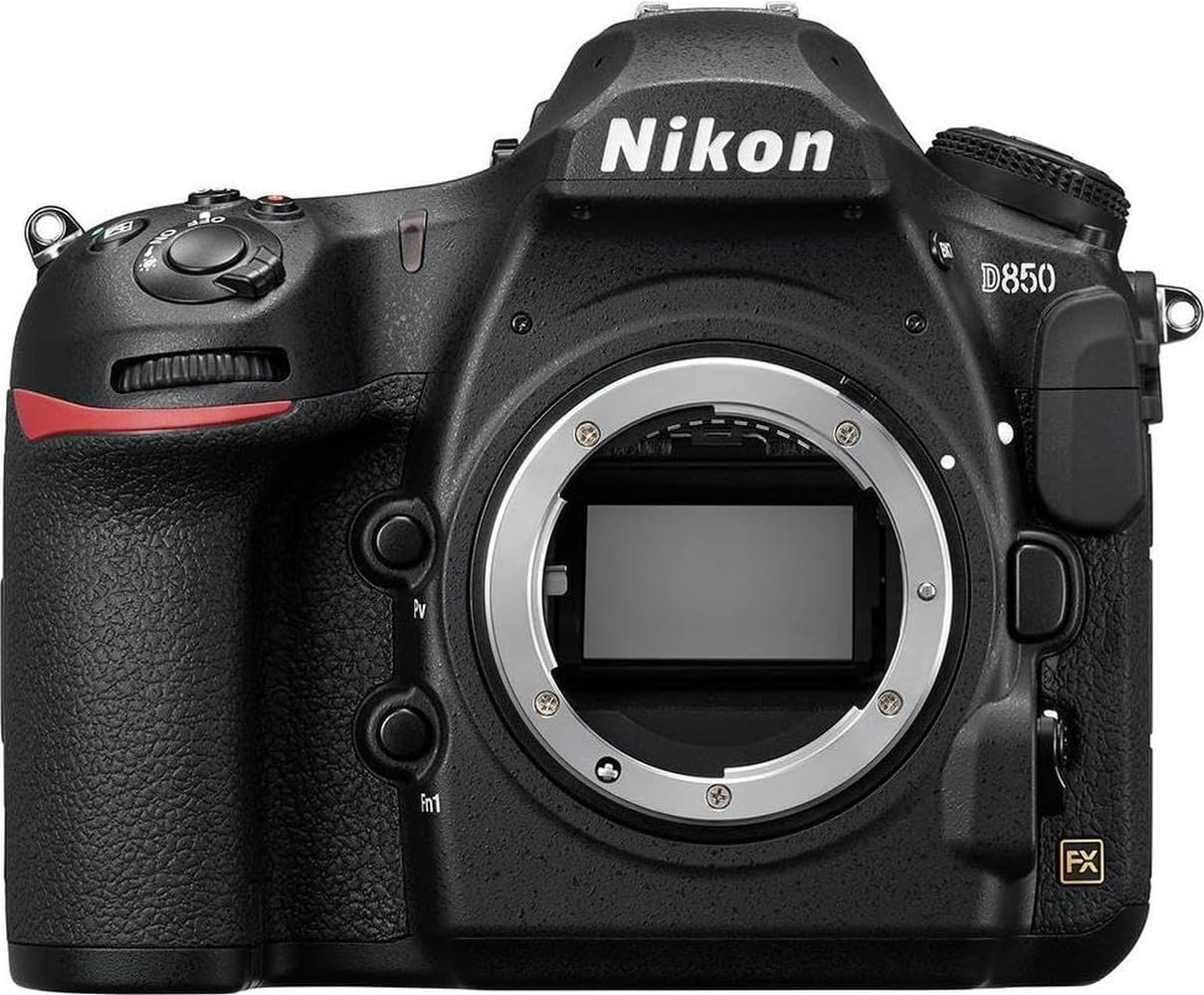
The 45.7-megapixel studio workhorse that makes every eyelash and fabric thread count.
If your portraits live or die on detail — think beauty retouching, fashion editorials, or large prints — the D850 is legendary for a reason. Its 45.7MP full-frame sensor is back-illuminated with no optical low-pass filter, which means maximum sharpness and detail with virtually no moiré (that rainbow pattern you sometimes see on fine fabric). Buyers outright call it “the best DSLR body ever made,” with stunning contrast and resolution that rivals medium format when paired with top-tier glass.
The 153-point autofocus system is industry-leading, and the tilting touchscreen lets you tap to pick focus points directly on the image. For studio work, the 9 fps continuous shooting at full resolution is more than enough, and the in-camera focus shift shooting mode is a gift for product and detail shots. The battery performance is outstanding, though owners note it drains faster when using live view. It also captures 4K video and slow motion up to 120 fps at 1080p.
This is not a beginner’s camera, and owners are clear about that — it demands high-quality lenses and fast SD cards to reach its potential. It’s heavy, and RAW files are massive. But if you’re a working photographer or a serious enthusiast chasing maximum resolution, this is the definitive choice. The quality is the most-mentioned aspect, with 180 owners highlighting it.
What makes it elite
- 45.7MP resolution for huge, detailed prints
- Back-illuminated sensor with excellent dynamic range
- Weather-sealed body with tilting touchscreen
Where it demands patience
- Heavy body and very large RAW files
- Not for beginners — requires quality glass to shine
7. Sony Alpha 7 IV Full-Frame Body

The 33-megapixel all-rounder that shoots like a pro and adapts to any assignment.
If you want one camera for portraits, video, and everyday shots, the Sony a7 IV hits a balance. Its 33MP full-frame sensor gives you detailed portraits without huge file sizes, and the 693-point autofocus with face and eye detection is accurate — owners consistently praise how sharp and well-exposed images come out right away. The BIONZ XR processor (the camera’s brain) speeds up operation, and the S-Cinetone color profile delivers pleasing skin tones straight out of camera.
It’s a true hybrid: 4K 60p video in 10-bit 4:2:2 with full pixel readout in all recording formats, plus 7K oversampling for 4K 30p that produces stunning clarity. Owners note the camera captures over 2,000 shots per battery charge in some testing, which is impressive for a mirrorless. The dual card slots support CFexpress Type A and SD cards, giving you flexible storage options.
Compared to the a7 III, this is a meaningful step up in resolution and video capability, though the a7 III still holds its own as a pure value pick. The menu system is much improved over older Sonys, and buyers who moved from DSLRs find the build intuitive. Some owners mention overheating during intensive video use, so long 4K 60p sessions might need breaks. For the photographer who needs one camera to handle portraits, landscapes, events, and video, this is the one.
The all-rounder read: A 33MP body with accurate eye AF and excellent video makes the a7 IV the one-camera solution for serious enthusiasts and pros.
8. Canon EOS 5D Mark IV DSLR Body
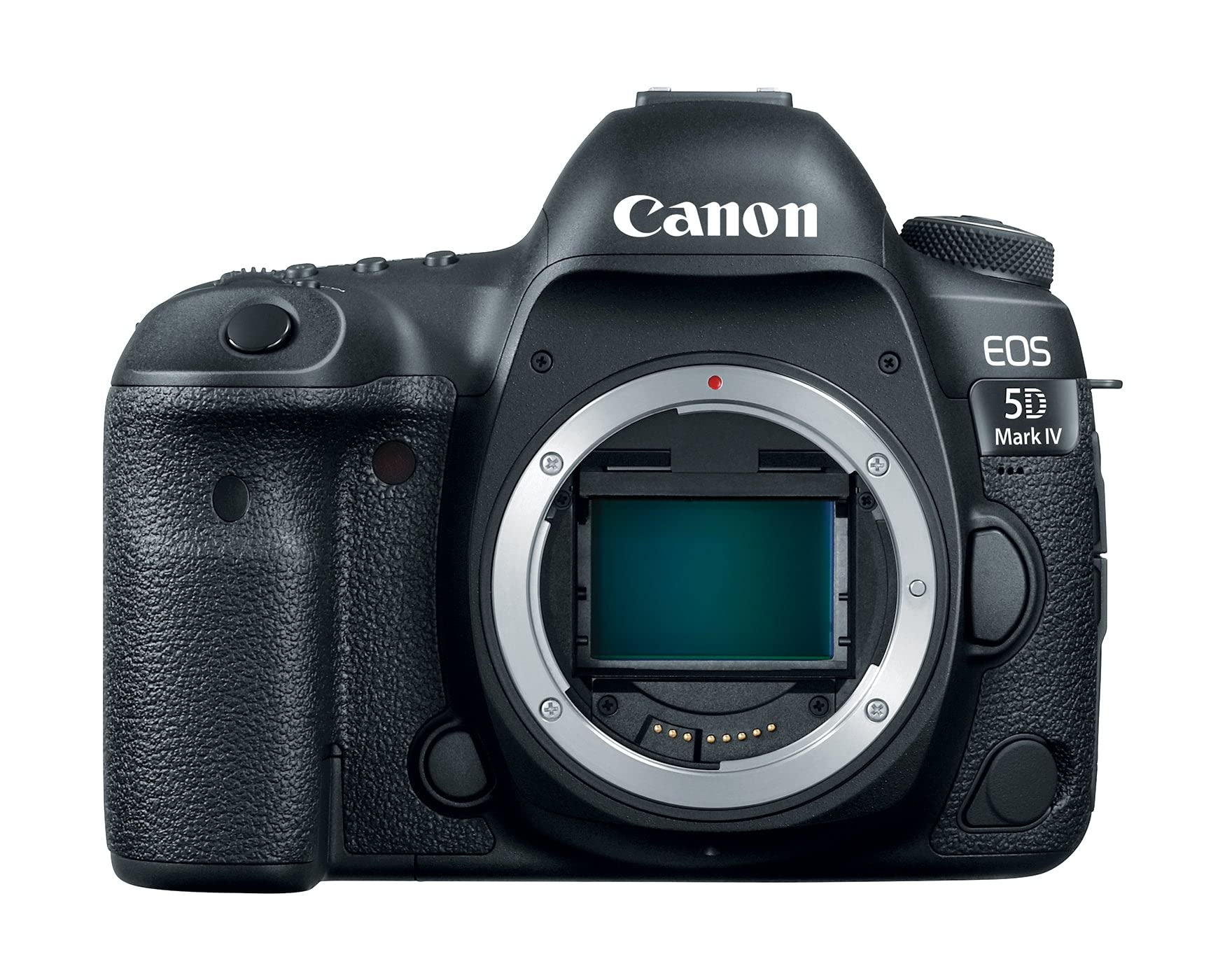
The wedding and event veteran that pros still reach for because it never misses.
If there’s a single camera that defined professional portrait and wedding photography for a decade, it’s the 5D line, and the Mark IV is its finest DSLR iteration. The 30.4MP full-frame sensor delivers clean images even at ISO 12,800, and the DIGIC 6+ processor powers up to 7.0 fps continuous shooting. Owners describe it as a “workhorse of a camera” that’s reliable for shoots, with a Dual Pixel CMOS AF system that’s responsive and smooth for both photos and live view video.
The 61-point autofocus system is fast and sensitive, and owners praise its flawless tracking of moving subjects in servo mode. For portraits, the 30MP resolution is what many consider the ideal balance — one owner who upgraded through the entire 5D line called 50MP overkill and 22MP dated, making 30MP perfect for wedding and portrait work. The full touchscreen interface speeds up menu navigation and AF point selection.
You get 4K video at 30 or 24 fps, plus Full HD up to 60 fps and HD up to 120 fps for slow motion. Built-in Wi-Fi makes it easy to transfer files to your phone. The honest caveat: the LCD screen doesn’t flip out for high or low angle shots like some rivals, and it’s a heavier DSLR body. But for the photographer who values bulletproof reliability in Canon’s EF lens ecosystem, this remains a top-tier choice.
Choose this for: paid wedding and event work where reliability, Canon colors, and a huge EF lens selection matter most.
Consider alternatives if: you want a flip-out screen for creative angles over a fixed one.
9. Fujifilm X100VI Digital Camera (Silver)

The retro-styled street camera that makes everyday portraits look easily artistic.
The X100VI is not a traditional portrait camera — it’s a fixed-lens compact with a 23mm lens and a 40MP APS-C X-Trans CMOS 5 HR sensor. That 23mm focal length translates to roughly a 35mm full-frame equivalent, which is a classic street photography and environmental portrait angle. It’s a camera that forces you to get close and compose, which many photographers find creatively liberating. It “makes it easier to travel” and delivers amazing photos, as one owner put it.
The hybrid viewfinder is a highlight — a 0.5-inch OLED viewfinder with approximately 3.69 million dots that can switch between optical and electronic modes. The 425-point autofocus system includes intelligent subject recognition with Face and Eye AF, plus object detection for animals, birds, cars, and more. In-body stabilization of 6 stops helps keep handheld shots sharp in low light, and it captures 6.2K 30p video with 10-bit 4:2:2 color.
This is a specialist tool, and owners are clear it’s not for beginners — one calls it “very complex professional camera.” It’s also a premium investment, and a couple of buyers felt the build didn’t match the cost. If you want a camera that’s a joy to carry daily and produces gorgeous, distinctive images with Fujifilm’s famous color science, this is a beautiful choice. If you need interchangeable lenses for a dedicated portrait kit, look at the other full-frame options here.
Specialist verdict: A 40MP fixed-lens joy for travel and street portraits with stunning color — but non-negotiable on lens interchangeability.
10. Canon EOS R5 Mirrorless Body

The 45-megapixel mirrorless beast that delivers eye-melting sharpness and 8K video.
For the photographer who wants the absolute pinnacle of resolution and video in a mirrorless body, the R5 is it. The 45MP full-frame CMOS sensor captures extraordinary detail that makes every eyelash and skin texture count, and the DIGIC X processor drives an ISO range of 100-51200, expandable to 102400x, for clean shots in low light. Owners describe the eye and face autofocus as blazing fast and accurate, calling the camera “a true beast.”
It’s a speed demon too: continuous shooting up to 12 fps with the mechanical shutter (the physical shutter mechanism) and up to 20 fps using the electronic silent shutter. The in-body image stabilization (IBIS) is described as rock-steady, with one owner noting they could shoot handheld at ISO 100 instead of ISO 6400 on their older 5D Mark IV — a huge leap for low-light portrait sessions. It captures 8K RAW and 4K up to 120fps internally, making it a stellar choice for commercial and hybrid work.
The trade-off is the premium cost and the demanding file sizes that a 45MP 8K camera produces. Owners mention the battery life is shorter than some rivals, and there are occasional reports of the camera overheating during heavy video use, though firmware updates have addressed many issues. The image quality is the aspect owners praise most, with the autofocus a close second. If budget is no object and you want the future of hybrid shooting, this is the benchmark.
Why it’s the top tier
- 45MP resolution with stunning detail and dynamic range
- 20 fps electronic burst for never-missing a moment
- 8K video with superb eye-detection autofocus
What to budget for
- High cost and very large files demand fast, big memory cards
- Heavy 4K video use may trigger overheating
Understanding the Specs
Sensor Size and Resolution
Full-frame sensors (like those in the Canon EOS RP, Nikon Z 6II, and Sony a7 III) are physically larger than APS-C sensors. That size lets them capture more light, which gives you cleaner images in dim conditions and a shallower depth of field for that creamy background blur you want in portraits. Resolution — measured in megapixels — determines how much detail you capture, with 45MP sensors like the D850 and R5 allowing for heavy cropping and large prints.
Autofocus Points and Eye Detection
Autofocus points are the areas in the frame where the camera can focus. More points, spread across the sensor, mean you can lock focus on a subject even at the edge of the frame. But for portraits, the real magic is eye-detection autofocus, where the camera finds and tracks the subject’s eye automatically. The Nikon D7500 has 51 points, while the Sony a7 III has 693 — that wider coverage helps when your subject isn’t dead center.
FAQ
What makes a full-frame camera better for portraits?
How many megapixels do I need for portrait photography?
Which lens is best for portrait photography?
Is the Canon EOS RP good for portraits?
What is eye-detection autofocus and why does it matter?
Should I buy a DSLR or mirrorless camera for portraits?
How long does a portrait camera battery last?
What does the f-number on a lens mean for portraits?
Final Thoughts: The Verdict
The crowd favorite for the best camera for portraits is the Nikon D7500 because it pairs pro-level autofocus and speed with classic Nikon image quality. If you want full-frame depth on a budget, grab the Canon EOS RP. And for maximum resolution and commercial-grade video in one body, the Canon EOS R5 is the one to reach for.
How We Picked
We do not accept paid placement. Every pick is matched to a real buyer and a real use-case; we do not hands-on test units.
Sources & Methodology
Specifications: manufacturer listings and product documentation. Review insights: verified customer reviews, as of August 2026. Pricing: not shown on this page (it changes often); check the current price via the retailer link.
As an Amazon Associate, FitlyFast earns from qualifying purchases. This does not affect which products we feature.